
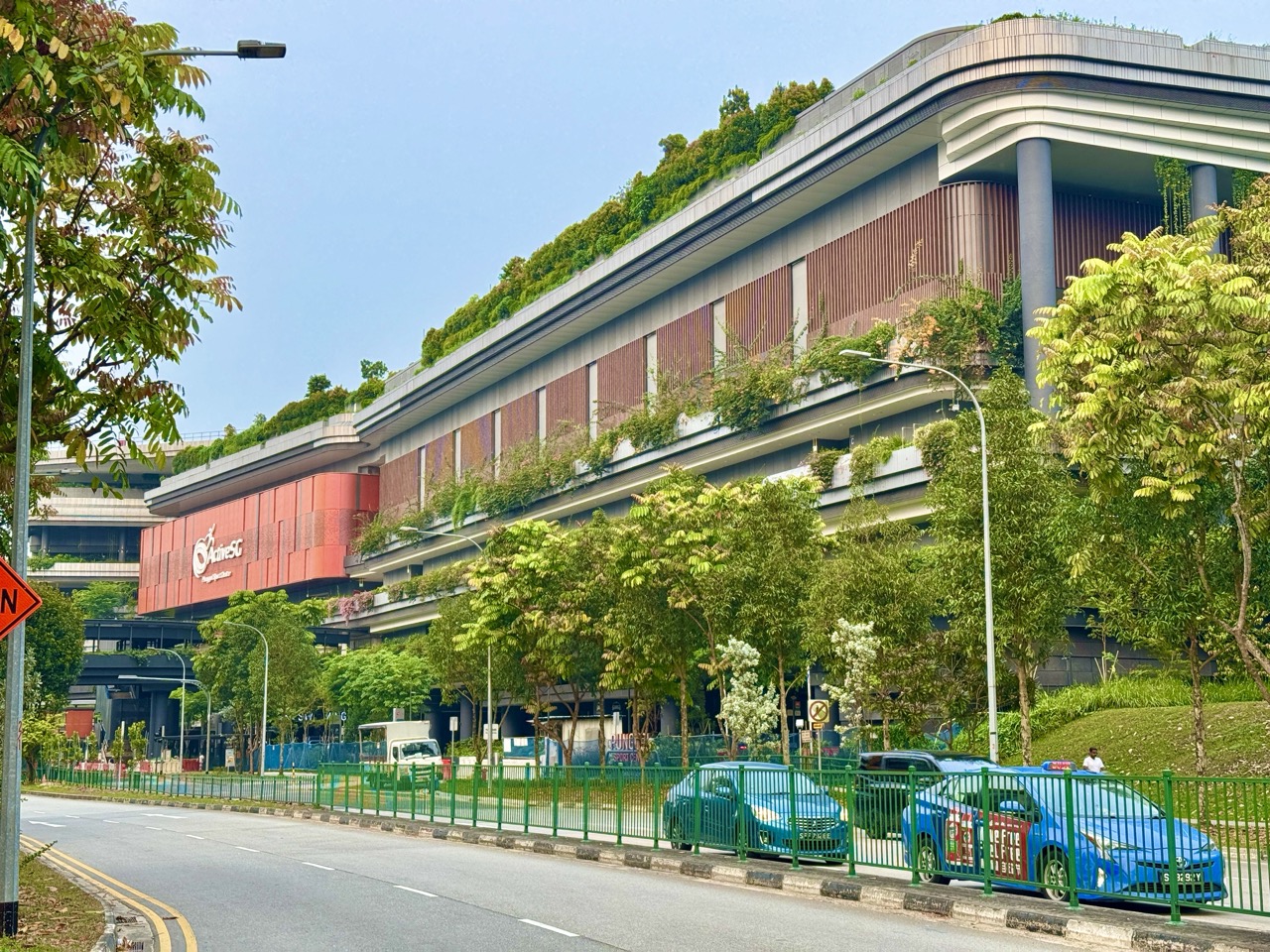
Pickleball players can practise the third-shot drop at ActiveSG Punggol’s bookable pickleball facilities at 11 Sentul Crescent, Singapore 828656. Punggol Sport Centre’s October 2026 soft launch introduced pickleball bookings at the Sport Hall and Sheltered Courts, and a 30 October walkthrough described six sheltered pickleball courts. The official Punggol Sheltered Courts page lists daily operating hours of 7am–10pm, subject to closures. Verify the exact indoor or sheltered pickleball product and live slot in MyActiveSG+ before arranging a practice; a tennis court booking does not substitute for pickleball access.
The third-shot drop is a controlled, relatively soft shot made by the serving team after the serve and the return have each bounced. Its purpose is to send the ball low into the opponents’ front court, making an easy attacking volley more difficult and allowing the serving pair a better opportunity to approach the non-volley-zone line. It is one of the most useful next skills after simply keeping a pickleball rally alive. This guide focuses on learning, practising and deciding when to use that one shot, rather than repeating a general beginner lesson, paddle-buying guide or mixed-racket-sport comparison.
- Venue: ActiveSG Punggol Sport Hall or Punggol Sheltered Courts (Pickleball & Tennis), 11 Sentul Crescent, Singapore 828656.
- Court availability: choose the exact Pickleball booking on MyActiveSG+, confirm date, fee, court and operator rules.
- Sheltered facility: official page lists normal hours daily 7am–10pm, with possible closures due to weather or operations.
- Skill: the third-shot drop, a soft controlled shot used by the serving side after the opponent’s return.
- Rule behind the skill: the served ball must bounce before being returned, and the return must bounce before the serving side hits its next shot.
- Target: usually a low landing in or near the opponents’ non-volley zone, reducing an easy attacking angle.
- Partner task: communicate, make a controlled shot and advance only when the ball gives a safe opportunity.
- Equipment: correct paddle, appropriate pickleball, suitable court shoes, water, towel and booking details.
- Avoid: rushing blindly to the net, ignoring the kitchen rules, crossing adjacent courts or treating every high third shot as a successful drop.
- Official sources: https://usapickleball.org/pickleball-skills/level-three/basics-of-the-third-shot-drop/ and https://www.activesgcircle.gov.sg/facilities/punggol-sheltered-courts-pickleball-tennis

Definition lock: what exactly is a third-shot drop?
In a standard pickleball rally, the first shot is the serve, the second is the return and the third is the serving side’s next shot. A third-shot drop uses soft control rather than an aggressive drive. The usual aim is to arc the ball over the net so that it lands low near the opposing kitchen, making it harder for the opponents to strike down aggressively. USA Pickleball describes it as a bridge from the baseline towards the non-volley-zone line.
The drop is not a separate category of legal scoring. It is a tactical choice: a third shot could also be a drive or another legal return. A successful drop is still governed by the same basic rules of court boundaries, net and bounces. Learning the term allows the player to discuss strategy precisely rather than describing every soft shot as a dink.
Why the two-bounce rule creates the third-shot problem
Pickleball begins with a serve that must bounce before the receiver strikes it. The receiving team’s return must also bounce on the serving side before the serving side plays the next shot. This is the two-bounce rule. It means the serving team cannot simply sprint to the net and volley the return out of the air. The team must first manage a ball that has bounced, often from a more defensive position.
At a beginner level, this rule explains why the third shot matters. The receiving team can frequently move closer to the non-volley-zone line after returning serve, while the serving team may still be back. The drop can reduce that positional disadvantage by creating a less attackable ball. Before doing complicated drills, practise the correct bounce sequence until everyone understands which shot may be played from the air.
Where the Punggol pickleball options are
The late-October opening reports identified indoor pickleball slots at Punggol Sport Hall and sheltered/outdoor pickleball at Punggol Sheltered Courts. The first-look article described six pickleball courts in the sheltered Level 3 arrangement, beside three tennis courts. These are different booking categories, potentially with different prices and operating conditions. The centre is next to SAFRA Punggol near Sam Kee LRT.
A court shown in a photograph is not a confirmed slot for your selected hour. Use the official booking platform and read the actual facility label. Do not book tennis because the pickleball calendar is full, or assume another private Punggol pickleball venue is the same site. The specific ActiveSG court is where this practice plan applies once a valid booking is made.
Why a sheltered roof does not remove all weather risk
The official Punggol Sheltered Courts page warns that outdoor facilities may be closed in bad weather. A roof can reduce direct rain but does not eliminate lightning precautions, slippery edges or wind that enters through open sides. A drop shot is particularly sensitive to how the ball travels, so wind may alter the flight on more exposed courts.
Use the current closure notice rather than an outdated screenshot. If staff suspend use, stop. Do not move into an unbooked indoor hall because it seems safer. Court bookings, weather rules and refund terms are separate matters. An honest activity plan treats safety and actual operating status as conditions of participation.
The three parts of a useful drop
Think about preparation, contact and recovery. Preparation means moving into a balanced position after the returned ball bounces. Contact means using a small controlled swing to send the ball with suitable height and depth. Recovery means staying ready for the opponents’ next shot and deciding with a partner whether movement towards the net is appropriate. Each part supports the next.
A newcomer may focus only on the ball clearing the net and forget to move afterward. Another may rush forward before seeing whether the shot is too high. By separating the actions, a player learns to make a decision rather than follow an automatic script. The objective is repeatability: several manageable drops that create a useful next ball.
Begin with the paddle face rather than force
A drop requires enough lift to clear the net but not so much height that an opponent can attack easily. Small changes in paddle-face angle and contact can alter the ball’s trajectory. Begin with soft cooperative feeds near the non-volley-zone line rather than immediately trying from the baseline. The movement should feel controlled and should not demand a huge backswing.
Use the paddle in a comfortable way taught by a competent coach if available. A hurried wrist flick or powerful arm swing may send the ball far beyond the intended target. If the ball repeatedly sails high or long, slow the action and examine the contact point. Learning to control trajectory is more valuable than hitting an impressive-looking isolated winner.
Understand the kitchen without inventing a no-entry zone
The non-volley zone, often called the kitchen, extends seven feet from the net on either side under standard pickleball rules. A player cannot volley the ball while in the zone or while violating the associated momentum rules. But that does not mean a player may never step into the kitchen. Entering to play a ball that has bounced is permitted, provided the other rules are respected.
This distinction is essential for drop-shot practice. The third-shot drop often tries to land near the kitchen, encouraging the opponent to play a low ball. A receiver might step into the zone to return it after a bounce. Do not teach children that merely touching the kitchen line loses a point in every situation. Rules become easier when people know that the restriction concerns volleying and associated contact.
Choose a clear target rather than the entire front court
A beginner may describe a drop target as ‘somewhere short’. That makes feedback vague. With a suitable booked court, identify a broad safe target area in the opponent’s front court and aim to land balls there with low height. Do not place cones or objects on the court unless the operator permits them, and never obstruct the footwork of another group.
Start with a generous target. The goal is to learn a controlled arc, not hit a tiny taped square on the first attempt. Once accuracy improves, vary the landing area slightly and notice how the opponents respond. Too precise a target can create unnecessary pressure and encourage a jerky movement. Broad, repeatable placement is a better foundation.
The first cooperative drop drill
One partner can stand a comfortable distance from the net and gently feed balls to a player practising soft returns. The learner tries to send the ball on a manageable arc so it lands near the front of the opposite court. Begin without scoring. Count several accurate contacts before increasing difficulty. Ensure the feed is predictable enough that the learner can concentrate on touch.
Do not begin from the baseline with a hard fast ball and expect instant precision. Skill development benefits from gradual distance. If a beginner cannot control the drop from a shorter position, practise there longer. A coach may adapt the movement according to ability. The purpose of the drill is not to simulate professional pressure immediately; it is to teach how a soft ball travels.
Move gradually back towards the baseline
When the player can control a short drop, increase the starting distance little by little, as permitted by the court arrangement. A ball struck from farther away needs a different combination of height, timing and pace. The player should maintain an easy controlled swing rather than simply hitting harder and hoping the ball falls short.
Progress until the drill begins to resemble the true third shot after a return of serve. If accuracy collapses, shorten the distance again. This backward progression reveals what has been learnt and which part still needs practice. A beginner who can drop reliably from halfway back may be making more useful progress than someone who attempts twenty rushed baseline drops.
Why a slow practice ball teaches more than a frantic feed
A player learning touch has limited attention for footwork, paddle angle and ball flight. A hard, unpredictable feed forces them to react and often encourages blocking rather than developing a smooth movement. Begin with a predictable incoming ball that bounces in the appropriate place. The feeder should cooperate rather than try to win the drill.
Later, vary the bounce depth and height so the learner can adapt. The increase in difficulty should be deliberate. Skill grows when mistakes produce useful information, not when the person is overwhelmed. A practice that feels too easy at first can still be valuable because it allows a stable movement to develop.
High drop versus low drop: learn the difference
A ball that goes high over the net and lands in the front court may be legal, but it can offer an experienced opponent a comfortable opportunity to attack. A useful drop attempts to make contact difficult by arriving low or close to the opponent’s feet. The exact geometry depends on where the opponents stand and how quickly the ball descends.
Ask the receiver to give honest feedback: was the ball comfortably attackable or did they need to lift it? This is more informative than simply counting how many balls landed inside the kitchen. A tactical skill should be judged by what it makes the opponent do, not by whether it matches a pretty arc in a video.
A ball that hits the net is feedback, not a verdict
Players learning a soft shot may frequently send the ball into the net. They could be contacting too low, failing to provide sufficient upward trajectory or making another technique error. The correct response is not automatically to swing as hard as possible. Step back into a balanced position and make one manageable adjustment. A qualified instructor can help diagnose the precise cause.
Keep the practice emotionally light. A partner who laughs at every missed drop can make the learner rush. Encourage observation instead: did the ball have enough height, and was the contact controlled? One change at a time makes the drill educational. The aim is to learn an adaptable skill rather than to avoid all errors.
Long drops tell a different story
A ball that travels beyond the intended front-court target may have been struck with too much pace, too open an angle or inconsistent contact. It can still be a legal return if it lands inside the full court, but it may not create the positional advantage the serving team wanted. Identify the difference between a legal deep shot and an effective short drop.
Instead of repeatedly changing grip, swing and stance at once, choose one factor to examine. A gentle practice feed helps isolate control. As the player improves, deliberate longer returns can become another tactical choice. The goal is to recognise what you intended and what actually happened, not treat every deep ball as failure.
Footwork comes before the final touch
After the opponent’s return has bounced, the serving player needs a stable position from which to play the third shot. If the ball is deep or arrives awkwardly, reaching with the arm while off balance can make the drop unpredictable. Move to the ball with controlled steps and create enough room to use the paddle. Do not run backwards blindly or swing through a teammate’s space.
A practice can begin with the feeder sending easy balls to several nearby positions. The learner moves, stops and then plays a soft return. This teaches that the third shot is not just a wrist action; it depends on arriving at a useful contact point. As movement becomes more reliable, the group can add realistic returns.
The serving pair must move together
A good drop can create an opportunity for the serving side to advance, but both players need to communicate. One partner running forward alone may leave a large gap behind or force the other into an awkward cross-court sprint. Agree on simple calls and watch the opponents’ response. Move when the shot has produced a manageable next situation, not automatically because it was intended as a drop.
Try a practice in which the pair hits a soft third shot, observes its height and advances only if it remains appropriately low. If the return is likely to be attacked hard, stay balanced and prepare to defend. This teaches judgement rather than a rigid sequence. The right move depends on the actual ball, not the shot’s name.
What a transition zone is
The transition zone is the court space between the baseline and the non-volley-zone line. Players moving forwards after a third shot may have to handle another ball before reaching the kitchen line. This is normal. A person who feels compelled to sprint through the transition area can become off balance just as an opponent hits the next shot.
Practise stopping in a controlled ready position and playing a further soft return when necessary. The next ball might be a fifth-shot drop or another defensive action. The skill is learning to keep the rally manageable until a better position becomes possible. You do not need to reach the net in one movement.
Learn the split-step as a timing concept
A split-step is a small movement used by many racket-sport players to prepare for a change in direction as the opponent strikes. Its exact form and suitability depend on the individual’s ability. The useful concept is to avoid being in full uncontrolled motion when a quick reaction becomes necessary. A beginner can practise pausing in a balanced ready stance rather than jumping dramatically.
During a drop-shot drill, notice whether both partners are ready when the opponents contact the ball. If not, slow the sequence and practise timing. Do not force repeated jumping on someone with a mobility or injury concern. Good preparation can be quiet and controlled. It is not a performance for spectators.
What if the opponent attacks your drop?
Even a carefully intended drop may sit up, allowing an opponent to volley aggressively. The serving pair should be prepared to defend instead of assuming every drop will solve the rally. Keep paddle awareness, maintain safe space and avoid charging forward blindly. A high drop is not necessarily a reason to give up; it is information for the next choice.
An appropriate drill can include the receiving player gently returning higher drops with a controlled attacking feed, while the serving pair practices a safe block or recovery. Keep force manageable for beginners. The purpose is to learn that tactics are probabilistic. A good shot can improve your chances without guaranteeing the point.
The third-shot drive is a separate choice
A third-shot drive is a firmer, faster shot used to create pressure or a different response. It is not the same as a drop. Some experienced players mix the two depending on the returned ball and opponents’ positions. A beginner learning the drop should understand the distinction without feeling required to master both in the first hour.
A friendly practice can use mostly drops to build touch and discuss when a drive might be reasonable. Avoid hard drives towards another player’s face or body, particularly in mixed-ability groups. Tactics must remain compatible with safe recreational play. The best choice is one the player can control.
Why a dink is not identical to a third-shot drop
A dink is generally a soft shot played from near the non-volley-zone line to the other side’s front court. The third-shot drop is commonly struck from deeper in the court after the serve and return. Both use touch and a low trajectory, but the distance, incoming ball and movement demands differ. Learning dinks first may help someone understand soft contact before trying a longer drop.
Do not merge the terms as though every short pickleball shot is a third-shot drop. A precise vocabulary helps players communicate about training. A short drill may begin near the kitchen, then gradually move back as control improves. That is a learning progression, not a claim that a dink and a baseline drop are interchangeable in competition.
A fifteen-minute third-shot mini-lesson
Start with a few minutes of gentle cooperative contact close to the net. Move farther back and practise a small set of predictable drops. Finish by putting the shot into a simple serve–return–third-shot sequence, with participants observing whether the serving side can advance safely. These are flexible example segments for a legitimately booked court, not an advertised ActiveSG lesson.
Do not fill the entire time with collecting missed balls while another court waits. Use only your assigned playing area, keep extra balls contained and rotate the feeder role. Everyone should have a chance to attempt the skill. An enjoyable first lesson ends with a clearer understanding of trajectory, not a perfect tournament score.
A thirty-minute partner practice
Two learners can alternate as feeder and hitter, changing roles after manageable short blocks. Spend some time on soft targets, then on footwork after the return, and finally on the serving pair’s transition towards the net. If only two people attend a court booked for pickleball, they can still practise useful fundamentals within the permitted arrangement.
Keep the sequence achievable. Do not jump directly from an easy drop to a full-speed competitive exchange. Use a brief reflection after each block: did the ball land where intended and what did the opponent need to do? This feedback is more informative than simply saying ‘good shot’. A short practice should generate a clear next step for the following visit.
A sixty-minute four-player training match
With four people, two can form the serving team and two the receiving team. Begin with a gentle warm-up, dedicate a focused period to third-shot drops, then play short doubles games in which the serving team intentionally attempts the new skill when appropriate. Rotate teams or roles so everyone gets an opportunity. Do not force a drop on a ball that makes it unsafe or obviously inappropriate.
The exact schedule depends on the court’s booked duration, group ability and any need for breaks. Leave time to collect balls and hand the court back. One hour is not a licence to overrun the next user’s reservation. The best learning match integrates a skill naturally without making every point a test the beginner must pass.
Serving and returning should remain consistent
The third shot begins with a legal serve and return. If those first two strokes are unpredictable, a learner cannot distinguish a drop-technique problem from a difficult incoming ball. Practise controlled serving to the correct diagonally opposite box and returns that bounce in a manageable part of the serving side’s court. Follow the 2026 rules, including permitted serve types and the two-bounce requirement.
Use the drill to develop realistic expectations. A very deep return can make a drop more difficult; a shorter return changes contact and positioning. As the group improves, vary these conditions deliberately. Do not invent a special rule allowing the serving team to volley the second shot merely to speed up practice. Keep rule modifications clearly labelled as drills.
Standard scoring and training scoring are different
Under standard pickleball scoring, the serving side typically scores points when it wins the rally. USA Pickleball’s 2026 guidance also describes a provisionally approved rally-scoring option, so it is important to identify the format actually in use. A recreational group might choose a short practice game with a custom objective rather than a full game to eleven. That is fine when everybody agrees.
Do not change the scoring system halfway through because one pair is losing. A third-shot-focused drill can track useful drops separately from match points without claiming an official ranking. This avoids a common source of confusion in new groups: treating a coaching exercise as though it must follow a competition format exactly.
Avoid stepping into the non-volley zone on a volley
Players approaching the net must still respect the non-volley-zone rules. A person may not volley while contacting the zone or as prohibited by associated momentum conditions. Reaching the kitchen line should not lead to an uncontrolled leap that lands inside while the player volleys. The rules also allow entering the area to play a ball after it bounces.
Explain this carefully because beginners often hear ‘stay out of the kitchen’ and misunderstand the real rule. The purpose of advancing after a useful drop is to reach a strong position while remaining balanced and lawful. A controlled groundstroke from inside the zone can be legal. Understanding the distinction gives players more options and reduces unnecessary disputes.
Why footwear and spacing matter
Pickleball contains lateral changes of direction, forward movement and short stops. Choose footwear accepted by the venue and appropriate for court activity. Avoid slippery soles, loose laces and clothing that could catch. On sheltered courts, moisture or wind-driven rain can affect footing. Check the surface before beginning and stop when conditions are unsafe.
Keep bags and spare balls out of the playing area. Do not practise a drop while someone is retrieving a ball directly in front of the net. A controlled soft shot is still an exercise within a shared public space. Safety and consideration allow participants to focus on the skill rather than obstacles.
What to do when a ball crosses to another court
Punggol’s sheltered-court area contains several adjacent courts. A pickleball that rolls into a neighbouring match can create a trip hazard. Pause play, alert the other players appropriately and retrieve it only when safe. Never run across an active rally for a ball. Keep extras in a container or designated place away from walking lanes.
Other users’ bookings deserve the same respect as yours. An enthusiastic group practising dozens of drops should keep the feeder and target work within its assigned space. A successful practice involves predictable activity, not balls constantly flying into the next court. Good court etiquette is part of learning the sport.
Children and mixed-ability beginners
Pickleball’s shorter court can be approachable, but young or inexperienced players still need suitable supervision and basic control. A child may struggle with a full baseline drop before they can strike a consistent forehand. Begin closer to the net with a soft contact task, then progress gradually. Avoid using hard drives or rapid volley challenges against a learner who is still finding their balance.
Parents should check venue conditions and any age or organised-coaching rules before making a booking. Do not assume a public court rental includes a teacher. The adult can celebrate a child’s first low controlled ball rather than demanding a competitive win. The third-shot drop is an opportunity to teach touch and patience.
A returning adult should not copy a tournament highlight
Someone who played tennis years ago may feel comfortable hitting hard but find the softer pickleball drop unfamiliar. The paddle, ball and court dimensions behave differently. Begin with manageable practice and avoid comparing performance with experienced pickleball players. A person with relevant health conditions or injuries may need individual guidance.
The point is not to force the wrists or shoulders through an exaggerated motion. A short smooth action and stable footwork can help build accuracy. If pain develops, stop. A sustainable game is more useful than an aggressive first session that makes the sport unpleasant or unsafe.
What if the desired court is fully booked?
A court can be listed by the operator yet have no suitable availability for your planned time. That is not proof that the venue has closed or that you can borrow a nearby tennis court. Check another eligible slot, a separately confirmed pickleball facility or another day. Do not invent times or promise a friend that you can use a vacant-looking surface.
Read the payment and cancellation terms before booking. A ball bag ready at home is not an admission ticket. A reliable Punggol sports routine depends on matching the exact product to the intended activity. The sooner you confirm this, the less likely the group is to waste travel time.
The weather problem on sheltered courts
ActiveSG’s Punggol Sheltered Courts page warns that outdoor facilities may be closed as a precaution in inclement weather. Shelter cannot eliminate lightning policies or guarantee that the court surface remains dry during wind-driven rain. If the operator suspends play, follow instructions rather than arguing that the roof makes the sport automatically safe.
Review current closure notices and the official terms for changes or refunds. A weather-related cancellation may be disappointing, but a good organiser can communicate a clear backup to the group. Never replace the booked outdoor pickleball session with unauthorised use of an indoor hall. That is a different facility with its own users.
Make the activity enjoyable without humiliating a beginner
Third-shot drops are difficult for many learners because the same soft contact must be judged across changing ball heights and distances. Some attempts hit the net; others sit high. A teammate who responds with criticism can make the player rush and repeat mistakes. Use constructive observations instead: ‘That one cleared lower and gave us time to move’ is more useful than ‘Your drop is terrible’.
Give each player manageable turns as feeder, hitter and receiver. A group with mixed skills can still enjoy the activity when everyone knows the purpose. Good practice builds confidence through small repeatable improvements. The court should be a place for discovery rather than a public ranking.
A four-week learning progression
Week one can establish cooperative short soft shots and the kitchen rules. Week two may move progressively back from the kitchen line towards the baseline. Week three can practise receiving deeper returns and completing a deliberate third shot. Week four can integrate drops into doubles points and review when the serving pair should advance. This is an illustrative recreational progression, not an official ActiveSG course.
Do not increase difficulty merely because a week has passed. Some players need more time at short range. Record one observation from each visit, such as lower ball flight or better partner movement. Progress can be a wiser tactical decision even when the match score remains unchanged. A repeatable drop is built through patience, not a dramatic deadline.
Five practical errors and what they teach
First, a drop repeatedly hits the net: examine trajectory and balance rather than just swinging harder. Second, the ball sits too high: practise softer controlled flight. Third, the serving player rushes forward after a poor drop: stay balanced and read the opponents’ response. Fourth, the partner does not move: rehearse communication. Fifth, a beginner volleys from the kitchen while approaching: review the actual non-volley-zone rules.
Each problem has a different cause, so one generic correction cannot solve them all. The best practice isolates the error, reduces difficulty and repeats a controllable task. If a technique issue persists, appropriate coaching can help. The aim is learning the shot and the associated decisions, not collecting as many attempts as possible.
Frequently asked questions
Where can I practise this at ActiveSG Punggol? Book a suitable pickleball court at the Sport Hall or Sheltered Courts through MyActiveSG+. What is the third shot? The serving team’s reply after the serve and return. Does it have to land in the kitchen to be legal? No; a kitchen landing is a common tactical target, not a special legality requirement. Can I volley from inside the kitchen? Not under the ordinary non-volley-zone rules.
Does the receiving side have to let the serve bounce? Yes. Must the serving side let the return bounce? Yes. Is a drop the same as a dink? Both involve touch, but they are typically played from different positions. Is sheltered pickleball always safe during storms? No, follow facility closures. How long does learning take? It varies; short, structured practice is more useful than a guarantee of instant mastery.
Sources and Your Next Step
The https://thesmartlocal.com/read/activesg-punggol-sport-centre/‘>TheSmartLocal’s 30 October 2026 walkthrough reported the sheltered-court layout. https://usapickleball.org/rules/summary/‘>official rules summary explains the two-bounce and non-volley-zone principles. Actual bookings belong to https://edukatepunggol.com/2026/11/01/things-to-do-at-activesg-punggol-pickleball-indoor-sheltered-courts/‘>our original Punggol pickleball guide.


