
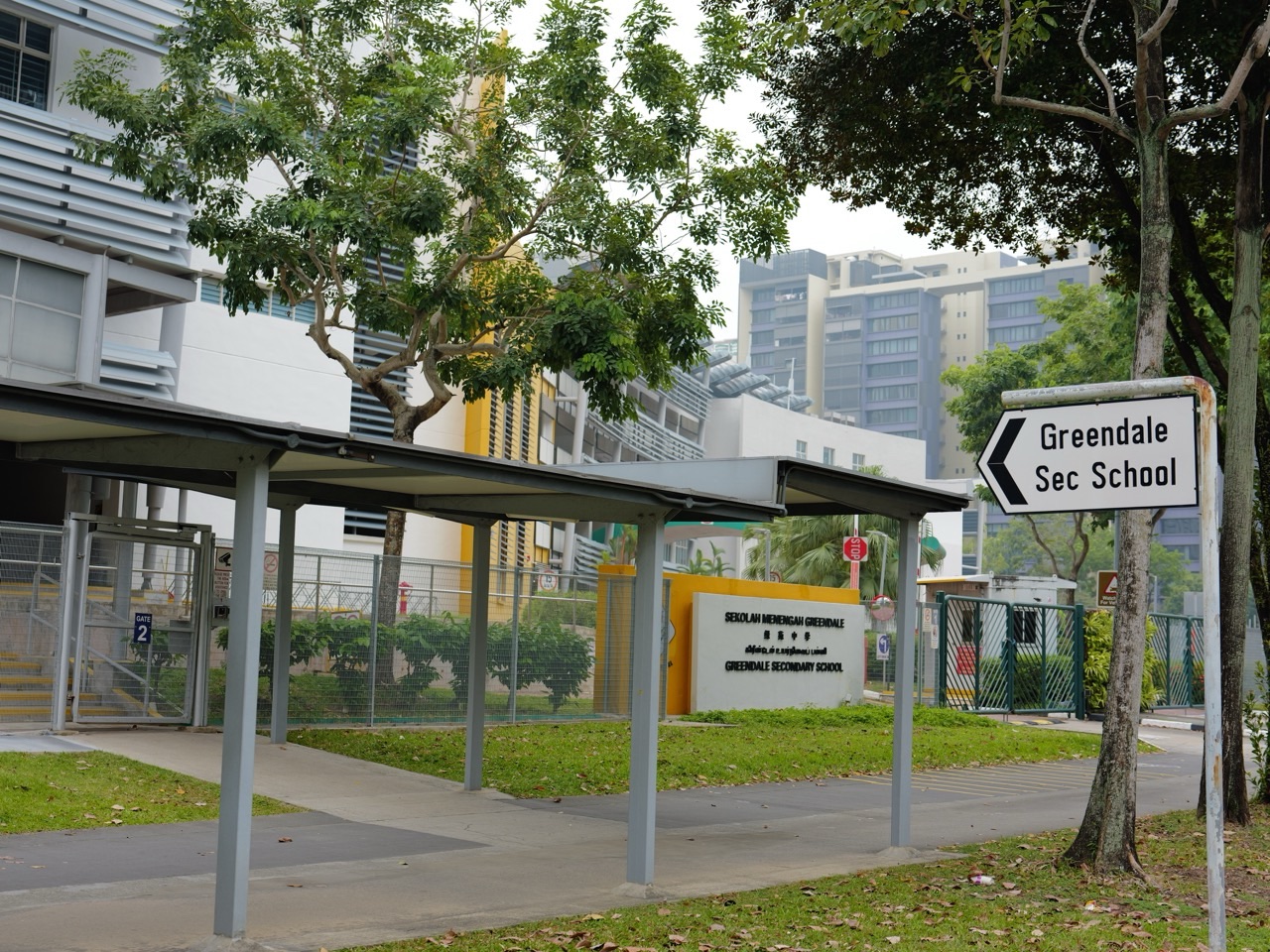
A student admitted to Greendale Secondary School through PG3 enters under Singapore’s Full Subject-Based Banding framework and ordinarily begins core subjects at the G3 level. Greendale’s published 2026 Applied Learning Programme adds a distinctive Design, Technology and Engineering (DTE) focus: its Secondary 1 curriculum describes Arduino microcontrollers, coding, electronics, computer-aided design, rapid prototyping and school hydroponics applications. The school’s Learning for Life Programme emphasises outdoor adventure, responsible risk management, resilience and teamwork.
Punggol parents comparing Greendale for Secondary 1 in 2027 should use the actual MOE S1 posting instructions, Greendale’s current school details and their child’s PSLE eligibility, not an old cut-off as a guaranteed place. The school also publishes blended-learning routines and student-support services that families can investigate before choosing. This guide explains the ordinary academic and practical questions behind the attractive engineering and outdoor themes, while distinguishing school-wide learning from selected clubs, DSA programmes and future year-specific arrangements.
- PG3 = Posting Group 3 for Secondary 1 admission; G3 = the academic level of an individual subject.
- Greendale ALP: Design, Technology and Engineering, with design thinking, coding and real-world prototypes.
- Greendale’s 2026 Secondary 1 ALP page describes Arduino, LEDs, servo motors, hydroponics monitoring, 3D design and prototype fabrication.
- Greendale’s 2026 Secondary 2 ALP page describes more advanced Arduino work and a Singapore Institute of Technology community challenge.
- Greendale LLP: Outdoor Adventure Education, with kayaking, climbing, navigation and teamwork among the published learning contexts.
- Greendale also describes blended learning with Home-Based Learning and student-initiated learning.
- Greendale’s official student support page lists school counselling, SEN Officers and Education and Career Guidance resources.
- Programmes and co-curricular clubs are not automatically the same as selected DSA talent routes or competition teams.
- Check actual 2027 school admissions, subject levels, programme participation and reporting arrangements.
- Plan the commute from the child’s actual Punggol home and test the late-CCA route.
- Choose the school for an achievable mix of study, practical learning, care and interest—not just a technical programme title.

Greendale Secondary: a PG3 guide to real school life and learning
1. Definition lock: PG3 is not an engineering stream
PG3 describes an initial Secondary 1 posting group linked to the child’s PSLE result. G3 describes a subject standard. Greendale’s design and engineering programme is part of the school’s broader educational direction, not a replacement for national subject levels. A parent should keep these descriptions separate: admission determines entry, school subject arrangements determine lessons, and programmes add distinct learning opportunities.
The new Full SBB structure means that students may share a form class while attending some subjects at their applicable levels. A child entering through PG3 is not automatically assigned to an exclusive technology class or guaranteed first access to every engineering workshop. The actual timetable and availability are determined by the school’s plans and applicable rules.
Imagine two children with similar PG3 eligibility. One loves technical tinkering but needs help organising written explanations. Another is a keen reader who has never written a line of code. The school’s ALP may be useful to both because design thinking involves understanding users, discussing solutions and learning through testing. Their needs in formal subjects will still differ.
On the family school-choice sheet, write four lines: Posting Group, academic subject levels, Greendale programmes and personal preferences. This avoids treating a national admission category as an academic identity or assuming that an appealing programme guarantees a future career.
2. How to make the actual 2027 school choice
First confirm the pupil’s official PSLE score, eligibility and the current MOE S1 posting rules. Then inspect Greendale’s latest SchoolFinder profile, school admissions information and programme descriptions. Any previous year’s cut-off point is a historical indication, not a fixed threshold that guarantees admission. The family should also check whether any year-specific changes affect school offerings.
School preference is not a contest to rank the most impressive websites. Put Greendale on the list because its educational culture, academic provision and everyday routine suit the child. Compare with other feasible Punggol or neighbouring schools and ensure that the six ranked options, where the normal posting process applies, genuinely reflect the family’s preferences.
Consider what a child will do on a difficult day. Can they find a trusted teacher, understand the subjects taught and travel home reasonably? Are they interested enough in Greendale’s project and outdoor-learning direction to engage over several years? A strong answer explains real experiences instead of relying entirely on an admissions number.
Do not confuse a Direct School Admission outcome with ordinary S1 posting. Successful DSA allocation may change the choices that can be submitted and bring a specific talent commitment. Check the student’s actual offer, not an informal assumption about whether interest in outdoor adventure or engineering will secure a place.
3. Design, Code and Build: the logic of the ALP
Greendale’s official Applied Learning Programme describes students learning to design, code and build. Its approach combines design thinking, computational reasoning and hands-on construction to address practical questions. It names tools such as Arduino microcontrollers, digital interfaces, cardboard modelling, 3D printing and laser cutting. The educational purpose is not merely exposure to equipment; it is the ability to define and improve a solution.
Design thinking begins with empathy. If a product is intended for a user, the learner should ask what problem that person actually experiences rather than build an object because it looks clever. A prototype can then test an idea cheaply and reveal its weaknesses. Students learn that a failed test is evidence of what needs changing.
Coding adds another layer. A microcontroller follows instructions, so a student must reason carefully about inputs, outputs and conditions. When a light fails to switch on, the learner can investigate the wiring, programme and power source instead of repeatedly pressing a button. This is a practical version of systematic problem-solving that also strengthens attention in academic work.
Ask the school what every Secondary 1 pupil is expected to experience and which extension workshops or competitions are selective. The official ALP page describes a progression across years, but a parent should not assume every photograph represents a guaranteed activity in the child’s first term.
4. Secondary 1 Arduino and electronics in ordinary language
Greendale’s July 2026 ALP page states that Secondary 1 pupils learn basic coding and electronics using Arduino. Examples include making a buzzer sound, lighting LEDs and controlling servo motors. The school connects these tasks with monitoring a hydroponics setup, which offers an observable way to understand how a programmed system interacts with the physical world.
A beginner does not need to memorise every electronic component before understanding the central idea. An input provides information, the programme follows rules and an output changes something. A soil or water-related observation can therefore become data used in a simple decision. Even without a large machine, this is a powerful example of how rules become useful actions.
Parents can encourage the student to explain a project as a sequence: what signal was received, what the code checked, what happened and how the result was tested. If it did not work, ask which part of that sequence failed. This reasoning matters more than whether the parent can write the code themselves.
Do not buy independent electronics kits simply because Greendale’s curriculum uses Arduino. The school may provide approved resources, safety rules and particular equipment. Wait for actual instructions before purchasing anything. A child can practise algorithmic reasoning with ordinary examples while the family learns what is needed.
5. Hydroponics and sustainability are a useful bridge to Science
Greendale’s ALP describes applications involving hydroponics and aquaponics, allowing students to see how engineering and coding can connect to sustainability. This can make abstract concepts more tangible. Water, nutrients, lighting and plant growth offer variables that a learner can observe. Practical measurements can create opportunities to ask fair-test and data-interpretation questions.
Suppose a student claims that one change improved plant growth. A thoughtful response asks what was measured and which other conditions might have changed. Did different plants receive different amounts of light? Were they the same age? The point is not to pretend a school project is a flawless laboratory experiment; it is to help students understand why reliable evidence matters.
Mathematics enters when learners measure, compare, graph or estimate. English enters when they explain an observation or present a proposal. Science enters when they connect the result to concepts. A meaningful ALP can bring these subjects together, but students still need to practise formal academic methods separately in their actual G3 lessons.
Families should ask which environmental projects are part of the current intake. A page published in 2026 describes real programme direction, not every detail of the future 2027 schedule. The best information comes from the school’s latest briefing and the child’s own teacher after posting.
6. Secondary 2 projects and the SIT Community Challenge
Greendale’s published programme progression describes Secondary 2 work with more advanced Arduino coding and a Singapore Institute of Technology Community Challenge. The school explains that students partner with community organisations to consider practical problems and develop solutions using design thinking. This adds a human dimension to technical learning: the problem must matter to someone beyond the classroom.
Students can learn that technical elegance is not the same as usefulness. A clever object may be too costly, difficult to maintain or unsuitable for its intended user. A group must listen, test assumptions and revise its plan. When learners present to judges or partners, they practise communicating constraints and evidence clearly rather than merely demonstrating that a device moves.
Parents can ask how this experience connects to the Secondary 1 foundation. Does the student first learn to code and prototype, then apply those tools in broader community problems? How are beginners supported? What happens if the proposed design is not practical? These questions reveal the progression behind the programme’s attractive public examples.
The current page describes awards and selected opportunities, but not every student should be promised the same recognition or overseas experience. Selection, availability and yearly programming can differ. The educational core is understanding how an idea develops through feedback and responsible collaboration.
7. Secondary 3 exposure and career curiosity
Greendale’s ALP page describes later exposure through workshops, learning journeys and talks involving engineering and design, as well as possible advanced modules and competitions for selected students. This may help a teenager discover how classroom skills relate to technical fields. Parents should distinguish exposure from a formal qualification or guaranteed place in a later programme.
A student who likes robotics might discover interest in software, product design, systems engineering or environmental technology. Another may learn that they enjoy project management more than technical assembly. All are valuable discoveries. The school experience should help a young person investigate what work actually involves rather than commit prematurely to a job title.
Use the child’s own interests as starting evidence. Ask which stage of a project they enjoyed: researching a user, writing code, building a model, interpreting results or presenting. The answer may influence later subject choices and post-secondary exploration. It should not be turned into a rigid career forecast at fourteen.
Any later subject combination follows school and MOE criteria, not simply ALP participation. A child keen on engineering must still strengthen relevant Mathematics, Science and communication skills. The family should review the actual Secondary 2 results and official subject-choice documents when the time comes.
8. Outdoor Adventure as a Learning for Life Programme
Greendale’s Learning for Life Programme is Outdoor Adventure Education. Its published rationale emphasises learning by doing, safe risk assessment, teamwork and personal growth. The school names activities such as kayaking, climbing and orienteering as examples of the outdoor skills students may encounter. These experiences create a different kind of classroom in which decisions have immediate practical consequences.
A child planning a route must identify landmarks, estimate distance and communicate with teammates. A climber may have to follow instructions and understand safety checks. A paddling activity can demand coordination and responsibility for other people. The lesson is not simply to be brave; it is to make careful decisions while facing unfamiliar conditions.
Parents should ask what the school’s LLP offers to the entire cohort and which activities are reserved for selected groups or DSA entrants. The Outdoor Adventure Club and Canoeing CCA may have their own training structures. The LLP and the specialist routes share a theme but are not automatically identical.
Outdoor learning also needs attention to individual suitability and safety. If a child has relevant health or access needs, communicate privately with the school and ask about appropriate support. Do not promise participation in a particular activity simply because it appears on a promotional page.
9. The difference between LLP, ODAC and DSA-Outdoor Adventure
Greendale’s Outdoor Adventure Club develops a specific range of skills such as navigation, campcraft, climbing and expedition planning. The school’s DSA-Outdoor Adventure documentation describes a more specialised talent-development route for selected students, with commitments that may include ODAC or Canoeing. These are distinct from the broad educational intent of the LLP.
The distinction matters when comparing schools. A PG3 student admitted through ordinary posting may benefit from the school’s outdoor education but is not automatically part of every specialist expedition or competition. A DSA entrant may be subject to a defined talent commitment. Parents should check participation rules and not mix broad school values with individual allocations.
If the child is excited about a particular club, ask about selection, weekly training, equipment and supervision. Can a beginner participate? Are there attendance requirements? Which activities are included during school time and which happen beyond it? Accurate answers prevent disappointment and enable responsible planning.
Encourage interest without romanticising difficulty. A teenager may enjoy outdoor recreation yet prefer a less intensive commitment. Another may find structured adventure deeply rewarding. The right decision respects enthusiasm, safety, family time and the actual school timetable.

10. Blended learning and home-based learning at Greendale
Greendale’s 2026 blended-learning page describes regular Home-Based Learning within the school experience. Its published example separates four hours of curriculum coverage from at least one hour of student-initiated learning. These are meaningful details because a student may have to plan work and manage digital instructions without the same physical classroom structure.
A PG3 learner should be able to locate assignments, understand when they are due and record questions that need clarification. Home-based learning rewards independence, but it can expose weaknesses in organisation. Parents can help establish one timetable and one trusted task list instead of constantly redirecting the child between several devices and message groups.
Student-initiated learning offers time to explore interests within school guidance. A teenager interested in coding, art, sustainability or physical activity can practise curiosity and responsibility. The point is not to leave the child unsupervised indefinitely; it is to develop the ability to make a thoughtful learning choice and reflect on the result.
Families should verify the school’s current Home-Based Learning calendar and platforms rather than assume that the example schedule applies identically to every week in 2027. Prepare basic connectivity and a quiet place to work where possible, and ask the school about support if access or digital instructions create difficulties.
11. G3 Mathematics supports the engineering mindset
A child who enjoys constructing devices may still struggle with algebraic notation. G3 Mathematics requires the learner to represent relationships with symbols, interpret graphs and justify operations. The school ALP gives practical reasons to value mathematical thinking, but it does not substitute for understanding the formal principles that appear in the subject syllabus.
Imagine a programme with a repeated control cycle. To reason about it mathematically, a learner may need to distinguish an input from an output, interpret quantities and read a scale correctly. A student who has memorised a formula without understanding the variables can make a technical error even when the code looks convincing.
Use a small review cycle: diagnose one error in schoolwork, explain the underlying principle, attempt a fresh example and check again after several days. Do not assume that difficult practice is always better practice. When negative numbers or fractions are unstable, stabilise those foundations before moving to more complex algebra.
A good student learns to connect precision with creativity. Design is not the absence of rules; it is often the art of using rules and evidence to produce something useful. This understanding can make both Mathematics and practical projects more satisfying.
12. G3 English explains why technical communication matters
Engineering projects often require students to document a problem, compare alternatives and present a recommendation. Those tasks connect naturally with English, but formal G3 English still has its own comprehension and writing expectations. A learner should practise interpreting evidence, explaining reasoning and choosing language appropriate to audience and purpose.
Consider two descriptions of a failed prototype. One says simply that the design did not work. Another explains what happened, which test showed the problem and what change will be made. The second description is more useful because the reasoning can be inspected. Clarity is a technical strength as well as a language skill.
At home, ask the child to describe one project in a short paragraph with a problem, evidence, change and conclusion. Then check whether every claim is supported. This helps communication without inventing a formal Greendale assignment. The same habit can improve G3 written responses that require precise explanation.
Parents should look at actual English feedback before paying for generic enrichment. If a student can speak confidently but writes unsupported claims, work on evidence. If they have sound ideas but poor organisation, practise structure. A focused correction is more valuable than a larger pile of model essays.
13. G3 Science and testing claims responsibly
Greendale’s hydroponics and engineering examples can help learners appreciate scientific investigation, but students must still explain scientific concepts accurately. A project can be attractive and still rely on assumptions that have not been tested. A G3 Science student should learn to distinguish what a measurement shows from what it does not prove.
Ask four questions: What variable was changed? What was measured? What other conditions might influence the result? What conclusion is justified? This structure can be used in school lab work or simple home observations. It discourages learners from treating one dramatic result as proof of a large general claim.
If a child repeats scientific keywords without connecting them to the specific evidence, build a causal chain. Observation leads to the relevant scientific relationship, which supports a carefully worded conclusion. Correcting this chain can be more effective than memorising another long paragraph.
Use the teacher’s current curriculum and marked work to identify the real difficulty. Parents should not infer that a student who loves Greendale’s ALP will automatically perform strongly in every formal Science topic. Curiosity and knowledge are complementary, and both need teaching.
14. Support, counselling and academic guidance
Greendale’s student-support page lists school counselling, Special Educational Needs Officers and Education and Career Guidance resources. This matters because academic eligibility does not guarantee an effortless transition. A PG3 student may need help adjusting to new peers, changing lesson rooms, homework volume or digital learning responsibilities.
A parent can start with the form teacher for general school adjustment and with subject teachers for specific academic concerns. If the difficulty is persistent and more specialised, ask about the school’s appropriate support route. Describe observed behaviour or actual schoolwork rather than applying labels to the child.
Greendale also describes student leadership and service. Such experiences may be useful for children growing in confidence, but parents should not assume everyone receives a formal appointment. Ask how ordinary participation differs from selected roles, and whether the student can develop communication and responsibility progressively.
Families should keep sensitive information private and use official communication channels. A child who needs help is not failing the school. Appropriate support is part of making demanding education sustainable and developing the ability to seek assistance responsibly.
15. Getting the Punggol journey and CCA week right
Greendale is in Punggol, yet the journey can vary substantially by neighbourhood and public-transport connections. A child living near a convenient stop may have a direct route, while another may need a transfer and a longer walk. The family should test the actual morning trip, including required reporting time and road crossings.
Outdoor and technical activities can extend the school day. Ask the child what time CCA finishes and how they will get home safely. A school that looks close on a map may still involve a demanding late journey. Transport planning should include rainy days and a sensible alternative route.
Build a weekly schedule around lessons, HBL days where applicable, CCA, meals and independent study. On heavier days, essential homework and a short correction task may be appropriate. On lighter days, the student can work on more demanding English or Mathematics. The goal is consistency, not identical work every evening.
Check actual school messages for activity schedules and required materials. Do not buy technical equipment or outdoor gear merely because a programme page includes photographs of a specialised activity. The teacher can tell the family what will be provided and what the individual student genuinely needs.
16. An observation-based first-term plan
During the first fortnight, prioritise orientation, timetable comprehension, digital access and safe transport. Ask the child to explain how to find assignments and whom to approach for questions. Make the student responsible for one short daily preparation routine, with adult support available as needed.
In the next month, review G3 English, Mathematics and Science work for repeated errors. A misconception about algebra requires different help from a difficulty reading instructions or structuring a Science explanation. Correct one or two important patterns and test the student’s independent understanding instead of rushing to buy several workbooks.
Ask the learner how the Design, Technology and Engineering experiences feel. Do they enjoy the process of planning and testing, or only the completed model? How do they respond when a prototype fails? Do they contribute to group discussions? These observations reveal the educational value of the experience for this particular child.
At the end of term, evaluate whether the daily system is sustainable. Is the teenager submitting work, asking questions and managing travel? Do outdoor and co-curricular experiences support confidence without creating chronic exhaustion? A good school fit is revealed through ordinary weeks, not merely a programme title.
17. Why Greendale may suit one child and not another
Greendale’s published combination of engineering-oriented applied learning and outdoor adventure provides a coherent story about problem-solving and resilience. A child who enjoys practical investigation and learning by doing may find that direction attractive. Another child may be more interested in an arts-centred school environment or prefer a different travel routine.
The family should not equate preference with a judgement of quality. Schools can be strong in different ways, and a teenager’s interests are not fixed at Primary 6. Consider whether the school has suitable subject choices, supportive teachers, manageable logistics and opportunities to discover new strengths beyond those already visible.
If the student has PG3 eligibility, compare the current admission information honestly. Do not promote the school because of a historical cutoff or reject it because another family’s preferences differ. Ask the learner to explain what they would enjoy doing regularly and what they might find difficult.
Ultimately, PG3 is only the door through which the child enters the system. Greendale’s actual educational value for that learner depends on how formal G3 study, design projects, outdoor education, friendships and school support combine over the coming years.
Frequently asked questions about Greendale and PG3
Does PG3 guarantee Greendale admission?
No. Entry depends on the current MOE posting rules, school demand and places. Use the child’s official eligibility and year-specific information rather than historic cut-off points as promises.
Will all Greendale Secondary 1 students learn Arduino?
Greendale’s official 2026 ALP page describes Arduino and electronics in its Secondary 1 programme. Families should confirm the current 2027 delivery and timetable with the school.
Does Greendale teach hydroponics in its ALP?
Yes, the school describes applying coding and electronics to monitoring its hydroponics setup. Specific activities may evolve, so check current year arrangements.
Is outdoor education the same as joining ODAC?
No. The LLP describes the school’s wider outdoor-adventure education direction, while ODAC and selected DSA routes have their own participation or commitment structures.
Does Greendale have Home-Based Learning?
Its 2026 blended-learning page describes regular HBL and student-initiated learning. Confirm exact 2027 dates, lessons and platforms with the school.
What school support is documented?
Greendale lists counsellors, Special Educational Needs Officers and Education and Career Guidance services on its official student-support page. Use the school’s current contact and referral process.
Does the DTE ALP guarantee future engineering study?
No. It offers useful exposure and experience; later subject choices and admissions follow their own criteria. Students still need sound academic foundations and to explore interests over time.
What should a PG3 parent compare before choosing?
Check current eligibility, the DTE and outdoor programme fit, the child’s academic readiness, school care, realistic commute and weekly workload. Confirm all administrative information for the actual cohort.
Your next step
Compare the child’s official PG3 eligibility and current Greendale information, visit the relevant programme pages and test the actual Punggol commute. Ask what ordinary Secondary 1 students do in DTE, how outdoor education is delivered, which clubs require selection and how HBL works. After posting, follow actual school instructions, teacher feedback and a sustainable G3 study schedule.
Official references and related guides
Greendale DTE Applied Learning Programme · Greendale Outdoor Adventure LLP · Greendale Blended Learning and HBL · Greendale student support · Greendale curriculum and policies · MOE SchoolFinder · MOE Full SBB · Other Punggol secondary programmes.
Independent parent guide checked against official Greendale and MOE information available on 1 November 2026. Programme participation and admissions remain subject to the school’s current rules; no outcome is guaranteed.


