
PG3 is a Secondary 1 posting group, not a promise that a child can automatically enter every upper-secondary subject combination. When a Punggol student approaches the move from Secondary 2 to Secondary 3, the real decision is whether their current subjects, G3 readiness, school criteria, learning interests and weekly workload match the options that the school actually offers. Additional Mathematics, separate or combined Sciences, Humanities electives and other choices have different demands. Families must check the current subject-combination booklet for the student’s own cohort.
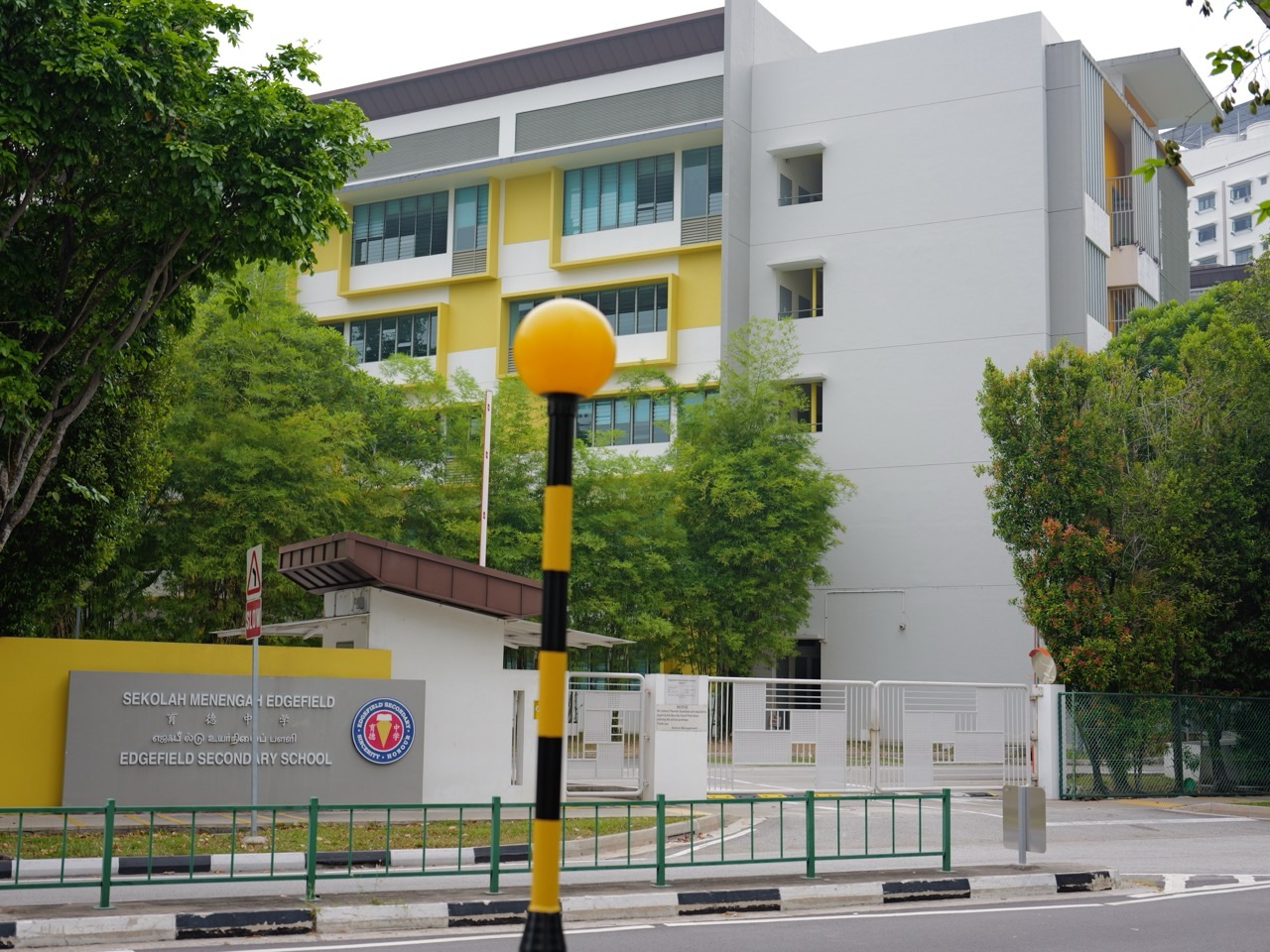
Edgefield Secondary School published its Year 3 subject-combination information in August 2026, and Punggol Secondary School has provided parent briefing materials explaining subject choices and eligibility. These are examples of why a family should use named school documents rather than assume that all Punggol schools provide identical packages. The best PG3 decision is not necessarily the most subjects or the most demanding combination: it is the combination that the student is eligible for, can learn well and can sustain through the relevant SEC examination pathway.
- Definition: PG3 is the secondary admission group; G3 is the level of a specific subject.
- Secondary 2 to Secondary 3 subject selection is school-led; school offerings and criteria vary by year.
- Additional Mathematics is a distinct subject and is not automatically compulsory for every PG3 student.
- Separate Sciences and combined Science pathways have different breadth, depth and workload.
- Humanities combinations may include Social Studies with an elective, and some schools offer separate Humanities options.
- Subject choices must follow each school’s current published rules, prerequisites, timetables and places.
- Judge readiness from sustained work and teacher feedback, not one exam or an old PSLE score.
- Compare future course prerequisites, but do not assume that a particular subject guarantees JC, polytechnic or university admission.
- Support the child’s interests in computing, arts, design, business, Science, languages and Humanities.
- Check the SEC syllabus and post-secondary rules for the actual graduating cohort, not merely the launch year 2027.
- Prepare an evidence-based preference list and attend the school’s subject briefing.

From PG3 to Secondary 3: choosing a real subject combination
1. Definition lock: posting group, subject level and combination are not the same
Posting Group 3 tells a secondary school how a student entered after the PSLE. The G3 level describes the academic demand of a particular subject. A subject combination is the package the school offers and allocates when students enter the relevant upper-secondary stage. Each term answers a different question. Parents should be able to explain all three without slipping into the old assumption that one stream label settles the entire secondary journey.
Full Subject-Based Banding removed the old fixed Express, Normal (Academic) and Normal (Technical) streams for new Secondary 1 cohorts from 2024. Yet schools still must offer workable combinations and ensure students meet relevant prerequisites. More flexibility does not mean unlimited choice. Classrooms, teachers, time slots and academic foundations all matter when a package is planned.
A PG3 learner may feel that the title obliges them to take the most demanding combination available. That is not sound reasoning. A student who understands mathematical relationships thoroughly may thrive in Additional Mathematics. Another who reads deeply and loves History may find a Humanities-heavy plan more appropriate. Both deserve a serious conversation about actual requirements and readiness.
Create three separate lines on the family decision sheet: current posting group, actual subject levels and prospective subject options. This prevents a school choice discussion from being dominated by a label that was used at entry rather than by the learner’s present abilities.
2. When the Secondary 2 decision actually happens
Upper-secondary subject selection is usually considered as students approach the end of Secondary 2, but the specific briefing, application window and allocation process belong to the school. Do not assume that another Punggol school’s October schedule applies to your child’s campus. Parents should read the school’s current notice, check important dates and preserve the official option form or instructions.
Edgefield Secondary’s website includes a Year 3 subject-combination page, updated in August 2026, showing different sets of options for students with G3 and mixed subject-level profiles. Punggol Secondary has also published Secondary 2 parent information on subject combinations. These sources are useful because they show that a real subject decision consists of defined packages, not a casual shopping list.
Start researching before the final deadline. Ask which subjects are common to all options, which are electives, whether any specific grade or level is required and how the school handles unavailable first choices. Some decisions may be constrained by timetable combinations or demand. Families should understand the rules before encouraging a child to become attached to an option they cannot actually take.
The aim is not to rush into a permanent identity as a scientist, lawyer or engineer at fourteen. It is to make a defensible next educational choice with the information the school and child currently have. Future goals can develop from that foundation.
3. What Additional Mathematics asks students to do
Additional Mathematics is a separate and more algebraically demanding subject than ordinary Mathematics. It rewards comfort with symbolic manipulation, functions and extended reasoning, depending on the applicable syllabus. Parents should not assume that a strong PSLE score alone predicts success. Lower-secondary understanding of equations, fractions, indices, graphs and algebraic structures is more informative.
Consider a learner who can follow an example of expanding brackets but becomes lost when negative signs and fractions appear together. Additional Mathematics will not make those foundations disappear. The correct preparation is to examine why the error occurs, repair the smaller principle and test a fresh problem. Doing more difficult worksheets before the foundation is stable often creates memorised procedures without control.
Another learner may be strong at routine calculations but dislike explaining their method. This matters because demanding mathematics becomes more reliable when the student can justify each transformation, check a solution and interpret a graph. Encourage the child to solve a problem twice using a different check or representation. Explanation reveals understanding that speed alone may hide.
The key practical question is whether the student’s school offers Additional Mathematics in the desired option, which criteria apply and how the subject fits with the rest of the weekly load. It is not universally compulsory simply because the student entered through PG3. Use the actual school guidance to decide.
4. Elementary Mathematics remains a foundation worth protecting
Families can become so focused on Additional Mathematics that they neglect the ordinary Mathematics foundation. That would be a mistake. Elementary Mathematics supports numeracy, algebra, geometry, graphs and practical problem-solving. Its concepts remain useful across subjects, including Science and parts of business or technology education. Strong performance in a broader syllabus is not a consolation achievement.
Ask the child to explain a common algebraic expression, interpret a graph and solve a word problem without being guided through every line. Look for accuracy and the ability to transfer a method to a changed example. A student who completes familiar exercises quickly but cannot explain a new context may need deeper learning before more advanced commitments.
Use school feedback to distinguish weakness in arithmetic foundations from difficulty with formal algebra. The repair steps differ. Fractions and negative-number control may need shorter, targeted practice. Forming equations from text may need translation between language and symbols. Presenting working clearly may need routine checking rather than reteaching the whole topic.
Future course prerequisites may mention Mathematics in specific ways. Parents should check actual requirements for any programme the student is considering, but avoid predicting a child’s destination solely from a single subject at fourteen. A secure foundation keeps options open even as interests change.
5. Separate Sciences are not simply more prestigious Science
Schools may offer combinations involving separate Science subjects, depending on the campus and cohort. Studying separate disciplines can allow more specialised depth, but it also adds distinct concepts, practical expectations and examination preparation. Parents should not equate the number of Science subjects with intelligence or future success. The correct comparison includes subject fit, actual academic standards and the rest of the timetable.
A teenager who loves living systems might be drawn toward Biology. Another may prefer physical laws and quantitative reasoning. Chemistry can appeal to a student interested in materials and reactions. Real interests often overlap, and lower-secondary Science provides an opportunity to discover them. Ask what kinds of questions motivate the child, not merely which subject names sound useful for a future occupation.
Consider a student who receives strong overall Science marks but struggles when data must be explained rather than recalled. The issue might involve graph interpretation or reasoning, not lack of scientific curiosity. Before choosing a heavy combination, review these skills alongside the school’s eligibility criteria. A combination should match demonstrated readiness rather than a one-off mark.
Any claim about a particular school offering Triple Science or a specific pair must be checked with that school for the correct year. Published combinations can change, and places or prerequisites may apply. The family should not buy advanced course materials before the actual option and syllabus are confirmed.
6. Combined Science can be a reasoned educational choice
Combined Science pathways may present learning across selected scientific disciplines in a different structure from separate Sciences. They are not identical to taking several separate Science subjects, and parents should inspect the exact curriculum and assessment expectations. A combination may suit a learner who wants a balanced subject package or who needs more room for other academic interests.
The important question is not whether someone in the neighbourhood calls one route better. It is whether the student can learn its content well and how that subject profile aligns with possible future courses. Different institutions and programmes may recognise particular Science prerequisites differently. Always check current formal rules before claiming that an option either guarantees or blocks an entire career.
Suppose a teenager is strong in Science but particularly passionate about Literature and Design and Technology. Choosing a manageable Science route alongside meaningful electives may support deeper overall engagement. Conversely, a student aiming to explore laboratory work may have good reasons to choose a more specialised Science package if they meet the prerequisites and enjoy the material.
Parents can ask the subject teacher what kinds of explanations and practical work each route involves. The response should help the student imagine ordinary lessons, not just the title on a report card. Educational fit is experienced weekly; prestige is often discussed from a distance.
7. Humanities are a serious part of an academic combination
Humanities subjects train students to read sources, interpret evidence, examine competing explanations and communicate a reasoned conclusion. Many upper-secondary combinations include Social Studies alongside an elective Humanities subject, while other offerings depend on the school. Do not dismiss History, Geography or Literature as secondary to Mathematics and Science. Their thinking skills are useful in law, public policy, business, research and everyday civic life.
A History source question may require the student to distinguish what a document actually says from what the writer intends readers to believe. A Geography task may ask for interpretation of patterns in data and an explanation of causes. Literature may require close reading of language, character and theme. A child who enjoys these demands deserves to explore them seriously.
The ability to argue carefully is not purely a Humanities skill. It can improve English writing, Science evaluation and decisions made outside school. Ask the child to show one extended answer and explain how evidence was selected. If the explanation is thoughtful, that is meaningful evidence of readiness, even if the student also enjoys technical subjects.
Compare each school’s available Humanities electives using the current official package list. A school may restrict combinations, group electives in particular ways or change offerings. The relevant question is which package exists and is suitable for the student, not which subjects can be imagined in an ideal timetable.
8. Computing, design, accounts and arts options may change the decision
A student’s interests may not fit neatly into the usual discussion about Additional Mathematics versus separate Science. Some schools offer subjects or electives connected to computing, design, art, nutrition, accounting or other fields. The exact list and prerequisites differ by school and intake. Families should read the real combination documents rather than assume that a subject available elsewhere is automatically an option locally.
Think about what the learner enjoys doing. Does the child like debugging a program, drawing a design, exploring how a business records transactions or creating visual work? These activities can reveal different kinds of reasoning and motivation. They should not be reduced to a ranking based only on average examination marks in unrelated subjects.
Ask the student to describe a project that went wrong and how they fixed it. A practical subject can be demanding when it requires iteration, documentation and careful evaluation. The child who is enthusiastic about the finished product may discover that they also need patience with planning and revision. That is useful information before committing.
Schools sometimes have limited elective combinations because of timetable constraints. If a desired subject is not offered, the family can explore related experiences through CCA, personal projects or later courses without claiming that the school has failed the child. A subject combination is one part of development, not the complete boundary of what a teenager may learn.
9. G3 level does not automatically mean every subject must be G3 forever
Under Full Subject-Based Banding, a student’s subject-level arrangement may reflect strengths and needs at different points, according to school and MOE criteria. A PG3 admission label does not make subject decisions immune to review. At the same time, parents should not regard subject-level changes as something that can be demanded informally at any moment.
Before deciding on an upper-secondary package, confirm each subject’s current level and any formal adjustments already made. An option might have specified prerequisites or include subjects at different levels. Ask the school how the package and national examination registration relate to the child’s profile. Do not transfer assumptions from a former Express-stream sibling directly into the new framework.
Use sustained academic evidence rather than a dramatic single result. Can the learner solve unfamiliar Mathematics tasks? Can they connect scientific evidence to an explanation? Do written Humanities arguments remain clear under a time limit? What does the teacher observe over weeks? Together, these clues support a more sensible plan.
Any change should be framed as a learning decision, not a loss or gain of social status. Children deserve to have their actual needs discussed respectfully. The purpose of subject-level flexibility is to match educational demand and readiness, not to create a fresh ranking of classmates.
10. Understand the school’s criteria before ranking preferences
Every prospective combination should be written next to the school’s published criteria. These may involve results, subject recommendations, eligibility or logistical requirements, depending on the school and year. Parents should not fill in missing conditions from memory or guess that a favourite combination will be available because the student has PG3 status.
Attend the subject briefing or study the official materials carefully. Ask which items are non-negotiable and which are preferences. If the school offers an appeal or review procedure, follow the stated process. Do not treat a teacher’s encouraging remark as a formal admission decision for a particular subject package.
Have the child rank the realistic packages based on both interest and readiness. A combination that sounds impressive but would leave no time for careful learning may be weaker than a balanced option in which the teenager can participate fully. Look at the weekly number of lesson hours and the demands of projects, laboratory work or extended writing.
Save the submitted preference and any school acknowledgement. Administrative clarity matters because subject-combination outcomes affect the next stage of textbooks, timetables and examination planning. A careful decision can still produce disappointment, but it should never be undermined by a preventable misunderstanding of the application instructions.
11. The timetable is a constraint that deserves respect
A Secondary 3 subject package is not only an academic plan. It is a timetable of lessons, homework, project deadlines, CCA, transport and rest. A student may be eligible for a combination but find its total demands difficult to sustain. The family should therefore inspect both academic suitability and the capacity of the household week.
Ask how long the child needs to travel between home and school, especially after CCA or project activities. Punggol residents may use LRT, MRT, bus and walking links, but actual routes vary by home and campus. Do not assume that a geographically close school produces the shortest journey. Test the route and leave sensible time for delays.
A heavy package can work when a student has strong habits and motivation. It becomes harder when the learner is already copying homework late at night or needs substantial adult supervision to begin tasks. Those are signals to strengthen organisation and independent thinking before adding more commitments.
The goal is not to discourage challenge. It is to make challenge sustainable. A realistic weekly plan leaves space for deliberate practice, revision, sleep, meals, relationships and occasional setbacks. A timetable with zero flexibility often collapses just when the child needs it most.
12. What future admissions rules can and cannot tell the family
Parents often choose upper-secondary subjects with post-secondary plans in mind. This is sensible when a course requires particular knowledge or subject levels. However, institutions update criteria, and a child in Secondary 2 may apply several years later. Use official requirements as current evidence, not as a permanent promise. Always record the programme, year and source of the rule.
MOE’s SEC and post-secondary reforms recognise subject-level combinations under Full SBB. From 2027, the SEC applies to the relevant graduating cohorts, with post-secondary admission changes being introduced from 2028. The particulars depend on the route. A single statement that G3 students automatically qualify for JC or polytechnic would be misleading.
Make a broad map of interests rather than a single destination. A student intrigued by science may later choose a pre-university route, an applied diploma or technical study. A student drawn to arts may pursue a range of programmes with different prerequisites. The better question is which current subjects develop strengths and preserve realistic options.
Check requirements again near the actual application year. The family can then adjust the plan with current results and preferences. Good guidance combines ambition with humility about what cannot yet be known.
13. Three realistic Punggol student cases
Case one is a learner who likes algebra and physical problems but has little enthusiasm for long memory-based revision. The family checks whether Additional Mathematics and suitable Sciences are offered together at the assigned school. They inspect the student’s actual lower-secondary Mathematics work and teacher feedback before ranking the package. The decision is made from readiness and interests rather than from an assumption about prestige.
Case two is a student who reads deeply, writes well and enjoys debating evidence. The family explores the current Humanities choices and asks how the workload combines with Mathematics and Science. They do not assume that choosing a Humanities elective is incompatible with future academic success. The goal is to develop the learner’s thinking while preserving appropriate subject breadth.
Case three is a student who likes practical design but has uneven Mathematics results. Instead of abandoning every technical interest, the family asks about relevant electives and possible foundational repair. They research future options carefully and avoid promising that one narrow upper-secondary package is the only doorway to a field.
These cases are illustrative, not admissions predictions for any particular child or school. They show the same method: inspect real choices, connect them with work samples, check formal criteria and consider the complete week. The correct answer may differ between students who entered through the same posting group.
14. Questions to take to the subject-combination briefing
Before the briefing, make a short list: Which exact G3 and other-level subject packages are being offered for our cohort? What are the prerequisites? Is Additional Mathematics in every option or only some? What separate and combined Science routes exist? Which Humanities electives or other electives can be paired? Are there limits related to timetable or numbers?
Add personal questions. Which current work samples best indicate readiness? What does the school recommend for a student with strong Mathematics but weaker written explanation? How should families interpret one disappointing assessment? When will the school publish results of the selection? What is the formal route for clarification or review?
Do not expect the school to predict a distant occupation. Ask instead how each combination develops useful competencies and what subject requirements should be checked if a student already has a serious interest. A good briefing provides enough facts for a defensible educational choice, not a guarantee of later admissions.
After the meeting, review the information with the child in ordinary language. Ask them to explain the difference between an available option and a preferred option. If the preference does not satisfy the stated criteria, discuss alternatives without blaming the learner. The conversation should produce a plan that can actually be submitted.
15. A six-week preparation plan before selecting subjects
In week one, gather the official combination document and create a list of realistic options. Do not rank them immediately. Mark any terms that require explanation and contact the school if necessary. This is the information stage; a family should not be making decisions from screenshots with missing dates or school names.
During weeks two and three, inspect the student’s work in Mathematics, Science, English and Humanities. Identify recurring errors and evidence of strong interest. Have the learner explain one demanding problem from each subject. A high mark that cannot be explained may be less informative than a thoughtful correction that the student can now perform independently.
During weeks four and five, compare the packages against actual readiness, interests, future prerequisites and weekly workload. Ask a teacher about any important uncertainty. Encourage the child to imagine an ordinary Secondary 3 school day in the combination: what will require sustained effort, and what makes the work worthwhile?
In week six, finalise and submit preferences through the school’s official process, if that matches the actual deadline. The six-week sequence is a family planning suggestion, not a published Punggol school timetable. Adjust it to the school’s real schedule and preserve evidence of submission.
16. After the combination is allocated, focus on mastery
Once the school confirms the subject package, stop comparing hypothetical timetables endlessly. Order the correct books and materials through the school’s current instructions, check the new timetable and identify the major foundational concepts. A student entering Additional Mathematics may benefit from revisiting algebraic manipulation; a student taking separate Sciences may need stronger explanation and data skills.
Discuss the adjustment with the child after a few weeks. Are the lessons understandable? Is homework being recorded accurately? Do projects and CCAs fit the week? If a repeated difficulty appears, use representative work and ask the subject teacher for advice. A poor first test is a reason to diagnose, not necessarily to panic about the entire decision.
Tuition, if appropriate, should target the actual difficulty rather than aimlessly recreate the whole syllabus. Small-group teaching can help when each student’s working is inspected carefully, but only if there is an aligned plan and independent practice. The measure is whether the teenager increasingly understands and checks their own reasoning.
Ultimately, a PG3 learner is more than a subject-package label. The right Secondary 3 combination supports intellectual growth, consistent effort and future choices that can be revisited as evidence develops. A well-informed decision gives the child room to learn deeply instead of merely collecting titles.
Frequently asked questions on G3 subject combinations
Does PG3 automatically qualify a student for Additional Mathematics?
No. PG3 is the initial admission group, while Additional Mathematics selection depends on the school’s actual package offerings and published criteria, together with readiness. Check the applicable year’s subject-combination information.
Must a PG3 child choose separate or Triple Science?
No universal requirement follows from PG3 alone. Separate and combined Science options differ among schools and cohorts. Families should review the available combinations, prerequisites, learning demands and student interests.
Can a student select all their favourite electives independently?
Usually schools provide defined combinations subject to practical and academic constraints, rather than an unlimited mix-and-match list. Use the assigned school’s current option sheet and ask which subjects can be taken together.
Does a past Secondary 3 combination list guarantee next year’s options?
No. Past materials show what the school offered to that cohort. Subjects, prerequisites and timetables can change. Check the document and instructions published for the child’s own selection year.
How important is lower-secondary Mathematics to choosing A-Maths?
It is highly relevant because Additional Mathematics builds on algebra and formal reasoning. Ask the learner to explain equations, fractions, indices and graphs independently and discuss readiness with the school.
Will one subject combination guarantee entry into JC or polytechnic?
No. Future admission depends on the applicable examination results, subject requirements and programme rules. Subject choices can preserve or constrain options, but they never guarantee an offer by themselves.
What if my child receives a combination that was not the first choice?
Read the school’s allocation and clarification instructions. Discuss the actual package and any formal review route. Then plan constructively for the confirmed subjects rather than assume the child cannot succeed in an alternative arrangement.
Where should Punggol parents check current options?
Start with the school’s official Secondary 2 briefing or Year 3 combination page. Edgefield Secondary and Punggol Secondary publish relevant materials; confirm current details with the child’s actual school and subject teachers.
Your next step
Obtain the child’s real Secondary 3 subject-combination options and the current eligibility rules. Mark the packages the school actually offers, compare them with sustained work in Mathematics, Science, English and Humanities, and involve the teenager in ranking realistic preferences. Confirm all deadlines and submission procedures with the school. Once allocated, move attention from prestige to actual learning.
Official school and MOE sources
Edgefield Secondary: Year 3 subject combinations (2026) · Punggol Secondary: Mathematics department · MOE Full SBB reference · MOE SEC changes · Existing Punggol overview of G1–G3 subject combinations · PG3 and post-secondary pathways. Consult your school’s formal current document for the applicable selection exercise.
Independent educational guide for Punggol parents, reviewed on 1 November 2026. A school’s historical subject combination does not guarantee current offerings, selection outcomes or future admission.


