
How PG1 works at Punggol becomes especially important when a Primary 6 child receives a PSLE Score of 25. Under Singapore’s Full Subject-Based Banding (Full SBB), this score makes the child eligible to choose Posting Group 1 (PG1) or Posting Group 2 (PG2) for Secondary 1 posting. The selected Posting Group is used for admission and generally guides the starting level of most subjects: G1 for PG1 or G2 for PG2. The decision is not a permanent label or a prediction of a child’s future. It is a practical choice about the secondary-school admission route and the level at which the child can begin learning well.
For Punggol parents, the immediate task is to study the child’s actual PSLE result, understand the official eligibility shown in MOE’s Secondary 1 Internet System, review suitable schools through SchoolFinder, and decide which Posting Group and six school choices form a coherent plan. A child eligible for both groups does not normally select a different Posting Group for each of the six schools: the chosen group applies to the entire school-choice submission. Historical cut-off points are guides, not guarantees, and the right decision considers learning readiness, school programmes, travel and emotional adjustment alongside scores.
- Meaning: PG1 is Posting Group 1, an admission grouping under Full SBB; it is not the name of a school stream or a child’s identity.
- Important boundary: PSLE Score 25 gives eligibility for PG1 or PG2; the chosen group applies across the six school choices in the S1 posting exercise.
- Other indicative PG1 range: PSLE Scores 26–30 with the applicable English and Mathematics Achievement Level requirement are associated with PG1.
- Starting subjects: PG1 usually means most academic subjects begin at G1; PG2 usually means most begin at G2, with appropriate subject-level flexibility.
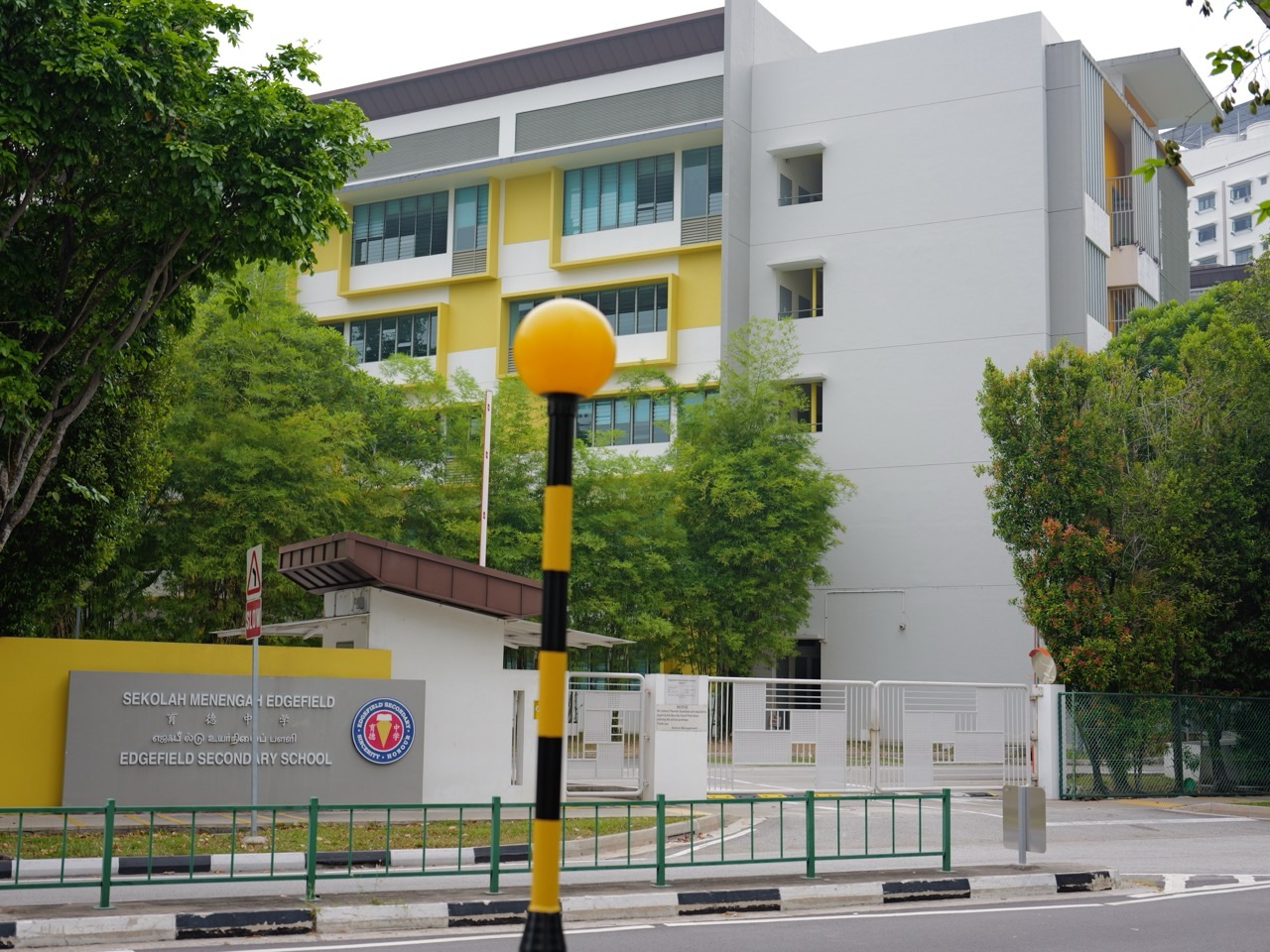
- Local context: Punggol families may examine Edgefield Secondary, Greendale Secondary, Punggol Secondary and Yusof Ishak Secondary, without assuming that every school offers every group or programme every year.
- The decision: Verify current MOE eligibility and offerings, compare actual learning needs, use all six choices thoughtfully, and do not treat past cut-off points as promises.
- 2027 reminder: The Singapore-Cambridge Secondary Education Certificate (SEC) first begins in 2027 for the graduating cohort; a student entering Secondary 1 in 2027 would ordinarily reach Secondary 4 in 2030.

First, understand what PG1 actually does
Imagine two doors at the beginning of the secondary-school journey. Both doors lead into a system where students can learn together, pursue CCAs, develop friendships, and take subjects at levels appropriate to their strengths. The difference is how a student enters the school and the usual starting demand of academic subjects. PG1 is one of the posting mechanisms, not a separate campus, a fixed classroom identity, or an instruction that a child must remain at one level for every subject for four years.
This is the key conceptual distinction Punggol families should settle before discussing school names. The three Posting Groups were introduced for Secondary 1 admission from the 2024 cohort as Full SBB replaced the former stream structure. G1, G2 and G3 are subject levels. A student can belong to a school through one Posting Group and later have a combination of subjects at different levels. In other words, a Posting Group organises entry; a subject level describes the demand of a particular course of learning. Mixing those terms is the beginning of many unnecessary worries.
What a PSLE Score of 25 really changes
A PSLE Score of 25 matters because it sits at a published boundary where families may have a choice of two Posting Groups. It does not mean one option is automatically correct, and it does not prove that a student is equally prepared for all parts of the two possible learning loads. It means the admissions framework recognises a transition point and allows the family to make a decision within the eligibility offered. The official eligibility displayed to the family, not a third-party infographic, must settle the administrative question.
Consider a fictional Punggol student, Aisyah, whose PSLE Score is 25. She enjoys practical Science activities, reads confidently when given time and is still consolidating multiplication, fractions and long word problems. Her parents might think selecting the more demanding starting group must always be better. But that assumption confuses a higher initial demand with a stronger eventual education. A suitable choice takes account of the school’s support, her ability to participate meaningfully in lessons and her capacity to make steady progress without living in constant catch-up mode.
The wider score ranges provide context, not a personal verdict
Under the published Full SBB posting framework, PSLE Scores 4–20 correspond to PG3, 21–22 allow PG2 or PG3, 23–24 correspond to PG2, and 25 allows PG1 or PG2. The published PG1 range also covers 26–30 subject to the stipulated performance in English and Mathematics. These bands explain how entry is organised. They are not intelligence categories, and they are not advice to ignore a child’s talents in language, design, music, sport, technology or practical problem-solving.
Parents should be precise about two different numbers. The child’s PSLE Score determines the eligible Posting Group or Groups under the rules. A school’s previous-year score range gives a historical picture of which children were admitted through a particular grouping. Those figures do different jobs. A child with the right Posting Group eligibility has not automatically secured a place at a particular school. Supply, demand, choices and tie-breaking rules still matter. Treating a previous cut-off point as a promise may make an otherwise reasonable six-school submission unnecessarily fragile.
PG1 does not mean the return of the old streams
Parents who remember Express, Normal (Academic) and Normal (Technical) often reach for those old labels because they are familiar. The G1 subject level is broadly mapped to the former Normal (Technical) curriculum standard, and G2 broadly to former Normal (Academic), but Full SBB is designed to avoid making these labels the architecture of a child’s entire schooling. The subject-level mapping is useful for understanding curriculum demand; it should not be used as a social label for the student.
In a Full SBB secondary school, mixed form classes and common curriculum experiences create opportunities for children with different academic profiles to know one another. Schools also organise subject lessons at the levels pupils offer. This is why a parent should ask about both form-class life and subject-group teaching instead of imagining that a Posting Group automatically determines every classmate in every lesson. Education has many rooms: academic subjects, physical education, art, character education, CCA, leadership and friendship. The student’s growth is not contained in a single admission code.
The choice between PG1 and PG2 is not a race for prestige
At a score of 25, the temptation is to ask, “Which one sounds better?” A more useful question is, “At which starting level can this child understand, practise, recover from errors and remain engaged?” There is no shame in choosing a start that enables secure foundations. Nor is it automatically wrong to choose the more demanding level when a child has the readiness and support to benefit from it. The family must examine evidence rather than attach prestige to a letter and number.
Evidence can be simple. Look at Primary 6 work and talk with teachers about reading stamina, mathematical fluency, confidence in classroom discussion, pace of completing homework, response to corrections and independence. Separate temporary exam anxiety from persistent foundational gaps. If a pupil can perform a skill only after extensive adult prompting, that is not the same as independent mastery. Conversely, if schoolwork is consistently secure and the child is motivated by an appropriate challenge, that too matters. The purpose of the decision is a better learning fit, not a better-sounding label.
Build a readiness picture across subjects
A single aggregate score combines outcomes from different subjects, yet a child does not learn English, Mathematics, Science and Mother Tongue in exactly the same way. For the PG1-versus-PG2 discussion, create a plain one-page readiness picture. Write each subject, the child’s strengths, errors that recur, the amount of help needed, and what happens when a question is unfamiliar. Include a column for what the child says is easy, frustrating or enjoyable. This is more informative than beginning with a ranking of schools.
For example, a student may read short nonfiction passages with understanding but struggle to write extended responses; solve routine arithmetic but lose track during multistep Mathematics; show excellent curiosity about experiments but have difficulty putting observations into precise language. These are not mutually exclusive findings. They point to teaching adjustments. A readiness picture helps parents ask schools relevant questions and avoids making the entire decision based on one weakness. The more honest the picture, the easier it is to support the child after posting.
What PG1 means for starting subject levels
A student posted through PG1 will generally begin most academic subjects at G1. That is a starting arrangement, not an instruction that every subject is forever fixed. Under Full SBB, schools consider eligible students for subjects at more demanding levels where appropriate, and later progression can depend on performance, readiness and school guidance. The exact applicable rules and subject offerings should always be checked through MOE and the school for the relevant year and student.
Think of subject demand as a staircase rather than a single elevator carrying the whole child. English may need sustained reading and expression support, Mathematics may need rapid recall of foundations, and a student could show unusual strength in a particular language or hands-on discipline. A useful timetable recognises those differences. Families should not independently assume that a student can request any combination at any time, because available subject combinations, prerequisites and school processes matter. Ask the school precisely which options exist and what evidence triggers a review.
What a family should ask before choosing PG2
Some parents understandably prefer PG2 when their child has a choice. But choosing it solely as a symbolic promotion can create a difficult beginning. Ask whether the student currently reads and writes with sufficient fluency for longer explanations, can manage the pace of G2 Mathematics, is able to complete independent practice, and can seek help when confused. Ask whether the family is prepared to support routines without turning every evening into intensive remediation. A strong start is not defined by never needing help; it is defined by being able to use help productively.
A second question concerns the school itself. What does the school explain about differentiated instruction, diagnostic assessment, support programmes, subject-level review and communication with parents? These are general questions, not claims that a particular Punggol secondary school runs any specific intervention. School programmes change. A family should hear the current answer from the actual school and not copy an old parent forum response into a high-stakes decision. Choose on the basis of the child’s learning needs and the current school’s practices.
What a family should ask before choosing PG1
If parents lean towards PG1, they should not reduce the decision to “easier work.” Ask what solid foundations can be built, how teachers check mastery, how practical learning is integrated, what enriching CCAs are available, and when subject-level progress is reviewed. Ask what independent study looks like and how parents can reinforce it at home. An appropriate G1 start is educationally meaningful when it gives the pupil the confidence to practise correctly, understand instructions and make measurable progress.
It also helps to ask what happens to a child who begins doing particularly well. What is the school’s procedure for discussing a more demanding level? How is the student’s workload considered? What happens if one subject is ready before another? Avoid framing a possible change of subject level as a trophy. A student might benefit more from greater depth in a current course before taking on new assessment demands. Growth should be celebrated, but it need not be rushed or measured solely by the letter printed beside a subject.
The six school choices are one submission, not six independent PG decisions
The Ministry of Education’s S1 posting process allows families to submit up to six different school choices in genuine order of preference. Where a child is eligible for two Posting Groups, the group selected in the S1 Internet System applies to all the school choices for that submission. This is why a score-25 family should decide its posting strategy before trying to make a list that quietly assumes PG1 for some schools and PG2 for others. The system does not operate as six separate applications with separate Posting Group selections.
A practical exercise is to write “Chosen Posting Group: ____” at the top of the family’s school-choice worksheet. Then list six schools the child could actually attend, each with verified eligibility and current subject availability. Add the historical PSLE ranges only as context. Keep one column for the child’s preferences and another for a travel test. Before submission, check all entries directly against MOE’s current system. This small discipline makes contradictions visible and prevents a well-intentioned family from mixing incompatible assumptions.
How allocation and choice order work in practice
S1 posting considers eligible pupils for school places using the official posting criteria. Stronger PSLE Scores receive priority under the posting system, and when students with the same score compete for the final available place, tie-breakers are applied. MOE identifies citizenship, the order of school choices and computerised balloting in its hierarchy. This makes genuine choice order important. It is not wise to place a preferred school lower simply because someone claims the algorithm will reward a strategic arrangement of “safe” schools.
But preference order is not a magic way to bypass eligibility. The strongest practical strategy combines honest school preferences with realistic choices based on actual eligibility and past score ranges. A family should not fill six lines with names a child would refuse to attend. Equally, a family should avoid six highly competitive choices when the historical evidence suggests a need for a broader range. The goal is a considered set of schools where an offer would be both attainable and welcome, not a list assembled to impress relatives.
What the Punggol school landscape looks like
Punggol has four mainstream government secondary schools often considered by local families: Edgefield Secondary School, Greendale Secondary School, Punggol Secondary School and Yusof Ishak Secondary School. Each has its own identity, programmes, student culture, CCAs and transport considerations. The existence of a school in the estate does not, by itself, prove that the precise Posting Group the child needs will be offered in the relevant admissions year. Check SchoolFinder and each school’s current admission information before treating any school as eligible.
Some families will also look beyond the Punggol boundary into nearby estates because public transport, special programmes or a child’s interests make a broader shortlist sensible. A student should not be restricted to a school name containing “Punggol,” and a nearby school is not necessarily a poor choice. Think of the ordinary Tuesday rather than the open-house brochure: arrival time, morning commute, late CCA release, rainy-day access, meal and homework arrangements, and the child’s sense of belonging. A workable everyday life supports learning in ways that an admission number cannot show.
Historical cut-off points are rear-view mirrors
Previous PSLE Score ranges can help a family understand the approximate competitiveness of a school in a particular Posting Group. They do not fix the next year’s cut-off. The cut-off for a given cohort results from that cohort’s scores, preferences and available places. A historical PG1 number must not be mixed up with a PG2 or PG3 number, and an old figure must not be described as a confirmed 2027 outcome when the current admission exercise has not occurred.
A careful parent might use the preceding year’s ranges to identify schools of different admission competitiveness, then cross-check each through the official source. If two or three options appear historically less competitive relative to the child’s score, that can be useful. But even the word “safe” should be handled carefully. No historical score can guarantee a place. This is why the worksheet should record the date and cohort of each figure. An undated screenshot circulates easily; a dated source can be checked, corrected and explained.
Visit a school with the child, not just for the child
A school open house is not merely a sales pitch. It can reveal whether the child feels comfortable in the environment, whether teachers speak clearly about teaching and support, and whether student guides describe ordinary school life naturally. Before attending, help the child choose three questions they genuinely want answered. Those might concern a favourite CCA, a subject that causes worry, the process of asking teachers for help, or what happens during the first weeks of Secondary 1.
After the visit, do not ask only, “Was it good?” Ask, “Can you imagine learning there when you have a difficult week?” “Which subject support felt useful?” “How would you get home after CCA?” “Did anyone explain how mixed form classes work?” Record the answers promptly. If the family cannot attend, school sites, official open-house material and direct enquiries can still be useful. The point is to understand the student’s lived environment, not to collect publicity photographs or count impressive facilities.
A worked decision example: two families, the same score
Imagine that Aisyah and Daniel both receive PSLE Score 25 and are eligible for PG1 or PG2. Aisyah has persistent challenges in core numeracy, tires quickly when reading long instructions and becomes more confident after repeated concrete practice. Daniel completes unfamiliar school tasks independently, reads fluently and asks for extra explanations when interested. Their identical aggregate score does not make their learning profiles identical. It would be poor advice to decree the same starting level for both without knowing the full picture.
Aisyah’s family might reasonably discuss PG1 with her teachers and shortlisted schools, concentrating on a stable foundation and growth. Daniel’s family might explore PG2 because his current independent work suggests he could meet the demand with suitable support. These are illustrations, not remote diagnoses or universal recommendations. The parents still need the official admission criteria and firsthand advice from teachers. The lesson is that a score opens the administrative options; evidence of how a child actually learns helps the family use those options well.
A second worked example: why school-choice order matters
Suppose a family prefers School A because its learning support and environment suit the child, but the school has a relatively competitive historical score range. School B is also attractive and historically appears more accessible. A relative suggests placing B first because it is “safer,” even though the family truly prefers A. That advice may misunderstand the value of choice order as a tie-breaker. The family should use the real preference order while ensuring that the complete six-school list is balanced and feasible.
The correct lesson is not “always place the most competitive school first.” It is “rank the schools you actually prefer, and construct a sensible list.” If the family does not like School A’s commute or programmes, a competitive score should not make it a trophy. If School B is genuinely preferred, put B higher. If the family includes a school only to fill a blank, examine the shortlist again. The child will attend the allocated school every school day, not merely enjoy the thrill of its name on results day.
DSA is a separate route and must not be confused with a PG switch
Direct School Admission for Secondary Schools, or DSA-Sec, recognises strengths in specified talent areas through each participating school’s selection process. It is different from ordinary S1 posting, and the applicable eligibility and commitment rules matter. A family that receives and accepts a confirmed DSA place should follow the current MOE instructions rather than trying to treat the six-school posting form as an alternative route. DSA admission still has requirements related to the student’s qualifying Posting Group.
Parents should begin with the school’s official DSA talent areas and MOE’s published procedures, not speculation that an enrichment course guarantees a place. A strong portfolio may be relevant where the school explicitly asks for it, but an application is not an automatic offer. If DSA was not pursued or was unsuccessful, the standard S1 posting process remains the relevant route for eligible pupils. Do not let DSA marketing obscure the basic PG1-versus-PG2 decision that the family must make under the ordinary posting system.
Separate the family decision from outside pressure
Many Punggol parents will hear comments about cut-off points, old streams, future jobs or what another child achieved. Some comments are well meant, but they can distort a practical decision into a status contest. A child who hears that PG1 is a shameful label may avoid asking for help precisely when support would make learning possible. A child who is pushed into unsuitable demand may internalise repeated confusion as evidence of inability. Neither outcome promotes education.
A more useful family conversation sounds like this: “We have two eligible starting options. We want you to learn well, become more independent and have opportunities to grow. We will look at your work, speak with teachers and choose schools where you can participate fully.” This does not promise that school will be easy. It promises that decisions will be grounded in evidence. The child’s voice matters, but adults must also interpret administrative rules and practical responsibilities accurately.
The first four weeks after posting are a learning audit
Once the school is known, parents should shift attention from choosing a Posting Group to making the actual start successful. The first week is about routes, timetables, school routines, equipment and getting comfortable asking for help. In the second week, note which subject instructions the child understands and where repeated mistakes appear. The third week can focus on building a short, consistent homework and correction routine. The fourth week is a sensible moment to check whether the child is coping with workload and friendships.
A learning audit is not a daily interrogation. Ask a few concrete questions: What did you learn that you could explain? Which task remained confusing? What can you try independently before asking a teacher? What helped you feel included? If you need to contact the school, describe observed patterns rather than making sweeping claims such as “the level is wrong.” Early, respectful, evidence-based communication gives teachers something actionable to respond to.
The home routine should build independence, not permanent dependence
Start with a modest, reliable after-school routine: a short break, checking the timetable, preparing the next day’s materials, completing a manageable study block, and recording questions for teachers. For Mathematics, practice that reveals a method matters more than blindly repeating twenty similar answers. For English, five minutes of explaining an article may show more about comprehension than copying a full page. For Science, ask the child to name an observation and then give a reason. These habits are useful whether a subject begins at G1 or G2.
Parents can create support without acting as substitute teachers every evening. Ask the child to show the first independent attempt, explain one correction, and identify what will be tried next time. Do not immediately complete the problem on the child’s behalf. As accuracy and confidence rise, reduce prompts. The desired outcome is a learner who knows how to begin, continue, notice an error and seek help appropriately. That capability travels with the child into later secondary school and post-secondary education.
When and how to discuss subject-level changes
A child’s starting academic level and future level are not necessarily the same. Full SBB permits differentiated combinations, subject to the official criteria and school implementation. But a level change should be discussed with teachers using consistent evidence: results over time, readiness for more demanding concepts, ability to learn independently and the effect on the student’s entire workload. A single unexpectedly strong quiz is encouraging, not a complete basis for redesigning a timetable.
For a PG1 entrant, one well-understood subject at G1 may become a candidate for greater demand while another subject still needs consolidation. That is not an inconsistency; it is the point of subject-level flexibility. Ask the school about review periods, eligibility, available classes and support before or after a change. A parent can help by keeping a portfolio of genuine student work, not by chasing arbitrary grade targets outside the published policy. Progress is best measured by what the student can now explain and do independently.
How the SEC fits into a 2027 Secondary 1 decision
The Singapore-Cambridge Secondary Education Certificate examination begins in 2027 for the first graduating cohort under the new system. This does not mean a child entering Secondary 1 in 2027 will take national SEC examinations in that same year. On a normal four-year secondary trajectory, that student would reach Secondary 4 in 2030. This distinction matters because headlines about “SEC 2027” can mislead families into thinking all secondary students have an immediate national examination that year.
The SEC records subjects at the levels offered, and MOE has also announced changes to post-secondary admissions arrangements from 2028. These are reasons to monitor official updates, not reasons to make a simplistic claim that a PG1 child must follow a particular occupation or institution. Skills, subject combinations, eligibility and admissions criteria matter later. The immediate objective remains the same: build reading, numeracy, reasoning, self-management and the capacity to pursue the opportunities the student becomes ready for.
What to do when the child struggles after the choice
If the child begins having difficulty, diagnose before assigning blame. Is the problem understanding classroom instructions, remembering concepts, managing several subjects, completing work on time, attending school regularly or feeling socially isolated? Different problems require different responses. A child who knows the method but rushes needs a different intervention from a child who cannot understand the question. A child whose sleep is disrupted may need a different plan from one missing a specific Mathematics foundation.
Begin with one recurring difficulty and one measurable repair. For example, if fractions repeatedly cause errors, identify whether the difficulty is equivalents, operations, word-problem interpretation or unit conversion. Practise the actual missing step, check it in a new question and ask the teacher whether the learning goal aligns with classwork. If emotional distress or school refusal emerges, treat it seriously and involve the school and appropriate support, rather than assuming more worksheets are the solution. Good help targets the cause.
A six-choice worksheet the whole family can use
Create six rows on paper or in a spreadsheet. For each school, record the name, current MOE-confirmed Posting Group availability, the date of the official information, the school’s programmes and CCAs that interest the child, ordinary travel route, estimated time tested by the family, and historical score range clearly labelled with its cohort. Add a column for support questions still unanswered. Finally, mark the child’s genuine preference ranking. If any row is supported only by hearsay, that row needs another check.
At the top, record the student’s official eligibility, chosen Posting Group and the submission deadline announced for that year’s exercise. At the bottom, note the source of every important claim. The family should compare the actual offer of schooling, not only websites. This worksheet also reduces last-minute decision fatigue. Once the information has been gathered, the parent and child can discuss trade-offs openly: one school may have better travel; another may offer a CCA the child loves; a third may offer a particularly supportive environment.
The decision after PSLE should still be a child’s beginning
PSLE is a significant milestone, but a Secondary 1 posting decision is not a complete biography. A Punggol child may discover interests in engineering, creative work, outdoor adventure, leadership, sport, languages or community service during the next few years. The purpose of secondary school is to develop a capable young person, not merely to validate the number awarded at Primary 6. Families should protect space for friends, curiosity, responsible independence and healthy routines as academic work becomes more complex.
The ideal decision is the one the family can explain without embarrassment or exaggeration: “We checked the rules; we understood our child’s work; we chose the appropriate posting group and schools; and we have a practical plan for the next stage.” If later evidence suggests a change of subject level, discuss it with teachers. If the child finds a new strength, nurture it. Full SBB is intended to permit a more varied journey. Families serve their children best by treating that flexibility as an opportunity for growth rather than an occasion for comparison.
Frequently asked questions about PG1 and PSLE Score 25
Does PSLE Score 25 automatically mean PG1?
No. Under the published score-to-posting table, a score of 25 makes a pupil eligible for PG1 or PG2. The family should check the official eligibility and follow the choice procedure for that admission year. It should not be assumed that a student may make a different group selection for each individual school choice.
Is PG1 the same as G1?
No. PG1 is a posting group used for Secondary 1 admission and to guide the usual starting subject levels. G1 is the level of an individual subject. A learner’s subject levels can become more differentiated during secondary school, within applicable rules and the school’s offerings.
Must a PG1 pupil sit alone in a PG1 form class?
No. Full SBB provides mixed form classes and shared experiences while subjects are taught at the appropriate levels. Ask the child’s school how it organises specific form classes, subject groups and common curriculum activities.
Can parents predict the 2027 cut-off point from last year’s number?
No. Historical PSLE ranges are reference points, not advance confirmation of the next cohort’s last admitted student. Use the current official SchoolFinder and the child’s actual eligibility. A family should have a balanced list rather than assume an old number guarantees admission.
Does choosing PG1 prevent a student from progressing?
A Posting Group is not intended to define a student’s identity or future. Actual options depend on subject-level progress, courses and admissions requirements. Speak with the school about appropriate level changes and monitor MOE guidance for later post-secondary pathways.
Does the SEC start in 2027 for a child who is Secondary 1 in 2027?
The first SEC examinations are scheduled from 2027 for graduating students, not all secondary pupils. A student starting Secondary 1 in 2027 would ordinarily reach Secondary 4 in 2030, subject to their actual progression.
Official sources and connected Punggol reading
For the current rules, check MOE Full Subject-Based Banding, MOE Secondary 1 Posting, MOE SchoolFinder and MOE Direct School Admission. Read the MOE 2026 Primary 6 school briefing for the indicative Posting Group score bands. For local perspective, see Punggol’s four secondary schools compared, Punggol Secondary 1 posting guide and PG1, PG2 and PG3 explained.
The information here is an educational guide reviewed against available material in November 2026, not a guarantee of 2027 admission, school capacity, programme offerings or an individual student’s subject eligibility. MOE notices and school communications take precedence. A good next step is to choose the Posting Group using the child’s actual eligibility, then complete the six-school worksheet together.


