
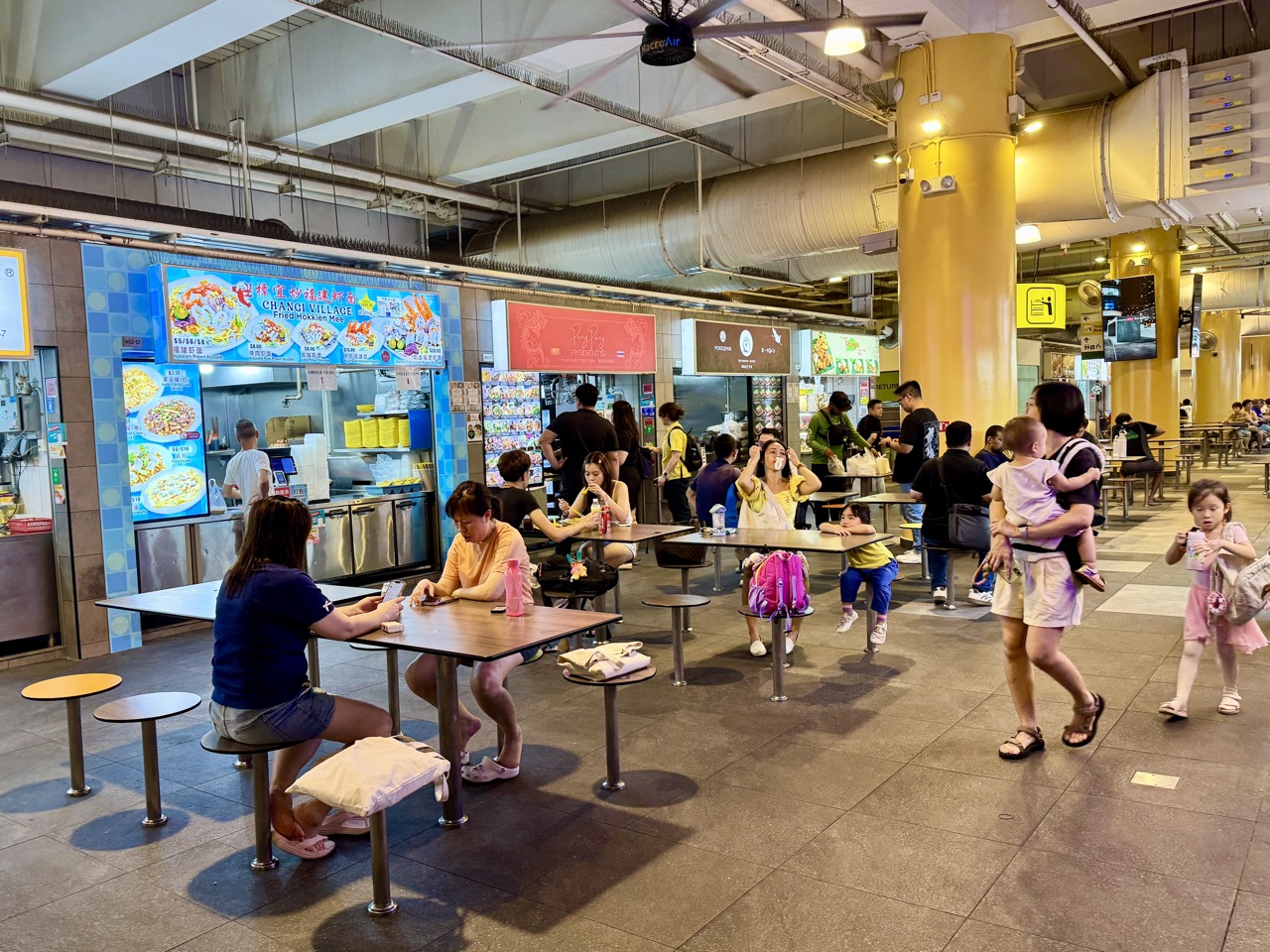
A Punggol resident seeking service or operations work in 2027 or 2028 can build useful skills by learning to manage customer queues without compromising safety, fairness or service accuracy. A long line does not automatically mean employees are slow; it can result from bursts of arrivals, uneven task complexity, missing information or a service point with insufficient capacity. Start by identifying where customers arrive, what they need, how work is assigned and where people can wait safely. Then help the employer measure and improve the process within its authorised procedures.
Punggol’s shopping areas, community facilities, food-service locations and developing Digital District offer different examples of people moving through services, but their queues and hiring arrangements are not identical. JTC says Punggol Coast Mall and its hawker-centre amenities are part of the district, while the Workplace Safety and Health Council emphasises risk assessment and safe arrangements for event activities. A job applicant should distinguish a routine service queue from large-event crowd management, which may require formal security and venue plans. This guide uses fictional worked examples to teach capacity, waiting-time communication and safe escalation without claiming that any named Punggol business currently has a queue problem.
- Useful roles: retail assistants, customer-service coordinators, event support, food service and administrative operations.
- First check: what do visitors need, how many arrive and which service stations can handle each request?
- Capacity: compare actual service ability with arrival patterns, not only the visible length of the queue.
- Fairness: use clear, approved priority rules and do not let personal favouritism decide service order.
- Safety: keep authorised walkways and exits clear and escalate potentially dangerous crowding promptly.
- Accessibility: provide appropriate ways for people needing assistance to use the service within employer policy.
- Communication: explain real waiting conditions without inventing a precise time or guaranteed outcome.
- Data: calculate rates with matching time windows and separate observation from estimates.
- Escalation: call the authorised manager or safety personnel where staff capacity or visitor safety is inadequate.
- 2027–2028: actual vacancies and queue procedures must be checked with individual employers, not inferred from a busy photograph.
Definition lock: queue, arrival rate, service rate and crowd
A **queue** is a set of requests or people waiting for service. **Arrival rate** means how many requests enter over a defined period. **Service rate** describes the volume one or more authorised stations can complete under specified conditions. A **crowd** is a broader gathering of people whose movement and safety may require controls beyond normal queue administration. These ideas are related but distinct. A line of five people waiting for food and a densely packed event entrance should not be managed as though they present the same risks. Match the method to the actual situation.
What a queue tells you and what it does not
A visible queue confirms that some demand is awaiting service at a particular moment. It does not prove the whole day’s average wait, which worker is responsible or whether the underlying system is inefficient. A queue may form when many customers arrive together even if staff work at an appropriate pace. Other people may be waiting virtually or at a second service stage. A responsible employee observes the entire process and checks with the appropriate team before drawing conclusions. A photograph of a long line is a starting point for questions, not a complete operational diagnosis.
Punggol examples should remain grounded
Waterway Point, One Punggol and Punggol Coast Mall illustrate different customer-service contexts. A shop may have a checkout queue, a food outlet may separate order and collection, and a community event may register participants before admitting them to another area. Each organisation sets its own legitimate operating procedures and staffing. This article does not allege that any photographed location has inadequate capacity. A career applicant should inspect current job descriptions and ask employers about queue responsibilities rather than assuming all service roles include crowd-control authority.
The first map: arrival, waiting, service and completion
A simple diagram might show a person arriving, joining an approved waiting area, submitting a request, completing payment or verification and leaving the service. Some cases need another queue for collection or specialist help. Include the steps that actually occur, not just what the process manual intends. Ask whether staff see people with different kinds of requests and whether certain cases need additional time. A good map identifies the correct point for communication and safe routing, so the employee does not try to solve everything by telling people to wait faster.
Arrival rates change during the day
Service demand is rarely perfectly uniform. A lunch rush, end-of-school period or planned event may bring many people within a short interval. An average of sixty visitors per hour can hide twenty arriving within five minutes and fewer arriving afterward. The capacity required for a peak can differ from the capacity needed during a quiet period. Record the time window and avoid calculating staffing from an undifferentiated daily total. A responsible supervisor may plan around predictable peaks while protecting breaks and other legal or contractual requirements.
Understanding service capacity with simple arithmetic
If a fictional service point can complete one ordinary request every ninety seconds under stable conditions, it could theoretically complete forty such requests in an hour of uninterrupted work. In reality, breaks, payment problems, different request types and handovers reduce or vary achievable throughput. Treat forty as an illustrative calculation, not a staffing requirement for a real shop. The point is to compare the kind of work entering the process with what a station can actually perform safely. Do not force a worker to skip necessary checks to match a simplified theoretical maximum.
When arrivals exceed capacity
Suppose an illustrative counter receives forty-five requests per hour while it can sustainably complete forty. If those conditions persist and no other station assists, unfinished requests accumulate. The queue does not disappear because staff are encouraged to smile more warmly. The organisation must consider legitimate options such as adjusting resources, managing arrivals, clarifying information or separating suitable request types. A junior employee should report the constraint rather than promise instant service. Capacity is an operational reality, and safety and correctness set limits on how fast work may be performed.
Why utilisation near the limit creates fragility
A service team operating very close to its maximum sustainable capacity has little room for unexpected demand, complex requests or staff absence. Even a small variation can create a visible waiting line. The correct response is not necessarily to add a permanent station or buy software. It may be to understand arrival patterns, avoid preventable rework and maintain appropriate contingency arrangements. A role-relevant analysis should consider cost and quality as well as speed. Continuous maximum effort without suitable breaks is not a reliable service plan.
The difference between actual service time and elapsed waiting
A person may spend two minutes at a counter after waiting fifteen minutes to be served. The service time and total time experienced are different measures. A third delay may occur while waiting for a prepared item or specialist result. If a business reports only checkout time, it could overlook the customer’s main problem. Define where measurement starts and ends, and whether virtual queueing counts. Good communication should use the same definitions as the relevant service promise rather than changing them to produce a more favourable figure.
Do not compare totals without denominators
A shop handles two hundred visitors on one day and three hundred on another. The number of complaints also changes. To assess a complaint rate, compare complaints with a suitable denominator and compatible time window. To assess waiting, consider arrival patterns and case complexity. The mathematics can be simple, but wrong definitions make it misleading. This connects with the separate Punggol workplace dashboard guide, which focuses on interpreting metrics. Here the main concern is turning those measurements into safe service decisions.
Priority queues need an approved rationale
Some services have different priority rules for appointments, urgent cases or people needing appropriate assistance. Such rules should come from the organisation’s legitimate policy and any applicable legal or safety requirements. Front-line workers should not invent priority categories based on appearance, personal familiarity or how loudly someone complains. Explain the process respectfully while protecting private information. A queue system is fair when it follows relevant, communicated criteria—not necessarily when every individual case has an identical service time.
Accessibility is part of service design
People may need a seated waiting option, accessible directions, assistance with a form or an alternative communication channel. Do not assume a person’s needs from age or appearance. Follow the employer’s available accessibility process and ask how best to assist. A long line in a narrow passage can create particular difficulties for mobility-device users and other visitors. The relevant manager should evaluate the service space rather than forcing everyone into an arrangement that ignores real access needs. Good operations protect dignity alongside efficiency.
Clear signs can reduce repeated questions
Visitors may join the wrong line when payment, collection and enquiry stations look similar. An authorised improvement may involve clearer signs, visible process steps or a staff member explaining the correct route. The wording should be accurate, readable and approved by the responsible organisation. Do not change mandatory signs or accessibility directions without permission. A simple explanation can sometimes reduce unnecessary movement more effectively than a new technology platform. But the team should observe whether the change helps instead of assuming that attractive signage automatically solved the problem.
The physical queue must not block safety routes
Crowds can obstruct walkways, exits or access needed by emergency services. The Workplace Safety and Health Council’s event-management material emphasises hazards, suitable controls, competent contractors and safe venue arrangements. A person handling an ordinary queue should know when to escalate to the manager or authorised safety team. Do not improvise barriers or redirect people into restricted areas. Formal occupancy limits and crowd-safety thresholds belong to the relevant venue and authorities, not to numbers invented by a jobseeker in a general article.
A routine line is not a large-event crowd plan
An employee at a retail counter may guide customers toward an approved queue. A major public event may require specialist risk assessment, trained personnel, access controls and coordination with venue or public authorities. Those responsibilities cannot be learned solely from a short online guide. The relevant event owner and contractors must implement appropriate safety measures. If an applicant sees “crowd management” in a vacancy, ask which training, role authority and safeguards apply. Do not pretend that observing a lunch queue qualifies you to manage high-density event movement.
Rain and heat change the waiting experience
Outdoor or partially sheltered lines may expose visitors and workers to weather. A hot, wet or slippery area changes comfort and potential safety considerations. The organisation should follow suitable risk-management and venue procedures, including accessible and safe waiting arrangements. A junior employee can report conditions and seek an authorised adjustment. They should not promise that temporary barriers or structures are safe without review. In Singapore’s climate, waiting-time communication matters, but it cannot substitute for legitimate controls over physical conditions.
How to communicate a wait without inventing precision
If a customer asks how long service will take, explain what is actually known. A recent observed waiting range may be more honest than a specific promise if arrivals and case complexity vary. Check whether the organisation has an approved estimated-time system before quoting it. Do not announce “five minutes” simply to prevent complaints when there is no basis. If the delay is uncertain, identify the next update point or alternative route where available. Trust is easier to preserve with a realistic statement than a precise but unsupported number.
Visible progress can help reduce confusion
People may become anxious when they cannot tell whether they are in the correct line or whether their request is still active. An approved queue-number display, confirmation message or periodic staff explanation can clarify status. Such systems must be accurate and accessible. A digital number does not solve the problem if calls are issued out of sequence or people cannot hear the announcement. Before recommending technology, understand the actual information gap. The objective is not to entertain the waiting customer but to help them understand the legitimate process.
Do not treat every impatient customer as abusive
A person may be frustrated because they have a tight schedule or received unclear information. The employee can listen, clarify options and maintain professional boundaries. An ordinary complaint is not automatically harassment. However, threats and abusive conduct require suitable safety support under employer procedures, and TAFEP recognises workplace harassment from external parties. Distinguish dissatisfaction from unsafe behaviour. A queue worker should not be expected to resolve a threat alone or accept physical intimidation as a normal condition of service.
A delayed service can create more work later
When the first interaction gives an incomplete answer, visitors may return to ask again, adding demand to the same queue. This is rework, and it can make a service appear under-resourced even when the deeper issue is unclear instructions. Record the nature of repeated contacts without exposing protected personal information. A small improvement may be to make the first explanation clearer. Do not shorten checks merely to reduce visible waiting if that causes more repeat visits. Good service design considers the entire journey, not one counter’s speed.

Fictional case: the One Punggol lunch rush
Imagine an invented food counter receiving a burst of lunch orders. Customers ordering food and delivery riders collecting prepared meals may need different information, but the team cannot assume that either group should be moved to a restricted area. A process review checks where orders are entered, where collection readiness is confirmed and how visitors receive accurate instructions. An approved collection-point notice may reduce repeated questions. The example does not describe any actual stall at One Punggol Hawker Centre. Its purpose is to show how different steps can form separate queues.
Fictional case: a shopping-centre checkout
A shop near Punggol MRT has a fictional long checkout line while another staff member handles complicated returns. The manager should not automatically blame the cashier or divert untrained staff to handle payments. Instead, they can examine whether routine purchases and authorised returns require separate processes, and whether approved staff coverage is sufficient. If any change is proposed, test whether it improves customer flow without creating mistakes. The scene is imaginary; no real outlet is being evaluated. It demonstrates the difference between queue length, staff competence and process design.
Fictional case: a campus visitor desk
An invented campus event has two groups: preregistered attendees and visitors requiring clarification. If both groups enter one line, a few complicated cases may delay everyone. An authorised organiser may consider separate information or verification steps while preserving appropriate identification and access rules. A helper should not admit people to restricted spaces merely to reduce waiting. Clear communication and safe routing matter more than making the queue look short from a photograph. The example is not a claim about SIT’s actual visitor procedures.
Fictional case: an appointment service
A fictional administrative office has people arriving at the same start time for appointments of different durations. A simple first-come-first-served rule may be inappropriate if some clients have scheduled slots or urgent authorised priorities. The team should follow the actual appointment policy and explain it clearly. A beginner can help by identifying where visitors misunderstand instructions and by recording non-sensitive observations for review. They should not create new eligibility rules or alter confidential booking records without permission. Predictability and fairness depend on an approved process.
Fictional case: delivery collection and customer ordering
An imaginary takeaway outlet experiences repeated crowding when people paying for new orders and riders collecting ready items stand in the same narrow area. An authorised review considers signage, pickup verification and available space. It must account for safe movement and avoid redirecting people into emergency access routes. The team may find that the underlying problem is a missing readiness message rather than insufficient physical floor area. The case illustrates why service communication and crowd safety must be examined together.
Fictional case: sudden system downtime
A queue-number display fails in a fictional service centre. Staff should follow the approved fallback rather than create random numbers or disclose a list of customer identities. The supervisor confirms how service order will be maintained, communicates the disruption and ensures that any urgent or accessibility needs are handled appropriately. An employee should record what occurred and which cases remain unresolved. The recovery plan should be tested in advance where possible. A digital queue is useful only when the organisation can also operate safely during a failure.
When a queue seems to vanish but work remains
A digital booking interface may let visitors wait away from the counter. The physical line becomes shorter, but unresolved work may be unchanged. Measuring only people standing in front of a desk can therefore create a false impression of improvement. Check actual request age, completed outcomes and relevant customer experience. If a person is not visible, they may still be waiting for a confirmation or specialist decision. Responsible service management does not confuse removing people from sight with completing their work.
How to explain multiple service stages
Some processes require registration, verification, payment and collection. Visitors become frustrated when they think the first queue completes the entire transaction. Explain each stage and which confirmation shows progress. If an additional stage is mandatory for safety or financial accuracy, do not bypass it. A simple public-facing explanation can reduce confusion without changing the policy. Before posting signs or making announcements, ensure the wording is approved and reflects the actual process. Honest expectations are an operational control as well as a courtesy.
Why queue discipline is not about shaming visitors
People may join the wrong line because signage is unclear, a language barrier exists or their needs differ from the normal process. Staff should correct the misunderstanding respectfully and use appropriate accessible options. Avoid public accusations or unnecessary disclosure of personal circumstances. If somebody deliberately disrupts the line, follow the organisation’s security or service procedure rather than starting an argument. Good operations protect both dignity and fairness. The goal is a predictable service process, not an opportunity to assert personal authority over visitors.
Observe peak times without spying on customers
A team can count arrivals and service completions using authorised, appropriately aggregated information. It generally does not need to copy individuals’ names or record private conversations to estimate demand. Follow the employer’s data protection and monitoring policies. If cameras, sensors or other tools are involved, use only approved access and permitted purposes. A simple manual tally may be sufficient for a preliminary question, but it must be collected safely and accurately. Data collection should be proportionate to the decision being made.
A simple fictional rate comparison
Suppose two fictional half-hour periods receive twenty and thirty customers, respectively. The corresponding average arrival rates are forty and sixty per hour if those periods are representative. This does not mean sixty customers actually arrived in each full hour. The distinction matters when planning peaks and communicating capacity. A candidate should state the observation window and any extrapolation. A few busy minutes cannot automatically establish a whole day’s demand, and rate calculations must not hide variability or different service categories.
How to use the average waiting time responsibly
Average waiting time can help monitor service, but it may exclude people who abandon the queue or cases not yet completed. Those omissions can make the average appear better than visitors experience. Define when the clock begins and ends and how incomplete cases are represented. Consider the spread of waits, not just the mean. An apparent improvement is more credible when customers actually receive accurate service and fewer cases return unresolved. Queue management is not a competition to create the most attractive number on a screen.
Why staffing needs honest coverage calculations
A staff member may serve one type of request quickly but need more time for complex problems. Breaks, training, accessibility assistance and essential checks affect sustainable capacity. Managers should not assume every worker can match an unrealistic theoretical maximum all day. Where work demand exceeds resources, raise the actual constraint and consider authorised alternatives. Do not use an invented throughput formula to justify ignoring rest entitlements or safety procedures. A good calculation supports a conversation about resources; it does not replace professional judgement.
What to do when a queue becomes unsafe
If people cannot move safely, required routes are blocked or a crowd appears to be building beyond appropriate controls, notify the authorised person promptly and follow venue procedures. Staff should not move barriers, close exits or perform crowd-control duties outside their training and authority. For a major public event, properly qualified organisers and security personnel may need to implement formal plans. In an immediate emergency, follow the venue’s emergency procedure and relevant public-safety instructions. Reducing queue duration is never a reason to compromise safe egress.
Worker well-being affects capacity too
A team running at full pressure for long periods may experience fatigue, mistakes and strained interactions. A responsible manager should consider breaks, duty rotation, training and realistic workloads under applicable employment and safety arrangements. Asking people to work faster without removing the actual constraint can increase errors and rework. A front-line worker should report unsafe capacity problems rather than conceal them. A service plan that depends on employees skipping every break is not a sustainable operational improvement.
How to practise with a fictional queue simulation
Draw two service counters and invent a set of arrivals over twenty minutes. Give some visitors simple requests and others more complicated tasks. Simulate the service order using paper cards or a spreadsheet. Record the waiting times and unfinished cases, then test a small change such as clearer initial routing. Do not present the results as measurements from a real Punggol business. The value is learning how arrival variability, service time and rules interact, along with the limitations of a simplified classroom model.
The three questions an interviewer may ask
An employer might ask how you would manage a sudden line, handle a visitor who disputes their place or respond when the service point is understaffed. A strong answer begins with safety, authorised rules and clear communication. It does not promise to serve everyone immediately or rearrange the venue without approval. Explain how you would seek support, communicate accurate expectations and record the issue for appropriate process review. Show that fairness includes both customers’ needs and employees’ legitimate ability to complete the work properly.
A realistic first-month learning plan
Week one: understand the employer’s service stages, accessible options and safety boundaries. Week two: practise explaining the correct process and distinguishing estimated from confirmed information. Week three: learn authorised basic rate or waiting-time measurements and safe escalation. Week four: review a fictional or permitted service problem with a supervisor and suggest a small improvement. The timeline is illustrative and does not authorise untrained crowd-control work. Individual employers may require different induction, professional qualifications or staffing arrangements.
The connection to process improvement
Queue management asks how customers move through a service and where safe capacity is constrained. Process improvement asks how the whole workflow might be adjusted and evaluated. The two topics overlap but have different primary objectives. Here the focus is physical and digital waiting, fair service order and capacity. A related Punggol article explains how to map bottlenecks and test wider workflow changes. The important point is to avoid using a localised speed improvement that merely shifts waiting to another, less visible stage of the customer’s journey.
Planning for 2027 and 2028 without invented figures
Punggol’s commercial and community facilities may change, and employers may introduce digital booking or queue displays. The effect will vary by organisation and cannot be converted into a universal job forecast. JTC’s current Digital District information gives useful location context, not a guarantee that named retailers or service providers need a certain number of new employees. Read actual vacancy requirements and check whether a role involves customer support, operations analysis or specialist event safety. The skills of clear communication, measurement and proper escalation remain useful as tools change.
Your next step
Use fictional data to compare arrivals and sustainable service capacity across two short time periods. Draw the waiting stages and identify one question that needs evidence before a change can be approved. Include a safety note about walkways and an accessible alternative where relevant. Then read a real Punggol or Singapore service job description and identify which responsibilities and qualifications it actually requires. Good queue management is not about forcing people through faster at any cost; it is about dependable, safe and fair service.
Frequently asked questions
Does a long queue always mean slow staff?
No. Arrival surges, case complexity, staffing and process design can all affect waiting.
Is the service rate always the reciprocal of one task’s average time?
That can be a simplified theoretical calculation, but breaks, variation and safety constraints affect actual sustainable throughput.
Can an employee change priority order because someone complains loudly?
Use the employer’s legitimate priority and accessibility policies, not personal favouritism.
Can queue staff move barriers or block exits to create space?
Only under authorised venue and safety procedures; never compromise required access or safe egress.
Are large-event crowd-control duties the same as shop queue assistance?
No. They can require different trained personnel, risk assessments and formal controls.
Do virtual queues eliminate waiting?
Not necessarily. They can change where people wait without reducing unfinished work.
Should an employee guarantee a five-minute wait?
Only if the estimate is sufficiently supported and permitted by the employer’s process.
Can I collect customers’ names to study queues privately?
Do not collect or copy protected data without the organisation’s authorisation and proper safeguards.
Is an improving average enough to prove the customer experience improved?
No. Check incomplete cases, variation, fairness, accuracy and other relevant outcomes.
Do the examples describe actual Punggol businesses?
No. All operational calculations and cases are fictional teaching examples.
Official references and related Punggol guides
- JTC: Punggol Digital District Community Amenities
- JTC: Punggol Digital District Business Ecosystem
- WSH Council: About Event Management
- WSH Council: Preventing Event Hazards
- WSH Council: Workplace Risk Management
- NEA: Hawker Centre Management Overview
- TAFEP: Workplace Harassment and External Parties
- eduKate Punggol: Reading Dashboards and KPIs
- eduKate Punggol: Mapping Bottlenecks and Testing Improvements
- eduKate Punggol: Customer Service Recovery


