
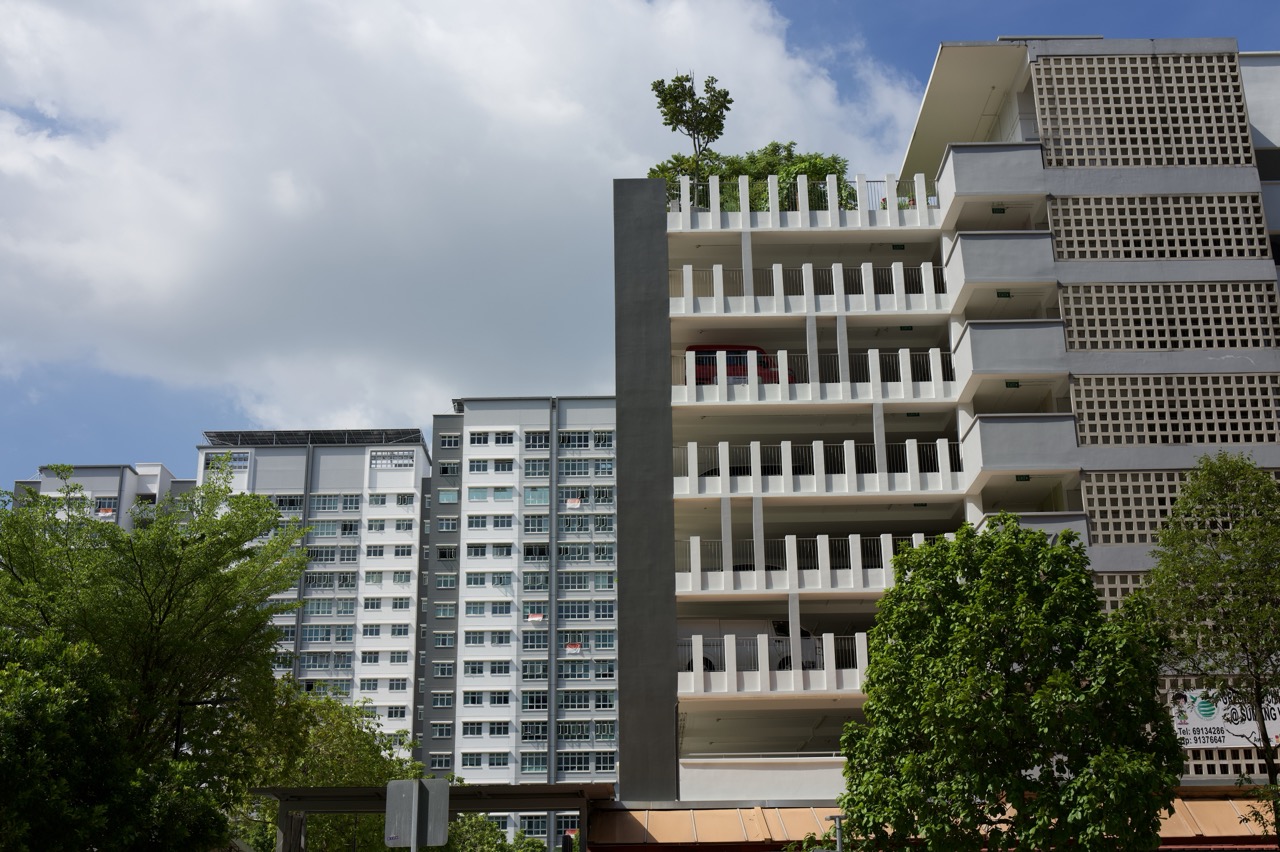
Punggol Digital District has publicly described rooftop urban farms among its sustainability design features, and Singapore permits appropriately approved food-production farms in certain indoor, rooftop and other urban settings. But a green rooftop, community garden or landscaped terrace is not automatically a commercially licensed farm. For entrepreneurs based in Punggol, Sengkang, Pasir Ris or Seletar planning 2027–2037, the genuine opportunity is to produce a specific crop for an identified buyer, supply qualified horticulture equipment or support established farms with safe monitoring, irrigation, packaging and logistics. The question is whether saleable produce and services can cover premises, energy, water, labour, spoilage and distribution costs in an appropriately authorised location.
JTC’s Punggol Digital District sustainability information lists rooftop urban farms within its planned green design, and a JTC Green Mark Districts announcement explains that farms and photovoltaic canopies have been prototyped for potential wider deployment. These statements do not establish that every PDD rooftop is presently an operating food business. The Singapore Food Agency’s August 2026 licensing guidance says commercial cultivation of food plants requires the appropriate farm licence, including for urban and rooftop farms, after a suitable site and proposal have been secured and relevant clearances obtained. SFA also describes a new S$70 million tranche of the Agri-food Cluster Transformation Fund available from 2026 for eligible licensed farms. Funding is not automatic and neither a proposed farm nor a grant application guarantees commercial success.
- Industry: Commercial urban agriculture, leafy vegetables, controlled-environment farming, rooftop horticulture and appropriate supplier services.
- Local planning anchor: Punggol Digital District’s green-roof and urban-farm concepts, with actual operating status to be separately confirmed.
- Possible customers: Restaurants, supermarkets, institutional food operators, licensed farms, landscape contractors and authorised site owners.
- Licensing: SFA farm licensing applies to commercial food cultivation; rooftop building and planning requirements may involve URA and other authorities.
- Supplier niches: Irrigation systems, environmental sensors, crop-management software, approved plant propagation, maintenance and produce logistics.
- Economic test: Yield actually sold at an achievable price after rent, energy, water, labour, transport and crop losses.
- Funding distinction: SFA’s ACT Fund 2 is for eligible licensed farming operations and assessed projects, not a universal startup entitlement.
- 2027–2037: Scenarios for careful development, not a confirmed count of new Punggol farms or guaranteed annual crop production.

What makes urban agriculture a real industry?
Urban agriculture involves growing food in or near built-up environments using suitable production methods. Some farms use natural light and outdoor conditions. Others use protected cultivation, hydroponics or controlled indoor systems. The technology may be sophisticated, but the result must still be a crop that people can buy and eat safely. If a growing system produces attractive photographs but has no reliable offtake, the operation may be a demonstration rather than a viable commercial farm.
A founder must decide which business it is building. A crop producer sells vegetables or another permitted food product. A technology vendor sells equipment or software to farms. A landscaping contractor maintains greenery, which is not automatically the same as food production. An educational garden may have learning value without being a commercially licensed supplier. Mixing those markets can create incorrect assumptions about site permission, funding and revenue.
The Punggol Digital District opportunity has boundaries
JTC describes rooftop urban farms and green spaces as features within Punggol Digital District’s sustainability vision. Earlier JTC material states that prototype rooftop farming concepts may be extended in future phases, including integration with solar photovoltaic canopies. That is a grounded development idea, not a public list of licensed farms currently accepting visitors or a guarantee of available leases.
An entrepreneur should contact the relevant site owner or authority for actual commercial opportunities instead of assuming that an unused roof is available. Building loading, waterproofing, access, safety barriers, solar equipment and maintenance routes may all affect suitability. The roof belongs to an owner and is subject to planning and building controls. Being located near PDD does not confer a right to cultivate on its structures.
Rooftop farms, community gardens and landscape planting are different
A community gardening area may allow residents to enjoy growing plants under the organiser’s rules, while a licensed farm grows food commercially. A landscape garden can improve greenery and urban comfort without producing food for sale. These activities can sometimes share techniques, but the legal and financial requirements differ. For example, a community plot is not necessarily available for wholesale supply to restaurants.
A business proposal should state whether its output is food, horticultural maintenance, education or an approved research project. Mislabeling an ordinary rooftop garden as a licensed food producer can mislead customers. Likewise, a commercial farm should not advertise public tours unless its permissions allow them. SFA’s farm licensing conditions explicitly prohibit non-farming activities such as commercial tours at licensed premises without the applicable separate authorisation.
Commercial food farms require SFA licensing
SFA’s requirements to start a farm explain that all commercial farms in Singapore require an SFA licence. The operator generally needs an ACRA-registered entity, a secured suitable site, an endorsed farming plan and necessary agency clearances. SFA’s August 2026 licensing category page includes commercial land-based farms, including urban and vegetable farms. The exact application and inspection steps depend on the proposed activity.
A founder should not rent premises and start large-scale crop sales before checking the approval pathway. Growing a few herbs for personal use or participating in a permitted gardening programme is not the same business model. Once the intention is commercial food production, the company should review SFA’s relevant licensing rules. The licence is a continuing operating responsibility, not a formality completed on the opening day.
URA roof rules can materially change the cost
URA’s July 2026 commercial building guidance explains that reinforced-concrete flat roofs generally remain inaccessible except for maintenance unless additional uses are approved. Its green-building and mechanical-and-electrical-space guidelines consider rooftop urban farming proposals on their merits. Covered rooftop farming areas may count toward gross floor area and require other planning treatment. Height controls and surrounding land uses also matter.
This means a rooftop that appears empty in a photograph is not necessarily suitable or economically available. A founder may face structural evaluation, access improvements, drainage work, barriers, utility connections and planning costs before it can plant anything. These must be included in a feasibility study. A cheap-looking rooftop can become an expensive production site after all safety and compliance requirements are considered.
The roof has competing functions
Commercial building rooftops may host solar panels, air-conditioning equipment, waterproofing systems and maintenance routes. Adding cultivation can introduce loads, moisture, shade, drainage and access requirements. A farm designed without cooperation from the building owner can interfere with essential equipment or maintenance. The existence of a photovoltaic canopy does not mean plants will automatically thrive beneath it.
A sensible technical team includes the owner, responsible designers and suitably qualified specialists. It should define which parts of the roof can be used, how equipment will be inspected and how water will be managed. The business must not alter building systems without approval. A farm’s commercial productivity cannot be purchased by compromising structural or operational safety.
A rooftop farm needs a defined customer before a crop plan
Many founders begin by asking which crop is easiest to grow. A stronger question is who will pay for the crop, at what specification, quantity and delivery frequency. A restaurant may prefer consistent herbs in a defined pack size. A supermarket may require food safety assurance, pricing, packaging and substantial reliability. A produce wholesaler may have a different margin and purchasing structure.
The founder should speak with eligible buyers before investing in a controlled environment. A chef’s enthusiasm for a prototype salad leaf does not establish a weekly purchase order. A commercial buyer may need more consistent quantities than the farm can supply. The farm should understand how orders change during holidays and what happens when a crop fails. Demand must be matched to a production system that can actually deliver.
Choose the crop according to economics and suitability
Leafy vegetables, herbs, mushrooms and fruited crops have different growth requirements, production cycles and buyer expectations. The most attractive crop for a publicity photograph may not be the most profitable one. A farm needs to understand planting density, growth time, expected yield, water and energy use, labour and saleable quality. Crop choice also affects pest management and handling requirements.
A small pilot should track actual performance. How many kilograms are harvested, how many meet the buyer’s specification and how much is rejected? What is the realised selling price after discounts and transport? How much labour is required for harvesting and packing? These questions allow a founder to compare crops without assuming that high yield alone equals profit.
Hydroponics is a method, not a business model
Hydroponics grows plants with nutrients supplied through an appropriately designed water system instead of relying on ordinary field soil as the main growing medium. It can support certain urban farming formats. But a hydroponic system still needs plant care, nutrient management, sanitation, water quality monitoring and reliable equipment. A pump or dosing failure can affect crops quickly under some configurations.
A technology seller should not advertise a generic kit as suitable for all commercial crops. The customer needs a system appropriate to the plant species, site, production goals and maintenance capability. Professional operators should be able to explain the limits of the equipment and provide safe instructions. The commercial outcome is stable crop quality, not simply the presence of sensors or coloured grow lights.
Controlled indoor farms introduce energy costs
Indoor farming can reduce exposure to some outdoor variability, but it may require artificial lighting, ventilation, cooling or dehumidification. Electricity can become a major recurring cost. A company should compare the value of predictable production with the cost of maintaining a controlled environment. Solar panels on a nearby rooftop do not automatically make all electricity free or eliminate peak-demand and reliability requirements.
The correct cost model records energy used per saleable kilogram, not only total monthly electricity. If production volume is low, a sophisticated growing system may consume too much energy relative to revenue. A founder should test realistic equipment settings and monitor crop response carefully. Technology can improve productivity, but only when the overall economics and food safety remain sound.
Singapore’s climate creates design trade-offs
Outdoor and rooftop farms experience heat, rain, humidity and sometimes strong wind. Growing systems need to account for these conditions without overpromising a stable crop every week. Crop protection structures may themselves require approval and adequate design. Rainfall can reduce some irrigation demand but may create drainage or disease concerns depending on the crop and method.
The supplier must understand how its equipment behaves under local conditions. A plant-growing controller tested in a temperate environment may need adjustment. A greenhouse system that traps too much heat can undermine production. Technical suitability should be verified under the actual site conditions rather than assumed from marketing photographs. Singapore’s climate is a design input and an operating cost, not a minor footnote.
Irrigation is a technical service with economic value
Watering equipment can help deliver more consistent irrigation, but a farm still needs appropriate water quality, safe plumbing and maintenance. A supplier may offer scheduling, monitoring or qualified repair services. The product should be designed around the crop and site rather than force every farm to purchase an elaborate automation system.
The buyer can measure water applied, plant condition, interruptions and labour time. If a new controller uses less water but damages crops or requires repeated visits from an expensive specialist, the economic case may fail. A responsible vendor measures the complete outcome. It also respects building and water-system permissions, especially for rooftop sites shared with other commercial users.
Farm sensors can fail silently
Temperature, humidity, lighting and water-related sensors are useful only when they provide reliable information. A sensor that drifts or stops reporting can cause a manager to make poor decisions. A software dashboard should make missing data visible and record when devices are inspected or replaced. It should not fill gaps with confident-looking invented numbers.
A small supplier can differentiate through dependable calibration, data quality and realistic maintenance. Farms may value simple alerts that identify a genuine problem more than dashboards with hundreds of indicators. Before deploying automation, agree on which decisions are supported and when a human should intervene. The farm operator retains responsibility for food production and safety.
Food safety is an ongoing farming responsibility
A farm producing food must operate within SFA’s applicable licence and food safety requirements. A technology supplier that visits the site needs to respect hygiene and production controls. Materials and equipment used around growing crops should be suitable for the intended purpose, and operators need appropriate procedures for handling inputs and harvested produce.
A business cannot rely on a technology description to establish that the final crop is safe. If a buyer asks for recognised assurance, the farm should check the applicable scheme and qualification requirements. SFA’s current guidance identifies Clean & Green and Singapore Good Agricultural Practice among relevant standards supported in certain funding contexts. Certification should only be claimed when genuinely achieved.
The journey from rooftop to supermarket shelf
A crop has to be harvested, checked, packed, transported and accepted by the buyer. Even if the farm is geographically close to a Punggol retailer, food handling and delivery still cost money. The buyer may require specific packaging, temperature conditions, labelling and delivery windows. A local farm may also have a small volume that is uneconomic for a distributor to collect separately.
The founder should negotiate offtake arrangements that match actual output and support fair rejection processes. An agreed weekly purchase volume is more useful than a general statement that consumers like locally grown food. Packaging and cold-chain decisions should be evaluated alongside production costs. Our separate food cold-chain and central-kitchen supplier guide examines that downstream industry in more detail.
Local produce is not automatically more profitable
Consumers may appreciate the idea of locally produced food, but price, freshness, convenience and product quality remain important. Imported produce competes with Singapore-grown food in many categories. A farm that depends on unusually high prices must understand whether buyers will consistently pay them. A promotional opening weekend does not establish ten years of premium demand.
A founder should test actual realised prices over several cycles. It may need to sell to restaurants, direct buyers or a wholesaler under different commercial terms. Each channel has acquisition, packaging and delivery costs. A crop that appears profitable at retail price may yield far less when sold wholesale. A business plan must use the price that the farm can genuinely realise.
Yield per square metre needs a time dimension
A farm can report a high yield per square metre for one harvest, but that does not reveal the annual economic output. Growth cycles, downtime, cleaning and crop failures affect how many usable harvests occur. A more helpful indicator measures saleable output over time and relates it to the land, equipment and operating resources used.
A credible production report distinguishes total harvested weight from accepted saleable weight. It also records the costs of seedlings, nutrients, electricity, water, labour and disposal. A founder who reports only the best-performing batch may create an unrealistic financial forecast. Ordinary weeks, including unsuccessful ones, are the foundation for a dependable business plan.
The founder’s time is not free labour
Small urban farms often depend on one enthusiastic person who manages planting, maintenance, marketing and delivery. If the business grows, those tasks still need to be performed by paid staff or the owner. A financial model that ignores this labour may appear profitable even when the founder is working excessive hours for little return.
Estimate the actual time spent on production, packing, customer service, repairs and administration. Consider staff leave and backup training. Some work requires competent specialists rather than casual helpers. The farm should be able to keep operating safely when the founder is absent. A business that cannot replace essential unpaid labour is not ready to scale.
A simple illustration of rooftop farm economics
Suppose a fictional small licensed farm sells 1,500 kilograms of produce per month at an average realised price of S$6 per kilogram. Revenue would be S$9,000. If direct seeds, nutrients, packaging and distribution cost S$2,400, contribution before fixed expenses is S$6,600. If rent, utilities, wages and maintenance amount to S$9,500 monthly, the farm has an operating shortfall. These are invented teaching figures, not Punggol farm quotations.
The conclusion is not that urban farming always loses money. It is that production, selling price and operating costs must be measured together. A different crop, buyer, system or facility may produce different economics. But no technology removes the arithmetic. A farm must either increase sustainable contribution, reduce costs or change its product model before committing to expansion.
Why equipment utilisation matters
A farm may purchase expensive lighting, climate controls or automated harvesting equipment. Those assets create fixed costs even when production is below target. A founder should consider how often the system operates at useful capacity and what happens during maintenance. New equipment may reduce manual work, but only if it performs reliably enough to justify its capital cost.
A supplier should prepare a payback analysis under several crop-price and output assumptions. It should disclose maintenance, replacement parts and operating expenses. A farm operator may prefer a simpler system with lower upfront cost if demand is uncertain. The best technology is the one that fits the full business, not the most automated option on display.
ACT Fund 2 is an opportunity for eligible farms, not a guarantee
SFA explains that its Agri-food Cluster Transformation Fund initially began in 2021, and a new S$70 million tranche of ACT Fund 2 is available from 2026. Supported activities include capability upgrading and technology upscaling under defined criteria. The published guidance says applicants must have a farm in Singapore with a valid SFA licence. Funding applications are evaluated and awards are subject to conditions.
A supplier should not market equipment as automatically eligible for every customer or imply that buying it guarantees a grant. A farmer should read the current application steps, proposal requirements and funding categories before signing. If an investment is economically weak without subsidy, the owner should be cautious about relying on uncertain funding. A grant can support a viable transformation, but it cannot replace genuine market demand.
The 2026 farm-land framework is not a Punggol land award
In May 2026 SFA announced a public tender involving land parcels at Lim Chu Kang and Sungei Tengah, with updated lease provisions for eligible farm development. These are specific locations, not evidence that a new government farm site has been allocated within Punggol. The announcement illustrates a national effort to support farm investment and realistic production development.
A regional entrepreneur should distinguish land tender opportunities from rooftop proposals in commercial developments. Each has different land, capital and planning implications. A farm can also be located elsewhere in Singapore while selling produce to Punggol consumers. The best site is the one that can lawfully and economically support the intended operation, not necessarily the closest roof to the founder’s home.
Horticulture suppliers may have a more accessible entry route
Not every company needs to grow food to participate in the agritech sector. Specialist firms may supply growing racks, suitable irrigation components, crop-monitoring software, seedlings, packaging or maintenance services to licensed farms. Landscaping firms can serve other green spaces but should not misrepresent ornamental planting as commercial food farming. The buyer’s technical requirements determine what a supplier may legitimately provide.
A small sensor vendor might begin by helping a licensed farm track approved measurements and equipment maintenance. A packaging company could design containers that reduce product damage. A qualified engineering company could maintain equipment within its permitted scope. These narrower services may avoid the financial risk of operating a complete farm while still supporting the sector.
Green roofs create a separate non-food business
A building owner may want greenery for shading, urban comfort or landscape requirements without producing food for sale. This creates work for suitable landscape designers, horticultural maintenance providers and plant suppliers. The project may fall under BCA, URA or NParks guidelines depending on its circumstances. The supplier should check the actual approval and maintenance needs.
A green roof can improve environmental quality while remaining economically different from a farm. It may have no crop revenue at all. The owner evaluates aesthetics, maintenance, heat management or building requirements. A business that confuses these outcomes may produce misleading claims. Commercial clarity begins by describing the service as landscaping rather than food production.
Product-market fit for a farm technology startup
A startup might invent an AI plant-monitoring application and hope farms will buy it. The stronger sequence is to ask operators which decisions are genuinely difficult and costly. Maybe nutrient readings are hard to compare, equipment faults are discovered too late or packing records are unreliable. A useful product solves one such problem at an affordable cost.
The vendor should begin with synthetic or properly authorised data and test the workflow with actual staff. It should measure time saved, fewer errors and the effect on crop quality. Software should not make confident recommendations beyond its tested scope. The farm’s qualified operators must retain control over production decisions. A small tool that improves one repeated task can be more valuable than an elaborate digital twin.
A fictional rooftop grower serving a restaurant
Imagine a founder with permission to explore a suitable rooftop site. The founder identifies a restaurant interested in a particular herb, checks SFA and building requirements, then tests production in an appropriate authorised setting. The buyer explains acceptable quality, packaging, delivery frequency and price. The founder documents realistic yield and cost.
If the numbers work, the business can proceed through the proper licensing and site approvals. If they fail, it can redesign the crop mix or avoid a costly lease. The founder should not sell from a commercial farm before satisfying requirements. A genuine restaurant supply agreement is more useful than enthusiasm expressed during a tasting.
A fictional irrigation maintenance supplier
An engineering SME knows how to maintain suitable water-delivery systems. It approaches licensed farms with a narrowly described service for inspecting approved irrigation equipment and recording faults. It identifies the site conditions, access permissions, materials and safe work procedures. Its quotation includes response times and replacement-parts arrangements.
The service is valuable if it reduces downtime and helps the farm maintain reliable production. The contractor should not promise to manage plant nutrition or food-safety compliance if those responsibilities are outside its expertise. Strong documentation and dependable response can create a repeat business relationship without operating a farm.
A fictional agritech software company
A developer creates a dashboard that records crop batches, planned harvests and confirmed customer orders. It starts with fictional data and tests whether farm staff can correct mistakes easily. The product does not invent yields or conceal rejected produce. It distinguishes forecast quantities from harvested and saleable quantities.
An operator may adopt the tool if it improves scheduling and makes customer commitments more reliable. The developer should provide privacy, security and data-export arrangements. A narrow business product can be commercially useful even if it never predicts plant health through machine learning.
Climate and environmental resilience are business risks
Outdoor farms face weather variability. Indoor farms face electricity and equipment dependence. Both may face disease, pest and market risk. A founder should build a resilience plan that fits its method. This can include suitable crop monitoring, prevention, contingency and a clear process for informing customers when supply changes.
A farm that promises a fixed delivery every week must know what it will do after an unsuccessful batch. It should not replace promised produce with unknown sourcing or misrepresent its origin. Honest supply terms and legitimate backup arrangements protect trust. A business that acknowledges agricultural uncertainty can still be dependable.
2027–2029: prove a lawful, affordable production model
During the first part of the decade, entrepreneurs can follow official updates on PDD rooftop concepts and any real site opportunities. They should also review SFA’s licensing and ACT Fund conditions. A responsible farmer begins with a confirmed site, clear customer demand and realistic production records, rather than assume a 2026 design concept is already open for tenancy.
The near-term business plan should test low and high yield, crop price, electricity expense and buyer cancellations. A narrow, reliable operation may be preferable to rapid expansion. If a proposal cannot cover labour and equipment maintenance at normal production levels, the founder should change it before buying more hardware.
2030–2033: scale customers and repeatability together
An established farm might expand production or serve new buyers if demand and permits support it. But increasing capacity can create additional delivery, packing and workforce needs. A successful small crop programme does not automatically justify a large automated facility. The business should verify its ability to produce saleable quality consistently across repeated cycles.
Suppliers can deepen specialised services such as monitoring or maintenance. Digital tools may help coordinate orders and production, but they should be judged on measured results. The years 2030–2033 are planning checkpoints, not a schedule announced for new farms in Punggol Digital District.
2034–2037: adapt to changing prices and technology
A decade can change crop varieties, imported-food prices, energy costs and equipment capabilities. The farm should maintain flexibility without repeatedly abandoning established customers. It may choose to change crop mix, upgrade selected technology or specialise in premium quality. Each decision needs a revised economic model.
Long-term resilience comes from safe operations, trained people, actual buyer relationships and the ability to manage crop losses honestly. No one can guarantee a particular growing system remains profitable through 2037. The business should preserve the competence to produce and sell food responsibly even as technology changes.
Business readiness checklist
- Is the proposed site actually permitted for commercial food production?
- Has the appropriate SFA farm licence and other necessary clearance been obtained?
- Is the roof structurally and operationally suitable with lawful access?
- Which crop and buyer create a genuine recurring commercial need?
- What are the saleable yield, accepted quality and realised selling price?
- Have labour, energy, water, nutrients, packaging and transport been included?
- What happens during a crop failure or major equipment outage?
- Are technology and sustainability claims based on tested evidence?
- Does the supplier have the correct expertise for the scope of work?
- Is any grant eligibility confirmed or merely hoped for?
- Can the business operate without unsafe shortcuts or unauthorised activities?
- What records support crop traceability and quality assurance?
- How will the customer be informed if supply cannot meet a commitment?
- Is the operation still viable under conservative sales and cost assumptions?
These questions may reduce the glamour of an automated rooftop farm, but they make the commercial proposition stronger. Agriculture remains an operating business involving biology, people, customers and uncertainty. Technology is useful when it improves that system.
Frequently Asked Questions
Are rooftop urban farms part of Punggol Digital District’s announced design?
Yes. JTC describes rooftop urban farms within its sustainability concept and earlier prototyping plans. This does not automatically establish that every roof has a licensed operating commercial farm.
Does a commercial rooftop farm need an SFA licence?
SFA’s current guidance says commercial farming of food plants, including urban and rooftop farms, requires appropriate licensing and site clearances. Check the exact circumstances with SFA before trading.
Can any building roof be converted into a farm?
No. URA planning, structural conditions, access, equipment and other approvals may apply. An attractive empty roof is not proof of commercial suitability.
Does ACT Fund 2 pay for every new farm automatically?
No. SFA’s new funding tranche has eligibility and assessment requirements, including valid farm licensing. Awards are not guaranteed.
Is hydroponic farming automatically cheaper than imported produce?
No. Commercial results depend on energy, labour, yield, quality, rent, logistics and customer price. A technology choice alone does not guarantee competitiveness.
Will Punggol have a fixed number of rooftop farms by 2037?
There is no confirmed number that can responsibly be promised here. The 2027–2037 period is a business-planning horizon. Verify actual projects and licences as they emerge.
Your Next Step: one buyer, one crop and one lawful site
Choose a crop or a specialist supplier service for which you can identify a genuine buyer. Confirm the site and regulatory requirements, then measure real costs and saleable output over multiple cycles. Compare conservative revenue with the full operating expense. If the project is not viable, redesign it before committing capital. Punggol can support agricultural innovation only when the farming business works safely, legally and economically.
Official sources: JTC Punggol Digital District sustainability features, JTC rooftop farm prototyping and Green Mark announcement, SFA requirements to start a farm, SFA farm licensing categories, URA commercial rooftop guidelines, URA urban farming and mechanical spaces, and SFA Agri-food Cluster Transformation Fund. Recheck current rules and project status before commercial action.


