
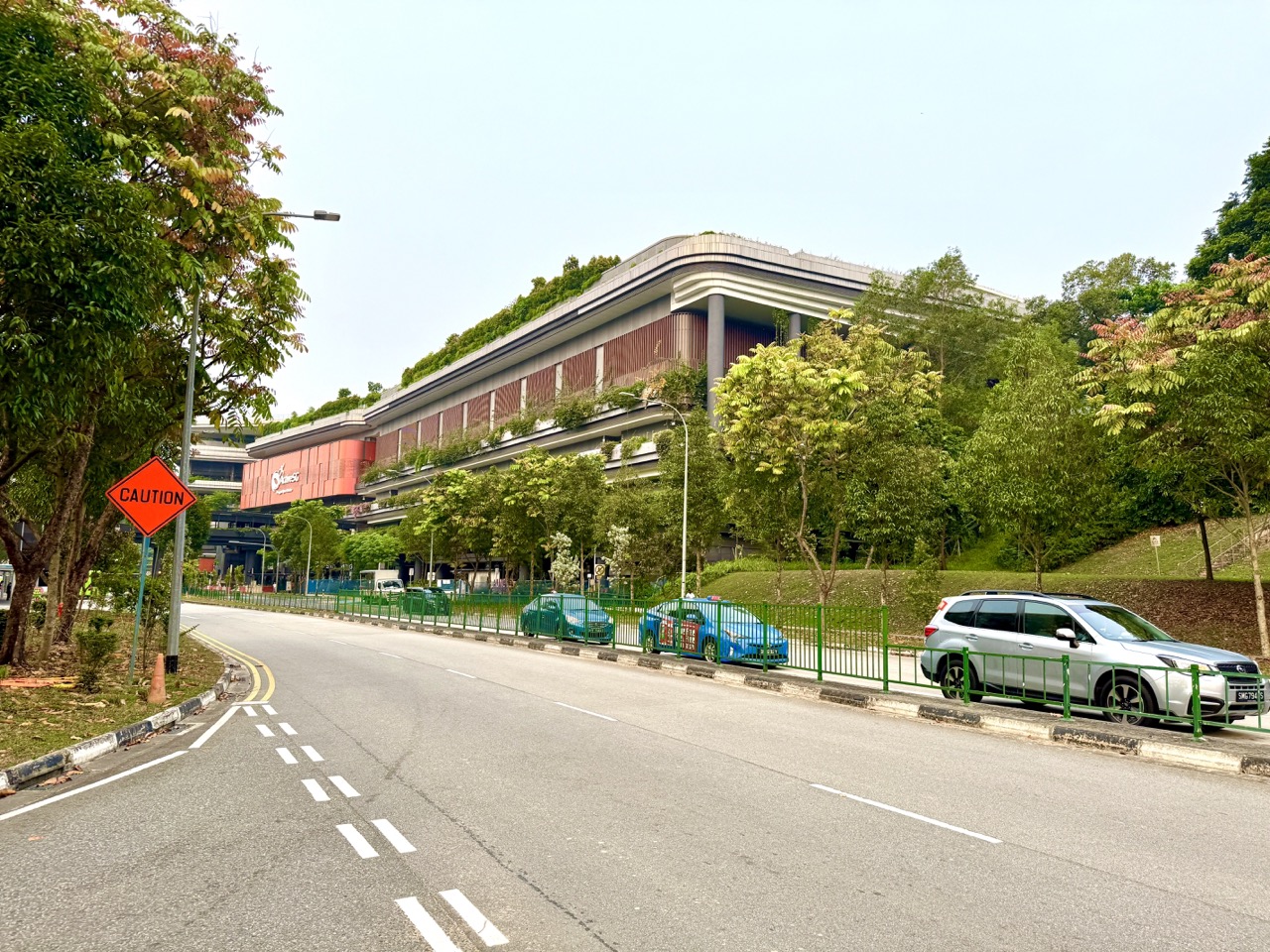
Parents can turn an ordinary, appropriately booked game of badminton, pickleball or table tennis near ActiveSG Punggol into short Mathematics practice without making the child complete a worksheet on the court. Ask the child to count five successful serves, compare two rally totals, represent three out of eight successful returns as a fraction, or draw a simple tally chart at home. These are real examples of numbers describing something the child has observed. Punggol Sport Centre at 11 Sentul Crescent began selected public sports operations during its 27 October 2026 soft launch, with its formal opening announced for 22 November. Families must still use the exact permitted court, programme or free-play space; no one should occupy a booked court just to conduct a Mathematics activity.
The most effective sequence is observe, represent, calculate, explain and check. A learner who sees twelve attempted returns with nine successful ones can write the fraction 9/12 = 3/4, the decimal 0.75 and the percentage 75%, provided percentages are appropriate to their learning stage. The parent then asks, “What does the denominator represent?” and “Would the answer change if the number of attempts changed?” These questions develop reasoning, not just arithmetic speed. Singapore’s Primary Mathematics syllabus values concepts, reasoning, problem solving and everyday application. The tasks below are original home-learning illustrations, not official ActiveSG lessons or MOE examination questions.
- Location and access: Punggol Sport Centre, 11 Sentul Crescent; check real bookable facilities via MyActiveSG+.
- Who benefits: parents helping primary pupils practise numeracy while engaging with an enjoyable sport or family game.
- Basic concepts: counting, comparing, adding, subtracting, multiplication, division and estimation.
- Later concepts: fractions, percentages, ratios, averages, rates and data displays when developmentally appropriate.
- Start small: choose one observation, ask one question and end before the exercise disrupts the activity.
- Use real labels: distinguish attempted serves, successful serves, players, games, minutes and court-hours.
- Protect fairness: do not turn children’s performance into public rankings, shame or pressure.
- Use consent: record only your own willing family’s game data, not identifiable strangers or private club records.
- No special purchase: paper, a pencil, a calculator for checking where appropriate, and a real or imagined set of game results are sufficient.
- This guide: carefully worked examples, common mistakes, a four-week progression and questions for reflection.
Definition lock: sport creates data, not automatic Mathematics learning
A game produces observations such as points, rally lengths, waiting time and successful attempts. Those observations become Mathematics only when the child chooses meaningful quantities, represents them accurately and explains the relationship. Counting randomly during a match is not the same as understanding a denominator or an average.
For example, the statement “We made seven shots” is incomplete if nobody knows whether seven refers to attempts, successes or an entire rally. Ask the learner to name the unit and the population being counted. “Our pair made seven successful serves out of ten attempts” gives a clear numerical relationship. Now a fraction or comparison has a definite meaning.
The aim is not to make sport an examination. A parent can keep the learning task short, follow venue rules and let the child enjoy physical play. Mathematical reflection can happen after the session, at home, without distracting other players.

Why this article is not a court-fee comparison guide
Families also use arithmetic to share booking costs, but this article’s primary purpose is teaching Mathematics concepts through sports observations. Detailed admission rates, passes and value comparisons belong in a separate Punggol sports-budget guide. Here, a price can be an occasional word-problem example rather than the reason to choose the activity.
This distinction helps parents avoid turning every outing into a lesson about money. A child can explore fractions through the proportion of successful serves or graphing through rally counts. Neither requires buying an additional court or debating whether badminton is financially cheaper than table tennis.
The strongest learning transfer occurs when numbers help explain a real pattern. An illustration should clarify the meaning of addition, measurement or chance—not become another promotional claim that attending one sports centre guarantees higher Mathematics grades.
Before the game: prepare a tiny observation sheet
Use a small page with a title, the units you will count and enough space for a few records. For an early-primary learner, the columns might simply be “try” and “successful”. For an older pupil, record attempts and successful shots for two short rounds. Include the date only if it helps compare similar personal practice later.
Do not ask the child to hold a pencil or phone while moving on a court. A responsible adult or non-playing helper can collect a very small amount of information where permitted. Alternatively, invent a clearly labelled hypothetical dataset at home based on the game. There is no need to film other players or occupy someone else’s space.
The observation must be simple enough to understand. Ten accurately counted attempts are more useful than fifty uncertain numbers collected while everyone is distracted.
Worked example 1: compare scores with subtraction
Two siblings play a short practice game. One scores 11 points and the other 8 points. Ask, “How many more points did the first sibling score?” The difference is 11 − 8 = 3 points. The unit is points, not minutes or shots. A child can draw eleven and eight counters and physically match eight pairs, leaving three unmatched.
Next ask a different question: “How many points did they score altogether?” That is 11 + 8 = 19 points, which represents a total rather than a difference. These two questions use the same numbers but describe different relationships. The child’s job is to interpret the sentence before choosing an operation.
Check by reversing the difference: 8 + 3 = 11. This simple habit teaches that calculation and checking are parts of the same task.
Worked example 2: multiples and equal groups
Four players each bring three shuttlecocks for a recreational badminton session. How many shuttlecocks are there altogether? The learner can draw 4 groups of 3, then calculate 4 × 3 = 12. Ask them to explain what each factor represents. Here, four is the number of players, and three is the number brought by each player.
Suppose the twelve are divided equally into three containers. Then 12 ÷ 3 = 4 shuttlecocks per container. That problem does not claim that three players received them; the denominator describes containers. The distinction teaches attention to units.
A useful extension asks what happens if one player forgets their three. The actual supply becomes 12 − 3 = 9, not twelve. Word problems become meaningful when the child keeps the story connected to the numbers.
Worked example 3: elapsed time without a timetable mistake
A family books a court from 4:00pm to 5:00pm. They spend ten minutes on approved setup and warm-up within the booking, then use the remaining time for games and proper departure. How much of the court-hour remains after the first ten minutes? One hour is 60 minutes, so 60 − 10 = 50 minutes. That does not mean the players are entitled to remain past 5:00pm.
Now ask what happens if they spend 8 minutes collecting equipment at the end. The time remaining for the main activity, after the first ten minutes and final eight, is 60 − 10 − 8 = 42 minutes. These are planned illustrative intervals, not actual booking extensions.
The key is understanding what a minute measures and why times on a clock cannot be added like ordinary two-digit numbers without converting units.
Worked example 4: fractions as part of a set
During ten practice returns, a player completes six successfully. The fraction of successful returns is 6/10, because the whole set consists of ten attempts. The learner can shade six of ten equal boxes, then simplify 6/10 = 3/5. Ask why the simplified fraction describes the same proportion.
Now change the question: if a second player has six successes out of twelve attempts, is their performance proportion the same? No. The second fraction is 6/12 = 1/2, which is less than 3/5. Counting only the successes would have hidden the difference in opportunities.
This is also a lesson in fair comparison. A child who makes more attempts may have more successes without a higher success proportion. The arithmetic helps explain why raw totals and rates answer different questions.
Worked example 5: turn a fraction into a percentage
An older primary learner makes 9 of 12 short serves successfully. Write 9/12, simplify to 3/4, divide 9 ÷ 12 = 0.75, then multiply by 100 to express 75%. Every form describes the same part of the same set of twelve attempts.
Ask the child to check reasonableness: nine is more than half of twelve, so the success percentage must be above 50%. It is fewer than all twelve, so the percentage must remain below 100%. This estimate can reveal a mistaken calculation such as 750%.
Do not announce the number as the child’s fixed ability or compare it publicly with classmates. It describes one small practice sample under particular conditions, not the whole player’s worth or future potential.
Worked example 6: ratios have an order
A group records 8 successful and 4 unsuccessful returns. The ratio of successes to unsuccessful returns is 8:4, which simplifies to 2:1. The order matters. Saying 1:2 describes the opposite relationship. Ask the learner to label the two quantities before reducing them.
The total number of attempts is 8 + 4 = 12. The fraction of all attempts that were successful is 8/12 = 2/3. Notice that the ratio of successes to failures and the fraction of successes to all attempts are different: 2:1 is not the same expression as 2/3.
This is a valuable teaching point because learners often mix up ratios and fractions when the underlying story is not clear. The game provides two categories that can be counted accurately.
Worked example 7: averages can hide a pattern
A table-tennis player records rally lengths of 4, 6, 5, 9 and 6 returns in five practice rallies. The total is 4 + 6 + 5 + 9 + 6 = 30 returns. The mean is 30 ÷ 5 = 6 returns per rally. Explain that the mean is a summary number, not necessarily the length of every actual rally.
Look at the data again. One rally reached nine, but several were shorter. Ask whether “every rally had six returns” would be truthful. It would not. The median of the ordered list 4, 5, 6, 6, 9 is six, and the mode is also six. Here the summaries happen to agree, but that is not guaranteed.
The lesson is that an average can be useful while still hiding variation. Always return to the underlying observations when a claim sounds too simple.
Worked example 8: a bar chart of rally lengths
Take the rally lengths from the previous example and draw a bar chart with categories such as “1–3”, “4–6” and “7–9” returns. Under these deliberately chosen bins, 0 rallies fall in the first category, 4 fall in the second and 1 falls in the third. The vertical scale must begin at zero for a basic bar chart unless a more advanced visual reason is carefully explained.
Label the horizontal axis “Rally length category” and the vertical axis “Number of rallies”. Ask what the tallest bar means. It means that four of the five observed rallies had between four and six returns, not that four people played.
The learner now sees why graph titles, categories, scales and units matter. A graph without labels can mislead even when the underlying counting is correct.
Worked example 9: probability is not a promise
Suppose a family places one coloured marker in a bag for each of three possible practice activities: badminton, tennis and table tennis. The child chooses one marker at random for a home planning game, not for deciding which official court may be used without booking. If the markers are equally likely, each has probability 1/3.
Ask whether choosing badminton once means it is guaranteed on the next draw. It does not. A one-in-three probability describes the chance under the model, not a deterministic cycle. If the family changes the bag to contain two badminton markers and one table-tennis marker, the probabilities change.
This example teaches that a model has assumptions. A real court-ballot system may use different rules and cannot automatically be treated as three equally likely coloured markers.
Worked example 10: speed, distance and unit checking
An older learner can practise a hypothetical speed calculation without running risky tests inside a public venue. Suppose a person walks 600 metres in 10 minutes on a suitable route. Their average speed is 600 ÷ 10 = 60 metres per minute. Convert ten minutes to 1/6 hour, and 600 metres to 0.6 kilometres, giving 0.6 ÷ (1/6) = 3.6 km/h.
Ask why the two answers differ numerically even though they describe the same walk. They use different distance and time units. If someone writes 60 kilometres per minute, the result should immediately look unreasonable.
This example is a mathematical illustration rather than an exercise target. Actual safe walking speed and suitability vary by person, route and weather; nobody needs to race for the sake of the calculation.
Worked example 11: measurement and perimeter
Imagine a drawn practice rectangle on paper with length 8 centimetres and width 5 centimetres. The perimeter is 2 × (8 + 5) = 26 centimetres. The area is 8 × 5 = 40 square centimetres. Ask what each answer measures. Perimeter is a boundary length; area is the size of the enclosed surface.
This is not a claim that any real Punggol badminton, tennis or pickleball court has those dimensions. The illustration deliberately uses a tabletop diagram to make the concepts easy to calculate. Actual sport courts have their own official dimensions and markings.

The distinction between centimetres and square centimetres is the teaching objective. A student who writes “40 cm” for area has performed arithmetic but not completed the meaning of the answer.
Worked example 12: more than one correct operation
A family has four players and wants each to practise six serves. The number of serves is 4 × 6 = 24. Now suppose they wish to divide the practice into three equal rounds. Each round contains 24 ÷ 3 = 8 serves across the group under that simplified plan.
A learner might instead calculate six serves per player over three rounds, giving two serves per player per round. Then 4 × 2 = 8 serves each round. These are two legitimate routes to the same answer. Ask which representation makes the relationship clearer.
This is a useful first-principles exercise: different methods can agree because they preserve the same structure. A child should be able to explain why the method works, not merely recite the answer.
How to teach the denominator properly
When students make fractions from sport, the denominator is often the hardest part. If a child says “I scored five, so my fraction is 5/10,” ask where ten came from. It is only a valid denominator if ten is the complete relevant set of opportunities, observations or equal parts. If there were eight attempts, 5/8 is the correct fraction, not 5/10.
Using a visible table helps. Write “Attempts = 8, successes = 5” before producing the fraction. If some attempts were not counted, record the uncertainty rather than inventing a convenient whole. The data must support the calculation.
This habit can transfer into PSLE problem solving and everyday reasoning. Learners who identify what the whole represents are less likely to divide by the wrong quantity.
What to do if the scorekeeper made a mistake
Suppose a child recorded a rally as eleven returns but later discovers that the first serve was counted differently from the other rallies. The data collection rule was inconsistent. The correct response is not to conceal the problem or adjust the result until it looks pleasing. Explain what was counted, correct the record if the evidence permits and label uncertain observations honestly.
This is a valuable mathematical and ethical lesson. Statistics depends on comparable definitions. An average calculated from inconsistent categories may look precise but communicate the wrong story. Encourage the learner to ask what should be collected consistently next time.
Sport becomes a source of reasoning, not merely a source of numbers. Errors are useful when they reveal how to improve the method.
Use estimation before a calculator
Children sometimes reach for a calculator before asking whether the result is sensible. With twelve attempts and nine successes, a value above 100% is impossible; with a one-hour court slot, a claim that 95 minutes remain after a ten-minute warm-up is impossible. These quick checks can catch mistakes even when formal calculation is incomplete.
Ask an older learner to estimate a range first, then calculate exactly. For a mean of five positive rally lengths between four and nine, the answer should lie between four and nine. If division produces a mean of thirty, something has gone wrong.
A calculator is useful for verification when appropriate, but judgement should lead. The mathematical habit is to understand the quantity and its limits before trusting a displayed number.
How to build simple tables without filming strangers
A family can collect a small table of its own practice attempts, but should not film other court users or record identifiable people without suitable permission. ActiveSG’s published rules prohibit unauthorised filming inside its facilities. In many cases, handwritten fictional or self-reported data is entirely sufficient for a home Mathematics activity.
Use a clear heading, unit and a small number of rows. If someone declines to have their performance counted, respect the choice. Avoid placing a child under public pressure by announcing the number of missed serves to strangers. Data should support learning, not turn a recreational session into an involuntary performance test.
For the most privacy-sensitive situation, simply create a hypothetical table after returning home. The arithmetic lesson remains valid when it is honestly labelled as an invented example.
Maths teaching for younger primary children
Younger children benefit from concrete objects and simple relationships. They can count shuttlecocks, match racquets to players, compare two point totals and draw a picture of equal groups. Use small numbers that the learner understands. Rather than introducing percentages immediately, focus on how addition and subtraction change a set.
Ask the child to explain the story in their own words. “Three players have two balls each” is more useful when the learner can draw three groups of two. If the child becomes tired or wants to enjoy the game without counting, stop the lesson. Family sport should remain fun.
The parent can develop the concept at home later using counters, small diagrams or verbal questions. There is no need to require school-style written working in the middle of a rally.
Maths teaching for older primary children
Older learners can handle fractions, percentages, rates and graphs when those concepts are within their learning stage. The challenge is to keep the questions authentic and logically sound. A success rate must have a defined denominator, and an average must describe exactly which observations were included. A chart should use labels and suitable scales.
Ask why a percentage might differ between two sessions even when the number of successes is the same. Invite the learner to explain how a simplified fraction preserves the same ratio. Encourage them to check whether the answer is reasonable before looking at a model solution.
These exercises build problem-solving language, not just computation. A student who can explain what the numbers represent is beginning to transfer Mathematics into daily life.
A home activity with no sports booking
Families do not need to pay for a court merely to practise these ideas. Create hypothetical scores on paper or use results from an ordinary board game at home. For example, write five rally lengths of 3, 4, 5, 6 and 7, then calculate the mean (3+4+5+6+7)/5 = 5. Draw a small line plot and ask which values are above or below the mean.
You can also use coins or counters to represent successful serves and unsuccessful attempts, without making claims about a real child. This protects both privacy and family finances. The sports setting is a source of concrete stories, not a requirement for every lesson.
When the child later plays a real game, the concepts may feel more familiar. The purpose is understanding that outlives the original activity.
A four-week progression for parent-led sport Maths
Week one focuses on counting, comparing and accurate units. Choose a few small examples and ask the child to explain the operation. Week two introduces equal groups and, where appropriate, fractions of a set. Week three adds tables or graphs from a short, clearly defined dataset. Week four asks the learner to invent one mathematically sound sports problem, solve it and check another person’s solution.
Do not rush through concepts beyond the child’s present learning level merely to finish a plan. If the learner struggles with division, return to equal groups before asking for percentages. If graph axes are unclear, practise interpreting one simple bar chart rather than producing several complicated visualisations.
The sequence is diagnose, rebuild, stabilise and extend. Sport supplies an engaging context, but the teaching still depends on clarity and carefully chosen practice.
When a parent turns sport into too much tuition
A well-intended adult may interrupt every rally with a word problem, turning an enjoyable outing into an unending test. Children need freedom to play, make friends and experience movement. A useful mathematical question can be postponed until the journey home or another calm moment. Learning is not improved simply by increasing the number of questions asked.
Consider limiting a court session to one informal observation, then discussing it later. If the child independently notices a numerical pattern, explore it briefly. If not, allow the activity to remain sport. A positive association with Mathematics and movement is more valuable than a forced worksheet completed resentfully.
Teaching should fit the learner and the situation. The problem is not too little arithmetic; it may be poor timing.
When the data makes a child anxious
A child who already worries about sports ability may dislike being scored or compared. Do not insist on recording every missed shot or publicising a percentage for relatives to judge. You can use invented data, count teamwork goals, or ask the child to draw a court diagram instead. Mathematical learning does not require measuring personal failure.
If a learner enjoys statistics, let them choose an appropriate private measure and understand what it means. Explain that one small sample does not prove permanent ability. Factors such as equipment, opponent and practice conditions can change the result.
Responsible data use is part of education. A mathematically correct percentage can still be inappropriate to publish when it reveals something personal or undermines confidence.
The difference between a score and a scientific conclusion
Imagine one player improves from six successful returns in ten attempts to eight in ten during a later practice. That is a visible change in the observed result. It does not prove that a single coaching instruction caused the improvement. There may be other influences, including variation between attempts and changes in conditions.
Ask the learner to describe only what the data supports: “The recorded proportion was higher in this sample.” Avoid exaggerating the claim into “This technique always works.” This distinction helps students build analytical habits that later support Science as well as Mathematics.
Numbers can be precise without settling every explanation. Good reasoning keeps calculation and inference separate.
A parent-child conversation after a match
On the journey home from an appropriate sport session, the parent might ask: “We had five rallies with lengths four, six, five, nine and six. What was the mean?” If the child is ready, they can calculate thirty divided by five. Then ask what else the mean does not show. The child may point out the very long rally.
This kind of conversation is short, concrete and connected to something real. It invites explanation rather than demanding a memorised formula. If the child is tired, let the discussion wait. The learning opportunity will not vanish because the family does not complete it immediately.
A good parent is not a permanent examiner. They are helping the learner notice that Mathematics can describe an experience outside a textbook.
Frequently asked questions
Does playing badminton automatically improve PSLE Mathematics?
No. Sport can provide useful numerical examples, but Mathematics improves through clear teaching, reasoning, practice and appropriate feedback.
Which ideas are suitable for younger pupils?
Counting, equal groups, simple addition, subtraction and comparisons can be introduced with concrete objects and small numbers.
Can older pupils practise percentages with sports data?
Yes, when the underlying fraction, denominator and interpretation are correct and the topic fits their learning stage.
Is 8 successes out of 12 attempts the same as an 8:12 success-to-failure ratio?
No. Eight out of twelve is success divided by all attempts; success-to-failure would be 8:4 if the remaining four attempts were unsuccessful.
Should parents film a match to collect data?
Not automatically. Follow ActiveSG filming restrictions and respect privacy; written or hypothetical data is often enough.
Can a child calculate averages without a real game?
Yes. Clearly labelled invented rally lengths make valid mathematical practice examples.
Does a high success percentage prove a child is a better person or athlete?
No. It describes one observed sample under defined conditions and is not a measure of worth.
Are court fees necessary for the Mathematics lesson?
No. Calculations can be practised at home; a paid sports booking should be made for a genuine permitted activity.
How often should we ask Maths questions while playing?
Keep them brief and appropriate. Preserve the primary purpose of safe, enjoyable recreation.
What is the most important checking habit?
Always ask what the numbers, units and denominator represent, then decide whether the answer is reasonable.
Official reading and a practical next step
See the MOE Primary Mathematics syllabus for the broader problem-solving curriculum. Use MyActiveSG+ for real sport access and SportSG rates only when genuine booking costs are needed. For another Punggol perspective read our guide to choosing a first racket sport. This Mathematics article deliberately focuses on numeracy teaching rather than court-fee comparison.
Your next step: choose one short observation—such as six successes in ten attempts—write exactly what the total means, represent it in two mathematical ways and ask your child to explain the relationship. Do the reflection after play if that makes the outing more enjoyable.
Editorial note: Independent family-learning examples prepared 1 November 2026. Calculations are illustrative, not live sports performance data, official MOE exam questions or ActiveSG assessments. Venue use and safety rules always apply.


