
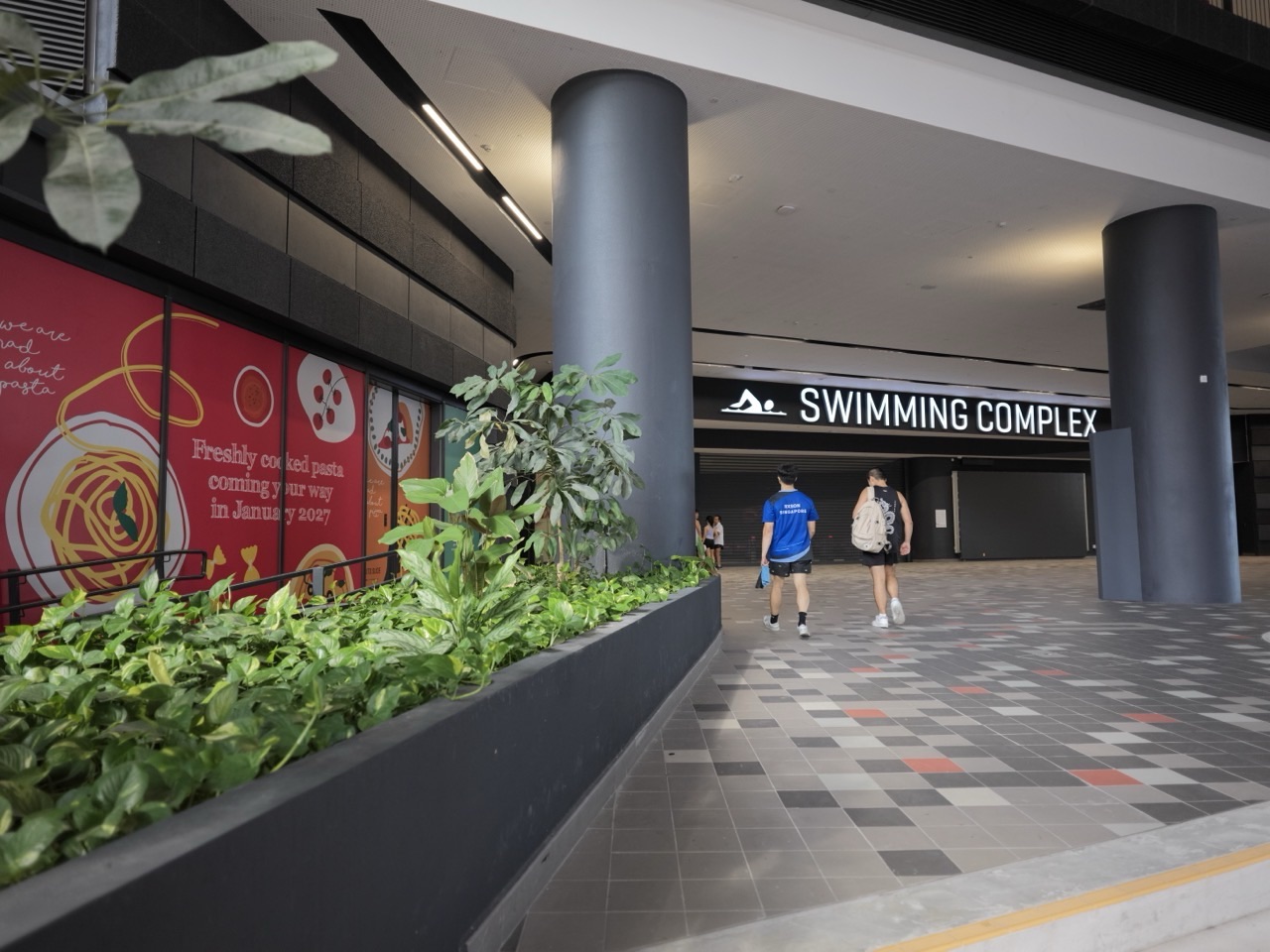
Swimming is one of the most useful ActiveSG Punggol activities for 2027, but families must check which pools are actually accepting swimmers before leaving home. Punggol Sport Centre at 11 Sentul Crescent began a partial soft launch on 27 October 2026, with gym and selected court activities reported in operation. As checked on 1 November 2026, the Punggol Swimming Complex had not yet been confirmed open for public swimming. A 22 November official opening for the wider centre has been reported, but that is not a verified swimming lesson, admission or pool-booking entitlement. For immediate swimming practice, confirm an operating public complex such as Sengkang Swimming Complex and check its latest notices.
This guide is about what to do in the water, rather than repeating a development-opening report or promising classes that have not been announced. A family can start with a simple goal: make the swimmer calmer, safer and more capable over a series of repeatable sessions. We explain how to choose an appropriate session, separate independent practice from instructed lessons, structure useful pool time, support children without pressuring them, and judge progress before signing up for the next programme. The advice works at an operating ActiveSG pool now and can be transferred to Punggol once the specific pool and session become officially available.
- Location to monitor: Punggol Sport Centre, 11 Sentul Crescent, beside the Waterway; verify the swimming complex separately.
- Current evidence, 1 November 2026: sport-centre soft launch reported; Punggol public pool opening and lesson slots not established here.
- Check MyActiveSG+ for the actual pool listing, entry conditions, programmes and any closure alerts before travelling.
- Practical alternative: an operating public pool such as Sengkang Swimming Complex, subject to its current hours.
- First session: identify swimming ability, water confidence, supervision needs and a realistic 20–40-minute practice focus.
- Progression: comfort and safe entry → breath control → floating and recovery → propulsion → strokes and endurance.
- SwimSafer is Singapore’s national water-safety programme; verify any instructor and class with the official provider.
- Do not mistake SAFRA Punggol indoor water play for a public lap-swimming or assessed lesson facility.
- 2027 programme schedules, fees and availability are not assumed; check the operator at time of booking.
Editorial check: 1 November 2026. This guide deliberately distinguishes operational gym/courts, the reported wider opening date, and the separately unconfirmed aquatic opening. No 2027 pool schedule, fee or provider is invented.
The 2027 promise and the November 2026 reality
The most important planning distinction is between a building and a usable activity. A sports centre may welcome people to its gym, yet leave a pool closed while testing, staffing and programming continue. In late October 2026, contemporary reporting described precisely that split at Punggol. It also reported an official opening date for the wider development of 22 November. Families should treat the facility-specific ActiveSG page and current admission options as the final confirmation for a swim, not interpret an attractive swimming-pool photograph as permission to enter.
A useful 2027 swimming plan is therefore conditional rather than speculative. Write the first preferred location as Punggol Swimming Complex, then identify an already operating backup and verify each booking separately. The planned five-pool complex should expand local choices once available, but no parent should promise a child a specific pool, instructor or lesson level until it appears in the live channel. That small discipline prevents the most disappointing kind of family trip: turning up prepared and being told the session cannot proceed.
Choose the activity before choosing the venue
When a parent says, “We want to go swimming,” four different activities may be hidden inside the sentence. The family might want a leisure splash, an adult’s quiet aerobic workout, a beginner’s structured lesson, or a child’s practice for a skill assessment. Those activities can need different pools, supervision arrangements and bookings. The venue is a means to the activity, not the activity itself. Start by choosing which outcome is the priority and which participant needs the most support.
For example, a six-year-old who wants to splash comfortably is not ready for the same outing as an older child practising continuous laps. A new adult swimmer may need a licensed instructor rather than a parent dispensing tips from poolside. A confident swimmer who has only thirty minutes might benefit from a narrow endurance set. Make the visit about one genuine objective and one enjoyable element. That balance is far more useful than collecting a long list of aquatic attractions without knowing what anybody will do there.
The first question: what can the swimmer do without prompting?
Before choosing practice activities, observe the actual swimmer, not merely the number of previous lessons attended. Can this person enter and leave safely? Can they move calmly in an appropriate shallow area? Can they place their face in water without panic? Can they recover their feet after an attempt to float? Can they follow the pool’s rules while tired? These observations reveal more than a certificate from long ago, particularly if the swimmer has had a long break.
A parent should not turn this into a stressful examination. Make it a simple conversation and, where appropriate, an instructor-led assessment. Ask the swimmer to describe which part feels easy and which part still creates worry. The aim is not to award a label but to identify the next sensible activity. Keep beginners in the area and circumstances suitable for their demonstrated ability, with active adult supervision of children. For uncertain ability, choose an instructed session rather than testing limits independently.
A beginner’s first visit is about calm, not distance
New swimmers often measure themselves against people crossing the pool. That comparison is unhelpful. Their immediate task is to discover that they can listen, breathe, communicate discomfort and complete a small water activity without rushing. A successful first visit might involve entering an approved shallow area, becoming used to water on the face, using the wall correctly, and leaving while still feeling positive. It need not involve a single full length of the pool.
A calm sequence also teaches the adult observer something important. If the child repeatedly clings, coughs or refuses to continue, pushing a more difficult exercise does not create learning. Return to a simpler task, ask what feels uncomfortable, and seek an instructor if necessary. Stop while concentration remains available. The family is trying to build a habit that will last beyond one morning, not to win the social-media version of a dramatic first swim.
Water confidence is not the same as water safety
A child can look cheerful while playing in water and still lack survival skills. Conversely, a person who swims one recognisable stroke may be uncomfortable when visibility, depth or fatigue changes. Water confidence describes how the person feels; water competence involves demonstrable skills and decisions. Both matter, but neither removes the need for appropriate supervision, rules or trained assistance. Treat flotation devices as equipment with limitations, not substitutes for an adult’s attention.
This distinction is particularly important when families move from familiar play pools to a new regional complex. New surroundings bring unfamiliar edges, steps, depths, lanes and movement patterns. Walk through the venue rules together, identify where the authorised entries and exits are, and discuss how to ask a lifeguard for help. Water safety remains a live responsibility even after a swimmer improves, which is why a structured pathway such as the national SwimSafer programme is worth investigating.
A practical 30-minute beginner pool session
A beginner session benefits from three clear phases. First comes a gentle settling period: understand the space, listen to instructions and revisit a comfortable movement. Next is a focused activity such as supported floating or breath control, chosen at the participant’s level and ideally taught by a competent instructor. Finally, return to an easy, enjoyable movement, discuss what worked, and exit before fatigue undermines confidence. Thirty minutes is an illustrative planning block, not a compulsory class duration.
Consider a fictional child who is comfortable getting into the pool but still frightened of lifting both feet from the floor. The outing should not be converted into repeated demands to swim across. The sensible goal is to practise a suitable supported recovery and listen to professional instruction. At the end, the parent asks, “What felt a little easier?” rather than, “Why haven’t you learnt it?” This changes the session from a performance into a meaningful learning experience.
Breathing and body position before stroke names
Beginners sometimes learn the names of freestyle, breaststroke and backstroke before they understand what their bodies must do. But effective swimming depends on controlling breathing, aligning the body, balancing buoyancy and coordinating movement. When someone lifts the head sharply to breathe, the lower body may sink and the stroke may become exhausting. An instructor can show the connection between breath timing and position in a safer, more manageable way than random advice shouted across a lane.
For independent family practice, remain within skills that an instructor has already established as safe for the swimmer. A child who has learned a simple breathing exercise might repeat it under appropriate supervision; a child who has never learned a safe float should not be pushed into one by trial and error. Focus on good movement and calm recovery rather than large numbers of repetitions. If a technique becomes worse with fatigue, that is evidence to simplify the session.
Why floating and recovery deserve attention
Floating is sometimes treated as a decorative milestone: the child lies still and the family takes a photo. Its real value lies in understanding body support, balance and the ability to recover safely. Being able to attempt a float matters less than being able to end the movement, regain control and orient oneself. That is one reason a structured sequence and trained oversight matter when introducing these skills to children or nervous adults.
A sensible progress record therefore separates “attempted,” “managed with instructor support,” and “performed reliably in the permitted environment.” This does not turn the pool into a school report. It simply prevents a parent from mistaking a one-off good moment for a fully learned skill. Notice whether the swimmer can repeat the movement without a long reset, whether instructions remain understood and whether calm returns quickly. Repeatability is more useful than surprise achievements.
Propulsion: moving with intention rather than splashing harder
At the next stage, the swimmer learns that effort and movement are not identical. Rapid kicking with poor posture may make a great deal of noise while producing little progress. Arms may move continuously but fight the direction of travel. The purpose of technique is to organise the body so each motion contributes something. A qualified instructor can adapt demonstrations to the individual’s size, mobility and readiness instead of insisting that every learner copy one visual example.
During practice, ask the swimmer what the movement is meant to achieve. Is the exercise helping balance, direction, breathing or steady forward travel? If nobody can answer, too many drills may have been added. One clear cue at a time usually works better than a stream of corrections. A child who understands the aim of a drill is more likely to remember it during the next session, which is exactly the sort of progress that makes weekly ActiveSG swimming worthwhile.
When to choose lessons rather than self-directed practice
Choose lessons when a person cannot perform fundamental water skills safely, is frightened, has plateaued despite regular practice, or needs qualified assessment. A parent who swims confidently is not automatically prepared to teach frightened children, recognise all risks or adapt methods to a learner with additional needs. A trained, suitably qualified instructor can choose a progression and change it when the learner’s behaviour shows difficulty. For children, verify supervision and safeguarding arrangements as carefully as the timetable.
Independent practice serves a different purpose: consolidating skills that are already understood and safe. It can build familiarity, consistency and endurance without introducing new risks. Families can use both modes, but they should not pretend an unsupervised leisure session is equivalent to an instructed course. When checking 2027 offerings, ask whether the booking is an entry pass, a structured group course, a private lesson or an assessment. Similar-sounding labels can hide very different services.
Understanding SwimSafer without chasing badges
SwimSafer 2.0 is Singapore’s national water-safety programme and has six progressive levels. Its purpose is broader than polishing one competitive stroke: it combines swimming ability with survival and safety learning. That makes it a useful reference point for families deciding whether a child’s instruction is systematic. However, the existence of the national programme does not establish that a particular Punggol class or examination date is available in 2027.
Use the official SportSG and Singapore Aquatics information to understand the framework and verify current providers. Then ask a prospective programme how it assesses entry level, what skills are practised, whether instructors are appropriately qualified, what happens when a child misses a class and whether there is an evidence-based route to the next level. A badge should be the consequence of competence, not the sole reason for entering the pool.
The parent who wants to help: three useful roles
Parents can do plenty without becoming unofficial swimming coaches. The first role is organiser: bring the necessary items, arrive with enough time and understand the booking. The second is supervisor: maintain appropriate attention, respect the instructor’s instructions and monitor the child’s comfort. The third is encourager: praise honest effort, recognise small improvements and create a predictable routine. Those roles are valuable because they make a young learner’s environment calmer and more reliable.
The least useful role is the parent calling out technical commands that contradict an instructor’s plan. This can overwhelm a child who is already processing unfamiliar movement. If you have a concern, discuss it with the instructor outside the exercise rather than correcting the child publicly. A short post-lesson question such as “What is one skill we should repeat safely before next week?” is more practical than offering a dozen tips. Consistency between adults is part of good teaching.
A gentle return plan after months away from swimming
A swimmer returning after a school examination period, illness or an extended family break should not assume the old routine remains appropriate. Changes in conditioning, confidence and coordination can alter what feels manageable. Start by reassessing the current ability and asking what the person wants to achieve. For a cautious adult, the first session may be mostly about safe, comfortable movement; for a formerly confident teen, it may involve fewer lengths at an easier pace.
Do not make an arbitrary target of regaining every lost minute or distance in the first week. That encourages hurried technique and makes the next session less appealing. Choose a smaller, repeatable dose of activity and adjust based on how the swimmer responds. People with medical issues or prolonged symptoms should obtain appropriate professional advice rather than follow a generic workout. The article’s examples are learning illustrations, not personalised exercise prescriptions.
Building an adult lap-swimming habit
Adults often need a different sort of help. They know that swimming can be enjoyable, but work, commuting and family obligations compete for time. A lap habit therefore has to fit a genuine weekly slot. Choose a nearby operating pool, confirm available sessions, and design an outing that includes changing and travel time. Plan the simplest session that can actually happen regularly, rather than a heroic schedule that collapses after a busy week.
A beginner adult might practise comfortable movement and technique under instruction; a confident adult might divide a session into warm-up, steady swimming and an easy finish. The number of lengths should follow current ability and conditions, not social comparison. If time runs short, completing a short safe visit is often better than abandoning the activity entirely. Swimming becomes sustainable when it fits everyday life in Punggol rather than needing a perfect day.
What a family of different abilities can realistically do
Imagine two children and one adult heading to the complex. One child is learning to feel comfortable in water, the other can already swim continuously, and the adult wants a modest workout. It sounds like one family outing, but it may require different activity zones, supervision and even different time slots. A single adult cannot assume that a confident swimmer or a lifeguard can take over responsibility for the younger child.
Plan backwards from the child requiring the closest attention. If safe simultaneous activities cannot be arranged, split the visit, bring another responsible adult or choose a lesson arrangement with verified supervision. This is not less efficient; it prevents an outing from becoming a set of competing demands. The adults may find it easier to take turns swimming on separate days. A good family exercise plan respects the practical limits of attention.
The difference between exercise and teaching
Swimming can function as cardiovascular exercise, a movement skill, a social leisure activity or a safety competency. These outcomes overlap, but not perfectly. Someone can feel tired after thirty minutes without having improved technique. Someone else may make a big technical breakthrough in a relatively short lesson without accumulating much exercise volume. Families should avoid treating sweat, fatigue or exhaustion as automatic evidence that the learning objective was met.
Ask one question after each session: “What changed that matters?” Perhaps the child entered more calmly, the adult maintained a more comfortable rhythm, or the swimmer remembered how to recover at the wall. Record that observation briefly and select the next session’s emphasis. This makes improvement visible without turning the swimming pool into another academic assessment. It also helps parents describe accurate needs when speaking with a coach.
How to plan a school-holiday swimming week
During holidays, families may be tempted to organise daily swimming simply because the calendar is open. More frequent outings can be enjoyable, but a plan still needs rest, weather awareness, energy management and age-appropriate supervision. For a child attending a class, the instructor’s programme should govern new skill progression; family visits can remain short opportunities to enjoy already learned skills. Avoid assuming the same pool lane or class can be booked every day.
A practical fictional week could include one structured lesson, one easy family visit and several dry-land days for normal activities. At the end of the week, ask what the child enjoyed and what felt difficult. Do not promise a SwimSafer stage advancement in five days. The real holiday achievement may be that the child now looks forward to safe water activity instead of fearing the entire experience. That is useful preparation for the school term.
Avoiding false confidence from flotation aids
Float boards and other teaching aids can make particular exercises more accessible, but equipment does not decide when a person is ready for deeper water or more challenging tasks. An aid may change posture or mask a weakness in balance. Young children can also overestimate what they can do because an object makes them feel protected. The correct use of each item depends on the setting, the learner, programme policy and the supervising instructor.
Parents should not independently replace approved instructional equipment with an inflatable product chosen for appearance. Ask the class provider what is permitted and why. If a child becomes dependent on an aid, the answer is not to remove it abruptly; discuss an appropriate progression with the instructor. A calm transition develops skill and confidence together. Pool rules and supervision requirements remain in force whether equipment is used or not.
A child with sensory discomfort or an anxious first response
Not every swimmer experiences a pool in the same way. Noise, echoes, cold water, splashes, unfamiliar changing rooms or the sight of deep water can be overwhelming. The solution may be to make the outing more predictable: explain what will happen, allow time to observe from a safe area, choose a quieter suitable session and seek an instructor comfortable supporting different learning needs. A child’s reluctance is useful information about the setting, not a character flaw.
Keep the first goal modest and specific. Perhaps the swimmer will complete a calm arrival, listen to a short instruction and choose one safe exercise. Families should discuss accessibility, appropriate supervision and any reasonable adjustments directly with the operator; planned universal-access features do not mean every class automatically meets every person’s needs. The lesson that matters is that swimming can become an activity the learner approaches with understanding rather than fear.
What to pack for a smooth swimming visit
The best packing list is short and linked to the actual venue’s rules. Bring suitable swimwear, a towel, a change of clothes, drinking water and any permitted personal equipment the operator or instructor requests. Secure belongings and learn where showers, toilets and lockers are available. Consider the practical needs of younger children: an easy-to-find bag, a dry change of clothing and a simple way to explain where the family meets after an instructed session.
Check whether the operator requires identification, digital passes or a particular check-in process. Do not rely on 2026 screenshots when entering a 2027 facility, since products and admission methods can change. For a school-age child, write the adult contact details and teach the agreed meeting plan. A calm arrival leaves more energy for swimming and reduces the awkward moment when an entire session is lost because a small essential item was forgotten.
Time budgeting: the hidden cost of a ‘half-hour swim’
The swim itself may take only thirty minutes, but the total outing includes travelling, finding the entrance, checking in, changing, showering and travelling home. This matters in Punggol because the nearest route from a particular block may not match the route shown in a generic attraction guide. During a phased opening, entry points and operational instructions can change. Verify them with the current ActiveSG listing rather than assuming that a familiar exterior is the admission entrance.
For a fictional after-school session, the family might have forty minutes of pool activity but need ninety minutes for the full trip. If that is unrealistic on weekdays, choose weekends or a different operating pool nearer the school. The principle is simple: select the schedule that supports consistent safe participation. A well-chosen weekly swimming routine is more valuable than a beautifully designed plan that no one can follow.
Pool lane etiquette for learners and confident swimmers
A lap lane works best when swimmers follow the venue’s posted direction, lane purpose and staff instructions. Different lanes may serve different speeds or programmes, and mixing abilities can make everyone uncomfortable. A beginner should not enter a fast lane to prove determination; a confident swimmer should not treat a leisure area as a race course. Where signs are unclear, ask staff. They know the current allocation and restrictions better than a visitor’s assumptions.
Teach children to wait for a safe opening, avoid grabbing other swimmers, respect personal space and ask before using equipment. Adults can model these behaviours rather than correcting everybody around them. Remember that organised lessons, competitions and maintenance may alter normal arrangements. A respectful swimmer contributes to a calmer pool, which is particularly important when a new facility attracts first-time visitors and curious families.
The first eight sessions: a progression example, not a syllabus
A family may find it helpful to organise an illustrative eight-session cycle: the first two visits establish comfort and observation; sessions three and four consolidate one or two instructor-taught foundations; sessions five and six revisit them with consistency; sessions seven and eight review progress and identify the next need. The numbers are a planning aid, not a claim that every person can learn a stroke in eight visits. Real progression varies with starting ability, frequency, anxiety and instruction.
At the end of each visit, write one factual sentence rather than a grade. “Entered calmly and followed the wall rule” is useful; “finally became good at swimming” is vague. If the same difficulty persists, seek appropriate teaching feedback rather than increasing pressure. The eight-visit structure helps a busy family create continuity while respecting that water competence is earned through reliable performance, not a calendar countdown.
What a useful learning diary actually records
A swimming diary should help the swimmer and instructor, not become another homework notebook. Record the date, venue, activity type, one skill attempted, one skill demonstrated reliably, and one question for the next session. Keep entries brief enough that they can be written while the memory is fresh. For young children, use a friendly prompt such as “What made you smile today?” alongside the skill note.
Avoid publishing photographs of other swimmers or sharing a child’s assessment details publicly. The practical purpose is private reflection, continuity and honest communication. An adult returning to swimming may also record perceived effort and how recovery felt. If a diary shows repeated discomfort, that is a reason to reassess the routine. Good records are not about making children perform; they make small, otherwise invisible changes easier to understand.
How to decide between weekday and weekend practice
Weekday practice can fit adults with a flexible schedule or children with a predictable school routine. Weekends may allow a relaxed family outing but can bring stronger demand for popular facilities. Neither option is inherently better. Begin with the household’s actual availability and check opening hours, designated class times, maintenance schedules and the type of admission required. Do not assume that every planned Punggol pool will follow the same timetable when the complex starts.
For a household in Punggol Northshore, an early morning session may work once the facility is operating; for another household, travelling to an established pool after school may remain simpler. Build a backup plan around one alternative date rather than booking multiple conflicting activities. The point is to protect regularity while respecting other visitors’ access to shared facilities. A schedule should work for the family and the venue, not only look attractive on paper.
The real cost is more than the pool ticket
Low public admission charges can make swimming accessible, but the complete cost includes transport, lessons if purchased, equipment where required and a family’s time. The price of a casual swimming entry is not the same as the cost of an instructor-led course or assessment. ActiveSG credits and eligibility rules may affect payments, but applicable rates and usable credits should be checked when a product is selected; a published national headline does not guarantee a particular Punggol discount.
Consider two fictional options. One family chooses occasional pool visits for practice of established skills; another signs up for lessons because the child needs instruction. Comparing only the entry ticket would be misleading. Decide first which service solves the need, then calculate the complete recurring cost. A cheaper activity that does not provide the required teaching is not genuinely better value. A more expensive class is also not automatically better without appropriate coaching, safety and fit.
When a session should be shortened or postponed
Swimming is not a test of toughness. Fatigue, distress, weather restrictions, pool closures or an inability to supervise properly can change whether an outing is sensible. Follow the operator’s instructions and any relevant health guidance. Someone who feels unwell should not be pressed to complete a planned distance. Parents should also avoid asking children to demonstrate new skills when the adult is distracted or the environment is unsuitable.
A shortened session can still have educational value. The swimmer might revisit one familiar movement, follow the exit routine and leave safely. If the venue is closed, use the time to review an instructor’s advice or plan another date; do not substitute unsafe open water or an unapproved area. The ability to stop appropriately is part of becoming a responsible swimmer. It protects the positive relationship with sport that a long-term 2027 activity plan is meant to create.
Swimming after school: balancing sport and homework
Swimming can provide a change of pace after a day of classroom learning, but it becomes counterproductive when every evening is overloaded. Families need to account for dinner, travel, sleep and school responsibilities. A predictable swimming slot may be easier to sustain than repeated last-minute bookings. The learner should know why the activity is on the timetable: enjoyment, water skills, exercise and family time are more meaningful reasons than vague pressure to stay busy.
An illustrative arrangement might put the structured lesson on a weekend and keep a shorter practice visit on a lighter weekday, if available. Another student may need the reverse. Listen to the child after a few weeks. If the activity feels constantly rushed, change the timing before deciding that the student dislikes swimming. Sport should strengthen life, not become another source of avoidable scheduling conflict.
Teenagers and the transition to independent lap swimming
As children grow, families may want them to exercise more independently. Independence should be gradual and tied to demonstrated judgment, pool rules and the operator’s age and access requirements. A teenager who can complete laps may still need guidance on training load, lane etiquette, hydration and recognising unsafe decisions. The transition is not simply a birthday when adult attention becomes unnecessary.
Help the teenager design a modest, repeatable plan and explain how they will check in, contact family and respond if a pool is closed. Ask them to describe their session’s purpose and how they will avoid racing others when tired. An instructor can review technique and appropriate progression. The benefit of independence is not just swimming further; it is learning to manage a public sporting activity responsibly in the community.
Older adults and returning movers
Some older adults are attracted to water-based exercise because the setting can feel different from land-based movement. Appropriate activities vary greatly depending on fitness, mobility, prior swimming ability and health. Do not assume that a shallow pool class is suitable for every person, or that being older automatically means a participant cannot improve technique. Ask the operator about available classes, access features and suitability, and seek health-professional advice where relevant.
A returning swimmer might prefer gentle familiar activity and social contact rather than distance targets. Another may be an experienced lap swimmer who simply wants predictable access near home. Treat both as individuals. If the future Punggol complex offers accessible aquatic programmes, judge each programme on its actual staffing, entry requirements and published details. The word “inclusive” is an aspiration unless the practical activity arrangements are clear to the participant.
What if the Punggol pool is still unavailable on your chosen date?
The correct response is not to turn the venue into an uncertainty. Check the current ActiveSG facility page and booking products, then select a confirmed alternative. Sengkang Swimming Complex is a practical public option for many Punggol residents, but its own opening hours and maintenance notices still matter. SAFRA Punggol’s Splash @ Kidz Amaze serves a different water-play purpose and should not be substituted for a lap session or structured SwimSafer lesson without checking the activity actually offered.
If the family cannot travel to another pool, skip that day’s swimming and preserve the habit through simple planning rather than trying improvised water practice elsewhere. Confirm the next class date, discuss an instructor’s feedback, and prepare the essentials. This may feel less exciting than being first through a new facility’s doors, but reliability matters more than novelty when teaching children water competence.
How to read 2027 activity announcements critically
As the sport centre moves from soft launch toward broader operation, residents may see advertisements for classes, commercial programmes and one-off events. Check who operates the advertised activity, whether the provider is officially affiliated with ActiveSG, which facility is involved, the eligibility and age conditions, and what payment covers. A post on social media may be an invitation to enquire, not a confirmed booking. A photograph of a class does not prove that the same class is operating at Punggol.
Be particularly careful with programmes promising rapid certification. A meaningful qualification depends on learning and an appropriate assessment, not a marketing countdown. Read cancellation policies and enquire about missed sessions. Keep screenshots of confirmed terms for practical reference, but return to the live operator for changes. In a newly opening complex, accurate detail is more useful than attractive adjectives.
A fictional family plan for Term 1 of 2027
Consider the Tan family, a deliberately fictional example. One child has attended beginner classes elsewhere; the second has never completed a structured swimming course. Both want to try Punggol. The parents first confirm whether the aquatic facility is open for the specific activity. If it is, they enquire about a suitable class for the beginner while selecting a supervised practice arrangement for the other child. If not, they continue at an established complex without changing their learning objectives.
The family schedules one lesson-led block and one optional practice opportunity each week, only if travel and energy make that realistic. After four weeks, they review the children separately. The younger child may have become calm in water; the older may have improved rhythmic breathing. Neither is compared with the other. This is what a responsible 2027 plan looks like: grounded venue checks, individual goals and honest adjustment rather than a promise of automatic results.
Frequently asked questions about ActiveSG Punggol swimming
Is the Punggol pool open on 1 November 2026? Reports of the late-October partial sport-centre opening do not establish public swimming access. The swimming complex was separately reported unavailable at the latest late-October check. Consult ActiveSG’s current facility listing before travelling.
Does 22 November guarantee swimming admission? No. A reported official sport-centre opening date is not a confirmed pool-specific admission product or lesson schedule.
Can a child learn to swim from family practice alone? Families can reinforce safely taught skills, but beginners and uncertain swimmers need suitable qualified instruction and supervision.
Where can families swim meanwhile? Check an operating ActiveSG complex such as Sengkang, subject to current closures and opening times.
What is SwimSafer? Singapore’s national water-safety programme with six progressive levels; see the official programme page for eligibility and details.
How often should a child practise? There is no universal number. Match frequency to readiness, safe access, class advice, rest and family routine.
Is SAFRA Punggol Splash equivalent to swimming lessons? No. It is an indoor water-play attraction, not an automatic substitute for public lap swimming or a structured water-safety programme.
What should a 2027 article update first? The aquatic opening status, accepted admission methods, class offerings, hours, closures and prices directly from official sources.
Official sources and related eduKatePunggol guides
- ActiveSG / Sport Singapore: ActiveSG programmes and facilities
- MyActiveSG+ platform and participation options
- SportSG’s official SwimSafer explanation
- ActiveSG facility closures
- AsiaOne, 29 October 2026: Punggol partial opening and reported 22 November date
- Punggol swimming pools and alternative venues guide
- Punggol sports access and ActiveSG bookings guide
- Punggol child supervision and SwimSafer safety guide
Reader note: pool hours, class availability, prices, access arrangements and programme policies can change. Confirm directly with the current operator before booking or travelling. This is an activity-planning guide, not a substitute for lifeguard instructions, professional swim teaching or individual medical advice.


