
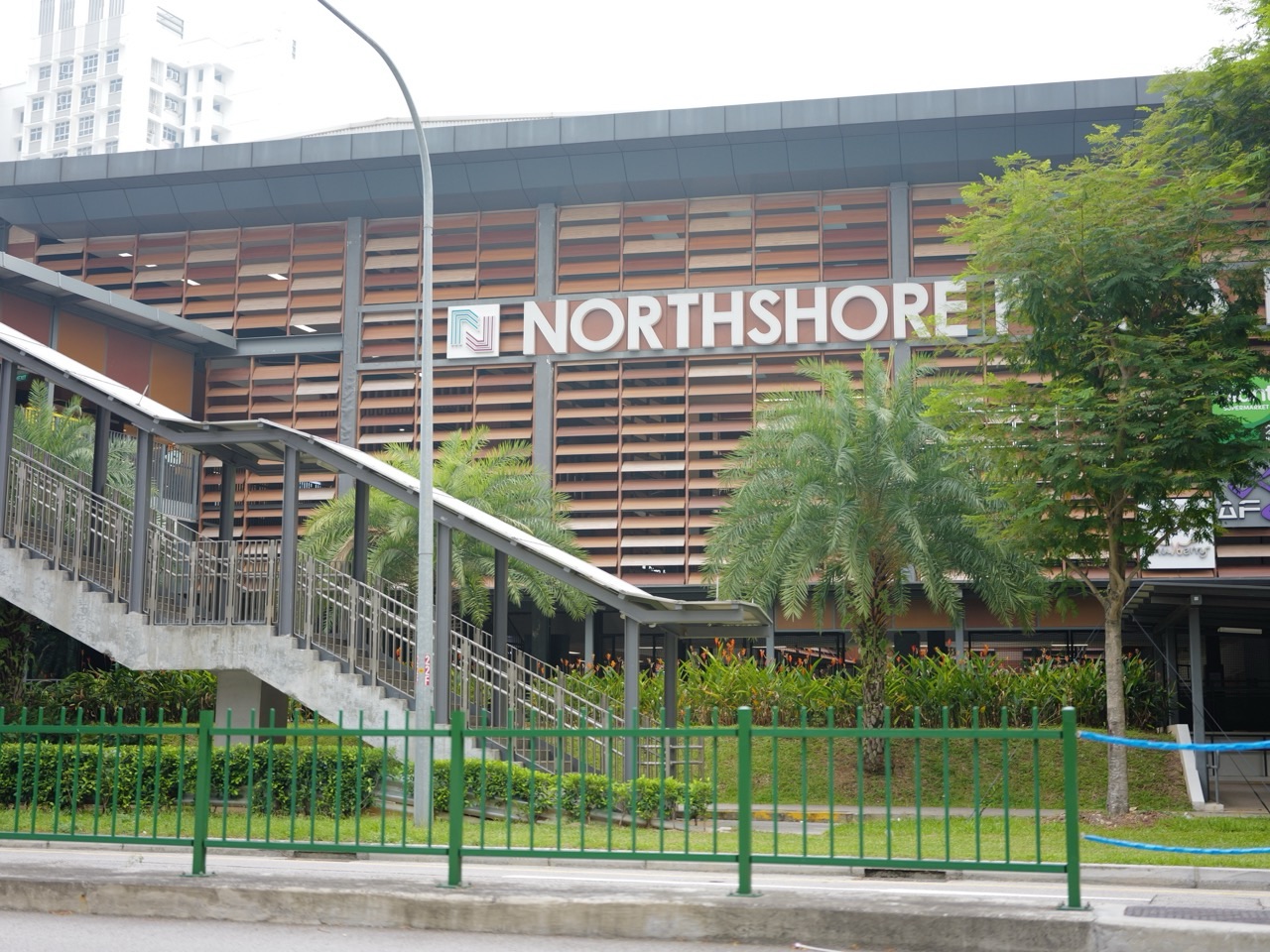
Why can a sea-facing place in Punggol feel breezy on one visit and almost still on another? A view tells you what you can see. It does not guarantee the direction or strength of moving air. Singapore’s weather reflects regional winds, local land–sea circulation and shorter-lived weather systems, while buildings influence the air that reaches a particular walkway or window. Meteorological Service Singapore explains these interacting influences.
This distinction matters at Punggol Northshore, where water views and environmental comfort are both part of the planning story. HDB says it used environmental simulations to improve wind flow and limit sun exposure while orienting blocks to provide sea views. Those are related design objectives, not a guarantee that every home receives a continuous breeze. Source: HDB’s Northshore biophilic-planning account.
This guide explains the difference between a coastal address, a sea breeze and actual ventilation. It is an evergreen weather-and-building explanation, not today’s forecast, a measurement of a particular flat or a promise about property value. The practical goal is to replace “near the sea means always windy” with a model that can explain changing conditions.
The answer in 50 seconds
Three layers matter. Regional weather influences the background wind. Local heating differences between land and water can produce sea and land breezes. Nearby buildings and openings influence how that moving air reaches the exact place you occupy. These layers can reinforce one another or produce a more complicated result than a simple arrow from the sea.
Meteorological Service Singapore describes daytime sea breezes developing as land warms faster than the sea, with a generally weaker reverse circulation possible at night. Its climate account also describes monsoon flow and lighter, variable winds during inter-monsoon periods. Neither description promises a fixed breeze at every Punggol window at a particular hour. MSS: Winds; MSS: Climate of Singapore.
The hidden mistake: confusing a view with a flow path
A line of sight is a visual relationship. You may see water through an opening between buildings without the current wind approaching through that same opening. The air could be arriving from another direction, moving weakly or being redirected by structures close to you.
Imagine looking through a doorway at a tree. The tree being visible does not prove that sound, rain and moving air will all enter the room in the same way. Each process has its own conditions. In the same way, an attractive coastal view and a comfortable ventilation pattern should be assessed as related but distinct features.
The corrective question is not “Can I see the sea?” It is “What is the wind doing now, and what route can air take through this location?” That turns an impression into an investigation. It also explains why a resident and a visitor can describe the same place differently without either inventing their experience.
How a daytime sea breeze develops
MSS explains that land and water heat and cool at different rates. During suitable daytime conditions, warmer air rises over land and air from the sea moves inland as part of a circulation. At night, a weaker land breeze can develop in the opposite direction. This is a simplified local-wind explanation, not a timetable guaranteeing reversal at sunset. Source: MSS’s local-wind guide.
Draw the mechanism in a fictional coastal cross-section: sea on one side, land on the other, an upward arrow above warmer land and a near-surface arrow pointing inland. Label the drawing “conceptual model”. It explains a process under suitable conditions; it is not a map of the wind around a specific Northshore block.
The distinction matters because a diagram usually removes competing influences to make one mechanism easier to understand. Real locations contain changing regional weather, irregular shorelines and buildings. Learning the simple model is useful, but the next step is to restore the conditions the diagram left out.
Why the background wind can change the result
Singapore’s climate includes Northeast and Southwest Monsoon seasons and intervening periods with lighter, more variable winds. MSS explains that the local wind on a particular day can also be affected by terrain, showers, thunderstorms and land–sea breezes. A familiar seasonal name therefore describes a broad pattern, not an instruction that every gust must follow one direction. Source: MSS’s climate account.
Use a paper-arrow exercise. One arrow represents a hypothetical background flow and another a possible local circulation. Ask whether they point broadly together, against one another or across one another. Do not calculate an actual forecast from the toy model; simply recognise that several influences may be present.
This repairs the sentence “The sea should be blowing air towards us.” The sea is not a fan operating at one setting. A coastal location participates in an atmosphere whose conditions change. A better question asks which influences are likely relevant and what current measurements support that interpretation.
Why wind direction is named from where it comes
MSS defines wind direction by its source direction: an easterly wind comes from the east. That can initially confuse a learner who assumes the label states where the air is travelling towards. Reading a wind arrow incorrectly can reverse the interpretation of which side of a building faces the incoming air. Source: MSS’s weather-observation guide.
A simple repair is to draw a compass and say the sentence aloud before adding an arrow. “The wind comes from the east” becomes an arrow moving from the east side towards the west. Use a fictional plan so the child practises the convention without pretending to measure the family’s home.
Do not substitute the phrase “sea-facing” for a compass direction either. A coastline is not one straight line, and a building can face different parts of a water view. The correct direction should be established from a suitable map or measurement, not inferred from an attractive photograph.
Why neighbouring buildings matter
HDB’s Northshore account explicitly treats wind flow and solar exposure as design questions requiring environmental simulation. That supports an important point: the arrangement of buildings is part of the environmental problem, not merely a frame around the sea view. Read HDB’s description of the planning method.
In a simplified model, placing a solid object in moving air changes the paths available to that air. A person immediately behind the object may experience something different from a person beside it. Actual flow around towers is more complicated than this model, so a general explanation should not claim the exact wind speed behind a named block.
The useful conclusion is conditional: a location’s exposure depends on geometry and the approaching flow. It is not enough to say that a tall building always blocks wind or that a narrow gap always creates a comfortable breeze. The actual dimensions, surroundings and weather determine the result.
Outdoor wind and indoor ventilation are different questions
A person can feel moving air beside a building without proving that every room inside receives the same airflow. Indoor ventilation depends on the available openings, the internal arrangement and the conditions outside. HDB’s use of environmental design does not make an individual room’s performance constant under every household configuration. Source context: HDB’s outdoor-comfort and building-planning account.
Imagine two fictional rooms facing the same view. One has an unobstructed permitted ventilation path; the other has a different layout and closed openings. Identical scenery cannot establish identical indoor air movement. The example shows why the observation must match the claim.
This is not advice to prop open fire doors, remove safety features or alter the building. Keep any observation within safe, permitted everyday use. When a household has a persistent ventilation concern, the question may need an appropriately qualified assessment rather than an improvised structural change.
Why feeling cool is not a direct wind measurement
HDB’s environmental-comfort approach considers sun exposure, vegetation and the built landscape as well as wind. MSS also describes Singapore’s high humidity and changing daily temperatures. Those sources support considering more than one variable when explaining comfort. A person’s impression of coolness is not an instrument reading of wind speed. HDB; MSS.
A shaded seat and an exposed seat can feel different even when both are beside the same water. A walk after a demanding activity can feel different from standing quietly in the same location. These comparisons show why a personal comfort report needs context before it is converted into a claim about the building or the weather.
A useful household note separates observations: “strong direct sun”, “air movement felt intermittently”, “windows closed” and “felt uncomfortable”. Combining everything into “the sea breeze failed” loses the information needed to understand the situation.
Why the weather-station reading is not your window reading
MSS describes surface-wind measurements taken at a standard height of ten metres above ground and averaged over a defined period. The agency explains that wind fluctuates and that measurement location matters. A reading from a station is therefore not automatically the exact flow beside a particular window, corridor pillar or balcony. Source: MSS’s observing-weather explanation.
NEA’s published wind-speed dataset adds that readings can be influenced by local conditions, may contain gaps and may later be corrected. It identifies the wind observations as ten-minute means, provided at finer reporting resolution. That distinction between averaging and update frequency is important. Read the official dataset notes.
Do not treat a mismatch between a station value and a household impression as proof that one is dishonest. They may describe different heights, locations, times or quantities. First check whether the two observations are genuinely comparable.
A gust is not automatically a pleasant sea breeze
MSS describes thunderstorms and Sumatra squalls as weather systems that can bring gusty winds. A sudden strong airflow therefore should not automatically be explained as the normal daytime sea-breeze process. Its cause needs the broader weather context. Source: MSS’s weather-systems guide.
This matters when a family is outdoors. An educational interest in wind is not a reason to remain in an exposed place during deteriorating weather. Follow current official advisories and choose appropriate shelter rather than trying to record a stronger gust for a school project.
The reasoning lesson is equally important: two events can feel similar while having different causes. Air moving from roughly the direction of water is an observation. Calling it a sea breeze is a causal interpretation that requires more evidence than the sensation alone.
Why a photograph cannot prove that a flat is always breezy

A photograph can show water, an opening or a nearby building. It does not record every wind direction or season. Even visible movement in leaves would represent a limited moment and would not establish a room’s year-round ventilation.
When reading a description such as “always breezy”, ask what observations support the word “always”. A particular person’s experience may be genuine, but converting it into a universal promise requires much stronger evidence. The sensible response is to narrow the claim rather than demand that the person never describe how a place felt.
A worked case: the breezy viewing and the still evening
In this fictional example, Aisha visits a coastal apartment on a breezy afternoon. A later visit feels much stiller. Her first explanation is that something must have gone wrong with the building because the view has not changed.
She writes down the differences: time of day, weather, which openings were in use and whether the observation was indoors or outdoors. She checks the relevant general wind explanation and recognises that an unchanged view does not require unchanged atmospheric conditions.
The better conclusion is limited: “These two visits had different observed air movement. I do not yet know which combination of weather and building conditions explains it.” That answer is more useful than either “the building failed” or “the first visit proves it is always breezy”.
A worked case: the promenade and the sheltered courtyard
A second fictional family walks from an open public promenade into a courtyard surrounded by buildings. They notice a change in the air movement they feel. The locations are close, but closeness does not establish identical exposure.
The family identifies plausible differences without claiming to diagnose the exact flow. The courtyard has different surrounding geometry; the viewing direction has changed; conditions may also have changed during the walk. A rigorous comparison would need matched observations and appropriate measurement.
The transfer lesson is that distance from the sea is only one descriptor of a place. It is not a complete explanation of the environment experienced at that place. A short walk can change the relationship between a person, the approaching air and the surrounding structures.
A worked case: the distant station and the quiet corridor
A student sees a published wind reading and says the school corridor must have exactly that speed. The teacher asks where the instrument is, how high it is installed, when the reading applies and what averaging period is used.
The student then checks whether the corridor is sheltered and whether they have made any actual measurement there. They discover that a regional or station-level observation can be useful context without being a direct reading for a different micro-location.
The corrected statement is: “The official observation describes its monitoring site under its published method. It may help us understand the wider conditions, but we cannot assign the same value to this corridor without evidence.” This is a general data-literacy skill, not merely a weather fact.
A small observation record that does not overclaim
A family can keep a simple record from safe, permitted locations: date, time, observation position, whether it is indoors or outdoors, ordinary window conditions, cloud or rain observations and a plain description of the air movement felt. Do not attach instruments outside a high-rise window, lean over barriers or enter restricted areas.
Separate measured values from impressions. “Felt intermittent air movement” is a valid descriptive observation. It is not equivalent to “wind speed was two metres per second”. A numerical value requires an appropriate instrument and measurement method.
Several observations can reveal that conditions vary. They do not automatically establish a long-term climate pattern or certify a flat’s ventilation performance. Write the strongest conclusion the record supports and leave the larger question open when the evidence is insufficient.
A Mathematics example: mean speed is not the strongest gust
Consider six invented wind-speed samples: 0.2, 0.4, 0.1, 1.0, 0.3 and 1.0 metres per second. Their sum is 3.0, so their arithmetic mean is 0.5 metres per second. Their largest value is 1.0. These are classroom numbers, not Punggol measurements or comfort thresholds.
Both “mean 0.5” and “maximum sample 1.0” can describe the same dataset. A disagreement can arise simply because two people report different statistics. Before comparing them, ask whether both statements refer to the same time window and quantity.
Now imagine one sample was missing. The calculation and its interpretation must account for that gap. The official NEA dataset itself warns that technical gaps and corrections are possible, making this a realistic information-quality issue rather than a reason to distrust all observations. Source: NEA wind-data notes.
A second Mathematics example: directions wrap around
Suppose two hypothetical wind directions are 359 degrees and 1 degree. Both are close to north on a compass. Their ordinary arithmetic mean is 180 degrees, which points in the opposite direction. That numerical answer demonstrates why circular quantities cannot always be averaged like ordinary measurements on a straight scale.
A younger learner can see the problem by placing the two arrows on a drawn circle. An older learner can investigate vector or circular methods in Mathematics. The purpose here is not to calculate an official wind product, but to recognise when a familiar method is inappropriate for the type of data.
This example also improves ordinary reading. A chart showing changing wind directions is not necessarily describing abrupt complete reversals every time a number moves from just below 360 to just above zero. Understanding the scale is part of understanding the weather information.
What a better question sounds like
Replace “Is Northshore windy?” with a more specific question: “What conditions were observed at this location during these times?” Replace “Does a high floor guarantee wind?” with “How do exposure and the actual building arrangement affect this position?” The second version admits the variables that the first version hides.
A useful question can still have a short answer. Specificity does not require jargon. It simply prevents a broad neighbourhood label from standing in for a measurement of one place.
The same habit applies to related topics. Breeze is not a complete air-quality test, and a comfortable temperature on one visit is not a full assessment of a building’s environmental performance. Identify the actual quantity of interest before using weather language to answer a different question.
Teaching Guide: from one breeze to a reliable explanation
Start with the claim. Write “A sea view guarantees a breeze” on paper. Ask what evidence would be needed for the word guarantees. The learner should recognise that one visit or one photograph cannot establish every condition.
Build the simple circulation model. Use MSS’s explanation to draw a fictional coast during suitable daytime conditions. Explain why the model is deliberately simplified and why it is not a timetable or a live forecast.
Add the missing layers. Introduce a hypothetical regional wind and several building shapes. Ask which parts of the original drawing may no longer describe the exact flow at the observation point. Do not claim the sketch is a validated simulation.
Distinguish observation from interpretation. Give three statements: “Leaves moved”, “the wind came from the east” and “a sea breeze caused the movement”. Ask which require visual observation, a directional reference or a causal explanation. The answers show whether the student understands different levels of claim.
Use the numbers carefully. Work through the invented mean-speed and circular-direction examples. Ask students to label the units, period and method. A correct calculation should answer the right question, not merely produce a neat number.
Transfer to another place. Present a fictional school courtyard with no sea view. Ask why it might still be breezy during some conditions. A learner who can explain that case has moved beyond associating all wind with the visible sea.
Frequently asked questions
Does living beside the sea guarantee wind every day?
No. Actual conditions depend on the atmosphere and the location’s exposure. A coastal address is not a constant wind-speed specification.
Is every wind coming from the water a sea breeze?
Not automatically. Direction alone does not establish the process causing the wind. Regional weather and shorter-lived systems also matter.
Can a Northshore design improve airflow without guaranteeing it?
Yes. HDB’s use of environmental simulations concerns design objectives under evaluated conditions, not an unconditional promise for every room at every hour.
Does a weather-station number equal the speed at my window?
No such equality should be assumed. Location, height, exposure, timing and averaging method may differ.
Does a north wind blow towards north?
Wind direction is conventionally named for where it comes from. A northerly comes from the north.
Can a short household diary prove the year-round pattern?
No. It can document selected observations and suggest better questions. Long-term or property-specific conclusions need appropriately representative evidence.
Is this a recommendation to change windows or other building features?
No. Observe safely within permitted everyday use. Changes to building components require the appropriate rules and professional advice.
Related Punggol explanations and primary sources
The existing Northshore wind, shade and nature article explains the planning approach. Why shade changes a walking route addresses pedestrian choices. The hourly haze explanation deals with a different air-quality question. This article concentrates on why a view and an airflow guarantee are not the same thing.
Primary references checked on 31 October 2026 are MSS: Winds, MSS: Climate of Singapore, MSS: Observing the Weather, MSS: Weather Systems, NEA’s wind-speed dataset notes and HDB’s biophilic-town account. Use current official forecasts and alerts for an immediate outdoor decision; this page does not replace them.
The one idea to remember
The sea is part of Punggol’s setting, but a sea view is not a ventilation guarantee. A reliable explanation considers regional weather, local circulation and the actual building or path. Once those layers are separated, a still evening and a breezy afternoon stop looking contradictory: they become observations that a good model should be able to accommodate.


