
Did you know? The official 2026 PSLE Higher Tamil 0017 syllabus requires candidates to write at least 150 words in a composition task chosen from two options. That minimum is different from Higher Malay 0016’s 180 words, even though both subjects use a 40%-weighted writing paper and a 60%-weighted language-and-comprehension paper. Families should never apply one Mother Tongue’s exact writing rules to another simply because both are called Higher Mother Tongue.
A Punggol pupil in Primary 6 during 2027 ordinarily entered P1 in 2022, before the refreshed 2024 Primary Tamil curriculum began with the P1 cohort of 2024. The first pupil group following that rollout reaches P6 in 2029. Correct cohort identification helps families choose the actual school textbooks and assessment expectations.
This guide relies on SEAB’s verified 2026 Higher Tamil 0017 format as the currently supported baseline, and asks parents to confirm the real 2027 publication. It offers original Tamil passages and exercises about sentence meaning, contextual grammar, precise editing, connected composition and reading evidence rather than claiming to predict the upcoming national questions.
First identify the correct PSLE Tamil examination
The SEAB 2026 PSLE format directory lists Higher Tamil Language 0017, Standard Tamil Language 0007 and Foundation Tamil Language 0027 separately.
The official Higher Tamil Language 0017 syllabus used for 2026 states that the specification applies from examination year 2017 and reflects the earlier primary curriculum pathway.
The 2027 Higher Tamil assessment should be checked against the actual SEAB 2027 syllabus when available. This guide does not rebrand a 2026 document as the confirmed next year’s paper. It explains the skills and exact reference format currently supported by the official published source.
Under normal progression, pupils taking P6 Tamil in 2027 did not begin the revised 2024 syllabus in P1. The school remains the authority for the child’s actual subject placement.
The verified 2026 Higher Tamil paper arrangement
The 2026 Higher Tamil syllabus prescribes two compulsory written papers with a total of 100 marks:
- Paper 1 — Composition: 50 minutes, 40 marks, 40%. Candidates select one of two writing prompts, either a title-based composition or continuation from a supplied opening. The minimum is 150 Tamil words in the stated 2026 reference.
- Paper 2 — Language Use and Comprehension: 1 hour 20 minutes, 60 marks, 60%. Candidates answer the compulsory questions involving word correction, sentence completion and two comprehension sections.
- Paper 2 Section A: language-use tasks including identifying and correcting wrongly used or formed words and completing sentences with appropriate vocabulary.
- Paper 2 Section B: reading comprehension based on a shorter fictional or non-fiction text, requiring accuracy in word meaning and evidence.
- Paper 2 Section C: another comprehension task based on a different text, with longer responses and contextual meaning.
The verified Higher Tamil reference does not list a separate oral or listening paper for this Higher Tamil subject. Standard and Foundation Tamil have their own assessment schemes.
These structural details explain why a pupil should practise purposeful writing, language precision and reading interpretation rather than use an unmodified Standard Tamil mock as a Higher Tamil test.
A word-count minimum does not guarantee a convincing composition
A pupil may reach 150 words by inserting unrelated events or repeating feelings. The reader still needs to understand the situation, the character’s choices and how the story develops.
A sound narrative has a setting, a challenge or change, a decision, actions, a consequence, and a suitable reflection if relevant.
The writing task may ask for a title-based response or continue from a provided beginning. Both require relevance to the actual prompt.
A tutor should ask whether each paragraph adds a different necessary idea. If the middle of the story were removed, could the ending still follow? A composition with a missing causal connection is weaker than a shorter, logically complete one meeting the rules.
The final exam year’s exact word-count and dictionary instructions should be verified when the 2027 publication is available.
Original practice 1: continue a Tamil story opening
Original fictional Tamil opening written for this exercise: “பள்ளி முடிந்தபின் நான் என் பையில் ஒரு பழைய குறிப்பேட்டைக் கண்டேன். அது என்னுடையது அல்ல என்பதால் எனக்கு ஆச்சரியமாக இருந்தது.”
In English: After school, I found an old notebook in my bag. It was not mine, so I was surprised.
A weak continuation might suddenly introduce a foreign adventure, an unrelated examination prize and a rescue story that has no clear connection to the notebook.
A more credible plan explores the pupil’s uncertainty, decision to seek the owner through an appropriate adult, discovery of a useful identifying clue and careful return of the item.
The purpose is to practise problem → evidence → decision → action → result, not to produce a fixed model for memorisation.
Give the pupil a different opening next time, such as a school exhibition mistake, and see whether the same planning discipline still works.
Original practice 2: sentence relationships matter
Consider these Tamil sentences:
- அண்ணன் தம்பிக்கு உதவினான். The older brother helped the younger brother.
- தம்பி அண்ணனுக்கு உதவினான். The younger brother helped the older brother.
Both mention the same people and act of helping. The direction of the action changes because the grammatical roles change.
A pupil may pronounce both versions correctly but write the wrong comprehension answer if the child ignores the subject and recipient.
A tutor can ask the student to explain who helped whom and identify which words establish that relationship. Then alter the people and the verb.
This is the foundation of upper-primary comprehension: understanding meaning carried by grammar rather than treating a sentence as a bag of familiar vocabulary.
Original practice 3: a pronoun may require context
“மீனா தனது நண்பிக்குப் புத்தகத்தைக் கொடுத்தாள். அவள் அதைப் படித்தாள்.”
The second sentence uses அவள் (she), which may not unambiguously identify whether Meena or her friend reads the book without sufficient context.
A careful reader should consider the wider passage. A careful writer may remove the ambiguity by naming the intended person again.
For example, “மீனாவின் நண்பி அந்தப் புத்தகத்தைப் படித்தாள்” makes the friend the reader.
A tutor who always insists that the pronoun refers to the last name merely because it is nearby is teaching a mechanical shortcut that can fail.
The child should learn to state what the text supports and avoid inventing a missing identity.
Editing: fix the expression and preserve the intended message
The Higher Tamil Paper 2 includes tasks requiring candidates to correct erroneous Tamil words and complete sentence forms appropriately.
A pupil may identify a familiar-looking word, then choose an unsuitable form because they did not read the entire sentence.
For example, compare an original action statement: “அவள் புத்தகத்தைப் படித்தாள்.” (She read the book.)
Now compare a noun phrase describing a place for reading. The pupil needs the appropriate form for the role the expression plays in the sentence, not the same verb everywhere.
A good method asks: What does the author intend? Is the expression describing an action, a person, an object or a relationship? Does the proposed correction fit the context?
After correcting one item, the tutor should change the subject, action or tense and test independent use.
Original practice 4: cause and concession are not identical
“மழை பெய்ததால், குமார் குடையை எடுத்துச் சென்றான்.” Because it rained, Kumar took an umbrella.
“மழை பெய்தாலும், குமார் நேரத்திற்குப் பள்ளிக்குச் சென்றான்.” Although it rained, Kumar reached school on time.
In the first sentence, rain is a cause of the action. In the second, the event occurs despite the rain.
The vocabulary topic overlaps, but the logical relation differs. A pupil who chooses a familiar connective from the keyword “rain” may reverse the meaning.
Ask the child to explain the relation aloud and create a changed pair of sentences about preparing for a school performance or helping a classmate.
This transferable distinction supports reading, grammar correction and original writing simultaneously.
Reading evidence: do not add unsupported events
Original fictional Tamil passage: “அருண் நூலகத்திற்குச் சென்றான். அங்கே ஒரு புத்தகத்தை எடுத்துப் படித்தான். புத்தகத்தைத் திருப்பி வைத்தபின் அவன் ஆசிரியரிடம் சென்றான்.”
The text says Arun visited the library, took and read a book, then put it back and went to the teacher.
A literal question may ask where Arun went. The answer is the library.
A sequencing question may ask what happened before visiting the teacher. Arun returned the book to its place.
An unsupported answer says Arun lost the book or was punished for returning it late. Those claims are not in the story.
A strong response identifies the exact relevant phrase and answers the asked question before adding any explanation.
Original practice 5: a reasonable inference
Invented short passage: “நந்தினி தனது வேலை முடிந்ததும் மீண்டும் வாசித்துப் பார்த்தாள். ஒரு சொல்லின் பொருள் புரியாததால் ஆசிரியரிடம் கேட்டாள்.”
Nandhini reviewed her work and asked a teacher about a word she did not understand.
A defensible inference is that she checks her work and seeks clarification when uncertain. The evidence lies in her reading again and asking about the unfamiliar word.
The text does not prove she obtained the highest examination score or that every other student refused help.
The tutor should train a simple chain: interpretation → textual clue → explanation. Longer answers are not necessarily stronger if they invent detail.
Give the child another passage with a different character and action to check independent reasoning.
Vocabulary: what a word means depends on context
Tamil vocabulary can express similar feelings with different implications. மகிழ்ச்சி often conveys happiness, கவலை worry, and நிம்மதி relief or peace of mind in suitable contexts.
If a story describes a pupil searching for a missing school project and then finding it, the emotion may move from கவலை to நிம்மதி.
A learner who chooses the most elaborate word from a list without examining the situation may misrepresent the character’s experience.
A tutor can group related vocabulary, ask for comparisons and revisit it after several days in new passages.
Language precision means the word actually fits its context, not that it is rare.
The difference between a summary and an evidence answer
A question asking what happened next does not require the entire passage to be retold. A question asking why a person acted requires an appropriate reason, explicit or inferred.
A child may know every event but give a long summary when the examiner asks for one specific cause. That is a task-reading problem rather than lack of memory.
A useful correction asks the pupil to identify the command word and formulate a one-sentence answer before deciding whether extra detail is needed.
The student then checks the response against the passage. A correct answer should not change a possibility into a certainty unless the text supports it.
This practice builds confidence in reading unseen materials without relying on one teacher’s fixed response.
Why the short and long vowels still matter at P6
Even advanced reading depends on accurate recognition of written language.
Consider பல் (tooth) and பால் (milk), or கல் (stone) and கால் (leg or foot in an appropriate context). A change in vowel length changes the written word and meaning.
At P6, the goal is not to repeat P1 lessons unnecessarily. Instead, diagnose whether a recurring comprehension error comes from a similar-looking word, from contextual vocabulary or from the sentence’s logic.
A targeted correction takes less time than giving an entire new spelling workbook when one orthographic contrast is the real issue.
Return to the same skill later through an unfamiliar phrase.
An original narrative: the missing middle
A weak fictional story might say: “I lost my poster. I was very sad. At last, everyone was happy.”
The narrative lacks the actions that produced the resolution.
A more credible structure identifies how the character searched for the poster, whom they asked, what they discovered and how the problem was resolved.
In Tamil, the pupil should first plan the sequence orally and then write natural connected sentences appropriate to the child’s competence and the task.
Do not force a highly memorised moral or unrelated dramatic crisis into every opening. Relevance and clarity are more important than a list of decorative expressions.
Use the actual paper weighting to choose practice time
The verified 2026 Higher Tamil 0017 scheme gives 40% to composition and 60% to language use and comprehension.
A child weak in both components may benefit from short regular sessions rather than practising only one full composition weekly.
One study cycle could include a short editing passage, a context-vocabulary comparison, a reading inference and a small original writing revision.
When ready, integrate those skills under the correct 50-minute Paper 1 and 80-minute Paper 2 timing, subject to confirmation of the 2027 rules.
A pupil who spends all available practice time copying old model essays is not preparing sufficiently for unseen passages.
A four-stage 2027 Punggol Higher Tamil plan
Term 1: verify the subject and diagnose
Confirm Higher Tamil 0017 registration and obtain any published 2027 SEAB instructions from the school. Examine a short composition, an editing task and comprehension answers.
Term 2: strengthen accurate expression and reading
Teach word and sentence relationships, contextual vocabulary and supported inference. Plan and revise original stories that genuinely follow the given title or opening.
Term 3: integrate unfamiliar writing and texts
Use new composition prompts and reading passages. Practise correcting forms and explaining meaning without the lesson title revealing which rule applies. Revisit errors after a delay.
Final PSLE period: simulate the confirmed examination
Follow the school and SEAB PSLE portal for the actual 2027 paper. If the two-paper scheme is retained, prepare with appropriate timing and approved materials, while protecting rest and other subject revision.
What a true three-student Tamil tutorial can offer
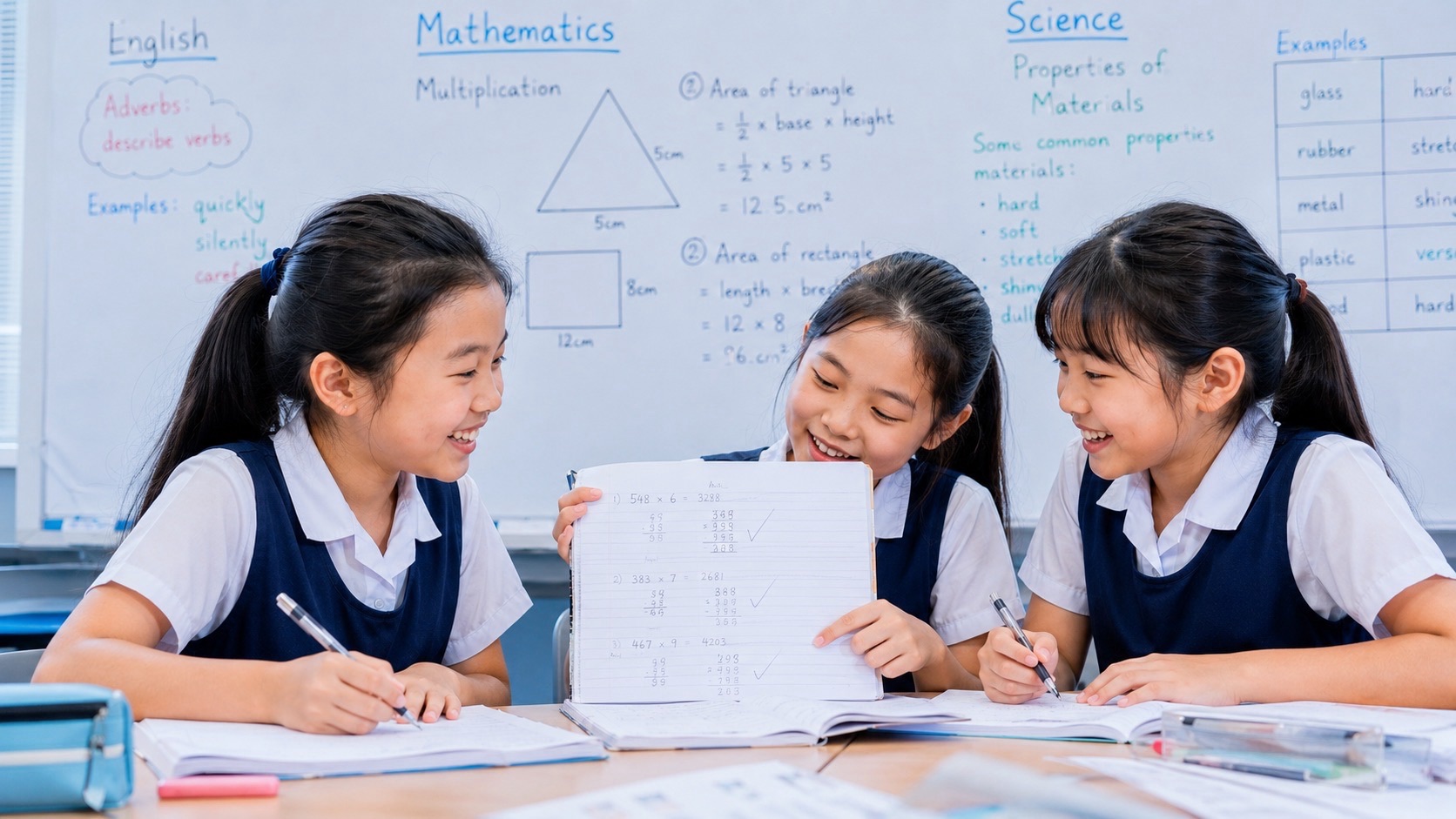
Three pupils can read an original passage, with one identifying a literal detail, another making a supported inference and a third checking whether a conclusion is too strong.
The tutor can then give each learner a different text and ask for an independent answer. This is how small-group discussion becomes useful rather than allowing one strong pupil to answer for everyone.
For writing, learners may discuss how to make an event credible but must create their own original compositions. Language-specific feedback should come from a qualified Higher Tamil teacher.
The eduKate maximum-three-pupil, 1.5-hour approach can support this process if a suitable Higher Tamil specialist and current class are genuinely available. Families should confirm availability rather than assume every language level is automatically offered.
Related Punggol guidance: Standard Tamil 0007 comparison, Primary 5 Tamil and the cohort boundary, Higher Mother Tongue programme and pathways and why eduKate uses groups of three.
Questions parents should ask
- Is the child’s actual examination Higher Tamil 0017, not Standard Tamil 0007?
- Has the tutor verified the latest official 2027 syllabus rather than merely using last year’s cover?
- Can the pupil produce a relevant title-based or story-continuation composition independently?
- Does editing practice ask what the whole sentence means before changing words?
- Can the child explain evidence for an inference without copying the entire passage?
- Is practice balanced between writing and language-and-comprehension skills?
- Does feedback lead to a new independent task?
Frequently asked questions
Is 150 words a confirmed Higher Tamil requirement?
It is the minimum specified in the verified 2026 Higher Tamil 0017 reference. Check the official 2027 syllabus before applying it to the actual forthcoming examination.
Does Higher Tamil use the same word count as Higher Malay?
No, in their published 2026 references: Higher Tamil specifies 150, while Higher Malay specifies 180 words.
Does Higher Tamil have a separate oral examination?
Not in the verified 2026 Higher Tamil 0017 scheme, which consists of two written papers. The school and SEAB’s 2027 instructions take precedence.
Is Higher Tamil 0017 the same as Standard Tamil 0007?
No. The subject code and paper structure differ. Standard Tamil contains a separate oral/listening assessment.
Is fluent reading aloud proof of advanced comprehension?
No. Comprehension also requires vocabulary meaning, grammatical relationships and reasonable conclusions based on the passage.
The Punggol 2027 takeaway
Higher Tamil 0017 is a course in accurate written language, thoughtful composition and reading with evidence. The 2026 reference offers a clear two-paper preparation baseline, but the 2027 examination must follow its actual official publication. Effective tuition makes the pupil able to write and interpret new Tamil independently.
Official references: SEAB PSLE Higher Tamil 0017, 2026 PDF, SEAB PSLE 2026 subject directory and MOE Primary curriculum directory. Reviewed 31 October 2026; use later SEAB and school instructions when available.


