
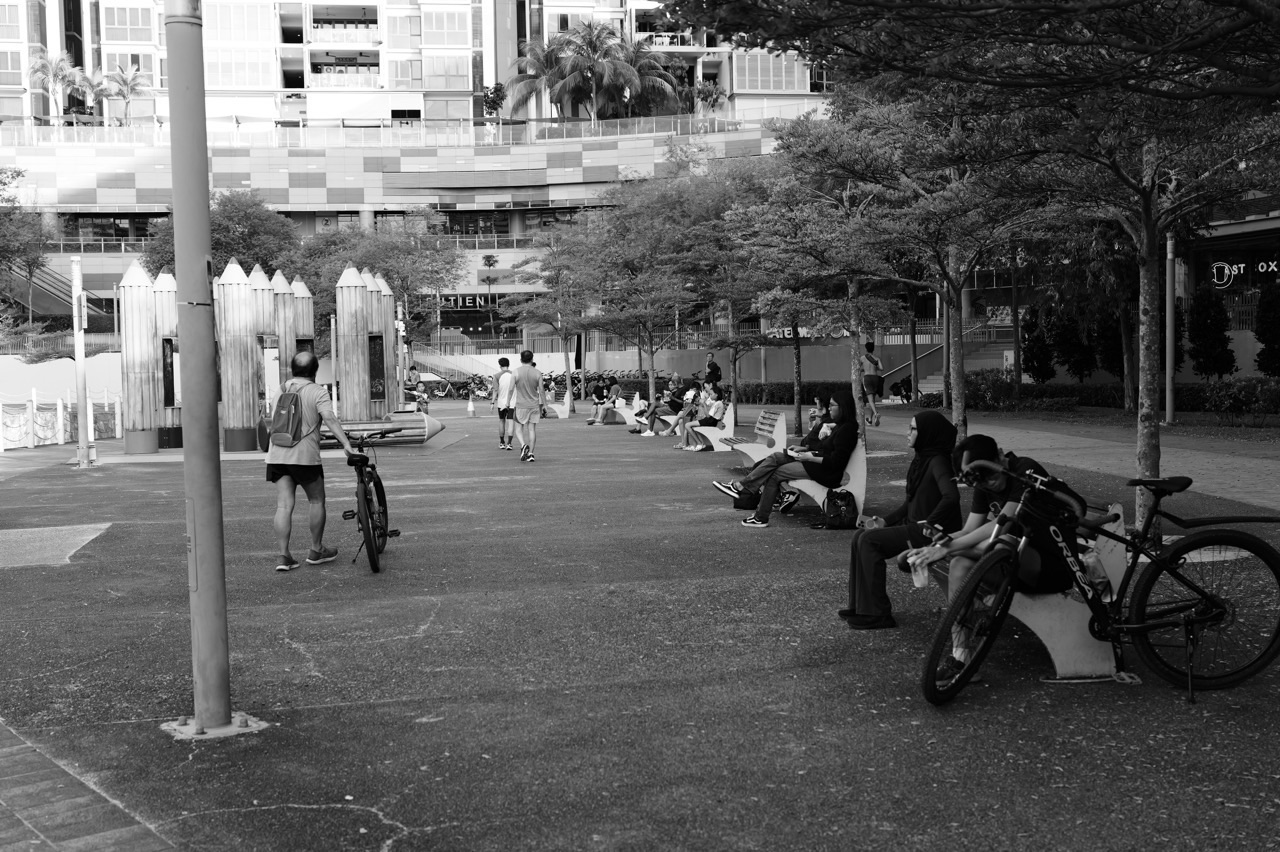
Why would a public garden be designed to do more than look attractive? Most people think of parks as places to walk, exercise, play or enjoy greenery. But some gardens are deliberately arranged so that visitors can experience a quieter environment, interact with plants and take part in suitable activities that may support well-being.
Punggol Waterway Park has one of these spaces. NParks identifies its 900-square-metre Therapeutic Garden, launched on 4 May 2020, near Carpark A along Sentul Crescent. The garden includes a wellness area with sensory plants, a communal planter, a fitness area and an elevated view of the Waterway.
Those features raise a useful question: why not simply fill the land with flowers, add a bench and call it finished? Why think carefully about paths, seating, senses, movement and activities? The answer is that a garden designed for therapeutic use has a different purpose from a decorative planting bed.
This easy explanation focuses on why sensory experiences and accessible design matter at Punggol Waterway Park’s Therapeutic Garden. It does not promise that a walk cures a medical condition. It does not confuse this garden with the separate Therapeutic Garden at Punggol Park, which is in the Hougang area and opened in December 2024.
The answer in 50 seconds
NParks says therapeutic gardens are planned using research-informed design principles to encourage interaction with nature and support visitors’ well-being. Its general design guidance emphasises clear paths, accessible circulation, places to sit, and varied sensory experiences involving plants and the surrounding environment.
At Punggol Waterway Park, the 900-square-metre garden includes sensory planting in a wellness zone, a communal planter, a fitness area and a view across the Waterway. It can also support therapeutic horticulture programmes led by trained people for suitable groups, including seniors and people with particular support needs.
The key idea is that a thoughtful garden considers how people experience a place, not just how it looks in a photograph. The layout, planting and opportunities for gentle activity are intended to make nature easier to engage with. But actual benefits vary between individuals and do not replace medical care.
What makes a therapeutic garden different from an ordinary garden
An ordinary public garden may prioritise beauty, botanical displays, environmental education or recreation. A therapeutic garden deliberately considers how the environment can support comfort, engagement and well-being for visitors with different needs.
This does not make an ordinary park useless for mental well-being. A pleasant walk through many green spaces can feel restorative. The difference is in the specific design purpose and the emphasis on evidence-informed features.
NParks describes therapeutic gardens as places with serene settings, accessible circulation and sensory opportunities. They may be used for informal visits or as the setting for structured horticultural activities.
A decorative flower bed can be admired without much interaction. A therapeutic garden may provide opportunities for visitors to observe, move through, rest within or participate in suitable guided activities in a more deliberate way.
The distinction is an intention, not a guarantee. A purpose-built garden is not automatically helpful to every person under every condition.
Why a garden should engage more than sight
A photograph captures colour and shape, but a person standing in a garden experiences more. They may notice natural sounds, scents, air movement and different visual textures. People can also connect those sensations with memories and emotions.
NParks’s therapeutic-garden guidance highlights sensory engagement through plants and surrounding features. The Punggol Waterway Park page specifically identifies a wellness zone with plants intended to evoke the senses.
Sensory design does not require intense stimulation. For some visitors, a calm environment with a few distinct features is more appropriate than a space full of competing colours, sounds and fragrances.
The important word is choice. A visitor should be able to experience the environment at a suitable pace. Someone may enjoy looking at foliage without wanting to touch it. Another person may appreciate the sounds of leaves or water more than a strongly scented plant.
A well-designed experience invites engagement rather than overwhelming the user.
Why the same plant can mean different things to different people
A familiar herb or flowering plant may evoke a memory in one visitor and no special response in another. Personal associations depend on experience, culture, age and individual perception.
Therapeutic-garden design often considers how plants can offer more than visual decoration. Some may have distinctive shapes, scents or textures, subject to safe planting choices. However, there is no universal list of plants guaranteed to make every visitor relaxed.
A child might think a scented leaf is wonderful. Someone else could find strong smells unpleasant or have a sensitivity. A person with low vision may experience the garden differently from someone whose primary interest is colour.
This is why inclusive design should accommodate a range of users. The objective is not to force everyone through an identical sensory lesson. It is to create options that can be used respectfully and safely.
Why calmness is a design question
A garden cannot command a person to feel calm. But its layout and surroundings may influence whether the environment feels approachable and comfortable.
NParks describes therapeutic gardens as incorporating clear routes, seating and layered vegetation that invite exploration while providing a serene setting. These choices can reduce uncertainty about where to go and offer opportunities to stop.
The experience may be particularly useful for someone who wants a gentle outing rather than an energetic exercise session. However, the surrounding weather, crowding and noise can still affect the visit.
It would be misleading to guarantee stress reduction after a fixed number of minutes. A therapeutic garden is one supportive environment among many factors influencing well-being.
The responsible explanation is that design can create favourable conditions for certain experiences, while individuals remain different.
Why clear paths matter to well-being
Imagine entering a garden but not knowing whether the route ends abruptly, whether there are steps or whether the path returns to a familiar point. For some visitors, uncertainty about navigation can make an outing tiring or stressful.
NParks’s general therapeutic-garden guidance emphasises legible paths and connected routes, with wider paths to help visitors using wheelchairs. Such features can make it easier to explore at a comfortable pace.
The exact suitability of a particular route still needs to be checked. A garden labelled therapeutic does not guarantee that every pathway beyond its boundary is fully accessible to every mobility aid.
For a caregiver accompanying an older person, the journey from parking or public transport to the garden may be just as important as the garden’s internal layout. Good access is continuous from the actual starting point, not merely a sign at the entrance.
Why looping routes can feel more manageable
NParks identifies looped and connected pathways as a common design principle across its therapeutic gardens. A loop allows visitors to continue moving and return towards an area without navigating a dead end in the same way as an isolated path.
For someone who finds complex directions difficult, a clear loop can make the route easier to understand. For a wheelchair user, a continuous path can improve the experience if its gradients and surfaces are appropriate.
The important caution is to distinguish general design guidance from a verified drawing of the Punggol Waterway Park garden. The site’s actual paths and current access should be checked using official information.
A simple explanation for children is that predictable circulation can help people focus on the garden rather than constantly worrying about where they will end up.
Why benches are part of the experience
A seat may look like an ordinary piece of park furniture, but its location can influence whether a person can comfortably use the space. Someone may need to rest after a short walk. Another may want a quiet place to observe plants without continuing to move.
NParks’s general therapeutic-garden guidance includes ample seating as part of the environment. The usefulness of any particular bench depends on access, shade, maintenance and the person’s needs.
There is no reason to assume that everyone who visits a therapeutic garden wants to exercise. For some, sitting quietly and observing the landscape is the main purpose of the outing.
This illustrates an inclusive principle: a public space should offer more than one reasonable way to participate.
Why the communal planter matters
NParks specifically identifies a communal planter at Punggol Waterway Park’s Therapeutic Garden. A planter can provide an opportunity for appropriate horticultural activities, such as observing or tending plants in a supervised, organised programme.
But the presence of a communal planter does not mean every visitor may harvest leaves, dig soil or move plants. The planter has a managed purpose, and activities must follow the operator’s current rules.
In therapeutic horticulture, guided nature-related tasks can be used to encourage engagement, movement and social interaction when suitable for the participant. The task may be deliberately simple, allowing someone to take part at their own pace.
This is different from a public allotment plot. A therapeutic planter is not automatically a personal vegetable bed or a space available for unregistered gardening.
Why gentle physical activity can be useful
The Punggol Waterway Park Therapeutic Garden includes a fitness area. That feature signals that the space can provide opportunities for suitable movement as well as quiet observation.
Gentle activity may be appropriate for some visitors, but exercise needs vary. A person with mobility limitations or a medical condition may require professional guidance on what activity is safe. The presence of fitness equipment is not a medical prescription.
A caregiver should not pressure someone to use equipment simply because it is nearby. A short, comfortable walk or seated observation may be a more suitable choice for that visit.
The educational lesson is that a supportive public space can allow different levels of activity while respecting individual ability and preference.
Why an elevated view of the Waterway is significant
NParks describes the garden as offering an elevated vista of the Waterway. A wider view can help visitors experience the landscape beyond the immediate planting area.
It may also provide a recognisable visual landmark, helping people orient themselves within the park. The Waterway is an important part of Punggol’s town identity, so seeing it from a garden connects the smaller therapeutic space with the larger neighbourhood.
But an elevated view is not a reason to approach railings unsafely or seek a photograph from undesignated positions. Visitors should use the intended public areas and follow safety instructions.
A child’s learning task might be to describe what they can see from one safe position, then distinguish that observation from guesses about what lies farther away.
Why a garden may evoke memories
Plants, scents and familiar landscapes may remind people of earlier experiences. An older resident might remember a type of plant from childhood. Another person may recall a family garden or a walk with friends.
NParks’s general therapeutic-horticulture guidance considers meaningful sensory engagement and opportunities for interaction with nature. Memory can be part of such interaction, but it is highly personal.
For a person with dementia or other cognitive needs, activities should be tailored by appropriately trained facilitators. A blog should not promise that a particular scent will restore memory or slow disease progression.
The respectful approach is to offer an opportunity for reminiscence without testing someone on whether they remember the “correct” answer. Conversation can be enjoyable even when memories are incomplete or different from those of other participants.
Why trained facilitators matter
NParks says therapeutic horticulture programmes are conducted by trained persons for appropriate participant groups, including seniors and people with dementia or other special needs.
This is important because a structured programme is different from an ordinary casual visit. The facilitator may need to adapt activity complexity, equipment, pacing and communication to participants’ abilities.
A programme can involve plant-related tasks designed for a particular group, with safety and accessibility considered. A member of the public should not assume that they can independently reproduce the same programme with vulnerable participants just by reading a garden description.
Likewise, participation does not replace treatment by qualified healthcare professionals. Therapeutic horticulture is a supportive activity, not a cure for an illness.
Why an ordinary visit and a programme are different
A family may visit the therapeutic garden during its public opening hours to enjoy the surroundings. NParks lists it as open 24 hours, within the broader Punggol Waterway Park context, though a family’s actual access plan should still account for lighting, weather and suitability.
A therapeutic horticulture programme is a different type of activity. It may have registration arrangements, specific facilitators, planned tasks and target participants.
The fact that the garden exists does not mean a programme is running whenever someone arrives. Conversely, someone who is not enrolled in a programme may still enjoy appropriate public areas.
The distinction helps families plan responsibly. For an informal walk, check the park. For a supported activity, ask NParks or the organiser about the current programme and participation conditions.
Why not every plant should be touched
Sensory plants may invite curiosity, but not all plants are safe or appropriate to handle. Some people have sensitivities, and particular plants may require protection or maintenance.
NParks’s broader guidance for therapeutic gardens includes careful plant selection and attention to safe engagement. Visitors should follow signage and programme instructions rather than assuming every leaf can be picked or crushed for its scent.
Children can appreciate a plant by observing its colour, shape or movement. Touching or smelling closely should occur only where appropriate and authorised, with adult supervision.
This is a valuable science principle: an observation can be rich even when the observer leaves the subject undisturbed.
Why a therapeutic garden needs maintenance
Plants grow and change. Paths wear. Seats, railings and fitness features can require inspection. The effectiveness of a public garden as a supportive environment depends on continuing care.
A damaged pathway can undermine access. Overgrown planting may block a sightline or make navigation difficult. A broken seat may remove a useful rest point.
Residents should report concerning conditions through appropriate official channels rather than making unsupervised alterations. Public horticultural spaces have management arrangements for a reason.
The lesson is that a therapeutic garden is not a one-time design achievement. Its practical value must be maintained over time.
Why Punggol Waterway Park is a suitable context for this idea
Punggol Waterway Park is an established part of the town’s green network. It offers walking routes, landscape features and connections to residential areas. The Therapeutic Garden adds a particular purpose within that wider environment.
This matters because some residents may already be familiar with the park. A small dedicated space within a larger public setting can make appropriate gentle nature experiences more accessible to people who live or travel nearby.
However, the park’s broader visitor activities are not all equally suitable for every therapeutic-garden user. A busy cycling route, energetic playground or long walk may not fit someone seeking a quiet, short outing.
The therapeutic space offers a different type of experience while remaining part of the town’s shared green infrastructure.
Why the launch date matters
NParks identifies the Punggol Waterway Park garden’s opening as 4 May 2020. That date places the garden within Singapore’s wider development of therapeutic green spaces.
It is also important for distinguishing this particular facility from later projects. NParks opened a separate Therapeutic Garden at Punggol Park on 12 December 2024, featuring a boccia court and wheelchair-oriented active facilities.
The names are similar, but the locations and designs differ. Punggol Waterway Park is in the Punggol town area along Sentul Crescent. Punggol Park is in the Hougang area. A search result that mentions an outdoor boccia court should not automatically be attributed to the Waterway garden.
This simple naming distinction can prevent families from travelling to the wrong destination.
Why the newer Punggol Park garden should not be confused with this one
NParks describes the 2024 Punggol Park Therapeutic Garden as a 2,000-square-metre space with active and passive zones, including Singapore’s first outdoor boccia court and an outdoor wheelchair obstacle course within its parks.
Those features are valuable, but they belong to that particular garden’s description. The Waterway Park garden is a 900-square-metre site with its own wellness zone, communal planter, fitness area and waterway vista.
Even when two facilities share a name category, their detailed design and access arrangements can differ. Residents should identify the exact park before relying on a facility list.
This is also a broader lesson in information accuracy: a technically true statement about one place may become false when copied into an article about another place.
Why inclusivity is a practical design question
A visitor using a wheelchair, an older adult needing frequent breaks, and a child who becomes overwhelmed by noise may all experience the same garden differently.
General therapeutic-garden design aims to provide clear circulation, suitable sensory experiences and opportunities to pause. But a specific user’s needs may be more detailed than an introductory description can cover.
A caregiver should check the full route from the actual starting point, access to toilets and rest areas, and the person’s comfort with outdoor conditions. They should ask the operator for specific arrangements where necessary.
Inclusivity is not a badge awarded because a site looks welcoming. It is measured by how effectively the space can be used by different people in real life.
Why a therapeutic garden is not a hospital
The word *therapeutic* can create the impression that visiting the garden provides medical treatment. That would be misleading.
NParks designs therapeutic gardens to encourage nature interaction and well-being, and it supports appropriately conducted horticultural programmes. These spaces do not diagnose medical conditions, prescribe medicine or replace professional care.
Research on nature exposure and well-being can support the design rationale while leaving individual outcomes uncertain. A person may feel more relaxed after visiting, but others may be uncomfortable due to weather, sensory sensitivities or personal circumstances.
The appropriate public message is supportive rather than curative: a garden can be one useful part of a person’s lifestyle and community environment, while health concerns are addressed through qualified healthcare pathways.
What the research can and cannot establish
NParks states that therapeutic gardens are based on scientific research. Studies on nature exposure and related activities report potential associations or benefits for particular well-being outcomes under defined conditions.
That does not prove that every therapeutic garden has the same effect, that one brief visit produces a specific clinical improvement or that results from one study generalise to all individuals.
When reading a study, ask who participated, what intervention was used, what was measured and how the results were compared. A research conclusion about a structured programme should not automatically be applied to an unsupervised visit.
For students, this is a good introduction to evidence literacy. “Designed using research” is an accurate statement about the approach; “guaranteed to cure stress after ten minutes” is not.
Why individual preferences matter
Some people find water views calming. Others prefer sheltered seating among trees. One visitor may enjoy scents and flowers, while another has allergies or sensitivities. A person with limited stamina may want a short route rather than a long landscaped walk.
A supportive space should allow suitable choice rather than assume everyone wants the same sensory experience. The same principle applies to social activity. Some people enjoy group horticulture programmes, while others prefer a quiet independent visit.
For caregivers, it helps to ask the person what they would enjoy and what would be uncomfortable. The aim is participation based on dignity and preference, not simply completing an activity chosen by someone else.
This is an important distinction between designing for people and designing an idealised experience that every person is expected to follow.
Why the garden can help intergenerational visits
Punggol households may include children, working adults and older relatives. A garden with seating, views and opportunities for gentle engagement can provide a shared destination that does not require everyone to undertake the same strenuous activity.
One family member may enjoy observing flowers. Another may prefer a short supervised stroll. A child may ask questions about plants or the shape of leaves. They can experience the place together without turning it into a competitive exercise.
However, a shared outing should be planned around the least comfortable participant rather than assuming everyone can complete a long route. Weather, access and individual needs remain important.
The social value lies partly in giving family members a reason to spend comfortable time together in a public environment.
A small lesson in sensory observation
Children often equate nature learning with naming plants or animals. Sensory observation can be simpler. A learner can notice the colour and shape of leaves, the change in light under a canopy or the sound of wind moving through branches.
A parent can ask the child to describe what they notice without demanding a scientific name. Then ask what might explain the observation. This encourages careful attention to the environment.
But sensory learning must remain respectful. Do not pick plants, enter beds or touch unfamiliar material. A child can describe texture visually without physically handling a plant.
The aim is to develop curiosity and vocabulary through a shared experience, not to collect specimens or make medical claims.
Why the view can encourage slower observation
The Waterway is a large visual feature that can draw visitors’ attention. From an appropriate safe viewpoint, a person may watch the movement of people, reflections, planted banks and changes in weather.
Such observation can encourage an outing with no pressure to achieve a particular distance or time. That can be attractive to people who prefer a slower activity.
Yet the waterway environment still has ordinary outdoor risks. Strong sun, heavy rain, lightning and unsafe approaches to the water are not removed by the therapeutic-garden label.
The appropriate approach is to make the observation comfortable and safe, leave when conditions change and accept that a short visit may be sufficient.
Three family scenarios
Scenario one: an older resident wants a gentle outing
An older resident enjoys greenery but does not want a long exercise session. The family checks the route to the Therapeutic Garden, the distance from the chosen starting point and whether there are suitable places to rest.
They plan a short visit focused on observing the plants and waterway rather than attempting the full park connector. The resident decides how much walking feels comfortable.
The lesson is that the value of a green space is not measured by the number of kilometres completed.
Scenario two: a group seeks a structured horticulture programme
A community organiser wants to arrange an activity for seniors with different abilities. Instead of turning up with tools and asking participants to garden, the organiser contacts the relevant NParks programme channel.
The organiser checks eligibility, trained facilitation, suitable activities, group size, safety and accessibility arrangements. A structured programme may require expertise that an informal volunteer does not have.
The lesson is that a supportive activity needs appropriate planning and people with the right skills.
Scenario three: a child asks whether plants can treat illness
A child hears that the garden is therapeutic and concludes that smelling the flowers can cure disease. The adult explains that nature exposure may contribute to well-being and that trained programmes can be supportive, but they are not a substitute for medical diagnosis or treatment.
The child is encouraged to describe what they enjoy about the setting without making clinical promises.
The lesson is the difference between supporting well-being and treating an illness.
What should families check before visiting?
Start with the exact location: Punggol Waterway Park near Carpark A on Sentul Crescent. Check current NParks information and the appropriate route. If someone requires step-free access or support, assess the complete journey.
Plan for weather and personal comfort. A garden open around the clock is not necessarily the best place for an unsupervised late-night visit, especially if lighting, isolation or changing conditions create concerns.
For a programme, confirm the organiser and participation conditions. Do not assume that a calendar entry from an earlier year remains valid.
These small checks make the visit more respectful of the people involved and reduce the risk of confusing public access with programme enrolment.
Why trained programmes may use simple activities
A horticultural activity does not have to be technically complex to offer engagement. Tasks such as arranging appropriate plant materials, talking about familiar scents or participating in a safe planting activity may be chosen for a particular group’s needs.
The quality of the experience depends on facilitation, appropriateness, consent and the participant’s abilities. A complex task is not inherently more valuable than a simple one.
NParks’s therapeutic horticulture material describes purposeful activities to encourage interaction, motor coordination and social connection. The organiser must still adapt to the actual group rather than assume that everyone will respond the same way.
For a student, this is a lesson in human-centred design: success is defined by the people using the activity, not by how difficult the task looks.
Why a therapeutic garden and a community garden have different goals
Punggol also has community gardening and allotment opportunities. Those programmes focus on organised plant growing and stewardship under particular rules. A therapeutic garden may incorporate planting activity but has a different primary design purpose.
Someone seeking a private growing plot should investigate the allotment scheme. Someone seeking to volunteer with neighbours can enquire about Community in Bloom. Someone interested in guided nature-related well-being activities should ask about therapeutic horticulture programmes.
The overlap in plants can create confusion, but programme structure matters. A communal planter in a therapeutic space is not automatically an allotment open for unrestricted cultivation.
Understanding the distinction helps residents select the right opportunity for their goals.
Why mental well-being is not the same as constant happiness
A public garden cannot make every visitor happy or remove every source of stress. A person may arrive tired, worried or simply uninterested in the setting.
The design aim is to provide a potentially supportive environment that people can use voluntarily and appropriately. It should not place pressure on someone to report that they feel better.
For caregivers, it is often more respectful to ask whether the person enjoyed a feature or wants to return, rather than demand proof that the outing improved their mood. A neutral experience is not a moral or personal failure.
This realistic approach also prevents overclaiming the benefits of green spaces. The garden has a useful public purpose without needing an impossible promise of universal outcomes.
Why maintenance and staff responsibilities matter
The garden’s planting, seating and activity spaces need appropriate care. If a path becomes difficult to use or a feature is damaged, the experience may become less suitable for its intended visitors.
Residents should report problems to the responsible authority and avoid moving plants, modifying planters or attempting repairs. Organised programmes have their own operational needs in addition to general park maintenance.
The lesson is that inclusive design continues after opening. It requires monitoring and responsiveness, not only a good initial drawing.
A garden’s success should be considered through actual usability over time as well as its visual appeal.
Why this belongs in Punggol’s education library
The Therapeutic Garden connects Science, Geography, social studies and human-centred design. Science asks what senses perceive and how plants function. Geography asks how public spaces are distributed. Social studies asks whether people with different needs can use shared facilities. Design asks how pathways, seating and activities serve real users.
Children can apply these ideas in many places. A library reading room, playground or school corridor can be evaluated using similar questions about comfort, choice, accessibility and clarity.
The garden is a concrete local example of a wider principle: the built environment shapes people’s opportunities to participate. A thoughtful town designs for varied human needs rather than only for a standard, highly mobile visitor.
Common misunderstandings
Do not confuse Punggol Waterway Park’s 900-square-metre Therapeutic Garden with the 2,000-square-metre garden at Punggol Park in the Hougang area. Do not attribute the 2024 boccia court or wheelchair obstacle course to the Waterway garden.
Do not assume every visitor may use communal planters without permission. Do not treat a garden’s public opening hours as evidence that every programme runs continuously.
Do not promise that sensory plants cure dementia, depression or any other medical condition. Do not say research-informed design guarantees identical effects for every visitor.
Finally, do not judge accessibility only from a garden name. Check the actual route, current conditions and the person’s needs.
Frequently asked questions
Where is Punggol Waterway Park’s Therapeutic Garden?
NParks lists it near Carpark A at Punggol Waterway Park, along Sentul Crescent.
When did it open?
NParks records its launch on 4 May 2020.
How large is it?
The official site describes it as 900 square metres.
What does it include?
NParks identifies a wellness zone with sensory plants, a communal planter, a fitness area and an elevated Waterway view.
Is it the same as the Therapeutic Garden at Punggol Park?
No. Punggol Park is a different park in the Hougang area. Its newer therapeutic garden opened in December 2024 and has distinct features.
What is therapeutic horticulture?
It refers to purposeful plant- and nature-related activities conducted in appropriate programmes, with trained facilitation for participants’ needs.
Can anyone join a programme immediately?
Do not assume so. Contact the relevant organisers for current registration, suitability and programme arrangements.
Is the garden a medical treatment?
No. It is a supportive green space and may host structured activities, but it does not replace diagnosis or medical care.
Can visitors touch and collect plants?
Follow current signs and programme instructions. Do not assume every plant or communal planter is available for public harvesting or handling.
Is it wheelchair accessible?
NParks’s general therapeutic-garden principles emphasise accessible pathways. Check the specific route and current conditions for the traveller’s actual needs.
A practical family checklist
- Confirm the garden is at Punggol Waterway Park, not Punggol Park in Hougang.
- Use NParks’s current information for location and access.
- Plan an appropriate journey from the actual starting point.
- Ask the visitor what kind of outing they would enjoy.
- Allow time for sitting, gentle observation and rest.
- Avoid excessive sensory stimulation where someone finds it uncomfortable.
- Do not pick, taste or handle unfamiliar plants without permission.
- Keep children supervised near the Waterway and planting beds.
- Seek trained programmes through appropriate organisers.
- Treat wellness support as complementary, not a medical cure.
- Adjust plans for heat, rain, lightning and individual limitations.
Teaching Guide: design a garden for different people
Learning goal. The student should explain why a therapeutic garden considers paths, seating, sensory plants and suitable activities, and why well-being design cannot promise the same outcome for everyone.
Stage one: identify different users. Draw three fictional visitors: an older person who needs a resting place, a wheelchair user who needs suitable circulation and a child interested in plants. Ask what each would need from a garden.
Stage two: design a route. Draw a simple entrance, path, seating area and plant zone. Discuss why connected and legible circulation can be helpful. Explain that a real design requires proper technical evaluation.
Stage three: add sensory choices. Include hypothetical plants with different visual and scent characteristics. Ask whether every user would want the same intensity of experience. The student should identify individual preferences and possible sensitivities.
Stage four: distinguish programmes. Compare an informal family visit with a facilitated horticultural activity for a group requiring support. Ask why the latter might need a trained facilitator.
Stage five: challenge an overclaim. Present the fictional headline “This garden cures every visitor’s stress in ten minutes.” Ask the child why that is not a responsible statement. The corrected version should refer to supportive design and varied outcomes.
Stage six: check the location. Show two labels: Punggol Waterway Park Therapeutic Garden and Punggol Park Therapeutic Garden. Ask the learner to identify how names can create confusion and why exact place verification matters.
Transfer test. Ask students to redesign a school reading corner for pupils with different preferences. They should apply principles of comfort, choice, clear movement and appropriate sensory conditions.
Parent checkpoint. A strong answer is: “This garden is arranged so people can enjoy nature at a comfortable pace, with plants, places to rest and suitable activities. It can support well-being but it does not replace medical care.”
Where this guide fits in eduKatePunggol
The existing History of the Punggol Waterway Park Therapeutic Garden explains the launch and history of the site. The Things to Do in Punggol for Caregivers guide helps families plan suitable outings. The Why Punggol guide on neighbourhood walking shade explains wider walking comfort.
This article owns the causal question: why are sensory plants, seating, accessible circulation and gentle activities deliberately considered in a therapeutic garden? It complements the park’s historical and practical guides rather than duplicating them.
Official sources and further reading
- NParks: Therapeutic Garden at Punggol Waterway Park
- NParks: Therapeutic gardens and horticulture programmes
- NParks: Punggol Waterway Park
- NParks: Separate Punggol Park garden opened 12 December 2024
- eduKatePunggol: History of Waterway Park’s Therapeutic Garden
The one idea to remember
Punggol Waterway Park’s Therapeutic Garden was designed to offer more than a pleasant view. Its plants, seating, communal features and gentle nature-related opportunities reflect an effort to make public greenery supportive of varied needs. The best measure is not whether it looks impressive, but whether people can use it appropriately, comfortably and with dignity.


