
Complete reading index
Read the dates first, then choose design, accessibility, funding, horticulture, educational activities or the original evidence.
- 1. The direct answer: Punggol gained a therapeutic garden in 2020
- 2. 2016: the earlier national experiment at HortPark
- 3. 2018: funding for gardens in several neighbourhoods
- 4. The three conflicting 2020 dates: April, 4 May and 30 November
- 5. The April 2020 reference in NParks’ annual report
- 6. Why NParks’ 4 May 2020 launch date deserves careful wording
- 7. What happened in public coverage on 30 November 2020
- 8. A 900-square-metre facility inside a much larger park
- 9. Raised planters and the design of participation
- 10. Sensory planting: fragrance, colour and familiar leaves
- 11. The fitness area: activity without demanding strenuous exercise
- 12. Benches, soft grass and places to rest
- 13. What therapeutic horticulture actually means
- 14. Designed for inclusion, not a guarantee of equal access
- 15. Do not confuse Waterway Park with Punggol Park in Hougang
- 16. The 2020 pandemic context and why dates need care
- 17. Mental well-being: evidence for intention is not proof of treatment
- 18. The garden as a response to an ageing population
- 19. How the garden fits the Punggol Waterway timeline
- 20. Funding, design and public stewardship are different roles
- 21. How to use the garden today without confusing history with live availability
- 22. A date-by-date audit for future researchers
- 23. A complete Primary and Secondary school learning project
- 24. Frequently asked questions about the 2020 garden
- 25. The source record and what remains unresolved
- Original records and Punggol cross-links
Punggol Waterway Park’s 900-square-metre Therapeutic Garden became part of Singapore’s network of inclusive green spaces in 2020. NParks’ amenity page gives a 4 May launch, its 2020/2021 annual report says April, and HDB and contemporary news accounts describe an opening on 30 November. These dates are attributed, not silently reconciled into an invented ceremony.
The garden near Carpark A combines waterway views, raised and communal planting areas, a fitness area and sensory planting. This historical guide explains the design, its funding context, the 2020 record and the difference between a public nature space and a structured therapeutic horticulture programme.
Choose your historical reading route
Key facts · Conflicting opening dates · Inclusive design · Original evidence
1. The direct answer: Punggol gained a therapeutic garden in 2020
Punggol Waterway Park’s Therapeutic Garden became part of Singapore’s network of purpose-designed restorative gardens in 2020. NParks currently describes it as a 900-square-metre garden near Carpark A, with an elevated view of the Waterway, communal planting facilities, a fitness area and a sensory wellness zone. It was Singapore’s sixth therapeutic garden, according to NParks’ annual report and contemporary news accounts.
One complication is the precise opening date. The official NParks garden page says it was launched on 4 May 2020. NParks’ 2020/2021 annual report uses the wording that it opened in April 2020. HDB’s Life Storeys issue 29 says it opened on 30 November 2020, and national media covered the garden as newly open that same day. These statements cannot responsibly be flattened into one unquestioned first-admission date.
The historical record supports a clear broader claim: the garden was developed and publicly documented in 2020, with at least three source-specific dates or descriptions. It does not give us a detailed inauguration chronology sufficient to explain why those accounts use different dates. It may be tempting to invent phases, but without a document explicitly linking them, the discrepancy should remain visible.
The garden’s importance lies beyond a date. Its design aimed to make green space more useful for people with different mobility, sensory and social needs, including older visitors and people participating in structured therapeutic horticulture. It represents a shift from thinking of a park only as scenery or an exercise corridor to considering whom a public landscape allows to take part.
This article concentrates on that specific history and design rather than duplicating the existing eduKate visitor guide on how to find Carpark A or plan a quiet visit today.
2. 2016: the earlier national experiment at HortPark
Punggol’s Therapeutic Garden was not Singapore’s first attempt at restorative garden design. Contemporary reporting places the first NParks therapeutic garden at HortPark in May 2016. That earlier project developed a model for using accessible landscape arrangements and guided plant activities to support emotional and social engagement in natural settings.
The national network matters because Punggol’s 2020 site was an expansion of an established idea rather than an isolated landscape decoration. By building similar gardens in different neighbourhoods, NParks could bring specialised features closer to communities instead of requiring visitors to travel across the island for every nature-based activity.
A therapeutic garden is not simply a garden with a medical-sounding name. Its design may involve suitable paths, seating, planting heights, sensory choices and appropriate spaces for low-intensity activity. The value is in reducing barriers to engagement with plants and surroundings. The existence of such design principles does not mean every user will experience the same health outcome.
The HortPark precedent also helps readers avoid confusion about ‘firsts’. Punggol’s garden was described as the sixth in the national series and the first in Singapore’s northeast at the time of late-2020 media coverage. It was not the first therapeutic garden anywhere in Singapore.
For a History or Geography classroom, an appropriate question is why a successful concept might be expanded through a network of neighbourhood locations. Location influences who can reach a facility, and transport distance can affect whether an activity becomes part of regular life. To establish exact participation outcomes, however, one would need programme records rather than assume every nearby resident used the garden.
3. 2018: funding for gardens in several neighbourhoods
A separate historical lead comes from Peter Lim Philanthropy’s published account. It states that Peter Lim donated S$900,000 over three years in 2018 to develop therapeutic gardens in Telok Blangah, Punggol and Bedok Reservoir. That description places Punggol inside a broader funding and development effort.
The figure is often an invitation to arithmetic mistakes. S$900,000 described for three locations is not evidence that exactly S$900,000 was spent on Punggol alone. Nor may the sum safely be divided into identical amounts per garden without a detailed budget. Land preparation, design, specialist accessibility features and landscaping can differ by site.
The philanthropic record is useful for explaining an enabling relationship. A public agency was expanding community access to therapeutic greenery, while private giving could support selected facilities. But the available statement does not provide every contract, expenditure item or long-term maintenance obligation. A serious article separates a declared donation from audited site expenditure.
Punggol’s garden also existed within an established public park managed by NParks. A donor supporting a facility does not mean the facility was privately owned or that entrance was necessarily restricted to the donor’s beneficiaries. Current access and programme arrangements should be established from NParks itself.
The wider historical lesson is that public amenities can involve several kinds of contributors: planners, landscape designers, healthcare and horticulture specialists, donors, operators and the communities who eventually use the space. Naming one philanthropist should not erase the institutional and professional work around the project.
4. The three conflicting 2020 dates: April, 4 May and 30 November
Three published accounts use three different temporal descriptions for what appears to be Punggol Waterway Park’s 2020 therapeutic garden. NParks’ 2020/2021 annual report says its sixth Therapeutic Garden was opened in April 2020. The NParks amenity page, updated in 2023, gives a precise launch date of 4 May 2020. HDB’s 2021 Life Storeys issue states that the garden opened on 30 November 2020.
The Straits Times published articles and a large visual guide around 30 November 2020 describing a new garden now open. Other reporting from that same period calls it the northeast’s first therapeutic garden. Those media reports support the existence of substantial public-facing publicity or an opening milestone at the end of November.
A careful historian should not write that NParks was simply wrong about April or May without further evidence. Agencies sometimes use ‘opened’, ‘launched’, ‘introduced’ and ‘publicly announced’ differently, and coronavirus-related operating rules may have affected access during 2020. But the specific relationship among these dates has not been established by a signed chronology in the sources reviewed.
This article therefore treats April, 4 May and 30 November as source-labelled claims, not as proven separate construction or admission phases. It identifies which institution states each date, when that statement was published and what additional record would be needed to reconcile them.
That uncertainty is itself educational. A webpage with a precise date can appear conclusive, yet another official publication may give a different one. Accuracy sometimes means presenting the conflict clearly and resisting an attractive but unsupported explanation.
5. The April 2020 reference in NParks’ annual report
The NParks Annual Report 2020/2021 devotes a section to green spaces for all ages. It describes a sixth Therapeutic Garden at Punggol Waterway Park as having opened in April 2020. The report positions the garden among efforts to make nature’s well-being benefits more accessible across Singapore.
The wording is institutionally important because the annual report provides an official account of what NParks completed during its reporting year. It also explains the broader aim of including residents with different conditions and needs within park environments. The report’s text is not a substitute for a ceremonial invitation or visitor log giving the exact first date of entry.
The report’s photograph shows a landscaped waterfront setting associated with the garden. The caption describes elevated views and features that support therapeutic horticulture. Like any official photograph, it should retain its original credit and contextual date when reused.
Because the report says April while a current NParks web page says 4 May, a researcher needs to keep both. It is inappropriate to quietly edit April into May and pretend every NParks publication agrees. A possible administrative or editorial discrepancy is still a documented disagreement until additional records explain it.
For a classroom source audit, label the report ‘primary institutional retrospective, covering 2020/2021’. Compare it with the later amenity page, then ask which is more precise and whether precision alone guarantees historical accuracy. That is a better exercise than simply choosing the latest page automatically.
6. Why NParks’ 4 May 2020 launch date deserves careful wording
NParks’ official garden page states that the 900-square-metre facility was launched on 4 May 2020. It identifies the Waterway location, elevated view, communal planter, fitness features and a wellness zone with sensory plants. This is the strongest specific official date on the current amenity page.
The word ‘launched’ is worth preserving. A launch may coincide with public opening, but the available webpage does not describe a ceremony, admission schedule or any restrictions that were in force on that date. A history article should not insert a ribbon-cutting photograph or event programme that it has not located.
May 2020 also fell during Singapore’s COVID-19 circuit-breaker restrictions, which affected how public places and activities could operate. That context may help explain why later media visibility was different from the named launch date, but the sources used here do not prove precisely how the restrictions affected this garden’s first visitors.
The amenity page remains useful in 2026 for stable features such as its approximate area and location. However, those current descriptions do not necessarily establish that every individual plant and sign now present was installed in May 2020. Gardens are living places and can be replanted or maintained over time.
Readers asking for the official launch date should receive the precise answer ‘4 May 2020, according to NParks’ and an immediate note that other institutional histories use April or November. A source-attributed answer is stronger than a date stripped of its provenance.
7. What happened in public coverage on 30 November 2020
On 30 November 2020, several media accounts treated the Punggol Waterway Park Therapeutic Garden as newly opened. The Straits Times published a feature and visual guide identifying its 900-square-metre area, accessibility features and gardening possibilities. The article described the garden as the sixth in a national series and highlighted its use by seniors.
HDB’s Life Storeys issue 29 later used the explicit wording ‘Opened on 30 November 2020’. It highlighted two raised planter boxes, including features allowing wheelchair users to see, touch or participate in plant maintenance. This is a clear HDB statement, but it does not explain how the date relates to the earlier NParks accounts.
Contemporaneous publicity is significant because it captures what the public was being told near that time. Newspaper reporting gives a strong date for public communication and a snapshot of features promoted at the end of 2020. It does not automatically erase earlier launch or completion records.
It is possible to write a precise historical sentence without resolving the disagreement: the garden was described as newly open in media published on 30 November 2020, while NParks now dates its launch to 4 May 2020. The two sources establish different claims, and further documentary evidence is required to explain the interval.
This approach avoids creating an artificial story that a second garden opened on the same site. There is no evidence here of two separately named Punggol Waterway Park therapeutic gardens in 2020; the records instead appear to discuss one facility through different dates and purposes.
8. A 900-square-metre facility inside a much larger park
The therapeutic garden is described by NParks as about 900 square metres. The surrounding Punggol Waterway Park is far larger, with NParks reporting a park area of about 25.79 hectares. These figures should not be confused: a specialised garden occupies only a small part of a multi-zone landscape.
The site is near Carpark A along Sentul Crescent, according to the official amenity page. It offers an elevated view of the waterway rather than being simply another path alongside the canal. That perspective matters because sitting and observing the surrounding landscape can be part of the experience even for people who do not wish to engage in active gardening.
The difference in scale also explains how the park serves multiple needs. Joggers, cyclists and families use its wider recreational areas, while a smaller designed zone can accommodate quieter activities and particular access features. The fact that both exist in the same park does not mean every route or structure is equally suitable for every visitor.
Students can calculate the ratio of 900 square metres to 25.79 hectares after converting units, but the result is only an area comparison, not a measure of how many visitors benefit. Density, design, seating and programming all affect practical use of public space.
For a heritage page, the appropriate opening description is ‘a 900-square-metre garden within Punggol Waterway Park’. A headline saying the entire 25.79-hectare park opened as a therapeutic garden in 2020 would be misleading.
9. Raised planters and the design of participation
One of the garden’s distinctive features is its communal or raised planting areas. HDB’s account describes two raised planter boxes designed so people using wheelchairs can be involved in plant maintenance or simply access plants at a comfortable height. The focus is on changing the environment to support participation rather than expecting every visitor to adapt to one fixed planting level.
A planter’s height and surrounding circulation space can affect whether a person can reach soil, leaves or watering tools. That does not mean one design works equally well for everyone; body sizes, mobility, strength and personal preference differ. Effective accessible design benefits from user testing and maintenance.
The 2020 descriptions show why a therapeutic garden is more than decorative planting. People may be encouraged to engage through touching foliage, observing changes, tending plants or participating in a guided session. The activity is optional and should match a visitor’s abilities and the space’s rules.
Care is needed with interpretation. The existence of raised planters does not establish that every wheelchair user could reach every plant or that the facility met every possible accessibility standard. The published sources support an intention to improve access through particular features, not an independently measured guarantee of universal use.
For a classroom discussion, compare a conventional ground-level planting bed with a raised bed. Ask which barriers each creates, who is helped and what additional adjustments might be needed. This helps students understand inclusive design as a practical question rather than a slogan.
10. Sensory planting: fragrance, colour and familiar leaves
NParks identifies a wellness zone with plants chosen to engage the senses. Contemporary articles noted colours, textures and familiar fragrances including pandan. The aim was to allow visitors to experience nature through several forms of perception, not merely look at flowers from a distance.
Sensory experience is personal. A familiar smell may prompt memory or pleasant association for one visitor and feel overwhelming to another. Some people prefer quiet visual observation; others enjoy plant handling. An inclusive garden should offer choice rather than assume a single experience is therapeutic for everyone.
The November 2020 newspaper visual guide named plants such as firecracker plant and crepe ginger among the garden’s displays. Those are examples from a dated report, not a permanent 2026 species inventory. Plants may be replanted, replaced or mature differently over time.
The use of familiar species such as pandan is particularly interesting in Singapore, where a plant can connect practical everyday knowledge with the sensory landscape. Yet a caption should not claim that all visitors have the same cultural memories of one plant. The historical account documents design intent and examples rather than uniform individual effects.
For children studying Science, this topic links plant structure, sensory receptors and the difference between observation and interpretation. They can record colour, leaf shape or fragrance during an authorised visit without tasting unidentified plants or claiming medical effects from smell alone.
Principal 2020 evidence
- NParks — Punggol Waterway Park Therapeutic Garden official feature and 4 May 2020 date
- NParks — Annual Report 2020/2021, ‘Green Spaces for All Ages’ (April reference)
- HDB — Life Storeys, Issue 29 (30 November reference)
- The Straits Times — Garden for the senses opens at Punggol Waterway Park
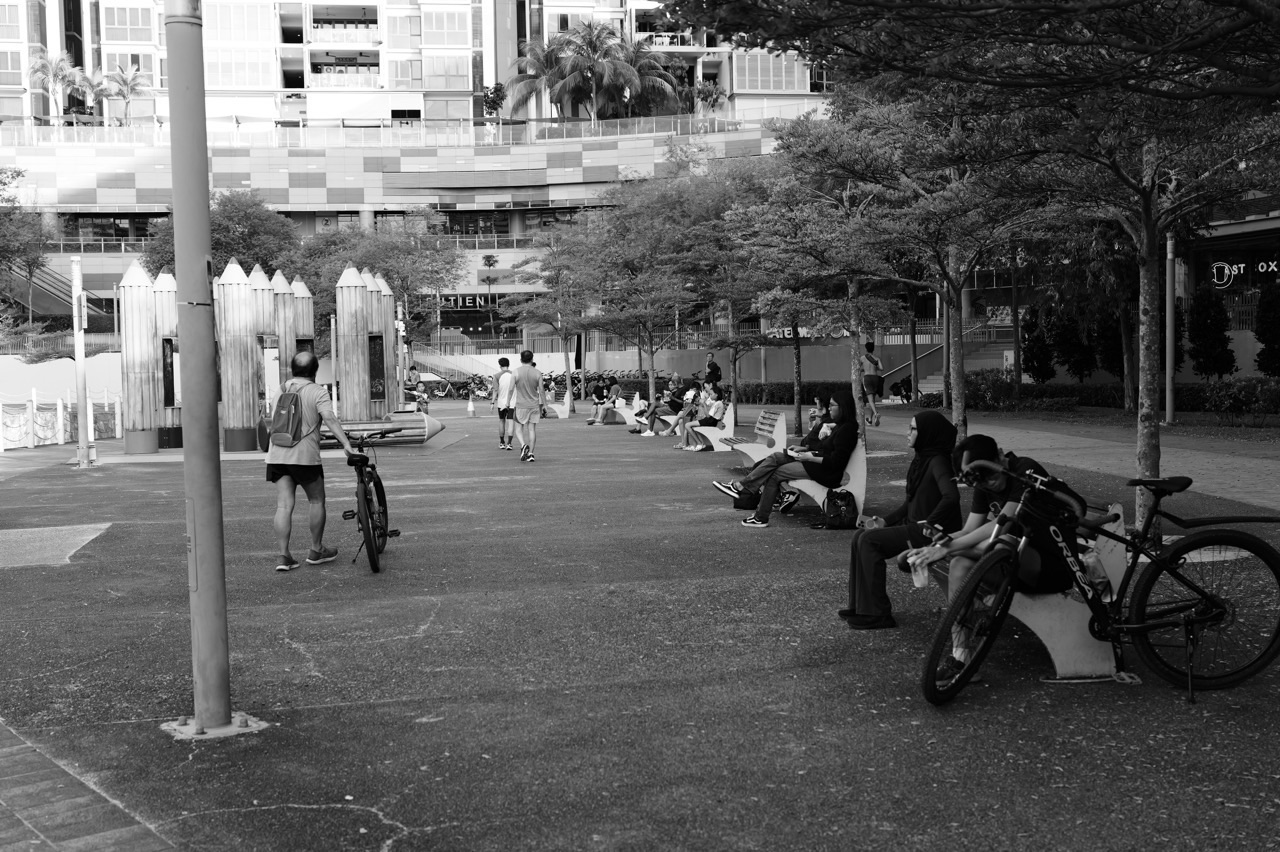
Featured image integrity: the photograph shows a current Punggol Waterway Park seating area, not an authenticated image of the 2020 opening ceremony or the garden’s original planting layout.
11. The fitness area: activity without demanding strenuous exercise
NParks’ official description of the garden includes a fitness area within the wider landscape design. This helps explain why the project was presented as supporting both mental and physical well-being. Green space is not only somewhere to sit; it can offer opportunities for gentle movement that a visitor chooses according to comfort and ability.
The fitness area should not be confused with a fully equipped clinical rehabilitation centre. A park feature may encourage low-intensity movement, but it does not automatically provide an individual treatment plan or medical supervision. The garden’s public design and the organised therapeutic horticulture programme are distinct services.
For some people, a short walk and a pause beside plants may be an achievable outdoor experience. Others may want to use a raised planter or participate in supervised group activities. An inclusive design aims to make different levels of participation possible rather than assume the whole community has the same capacity or needs.
The 2020 reporting highlighted older visitors, but the garden is not exclusively a place for senior citizens. The physical features were presented to a general community, while particular programmes can serve groups with additional requirements.
Historical interpretation should therefore avoid claiming the garden was built as a gym, clinic or a retirement facility. The published record supports a more precise category: a public therapeutic garden designed to support varied forms of nature engagement and well-being.
12. Benches, soft grass and places to rest
The November 2020 Straits Times visual guide highlighted seating areas and grass underfoot, along with a sheltered viewing deck. These features may seem ordinary, but their arrangement shapes whether people can spend time comfortably in a garden rather than simply pass through it.
A person who tires easily may need several opportunities to sit and pause. A caregiver may appreciate space to stop, talk or help a companion change activity. Others may prefer to remain on firm paths instead of stepping onto grass. Making those choices available is part of design quality, although a historical article cannot certify every route’s present condition.
The contemporary graphic said NParks incorporated soft-grass areas after feedback that some users enjoyed lingering and feeling grass underfoot. That is a useful example of design responding to reported user preferences. It does not mean stepping barefoot on grass is compulsory or medically effective.
The viewing deck’s elevated vista of Punggol Waterway gives visitors a wider field of view. It makes the landscape itself part of the intended experience. Still, conditions change with shade, rainfall and weather, and an accessible design should be judged by actual use as well as original intentions.
For a school project, students can compare a normal path through a park with a place intentionally equipped for stopping. Ask which forms of participation each encourages. The exercise reveals how a bench or viewing area can contribute to public inclusion without being a hospital treatment.
13. What therapeutic horticulture actually means
Therapeutic horticulture uses plants and nature-related activities in structured programmes. NParks explains that these activities can be conducted by trained people for groups that include senior citizens, people living with dementia and others with specific needs. The aim may include sensory stimulation, gentle movement, social interaction and purposeful engagement.
That is different from a visitor arriving independently to enjoy the garden. Anyone can appreciate the landscape under the park’s access rules, but participation in a particular organised programme depends on the provider’s arrangements, trained staff and availability. A historic opening date does not create a standing booking for 2026.
A separate term, horticultural therapy, can describe more individualised programmes with documented therapeutic goals under appropriately trained practitioners. The 2020 newspaper visual guide distinguished the two categories. A history article should preserve this distinction rather than call any household gardening task a medical treatment.
For a class or family, simple planting and observation activities can be enjoyable without being clinical interventions. Measuring the height of a seedling or making a leaf collage can teach attention and cooperation, but those activities should not be advertised as treating specific medical conditions.
The historical value of the garden is that NParks integrated facilities supporting such structured nature engagement into a public Waterway park. The evidence demonstrates programme and design intent; it does not itself quantify how much each participant’s health improved.
14. Designed for inclusion, not a guarantee of equal access
The garden’s raised planting areas and seating were described as welcoming to users with different mobility needs. That is a substantive design direction: an environment can remove some barriers rather than demand that every person reach, stand or walk in the same way.
However, accessibility is not a single yes-or-no attribute. Wheelchair width, slope, surface condition, toilet access, transport connections and individual assistance requirements may affect a visit. The 2020 publicity establishes selected features and design intentions but cannot guarantee present suitability for every person.
The HDB description of two raised planters is a useful, specific fact. It shows a practical intervention through which wheelchair users could reach plants without bending to ground level. Whether those planters remain unchanged in 2026, and how each visitor experiences them, would require direct current observation or an updated site assessment.
The garden’s public character is also important. A person does not need to be a patient in order to appreciate its greenery. The design seeks to accommodate different people within a shared community space rather than setting aside a highly restricted outdoor facility.
A responsible visitor guide might ask individuals to assess current access needs and contact operators where necessary. A history article should focus on why those features were included in the 2020 plan and what they reveal about public-space thinking at the time.
15. Do not confuse Waterway Park with Punggol Park in Hougang
Singapore has more than one park with ‘Punggol’ in its name. Punggol Waterway Park runs through modern Punggol town along Sentul Crescent, while Punggol Park is a separate park in the Hougang area. Both have had therapeutic-garden initiatives, but they are not one physical site.
This distinction matters because later accounts of a new inclusive therapeutic garden at Punggol Park describe features such as an outdoor boccia court and wheelchair obstacle course. Those features belong to that other park’s more recent project, not automatically to Punggol Waterway Park’s 2020 garden.
A page that mixes the two may mislead someone about the opening year, access or available activities. It could also create a false history in which every Punggol-named facility was constructed in a single phase. The correct location label includes the park’s full name.
For the 2020 story, use the NParks amenity page headed ‘Therapeutic garden at Punggol Waterway Park’. It places the site near Carpark A and identifies the 900-square-metre garden with waterway views. If researching the garden at Punggol Park, consult its own NParks record and contemporary coverage.
Precise place names are an important part of local SEO because they answer the reader’s real intent. An informational history article should help users distinguish nearby or similarly named places without inventing that they share a boundary, operator or date.
16. The 2020 pandemic context and why dates need care
The garden’s historical documentation belongs to a year when COVID-19 restrictions reshaped public activity in Singapore. The national circuit-breaker period began in April 2020 and continued into the following months, affecting how people could gather and access facilities.
This context makes the different opening dates particularly tempting to explain as a sequence of private launch, restricted access and later public reopening. Such a sequence is plausible, but the cited documents do not explicitly establish it for this garden. The honest article states the verified dates and acknowledges that access arrangements would need separate contemporary records.
A retrospective NParks report can describe a garden as opened during its reporting year, while a later webpage gives a more exact launch date and November media describes it as new. Those forms of publication have different purposes. The terms do not necessarily map to the same event, yet they cannot be reconciled just by guessing at the writer’s meaning.
For readers studying Singapore in 2020, the garden is a useful reminder that park developments continued during a disruptive period. It does not prove the garden was continuously available for unrestricted gatherings from May onwards or that therapeutic programmes operated every week.
The research task is to find dated NParks access notices, original programme schedules or inauguration materials if a detailed event chronology is needed. Until then, no single assertion should erase the documented disagreement.
17. Mental well-being: evidence for intention is not proof of treatment
NParks presented the garden as a nature-based setting intended to support well-being and respite. Contemporary media discussed studies of therapeutic horticulture and positive outcomes for some participants. These are relevant to understanding why public agencies invested in the design.
But an individual garden’s existence is not a controlled clinical trial. A photograph of an older visitor tending plants cannot establish that the garden cured a medical condition. Improvements in mood or social connection may be valuable, but the scale and causes of such effects require careful research.
The annual report discussed people with conditions including dementia, stroke and mood disorders as groups who might benefit from more suitable access to nature. This is a statement of programme purpose and design philosophy, not a promise of recovery or an alternative to professional medical care.
An ethical history should also avoid identifying particular visitors as having a medical condition merely because they are photographed at a therapeutic garden. People may be there for leisure, conversation, volunteering or supervised activities. Their motives and diagnoses are not visible in a photograph.
The enduring lesson is that public health and environmental design can work together, while each claim still needs the right level of evidence. The facility supports opportunities for well-being; it cannot guarantee clinical results for every visitor.
18. The garden as a response to an ageing population
The 2020 Straits Times reporting connected Singapore’s therapeutic-garden programme to planning for a growing older population. It noted the national goal of expanding gardens by 2030 and the emphasis on accessibility and nature-based activities for seniors.
The significance for Punggol is not that only elderly residents use the park. Rather, adding a specialised garden creates options for households in which different generations may wish to spend time outdoors together. A park designed exclusively for energetic walkers or cyclists would not meet every need.
The 2015 Action Plan for Successful Ageing supplied part of the broader policy context for accessible green spaces. The Punggol garden fits within that larger direction, but its presence alone cannot measure local demographic trends or programme take-up among seniors.
One can compare the design of a long exercise route with that of a small sensory garden. The exercise route may encourage continuous movement; the garden offers spaces for resting, observing plants and participating in low-intensity activity. Both can be useful without one replacing the other.
The historical takeaway is that the public-space agenda expanded to consider different ages and abilities. That shift deserves its own article because it tells us not simply what was built, but whose everyday activities designers were trying to support.
19. How the garden fits the Punggol Waterway timeline
Punggol Waterway was officially opened in October 2011 as a major component of the Punggol 21 Plus waterfront vision. The surrounding park developed into a landscape with walking paths, themed zones, bridges and recreational features. The Therapeutic Garden arrived later, in the 2020 period.
This sequence matters because it shows the difference between creating major public infrastructure and refining it for changing community needs. A canal and park can be open for years before a specialised space for sensory and accessible nature activities is introduced.
The wider Waterway Park has four themed areas identified by NParks: Nature Cove, Recreation Zone, Heritage Zone and Green Gallery. The therapeutic facility should not be mistaken for a new fifth park covering all those areas. Its 900 square metres form a smaller designed destination within the existing park network.
Another issue is historical geography. The old Punggol of villages and farms had many plants and outdoor livelihoods, but the 2020 therapeutic garden belongs to a modern, managed landscape. It does not recreate an older kampong garden simply because its visitors engage with soil or vegetation.
Cross-linking the broader Waterway history allows readers to understand both stages. The 2011 opening article explains the town-wide infrastructure; this 2020 article explains a later specialised use within that public environment.
20. Funding, design and public stewardship are different roles
Peter Lim Philanthropy’s account of a S$900,000 contribution for multiple therapeutic gardens offers a valuable reminder about how projects are enabled. Funding can help make a concept possible, while planning, design, operations and ongoing maintenance involve further organisations and responsibilities.
The gift was associated with a three-year programme covering Telok Blangah, Punggol and Bedok Reservoir, not an audited cost breakdown for one Waterway site. Readers should never infer that Punggol alone received the entire sum or that the number can be used as the precise construction cost.
NParks’ descriptions remain the strongest source for what the garden offers as a public facility. HDB and media accounts supply a later portrait of specific design features and public presentation. The philanthropic source helps identify one financial contribution. They are complementary, not interchangeable.
The physical landscape also needs care over time. Plants grow, planters require maintenance, surfaces wear and visitor needs change. The 2020 publicity does not establish a permanent, unchanged arrangement or the cost of operations six years later.
For a school project, create a responsibility map showing donation, design, public ownership, park management, programme delivery and visitor participation as different roles. Understanding those roles is more informative than attributing every result to the person whose name appears in the funding announcement.
21. How to use the garden today without confusing history with live availability
NParks’ official amenity page places the garden near Carpark A and lists it as open 24 hours. The current park page similarly describes Punggol Waterway Park as open around the clock. Such access information is useful, but it should be checked close to the time of a planned visit because temporary works or site conditions can affect particular areas.
The 24-hour access label is not the same as a guarantee that an organised therapeutic horticulture session is available at any time. Group programmes depend on trained facilitators, programme dates, eligibility and registration arrangements. The NParks programme page is the appropriate source for current listings.
The garden’s location also should not be confused with the Therapeutic Garden at Punggol Park in Hougang. Someone following the wrong park name may end up in an entirely different part of Singapore.
Visitors can enjoy the general greenery without presenting themselves as participants in clinical therapy. Equally, caregivers seeking specific accessible features may wish to consult current information before making arrangements. The historical account does not replace professional or provider advice.
Separating stable history from live availability helps make the article evergreen. The 2020 records explain why the garden was built; NParks’ current visitor information answers when and how people may use it today.
22. A date-by-date audit for future researchers
Begin in 2016 with the national therapeutic-garden precedent at HortPark. Next, record the 2018 philanthropic commitment for several gardens, including Punggol. These dates establish context and are not the opening of Punggol Waterway Park’s own therapeutic space.
For 2020, create three distinct lines: NParks Annual Report 2020/2021 retrospectively says April; NParks’ official amenity page says launched 4 May; HDB and contemporary reports describe the garden as newly open on 30 November. Do not collapse those into a single unqualified opening date or assert without evidence that they correspond to construction completion, private ceremony and unrestricted admission.
Then record the NParks amenity-page date as updated in 2023, and the contemporary 2026 access information separately. A later page can include retrospective facts and current facilities in one place, so students must label which year each statement concerns.
The strongest next research step would be an original NParks press release, ministerial launch programme, dated contract-completion record or visitor advisory explaining the May and November phases. Without one, the discrepancy remains a transparent archival problem rather than a solved mystery.
That approach is an example of source-based chronology done properly: each entry includes the date of the event claimed, the date of the document that makes the claim and its precise wording. Readers gain information they can verify instead of inheriting an editor’s unjustified certainty.
23. A complete Primary and Secondary school learning project
For Primary children, begin with the simple question ‘How can a garden welcome people who move, see or sense the world differently?’ Compare raised and ground-level planters, benches, paths and fragrant plants. Ask the child which barriers each design feature might reduce, without assuming one feature is comfortable for everyone.
For Secondary History, assign a source-comparison exercise using NParks’ webpage, its annual report and HDB’s 2021 article. Students should identify the different 2020 dates and explain why evidence from several official sources can remain inconsistent. Reward students who attribute each claim rather than guess at a hidden ceremony.
For Geography, calculate the difference in scale between 900 square metres and the 25.79-hectare park. Discuss why a small specialised facility may serve a different function from a large general recreational space. The correct units and limits of interpretation matter as much as the result.
For Science, use a plant observation activity in an appropriate place. Children can record leaf shapes, colour, texture and the conditions plants need. They should not taste unknown leaves or claim therapeutic outcomes without scientific evidence.
For English, write a concise article beginning with the sourced answer that Punggol gained a 900-square-metre therapeutic garden in 2020, then explain the conflicting dates in the second paragraph. The exercise builds a disciplined approach to delivering facts immediately while making unresolved uncertainty easy to retrieve.
24. Frequently asked questions about the 2020 garden
When did Punggol Waterway Park’s Therapeutic Garden open? Published sources differ. NParks’ amenity page says it launched on 4 May 2020; its annual report says April 2020; HDB and late-November press coverage refer to 30 November 2020.
How large is the garden? NParks states approximately 900 square metres.
Was it Singapore’s first therapeutic garden? No. Contemporary sources describe it as the sixth nationally and the first in the northeast.
Where is the garden? Within Punggol Waterway Park, near Carpark A along Sentul Crescent.
Is Punggol Waterway Park the same as Punggol Park in Hougang? No, they are different parks and should not be confused.
What are the distinctive features? Raised or communal planters, a fitness area, a sensory wellness zone and views over the waterway.
How many raised planters were highlighted? HDB’s 2021 article described two raised planting boxes.
Why are raised planters useful? They can make plant access easier for people who cannot comfortably bend to ground level, including some wheelchair users.
What was the public policy purpose? NParks described nature engagement and well-being benefits for a more inclusive community.
Did the garden treat specific diseases? The sources describe supportive design and therapeutic horticulture programmes, not a guaranteed cure or clinical result for each visitor.
Who helped finance therapeutic gardens? Peter Lim Philanthropy describes a S$900,000 donation in 2018 for facilities across Telok Blangah, Punggol and Bedok Reservoir.
Was S$900,000 spent solely on Punggol? That conclusion is not supported; the stated gift covered several gardens.
Did the pandemic cause the conflicting dates? The sources do not prove that explanation. It must remain a hypothesis until original opening or access records are found.
Is the garden open all night? The NParks page lists 24-hour access, but check current site notices before visiting.
Can anyone join a structured programme without booking? No such guarantee is established. Consult NParks’ current therapeutic horticulture programme information.
Why does this belong in Punggol history? It documents a shift towards designing public greenery for different abilities and forms of participation within the growing waterfront town.
25. The source record and what remains unresolved
NParks’ official therapeutic-garden amenity page is the direct source for the 4 May 2020 launch, 900-square-metre area, proximity to Carpark A and core design features. Its 2020/2021 annual report provides the April 2020 wording and the broader policy setting for therapeutic green spaces.
HDB’s Life Storeys issue 29 supplies the 30 November 2020 opening description, two raised planter boxes and sensory features. Contemporary Straits Times and other press reporting around that date shows how the facility was presented to the public near the end of the year. The Peter Lim Philanthropy account provides funding context across several locations.
These sources do not establish a reconciled, official three-stage opening timeline. They also do not supply a complete original planting list, audited garden-specific construction budget, individual programme outcomes or an exhaustive visitor count.
The wider Punggol reading route covers the Waterway opening in 2011, the current therapeutic garden visitor guide, local park activities and the role of greenery in the new town. Those related articles should answer their own search questions rather than repeat this history in full.
The principal conclusion is appropriately limited but useful: Punggol Waterway Park gained a deliberately inclusive 900-square-metre therapeutic garden in 2020. Several official publications attach different dates to that milestone, and strong historical practice preserves the source trail instead of concealing the inconsistency.
Dated original records and related Punggol history
- NParks: Therapeutic Garden at Punggol Waterway Park, 4 May 2020 launch
- NParks: Annual Report 2020/2021, garden described as opened in April 2020
- HDB: Life Storeys, Issue 29, garden described as opening on 30 November 2020
- The Straits Times: Garden for the senses opens at Punggol Waterway Park, November 2020
- Little Day Out: Contemporary 30 November 2020 public coverage
- Peter Lim Philanthropy: 2018 gift for three therapeutic gardens
- NParks: Current therapeutic horticulture programme information
- NParks: Punggol Waterway Park main visitor page
- eduKate: Punggol Waterway Park Therapeutic Garden visitor guide
- eduKate: Punggol Waterway Park garden exploration
- eduKate: Punggol Waterway history
- Punggol history master timeline and directory
Evidence and illustration note: the dates April, 4 May and 30 November 2020 are attributed to their named sources, without an invented reconciliation. The owned featured image shows another part of modern Punggol Waterway Park and should not be interpreted as a photograph of the garden’s initial planting beds.


