
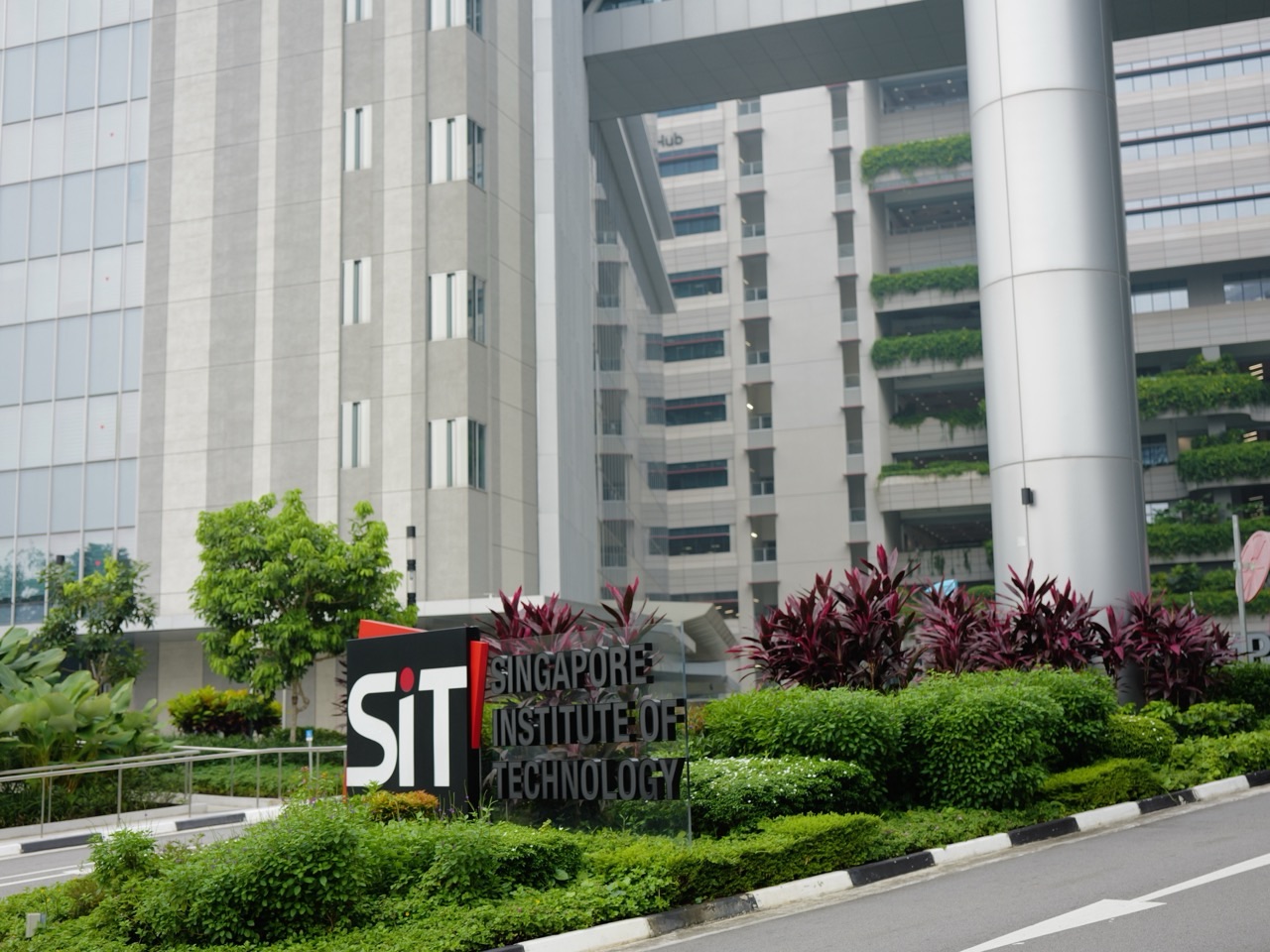
Punggol Events 2027 includes a Singapore Institute of Technology programme that addresses a question affecting professionals, parents and educators: when AI produces a confident recommendation, what should a human decide independently before accepting it? SITLEARN’s Human vs AI Decision-Making course is scheduled for 15–16 April 2027, 9am–6pm each day, through in-person teaching at SIT Punggol Campus, 1 Punggol Coast Road, Singapore 828608. The university also publishes 16–17 August and 9–10 December 2027 as later dates. Official SITLEARN course.
Did you know? This is the first course in SIT’s six-part Psychology of AI series, and SIT says it can be taken independently of the other five. Learners examine human cognition, intuition, memory, heuristics, cognitive offloading, overconfidence, automation bias and the illusion of correctness created by fluent AI responses. The classroom uses Capabara AI Assistant in a programme developed with Straits Interactive. Its practical approaches include commit-then-consult, reflective reasoning, explanation of decisions and verification according to stakes, rather than an instruction to reject AI or trust it blindly.
The full course price is S$2,616 including GST, with conditional funded payable amounts of S$784.80 or S$304.80 for eligible groups. Booking caveat: the course’s published calendar gives the April, August and December dates, but the separate Course Runs panel currently says “There are no upcoming course runs at the moment.” Therefore those are official planning dates, not confirmation of an immediately bookable April seat or verified application deadline. This guide, checked 30 October 2026, explains what is taught, how it differs from the later AI Accuracy and Trust courses, and how residents can make better human–AI decisions without promising psychological or career transformations.
April 2027 dates, costs, cognitive skills and booking status
- Course: Human vs AI Decision-Making
- Provider: Singapore Institute of Technology, SITLEARN
- April 2027 published date: 15–16 April, 9am–6pm
- Other 2027 dates in syllabus: 16–17 August and 9–10 December
- Current actual Course Runs status: No upcoming course runs
- 2027 application closing date: Not verified on the current booking panel
- Teaching format: In-person classroom discussions and exercises
- Advertised venue: SIT Punggol Campus, 1 Punggol Coast Road
- Series position: First of six Psychology of AI courses; independently enrolable if offered
- Programme partner: Straits Interactive
- Learning tool: Capabara AI Assistant
- Core ideas: Human intuition, memory, heuristics, fluency illusion, offloading, bias and verification
- Professional methods: Commit-then-consult, reasoning trace, reflective review, verification by stakes
- Intended participants: Managers, analysts, HR/compliance staff, educators, governance and transformation professionals
- Preferred preparation: Degree or diploma plus around three years relevant experience
- Published teaching team: Dr Kevin Shepherdson and Dr Celine Chew
- Course duration: Two full scheduled training days
- Full listed fee: S$2,616 including GST
- Conditional 70%-funded fee: S$784.80
- Conditional enhanced-funded fee: S$304.80
- Assessment mode: Non-credit assignment
- Certificate of Attainment: 75% attendance and passing assessment
- Certificate of Participation: May apply for sufficient attendance without assessment pass
- Employment or professional licence: Not guaranteed
- Primary official course: SIT Human vs AI Decision-Making
The 50-second answer for Punggol residents
SIT’s official syllabus schedules Human vs AI Decision-Making for 15–16 April 2027 at its Punggol campus, with May not involved in this specific module. It teaches professionals to recognise where AI-generated fluency, bias and cognitive shortcuts can weaken human judgement and introduces practical checks before acting on a recommendation. The full price is S$2,616, with conditional subsidies. Crucially, the current Course Runs panel does not show an open course run, so no active April place or application deadline is confirmed. A learner should enquire through SIT, confirm financial eligibility and attend for better decision practices rather than an invented guarantee that AI will always become reliable.
Why this is not another prompt-writing workshop
A general introductory course might focus on writing instructions to obtain useful text from a chatbot. This programme focuses on the human decision process around the answer. A prompt can be carefully written while the result remains wrong or incomplete. The professional still needs to decide what evidence matters, what risk is acceptable and who has authority to act. SIT teaches cognitive habits and reflective analysis, not merely a collection of fashionable wording tricks. The educational goal is for people to use AI thoughtfully rather than outsource their judgement without noticing it.
Why human and AI reasoning are not identical
People draw on experiences, goals, social understanding and different forms of memory, while AI models process information through trained computational mechanisms. Some outputs can look remarkably human, but similarity of wording does not prove identical internal understanding. SIT explores both parallels and differences in human and artificial cognition. A professional should avoid two extremes: believing AI must be right because it sounds fluent, or dismissing every useful result because it comes from a machine. The right response is task-specific evaluation using independent evidence and appropriate human authority.
The first module of a six-part series
SIT identifies Human vs AI Decision-Making as Part 1 of six Psychology of AI courses, developed with Straits Interactive. It explicitly says the course can be taken independently. That makes the two-day workshop a possible entry point without a universal requirement to buy the other five courses. However, the preferred background is a diploma or degree and relevant work experience; independent enrolment does not automatically mean it is a school-level beginner class. A learner should understand their actual goal, the teaching format and current admission status before committing.
The published April, August and December dates
The individual course schedule lists 15–16 April, 16–17 August and 9–10 December 2027, each from 9am to 6pm. These are meaningful planning dates for employed adults. Yet the current Course Runs panel reports no upcoming runs. That means a resident should not tell colleagues that seats have been reserved or infer a registration cut-off by subtracting a guessed number of weeks. Ask SIT which date, if any, is actually accepting applications and obtain confirmation before scheduling paid leave or arranging work coverage.
What a heuristic means
A heuristic is a mental shortcut people use to make decisions without analysing every possible detail. Such shortcuts can be useful when time and information are limited, but may also lead to mistakes in particular situations. For example, a polished AI response may feel more credible than a cautious answer even when the latter has stronger evidence. SIT teaches heuristics because the person evaluating the tool is part of the system. Better decision-making begins by recognising the shortcut and checking whether it is appropriate for the stakes.
Intuition can help, but needs context
Human intuition often draws on past experience and learned patterns. A professional may rapidly notice that a report looks unusual without immediately knowing why. Such awareness can be valuable, yet intuition may also reflect incomplete experience or bias. AI systems can identify patterns too, but neither human instinct nor model output should be treated as infallible. A useful approach is to use intuition to generate questions and then seek relevant evidence. The course asks participants to compare these decision processes rather than rank one as universally superior.
Memory is not a perfect record
People can forget details, confuse similar events or remember information more confidently than the evidence warrants. AI-generated summaries may help organise complex material, but can also omit important conditions or invent details. The right solution is not to insist that professionals memorise everything; it is to build ways of retrieving and verifying authorised source information. SIT’s emphasis on memory and cognition supports understanding why decision quality depends on both individual reasoning and reliable records. A confident recollection and a confident chatbot answer may both need checking.
Cognitive offloading: useful and risky
Cognitive offloading occurs when people rely on tools or external systems to handle parts of a mental task. Calculators, calendars and search systems can make work more effective. AI extends this possibility into summarising, drafting and planning. The risk arises when the user stops maintaining enough understanding to identify mistakes or make a consequential decision independently. A professional should ask which tasks can safely be delegated and which judgement must remain accountable. SIT addresses this balance rather than telling everyone to work without digital assistance.
What is productive struggle?
Productive struggle involves engaging with a manageable challenge long enough to understand a problem rather than immediately taking an answer that bypasses the reasoning. In education, students may develop stronger understanding when they attempt an explanation and receive appropriate feedback. But difficulty should not be deliberately made excessive or unsafe. SIT includes productive struggle in discussing AI-supported learning and decision-making. A useful habit is to make an initial effort before consulting a tool when the task is intended to develop judgement, not to reject help categorically.
Why instant answers can weaken understanding
A learner may ask AI to complete a mathematical explanation and receive a convincing set of steps without understanding why they work. If the same person later encounters a slightly different problem, they may struggle to judge a new answer. The issue is not that AI assistance is always bad; it is that the assistance can replace the part of the task that needed learning. A useful approach might ask for a hint or feedback after the learner has attempted the problem. That keeps the human’s reasoning active and improves the chance of noticing an incorrect response.
The fluency illusion
Fluency illusion describes the mistaken impression that information is correct or well understood because it is presented smoothly and confidently. AI systems are particularly able to produce polished language. A response with headings, exact-looking numbers and a plausible citation can therefore feel authoritative even when the facts are unsupported. SIT explicitly teaches this risk. A responsible decision-maker asks which sources support the statement and whether the evidence matches the actual claim. Polished writing is a communication strength, not a substitute for truth.
An invented citation is still invented
A chatbot might produce a realistic-looking reference or claim that an official page confirms a precise application deadline. A user should open the original source and check whether it actually says so. For example, the SIT programme page currently lists April teaching dates but no upcoming active Course Runs; it would be false to convert that into a guaranteed open admission. The same habit matters for tuition, healthcare and workplace rules. A citation should be checked against its content rather than accepted because it has an impressive domain name.
Automation bias and the human-in-the-loop problem
Automation bias describes over-reliance on an automated recommendation, sometimes at the expense of relevant contrary information. An organisation may claim that a human approves every AI action, but the review can be meaningless if the person is rushed, lacks source access or cannot challenge the system. SIT’s course addresses responsible human–AI judgement. Effective oversight needs real authority, a clear process and enough evidence to make a decision. A decorative approval button does not make the system safe or accountable.
An everyday automation-bias example
Imagine a fictional staff member checking a customer case. An AI summary says all requirements have been met, but the original record contains an exception. If the employee simply accepts the summary because it looks professional, the organisation may act incorrectly. A better workflow would make important exceptions and source evidence accessible for review. This example is invented to illustrate a decision error, not a claim about a particular Punggol agency or employer. The learning goal is noticing when the automated summary should be challenged.
Overconfidence can belong to either side
A human professional may overestimate their own knowledge, while an AI interface may express an unsupported conclusion with excessive certainty. In both cases, a high-confidence statement is not proof. A team should distinguish the strength of evidence from the confidence of its presenter. A responsible person can say when more information is needed. SIT’s psychology focus includes overconfidence because good human–AI use requires humility about both human and machine limits. This is a work habit rather than a promise of a particular personality change after two days.
What confirmation bias looks like with AI
A person may favour information that supports a preferred conclusion and overlook contradictory facts. An AI system that responds agreeably can amplify that problem. Suppose a manager already believes a new process will save money and asks an assistant for supporting reasons. A well-written answer may feel persuasive even without a reliable cost model. A better review actively looks for relevant evidence that could disprove the proposal. This does not mean opposing every idea; it means ensuring a real decision can survive reasonable challenge.
Anchoring on a first recommendation
An initial AI estimate can influence later judgements even when it lacks a sound basis. If a tool says a project should cost S$8,000, a manager might keep revising around that number instead of building a proper cost estimate. The danger is relying on an anchor that was never validated. A better process establishes relevant data and assumptions independently where possible. SIT discusses heuristics and bias to help professionals recognise this effect. The right answer depends on real evidence, not the first figure a fluent assistant presents.
What is commit-then-consult?
Commit-then-consult is a practice highlighted by SIT in which a person forms an initial judgement or hypothesis before asking an AI system for assistance. The point is not to become stubborn or ignore better evidence. It is to preserve an independent reference that can later be compared with the AI output. After consulting, the person should revise their view when the evidence warrants it. This can reduce mindless agreement and reveal what the tool added. The course uses it as a learning method, not a legal standard that every organisation must adopt in identical form.
A simple commit-then-consult example
Imagine a parent comparing two educational programmes. Before using AI, they write down the relevant constraints: actual syllabus, child readiness, class time, travel and verified fee. They then ask AI what factors they may have missed. Any suggested new facts are checked with official sources. If the tool identifies a genuine concern, the parent updates the decision. If it invents an available seat, the claim is rejected. This is a fictional example of method, not a guarantee that one tool makes every educational decision simple.
What is reflective decision-making?
Reflective decision-making means considering the reasoning and consequences of a proposed action rather than responding automatically to a recommendation. A person can ask why one option was chosen, which alternatives exist and what evidence could change the conclusion. Reflection need not require a long essay for every trivial choice. Its depth should fit the stakes. SIT’s practical exercises help participants recognise where a decision deserves more care. The aim is to make important choices defensible rather than replace a human’s judgement with a polished but untested answer.
A reasoning trace is an accountability aid
The course mentions reasoning trace as a practical approach. In a professional workflow, this can mean documenting the relevant evidence, options considered and why a person chose an action. It should not be misrepresented as guaranteed access to an AI model’s private internal reasoning. A record can explain a decision without proving every intermediate thought of a machine. The useful objective is a reviewable human rationale with sources and assumptions. When consequences matter, another authorised person should be able to understand the basis for the action.
Verification by stakes
Verification by stakes means matching the effort and scrutiny of checking to the potential consequences of an error. A casual brainstorming suggestion may need less review than a payment instruction, legal term, medical concern or safety-critical action. The method is not permission to ignore accuracy in ordinary situations. It is a practical way to allocate attention proportionately. SIT teaches it because AI can be used across tasks of very different significance. A responsible person knows when a plausible answer is insufficient and when qualified independent verification is necessary.
A three-level verification example
Consider three fictional uses. For a casual lunch idea, a quick check of suitability may be enough. For an advertised course fee and registration date, open the current official organiser page. For a medically or legally consequential recommendation, obtain the appropriate authoritative sources and qualified human input. The exact process differs by organisation. This example demonstrates proportional scrutiny, not an official SIT grading rubric. The important lesson is that one generic “the AI said so” standard cannot govern decisions with radically different stakes.
Evidence, relevance and sufficiency
An AI answer may contain true statements that do not actually answer the question. Relevance asks whether the evidence addresses the task. Sufficiency asks whether enough appropriate information exists to support the conclusion. A university homepage might establish that SIT exists but not that a specific April class has vacancies. A marketing page might describe a programme but omit its refund terms. SIT’s course includes relevance, sufficiency, evidence and consequences as evaluation criteria. A responsible reader tests the exact claim instead of accepting any nearby fact as proof.
How to check for missing alternatives
A decision can look obvious when only one option is presented. AI may also frame the available choices too narrowly. A professional should ask whether there are relevant alternatives or whether the tool excluded an important constraint. For a small business, the answer may involve improving a manual workflow rather than purchasing a complex AI platform. In an education setting, a child might need additional feedback rather than more paid tutoring. The course’s reflective framework is useful because good decision-making begins by clarifying what problem needs solving.
Bias may enter through the task itself
Even when a model reproduces historical data accurately, those records can reflect earlier decisions that were unfair or incomplete. A manager should therefore examine whether the target and evaluation are appropriate, not only whether model predictions match the data. Human oversight can also be affected by stereotypes and prior expectations. SIT’s focus on human–AI bias recognises the need to examine both. This article does not make claims about a particular deployed AI provider or local employer without evidence; the point is to ask better questions before using predictions to affect people.
Why a prediction is not a recommendation
A system may estimate what is likely under its model, while a recommendation tells someone what they should do. Those are different logical tasks. Choosing an action requires values, goals, costs, legal obligations and possible consequences that may not be represented in the prediction. A model saying a customer is unlikely to respond does not automatically mean it is fair to deny them a service. Human decision-makers need to connect evidence with legitimate purposes. SIT’s course encourages learners to understand that leap rather than treat statistics as moral or organisational authority.
Human–AI collaboration needs clear roles
An organisation should identify which tasks AI assists, which decisions require qualified human approval and what happens when the tool is uncertain. It is insufficient to say “human in the loop” without defining who can challenge or override an output. Effective collaboration also needs access to relevant sources and time for review. SIT asks learners to design a decision checklist for responsible human–AI work. The checklist should serve actual operations, not merely be pasted into a policy document that nobody follows.
Why a stop rule matters
A useful AI workflow needs a way to pause when required evidence is missing, a case falls outside the authorised task or a decision has serious potential consequences. A stop rule may send the issue to an appropriate professional or request additional information. The correct trigger depends on the work. This is an important form of competence: a system that asks for help at the right time may be more trustworthy than one that always produces a confident final answer. The classroom method should not be confused with universal certification of any particular AI system.
A manager’s human–AI decision checklist
A practical checklist can ask: What decision is being made? Which information is authoritative? Was the AI’s output verified against that evidence? What important uncertainties remain? Who owns the final action? Are affected people able to challenge a mistake? The organisation should adapt such questions to the job and legal context. This is a general educational illustration inspired by the course’s stated outcomes, not a copy of its proprietary assessment or a universal regulation. The value lies in accountable review that people can actually carry out.
Why the same prompt can produce different answers
A generative AI system may vary its response across runs or after changes in context, model version or available tools. Some variation is harmless; in consequential decisions, unexplained inconsistency can matter. A professional should understand what the system was asked, which evidence it used and whether the result can be reproduced or checked. A single satisfying example does not establish long-term reliability. SIT’s course complements more technical model-evaluation programmes by focusing on how humans interpret and respond to such outputs rather than measuring one benchmark alone.
The Capabara AI Assistant in class
SIT says the programme uses Capabara AI Assistant for practical exercises developed with Straits Interactive. Its role is a learning environment for evaluating and reflecting on AI-assisted decisions. That does not guarantee a permanent software subscription or unrestricted enterprise access to all participants. A learner should ask about account arrangements, approved data and exercise conditions. Confidential workplace, student or client documents should not be uploaded without appropriate authorisation. Good decision-making includes understanding what information the tool is permitted to receive, not only checking what it generates.
Protecting personal information during practice
Decision examples may involve HR, compliance, education or customer records. Those fields can contain personal information requiring appropriate protection. A classroom exercise can often use fictional or approved anonymised scenarios rather than actual private files. Singapore organisations should consult relevant PDPC guidance when personal data are involved. Enrolling in a course does not automatically authorise sharing employer records with its AI tool. A responsible professional should know which datasets are permitted, what the purpose is and how access is controlled.
An educator’s classroom dilemma
A teacher may use AI to generate practice questions, explanations or marking suggestions. A polished explanation can save preparation time yet contain a subtle conceptual error. The teacher remains responsible for checking alignment with actual curriculum and learner needs. Students may also need to practise thinking rather than receive a complete answer immediately. The SIT course’s ideas about productive struggle and verification can inform such decisions, without making the programme an official MOE teacher certification or guaranteeing any particular classroom outcome.
A parent’s education decision
A Punggol parent might ask AI which Secondary subject level or enrichment programme is best for a child. AI can help organise questions, but the parent should verify current MOE or school requirements and consider the child’s actual learning, wellbeing and interests. A model cannot guarantee examination scores or predict an individual career. Commit-then-consult can help preserve the family’s priorities before reading a recommendation. The best outcome is an informed conversation with relevant teachers and the child, not automatic obedience to an answer that sounds certain.
An HR professional’s example
A fictional HR team might use AI to summarise authorised training requests. The system could identify common themes, but final decisions should consider correct records, fairness, policy and human circumstances. If an AI summary omits an important qualification, a reviewer needs a way to find it. The example illustrates why source access and authority matter; it is not a description of SIT’s own HR system. The responsible organisation should test the workflow, ensure proper data handling and monitor whether it behaves appropriately for different cases.
A compliance professional’s example
A compliance analyst may receive an AI summary of a new regulation. Before relying on it, the analyst should open the actual statute, authority guidance or relevant current document and check that the interpretation applies to the organisation. A fabricated exemption or outdated date could create meaningful harm. AI may support initial research but does not replace qualified legal interpretation. SIT’s emphasis on verification according to stakes is particularly relevant here. A robust decision should record the authoritative source and who approved the final action.
An operations manager’s example
A manager may ask AI for a plan to reduce delays. The tool might recommend cutting a review step because it appears slow, without knowing that the step prevents expensive or dangerous mistakes. A human should map the actual process and ask why the review exists before accepting that suggestion. Productivity and safety cannot be judged from a generic template. This fictional case illustrates the difference between generating ideas and making a responsible operational decision. A manager should verify assumptions with affected staff and appropriate experts.
Why the fee needs an individual funding decision
The full course charge is S$2,616 including GST. SIT shows S$784.80 for relevant eligible 70% categories and S$304.80 for its stated enhanced-funded category. A resident cannot assume they qualify solely because they live in Punggol or have reached a particular age; current scheme conditions and provider assessment matter. The published amounts are helpful planning figures, not personalised invoices. Ask SIT to confirm the actual payable amount before booking work leave or promising an employer that everyone in a group will receive the lowest advertised price.
A fictional employer sponsorship budget
Suppose a company wishes to sponsor three employees and each is independently approved at S$784.80. The simple total tuition would be S$2,354.40, excluding work coverage and travel. This is conditional arithmetic, not a group discount offered by SIT. The company should define what it wants the learners to accomplish afterward, perhaps a decision-review checklist and a documented pilot with authorised data. A certificate alone does not prove the organisation’s AI practices are governed well or that the training has produced a measurable improvement.
Two full days have a real opportunity cost
The April course is listed 9am–6pm on both 15 and 16 April 2027. For a full-time employee, that means two weekdays away from normal work and perhaps additional time for the assignment. A parent may need school collection arrangements and transport planning. SIT’s campus location can be convenient for some Punggol residents but is not automatically near everyone’s workplace. Because the current Course Runs panel is empty, the applicant should not make irreversible leave or childcare arrangements until the university confirms the actual run and acceptance.
Where the April course is held
The published teaching venue is SIT Punggol Campus, 1 Punggol Coast Road, Singapore 828608. That is different from One Punggol Community Club at 1 Punggol Drive and from Punggol 21 CC on Punggol Field. The source does not identify a specific 2027 classroom within the university, so the exact reporting block needs joining instructions. A general campus address supports local planning but does not imply reserved parking, drop-in attendance or a confirmed seat. Residents should navigate using the authorised participant notice rather than an inferred room number.
Who is likely to benefit?
The university describes a professional audience including managers, HR and compliance staff, educators, analysts, AI designers and transformation leads. Preferred entry preparation is a degree or diploma and about three years’ relevant work experience. A person need not be a machine-learning engineer to think carefully about AI-assisted decisions, but the course is not advertised as a general school holiday workshop. Ask SIT about actual suitability if the background differs. The most useful participant brings a real decision process they are authorised to examine, rather than expecting a generic AI demonstration to solve every problem.
The named teaching team
SIT identifies Dr Kevin Shepherdson, founder and CEO of Straits Interactive, and Dr Celine Chew, the organisation’s Chief AI Learning Officer, as members of the teaching team. Their published backgrounds include data governance, privacy and generative AI. Those details help establish the programme’s professional context, but do not guarantee private consultation with any named expert or a particular commercial benefit. SIT can change teaching arrangements. The actual learning outcomes should be judged by the syllabus, supervised exercises and assessment rather than promotional biographies alone.
The assessment and Certificate of Attainment
SIT says a Certificate of Attainment requires at least 75% attendance and passing a non-credit-bearing assignment. A learner who satisfies attendance without passing may receive a Certificate of Participation. This differs from an 18-credit Specialist Certificate such as Machine Learning or Smart Maintenance. It also is not a legal licence to certify AI systems or a guarantee of promotion. A participant should ask when and how the assignment is completed and whether any organisational materials may be used. Training records competence under provider rules; real workplace decisions still need their own governance.
Why this is different from AI Accuracy and Bias
The SIT AI Accuracy, Bias and Decision Psychology guide covers another Psychology of AI module with more attention to technical evaluation measures including precision, recall, consistency and hallucinations. Human vs AI Decision-Making is Part 1 and focuses first on how humans reason, offload effort and accept recommendations. They complement each other, but a two-day booking for one does not include the other automatically. A professional should choose according to the immediate work problem rather than assume the two titles are different names for one course.
Why this is different from Psychology of Trust
The Psychology of Trust and Human–AI Interaction guide explores overtrust, undertrust and the way interface design can influence reliance. Human vs AI Decision-Making examines the human thinking process and techniques for making better decisions with AI assistance. Both address human behaviour, but their main questions differ. A course attendee may choose one module independently, subject to actual availability and eligibility, rather than buy the entire series under an unsupported assumption that every date is open.
Why this is different from the Governance Lab
The Human–AI Governance Lab guide describes the sixth/capstone module, in which participants design and defend a workflow or governance solution, including considerations of return on investment and integrity. Part 1 instead develops individual and team decision habits. A manager may want the conceptual foundations before undertaking a larger design exercise. However, SIT says these courses can be taken independently, and no automatic prerequisite sequence or package fee should be invented.
What is not established by the published dates
The official teaching schedule lists 15–16 April, 16–17 August and 9–10 December 2027, but the current Course Runs panel says no upcoming runs. This does not prove that the teaching dates were fabricated or that the university will cancel every session. It means live admission is not currently confirmed through the individual booking panel. There is also no verified application deadline for April. A prospective participant should register interest or enquire directly and wait for a formal run before treating the programme as an accepted commitment.
A practical commit-then-consult exercise for home
Before asking AI to recommend an activity, write down the actual goal and three essential constraints. Ask the tool to suggest possible overlooked considerations, not to make the final decision without context. Verify material claims—such as dates, fees, age restrictions and seat availability—against the organiser’s official record. Then decide what really changes. This simple method resembles SIT’s published commit-then-consult idea, but it is an illustrative household adaptation rather than its proprietary class exercise. The central habit is preserving the person’s reasoning while welcoming useful evidence.
A workplace quick test for AI-supported decisions
Ask whether the employee can state the question independently, identify authoritative evidence, recognise uncertain outputs and say who owns the final action. Then ask whether the AI can stop or escalate when a case exceeds its approved scope. If any answer is missing, the system may need better controls before consequential use. This is an educational checklist inspired by the course outcomes, not a formal SIT assessment or certification standard. It helps reveal when an attractive interface has been mistaken for a complete governance process.
Frequently asked questions
When? 15–16 April 2027, with later dates 16–17 August and 9–10 December, 9am–6pm. Open now? The current Course Runs panel says no upcoming runs; seek organiser confirmation. Venue? SIT Punggol Campus. Full fee? S$2,616, with conditional S$784.80 or S$304.80 funded amounts. Who is it for? Professional decision-makers, educators, compliance and AI teams. Coding required? The page emphasises judgement and Capabara exercises rather than publishing a coding prerequisite. Must I complete six courses? SIT says Part 1 can be taken independently. Assessment? Non-credit assignment and 75% attendance. Does the certificate guarantee correct AI decisions? No.
Official proof pack and related Punggol reading
Primary university course: SIT Human vs AI Decision-Making, confirming the April/August/December schedule, Punggol Campus, psychology topics, partner, fee table, assignment and current no-upcoming-runs notice. Series context: SITLEARN Psychology of AI. Other Punggol guides: AI Accuracy and Decision Psychology, Psychology of Trust, Human–AI Governance Lab and Punggol Events. Verified 30 October 2026. Actual registration, individual subsidy and venue room require university confirmation.
Final thought: AI should help people think, not stop them thinking
SIT’s 15–16 April 2027 Human vs AI Decision-Making dates describe a professional opportunity to strengthen how people evaluate machine-generated recommendations. Its distinguishing value is the focus on cognitive offloading, bias, commit-then-consult and verification according to consequences. The current individual Course Runs panel does not confirm an open place, so applicants should enquire rather than assume admission. The longer-term lesson is to preserve legitimate human judgement, seek evidence and make decisions that can be reviewed and corrected. A fluent AI answer can support work, but it cannot inherit responsibility from the person who acts on it.


