
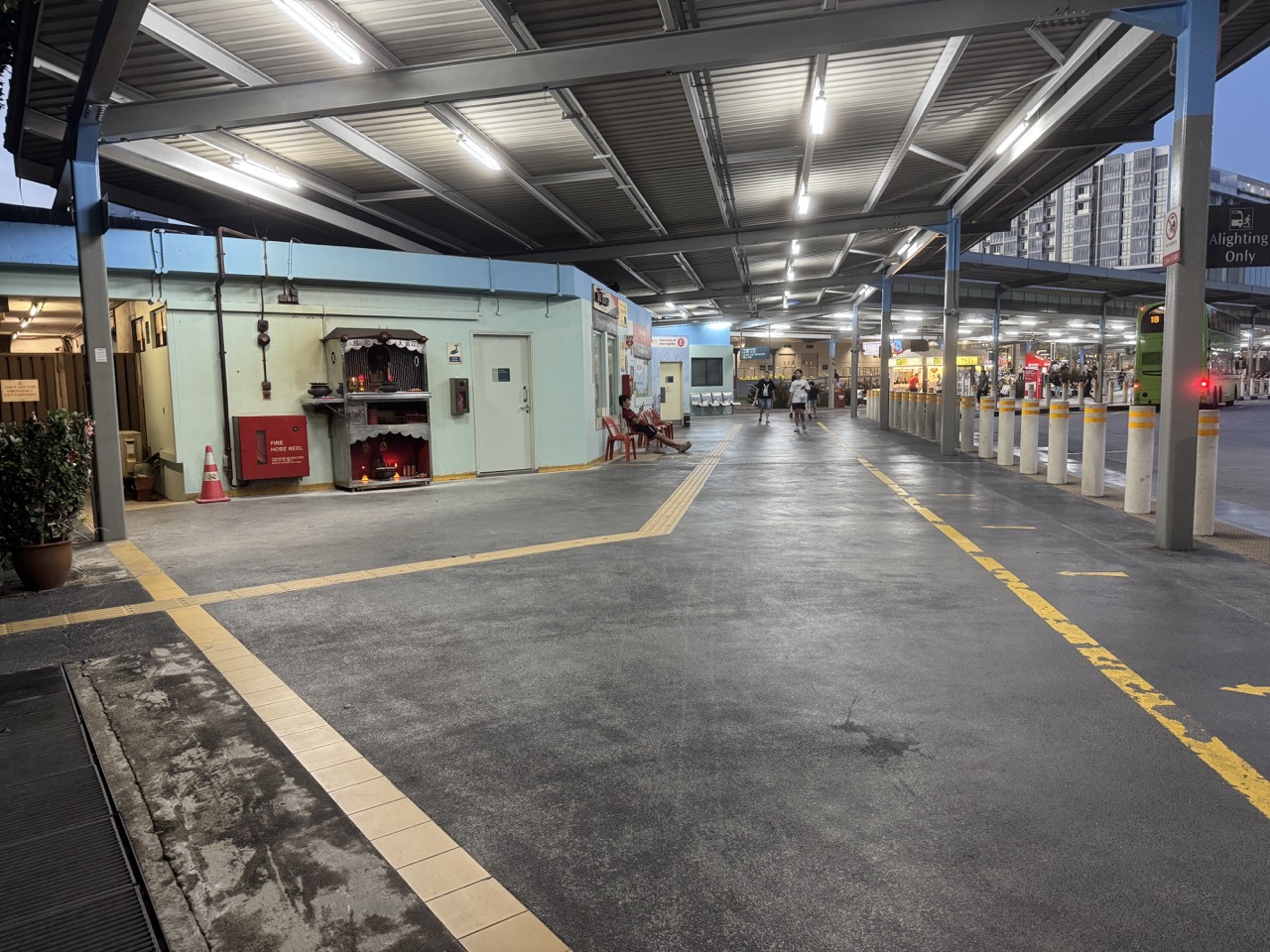
What should Punggol residents expect at the town-centre Bus Interchange in 2027? LTA announced on 18 August 2026 that upgrading works at Punggol Bus Interchange and five other existing interchanges would begin in 2027. Improvements include ventilation, lighting, inclusive passenger spaces, accessible toilets and staff facilities. Works will be phased to minimise disruption, but the release did not specify an exact Punggol completion date.
The Punggol town-centre interchange should not be confused with Punggol Coast Integrated Transport Hub, which opened in 2025. The key family decisions during 2027 will concern where to board, how to use temporary paths and which improvements are actually ready for passengers.

The 2027 bus interchange facts
| What residents need to know | Status and practical meaning |
|---|---|
| Project | Refurbishment of existing Punggol Bus Interchange, part of six interchange enhancements. |
| Official time | Works begin in 2027; no exact Punggol completion month in August 2026 release. |
| Passenger comfort | Upgraded air-conditioning, ventilation and lighting systems, subject to final site design. |
| Inclusive amenities | Priority queues, seating, baby care/family washrooms, accessible toilets, tactile guidance, Braille handrail signs and commuter care rooms across project programme. |
| Operations | Phased works intended to minimise interruption; any actual moved berth needs a live notice. |
| Different hub | Punggol Coast ITH integrated with Punggol Coast Mall and MRT, already operating since June 2025. |
| Different bus-service change | Bus 381 was extended to Punggol Coast in September 2026, separate from refurbishment. |
| Not yet verified | An exact construction start day, all new facilities opening January 2027, permanent closure, or guaranteed shorter bus headways. |
Information reviewed 29 October 2026 using LTA’s official August and September announcements. Site-specific future boarding arrangements require current transport notices.
2027 is the year works are planned to begin, not an announced completion
Did you know that LTA named Punggol Bus Interchange among six established interchanges scheduled for enhancement works beginning in 2027? The announcement was made on 18 August 2026 and covers Punggol, Bishan, Bukit Batok, Bukit Merah, Eunos and Tampines. These are existing bus interchanges whose passenger facilities and behind-the-scenes systems are to be improved.
The distinction between starting and completing work matters. LTA did not give a Punggol-specific completion month in this announcement. An article claiming that all new washrooms, queues and lighting will be ready by January 2027 is promising more than the evidence supports.
Residents should expect a phased programme, check the actual site notices and continue using valid bus services during the works. The announcement explicitly says phasing is intended to minimise disruptions to bus operations.
Punggol Bus Interchange is not Punggol Coast Bus Interchange
The established town-centre Punggol Bus Interchange serves the Punggol MRT/LRT transport node and the Waterway Point area. Punggol Coast Bus Interchange, by contrast, opened on 29 June 2025 within Punggol Digital District, integrated with Punggol Coast MRT and Punggol Coast Mall.
They have similar names but serve different destinations. A parent taking a child from the older town centre to SIT may need to know whether the bus terminates at Punggol or Punggol Coast. A change to the interchange at Punggol does not mean Coast’s separate 2025 facility is being built for the first time in 2027.
Before taking a ride, inspect the current route direction and destination on the operator’s app or signage. A photograph of a bus at one terminus cannot establish where it calls after a service amendment.
Why accessibility is central to the upgrade
LTA says its six-interchange programme includes improvements to priority queue zones, additional seating, wheelchair-accessible toilets, baby-care and family washrooms, commuter care rooms, tactile guided paths and Braille signs along handrails.
These measures respond to real difficulties. A wheelchair user needs a reliable route between bus berth, toilet and train transfer; a parent carrying a baby needs more than a generic cubicle; someone who cannot stand for long may need seating within a manageable distance of a queue.
The announced list describes the types of work across the group of six interchanges. Residents should await Punggol’s site-specific layout or completion notices before claiming that every individual facility has opened at an exact location.
Good inclusive infrastructure is judged by whether someone can use the complete journey safely, not simply by the presence of a symbol on a building plan.
Ventilation, air conditioning and lighting are not decorative upgrades
LTA also plans to replace or upgrade air-conditioning, ventilation and lighting systems to improve comfort and energy efficiency. This is a practical investment in a busy place where buses, commuters and staff operate for long hours.
Ventilation and cooling affect comfort, while lighting helps people navigate queues, stairs and entrances. Modernising worn equipment can make maintenance easier, but no release has quantified a specific annual electricity saving for Punggol’s completed works.
During implementation, parts of a concourse may be cordoned off or temporary routes may be used. A live barrier or alternative entrance on the day is more authoritative than a pre-construction plan.
Parents, older residents and students should allow a little margin during the works, especially for unfamiliar transfers or mobility needs.
Staff facilities also affect the quality of passenger service
The programme includes work on passenger service offices and staff lounges. Frontline staff need suitable operational and rest facilities to help passengers and perform their duties throughout a service day.
Passengers may only notice a refurbished service counter or a clearer route to ask for assistance. Yet a functioning interchange also relies on drivers, customer service officers, dispatch and maintenance teams.
This does not mean that every employee will be moved or that the interchange will close permanently for refurbishment. Actual staffing and temporary counter arrangements depend on the phased work programme.
Residents who require help with a disrupted journey should use the operator’s active counter or official contact channel rather than assume a temporary-looking counter is abandoned.
What phased construction means for ordinary commuters
LTA explicitly intends to carry out the upgrades in phases to minimise interruptions to bus services. That is a commitment to plan around daily operations, not an absolute guarantee that no boarding area, escalator, walkway or toilet will be affected.
A bus route could continue serving an interchange while passengers are directed to a temporary boarding point or different pathway. Such an arrangement would need a current operator or LTA advisory, and it should not be invented in a future-looking article.
For someone making a time-sensitive journey to school, work or hospital, check the route before leaving and allow for a safer rather than merely shorter walking path.
Temporary works can create an inconvenience without changing the final destination of the bus. Follow official signs rather than a message in a neighbourhood group that names no date or berth.
What the 2026 bus-service changes tell us
LTA announced in September 2026 that Bus Service 381 had been extended from Punggol East to Punggol Coast, improving access to the newer integrated hub. That service change was effective from 13 September 2026 and is separate from the 2027 town-centre interchange construction.
The same release mentioned adding trips to City Direct Service 674 and Service 861. These announcements concern service capacity and connectivity, not a new public building opening on the same timetable.
When comparing alternatives, check whether a service actually stops near the household’s block, which direction it is operating and whether changes have already commenced.
One easy mistake is to combine a 2025 Coast interchange opening, a 2026 route extension and a 2027 interchange refurbishment into a single vague headline. The years identify three distinct developments.
Waterway Point, Punggol MRT and pedestrian access
The town-centre interchange connects with the Punggol MRT and LRT environment and serves commuters visiting Waterway Point. Waterway Point’s operator currently points passengers using rail towards Punggol MRT/LRT Exit A, but bus stops, pickup areas and temporary access require their own guidance.
The mall also has a separate notice that its passenger vehicle pickup and drop-off has been relocated to Punggol Walk, while the taxi stand is along Punggol Central opposite the mall. These road-side arrangements are not themselves the 2027 interchange upgrade.
A person guiding an older relative should give a clear meeting point within an authorised public area. ‘Wait outside Punggol’ is not precise enough when buses, train exits and shopping-centre entrances are close together.
Confirm a usable lift or step-free route if a stroller, wheelchair or mobility device is involved.
How a student should prepare for route changes
A secondary student travelling independently may know the usual bus service but become confused when a boarding queue is moved temporarily. Before the school week begins, parents can show the child how to check the bus destination display and the relevant operator’s current service notice.
Teach the pupil to use a well-lit permitted path, ask an authorised staff member for help and contact a trusted adult if uncertain. This is more useful than memorising a particular bay number that might change during construction.
Younger primary pupils require appropriate supervision and an agreed collection plan. A construction zone should never be used as a shortcut to reach the school bus.
Sharing a child’s precise daily travel routine publicly is unnecessary. Keep family arrangements private while using official network information for directions.
The difference between a passenger estimate and a confirmed wait time
A redesigned waiting area may eventually improve comfort even if buses retain their existing schedules. More seating is an amenity, not automatically evidence that peak-hour queues have disappeared.
Similarly, refurbished ventilation or a tactile path does not establish a revised headway for Service 3, 50 or another route. LTA and the bus operators publish service updates separately from construction works.
Residents should compare door-to-door journey time, safe access and comfort after changes actually take place. An objective 2027 follow-up could document a commissioned ramp, reopened toilet or modified boarding location.
No article should turn a project intent into a measured outcome before it is possible to observe.
What to watch during 2027
First, look for an LTA or bus operator notice giving the start of actual Punggol site works, affected entrances and the sequence of phases. The August 2026 release is evidence of planned commencement, not a complete works calendar.
Second, look for Punggol-specific details of the new inclusive facilities. If a room or washroom becomes available, confirm its precise location and opening status rather than assume the entire programme is done.
Third, watch real bus-service changes independently. A bus route may be extended or receive more trips for reasons unrelated to the physical refurbishment.
The strongest local update will distinguish the project’s progress from the experience of people actually navigating the interchange with children, luggage, mobility aids and ordinary weekday commitments.
Before commuting during 2027 works
- Check whether a Punggol-specific work advisory has been published.
- Identify the bus service and its live boarding point, not an old bay from a photograph.
- Use safe marked paths and never cross barricaded construction areas.
- Allow transfer time for passengers with strollers, luggage or mobility aids.
- Confirm wheelchair-accessible toilets and other new amenities only after commissioning.
- Keep Punggol Coast and town-centre interchanges separate in directions.
- Use current LTA and operator information for any route changes.
Frequently asked questions
Is Punggol Bus Interchange closing permanently in 2027?
No. LTA plans phased enhancement works to minimise bus-service disruption, not permanent closure.
When do the works begin?
LTA says the six-interchange programme including Punggol begins in 2027; an exact local start date requires a newer notice.
When will Punggol’s upgrades be completed?
The August 2026 announcement did not give a Punggol-specific completion month.
Is this the same interchange as Punggol Coast?
No. Punggol Coast ITH opened in June 2025 and is a different transport facility.
What passenger amenities are planned?
Across the programme LTA lists more seating, priority queues, family washrooms, accessible toilets, tactile paths, Braille signage and commuter care rooms.
Will air-conditioning change?
Upgrading ventilation, air-conditioning and lighting systems is part of the announced programme.
Does every bus route change automatically?
No. Service route changes are separate announcements and need current checking.
Was Service 381 extended in 2026?
Yes. LTA says it was extended to Punggol Coast from 13 September 2026.
Can I still reach Waterway Point?
The mall and its transit connections are operating; follow current station and worksite directions.
Where should children board during works?
Only at current signposted authorised boarding points, not a berth number inferred from an old photo.
Can a wheelchair user rely on all new features today?
No. Check actual commissioned step-free facilities and current site instructions.
Is the 2027 date a new Punggol MRT opening?
No. It concerns upgrading the existing bus interchange.
Official transport sources
- LTA 18 August 2026 six bus interchange upgrades and 2027 start
- LTA existing integrated hubs and Punggol Coast’s 2025 opening
- LTA September 2026 new bus connectivity and Punggol Service 381
- LTA bus services and commuter information
- Waterway Point current visitor and MRT exit information
- Waterway Point transport pickup notices
Related Punggol guides
- Waterway Point, MRT and family facilities in 2027
- Punggol 2027 Seletar Link roads and buses
- Punggol 2027 Coast and Digital District
- Punggol 2027 LRT depot and new trains
Editorial status: 29 October 2026. A planned 2027 commencement is not a verified completion or a promise about an individual bus schedule. Residents should follow posted worksite and operator directions.


