
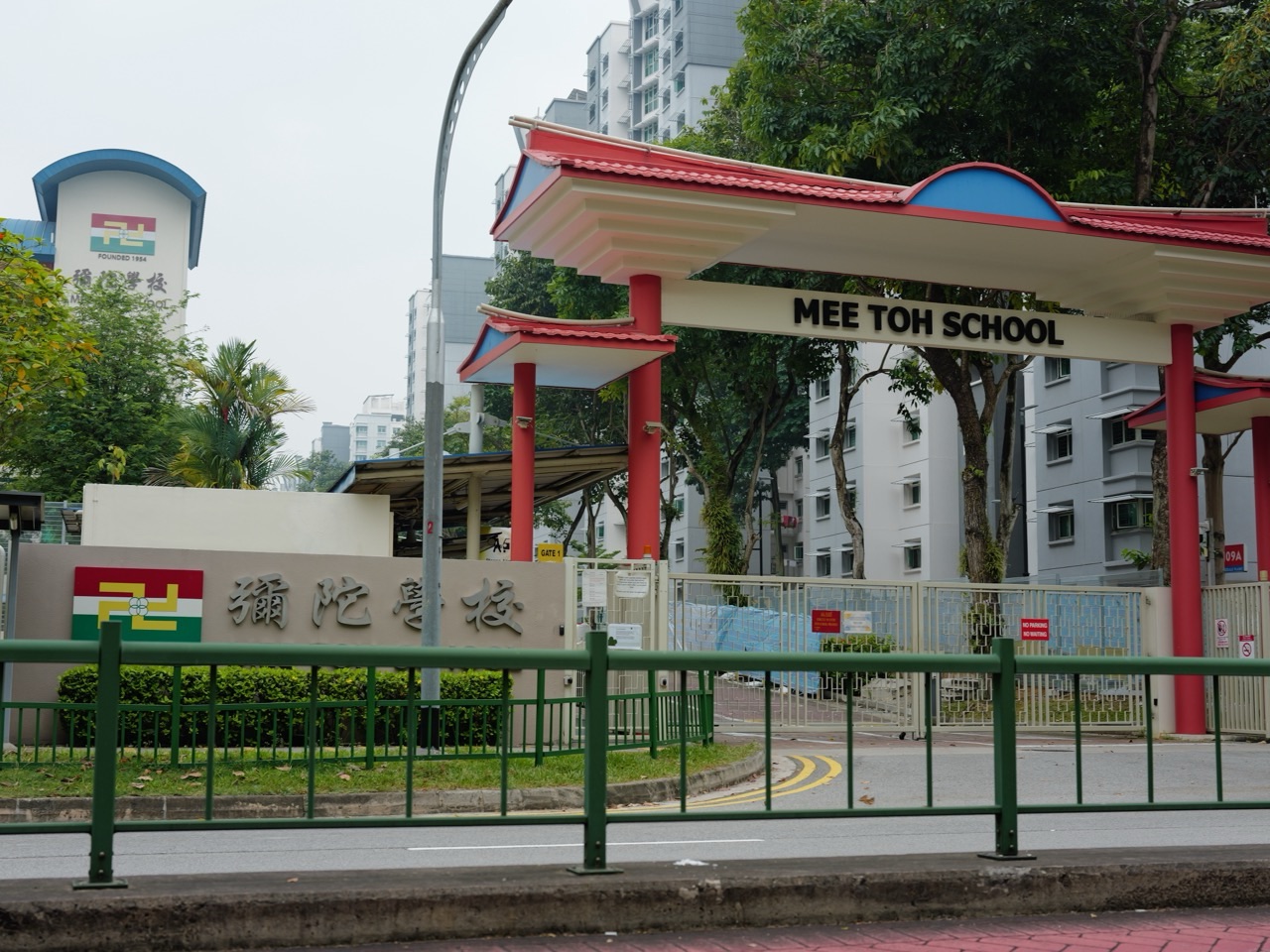
What should Punggol families expect at Mee Toh School in 2027? Mee Toh School is already an established primary school at 21 Edgedale Plains, with a history dating to 1954. Its Applied Learning Programme emphasises environmental education, while SENCE @ MTS develops character through sport, physical education and outdoor learning.
For 2027, parents should focus on the actual MOE Primary 1 registration outcome, transport and safe school routes, existing CCA opportunities and supporting their child’s learning. A historic school with a modern Punggol campus should not be reported as a brand-new 2027 opening.

Mee Toh 2027 in one minute
| Question for 2027 | Verified 2026 answer |
|---|---|
| Operating campus | Mee Toh School, 21 Edgedale Plains, Singapore 828867. |
| History | Origins in the 1950s, with 70th anniversary celebrated in 2024. |
| Applied Learning Programme | Environment Education, real-world sustainability and responsible everyday habits. |
| Learning for Life | SENCE @ MTS with active learning, sports, outdoor activities and character development. |
| Co-curricular activities | School programme aimed at Primary 3–6 pupils, subject to current offerings. |
| Not guaranteed | Primary 1 admission, a specific CCA place, unrestricted heritage centre entry or a fixed 2027 bus journey. |
Sources reviewed 28 October 2026. For individual 2027 intake, office and pupil schedules, current MOE and school instructions take priority.
An established school with deeper roots than modern Punggol
Did you know that Mee Toh School’s history goes back to the 1950s, long before Punggol’s modern waterway, digital district and LRT loops? Its present campus at 21 Edgedale Plains, Singapore 828867, is an established neighbourhood school. The useful question for 2027 is not whether it opens for the first time, but how its next cohort will study, travel and participate in school life.
Mee Toh School celebrated its seventieth anniversary in 2024. Its official school history connects its beginnings to community education near Leong San See Temple and an earlier school for children living in the area around Race Course Road. Those origins help explain a continuity of service and values despite changes in Singapore’s physical landscape.
A family’s decision about a school should consider the child’s actual readiness, learning needs, transport and admission rules. A school having a long history does not automatically make every programme right for every child or guarantee a place to a household living nearby.
Finding the school at 21 Edgedale Plains
The current official address is 21 Edgedale Plains, Singapore 828867, with the administrative telephone number 6489 3326. The school’s September 2026 contact page lists the general office operating from 7am to 5.30pm on regular Mondays to Fridays, with a different 8am to 5pm schedule during school holidays.
These administrative times should not be mistaken for every pupil’s arrival or dismissal times. School security, authorised visitor entry, CCA collections and classroom activities operate under their own arrangements. A grandparent who is collecting a child needs the actual designated gate and agreed time.
Meridian PE2 and Coral Edge PE3 are relevant nearby Punggol LRT East Loop stops, but their usefulness depends on where the family starts and the current pedestrian route. Do not rely on a property brochure’s straight-line distance when planning a Primary 1 child’s daily crossing.
Edgedale Plains contains several schools and residential precincts. The correct full school name and address are important when arranging a bus, taxi, parent pickup or school trip.
The founding story and how the school changed
Mee Toh’s official history says the educational need arose when Leong San School serving children near Leong San See Temple became overcrowded. Founder Venerable Kong Hiap requested the Mee Toh name in July 1953; a groundbreaking ceremony took place in May 1954.
The school began with Chinese as its teaching language and became a government-aided school in 1957. Later curricular changes reflected the wider development of bilingual education and Singapore’s examination framework. Its identity can be traced across different buildings, cohorts and decades.
In 2027, this history can help children understand that familiar institutions adapt. Families who have only recently moved into Punggol may discover that their town’s modern appearance is not the whole story. Schools, older roads, neighbourhood memories and community organisations carry earlier layers of the place.
School heritage is a subject for learning, not a guarantee of a 2027 public festival or commemorative programme. Consult the school’s current calendar if a special event is announced.
Learning school history instead of memorising dates
Mee Toh publishes a School History Curriculum that introduces its founding and development through stories about overcoming challenges, compassion and service. It also describes a heritage centre and selected school heritage ambassadors trained to explain its displays.
These resources can encourage pupils to compare documents, oral accounts and visible artefacts. A student might ask why an earlier school needed more space, how a founder obtained support and why a school continues to teach values alongside academic subjects.
An organised heritage centre or student-guided tour belongs to the school. There is no basis to promise unrestricted public walk-in admission or claim every 2027 pupil will receive the same ambassador role. Visits are subject to current permission and programme arrangements.
The wider Punggol neighbourhood offers related public history resources, including community exhibitions and the town’s changing waterfront. Those are useful complements without turning separate programmes into a fictional single school excursion.
Environmental Education: the school’s Applied Learning Programme
Mee Toh’s current Applied Learning Programme focuses on Environment Education, using a whole-school approach to sustainability. Its June 2026 description says pupils make meaningful connections between environmental issues, what they have studied and decisions in everyday life.
This is an applied learning concept rather than simply more memorisation. Children can ask what happens to litter after rain, why plants grow differently in shade, how materials can be reused and what people can do to reduce waste in shared residential spaces.
Parents can reinforce the learning with safe, realistic tasks: sorting household recyclables correctly, observing plants without removing them, conserving water and evaluating whether a change in habit actually has the intended effect.
A general programme description does not establish an identical 2027 lesson plan for every year group. Schools decide activity design, age suitability, safety and access. The family should use current teacher information for individual assignments.
SENCE @ MTS: developing character through movement
The school’s Learning for Life Programme is named SENCE @ MTS, or Sports Education Nurturing Character Excellence at Mee Toh School. It combines Physical and Outdoor Education, Programme for Active Learning, sports CCAs and ACE Wushu @ Mee Toh School.
Its official goals include healthy active lifestyles, building character and social responsibility. These objectives connect sport to the everyday choices children make: accepting a fair decision, practising patiently, supporting a teammate and learning how to recover after a mistake.
A school programme incorporating wushu does not mean every pupil attends a competition or must achieve one level of physical performance. The specific activities and suitable challenges depend on age, school arrangements and the child.
Parents can encourage movement without overloading the week’s timetable. Adequate sleep, meals, homework and relaxed outdoor play still matter, especially as school years become more demanding.
CCAs for Primary 3 to Primary 6
The school’s CCA overview describes a programme intended for pupils in Primary 3 through Primary 6. Its categories include sports, performing arts, uniformed groups and clubs, with aims such as resilience, confidence, teamwork, service and the discovery of interests.
A child who enjoys the arts may find different opportunities from one who prefers a ball game or an outdoor challenge. The correct decision is not simply the activity with the most impressive public performance. It is the activity that helps that particular child participate meaningfully.
Families should confirm the actual 2027 CCA list, eligibility, allocation and finishing time directly. Past-year webpages and photographs cannot guarantee that a specific activity or instructor is available to every child.
An after-school CCA may affect bus schedules and pickup arrangements. A parent should test the later journey and ensure children have time to eat, rest and complete essential schoolwork.

How Primary 1 admission really works for a 2027 entrant
MOE’s Primary 1 Registration framework governs entry to mainstream primary schools. For the 2027 Primary 1 intake, parents follow the relevant 2026 application exercise, including eligibility, registration phases, available vacancies and balloting conditions.
Living close to Mee Toh is not enough to guarantee a place. MOE’s official home-school distance information, declared residential address and phase-specific priority rules determine the relevant category. A five-minute real-estate map estimate is not a substitute.
Parents should also plan alternatives and avoid assuming that a school’s history or popularity creates personal eligibility. The best practical response is to read the current MOE process before taking irreversible housing, transport or childcare decisions.
Families who already have an offer for Primary 1 in 2027 should focus on the child’s orientation, social confidence, safe travel, school supplies and the routines that make the first term manageable.
What a parent should ask about learning and school fit
The useful starting question is what the child can currently understand and do. A strong reader, a child who needs support expressing ideas and a pupil who learns best through practical activities may benefit from different kinds of guidance, even when attending the same school.
Mee Toh’s environmental ALP and physical, character-based LLP illustrate educational priorities beyond examinations. But every child will still need core foundations in English, Mother Tongue, Mathematics and Science appropriate to their level.
A parent can ask how teachers identify misconceptions, give feedback and support pupils who need additional practice. Academic support is most useful when it addresses the underlying gap rather than simply repeating timed assessments before the relevant skills have been learned.
Past results and admissions demand should not be treated as guarantees of future grades. A school is part of a child’s development, but individual wellbeing, motivation, teaching and home support also affect progress.
The practical route from Punggol or Sengkang
Edgedale Plains lies in a part of Punggol with connections towards neighbouring Sengkang. A family may approach through the Punggol LRT East Loop, an appropriate bus or a safe walking route from a nearby HDB block.
The correct way to evaluate a journey is to start from the actual front door and follow permitted footpaths to the school’s proper gate. Include crossings, waiting time, the P1 child’s pace and whether the route remains sensible during rain.
Older pupils can gradually learn which platform direction leads home and how to contact a responsible adult if transport changes. Young children require age-appropriate supervision and clear collection procedures.
All parents should check actual 2027 school and operator announcements where pedestrian works, bus routes or visitor arrangements change, rather than rely indefinitely on an October 2026 guide.
How the surrounding neighbourhood becomes a classroom
The established Punggol Waterway and park connector network can provide simple opportunities to observe how urban nature, drainage, transport and homes interact. These are examples for discussion, not permission to enter controlled spaces or collect reservoir water.
A child could describe the difference between a sheltered walkway and an exposed path, count repeated shapes in landscaping or investigate why a plant grows differently in different light. The learning value comes from explaining observations and recognising uncertainty.
This approach fits with the school’s interest in environmental responsibility. Family learning does not need to involve buying specialised equipment. Often the useful skills are careful attention, asking a good question and making a reasonable comparison.
Respect neighbours, park users and animals during any observation. Do not photograph identifiable children without permission or treat school and private premises as open fieldwork locations.
What to expect in 2027: school-year change, not invented construction
At the start of 2027 the most tangible change for Mee Toh families is a new school year, with cohort-specific learning, orientation, school activities and possible administrative changes. The building and school identity already exist.
Parents should use the school’s current official notices for term dates, CCA schedules, student-care arrangements where applicable and gate access. More broadly, the Punggol transport network and community amenities continue to serve school trips.
No reviewed official notice justifies claiming a completely new Mee Toh campus will open in 2027. An accurate local guide should not invent one simply because the article series is about the future.
A properly planned year helps the child develop core understanding, integrity, empathy, critical thinking and responsibility, while making realistic use of the neighbourhood around the school.
Parent preparation checklist
- Use the full campus address and current visitor or pupil gate instructions.
- Check Primary 1 registration eligibility and official home-school distance rather than property advertising.
- Inspect the actual route from home through the Punggol East LRT and suitable crossings.
- Ask about current environmental education, SENCE activities and the child’s realistic CCA allocation.
- Plan time for independent reading, core schoolwork, rest, outdoor play and safe travel.
- Treat special heritage events and student tours as programmes needing school permission.
Frequently asked questions
What is Mee Toh School’s address?
21 Edgedale Plains, Singapore 828867.
Does Mee Toh School first open in 2027?
No. Its history reaches back to 1954 and it celebrated its 70th anniversary in 2024.
Who established the school?
Its official history identifies Venerable Kong Hiap as founder.
Which LRT stations may be relevant?
Meridian PE2 and Coral Edge PE3 are in the wider area; check the actual home-to-gate walking route.
What is its Applied Learning Programme?
Environment Education, connecting sustainability ideas with everyday decisions and character.
What does SENCE mean?
Sports Education Nurturing Character Excellence, the school’s Learning for Life Programme.
Which years can take part in CCAs?
The current CCA overview describes activities for pupils in Primary 3 to Primary 6.
Is the school’s heritage centre a public walk-in museum?
No unrestricted entry should be assumed; current school programme and visitor rules apply.
Will a nearby flat guarantee Primary 1 admission?
No. MOE’s official registration phases and address-based criteria apply.
Do office hours determine the pupil’s dismissal time?
No. The administrative office schedule and school-day arrangements are separate.
Official school and government sources
- Mee Toh School contact page and office hours
- Mee Toh School history and founder
- Mee Toh Applied Learning Programme: Environment Education
- Mee Toh Learning for Life Programme: SENCE
- Mee Toh CCAs Primary 3–6
- Mee Toh School History Curriculum and Heritage Ambassadors
- MOE Primary 1 Registration guidance
Related Punggol guides
- Mee Toh School 2026 school guide
- Mee Toh’s move from Race Course Road and its heritage
- Cove and Meridian 2027: East Loop and neighbourhood journeys
- Edgedale Plains Greendale and Horizon 2027 routes
Editorial note, 28 October 2026: Programmes and office information are taken from Mee Toh’s current public material. This article does not promise admission, a specific school activity or a new school opening.


