
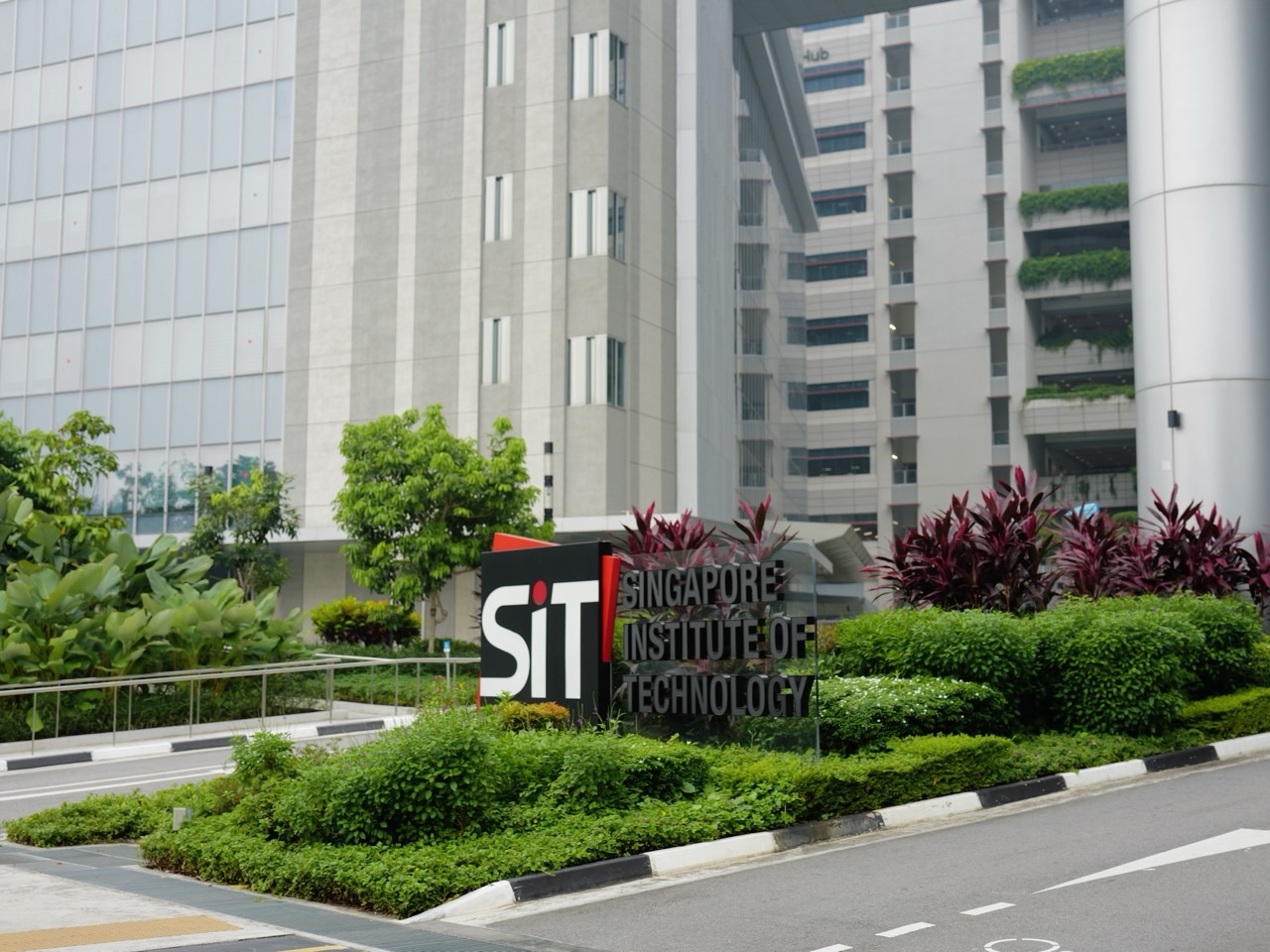
An official Punggol Events 2027 opportunity addresses something businesses and building professionals increasingly need to understand: the difference between environmental ambition, government policy, industry certification and binding legal requirements. Singapore Institute of Technology (SIT) lists SDE5404 Sustainability Legislation Frameworks for 12, 19 and 26 February 2027, on three Fridays from 9am to 6pm, at SIT Punggol Campus, 1 Punggol Coast Road. Its published application deadline is 22 January 2027 at 11.59pm. SIT’s official module page.
Did you know? This is a three-credit, project-assessed module that can contribute toward SIT’s Graduate Certificate in Sustainability Principles and Practices. The published full price is S$3,597 including GST, with conditional after-funding figures of S$1,079.10 and S$419.10 for eligible categories. It is also mapped to an Institution of Engineers, Singapore sustainability chartership pathway—but taking one course does not automatically make a participant a Chartered Engineer or an authorised legal adviser.
The curriculum names Singapore’s Green Plan 2030, Green Mark, Resource Sustainability Act, Energy Conservation Act and Carbon Pricing Act, alongside water policy, global climate agreements and sustainable urban development. This article links those ideas to current official references—including the S$45-per-tonne carbon tax for covered facilities in 2026–2027 and BCA’s Green Mark v7 transition—while keeping actual legal applicability separate from a training overview. Details were checked on 28 October 2026.
Official dates, fees and certificate details
- Programme: SDE5404 Sustainability Legislation Frameworks
- Provider: Singapore Institute of Technology, SITLEARN
- Organiser/partner: SIT in collaboration with IES Academy
- Dates: Friday 12, 19 and 26 February 2027
- Hours: 9am–6pm each listed day
- Venue: SIT Punggol Campus, 1 Punggol Coast Road, Singapore 828608
- Application deadline: 22 January 2027, 11.59pm
- Full fee: S$3,597 including GST
- Published eligible 70% category: S$1,079.10 payable
- Published eligible enhanced subsidy: S$419.10 payable
- Non-chartership prerequisite: Recognised bachelor’s degree
- IES chartership prerequisite: Washington Accord/PEB-recognised equivalent and four years’ engineering work experience, plus separate IES conditions
- Assessment: Credit-bearing project assignment worth three credits
- Certificate of Attainment: At least 75% attendance and a passing assessment
- Primary programme source: SIT SDE5404
Why residents should care about sustainability legislation
The term *sustainability* appears in advertisements, school projects, building specifications and company reports. But a manager needs to know which requirements are binding law, which are government strategies, which are certification frameworks and which are voluntary corporate objectives. Confusing them can lead to incorrect investment plans or misleading public claims. SIT’s module is designed for professionals who need to understand that landscape. Its location in Punggol makes it a specific, scheduled local opportunity—not a guarantee that all nearby firms or residents are subject to every environmental obligation discussed.
Three Fridays, not three consecutive weeks of daily classes
The official schedule states 12, 19 and 26 February 2027, each 9am–6pm. These are separated by six calendar days. A participant should plan for three Friday workdays and any independent assignment work rather than mark 12–26 February as continuous attendance. The page does not specify the exact time required to complete the project outside class. Request joining details and assessment deadlines after acceptance, especially if employer leave or family-care arrangements are needed.
The January application deadline is important
SIT’s course-runs panel lists Apply By: 22 January 2027, 23:59. That is several weeks before the first class and gives applicants a reason to investigate funding and prerequisites early. A published closing time does not guarantee admission or vacancies until that exact minute. An application can be subject to checks, and SIT may revise the intake. Confirm acceptance before arranging non-refundable travel, making promises to an employer or treating the certificate as certain.
What does a sustainability framework do?
A framework organises goals, standards, indicators and responsibilities so that organisations can make coherent decisions. Some frameworks are established by law or regulatory instruments, while others help businesses disclose performance or choose voluntary targets. One organisation may use several simultaneously. A useful professional needs to know which applies to its actual activities and why. Saying that a building follows a “green framework” is not enough to establish a particular legal compliance status. SIT’s syllabus asks learners to identify and critically evaluate different frameworks, rather than simply memorise fashionable terms.
Legislation, regulation, policy and certification are not synonyms
A statute enacted by Parliament, a subsidiary rule, a government policy statement and a voluntary certification assessment have different legal effects. An organisation that confuses them may believe it is compliant because it has a label, or assume an aspirational target imposes an identical legal duty on every business. The course covers how these categories interact. To check actual obligations, use current official law and regulator guidance, including Singapore Statutes Online and the relevant agency’s published requirements. This article is an education guide, not legal advice for a specific site.
Singapore Green Plan 2030: a national strategy
The Singapore Green Plan 2030 sets out national sustainable-development ambitions across areas such as energy, waste, transport and the environment. It can help a business understand the broad policy direction, but reading the plan is not equivalent to identifying which particular licences, rules or reporting duties apply to its operations. A sustainability officer needs both perspectives: long-term strategy and present legal responsibilities. SIT’s module provides that wider orientation without promising to resolve every company’s individual compliance question in three days.
Carbon pricing: why the year matters
Singapore’s National Environment Agency carbon-tax information states S$45 per tonne of carbon dioxide equivalent for 2026 and 2027, following S$25 in 2024–2025. That dated rate is relevant to the 2027 training, but it should not be described as a direct S$45 tax on every Singapore household. The Carbon Pricing Act applies through defined rules to covered facilities and taxable emissions. The actual tax base, reporting obligations and eligible mechanisms require official guidance and specific evaluation.
A careful carbon-cost illustration
If a fictional covered facility were liable for 100 tonnes of taxable emissions at a S$45-per-tonne rate under otherwise unchanged simplified assumptions, the arithmetic amount would be S$4,500. That example is not a real factory’s bill or a calculation of anyone’s household emissions. Actual liability depends on coverage, verified data, applicable administrative processes and other lawful considerations. The example demonstrates why professionals need accurate units, dates and legal scope rather than approximate slogans about the cost of carbon.
Carbon pricing is not the same as personal energy-saving advice
A Punggol family can benefit from energy-efficient appliances or considerate electricity use without being a registered taxable carbon facility. The carbon tax may affect wider prices and business investment decisions, but that is different from a household filing the tax directly. Understanding this distinction prevents misleading public communication. Environmental policy operates through different instruments for different actors, and a responsible manager should describe those channels accurately instead of applying one regulatory headline to everyone.
What does the Energy Conservation Act cover?
SIT names the Energy Conservation Act among the laws learners explore. Its purpose is not to tell every family they must hire an energy auditor. The applicable duties depend on regulated persons, facilities, reporting arrangements and the law’s current provisions. A professional should check Singapore Statutes Online and the relevant regulator before assessing a real organisation. The useful classroom question is how energy measurement and management obligations influence investment and operations, rather than how to use a law’s title as an advertising claim.
The Resource Sustainability Act and material responsibility
The module also includes the Resource Sustainability Act and extended producer responsibility. Singapore’s Ministry of Sustainability and the Environment explains responsibilities associated with certain waste streams and relevant producers or retailers. These duties are not identical for every product or shop. An officer needs to identify which goods and actors are covered, what reporting or collection arrangements apply and how the legal rules interact with a business’s supply chain. This is why environmental management involves contracts and operations as well as public-facing recycling campaigns.
Why a circular economy is more than a recycling bin
Circular-economy thinking asks how materials and products can retain useful value and how waste can be reduced across their life cycles. Recycling is one activity within that broader approach. A company might evaluate product design, repairability, take-back arrangements or responsible procurement. But a public claim that a product is “circular” needs supporting evidence and a clear scope. SIT’s course positions legislation within waste and resource-management questions, helping learners distinguish practical responsibilities from vague branding.
Green Mark: a building framework, not the entire law
BCA’s Green Mark system evaluates environmental performance and sustainability outcomes for buildings. It is important for Punggol residents because the estate includes housing, commercial properties, university spaces and major infrastructure. However, an individual building’s obligations and certifications should not be guessed from its appearance. BCA publishes the Green Mark programme and current requirements. Certification frameworks and mandatory legal duties can intersect, but one should not be casually substituted for the other.
A 2027 Green Mark transition worth knowing
The Building and Construction Authority’s Green Mark Version 7 implementation roadmap states no new Green Mark 2021 applications from 1 April 2027, with ongoing GM:2021 projects to be completed by the end of 2027 under its published transition. This is a real dated industry development, not a promise that every building must reapply on 1 April. Project-specific requirements depend on the actual circumstances. Professionals planning certification should use BCA’s current standard and transition guidance, rather than rely on an older checklist without checking its version.
Why regulatory versions matter
A professional may be working with a specification prepared years earlier while policy and certification standards change. If the project team assumes the old version remains valid, it may plan the wrong evidence or submission timeline. Sustainability compliance and certification therefore require document control: record the applicable version, effective date and project category. The Green Mark v7 transition is a practical 2027 example. The lesson extends beyond buildings: every claim should be grounded in the rules applicable to the actual period and activity.
What is the role of water policy?
SIT’s syllabus includes water management, desalination and NEWater as examples of Singapore’s resource strategy. PUB describes Singapore’s national water system at pub.gov.sg. These topics help learners understand how public infrastructure, technology, pricing and conservation interact. They do not mean every private firm operates a desalination plant or is subject to identical water reporting obligations. A good sustainability manager identifies the organisation’s real water uses, constraints and relevant rules before proposing changes or declaring a result.
Climate mitigation versus adaptation
Mitigation seeks to limit contributions to climate change, for example by reducing greenhouse-gas emissions. Adaptation addresses the effects that occur or may occur, such as changing heat or weather-related risks. These are related but different types of action. A firm that reduces electricity use has not thereby established that its facilities are resilient to every climate hazard. The SIT curriculum includes both the international climate-policy setting and Singapore’s resilience measures, so participants should be ready to discuss trade-offs rather than treat sustainability as one metric.
International agreements and local implementation
The course names the Paris Agreement, the UN Sustainable Development Goals and other international frameworks. These can shape national policy directions and organisational expectations, but they do not create identical direct obligations on every Singapore business. The relevant domestic laws, regulators and business activities still matter. Learning how international and local systems relate helps professionals avoid both overstatement and complacency. An ambitious global goal is not itself a completed company action plan or a substitute for appropriate compliance.
Who benefits from the course?
SIT identifies sustainability officers, policymakers, managers and business owners as potential learners. A facilities manager may need to understand energy and building requirements; a procurement lead may need to evaluate supply-chain claims; a business owner may need to distinguish material compliance costs from voluntary initiatives. The programme is not limited to one engineering discipline, but entry prerequisites still apply. Applicants should compare the published curriculum to their real responsibilities rather than enrol solely because green skills are described as important.
Two prerequisite routes, two different purposes
For learners not pursuing engineering sustainability chartership, SIT specifies a recognised bachelor’s degree. For those pursuing the Chartered Engineer (SG) in Sustainability route, it describes a Washington Accord degree or equivalent PEB-recognised programme and four years’ engineering experience, plus separate IES requirements. These are different entry routes. Passing SDE5404 does not automatically satisfy the whole chartership process. Applicants should confirm their intended qualification and the relevant IES requirements before making a financial commitment.
IES Academy collaboration explained
SIT describes SDE5404 as developed with IES Academy and mapped to an IES sustainability legislation module. Such a partnership can connect teaching with professional practice, but it should not be advertised as an unconditional award of Chartered Engineer status. Professional credentialing may require further modules, experience and assessment. A participant should ask how this particular three-credit module fits their intended route and which separate applications or fees remain necessary. The university and IES are the authorities for those questions.
Credit-bearing project and attendance
The official page says a project assignment forms the credit-bearing assessment, worth three credits toward the Graduate Certificate in Sustainability Principles and Practices. A Certificate of Attainment requires at least 75% attendance and passing the assessment. Those meeting attendance but not passing may receive a Certificate of Participation. Merely paying or showing up for one lecture is not a guarantee of the stronger credential. Ask about project scope and outside-class workload before committing three full Fridays.
One module is not the whole graduate certificate
SDE5404 is one component of a larger pathway. The term “stackable” means successful, approved learning may contribute toward the qualification under the provider’s rules. It does not mean a learner can simply add any collection of unrelated courses and claim the graduate certificate. SIT’s Graduate Certificate framework describes where this particular module belongs. Confirm all required modules, time limits and admission rules with the university.
Full fee and conditional subsidies
SIT publishes S$3,597 including GST. Its eligible 70% categories show S$1,079.10 payable; the specified enhanced category shows S$419.10; the non-funded category shows the full amount. These are official displayed scenarios, not an award made to each reader. The enhanced category’s age and status conditions should be confirmed individually. A resident’s Punggol address does not create a special university discount. Ask for the final payable quote before arranging sponsorship or personal payment.
A realistic employer training budget
Suppose a company plans to sponsor two employees who are each independently approved at the published S$1,079.10 payable amount. The basic combined tuition would be S$2,158.20, before staff time, transport, meals or other organisational costs. That is a conditional calculation, not a group discount or actual quote. A prudent employer should also define why the training matters: perhaps understanding a Green Mark transition, improving regulatory monitoring or making better procurement decisions. A subsidy does not, on its own, prove training value.
Sustainability rules need a responsible owner
In a real organisation, a sustainability issue may involve finance, operations, legal, facilities, procurement and communications. A regulation can be missed when each department assumes somebody else is responsible. A practical approach assigns ownership to identify the applicable duty, maintain records and escalate changes. This is an illustration of governance, not a prescribed legal checklist from the course. The important principle is that responsibility should be explicit before a company makes public claims or commits to a compliance deadline.
Why reports can mislead if scope is missing
A company’s sustainability report may feature a large percentage improvement while omitting information needed to interpret it. For example, a fall in total electricity use could reflect fewer operating hours rather than a more efficient process. Similarly, a certification badge cannot be assumed to cover every facility owned by the same business. Ask what the boundary, period, metric and standard actually represent. SDE5404’s emphasis on evaluating frameworks is a useful foundation for critical reading of such claims.
How this differs from the March Roadmapping module
SIT’s SDE5405 Sustainability Roadmapping course in March 2027 focuses on translating objectives into organisational plans. SDE5404, in February, is centred on legislation, policies and comparative frameworks. They are related but not identical. A professional may need both knowledge of applicable rules and a practical implementation plan. Neither course should be described as automatically including admission to the other, and each has its own dates, fees and application rules.
Where is SIT Punggol Campus?
The published venue is 1 Punggol Coast Road, Singapore 828608. SIT’s Getting to SIT page confirms that main campus location and cautions that some SITLEARN courses may use external partner premises for selected activities. This module’s February run is listed in person at Punggol Campus, but the summary does not specify a unique classroom number. Obtain the correct joining instructions after acceptance. Do not navigate to One Punggol CC or Punggol 21 CC simply because their names share the same estate.
Frequently asked questions
Dates? Friday 12, 19 and 26 February 2027, 9am–6pm. Apply by? 22 January 2027, 11.59pm. Full fee? S$3,597, with conditional published funding figures. Is a bachelor’s degree expected? Yes for the stated non-chartership route; chartership has different engineering prerequisites. Is this a degree? No, it is a three-credit module that may stack toward a separate graduate certificate. Does it make me a Chartered Engineer? No, professional certification has additional requirements. Is the 2027 carbon tax S$45 for every household? No; S$45 per tonne is the published rate for covered taxable emissions, not a universal direct household charge.
Applicant checklist
Open SIT’s SDE5404 module page, verify the three February Fridays and 22 January closing date, then check your entry route and actual funding. Ask how the project assignment is conducted, whether employer data can be used responsibly and how the module contributes to the intended certificate or IES pathway. Confirm the classroom, work leave, travel and assessment schedule before committing. For real compliance questions, consult the applicable current statutes and regulators rather than assuming that course completion itself resolves an organisation’s legal position.
Primary sources and Punggol links
SIT course: SDE5404 Sustainability Legislation Frameworks. Carbon-tax authority: NEA carbon tax and NCCS carbon tax policy. Buildings: BCA Green Mark v7 transition. Resource management: MSE Resource Sustainability Act. Local connections: Punggol Events and March Sustainability Roadmapping. Checked 28 October 2026; rules and admissions can change.
Final thought
This SIT Punggol module is a concrete 2027 professional-learning opportunity: three Fridays in February, a stated closing date, a defined project assessment and a clear university fee table. Its deeper value is learning to distinguish what Singapore law requires, what government policy encourages and what an organisation voluntarily commits to. Before enrolling, confirm eligibility, funding and work relevance. Before acting on any particular law, verify the current official rule and the facts of the organisation concerned. That separation is the foundation of trustworthy sustainability practice.


