
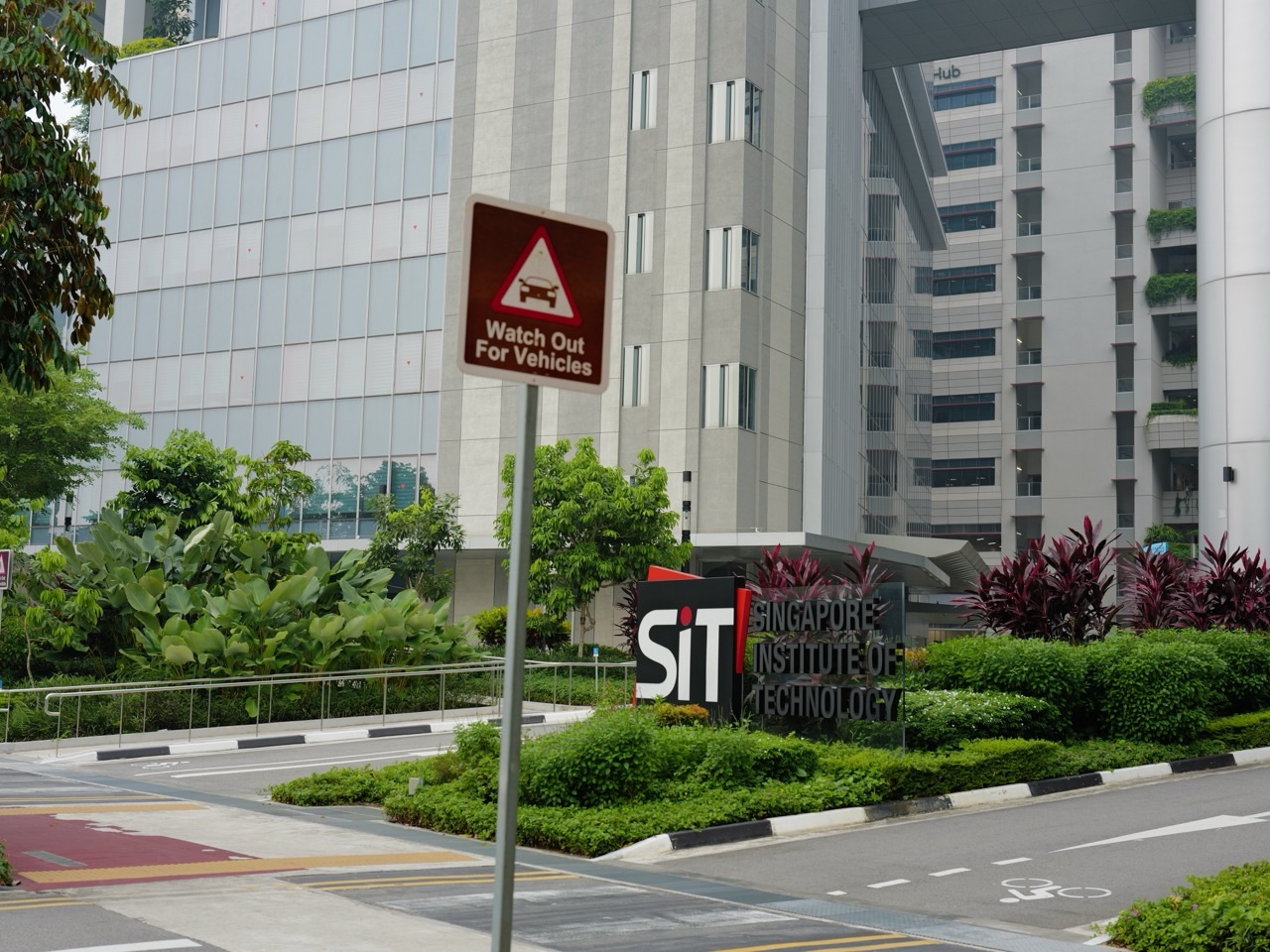
What should Punggol residents expect from the Rotary-SIT Mangrove Conservatory in 2027? This is a university research, education and public-outreach facility being developed beside Punggol Heritage Trail near Punggol Coast MRT. SIT’s current sustainability research page projects completion by 2027, updating older 2024–2025 statements that had targeted the end of 2026.
The project is backed by S$680,000 in Rotary-linked support and is intended to combine mangrove biodiversity research, climate adaptation, seedling cultivation and community learning. A completed building and an open public education programme are separate milestones; residents should wait for SIT to confirm actual visitor conditions.

The 2027 answer: what’s confirmed?
| Conservatory 2027 | Confirmed evidence and timing |
|---|---|
| Project | Rotary-SIT Mangrove Conservatory, planned within SIT Punggol Campus alongside Punggol Heritage Trail. |
| Funding | S$680,000 over three years from the Foundation of Rotary Clubs Singapore. |
| Timeline | Older announcements targeted end-2026; SIT’s current research summary projects construction completion by 2027. |
| Recent activity | SIT published a new conservatory laboratory works tender in September 2026. |
| Research purpose | Mangrove biodiversity, resilience, restoration, blue carbon and nature-based coastal adaptation. |
| Not guaranteed | Walk-in entry today, a specific 2027 opening month or unrestricted access to nursery and laboratory. |
Information reviewed 27 October 2026. The difference between older projections and the university’s later 2027 wording is intentional and should be retained in future updates.
The 2027 conservatory: a real research and public-learning project
Did you know that the Rotary-SIT Mangrove Conservatory is planned as a research nursery and teaching space within the Punggol Digital District’s university environment, not simply a decorative garden along a walkway? The Singapore Institute of Technology describes it as a living platform for biodiversity conservation, climate adaptation and public outreach beside the Punggol Heritage Trail.
An important update separates recent project information from older promises. SIT’s 2024 and June 2025 announcements projected construction completion by the end of 2026. The university’s current sustainability research page instead says construction is projected to be completed by 2027. That revised wording is the responsible position to use when discussing what Punggol residents should expect in 2027.
Construction completion is also different from official public opening. A scientific nursery or laboratory may have testing, staff setup and environmental protection rules before it can host an organised visitor programme. A student should not assume that the site accepts unscheduled walk-in field trips merely because a project has a target year.
Where the conservatory belongs in the actual town
SIT’s announcements locate the project at its Punggol Campus, beside the Punggol Heritage Trail and near Punggol Coast MRT. It is designed to connect the public green route with university teaching and research. This is part of a working environment that already includes classrooms, business park buildings, public areas and shops.
NParks identifies Punggol Heritage Trail as a 2.75-hectare public park landscape between Punggol North Avenue and Punggol Point. The park’s first portion is already available, and Phase 2 is expected to be completed by the end of 2026. The trail’s status must not be confused with the completion or availability of SIT’s separate research facility.
Visitors can use operating Punggol Coast MRT and follow marked public paths where available. However, the shortest path indicated on a campus diagram may pass a controlled university entry or active worksite. A project can be close to public transport yet still require advance registration for interior areas.
The conservatory is not the same as Coney Island Park or the mangrove habitats at Lorong Halus. A family can study these destinations as complementary environments, but public-park rules do not grant access to a private laboratory or research nursery.
How this project was funded
SIT announced in May 2024 that the Foundation of Rotary Clubs Singapore was contributing S$680,000 over three years to establish the conservatory. SIT later held a groundbreaking ceremony on 16 June 2025. This financial support shows that the initiative has a named institution and partner behind it, rather than existing only as an aspirational drawing.
The donation is not an admission fee, ticket budget or project operating grant that can be divided into promises of individual school visits. Its purpose is to support the establishment of the conservatory and associated research and public education.
SIT says the facility will integrate mangrove research, education and community outreach, with opportunities to expand collaboration among researchers, Rotary members, students and interested environmental organisations.
Funding, a groundbreaking ceremony and a subsequent construction target are three different milestones. Proper reporting identifies each without claiming that a project already welcomes visitors whenever an earlier event has taken place.
September 2026 tender: why the timeline should not be overstated
SIT published procurement reference TO2026019 on 4 September 2026 for the proposed erection of a single-storey mangrove conservatory laboratory at Block 7 Level 2 of the campus. The published tender deadline was 9 October 2026, with a compulsory tender briefing at SIT on 11 September.
That record confirms that construction and procurement planning were active in the second half of 2026. It does not prove that the contract has been awarded, that every construction phase is finished, or that a visitor can enter the laboratory.
When different articles provide different years, the university’s latest project summary should receive greater weight than an old launch-day forecast. Even the latest ‘completed by 2027’ wording remains a projection until SIT issues a dated completion statement.
Punggol residents should resist the habit of turning tender notices into opening announcements. A tender shows that a buyer is seeking services under specified conditions; it is not itself a certificate that the facilities have been handed over or approved for public use.
The first scientific question: which mangroves survive changing conditions?
Mangrove species occupy challenging shorelines where salt, water levels, sediment, heat and changing tidal conditions affect growth. The conservatory’s research aims to understand genetic diversity and the ability of different mangroves to tolerate conditions that may change as the climate warms and seas rise.
That is a controlled research question, not a guarantee that a single ‘super mangrove’ will solve sea-level rise. Researchers need repeated observations, suitable comparisons and careful understanding of what a species can actually tolerate.
The conservatory is intended to help researchers cultivate and study different species, including those that may have disappeared locally, with the aim of supporting appropriate restoration. Returning a species to an area is more complex than planting seedlings; the habitat, water movement, soil and long-term ecological interactions all matter.
For students, this is an accessible example of first-principles biology: a living thing needs suitable conditions to survive and reproduce, while scientists need evidence before declaring an intervention successful.
Mangroves, shore protection and blue carbon
Mangrove roots can help trap sediment, slow water and provide shelter for juvenile fish and other animals. They also store carbon in vegetation and wet soils, a concept often called blue carbon in coastal ecosystems.
These benefits are meaningful but should not be exaggerated. Mangroves alone do not guarantee that every exposed shoreline is protected against an extreme event. Their value depends on the right species, site conditions, ecosystem health and surrounding coastal engineering.
A sensible 2027 article should also avoid inventing a precise quantity of carbon that the Punggol conservatory itself has already captured. Carbon storage requires measurements, boundaries, timescales and methods; research aims are not measured annual outcomes.
Learning why a living wetland can be useful alongside engineered coastal defences is part of the project’s value. Students can explore how natural and built solutions may complement each other in a small island country.
What the first phase is supposed to include
SIT’s 2025 annual-report material describes an initial phase focused on education programmes for its students and the Punggol community, together with establishing a mangrove nursery for research and seedling cultivation.
Public outreach is also expected to use displays and explanations of research findings and the suitability of species for different conditions. This gives residents a more useful expectation than simply imagining a glasshouse full of decorative plants.
A small nursery is not a zoo, garden centre or shop selling mangrove seedlings. Scientific samples and growing plants may need restrictions on handling and movement. Visitors should expect to follow supervision and biodiversity protection rules where programmes are offered.
The first practical public question for 2027 is therefore not ‘Which ticket can I buy?’ but ‘Has SIT announced an exhibition, tour or community event, and what are its participation requirements?’
What a school might learn from the facility
A Primary Science class could compare plants adapted to different surroundings: mangroves in saline and waterlogged conditions versus garden plants in ordinary soil. Students should distinguish visible structures from the functions inferred from them.
Secondary students could investigate ecological relationships, resilience, adaptations and how a controlled experiment tests one factor at a time. They could also examine the limits of a model: results from a small controlled growing area may not automatically translate to a living coastline.
At higher levels, the conservatory’s research can connect to environmental engineering, biology, GIS, modelling, carbon accounting and coastal management. The project is particularly suited to SIT’s applied learning philosophy, which connects scientific principles with real constraints.
None of these learning possibilities means every Punggol school has a confirmed 2027 tour reservation. Teachers should use SIT’s official public outreach announcements and obtain permission rather than enter research spaces without a programme.
How children can understand the project without visiting the laboratory
A family can begin with a publicly accessible part of the Punggol Heritage Trail, subject to current NParks restrictions, and discuss the difference between a managed park and a scientific research site. That builds the idea that both nature and institutions have boundaries.
Ask why a mangrove growing beside salt water has different problems to solve from a potted plant at home. Let children propose the causes of leaf changes or water tolerance while reminding them that one observation rarely proves a scientific explanation.
Use approved photographs, official drawings and SIT’s accessible public explanations to introduce the conservatory. Avoid collecting mangrove seedlings or removing plants from protected areas for a home experiment.
A child can practise good environmental vocabulary: habitat, biodiversity, salinity, sediment, adaptation, restoration, resilience and carbon storage. Knowing the words is useful when tied to real examples rather than memorised in isolation.
The connection with Coney Island and regional restoration
SIT’s 2024 announcement mentions possible collaboration on ecological restoration at nearby Coney Island and other sites including Pulau Ubin. That points towards a broader network of relevant habitats and real-world research opportunities.
However, one research project being situated in Punggol does not mean people may collect samples, plant trees or conduct field experiments anywhere on Coney Island. NParks manages public park access and environmental rules separately.
Researchers working in an ecosystem need suitable permissions and careful methods. A casual visitor should use open paths, avoid disturbing flora and fauna and follow published Coney Island gate hours.
The conservatory could become an educational connection between an urban campus and natural habitats, but each field project needs its own evidence, scale and timeline.
What residents should look for in a real 2027 opening notice
A trustworthy announcement will name SIT, the exact facility, whether construction and commissioning have been completed, the public entry arrangement, access hours and any registration required for guided tours or school programmes.
Other important details may include whether the nursery and laboratory are restricted while a viewing or exhibition area is open, how visitors should approach from Punggol Coast MRT and whether the content is suitable for young children.
If the headline says only ‘targeted for 2027’, do not assume bookings can be made. If it announces a community event, check the specific event dates and age or capacity rules rather than generalise them to permanent unrestricted access.
Residents interested in volunteering or research can follow SIT and Rotary for formal programme announcements. Punggol’s green future becomes most useful when evidence is communicated clearly and public interest is channelled responsibly.
A sensible 2027 community learning checklist
- Use the latest SIT construction and visitor announcements instead of assuming an older target is confirmed.
- Find the official public approach from Punggol Coast MRT or the open Heritage Trail.
- Check which exhibits, guided tours or school programmes actually have published registration.
- Respect laboratory, nursery and university access restrictions.
- Teach children mangrove adaptation and ecological reasoning from reliable public sources.
- Never collect plants, take water samples or enter restricted habitats for an informal school project.
- Differentiate a research objective from measured carbon removal or a guaranteed coastal-protection outcome.
Frequently asked questions
Is the Mangrove Conservatory already open to the public in October 2026?
SIT’s current research summary describes construction as projected for completion by 2027, not a confirmed general public opening.
Where is the planned project?
At SIT Punggol Campus beside the Punggol Heritage Trail, near Punggol Coast MRT.
Who is funding it?
SIT announced a S$680,000 contribution over three years from the Foundation of Rotary Clubs Singapore.
Why do older sources mention 2026 completion?
SIT’s 2024 and 2025 launch announcements gave an end-2026 projection; its later research page gives completion by 2027.
What was the September 2026 tender?
SIT’s TO2026019 tender sought works for a single-storey mangrove conservatory laboratory at Block 7 Level 2.
Is this the same as Punggol Heritage Trail?
No. The Heritage Trail is a public green route managed separately; the conservatory is a research and learning facility alongside it.
Can any student handle mangrove specimens in the nursery?
No automatic permission exists. Research materials and education sessions may require supervision and registration.
Will the project stop sea-level rise?
No. It aims to advance understanding and restoration; a conservatory alone cannot eliminate a global climate problem.
What is blue carbon?
Carbon stored in coastal ecosystems such as mangroves, including vegetation and sediments.
Is there a confirmed 2027 school field-trip calendar?
No specific universal calendar is established by the project overview. Check SIT’s outreach announcements.
Will Coney Island be turned into the conservatory?
No. Possible external restoration work is separate from the campus facility and subject to permissions.
Official sources
- SIT current sustainability page: Mangrove Conservatory projected complete by 2027
- SIT 2025 groundbreaking, public learning design and older 2026 target
- SIT 2024 S$680,000 Rotary funding, mangrove adaptation and outreach
- SIT September 2026 tender TO2026019, Block 7 Level 2 laboratory
- NParks: Punggol Heritage Trail location, Phase 2 and visitor rules
- SIT 2025 annual report and initial nursery/education phase
Further reading on Punggol
- Rotary-SIT Mangrove Conservatory: earlier Punggol opening-status guide
- Future of Punggol: Mangrove Conservatory, research and blue carbon
- Punggol Coast 2027 digital district and public amenities
- What to Expect for Punggol 2027: Coney Island and Nature Walk
- Punggol neighbourhood and nature guides
Editorial note: 27 October 2026. The latest university research page supersedes older target language for planning purposes but is still a projection, not a public access confirmation. No individual school programme or field research permission is guaranteed.


