
Punggol Digital District is getting a new kind of environmental learning space. The Rotary–SIT Mangrove Conservatory is designed for applied mangrove research and public education along the Punggol Heritage Trail, with construction now projected for completion in 2027. This article separates the changing project timeline from the real science of biodiversity, blue carbon and coastal resilience.

The latest target: 2027, not the old 2025 opening headline
Updated 23 October 2026. Singapore Institute of Technology’s current sustainability information identifies 2027 as the projected construction-completion year for the Rotary–SIT Mangrove Conservatory at its Punggol campus, along the Punggol Heritage Trail. The project is intended to combine mangrove biodiversity research, coastal climate-resilience studies, education and community outreach. Completion is projected, not a confirmed public opening day, and visitor access or outreach activities will depend on actual operating arrangements.
The schedule has changed since the project was introduced. SIT’s May 2024 announcement initially spoke about construction beginning in 2024 and completion by December 2025. At the 16 June 2025 groundbreaking, the university announced a revised timeline with construction starting by end-2025 and a projected end-2026 completion. SIT’s current sustainability page now says the conservatory’s construction is projected for completion by 2027. A well-maintained local article must use the latest clear institution statement while retaining the history of earlier estimates.
The core purpose has been consistent despite the changes: turn a publicly approachable part of Punggol Digital District into a place where real mangroves help people understand research and conservation. That is a different undertaking from building another decorative green wall or simply planting more roadside trees.
Where is the conservatory supposed to be?
SIT places the project at Campus Heart, along the Punggol Heritage Trail in the integrated Punggol Digital District. It is close to Punggol Coast MRT and SIT’s campus facilities. The location is important because researchers and students can work near the living conservation installation, while residents using the heritage route may eventually encounter approved displays and outreach activities.
But a planned site close to a public trail is not a guarantee that every laboratory or controlled growing area will be open for casual entry. The university describes public engagement as part of the mission; individual access, supervision, opening hours and events require actual confirmation. Do not enter construction or research zones because the attraction appears on a future visitor map.
The project should not be confused with Punggol Point Park’s separate closure through a scheduled end-2027 upgrading period. Nor is it identical to the existing forest sections of Coney Island Park. These are different places with different managers, purposes and restrictions.
The S$680,000 support and the Rotary partnership
The Foundation of Rotary Clubs Singapore committed S$680,000 over three years to help establish the conservatory. SIT announced the support in May 2024, and the partnership continued through the June 2025 groundbreaking. The contribution is project support, not an annual operating budget, a price for public admission or evidence that every research study is fully funded for all future years.
Rotary organisations have described their aim as advancing environmental stewardship, community learning and applied mangrove research. The relationship matters because coastal conservation requires effort over time, beyond the initial construction event. Students, volunteers and technical experts may contribute through appropriately organised activities.
The public should distinguish confirmed philanthropic support from unannounced future grant amounts or research outcomes. A generous donation can enable a living laboratory, but the final scientific value depends on long-term methods, people and ecological results.
What makes mangroves different from ordinary trees?
Mangroves occupy intertidal coastal environments where salt, inundation and oxygen-poor sediments create demanding conditions. Different species have adaptations suited to those challenges, including specialised roots and strategies for coping with salt or waterlogged soil. They are not all one species, nor can every coastal plant be treated as a mangrove.
Mangrove habitats can stabilise shorelines, provide habitat for animals and store carbon, including in sediments. Those benefits depend on a functioning ecosystem. A row of young plants in a controlled testbed is an important learning resource but not yet equivalent to a mature, biodiverse coastal forest.
The conservatory aims to study how different mangrove species respond to environmental change and how conservation or restoration methods could be improved. Scientific care is essential because planting the wrong species in the wrong place can create disappointing outcomes despite good intentions.
Why Punggol is a credible location for mangrove learning
Punggol’s modern district sits near coastal and waterway landscapes, while the town’s history includes fishing, settlement and extensive change to land and shorelines. A mangrove research project within a university and close to a public heritage trail can help connect these histories to current climate concerns. It brings the topic from a textbook diagram into a recognisable local context.
SIT has described the conservatory as part of its applied-research model, where students work on problems with practical relevance. The site could allow controlled studies, displays and outreach to complement existing opportunities for nature observation nearby. But a campus facility is not itself a replacement for protecting real coastal habitats.
The educational value will be highest when it helps people understand that biodiversity, shoreline protection and climate adaptation depend on sustained ecological management rather than one high-profile planting event.
Blue carbon: what the term means
Blue carbon commonly refers to carbon stored in coastal and marine ecosystems such as mangroves and seagrass habitats. Mangrove vegetation absorbs carbon as it grows, while sediments can hold substantial carbon over time. The amount stored depends on the species, site conditions, age, sediment dynamics and the method of measurement.
This is why mangrove conservation is sometimes associated with climate mitigation. But announcing a new conservatory does not justify claiming a specific number of tonnes of carbon has already been removed from the atmosphere. Young experimental plants and mature forests have different carbon stocks, and accounting requires clear boundaries and evidence.
A responsible Punggol article can explain the mechanism while refusing to invent a project carbon total. Future researchers may report measured results, but those will need proper methods and transparent qualifications.
Mangroves and coastline protection
Mangrove roots and vegetation can help influence sediment movement and reduce wave energy in some coastal settings. Their protective effect varies with species, stand width, water depth, shoreline shape and storm conditions. Mangroves are therefore a potential nature-based contribution to coastal resilience, not a universal substitute for every engineered coastal defence.
The conservatory intends to study which species and arrangements may be useful under changing sea levels and environmental conditions. Testing can help researchers identify where restoration is plausible and what limitations remain. A successful experiment in a tank may still need careful field validation before a method is adopted on a real shoreline.
For children, this introduces an essential scientific distinction: a helpful natural mechanism does not eliminate risk. Sea-level rise, storms and erosion require integrated planning, monitoring and sometimes additional infrastructure.
Research on biodiversity and species resilience
The project’s research objectives include examining different mangrove species and their ability to cope with changing conditions. Species vary in salinity tolerance, growth patterns, root structure and habitat preferences. Researchers can study those characteristics through appropriately designed experiments and repeated observations.
An experimental conservatory can help explore why some plants survive a condition that harms others. But one well-grown specimen does not establish that a species will thrive across every part of Singapore’s coast. Variability among individual plants, genetic diversity and environmental conditions must be considered.
The most useful outcome is evidence that helps choose suitable restoration strategies rather than a dramatic headline about discovering a single ‘future-proof’ tree.
Genetic diversity matters to conservation
SIT’s 2024 project announcement specifically emphasised conserving a wide range of genetically diverse mangroves. This is important because populations with limited diversity may be more vulnerable to environmental change or disease. Research on diversity can inform conservation plans, although the relationship between genes and real-world resilience requires careful study.
A nursery or controlled collection must be managed under appropriate scientific and biosecurity arrangements. Importing propagules or planting unfamiliar species should never be undertaken casually. A well-intended introduction can have ecological consequences if it is not suited to the receiving environment.
For the public, the lesson is that conservation involves more than counting seedlings. Protecting the ecological integrity of populations and sites can be as important as the number of stems planted.
The Brownlowia argentata ambition
Early reporting on the conservatory described SIT’s interest in restoring Brownlowia argentata, a mangrove-associated tree considered locally extinct in Singapore, using carefully selected material from areas where the species remains present. This is a research and conservation ambition from the project’s earlier phase, not proof that successful reintroduction has already occurred.
A reintroduction programme needs appropriate scientific review, genetic and biosecurity considerations, suitable planting sites and long-term monitoring. Importing or transplanting a species without approval is not an appropriate public volunteer activity. A failed planting could damage habitat or waste scarce material.
This example shows why long-term ecological work moves more slowly than a publicity timetable. A conservation success cannot be declared on the day seedlings arrive.
Controlled environments and the scientific method
Rotary’s project descriptions have discussed controlled environments to test how mangrove species respond to future climate scenarios. A controlled experiment can vary selected factors and monitor plant responses under conditions that would be difficult to study consistently in the open coast.
Researchers must define which variables they are changing, how responses are measured and what counts as a meaningful result. A plant’s height alone may conceal problems with root development or long-term health. Repetition, suitable comparison groups and careful analysis are crucial.
A controlled system can reveal mechanisms, but real shorelines have tides, storms, sediments, interacting species and human activities. Results should inform field research rather than be assumed to transfer without further validation.
A living laboratory, not just a static exhibition
The conservatory is planned to combine active research with learning and outreach. A static museum displays existing knowledge, while a living laboratory can show how questions are investigated and updated as evidence changes. This can make science more engaging for students, provided exhibits clearly distinguish ongoing experiments from established conclusions.
A public display might explain mangrove root types, biodiversity, coastal protection or carbon storage. SIT has mentioned interactive exhibits and educational programmes, but actual opening arrangements and the final exhibit list have not been established by the current page. Do not invent a visitor route or promise hands-on access to experimental equipment.
The strongest future visitor experience would help someone leave with a clearer sense of how researchers test claims, not merely a new photo opportunity.
Where the project differs from Punggol Heritage Trail Phase 2
NParks’ Punggol Heritage Trail preserves the corridor of Old Punggol Road and its landscape context, with a later section expected by end-2026 in the published plan. The Rotary–SIT Mangrove Conservatory is a separate SIT/Rotary research and outreach project along the trail, now carrying a 2027 projected construction-completion date in SIT’s current material.
The two projects are related through location and ecological education but must not be assigned one shared opening date. A segment of the trail could become accessible while the conservatory remains under development, or vice versa under revised arrangements. Each site requires its own operating notice.
For local readers, the difference is functional: the trail is a place to move through and understand Punggol’s past, while the conservatory is intended as a living platform for understanding mangrove science and future climate resilience.
Why Coney Island is relevant but not identical
SIT’s earlier announcement described potential research and restoration connections with nearby Coney Island, which already has mangrove habitats. Real coastal ecosystems provide conditions that controlled experiments cannot fully reproduce. They also require conservation rules that protect existing plants and wildlife.
The public should not enter mangrove habitat to collect samples or seedlings for a home experiment. Coney Island Park has its own permitted routes and operating information. Habitat restoration undertaken by authorised experts should not be confused with casual planting by visitors.
A school can connect classroom lessons to safe nature observation without entering sensitive areas. The relationship between the conservatory and Coney Island is a promising educational concept, not blanket public access to research sites.
How schools might use the conservatory
A planned outreach programme could support Geography, Biology, Science and environmental education by showing how salt tolerance, biodiversity and coastal resilience are studied. But no school should treat the future conservatory as a confirmed 2027 excursion slot until SIT publishes actual group-booking arrangements.
Teachers should define the learning question before organising a visit: what evidence shows a mangrove adaptation, how is a restoration strategy evaluated, or why can a shoreline require more than one kind of protection? Students need appropriate supervision, respect for research equipment and a way to record observations without disturbing plants.
A good visit should challenge students to describe not only what a mangrove does but also how a researcher knows it.
An easy Primary Science model
Young learners can compare pictures of a mangrove and an ordinary tree and discuss what environments they grow in. They can draw the roots and explain that living things have features suited to their conditions. The teacher should avoid oversimplifying by claiming every mangrove species has the same roots or survives exactly the same salt concentration.
A safe classroom activity might examine how plant roots help anchor soil in a model using appropriate materials. Such a model is an analogy, not proof that a mangrove forest stops every wave. No live habitat needs to be disturbed to teach the idea.
The goal is accurate observation and curiosity rather than collecting rare plants.
A Secondary Geography investigation
Secondary students can use published maps and research to examine where mangrove habitats occur and how coastal development influences them. Ask what makes one shoreline suitable for restoration and another challenging. Key considerations may include tidal range, sediment, water conditions and existing ecological communities.
Students should separate general science from site-specific claims. A photograph of Punggol’s waterfront does not reveal soil salinity or long-term erosion rates. They can state which variables would require field instruments or specialist data.
This is useful preparation for interpreting real climate adaptation proposals, where a confident-looking plan is only a starting hypothesis.
A Mathematics project about growth and uncertainty
Imagine a fictional experiment with two groups of mangrove seedlings grown under different salinity conditions, using classroom-provided hypothetical measurements. Students can calculate average height changes and plot values over several periods. They should recognise that higher average height is not automatically stronger ecological performance.
The model can introduce sample size, variation, error bars and the difference between an observed association and a causal claim. If the groups also receive different light, the effect of salinity cannot be isolated cleanly. This connects Maths to the scientific discipline behind conservation research.
The project should be labelled synthetic and should not claim results from the SIT conservatory.
How a university learner could contribute
SIT students in relevant programmes may encounter applied research involving plant monitoring, engineering systems, sensors, data analysis or environmental management. The institution’s stated goal is hands-on, interdisciplinary learning linked to real environmental problems. The exact participation route and any vacancies must be confirmed with SIT.
A useful student contribution might involve designing a repeatable measurement method, improving the clarity of research data or building an authorised educational exhibit. But laboratory work requires supervision and appropriate permissions, especially where living collections or specialised equipment are involved.
A career path into conservation does not depend on one university project alone. Ecology, environmental engineering, data science, education and communication can all play substantive roles.
Future careers in conservation and blue carbon
Research-oriented conservation can require ecologists, field technicians, environmental scientists, policy specialists, engineers and people skilled in community engagement. Blue carbon accounting can also involve geospatial analysis, measurement protocols and careful interpretation of ecosystems and sediments.
The mangrove conservatory’s development may inspire students, but its establishment does not announce a specific number of jobs or guaranteed internships for residents. Career planning should rely on actual qualifications and recruitment routes rather than a general construction announcement.
For secondary-school students, the most useful preparation is a combination of Science, Mathematics, communication, ethical fieldwork and sustained interest in how ecosystems function.
Coastal adaptation cannot be reduced to one species
The 2024 sources discuss developing mangroves that may better withstand future conditions. The phrase ‘future-proof’ is attractive but scientifically demanding. A species well suited to one site or sea-level scenario may fail elsewhere. Ecological resilience also depends on interactions among plants, animals, sediments and human activity.
Sensible adaptation planning asks how mangroves might complement sea walls, drainage infrastructure, land-use decisions and other responses. It would be irresponsible to promise that planting a particular species eliminates rising-sea-level risk for Punggol or all of Singapore.
A living research site can help reveal both the strengths and limitations of nature-based solutions.
What community volunteers could appropriately do
SIT and Rotary describe community outreach as a central mission. Future programmes may invite participants to learn, observe or help under appropriate supervision. But a volunteer should not assume they may bring seedlings, enter experimental plots or undertake restoration without authorisation.
Well-designed volunteer roles could involve education, approved observation, event support or other activities specified by the organiser. The actual programme must set eligibility, safety arrangements and any requirements for handling plants or recording research data. A participant’s best contribution is disciplined care, not unapproved intervention.
The public can already support conservation by following NParks trail rules and avoiding disturbance of existing mangrove habitats.
How to tell a genuine conservation result from a publicity claim
A photograph of a seedling being planted proves that planting happened. It does not show whether the plant survived a year, whether it reproduced, whether the habitat supports other species or whether the shoreline became more resilient. Ecological outcomes take time and suitable monitoring.
A credible report should specify the species, site, dates, methods, survival indicators and limitations. Research findings may be preliminary or site-specific and should be labelled accordingly. Numbers that sound precise should be traceable to appropriate observations.
This habit is useful far beyond one Punggol facility: public sustainability projects deserve credit for real progress without being credited for results not yet observed.
Why the construction date has shifted
The public chronology shows revised expectations: 2024 reporting identified an ambitious original construction schedule; SIT’s June 2025 groundbreaking introduced a later sequence; its current project overview now projects 2027 completion. The provided materials do not establish a single verified cause for each change. It would be misleading to invent a contractor problem, funding gap or ecological difficulty to explain the dates.
Longer schedules can occur in research and infrastructure projects, but only the responsible institution can confirm specific reasons. For readers planning an outing, the safe conclusion is simply that earlier opening estimates are outdated and an actual public-opening notice is still needed.
Keeping the chronology visible prevents an old search result from becoming a false claim that the conservatory is already open.
The research value of nearby public space
Locating the conservatory along a heritage corridor could make mangrove science easier for residents to encounter. A university laboratory behind closed doors serves researchers, while thoughtfully designed public interpretation can share methods and findings more widely. The aim is to connect expertise with community understanding without compromising ongoing experiments.
A public route still needs accessible paths, appropriate signage and clear boundaries. A visitor who cannot manage stairs or who needs frequent rest should be able to plan from confirmed facilities rather than an undated artist’s impression. The practical quality of outreach depends on these ordinary details.
When SIT publishes actual access information, a reliable local guide can convert the project description into a verified visitor plan. Until then, the construction target is not enough.
What to observe while the project is still being built
Residents may notice changes near Campus Heart or the Heritage Trail, but a fence, structure or planting area does not prove the site has opened or that particular research species have been established. Photograph only from public paths and keep away from works and protected plants.
If a publicly visible interpretive sign is added, record its date and exact wording before publishing conclusions. Construction, commissioning, research setup and public admission are separate stages.
A local chronicle can be useful even when it only records what is known. Accuracy is more valuable than announcing an opening a year too early.
A four-week family learning plan
In week one, learn the difference between mangroves and ordinary terrestrial trees using trusted botanical resources. In week two, discuss how changing sea levels may affect coastal habitats. In week three, draw a simple controlled experiment with two hypothetical groups of seedlings and identify variables that would need to be held constant.
In week four, the child writes a short explanation of what a successful restoration would require beyond planting. The answer should include monitoring, suitable habitat and time. No plant collection or access to restricted research space is needed.
This learning sequence uses the future facility as inspiration while protecting real ecosystems.
How to revisit the status in 2027
Check SIT’s own sustainability and conservatory pages for an updated construction milestone, then seek an explicit announcement of public programmes or visiting arrangements. If a school or community organisation advertises an event, verify it through an authorised channel and review access, safety and enrolment conditions.
An official construction completion might precede exhibitions, research commissioning or regular public visits. The correct timeline should distinguish those stages just as it distinguishes earlier estimates. An article can be updated meaningfully when one of them is confirmed.
Do not treat the opening of a nearby segment of Punggol Heritage Trail as proof the conservatory has opened.
Frequently asked questions
When will the Mangrove Conservatory open? SIT’s current page projects construction completion in 2027; a specific public opening date is not established. Where is it? At SIT’s Punggol Campus Heart along the Punggol Heritage Trail near Punggol Coast MRT. Who supports it? The Foundation of Rotary Clubs Singapore pledged S$680,000 over three years.
Is the conservatory the same as the Heritage Trail? No; it is a separate research, education and outreach project associated with the trail. Can the public visit? Public engagement is planned, but current entry rules and programmes must be confirmed. Is Brownlowia argentata already restored in Singapore? The cited materials describe a research ambition, not confirmed successful reintroduction.
Will it protect the whole Punggol coast from rising sea levels? No such guarantee is supported. Can students take seedlings home? Do not assume any plant collection or distribution is permitted. Are research internships guaranteed? No; participation depends on real opportunities and academic criteria.
What scientists need to know about a mangrove seedling
A seedling’s survival depends on more than its species name. Its origin, genetic variation, size, health, growing medium and handling can affect how it performs. Mangroves often inhabit shifting environments where the frequency and duration of flooding matter. A plant that survives briefly under one controlled setting may not thrive once transferred to a different shore.
This is why the conservatory’s emphasis on genetic diversity and appropriate environmental experiments matters. Researchers can test hypotheses under supervised conditions while recording exactly what material was used. Site-specific observations provide stronger information than a general claim that one species is suitable for the entire region.
For ordinary visitors, the lesson is to leave experimental collections alone. A small sample can represent years of planning and scientific work, and unauthorized removal or disturbance can invalidate research as well as damage living material.
Why long-term monitoring is central to restoration
A mangrove restoration programme might count the number of seedlings planted, but that is an input, not a final outcome. Conservationists also need to know how many survive after storms, whether they grow and reproduce, and whether animals use the restored habitat. Ecological recovery depends on soil and tidal processes that may not be obvious in a short visit.
Measurements should therefore continue beyond opening day or the end of a funded construction stage. A project can provide useful knowledge even when some plantings fail, if researchers record the causes and improve the method. A public report should distinguish an experimental planting from an established restored ecosystem.
This is an important lesson for families interested in sustainability: meaningful outcomes may need years of patient observation rather than a single dramatic event.
Blue carbon measurements require a clear boundary
Mangrove carbon research can involve vegetation and sediment. Counting carbon stored in leaves or stems alone may miss important parts of the ecosystem, but sediment estimates also require careful methods and appropriate sampling permissions. A small teaching tank does not automatically represent a mature tidal forest with decades of accumulated organic material.
If the conservatory publishes carbon findings, readers should check which pool of carbon was measured, what baseline was used and whether the result concerns storage, sequestration over time or an experimental comparison. Those are different quantities. A figure expressed per hectare may also be difficult to apply to a much smaller trial site without ecological justification.
A good explanatory article can make the mechanism accessible while keeping all claimed site-specific carbon benefits attached to actual measured evidence.
What public exhibitions could explain well
An effective mangrove exhibition could show visitors how species differ, how a research question is formed and why measured outcomes can take time. Simple diagrams might compare root adaptations, while age-appropriate displays could explain sediment and shoreline processes. SIT’s publicly stated outreach mission supports that possibility, but the final exhibition contents and programme schedule are not yet confirmed.
The most useful displays will distinguish what is known from what researchers are actively investigating. If a controlled experiment gives an unexpected result, sharing that finding honestly may teach students more than a slogan about having already solved coastal climate change.
Families should wait for official visiting information before promising children an interactive exhibit or a hands-on session. Public engagement and uncontrolled access to research collections are not the same thing.
An accessible learning space requires more than proximity to an MRT
Punggol Coast MRT provides a convenient regional access point, but the experience of reaching a conservatory also depends on the actual pedestrian route, gradients, signs, seating and entry rules. Someone using a mobility aid may need step-free access that is different from the shortest apparent path on a map.
The site lies along a heritage route with natural topography, making thoughtful access design important. The public’s ability to participate in educational events should not be limited inadvertently by unclear directions or barriers. At the same time, sensitive research spaces may need controlled entry for environmental or safety reasons.
Once the conservatory is commissioned, an accurate local visitor guide should describe the real public entrance and accessible route rather than use a 2025 artist’s impression as a navigation map.
How the conservatory could support local citizen science
Citizen science can involve members of the public contributing observations to a properly designed research project. In a mangrove context, a sanctioned programme might teach visitors how to record a species or environmental observation consistently. But it requires clear instructions, data-quality review and boundaries to avoid disturbing the habitat.
An enthusiastic resident should not begin sampling soil, collecting seeds or entering a controlled research plot simply because the conservatory’s mission includes public engagement. Any specific research participation must be advertised and supervised by the organiser. Data without a clear method can mislead researchers as easily as it can help them.
Students can practise the underlying skill now by using authorised public nature trails and recording what they observe without disturbing wildlife. This prepares them for future opportunities while protecting existing ecosystems.
A climate resilience discussion for older students
Ask a class to imagine a low-lying shoreline facing higher average sea levels and episodic storm waves. Some sections may support healthy mangrove habitat, while others lack suitable sediment or space for landward habitat migration. The students should compare several responses: conservation, restoration, carefully designed engineered protection and adjustments to coastal land use.
Each response has benefits, costs and limits. Mangroves can contribute under suitable conditions, but a narrow planting strip may not provide adequate protection against every hazard. A seawall may defend infrastructure while reducing habitat unless designed thoughtfully. The class should avoid declaring one universal solution.
The purpose is systems thinking: successful climate adaptation connects ecology, engineering and public policy. The conservatory’s research can inform such decisions without being a complete solution on its own.
What a successful 2027 milestone would look like
A meaningful project update should distinguish construction completion from commissioning of experimental systems, readiness of growing collections and the first public education event. Those may occur on different dates. An official ceremony, a newly erected sign or a construction fence being removed does not by itself settle all operating questions.
The university could publish details of the research programme, accessible opening arrangements and relevant safety conditions after it has verified readiness. If a new date replaces the 2027 projection, the newer official statement should govern the status. The earlier dates remain part of the history rather than evidence of a current opening.
Readers should reward precise, dated reporting. A conservatory is ultimately judged by the quality of its science and learning, not the speed with which its launch is announced.
Why this matters beyond Punggol
Singapore’s coastal habitats are part of a regional ecological system, and mangrove conservation has relevance across Southeast Asia. Methods developed through careful experiments may offer insights for other sites, though any application beyond Punggol requires local ecological assessment. Different coastlines have different soils, tides, species and human pressures.
The Rotary–SIT partnership combines education, philanthropic support and research in one local project. That can help residents see that a university contributes to a town not only through professional employment but also through public knowledge about nature and resilience.
A mature long-term outcome would include transparent findings, practical learning opportunities and sustained conservation partnerships, rather than a claim that one facility has resolved a regional climate challenge.
Primary sources and related Punggol reading
The most recent published project horizon comes from SIT’s sustainability research and innovation overview, which projects construction completion in 2027. The project details and June 2025 groundbreaking are in SIT’s 16 June 2025 announcement. The initial S$680,000 pledge, biodiversity research and conservation ambitions are detailed in SIT’s 23 May 2024 launch. These dates explain why old pages may give earlier completion estimates.
For a concise location and status page see the existing Rotary–SIT Mangrove Conservatory guide where available. Our Punggol Heritage Trail Phase 2 guide covers the separate public heritage-route development. This article uniquely examines the conservatory’s future research, ecological limits and learning opportunities.
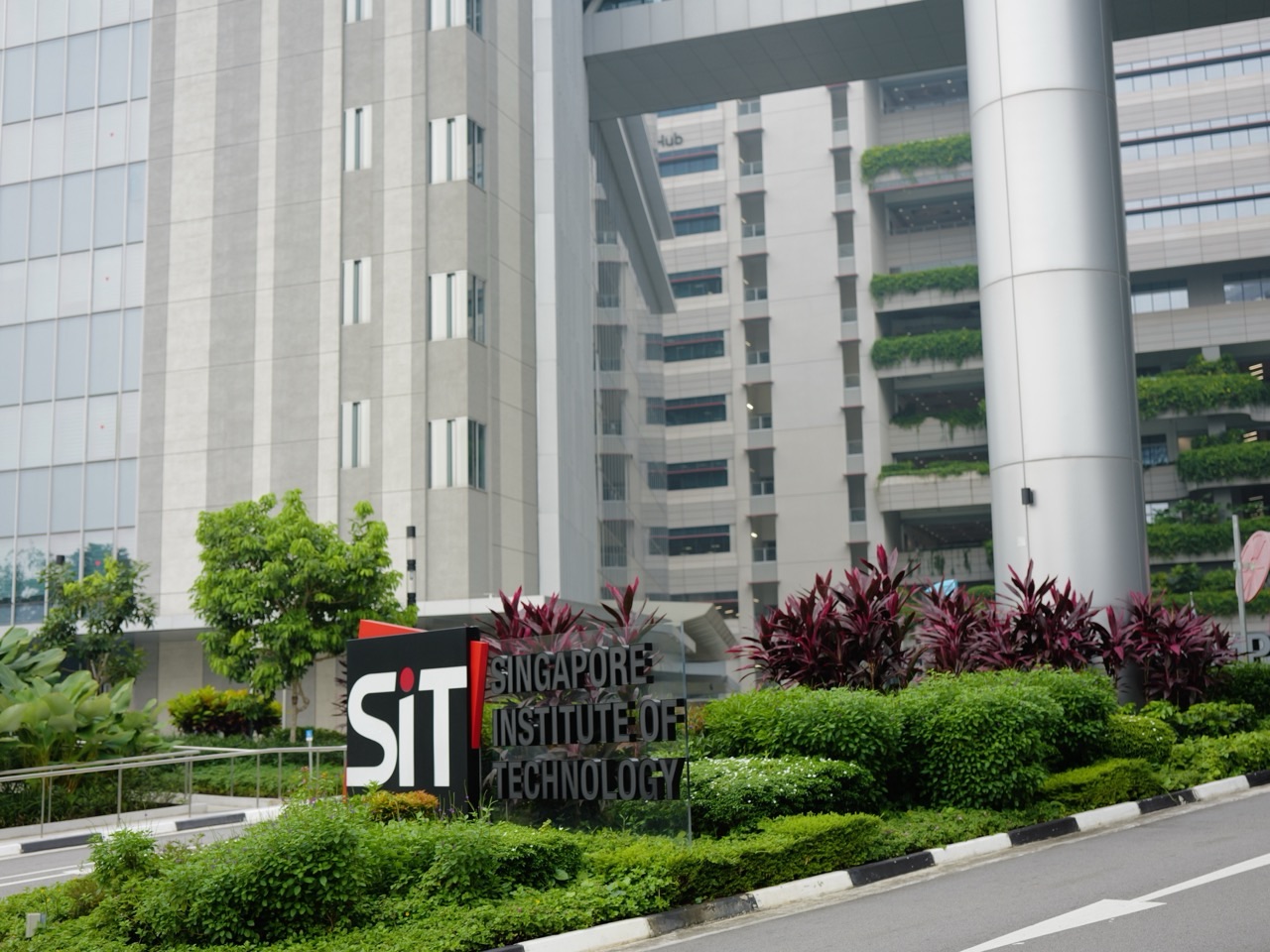
Editorial boundary: The featured photo documents SIT’s current Punggol campus rather than the completed Mangrove Conservatory. Scientific benefits and climate resilience are research objectives, not already verified site-specific outcomes.
| Milestone or purpose | Grounded statement |
| 23 May 2024 | SIT launch and S$680,000 FRCS pledge over three years |
| 16 June 2025 | Groundbreaking; revised end-2026 projected completion |
| Current SIT overview | Construction projected complete in 2027 |
| Location | SIT Campus Heart along Punggol Heritage Trail |
| Research | Mangrove biodiversity, restoration, blue carbon and climate adaptation |
| Public role | Education and outreach planned, entry schedule to be confirmed |
| Do not assume | Successful species reintroduction, public opening day or unrestricted lab access |


