
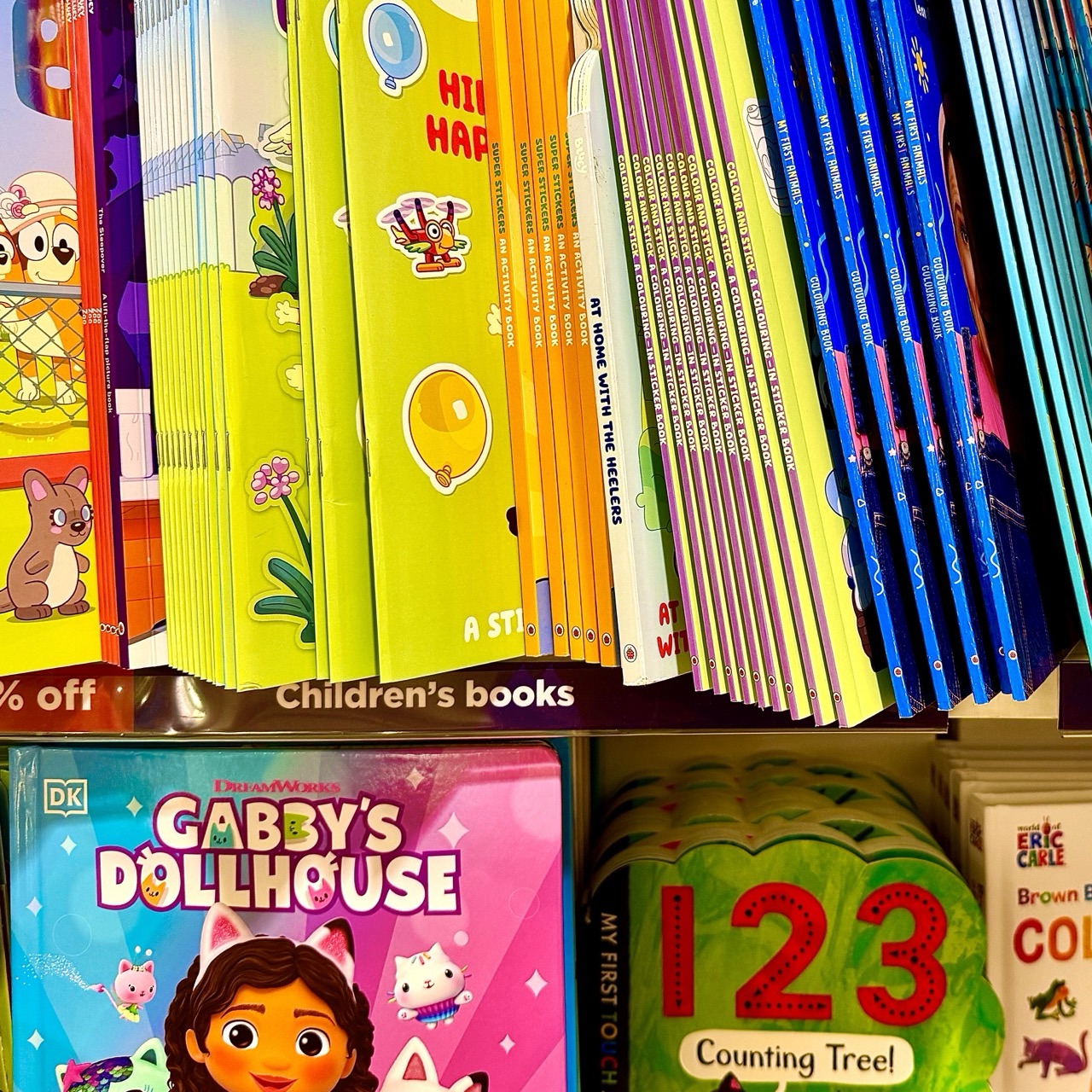
Punggol families planning Kindergarten 1 and Kindergarten 2 activities for 2027 have a specific People’s Association course to examine. One Punggol Community Club lists Phonics and Reading for K1/K2 from Saturday 16 January to Saturday 13 March 2027, with eight sessions running from 11.45am to 1.15pm. The published course-fee range is S$120–S$130, and an additional S$20 materials charge is payable directly to the trainer.
Here is the detail that distinguishes this programme from the other One Punggol English course starting on the same date: the organiser explicitly says K1 students are to be assessed before registration. The separately listed 10am course is intended for K2 and P1 learners; this later 11.45am session is for K1 and K2. They are two different course references, with different eligibility and published prices. Parents should not treat the places, fees or teaching levels as interchangeable.
The official listing also says no class on 6 February 2027, registration is first-come, first-served, reservations are not accepted, and no additional places will be provided once the class is full. The People’s Association onePA course record C027251856 is the source for this announcement. The organiser lists Beamazed as the training provider.
This guide was fact-checked on 27 October 2026. It explains the announced dates, the K1 assessment requirement, the whole cost, the difference between recognising sounds and reading meaningfully, and the parent questions that should come before enrolment. The programme is an officially advertised community course, not a compulsory MOE school activity, a guaranteed reading result or proof of live vacancies.
Quick answer: the official K1/K2 2027 course
- Programme: Phonics and Reading for K1/K2
- Official reference: C027251856
- Organiser: One Punggol Community Club, via onePA
- Training provider: Beamazed
- First advertised date: Saturday, 16 January 2027
- Final advertised date: Saturday, 13 March 2027
- Weekly time: 11.45am–1.15pm
- Scheduled lessons: eight sessions of 90 minutes each
- Explicit break: no class on Saturday, 6 February 2027
- Intended learners: K1 and K2 children
- K1 condition: assessment before registration
- Course price: S$120–S$130, depending on applicable onePA category
- Additional materials fee: S$20 paid directly to trainer
- Basic combined planning amount: S$140–S$150 if the published amounts apply separately
- Registration closing date: 16 January 2027, subject to earlier capacity limits
- Booking rule: first come, first served; no reservations; no extra slots when full
- Primary source: Official onePA K1/K2 course
The One Punggol CC directory lists the club at 1 Punggol Drive #04-05, Singapore 828629, but the public course entry does not give a classroom number. Confirm the teaching location and child’s pickup instructions directly before the first Saturday.
Why this is a useful Punggol Events 2027 announcement
Not every event is a concert or a festival. A dated community course can be important to a household preparing a child’s learning and care routine, particularly around the beginning of a school year.
This particular onePA entry is unusually actionable because it specifies an age group, a separate K1 assessment, a fee range, materials, a Saturday time and a non-lesson date. Those are the facts a parent needs to decide whether the activity deserves attention.
But an official listing is not an endorsement that every preschooler needs paid phonics lessons. Nor does it prove the class is already suitable for an individual child. A parent should begin with the child’s abilities and the family’s aims, then evaluate what the provider actually teaches.
The wider Punggol Events page groups local programmes, while the onePA record controls booking for this specific course.
K1 and K2 are different stages of early reading
Kindergarten 1 learners can differ greatly in their familiarity with printed letters, nursery rhymes, spoken vocabulary and group instructions. Some are beginning to connect a few letters with sounds. Others recognise common words in picture books but still rely on an adult to read the story aloud.
Kindergarten 2 learners may be preparing for Primary 1, but their reading experience also varies. A child may already decode some simple words while another benefits from systematic introduction to sound-letter relationships.
One group can include these learners when instruction is matched appropriately to ability. However, the published listing does not tell us the class size or exact differentiation method. Ask Beamazed how the instructor handles different starting points.
A child should not be treated as behind merely because another child of the same age has learned a larger number of letter patterns.
What is the pre-registration assessment for K1?
The official course remarks say K1 students must be assessed before registration. That establishes the need for an assessment; it does not specify its format, duration, price, passing score or whether it takes place online or in person.
Do not tell parents that the child must pass a particular phonics test when the onePA description has not published one. The assessment could involve an appropriate readiness conversation or activities, but only the organiser can confirm.
A useful enquiry is: What does the assessment involve? Who conducts it? Does it identify the child’s current learning level or determine admission suitability? Is any separate amount payable? What happens if the trainer recommends waiting?
Parents should treat assessment as information about fit, not as a judgement of a young child’s intelligence or long-term potential.
Does a K2 learner also need an assessment?
The public requirements specifically mention K1 students. They do not promise that K2 students will never be evaluated, and they do not describe a compulsory K2 admission test.
The right approach is to ask about the current enrolment procedure for the child’s actual Kindergarten level. Avoid applying requirements from another onePA listing or a different provider.
If a child has already studied phonics elsewhere, parents can describe what the learner reads and where assistance is still needed. That helps the trainer discuss fit without assuming a formal placement system exists.
A short, honest description of the child’s present skills is more useful than a claim that the child is advanced or weak.
What does the course promise to teach?
The organiser says learners will work on recognising phonics, associating sounds with words and phrases, and being guided toward reading passages and stories.
This description suggests a sequence from basic sound-letter knowledge into application in connected text. It does not state every pattern that will be covered, a guaranteed reading stage by March or a formal report card.
Phonics instruction can help children decode unfamiliar printed words. It works best as part of a wider language experience involving conversation, vocabulary, books and understanding what is read.
A parent whose main goal is richer storytelling or oral vocabulary should ask whether the class offers those experiences alongside its sound-recognition focus.
Letter names and letter sounds are not identical
Singing the alphabet tells you that a child knows a sequence of letter names. It does not necessarily tell you that the child can connect letters to speech sounds within a word.
For example, the learner may recite M, A and P but find it hard to combine the corresponding sounds into the word map. That can be a blending difficulty rather than a lack of general intelligence or effort.
Good instruction models the relationship between print and speech and offers opportunities to use it in actual reading. Repeating sound names alone is a foundation, not the complete skill.
Ask the trainer how the class moves from identifying sounds to recognising a new printed word without a picture giving away the answer.
What is blending?
Blending means bringing individual sounds together to recognise a spoken word. In early reading, a child may know the component sounds but still need practice combining them smoothly.
An adult can demonstrate slowly, then help the child notice how the word sounds as a whole. This should be done with appropriate examples that match the learner’s current knowledge.
The official course description does not publish a step-by-step blending method or the exact sequence of letter patterns. Use the provider’s teaching guidance rather than introducing a competing system from multiple online videos.
The objective is confident, meaningful decoding. Speed may increase gradually but should not become the sole standard.
What about sight words and irregular spellings?
English contains common words whose spelling patterns may be unfamiliar to a beginner. Some words are easier to recognise automatically after appropriate practice, while others require explanation of less common patterns.
A child can learn useful word recognition without being encouraged to guess every unfamiliar word from its appearance. Phonics and familiarity with frequently encountered words can support one another.
The public onePA listing does not set out a complete sight-word list. Parents should not promise that a particular collection of words will be mastered by the end of the eight sessions.
Ask which reading materials and patterns will be introduced and what the S$20 materials payment includes.
Reading means understanding, too
A child might correctly pronounce the words in a simple sentence but not know what the sentence means. That is why early literacy requires vocabulary and comprehension as well as decoding.
After a child reads a sentence, ask a simple meaning question: Who did something? What happened? Where? Encourage answers grounded in the text.
For a child who cannot yet decode, a parent can read richer stories aloud and talk about characters and events. Listening comprehension can grow while independent reading skills are still developing.
Phonics is a means of unlocking print. It should not be mistaken for the whole of English education.
Why story reading is part of the description
The onePA course says children are guided to read passages and stories. This matters because letter patterns become useful when they help the learner understand real writing.
A short passage gives a child opportunities to encounter familiar words, attempt newer ones, and connect sentences into a coherent meaning.
However, the listing does not specify whether every learner receives their own reader, the level of the stories or how teachers assess comprehension.
Ask whether books are supplied, how reading is shared in class and what parents may practise between lessons. The material fee is separate, so it is reasonable to request its actual itemised purpose.
The eight-session timetable and February break
The published dates are 16 January through 13 March 2027, with eight Saturday lessons from 11.45am to 1.15pm. The organiser expressly states no lesson on 6 February.
That one break is important for parents coordinating a second activity. The official schedule also remains subject to the organiser’s right to notify changes or postponements.
Do not assume a replacement class on a Sunday or a session at the earlier K2/P1 time merely because 6 February is excluded here. No such substitution is promised.
Keep the current joining timetable and check for messages. An old poster is not proof that a later session has remained unchanged.
A child’s Saturday can become crowded quickly
A 90-minute course around lunchtime affects more than the class itself. A child may need to leave another activity early, eat at a different time or travel when tired.
The 11.45am start may be convenient for families whose mornings begin slowly. But others may already have sports, cultural lessons or family commitments at that time.
Consider the whole day. A four- or five-year-old may enjoy one class and still need time to rest and play.
The best schedule is one that supports learning without turning the weekend into a series of exhausting transitions.
What is the whole published fee?
The onePA page shows a S$120–S$130 course-price range. It separately says a S$20 materials fee is paid directly to the trainer.
Using the displayed values, a simple combined planning range is S$140–S$150 before any other applicable checkout adjustment or personal travel expense.
That does not mean every household will see the same category at payment. Nor is it proof that the materials fee includes a particular workbook, reader or assessment.
Ask about the correct checkout amount, what the S$20 covers and whether the payment is collected only once for the term.
How much is the course per scheduled hour?
Eight lessons of 90 minutes amount to twelve scheduled hours. The course fee alone therefore works out to S$10–S$10.83 per scheduled hour when averaged over the whole programme.
Including the S$20 materials amount gives a simple S$11.67–S$12.50 per scheduled hour under the published fee assumptions.
These calculations are useful comparisons, not an offer to purchase lessons individually. They also do not create any right to a proportional refund if a child misses class.
The value of the course depends on teaching fit and meaningful learning, not only the arithmetic of a headline price.
Registration is first come, first served
The official requirements explicitly say registration is first-come, first-served, subject to available slots. They also say reservations are not accepted and no extra places will be made available once full.
A parent should distinguish a published 16 January closing date from an assurance that places remain until that date. Capacity can be reached earlier.
Check current onePA booking status, ask about K1 assessment before paying and complete enrolment only through the proper channel.
Do not pay a third party who claims to hold a place outside the official registration system.
The cancellation conditions deserve close reading
The course remarks say a 20% administrative fee applies to cancellations before commencement. They also say course fees are non-transferable between people or classes and that refunds after commencement are generally not given except under unforeseen circumstances subject to committee approval.
These are significant conditions for a young learner whose family may be unsure about class fit.
Do not register for both this K1/K2 course and the earlier K2/P1 course expecting to switch freely later. The official bookings have distinct references and restrictive transfer terms.
Review the current full terms at checkout and contact One Punggol CC before completing a transaction if a foreseeable schedule conflict exists.
Who is the training provider?
The People’s Association names Beamazed for this programme. Its published profile describes an enrichment provider with phonics, speech-and-drama and creative-writing experience.
That identifies the organisation teaching the class. It does not tell us the particular teacher’s name, their individual teaching style, a guaranteed pupil-to-teacher ratio or the number of children already registered.
Ask about the actual class instructor, level differentiation and feedback. An established provider’s general profile does not substitute for assessing whether this particular cohort matches your child.
If the learner has previously used another phonics system, explain that to the teacher so that similar terminology does not conceal different starting assumptions.
Where exactly is One Punggol CC?
The official One Punggol Community Club directory lists the club at 1 Punggol Drive #04-05, Singapore 828629. It gives telephone 6600 5292 and email pa_onepunggolcc@pa.gov.sg.
The building houses multiple services and activities, and a CC office address is not necessarily the classroom door. The public onePA course fields reviewed do not identify the actual K1/K2 class room.
Before the first day, ask which floor and room the children should report to, what time they may enter and how guardians collect them at 1.15pm.
Do not confuse this club with Punggol 21 CC at Punggol Field, which has different community programmes and a different address.
One Punggol K1/K2 versus K2/P1 phonics
The existing K2–P1 English Phonics course guide describes a separate 10am–11.30am programme scheduled over the same date range.
That earlier group advertises S$140–S$150 in course fees, while the K1/K2 group in this article is S$120–S$130. Both publish a S$20 materials fee and a 6 February break, but their intended learner groups differ.
A parent with a K2 child should not automatically assume either one is better. Ask the organiser how their curricula and levels differ and which would suit the child’s present reading ability.
A parent with a K1 child must also resolve the assessment condition that is expressly stated for this later group.
Is a cheaper course necessarily better value?
Not necessarily. Course price matters, but an activity that is too easy, too advanced or scheduled at the wrong time can be a poor fit even when its published fee is lower.
A family should consider what the child needs, what the teacher is prepared to cover and whether the learner can participate comfortably.
A child who already reads short stories may need comprehension and vocabulary more than repeating introductory sound identification. A child who cannot yet recognise letter patterns may need the opposite.
The objective should be progress from the current starting point, not enrolment in the lowest-priced class in a search result.
What about Primary 1 school preparation?
K2 parents may see a phonics course as preparation for Primary 1. It can help some children practise decoding, but readiness for primary school also includes speaking, listening, participation, relationships, self-management and the ability to learn with teachers and classmates.
A child need not be an independent reader of complex books before school begins. Families should avoid turning early literacy into a race against other children.
If parents are worried about specific reading difficulties, they can speak with the child’s preschool teacher and consider appropriate support.
The Punggol Primary 1–2 English foundations guide places reading within the larger primary education context.
An age label is not a reading diagnosis
A four-year-old who is not reading full sentences is not automatically struggling in an unusual way. Learners develop skills through different experiences and progress at different speeds.
An assessment may help a provider place a learner in a class, but it should not be confused with a clinical diagnosis. The official onePA requirement for K1 assessment does not promise specialist dyslexia screening, speech-language therapy or a medical review.
For persistent concerns, gather specific observations and discuss them with suitable educators or professionals. Do not rely on a generic advertisement to determine a child’s learning condition.
The aim is appropriate support, not applying a negative label to normal variation.
A meaningful at-home reading routine
A short, regular routine can support course learning. Begin with a few minutes practising a sound pattern that the teacher has actually introduced, then enjoy a book together.
Let the child hear fluent reading from an adult, talk about pictures and discuss what is happening in the story. Ask one simple question rather than requiring an elaborate worksheet.
If the child becomes distressed, reduce the demand and return to language play. Reading confidence grows through manageable experiences.
These are general parent suggestions, not official homework from Beamazed. Follow the trainer’s actual sequence for specific phonics patterns.
Why speaking and listening still matter
Written language rests on spoken language. A child who understands more words and sentence structures can make better sense of what they eventually decode.
Parents can build oral language in everyday contexts: describing a journey, explaining a recipe, remembering what happened at school or discussing a picture book.
Children benefit when adults respond thoughtfully to questions rather than test vocabulary at every opportunity.
A phonics class may offer one structured component, but it should not displace ordinary conversation, play and meaningful storytelling.
What if the child is shy in a group?
A new classroom can be unfamiliar to a young learner. Ask the organiser how beginners are introduced and whether a child must read aloud immediately.
Some children need time to become comfortable. Listening, practising quietly and gradually participating may still involve learning, depending on the teacher’s approach.
The official listing does not promise a trial lesson, an individual consultation or a guaranteed observation session for parents. Those can be requested as questions rather than assumed entitlements.
The family should choose an environment where the child can learn without unnecessary pressure.
Parent questions that save time
Ask which course reference applies, whether K1 assessment is necessary in your case, how the class differs from the K2/P1 group and what materials are included.
Ask about the actual room, teaching format, size of group if relevant, feedback and any homework that parents are expected to support.
Check whether the current term has vacancies and whether joining later in the term is even permitted.
If the child has a known difficulty or a developmental concern, discuss appropriate support before payment rather than expecting the general course to supply an unadvertised specialist service.
A fictional family example
Imagine a parent with a four-year-old K1 child who recognises some letters but has not yet started blending sounds into words.
The parent considers the 11.45am class but first asks about the K1 assessment and whether the child can sit comfortably through a 90-minute Saturday session.
They calculate the S$120–S$130 course range plus S$20 materials and think about lunch and travel. They also check the 6 February break.
Only after these details fit do they consider booking. The example does not imply that every K1 child needs such instruction or will achieve the same result.
Another family example: an advanced K2 reader
Suppose a K2 child already decodes familiar stories confidently and enjoys asking questions about the plot. The parent wonders whether the K1/K2 course would be too introductory.
A useful conversation with the provider asks whether there are extension activities or whether the separate K2/P1 programme would offer a better match.
It may also be that the child benefits more from richer independent reading and discussion at home rather than adding another paid phonics course.
A correct decision depends on current skills and learning aims, not on assuming that more classes always produce better readers.
Frequently asked questions
Is this a new January 2027 course?
The official onePA listing begins on 16 January 2027 and is scheduled through 13 March.
What is the weekly class time?
Saturday 11.45am–1.15pm, for eight advertised sessions.
Is there class on 6 February?
No. The onePA requirements expressly say no class on 6 February 2027.
Is the class for Primary 1 children?
The target group is K1/K2. A separate One Punggol K2/P1 course runs earlier on Saturdays.
Must every K1 student be assessed?
The official listing says K1 learners are to be assessed before registration. Ask Beamazed or One Punggol CC for the actual process.
What is the full published cost?
The course range is S$120–S$130 and materials are S$20 directly to the trainer, giving a basic planning range of S$140–S$150.
Can I reserve a place?
The official conditions say no reservations, first come first served, and no additional places after capacity is reached.
Is a reading level guaranteed?
No. The course describes intended instruction; it does not promise a particular level, school grade or individual outcome.
Can an enrolment be transferred to the 10am group?
The published terms say course fees are non-transferable between classes, subject to any official organiser decision under the relevant conditions.
Where is the classroom?
The organiser is One Punggol CC, but the course record reviewed does not specify the exact teaching room. Confirm joining instructions directly.
Parent checklist before registering
- Open onePA K1/K2 course C027251856.
- Check the learner’s Kindergarten level and whether K1 assessment is required.
- Compare this 11.45am course with the separate 10am K2/P1 listing.
- Note 16 January–13 March 2027 and the 6 February no-class date.
- Verify current capacity and do not assume the closing date guarantees vacancies.
- Budget the course fee and the separate S$20 materials.
- Review cancellation, refund and transfer conditions.
- Confirm the classroom, drop-off and child collection arrangements.
- Ask how instruction is adapted for varying starting reading skills.
- Keep the child’s wider routine balanced with play, rest and everyday reading.
Sources and verification
The primary source is People’s Association — Phonics and Reading for K1/K2 C027251856. Its details establish the dates, hours, eligibility, K1 assessment, fee range, materials charge, provider and booking conditions.
The One Punggol CC directory lists 1 Punggol Drive #04-05, telephone 6600 5292 and the organiser’s official email.
Related eduKatePunggol reading includes K2/P1 phonics in the earlier Saturday slot, Primary 1–2 English foundations and Punggol Events.
Fact-checked on 27 October 2026. Booking availability, assessment process, classroom and later schedule updates remain under the organiser’s control.
Final thought
A carefully chosen early reading activity can support a child’s ability to turn printed letters into meaningful language. But class suitability matters more than the mere presence of a registration button.
The published K1/K2 phonics course at One Punggol is a concrete January–March 2027 opportunity, with its own timetable, fees and K1 assessment condition. Read the official record, ask how the teaching fits your child and decide without unnecessary pressure. Good literacy grows through appropriate instruction, vocabulary, conversation and continued interest in reading—not through enrolment alone.


