
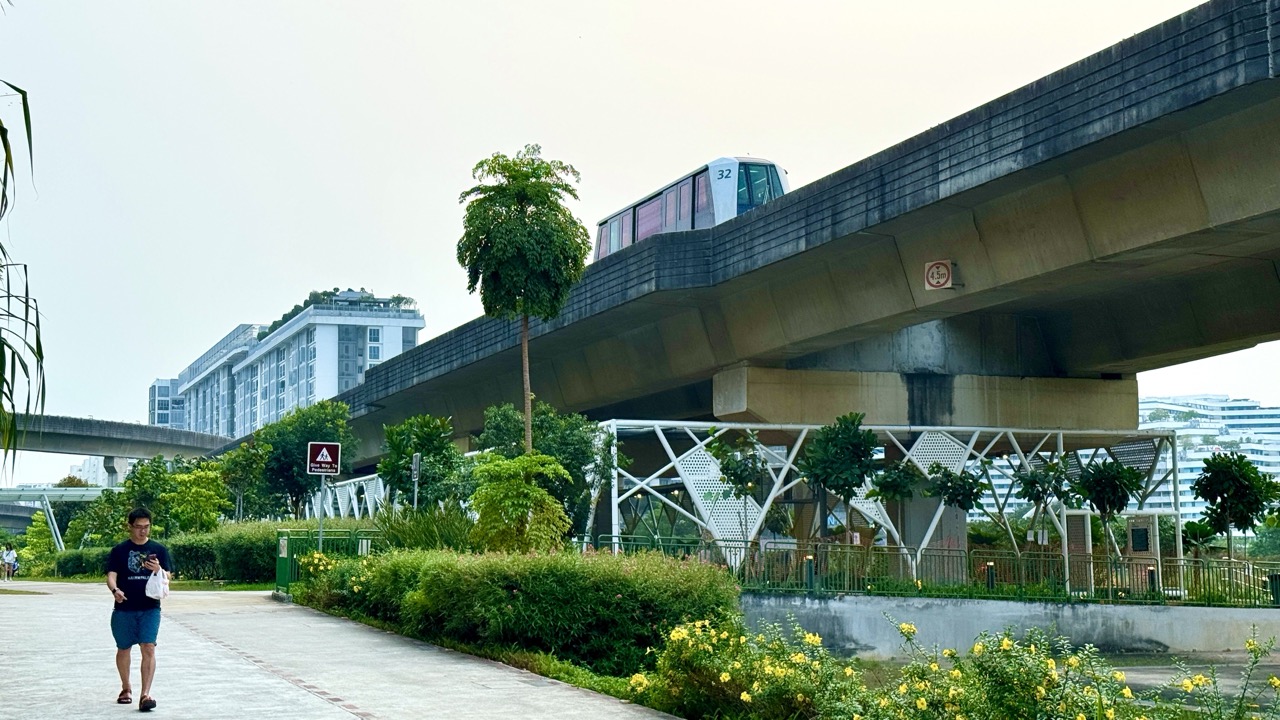
Punggol Education 2027 | Rail Engineering, MRT Operations and New Certifications is a guide for school-leavers, working adults and parents asking what jobs and courses sit behind Singapore’s MRT and LRT system. A reliable rail journey depends on much more than driving a train: signalling, communications, vehicles, electrical systems, maintenance, track infrastructure, station operations, incident response and the judgement of trained teams all matter.
Did you know? On 24 October 2026, the Land Transport Authority (LTA) and rail operators SMRT and SBS Transit announced that the Singapore Rail Academy (SGRA) would be jointly administered from 1 November 2026. The announcement said the Academy would progressively introduce a rail-sector WSQ certification framework starting in early 2027, beginning with Basic Certificates in Railway Operations and Railway Maintenance. That is a confirmed reform announcement, but it is not a promise that every new certificate or trainee place is already open for registration.
This article explains the real rail education pathways available to investigate in 2027: ITE’s two- and three-year Higher Nitec in Rapid Transit Engineering, its employer-based Work-Study Diplomas in Land Transport Engineering (Rail) and Operations Management, Polytechnic or University technical study where appropriate, and the new SGRA framework. It gives practical exercises for Primary and Secondary learners and helps Punggol families understand what to do, avoid and verify.
Quick comparison: rail is an industry of several different technical professions
| Role | Typical responsibility | Important capability |
|---|---|---|
| Signalling technician | Maintain and diagnose signalling and train-control equipment | Electronics, systems, safety procedures |
| Rail communications technician | Support communication systems used across transit infrastructure | Networks, equipment checks, documentation |
| Rolling-stock specialist | Monitor and maintain train vehicles and components | Mechanical/electrical diagnostics, reliability |
| Permanent-way specialist | Inspect and maintain track and supporting infrastructure | Civil systems, measurement, safety |
| Station operations professional | Coordinate passenger services, incidents, crowd flow and operations | Communication, situational judgement, service |
| Systems engineer or data specialist | Integrate subsystems, interpret reliability data, manage change | Engineering Mathematics, analytics, risk and teamwork |
Some roles require intensive applied equipment training; others emphasise operations, service and multi-team decisions. The student who loves Electronics may not enjoy frontline station service, while an excellent communicator may prefer rail operations to workshop maintenance. A useful course decision begins with these differences.
Why Punggol’s LRT matters as a learning example
Punggol residents encounter MRT and LRT transport, transfers, station signs, travel information and service announcements. The neighbourhood offers an accessible public context for discussing how engineering, service and passenger safety interact. It does not give the public access to signalling rooms, trackside equipment or maintenance sites, and students should not cross barriers or approach moving trains for a school assignment.
A safe public-observation project can examine how a station sign helps passengers choose a platform or how a service disruption message communicates alternatives. Use only public spaces, keep clear of boarding areas while recording notes, and follow operator directions. A pupil can learn about system resilience without trying to test or tamper with actual transport equipment.
Primary 3–6: numbers, diagrams and clear instructions
Primary Mathematics develops time, distance, units, ratios, tables and graph reading. English helps explain a passenger announcement precisely. Science introduces forces, energy, electricity and testable explanations appropriate to age. These foundations later support engineers and transport-operations personnel who need both technical reasoning and reliable communication.
Imagine a fictional service where a train route takes 24 minutes and a passenger must allow 6 minutes for a transfer. The total scheduled time is 30 minutes, before any waiting or delay. Ask the child why a real passenger’s journey might take longer. This teaches that a calculation is an estimate under stated assumptions, not a prediction for an actual Punggol LRT ride.
A second project asks a pupil to write a clear, respectful fictional service announcement: what has happened, who is affected, what people should do and where they can get verified updates. Do not publish the example as if it were a real operator announcement.
Secondary G1/G2/G3: what subjects prepare rail engineers?
Full Subject-Based Banding allows students to take individual subjects at G1, G2 or G3. The first SEC graduating cohort completes exams in 2027, followed by the new 2028 Post-Secondary Admissions Exercise. The 2027 intake for students holding 2026 GCE O-Level results follows the applicable earlier admission arrangements. This difference matters when interpreting a course’s published O-Level prerequisites.
Rail signalling and rolling-stock maintenance require Physics, Electrical/Mechanical reasoning, Mathematics, careful reading and procedures. Station operations require communication, organisation, safety knowledge and an ability to handle uncertain situations. A student should not infer that all rail careers require the same upper-secondary subject combination.
Review the student’s actual confidence in algebra, negative values, graphs and interpreting units. A pupil fascinated by trains may need explicit support with these foundations before progressing to circuits or safety-critical systems. Interest is a motivation to learn, not a substitute for a technical qualification.
ITE Higher Nitec in Rapid Transit Engineering: the 24-month route
ITE’s official Higher Nitec in Rapid Transit Engineering is listed as a 24-month full-time course at College West. Its published learning outcomes include maintaining rapid transit communications and signalling systems, with training involving industry expertise from SMRT.
For its stated O-Level entry route, ITE lists English Language, Mathematics and one approved Science or technical subject with minimum grades. It also flags a colour-appreciation requirement and a mandatory student laptop purchase in addition to fees, with assistance for eligible learners. Parents should ask ITE about actual programme demands or accessibility questions rather than attempting to determine medical suitability from a generic internet statement.
The course relates to rail maintenance and technical support. It does not automatically qualify a graduate to operate a train independently or to hold every future rail-sector certification. Job roles, employer practical training and operator authorisations can differ.
ITE three-year Rapid Transit Engineering is a separate qualification route
ITE also lists a 36-month Higher Nitec in Rapid Transit Engineering, likewise at College West, with other prior examination profiles such as relevant N-Level routes. A Punggol student should compare their actual qualifications with both structures instead of assuming everyone can opt for the shortest duration.
ITE notes that eligible graduates from relevant Higher Nitec routes with net GPA 2.5 or above may apply for related Polytechnic first-year places from AY2027, subject to course mapping, vacancy and other criteria. The minimum threshold permits an application; it is not a guaranteed Polytechnic posting.
ITE Work-Study Diploma in Land Transport Engineering (Rail)
For people seeking to learn through an employer, ITE’s Work-Study Diploma in Land Transport Engineering (Rail) is listed at College West with a duration of 30 months. It uses a day-release format: one classroom day a week and the remaining work-week on employer-based training. Named industry partners include SMRT and SBS Transit.
The course’s competencies include railway signalling diagnosis, rolling-stock monitoring, permanent-way systems, safe operations and predictive-maintenance data analytics. Its entry routes cover relevant ITE graduates who meet stated academic requirements and pass company screening, or eligible employer-endorsed in-service workers with sufficient qualifications and experience.
An applicant must not assume the course is merely a classroom diploma or that it is automatically available without a participating employer. Employment conditions, shift schedules, training locations, safety requirements and progression opportunities must be read in the actual offer. A relevant graduate may find the route attractive because learning and paid workplace experience are coordinated.
Operations Management is not the same as rail maintenance
ITE separately lists Work-Study Diploma in Land Transport Engineering (Operations Management), another 30-month College West programme. It trains candidates to manage station and interchange operations, respond to disruptions and security concerns, coordinate contingency plans, and improve passenger services.
This is a useful alternative for learners interested in transport systems but more motivated by service planning and incident coordination than by diagnosing electronics. The programme has its own eligible feeder qualifications and in-service worker rules, including employer endorsement and practical requirements. The word ‘land transport’ does not make its curriculum interchangeable with the Rail engineering track.
The 24 October 2026 SGRA reform: what is actually confirmed?
The LTA news release of 24 October 2026 says the SGRA’s joint administration by LTA, SMRT and SBS Transit begins on 1 November 2026. It describes a wider mandate: align standards, improve industry-recognised competency assessment and make progression pathways clearer across operations and maintenance.
It also says SGRA is to progressively establish a sector-wide WSQ certification framework from early 2027, beginning with Basic Certificates in Railway Operations and Railway Maintenance. The word ‘progressively’ matters: an announced framework is not evidence that every certificate has a final syllabus, public registration portal, fee, examination or course date on 27 October 2026.
Families can use the announcement to understand the intended skills direction and follow the official later details. Do not market an unannounced qualification as an already approved 2027 course, or claim to have secured a place based on a press release.
A collaboration across ITE, NYP, RP, SP and SIT
The same LTA announcement says SGRA signed memoranda of understanding with ITE, Nanyang Polytechnic, Republic Polytechnic, Singapore Polytechnic and SIT to explore and develop complementary rail education routes. These may include Higher Nitec, diploma, work-study and continuing-education opportunities. The release describes institutional collaboration, not an immediately open identical rail degree at every institution.
When a specific course is later publicised, residents should check the institution’s official course page, qualification, mode, cohort and eligibility. The presence of an institute in the MOU does not guarantee that it currently runs a full-time Rail Engineering diploma for the next intake.
Why new rail certificates and University courses are not the same
A basic WSQ certificate can recognise a defined set of workplace competencies. A Higher Nitec teaches a structured applied technical programme. A Work-Study Diploma combines academic assessment and supervised employment. A Polytechnic Engineering diploma or University Engineering degree may develop broader mathematical, design and systems capabilities. All may contribute to rail workforce development, but one does not automatically award or replace another.
A student’s educational planning should therefore start with the target job and qualification needs. Some maintenance roles require operator training and asset-specific authorisation, while others demand broader Engineering design skills. Rail reliability depends on recognising the limits of one’s responsibilities, not just collecting certificates.
What should a family do before choosing a rail course in 2027?
- Identify the role: maintenance, signalling, train systems, station operations, engineering design or passenger-service management.
- Check the route: confirm 24- versus 36-month Higher Nitec, employer-based WSDip or another programme.
- Verify the applicant year: 2026 O-Level to 2027 admissions is not the first SEC cohort’s 2028 PSE.
- Inspect required subjects: English, Mathematics and approved technical or Science subjects matter differently by course.
- Include work demands: ask about shifts, site restrictions, safe-work procedures, commuting and employer screening.
- Check 2027 SGRA status: look for issued course details and approval rather than infer the dates from the 24 October news release.
- Maintain alternatives: Electrical Engineering, Electronics, Mechanical Engineering or operations training may be relevant if a preferred rail route is unavailable.
A simple system-reliability exercise for students
Imagine a fictional signalling device that experiences 2 recorded faults over 200 operating hours. The descriptive fault frequency for this exercise is 2 ÷ 200 = 0.01 faults per hour, or one fault per 100 observed operating hours. This calculation alone cannot predict a real railway’s reliability. We would need to know what constitutes a fault, how failures are detected, whether the sample is representative and how safety procedures respond.
The goal is to teach honest interpretation and the difference between observation and a validated engineering model. A learner can compare two simulated systems using consistent definitions; they must not attempt to create faults, interfere with signals or enter restricted rail facilities for a project.
Punggol transport projects: how to read future announcements
A Punggol resident may read about additional LRT fleet capacity, depot work, future connections or railway asset renewals. Each news item describes a project stage. Announced procurement, a construction milestone, a testing plan, a certification framework and a public opening are different events. A technically curious pupil should practise identifying those stages before telling neighbours that a future service is already available.
LTA publishes formal information about the rail network and related industry training. For example, the Rail Manpower Development Package explains sector training and emerging skills such as analytics, robotics and simulation. Follow authoritative sources rather than relying on an undated image shared in a group chat.
What to do, what not to do and what to think about
Do
- Compare actual rail maintenance and passenger-operations roles before choosing a course.
- Read ITE’s two separate Rapid Transit Higher Nitec entry routes.
- Inspect the Rail and Operations Management Work-Study Diplomas independently.
- Use LTA’s 24 October announcement to understand the confirmed 2027 WSQ direction, not invented course dates.
- Check actual employer partnerships, screening and qualification outcomes.
- Strengthen Mathematics, English, technical explanation and safety judgement.
- Use public-space observations, hypothetical data and respectful explanations.
Do not
- Present the upcoming SGRA certificate framework as an already open course with a confirmed 2027 registration day.
- Assume an MOU with a Polytechnic guarantees a new diploma at every institution.
- Confuse a rail maintenance technician qualification with train-driving authorisation.
- Read the AY2027 Higher Nitec GPA 2.5 minimum as a guaranteed Polytechnic place.
- Use LRT or MRT signalling equipment, restricted tracks or maintenance sites for school experiments.
- Claim a course or training academy near Punggol simply because the neighbourhood has an LRT.
- Copy a previous year’s admissions or professional requirement without checking the official update.
Think about
Would the learner rather investigate a technical fault, improve station communication, manage a complex incident or design a system from first principles? Can they work carefully when safety standards are strict and many teams share responsibility? Understanding the kind of work is a stronger basis for education than the excitement of a new train arriving.
Frequently asked questions
Where is ITE’s Rapid Transit Engineering Higher Nitec taught?
The current ITE course pages list College West, with 24- and 36-month structures. Applicants should confirm their actual cohort and campus.
Is ITE Land Transport Engineering (Rail) a normal full-time classroom diploma?
No. The published Work-Study Diploma is employer-linked, lasts 30 months and uses a day-release teaching pattern with substantial on-the-job training.
When will the new rail WSQ certificates be available?
LTA announced progressive introduction starting in early 2027, beginning with basic operations and maintenance certificates. Exact opening dates, eligibility and fees require later official notice.
Can every Polytechnic in the SGRA agreement already offer a new Rail Engineering diploma?
The agreement covers collaboration and possible programme development. It is not proof that identical full-time courses are currently available for all applicants.
Does a student need to study Secondary Computing to work in rail?
Not universally. ITE’s stated rail entry route includes English, Mathematics and one of several approved Science or technical subjects. The exact role and later study determine the skills needed.
Does living near Punggol LRT improve admission or hiring priority?
No general local priority is established by the course and LTA sources. Entry and employment depend on qualification, selection and other actual conditions.
Official sources and related Punggol education reading
- LTA 24 October 2026: SGRA reform and 2027 WSQ certificates.
- ITE Rapid Transit Engineering, 24 months.
- ITE Rapid Transit Engineering, 36 months.
- ITE Work-Study Diploma in Land Transport Engineering (Rail).
- ITE WSDip Land Transport Operations Management.
- ITE official 2027 WSDip course list.
- LTA Rail Manpower Development Package.
- Punggol ITE, JC and Polytechnic course choices.
- Punggol adult work-study pathways.
- Punggol Education & Town-Life Article Index.
Research checked 27 October 2026. SGRA’s 2027 WSQ framework is announced but not equated with a currently open certificate. All course, training, admissions and employment details should be verified through ITE, LTA and the participating institutions.


