
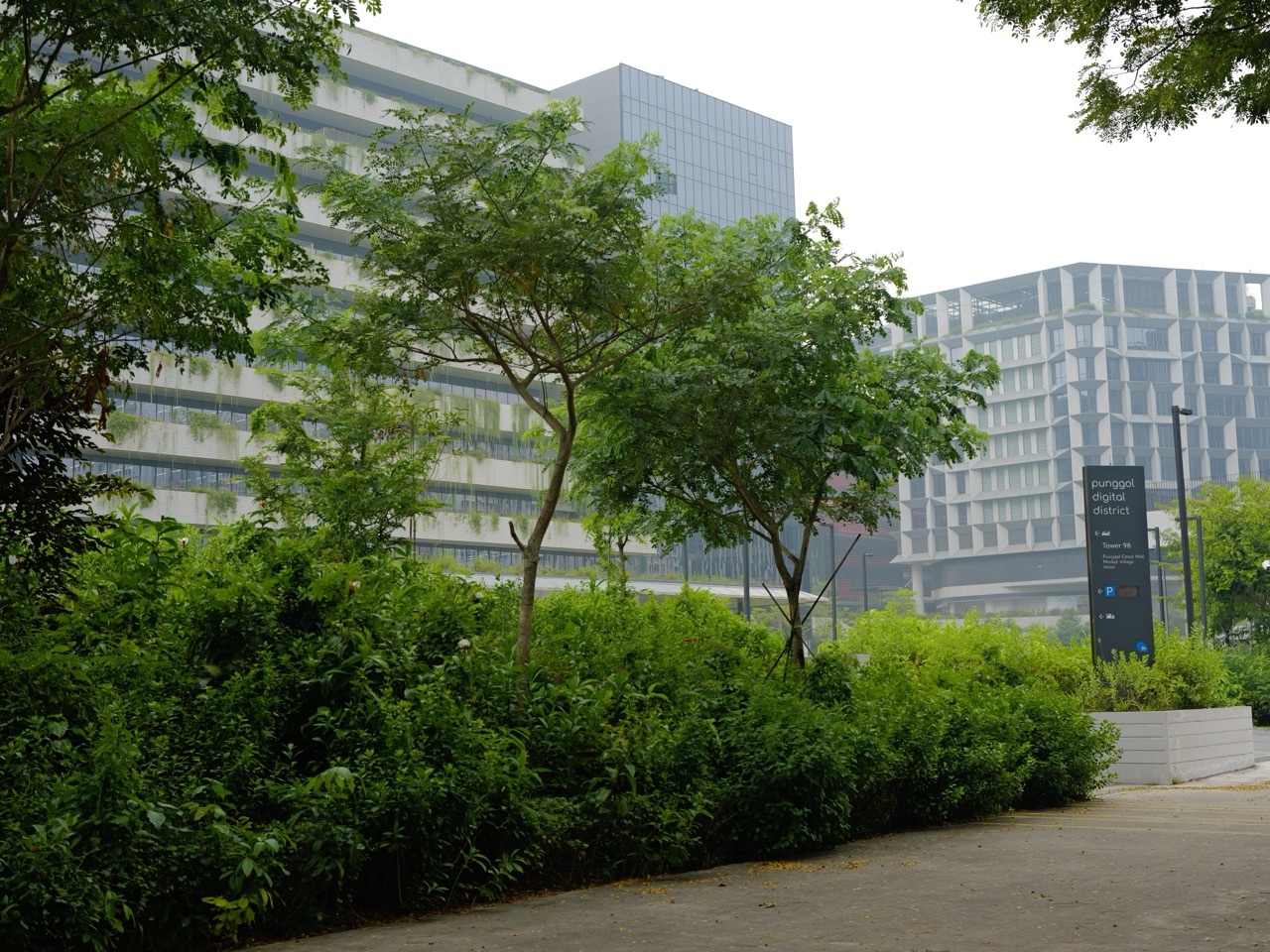
Punggol Education 2027 | Game Development, Animation and Immersive Media is especially relevant now that DigiPen Singapore is expanding its education activity inside Punggol Digital District. But there is an important distinction before choosing a course: playing games, designing a game, programming a game engine, creating animation and building real-time simulation for training are different skills. A student who loves digital art may enjoy a creative technology programme but struggle in a heavily mathematical computer science degree.
Did you know? DigiPen Singapore published two separate sets of programme pathways at Punggol. An existing four-year SIT–DigiPen joint BSc (Honours) in Computer Science in Real-Time Interactive Simulation is taught at SIT Punggol Campus. DigiPen is also independently offering three newly announced degrees at expanded facilities in Punggol Digital District: a BA in Digital Entertainment and Creative Technology, an MA in Creative Technology, and an MS in Computer Science. Its official new-degree admissions page lists a 30 November 2026 application deadline for the January 2027 BA intake, and 30 July 2027 for the September 2027 programmes. Those are real and different application cycles.
This article helps Punggol parents and students compare the full school-to-career sequence: Primary vocabulary and Mathematics, Secondary G1/G2/G3 choices, ITE Immersive Applications & Game, NYP Game Development & Technology, SIT–DigiPen and DigiPen independent degrees. It also explains portfolio evidence, professional tasks, new-course status, costs, ethics and how not to waste money on a course that does not fit the learner’s actual interests.
Quick answer: games, interactive media, animation and simulation use different skills
| Path | The work | Technical foundation |
|---|---|---|
| Game programming | Build game rules, engine behaviours, tools and networked systems | Programming, algorithms, Mathematics, debugging |
| Game design | Design challenges, rules, feedback and player experience | Systems reasoning, testing, writing, design |
| Animation and digital art | Create characters, environments, motion and visual storytelling | Visual observation, art, story, production discipline |
| User experience | Study people, prototype and test interfaces | Research, communication, interaction design |
| Immersive XR and simulation | Construct interactive 3D systems for training, visualisation or other uses | Real-time graphics, engines, spatial reasoning |
| Game production | Coordinate team responsibilities, milestones, assets and quality | Project management, teamwork, decision making |
These roles collaborate. A game may need both a character artist and a graphics programmer, but one does not automatically know the other’s methods. The diploma or degree must be evaluated through actual modules, assessments and projects.
Punggol Digital District: what is really changing in January 2027?
DigiPen’s official 2026 expansion announcement states that from January 2027, it plans to expand its Punggol Digital District facilities and commence new independently offered programmes. The campus expansion and a course’s application are different facts: a student must still satisfy programme-specific entry and fee conditions.
A local university campus does not automatically mean every Punggol resident receives a place, nor that graduates are guaranteed jobs at digital companies nearby. Industry placements and recruitment depend on actual academic requirements and employer decisions. The practical advantage is the opportunity to understand and visit a growing educational ecosystem through authorised channels.
Primary school: learning games can build language and mathematical thinking
At Primary level, English and Mathematics are more valuable foundations than collecting the most game screenshots. A child who can explain a rule, reason about scoring and detect an unfair game mechanic is developing early computational and systems thinking. Creative storytelling, vocabulary precision and respectful teamwork help them work with other people on a project.
Imagine a fictional board game: a player earns 3 points for a correct answer, loses 1 point for an incorrect answer and starts with 5 points. After 4 correct and 2 incorrect answers, the result is 5 + 12 − 2 = 15 points. The important next question is whether that scoring system is fair and what behaviour it encourages. A good game designer must evaluate systems, not only add colourful characters.
Children can make simple paper games without screen exposure or online contact with strangers. Adults should set age-appropriate boundaries. A game can be a learning technology, but it should not become a substitute for sleep, exercise, relationships and broader reading.
Secondary G1/G2/G3: check whether the learner likes coding or creative production
Under Full Subject-Based Banding, students may take subjects at G1, G2 and G3 levels according to school offerings and readiness. The first SEC cohort graduates in 2027 and enters the new PSE from 2028; a 2026 O-Level candidate applying in 2027 instead follows the earlier application rules. Subject choices and official programme eligibility must be checked for the correct year.
Game coding uses variables, functions, conditional logic, coordinate systems, vectors, probability and sometimes 3D Mathematics. Animation uses observation, timing, composition, spatial understanding and digital tools. Both use English: programmers write documentation and artists explain design decisions and stories. A student should investigate which side they actually enjoy instead of assuming that an interest in gaming predicts programming ability.
A useful readiness test is to build a tiny offline interactive project and ask for a clear explanation. Can the pupil modify the rules without following a copied tutorial? Can they identify a bug, reproduce it and verify the fix? Can they describe why an interface confuses a new user? These reveal the learning needs better than gaming hours.
ITE: Higher Nitec in Immersive Applications & Game (two years)
ITE’s Higher Nitec in Immersive Applications & Game is a 24-month full-time course at ITE College Central. Students learn game design processes, developing program code, designing game levels, creating AR/VR experiences, game integration and testing.
The listed O-Level route specifies English, Mathematics and an approved Science, computing or technical subject, while an N(A) route and some Nitec routes have separate conditions. The ITE page also notes that a laptop is required beyond tuition fees, with eligible financial assistance under the stated rules. The family should confirm the right applicant category and equipment requirements.
The programme prepares students for possible junior game technical programming, interactive content creation or testing responsibilities. It does not mean that the learner will automatically graduate as a lead AAA game designer. Industry careers involve further practice, teamwork and a strong portfolio.
The ITE three-year route and adult learning are not the same
ITE separately publishes a 36-month Higher Nitec in Immersive Applications & Game for other entry profiles, including appropriate N-Level qualification pathways. It covers related competencies but has different duration and admission rules.
ITE also publishes a part-time Enhanced Curricular Structure programme for eligible adults or continuing learners, lasting between 1.5 and 3 years under its published structure. The part-time route may involve GCE qualifications, relevant Nitec courses, WPLN credentials or Foundation modules. The applicant must check live intake availability and actual study commitments.
ITE’s Higher Nitec page notes that, from the AY2027 Polytechnic intake, eligible graduates with a net GPA of at least 2.5 may apply for a related diploma. This is not a guaranteed place at NYP or any other institution. The receiving programme’s mapped entry rules, academic results and vacancies still matter.
NYP C70: Diploma in Game Development & Technology
Nanyang Polytechnic’s Diploma in Game Development & Technology (C70) trains students in game front-end development, game engine application, game networking, game design and production. It includes an internship, a final-year project and work-integrated competency units. From AY2026, its published third-year structure lets students select three of six electives, including Artificial Intelligence, Extended Reality, Console Game Development, Game Narrative, User Experience and Game Entrepreneurship.
The 2026 listed O-Level entry profile uses ELR2B2-C, with English, Mathematics and an approved subject requirement, and a historical net JAE range of 6–15. This is a past reference, not a 2027 cut-off guarantee. The programme’s published opportunities include game programming, 3D graphics, interactive simulations and software careers, subject to graduate skill and employer hiring.
C70 is not identical to NYP’s Animation, Games & Visual Effects (C29). One applicant may prefer programming and systems while another enjoys character art, modelling, VFX and visual narrative. Read compulsory modules, portfolio and assessment requirements, not merely the shared word ‘game’.
SIT–DigiPen joint Computer Science in Real-Time Interactive Simulation
SIT’s BSc (Honours) in Computer Science in Real-Time Interactive Simulation is a four-year joint SIT–DigiPen degree at SIT Punggol Campus. It emphasises algorithms, data structures, low-level and high-level programming, graphics and real-time simulation. Students complete progressive software engineering projects over multiple trimesters and work in multidisciplinary teams.
This is an academically demanding Computing route. A teenager who loves art but finds mathematical programming unpleasant should not assume it is the best path because DigiPen is associated with games. Someone who enjoys rendering systems, algorithms and interactive simulations may find the curriculum suitable.
The official SIT page currently displays the 8 January–19 March 2026 application period and August 2026 intake. These are not confirmed 2027 SIT admissions dates. Applicants need the updated joint-programme application information.
DigiPen’s separate independently offered 2027 degrees
The DigiPen Singapore Punggol Digital District degree portal advertises an independently offered BA in Digital Entertainment and Creative Technology for aspiring digital artists and creative technologists, alongside MA in Creative Technology and MS in Computer Science postgraduate programmes. DigiPen describes animation, digital media, real-time cinematics, procedural art and interactive systems.
An independently offered DigiPen degree is not automatically the same qualification or application channel as a joint SIT–DigiPen degree. Applicants should ask who awards the qualification, what the curriculum and recognition are, whether their citizenship affects tuition and other costs, and where teaching and industry activities actually take place.
Verified January 2027 BA intake dates
DigiPen’s official admissions timeline gives the January 2027 intake for the BA in Digital Entertainment and Creative Technology a 30 November 2026 application deadline, with offers and interviews scheduled on a rolling basis by that date and an acceptance deadline of 7 December 2026. Its listed orientation is 4 January 2027. The teaching start follows the programme’s academic calendar.
Its fee guidance says the applicable term tuition and an S$218 administrative fee are payable within 14 calendar days of an offer. This is not a quotation of total tuition for any applicant. Confirm complete fees, aid availability, qualification recognition and applicable payment rules before accepting.
Verified September 2027 BA/MA/MS intake dates
The same admissions page lists 30 July 2027 as the application deadline for September 2027 intake of the independent BA, MA and MS programmes, with an 6 August 2027 acceptance deadline and 27 August 2027 orientation. The University states the first day of teaching follows the programme’s academic calendar.
Graduate programmes require appropriate earlier qualifications. A Secondary school-leaver should not apply for an MA or MS just because the next intake date is attractive. The suitable route starts with genuine subject and academic readiness, and applicants must recheck if deadlines or criteria are updated.
What should a useful game-development portfolio show?
| Evidence | What it should demonstrate | Common weak approach |
|---|---|---|
| Small game prototype | Original rules, independent implementation and testing | Copied tutorial presented as personal design |
| Game narrative | Clear audience, choice consequences and coherent writing | Long plot without playable interaction |
| 3D or 2D art | Design iteration, visual communication and technical process | Impressive image with no attribution or process |
| Interactive UX | Testing and improvement after player feedback | Screenshots alone without user understanding |
| Debug log | Reproducible error and explanation of a verified fix | Claiming code always worked first time |
| Team project | Clear attribution and responsibilities | Passing shared work off as individual creation |
The student can begin with a modest original game, rather than spend money on expensive development equipment before building the required foundations. A strong portfolio documents actual work, reasoning, feedback and corrections. Use only authorised software and content and respect copyright and privacy.
A six-week Punggol learner project
- Week 1: define an age-appropriate problem such as helping pupils practise a concept without rote repetition.
- Week 2: draw a paper prototype with three rules and clear success and failure conditions.
- Week 3: implement one working interaction using an authorised beginner tool.
- Week 4: ask a willing participant to test the project without explanation and document genuine confusion.
- Week 5: repair the most important flaw and check what changed.
- Week 6: present a short report with screenshots, attribution, what failed and the next technical skill to learn.
For minors, keep the activity private or supervised and avoid designing games that pressure classmates to share personal details or spend real money. The portfolio is an educational exercise, not a claim that the child runs an approved commercial game service.
What to do, what not to do and what to think about
Do
- Decide whether the learner prefers programming, game rules, visual art, animation or immersive simulation.
- Build strong English and Mathematics foundations before rushing into expensive software tools.
- Compare ITE’s 24-month and 36-month Immersive Applications & Game routes.
- Read NYP C70’s actual AY2026 competency and elective structure.
- Distinguish NYP Game Development & Technology from Animation, Games & Visual Effects.
- Separate the joint SIT–DigiPen BSc from DigiPen’s independent PDD degrees and admissions.
- Record the official November 2026 and July 2027 DigiPen application windows and verify current fees.
Do not
- Assume playing games for many hours is evidence of professional programming ability.
- Claim every DigiPen programme is jointly awarded with SIT.
- Treat the 2026 SIT application period as the 2027 DigiPen independent-degree deadline.
- Apply to a Master’s programme without the actual prior qualification.
- Use NYP C70’s historical 2026 JAE range as a guaranteed 2027 admission result.
- Call an ITE net GPA of 2.5 a guaranteed Polytechnic place.
- Publish copied assets, uncredited AI output or team work as original solo portfolio material.
Think about
Does the learner enjoy making an interactive system work, or do they mostly enjoy playing the finished product? Can they tolerate debugging, rewriting artwork, documenting mistakes and receiving criticism? A future-proof creative technology education is based on transferable production and reasoning skills, not merely today’s popular game genre.
Frequently asked questions
Is ITE Immersive Applications & Game taught at Punggol?
The official ITE full-time courses are listed at College Central. A Punggol resident must plan the actual commute.
Does a 2027 ITE Higher Nitec student automatically progress to NYP C70?
No. Progression is subject to relevant course mapping, academic results, selection and vacancies. The published net GPA minimum enables an application only.
Are DigiPen’s new Punggol Digital District degrees the same as SIT’s joint BSc?
No. DigiPen has announced independently awarded programmes, in addition to existing joint SIT–DigiPen degrees. Their application portals, fees and qualification details must be checked separately.
What is the confirmed application deadline for DigiPen’s January 2027 independent BA?
The official page lists 30 November 2026, with acceptance by 7 December 2026. Applicants should confirm any later changes on the live admissions portal.
Can someone apply for the September 2027 independent DigiPen intake?
The currently published admissions page lists a 30 July 2027 deadline for the BA, MA and MS programmes, subject to programme-specific eligibility and current updates.
Does game development require Mathematics?
Programming and real-time graphics can demand substantial Mathematics, while art-focused routes emphasise design, timing and visual production. The degree or diploma’s actual modules determine the level.
Official sources and Punggol reading
- ITE Immersive Applications & Game (24 months).
- ITE Immersive Applications & Game (36 months).
- ITE part-time immersive course.
- NYP Game Development & Technology C70.
- SIT–DigiPen Real-Time Interactive Simulation BSc.
- DigiPen new PDD programmes — expansion announcement.
- DigiPen independent PDD degree admissions for 2027 — actual application dates.
- Punggol 2027 Design and Media courses — complementary creative route.
- Punggol Computing, AI and Cybersecurity pathways — technical alternatives.
- Punggol Education & Town-Life Article Index.
Research cut-off: 27 October 2026. Published new DigiPen PDD dates concern its independently offered programmes, not a guaranteed 2027 SIT joint-degree application window. Always verify eligibility, recognition and fee arrangements directly with the awarding institution.


