
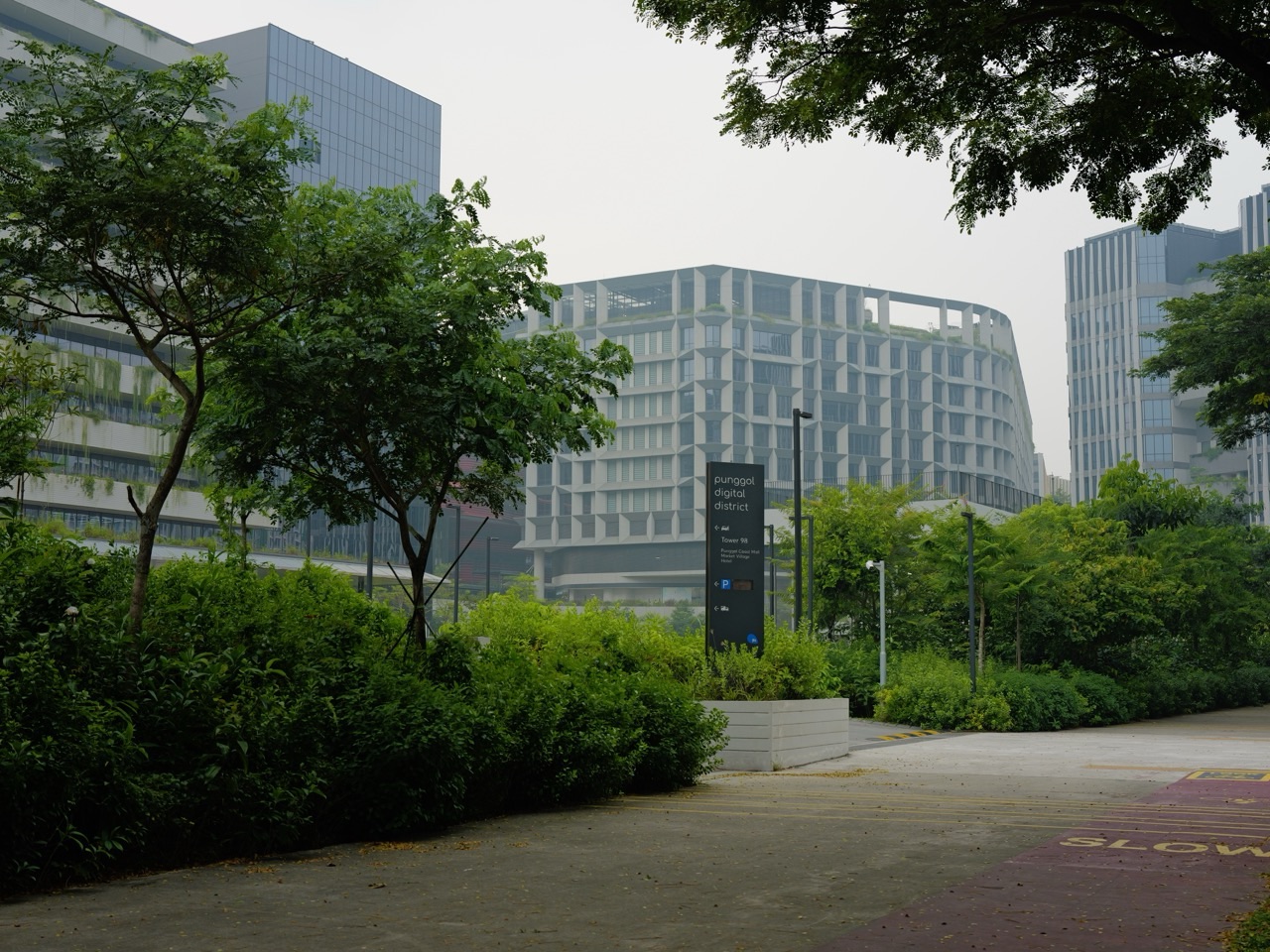
Quick answer — 27 October 2026: Urban farming and agriculture technology offer a distinct Punggol Career 2027/2028 research direction, but they require realistic expectations. JTC describes rooftop urban farms being prototyped at Punggol Digital District, with ideas for future combinations of rooftop photovoltaic canopies and food production. Meanwhile, Singapore’s Food Story 2 strategy has revised national 2035 production ambitions for fibre foods and protein foods. Neither document announces a Punggol rooftop farming employer, crop-production vacancy number or a guaranteed opening in 2027.
Did you know that a high-tech farm may be a more demanding engineering business than an ordinary patch of vegetables? It has to manage light, heat, growing cycles, nutrient supply, water, equipment, hygiene, labour, packaging and sales. A harvest can look impressive while the cost of electricity, cooling or wasted produce makes the operation unsustainable. Successful farmers need scientific measurement and financially honest decisions, not only advanced hardware.
This guide concentrates on land-based crops, indoor production, mushrooms, beansprouts and agri-tech systems, rather than aquaculture, which is covered in a separate Punggol Career article. It provides a source-checked forecast for 2027–2028, entry routes for students and mid-career workers, examples of job tasks and a decision process before choosing a farming course or investing in a prototype.
Start with the actual Punggol facts
| Statement | What public sources establish | What not to assume |
| Rooftop farms at PDD | JTC has described prototypes and future rollout concepts within a greener business park | A commercial farm at every rooftop already operating |
| Rooftop solar integration | JTC discussed PV canopies combined with urban farming as a future typology | Every crop and panel arrangement is already commercially proven |
| Singapore Food Story 2 | National food-resilience strategy with four complementary pillars | One neighbourhood must produce all food consumed |
| Grow Local strategy | Support for more productive, resource-efficient and resilient farming | Every grant applicant is approved |
| 2035 fibre goal | Local farming capacity intended to supply 20% of Singapore’s consumption of specified fibre foods | The older ’30 by 30′ framing remains the current universal goal |
| Research, careers and training | SFA lists agri-food roles and course options through ITE and polytechnics | A short course guarantees PDD hiring |
Primary sources: JTC’s current PDD sustainability page, JTC’s rooftop-farm prototyping account and SFA’s updated Singapore Food Story 2. They describe different planning scales and must not be mistaken for a list of vacancies.

The Singapore Food Story 2 targets need to be read carefully
At the 2025 Singapore International Agri-Food Week, SFA explained its revised 2035 ambition: local farms would supply 20% of local consumption of fibre foods such as fresh leafy and fruited vegetables, beansprouts and mushrooms, and 30% of the specified protein category. This is a forward-looking national ambition, not a measured 2026 outcome or a requirement that Punggol host a particular number of farms.
Food Story 2 has four pillars: diversify imports, grow local, stockpile and pursue global partnerships. Local farming is a regenerative buffer during long disruptions, but Singapore continues to rely heavily on international supply networks. The right interpretation is a portfolio of resilience strategies, not food autarky.
The Government’s Agri-Food Cluster Transformation Fund has supported upgrades such as LED grow lights, automated irrigation and controlled-environment production. These may improve efficiency, but installation and running costs must be compared with measured productivity. A farm’s technology is worthwhile only if it solves a genuine production problem.
What jobs can a land-based agritech operation involve?
1. Crop production and cultivation operations
A production grower monitors plant growth, schedules seeding, handles authorised harvesting, records crop conditions and identifies signs that something has changed. The role may be based inside an enclosed facility or at another licensed site in Singapore.
Clear observation matters. If growth slows, there may be changes in light, water, temperature, substrate, plant health or handling. A good grower does not claim a cause without checking relevant records and using approved crop-management procedures.
2. Controlled-environment agriculture technician
Indoor and rooftop farms may use fans, sensors, pumps, irrigation, environmental controls and lighting. A technician helps keep those systems within suitable operating parameters and logs failures. This can suit someone with an electrical, mechanical or mechatronics background.
A sensor that looks normal may be miscalibrated, and a sudden alert may be caused by the sensor rather than the growing conditions. Technical judgment requires both equipment knowledge and responsible checking.
3. Horticulture and plant science
Horticulture professionals study how crops respond to environmental and cultivation conditions. Experimental work may involve plant physiology, sampling, controlled comparisons, nutrient management and evaluating whether a method is repeatable.
A student attracted to biology should learn the practical distinction between plant science and running a commercial production company. The former asks whether a method works under controlled conditions; the latter also asks whether the farmer can afford it, hire workers and sell the harvest.
4. Farm data and optimisation
A data-oriented role may connect production records, energy, irrigation, crop growth and wastage to help managers compare alternatives. Examples include tracking production per square metre, consistency between batches and changes in electricity use.
AI-based prediction can support a forecast, but models still need representative data and measured outcomes. A tool trained during a mild season may fail during high heat or unusual supply conditions. Results should include a margin of uncertainty.
5. Food safety, grading and quality
Agricultural products pass from cultivation to preparation, packaging, storage and transport. Workers need accurate product information and appropriate hygiene controls. Quality specialists may investigate spoilage, traceability and complaints. Exact tasks and licensing conditions depend on the farm and downstream business.
A school project using purchased supermarket produce does not qualify someone to establish compliance at a commercial farm. Work with applicable standards and professional supervision.
6. Distribution, sales and business development
A profitable local farm must secure customers and deliver products when promised. Farmers, distributors and retail partners may work on forecasting demand, planning harvests, reducing rejected batches and presenting credible product claims.
A manager might discover that the limiting factor is not crop growth but predictable buyer contracts. That is why agriculture operations, procurement and logistics can be as important to the business as the greenhouse’s sensors.
PDD’s rooftop solar and urban farm idea: how to interpret it
JTC has described a concept combining broad rooftop photovoltaic canopies with urban farms, alongside solar power and smart-grid features in the mixed-use district. This offers an opportunity to study two uses of limited roof space: generating electricity and growing crops.
These uses can sometimes complement each other, but they can also compete for sunlight, maintenance space and access. The actual feasibility depends on structural loading, shade, irrigation, water protection, heat, waterproofing, safety and service routes. A beautiful rendering cannot resolve those engineering questions.
Do not go onto roofs or buildings without authorisation to investigate these concepts. Building managers and qualified professionals must assess roof loading, electricity, fall protection, water use and other safety requirements.
A worked example: productivity is not profit
Illustrative classroom calculation: a fictional farm grows 120 kg of leafy vegetables per month on 60 square metres of growing area, or 2 kg per square metre per month. A second setup delivers 160 kg from the same area, about 2.67 kg per square metre. That looks like a roughly 33% productivity improvement.
But suppose the new system needs S$500 more in lighting and maintenance costs every month. At a fictional selling price of S$5 per kg, the extra 40 kg earns only S$200 of additional gross revenue. The higher-yield method may actually weaken operating margins unless it improves something else or costs fall.
This is why farmers measure energy per kilogram, water use, crop losses, working hours, quality and income, not just harvest weight. The figures here are educational inventions, not the measured performance or prices of a real Singapore farm.
A crop trial that students can do safely
An upper-primary or Secondary student can grow a few ordinary edible plants in suitable pots at home, with parental permission, and observe leaf count and size under two reasonable light conditions. They should use safe commercially available materials, follow normal household hygiene and avoid applying hazardous chemicals.
Keep plant variety, watering and recording intervals as consistent as practical. Write the dates, visible observations and possible confounding factors. Do not conclude that a larger leaf proves better nutrient content or a commercially efficient growing method.
A useful report contains the question, method, observations, chart, limitations and what to test next. The transferable skill is honest scientific reasoning—not claiming to have invented a profitable rooftop system.
Education and training routes worth checking
| Starting point | Relevant foundations | Where to investigate |
| Secondary student | Science, Mathematics, English, practical observation and data literacy | ITE/polytechnic course prerequisites and safe school projects |
| ITE learner | Technical operations, food safety, equipment servicing and practical skills | Recognised agriculture-related, process or engineering training |
| Polytechnic learner | Agriculture technology, food science, biotechnology, environmental systems | Republic Polytechnic and Temasek Polytechnic programmes listed by SFA |
| University learner | Plant science, engineering, computing, food systems and sustainability | Relevant degree pathways and supervised research |
| Experienced worker | Procurement, horticulture, food operations, mechatronics or data | Targeted retraining with actual employer participation |
SFA’s agri-food career and training portal lists examples such as Agriculture Technology, Agriculture 101, high-value crop cultivation, nutrient analysis, sustainable urban farming and role-specific technical skills. Availability, funding and entry criteria need to be checked with the education provider at the time of application.
A realistic 2027–2028 forecast table
| Scenario | What would strengthen it | What could limit it |
| PDD prototypes advance into more trials | JTC publishes commissioning, research or tenant updates | Technical feasibility and site permissions remain unresolved |
| Some controlled-environment farms hire | Verified employer advertisements and new production contracts | Costs, market conditions and farm closures |
| More farm operations use sensors and automation | Repeated role requirements for plant systems, calibration and analytics | Small farms may adopt technology at different speeds |
| Food Story 2 stimulates skills interest | New approved courses, partnerships and production results | Training volume rises without matched vacancies |
What a Punggol jobseeker should not do
- Do not describe a planned rooftop farm as an operating food-production company without confirmation.
- Do not infer local job counts from Singapore-wide 2035 ambitions.
- Do not mistake an attractive hydroponic photograph for a commercial profit-and-loss statement.
- Do not buy an expensive automation kit before identifying its actual maintenance and production benefits.
- Do not perform rooftop work, industrial electrical maintenance or pesticide handling without appropriate authority and training.
- Do not claim a short course guarantees employment at PDD or any specific farm.
A one-month research plan
- Week 1: read the current SFA Grow Local strategy and JTC’s PDD sustainability facts; write down what is confirmed and what remains planned.
- Week 2: investigate three real job advertisements spanning cultivation, equipment or quality work and compare their duties.
- Week 3: practise a safe plant-observation or synthetic production-data exercise; calculate output and identify missing cost data.
- Week 4: verify education prerequisites, employer location, work safety and financial affordability before enrolling or applying.
Frequently asked questions
Is there definitely a working urban farm on a Punggol Digital District rooftop?
JTC documents rooftop urban farm prototypes and design concepts. That is not enough to claim every pictured or planned rooftop is an open commercial farm. Check later commissioning and operator updates.
Does Food Story 2 still require 30% of all food to be grown in Singapore by 2030?
No. The current Food Story 2 framework uses revised 2035 ambitions for specified fibre and protein categories. An older slogan should not be presented as the current national target.
Do I need a plant-science degree to enter agritech?
Different positions have different requirements. Crop operations, engineering maintenance, laboratory research, logistics and business development can require very different technical and academic backgrounds.
Will robots make farm workers unnecessary by 2028?
Technology may change repetitive tasks, but crop health, equipment safety, quality, biological variation and business choices still need accountable human work. There is no sourced Punggol-specific replacement percentage.
Official sources and connected Punggol reading
- JTC: PDD sustainability, green roofs and urban farms
- JTC: urban farm prototypes and solar canopy concept
- SFA: Singapore Food Story 2, four pillars and 2035 fibre/protein ambitions
- SFA: announcement of revised Food Story 2 targets, 2025
- SFA: agri-food career opportunities and course routes
- eduKatePunggol: rooftop farm and solar canopy project background
- Punggol Career: the separate aquaculture and fish-feed research pathway
- Punggol Career: built-environment research and safety
A practical conclusion for 2027 and 2028
Urban farming is worth understanding because Singapore has a genuine need for productive and resilient local food systems, and Punggol Digital District provides a nearby prototype context. For a resident, however, the next action should be to identify a role, a real employer and evidence of skills. Rooftop plans are not jobs; demonstrated competence and viable operations are what make careers possible.


