
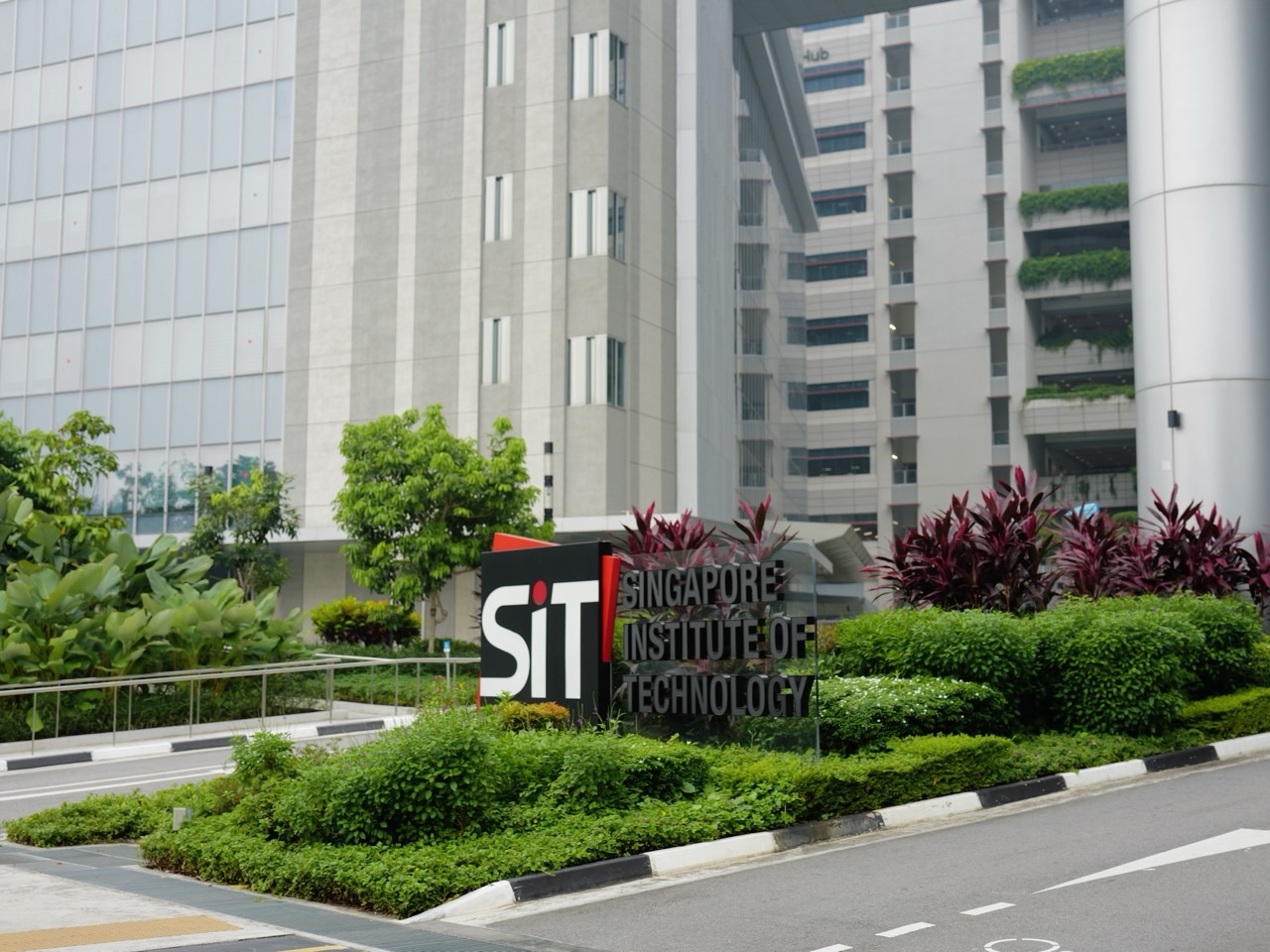
Quick answer — 27 October 2026: Punggol’s quantum-safe cybersecurity career outlook for 2027 and 2028 has more substance than a futuristic slogan. On 18 August 2026, SIT and IBM announced a planned Quantum-Safe Centre at SIT Punggol Campus, targeted for launch by the end of 2026. On 14 October 2026, Singapore’s Cyber Security Agency issued a new advisory asking organisations exposed to quantum risk to aim for a migration plan by the end of 2027, while critical infrastructure owners face specific earlier submissions and later completion milestones. This creates genuine reasons to learn cryptographic inventory, cyber-risk assessment, systems integration and migration planning. It does not guarantee local hiring or prove that quantum computers can already break today’s banking encryption.
Did you know that a quantum-safe career is not necessarily a career building a quantum computer? Most organisations will need to discover which existing systems use vulnerable cryptographic methods, identify data requiring long-term protection, work with technology vendors, test alternatives and deploy changes without breaking essential services. A person with careful documentation, networking, software testing and information-security skills may find useful work in that transition without being a theoretical physicist.
This Punggol Career 2027/2028 article is designed for Secondary G1/G2/G3 students, ITE and polytechnic learners, SIT and other university students, working adults and parents weighing expensive training. The central question is which competence can be shown, and which job opportunities can actually be verified? We separate confirmed 2026 announcements from conditional 2027–2028 employment scenarios.
The facts first: five milestones that must not be mixed up
| Milestone | Responsible organisation and actual date | What it means | What it does not guarantee |
| IBM–SIT Centre | SIT and IBM, announced 18 August 2026; launch targeted by end-2026 | Proposed industry-academic hub for cryptographic readiness, evaluation and learning | The centre is already fully operational on 27 October or will employ a given number of residents |
| Quantum readiness tools | CSA, GovTech and IMDA, updated July 2026 | Migration Handbook and Quantum Readiness Index to structure risk assessment | Certification or job eligibility for everybody completing a questionnaire |
| General migration plan | CSA advisory, 14 October 2026: organisations facing quantum risk should aim to plan by end-2027 | Businesses may need inventories, prioritisation and governance | All Singapore systems must complete migration in 2027 |
| Critical infrastructure plan | CSA: CII owners submit plans by 31 March 2027 and target migration completion by end-2031 | Specific critical infrastructure obligations and deadlines | All organisations share the exact same legal deadline |
| Other exposed systems | CSA encourages migration by 2035 | Longer phased migration horizon depending on risk | A precise prediction of when a cryptographically relevant quantum computer will arrive |
Primary official sources include SIT’s 18 August 2026 centre announcement, CSA’s 14 October 2026 advisory and CSA’s migration handbook. A career forecast should never turn a governance deadline into an invented number of future vacancies.

What is the quantum threat, without the science-fiction version?
Today’s internet depends on several kinds of cryptography. Encryption can protect the confidentiality of messages and stored information. Digital signatures can help establish that a software update or transaction message came from an authorised source and has not been changed. Key exchange lets two systems agree on secrets over an untrusted network. These are different functions and not every algorithm faces the same quantum-related risk.
A sufficiently powerful future quantum computer could threaten widely used public-key schemes based on certain mathematical problems. That does not mean every modern cryptographic primitive suddenly stops working, that banks are presently unprotected or that a quantum computer exists today with the capacity to decrypt all financial records. The timing remains uncertain; CSA’s October guidance takes an early and phased risk-management approach.
The phrase harvest now, decrypt later describes the possibility that an adversary records encrypted data now and attempts to decrypt it when future capabilities improve. Long-lived confidential data and systems that cannot be upgraded quickly deserve particularly careful attention.
What does the proposed SIT–IBM Quantum-Safe Centre intend to do?
SIT and IBM described a centre serving enterprises, technology practitioners, researchers and government stakeholders. The intended work includes enterprise cryptographic discovery, vulnerability assessment, testing of suitable approaches and capabilities for moving legacy systems toward quantum-safe protection. The university’s Punggol campus and its links with Punggol Digital District make this a locally relevant place to understand the work.
The announcement also described two continuing-education offerings. An Executive Programme of one day is intended for leaders and security decision-makers. A Foundation Programme of three days is intended for cybersecurity practitioners, software developers, engineers and IT professionals. The latter covers architecture, post-quantum standards, risk management and migration planning.
These are descriptions of planned programmes. Readers should look for confirmed dates, fees, eligibility, learning outcomes and assessment arrangements before registering. An industry-academic collaboration does not mean every learner secures a job with IBM, SIT or a government agency.
The 2027–2028 work is likely to be a programme of migration, not a one-off software installation
An organisation might operate thousands of applications and devices, many relying on libraries or services maintained by other companies. Before changing anything, the organisation needs to know which components handle sensitive information and how long the information must stay confidential. It also needs a plan for testing, fallback, interoperability, deployment and future upgrades.
An ideal migration is rarely achieved by selecting a cryptographic algorithm from a list and replacing every certificate overnight. Changes can affect device performance, transaction latency, compatibility, storage, vendor support and operational availability. These are reasons why architecture, testing, governance and documentation can matter as much as advanced mathematics.
Seven roles to investigate instead of searching only for ‘quantum scientist’
1. Cryptographic asset and dependency analyst
This person helps a company understand where cryptography is used: web servers, private connections, applications, authentication services, backups, certificates, third-party suppliers and connected equipment. The work depends on reliable inventories, permissioned access, clear classification and a useful record of uncertainty.
A student can practise on a fictional system diagram and label which connections should require confidentiality, integrity or authentication. That is a safer and more truthful portfolio example than claiming to have audited a real bank.
2. Cybersecurity risk and governance specialist
Security risk staff help decide which systems should be prioritised, who owns the decision and what evidence is necessary for management approval. A long-lived medical record may deserve a different urgency assessment from short-lived public information. The decision needs both technology knowledge and an understanding of consequences.
A graduate who can explain trade-offs to a non-technical manager may contribute meaningfully without implementing encryption libraries personally. Regulatory interpretation is part of the role but should not be confused with legal advice.
3. Security architect and systems integrator
An architect maps secure communications across many services and devices. An integrator tests whether a change affects partners, hardware, networks or older applications. In a complex workplace, a system may have a legitimate dependency on a cryptographic component supplied by someone else.
Future roles may require understanding key management, certificates, public-key infrastructure, application protocols, cloud platforms and safe migration sequencing. A jobseeker should compare actual advertisements to understand which expertise the employer needs.
4. Software and platform engineer
Software engineers may contribute by updating supported libraries, configuring services, writing compatibility tests, preparing rollback paths and measuring performance. Responsible engineering includes version control, code review, monitoring and dependency management. It is not acceptable to present copied code as proof that a system is secure.
5. Testing, quality assurance and validation
Security migrations require repeatable tests. Does a client with older software still connect correctly? Does a signed update verify? Does the service recover after a failed handshake? What happens to monitoring, audit logs and user experience? A tester can help define expected results and safely record actual behaviour.
6. Research and applied cryptography
Researchers may assess technical approaches, performance, interoperability or future algorithms. This work often requires mathematics, computer science and advanced specialist study. The presence of such roles should not imply that every quantum-safe career needs doctoral-level physics.
7. Training, communications and project delivery
Organisations also need professional educators, project managers, procurement teams and people who can explain why change is necessary without frightening customers. Good communication distinguishes ‘a future risk requiring preparation’ from ‘our encryption is broken today’.
How 2027 can differ from 2028
| Period | Plausible activity | What residents should verify |
| Late 2026 | Centre launch preparations, early training and CSA implementation guidance | Real opening confirmation, current programme registration, existing staff versus new vacancies |
| 2027 | Cryptographic inventory, governance plans, partner coordination, risk prioritisation and initial pilots | Published industry projects, official grant conditions, genuine employer roles |
| 2028 | For some organisations, deeper implementation and integration testing as plans progress | Procurement outcomes, continuing programmes, secure-system vacancies and skill requirements |
| 2031 and 2035 | Longer migration targets published by CSA | Do not translate national milestones into guaranteed headcount or salary figures |
This is a scenario analysis. Neither SIT nor CSA has provided a validated Punggol-specific forecast of new post-quantum cryptography jobs in 2027 or 2028.
An important funding distinction: a grant is not a personal course voucher
On 14 October 2026, CSA announced the Quantum-Safe Kickstarter Grant to support eligible organisational pilot projects and preparation. Its existence supports the case that Singapore is investing in real transition work. It does not mean that a student receives course-fee funding simply by being interested in quantum computers.
CSA and GovTech also published a Request for Information on Quantum-Safe Market Readiness and Capability with a 27 November 2026 response deadline. An RFI gathers supplier information; it is not the same as a contract award or a jobs advertisement. A service provider must confirm the original GeBIZ documents, eligibility and date rather than assuming an open grant or tender.
A practical skills ladder for Punggol Secondary students
| Foundation | Why it matters | Age-appropriate demonstration |
| English and clear explanation | Security advice fails if staff cannot understand risk and instructions | Explain a fictional security change in 150 accurate words |
| Mathematics | Cryptography and risk work require abstraction, precision and quantitative judgment | Reason through modular arithmetic and basic probabilities |
| Computing | Applications and protocols are part of cryptographic migration | Build a small non-sensitive script and test error handling |
| Science and physics literacy | Helps distinguish what quantum computing is from marketing claims | Explain what scientists know and which breakthroughs remain uncertain |
| Ethics and privacy | Cybersecurity requires restraint and permission | Identify what data must never be copied into a school project |
| Teamwork | Large migrations cross departments and vendors | Create a change-review checklist with clear responsibilities |
For Full SBB students in G1, G2 or G3, the right approach is to develop a flexible foundation and check each post-secondary course’s actual prerequisites. A young person does not have to select a career in post-quantum security at fourteen.
What an ITE, polytechnic or university learner can build
An ITE learner with an interest in networking or systems could focus on sound troubleshooting, accurate records and basic security principles. A polytechnic learner may build projects involving application architecture, test design and risk communication. A university learner might study cryptography, information security, formal methods and systems engineering more deeply.
For all stages, the most useful demonstration is what was tested, what failed, what was corrected and what remains unproven. A portfolio should not include unauthorised penetration testing, private encryption keys or workplace certificates.
Worked example: a fictional hospital system
Suppose a teaching scenario describes a hospital with an appointment website, patient-record database, internal staff portal and a backup archive. Students do not need real patient information. They can identify which components handle records requiring long-term confidentiality, which exchanges need authentication, and where a third-party vendor may influence migration.
Next, ask what the institution must know before changing cryptography: system ownership, vendor compatibility, certificate renewal, data retention, disaster recovery, fallback controls and test criteria. The student should not attempt to build or deploy a real medical encryption system as a school project.
The final output can be a one-page inventory table with columns ‘asset’, ‘business purpose’, ‘sensitive data’, ‘owner’, ‘dependency’, ‘unknowns’ and ‘next authorised assessment’. The conclusion should be that the inventory identifies questions for qualified teams, not that the system is quantum-safe.
The science-versus-security distinction
A student may also ask whether quantum key distribution and post-quantum cryptography are the same. They are not. Singapore’s CSA has described post-quantum cryptography as the mainstream migration approach, with quantum key distribution a possible complementary option for specialised applications. PQC uses algorithms intended to resist both conventional and relevant quantum attacks and can be integrated into existing computing environments. QKD involves specialised physical communication arrangements.
Do not buy a course merely because it mentions ‘quantum’ without specifying whether it is about physics research, algorithms, network systems, cybersecurity migration or enterprise governance. Those paths have different prerequisites and occupations.
A 30-day career investigation plan
- Week 1: read the CSA advisory and separate the 2027 planning objective, 2031 CII deadline and 2035 wider migration horizon.
- Week 2: identify two role families—such as security engineer versus risk analyst—and inspect five genuine job descriptions.
- Week 3: build a fictional cryptographic inventory, stakeholder map and small test plan with no personal data.
- Week 4: review qualifications, learning costs, present employer needs and the current SIT registration notices before applying or training.
Five mistakes that cause costly career decisions
- Believing that quantum computing has already broken all modern encryption.
- Treating a centre’s targeted completion date as proof it has opened or is hiring.
- Confusing a government migration-plan milestone with a guaranteed salary or job count.
- Choosing an advanced cryptography course without the mathematics and computing prerequisites.
- Publishing confidential keys, credentials, workplace data or security findings in a portfolio.
- Assuming every person working in quantum-safe migration is a quantum physicist.
Frequently asked questions
Will the IBM–SIT Quantum-Safe Centre definitely open before 2027?
The August 2026 announcement targeted the end of 2026. This article does not claim a verified operational opening on 27 October 2026. Recheck official SIT and IBM releases for any updated date.
Are organisations required to finish quantum-safe migration by end-2027?
No. CSA encourages organisations exposed to quantum risks to develop a plan by end-2027; CII owners have a 31 March 2027 plan submission and 2031 completion target, while other exposed organisations are encouraged toward 2035 completion.
Can a non-physics graduate work in this area?
Yes, depending on role. Governance, systems, software, risk, testing and project delivery can require relevant security and IT knowledge without physics research credentials. Check specific employer requirements.
Is the Centre a hiring partner for every SIT cybersecurity student?
No guaranteed recruitment or placement is established by the announcement. The planned continuing education programmes and potential research activities are distinct from an employment offer.
Is the Quantum-Safe Kickstarter Grant funding for individual training?
It is an organisational programme for relevant pilot and preparation activity under its terms, not an automatic individual skills-credit grant.
Official sources and connected eduKatePunggol reading
- SIT: Quantum-Safe Centre with IBM, 18 August 2026
- IBM: industry partnership announcement
- CSA: 14 October 2026 advisory and migration horizons
- CSA: 2026 policy milestones and enterprise pilot funding
- CSA: Quantum-Safe Migration Handbook and Quantum Readiness Index
- CSA: Quantum-Safe Kickstarter Grant details and eligibility
- eduKatePunggol: project timeline and original centre announcement
- eduKatePunggol: GovTech, CSA, JTC and SIT hiring routes
A career forecast grounded in capability
Punggol has a concrete connection to a major national cybersecurity transition through SIT and IBM. The 2027–2028 opportunity is not an easy career shortcut: it is to learn how to assess real cryptographic risk, plan measured improvements, cooperate with qualified professionals and demonstrate dependable work. As with any specialised field, prepare skills first and confirm a genuine job before treating the forecast as income.


