
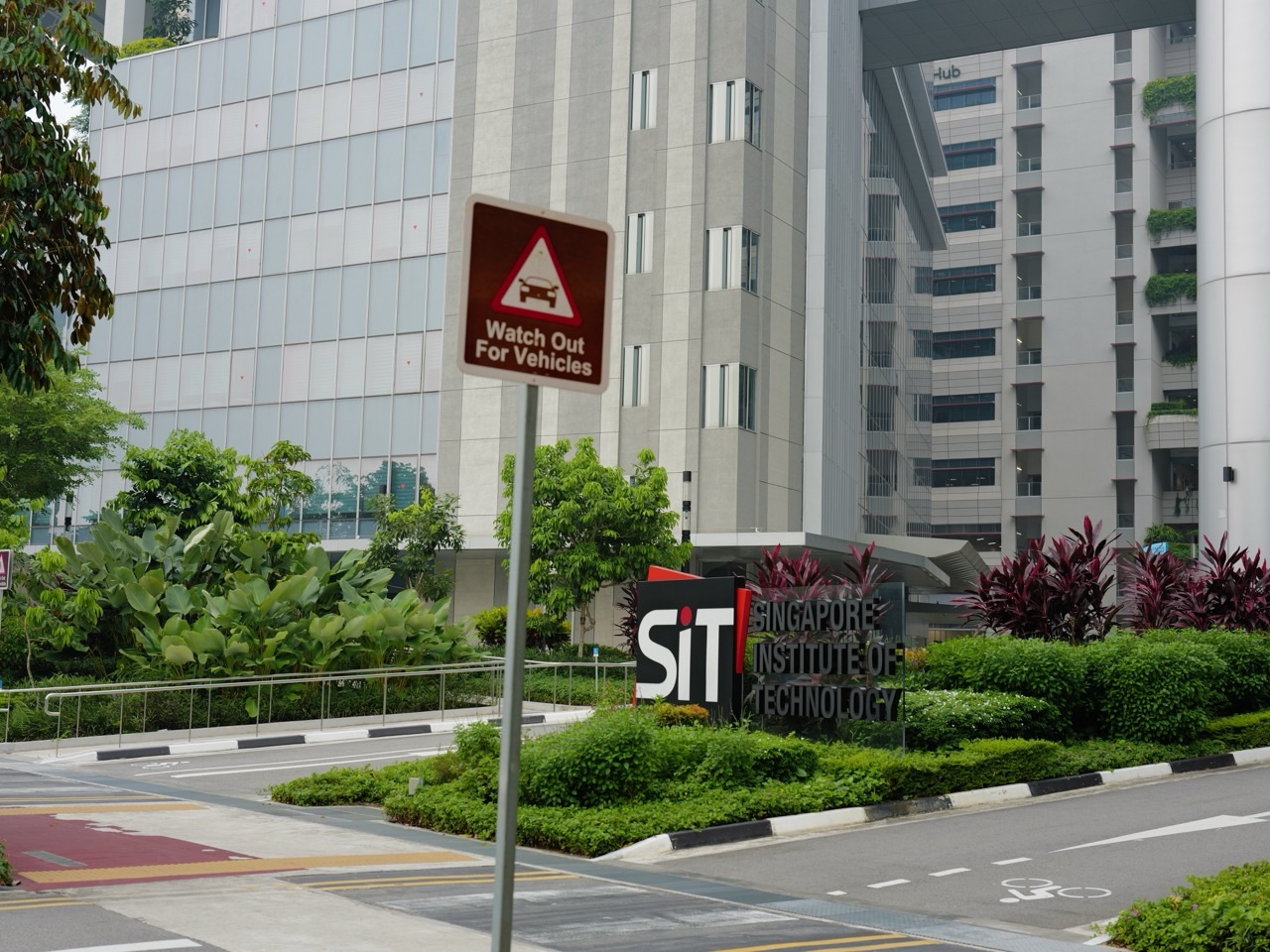
Quick answer — 27 October 2026: Punggol Digital District offers a particularly useful way to study careers in public digital services, cybersecurity, applied research, university operations and district planning. JTC lists government-related organisations such as GovTech and the Cyber Security Agency of Singapore (CSA) in the PDD ecosystem, while Singapore Institute of Technology (SIT) operates its Punggol campus. But organisations being present or associated with a district does not guarantee that their next job advertisement is based in Punggol or that Punggol residents receive hiring priority.
Did you know the work of a smart public service needs more than software engineers? Public systems require policy interpretation, accessible design, communications, privacy, procurement, records management, security, testing, reliability and patient investigation when a digital service fails. Meanwhile, an applied university needs learning support, laboratory professionals, administrators, research staff and experienced academic teachers.
For 2027 and 2028, the strongest career approach is to investigate the hiring employer, the duty, the work location and the evidence they expect. This article explains where to look and how to distinguish a genuine Punggol career route from a building photograph.
Four organisations to understand before forecasting jobs
| Organisation | Its relevant role | Where to check jobs | Important distinction |
| JTC | Masterplans, develops and manages industrial districts, including PDD | JTC’s official careers pages | A JTC-built district is not a promise that all JTC vacancies are based there |
| GovTech | Develops technology for public services and government systems | GovTech careers and Careers@Gov | Participation in PDD’s ecosystem does not locate every GovTech team there |
| CSA | Safeguards Singapore’s cyber environment and runs policy, technical and operational functions | CSA’s official career pages and recruitment channels | A Punggol office address does not mean every advertised role operates from it |
| SIT | University for applied learning, research and professional education at Punggol | SIT careers and its official job portal | A university role is not automatically a Public Service civil-service position |
The institutional context is published on JTC’s PDD business-ecosystem page. For CSA, the agency’s own contact page gives a grounded office address at 92 Punggol Way, Tower 92. For SIT, the university’s careers page describes distinct recruitment tracks. These sources can be checked again when 2027 hiring begins.

The forecast rule: a workplace address is not a vacancy count
A major public organisation can transfer an existing team, recruit a replacement, commission work from a contractor or hire additional staff. These events have different effects on the employment market. For Punggol residents, a vacancy’s work location and contractual employer must be checked individually.
JTC’s district-level forecast of 28,000 jobs is an expected ecosystem scale, not 28,000 government vacancies or new 2027–2028 recruitment positions. Do not add up the names of organisations on a development webpage and convert them into imagined job offers.
1. GovTech: understand the public service problem behind the software
GovTech’s hiring guide, updated 25 August 2026, identifies capability areas such as software engineering, cybersecurity, data engineering, design, government ICT infrastructure and smart-city technology. It tells candidates to apply for actual openings via Careers@Gov and describes interviews and decision processes.
A useful student question is not simply ‘Does GovTech do AI?’ It is ‘How do government digital systems serve residents who have different devices, languages, ages and accessibility needs?’ A technical solution must perform securely and reliably while remaining understandable to the public.
Potential role families to investigate include application development, systems reliability, data engineering, security, service design and technology project coordination. The exact number of jobs in 2027 or 2028 cannot be inferred from a list of capability areas.
A practical portfolio for public digital services
Using invented data, create a small service process that lets a person complete a task on a slow mobile device. Record usability difficulties, language clarity, accessibility checks, error handling and privacy choices. Explain what cannot be automated safely. This shows a public-service mindset better than claiming a generic chatbot is ‘government-ready’.
2. CSA: policy, investigation and critical systems protection
CSA’s career pages describe national cyber protection and opportunities for professionals, students and graduates. Its experienced-professional pages identify technical, operational and policy roles. That distinction matters. Cybersecurity is not a single desk where everyone uses the same tools or has the same qualifications.
Some roles require deep engineering or incident-response expertise. Others involve risk assessment, policy implementation, programme management, training or cross-agency coordination. Job requirements will vary, and sensitive positions may involve role-specific eligibility and checks. Applicants should not speculate about clearance requirements or present unverified claims of eligibility.
An ethical learning portfolio could document a threat model for a fictional system, a safe-lab incident response runbook or a public-data cyber awareness programme. Do not scan, test or seek unauthorised access to government or corporate infrastructure. A hiring applicant’s judgement includes knowing when not to experiment.
3. SIT: university jobs go far beyond teaching
SIT’s official careers page separates corporate, professional officers, research, faculty and associate faculty tracks. Its job portal also makes employment type explicit in individual listings; for example, a 2026 professional-officer listing used a fixed-term designation. That is why applicants should read the actual advertisement rather than assume all university positions are permanent academic appointments.
A professional officer may contribute technical expertise, hands-on learning and industry-facing projects. A research assistant or associate may support experiments, data quality and documented methods. Corporate staff may handle finance, admissions, procurement, people operations and facilities. Faculty appointments generally involve teaching, scholarship, professional service and relevant credentials.
Why the 2027–2028 outlook is interesting
Punggol’s arrangement links an applied university with businesses and district infrastructure. This creates a plausible setting for interdisciplinary research and applied work. Yet the number of future jobs depends on budgets, project funding, contracts, student numbers and approved organisational plans. A large academic campus is not an unlimited hiring pool.
Students can explore authorised research participation, properly supervised projects and credible continuing-learning offerings. A person changing careers should compare fixed-term and permanent roles, expected work outputs and whether a qualification is essential.
4. JTC: planning, engineering, management and development
JTC’s official jobs page groups careers into planning and development, marketing and management, and corporate functions. These include work connected with land use, industrial services, tenant needs, facilities, policy, engineering, collaboration and organisational support.
This is a reminder that ‘smart district careers’ can include convening stakeholders, maintaining sound records and making public investments work, not only developing robots. Someone with planning, sustainability, engineering, communications or business-operation strengths may find different ways to contribute to such organisations.
However, JTC operates across multiple districts. A posting on its national recruitment pages does not automatically mean the position is at PDD. Check the reporting site, employer, contract duration and travel requirements.
What about suppliers, service providers and contractors?
A university or public agency may procure work from a separate organisation. Engineers, installers, designers, security providers, researchers and facilities contractors may work at an institutional site while being employed elsewhere. Applicants should know whether they are applying to the institution, to a vendor or to a time-limited research project. These arrangements are not interchangeable.
| Work relationship | Who typically signs the employment contract? | What to verify |
| Direct organisation hire | Agency, university or statutory board, as applicable | Hiring channel, service scheme, probation and duties |
| Research project or fixed-term hire | Actual employer specified by the project contract | Project end date, renewal conditions, grant or funding dependencies |
| Outsourced support | Contractor or supplier | Duty location, shifts, benefits, reassignment and manager |
| Internship or student attachment | Host and education institution arrangements vary | Learning outcomes, supervision, insurance, approval and allowance |
| External consultant or business supplier | A commercial services contract, not necessarily an employment contract | Deliverables, acceptance, payment and responsibility for errors |
2027 versus 2028: what could happen?
| Period | Plausible opportunity | What would count as evidence | What should not be assumed |
| 2027 | Teams deepen operational work, research partnerships and support processes | Official vacancy postings, role descriptions, published programme calls and signed contracts | All participating agencies have expanded local headcount |
| 2028 | Some projects mature, change direction or become routine operations | Repeated jobs in the same family, renewed grants, sustained services, new documented public programmes | Every funded pilot becomes a permanent job |
These are scenario forecasts, not a sourced prediction of public sector headcount in Punggol. Review an organisation’s current recruitment pages before making a study or resignation decision.
What subjects and skills support these routes?
| Capability | Why it matters | How a student or adult can show it |
| Clear English | Policy, user guidance, incident reports and research are written work | A concise report with evidence and accurate explanations |
| Mathematics and statistics | Performance, risk, costs and research depend on measurement | A small dataset with transparent calculations and uncertainty |
| Computing and cyber safety | Government and campus systems must be dependable | Safe demo with privacy controls and tested failure cases |
| Scientific or engineering reasoning | Physical systems and research require reproducible methods | Supervised experiment, protocol and documented observations |
| Service and accessibility | Public-facing programmes must serve different people | User journey audit using synthetic cases and accessibility criteria |
| Governance and teamwork | Complex work involves approvals and responsible handoffs | Project decision record with clear ownership and review |
An application preparation plan
- First: Choose an actual job family rather than an organisation’s prestige. For example, research operations is not the same as software engineering.
- Second: Identify which official recruitment portal handles that type of role. SIT’s portal is different from Careers@Gov.
- Third: Read requirements carefully, especially academic or professional qualifications, security expectations, employment type and reporting location.
- Fourth: Build or select two genuine work samples that match the responsibilities. Remove all confidential material.
- Fifth: Prepare examples of dealing with mistakes, teamwork, public impact and explaining technical matters to non-specialists.
- Sixth: Apply only through verified channels and track what you actually submitted.
- Seventh: Revisit the official vacancy after the interview. Do not base decisions on a rumour about a future Punggol campus expansion.
For families choosing courses
A Secondary-school student interested in public technology can start with a strong foundation in Mathematics, English, Science and responsible computing. They do not need to decide at fourteen whether to work at GovTech or a university. Learn what systems must do for people before choosing a narrow title.
An ITE or polytechnic student can explore recognised technical qualifications, laboratory safety, software testing, service management and hands-on attachments. The best path depends on the job family, not the assumption that every public agency role needs the same degree.
A university learner should seek authentic project evaluation, research integrity, ethical use of data and supervised applied experience. A mid-career applicant should investigate transferable strengths in governance, finance, procurement, operations, communication and service delivery alongside any new technical requirements.
Mistakes to avoid
- Do not treat an ecosystem logo as proof of a current job opening.
- Do not assume a public university uses the same recruitment system, scheme of service or contract conditions as every statutory board.
- Do not copy protected workplace or government information into an AI model as a portfolio demonstration.
- Do not interpret a research partnership as a guaranteed internship or graduate position.
- Do not assume that all GovTech, JTC or CSA roles work physically at Punggol Digital District.
- Do not send identity credentials to unofficial recruiters; verify suspicious messages through the real organisation.
- Do not let a prestigious institution’s name distract from duties, supervisory quality, pay, contract duration and family suitability.
A critical recruitment warning from SIT
SIT’s careers webpage explicitly notes that unauthorised agencies have made fictitious employment offers using the university’s name. The university provides official recruitment contacts to validate suspicious approaches. This makes verification an everyday professional skill, not an insult to a recruiter. The same principle applies when a supposed agency claims to be hiring for a public-sector employer at PDD.
Frequently asked questions
Is CSA actually located in Punggol?
CSA’s own official contact page lists 92 Punggol Way, Tower 92, Punggol Digital District, as its address as at October 2026. That establishes an official office location, not the reporting location of every role.
Does GovTech have jobs for people without a pure computing degree?
GovTech’s public career information discusses both tech and non-tech professionals. Each advertised role has its own requirements; do not assume a particular qualification is always accepted.
Can I work at SIT without becoming a lecturer?
Yes, SIT lists corporate, professional-officer and research tracks alongside faculty roles. Applicants should review the live positions and role-specific qualifications.
Will all these institutions expand their Punggol hiring in 2027 or 2028?
No such common commitment is established by the sources cited here. The district provides an ecosystem in which opportunities can arise, but headcount and location must be confirmed with each employer.
Official reading and nearby eduKatePunggol guides
- JTC: organisations in the Punggol Digital District ecosystem
- JTC: official careers and role families
- GovTech: how we hire, updated August 2026
- Cyber Security Agency: career pathways
- CSA: official Punggol office address and careers contact
- SIT: university jobs in faculty, research, professional and corporate tracks
- Careers@Gov: official Singapore Public Service recruitment portal
- eduKatePunggol: detailed guide to SIT campus job routes
- eduKatePunggol: how to apply via Careers@Gov
- Series: job offer verification, salary and contract risks
What to remember
Punggol can be a practical classroom for understanding how universities, business innovators and public agencies work together. A career is not guaranteed by standing near a government building. It becomes possible when a real role exists, the applicant meets its requirements and the application demonstrates useful capabilities. For 2027 and 2028, follow official vacancies and learn the purpose of the work, not just the organisation’s name.


