
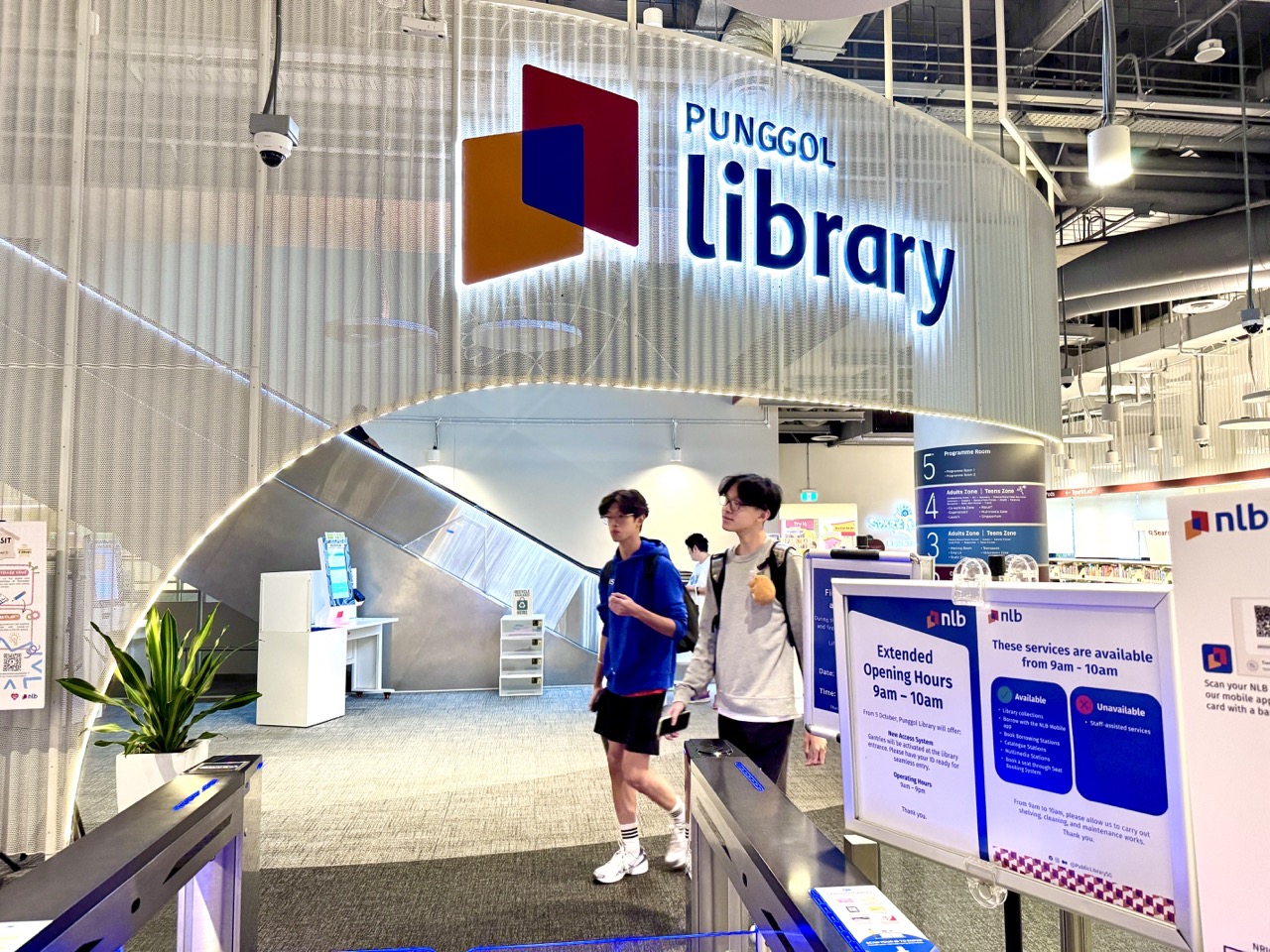
Quick answer — 27 October 2026: Punggol residents exploring library, archiving, digital-curation and learning-service careers in 2027–2028 have a particularly useful local example: Punggol Regional Library at One Punggol. The National Library Board (NLB) operates the five-storey public library with accessible borrowing, calm spaces, learning facilities and MakeIT on Level 4. NLB’s Libraries and Archives Blueprint 2025 (LAB25) and subsequent professional-development work show how library roles are expanding into programming, digital services, accessibility and information literacy. But NLB has not announced a fixed number of new Punggol jobs for 2027 or 2028 through these initiatives.
Did you know a modern library employee may spend more time helping someone evaluate a misleading online claim than handling a printed book? A community member could need assistive technology; a parent might need trustworthy information about schools; a teen may be curious about digital making; an archivist may need to determine whether an old photograph has a reliable date. The underlying professional skill is helping people find, understand, preserve and use knowledge responsibly.
This guide is for students, parents, graduates and adults considering a meaningful career change. It distinguishes the local spaces that already exist, the occupational pathways a library network supports, what can reasonably change by 2027–2028, and why a public facility’s popularity does not by itself prove a recruitment boom.
Three separate NLB workplaces—do not confuse them
| Institution or space | What it principally does | Key hiring caveat |
| Punggol Regional Library | Public reading, access, information help, programme experiences and learning | Not every NLB vacancy is located at Punggol |
| National Library | National collections, research support, specialist knowledge and collection work | Professional librarianship can require particular specialist skills |
| National Archives of Singapore | Archives, preservation, historical records and access to Singapore’s documentary heritage | Archiving is a distinct professional discipline; an archival position need not be in Punggol |
| Comics & Games Library at Punggol Coast Mall | NLB’s pop-up, largely self-service library with comics, graphic novels and games | Self-service services do not automatically imply a new team stationed inside |
| MakeIT at Punggol Regional Library | Learning to use technologies such as 3D printing and creative making equipment | Public programme availability is not the same as an instructor vacancy |
The National Library Board’s own July 2025 interview about the future of libraries and archives describes public libraries, the National Library and National Archives as related but different parts of its mission. NLB’s Nodes information confirms the Comics & Games Library at Punggol Coast.

Why Punggol Regional Library is a useful careers classroom
The library was developed as an inclusive and accessible space for people with different needs. NLB describes features such as Borrow-n-Go, assistive devices, accessible collections and calm areas. It also hosts creative learning, programmes and digital services. These show that effective public knowledge spaces require designing for real people, not simply arranging shelves.
Imagine a resident using a wheelchair, a young child distracted by noise, a senior unfamiliar with smartphone apps and a student trying to locate reliable research sources. Each may need different help. A professional has to understand the problem, protect dignity and independence, and apply the appropriate service without assuming all visitors want the same interaction.
NLB’s MakeIT initiative, with a facility on Level 4 of Punggol Regional Library, gives residents opportunities to explore tools such as 3D printers, 3D pens and sewing machines subject to current programme and booking rules. The existence of these machines is an educational resource, not a free licence for unsupervised use or a certification in engineering.
Career 1: library services and information assistance
Public library officers help patrons navigate borrowing, reservations, library rules, collections, digital resources and learning spaces. Some roles involve frontline service, event support, reading recommendations, inclusive communication and handling difficult situations calmly. Other library positions may be more focused on operations and management.
A typical challenge could be a parent looking for material at a suitable reading level. The service worker should ask questions, locate appropriate resources and explain options without humiliating the family or claiming a book can guarantee a test result. Information work is as much about listening as knowing where a database is.
Career 2: librarianship and collection development
Librarians can help develop collections, categorise information, evaluate relevance, support research and design content experiences for target communities. An employee working with children’s literature will face different questions from a specialist working with historical newspapers, research datasets or corporate information.
As AI tools become more common, professional information judgment matters more, not less. A model can generate confident-looking references that are inaccurate. A librarian needs the ability to check bibliographic details, provenance and whether the material actually supports the claim made about it.
Career 3: archives, records and digital preservation
Archivists preserve records so they remain understandable and accessible over time. The task can involve appraisal, arrangement, description, rights, metadata, digital file integrity and provenance. Historical content may have complicated copyright and privacy restrictions, especially if people or their correspondence appear in it.
A digital file can be copied easily while still being poorly preserved. If its date, format, origin or permissions are unknown, future readers may misinterpret it. Good preservation requires documentation, trustworthy metadata, access policies and long-term technical care.
A student interested in Punggol history could create a small catalogue of their own family photographs with permission. Record estimated date, people who consent, location when appropriate, context, known uncertainties and permission for display. Do not collect neighbours’ private photos or publish identities without consent.
Career 4: accessibility and inclusive service design
Punggol Regional Library has concrete accessible technology and facilities, including borrowing arrangements designed for wheelchair users and calm spaces for people who may find sensory environments overwhelming. Making services work for different people requires user research, careful design, equipment support and respectful engagement.
An accessibility-focused team might review readability, interface height, audio information, translation, seating, wayfinding or the clarity of a digital borrowing process. However, technical experts should engage with people who actually use the services rather than speculate about their needs.
A teenager with an interest in design can learn to produce large-print instructions, readable contrasts and alternate descriptions. An adult with experience in customer service or special education may also bring transferable strengths to inclusive-programme work. Professional accessibility jobs may have further qualifications depending on duties.
Career 5: programmes, communities and lifelong learning
A library is increasingly a space where people learn together. Staff can coordinate talks, reading sessions, maker workshops, digital literacy and activities for different age groups. Good programming asks who the participants are, what they will learn, what resources are needed, how access is managed and whether the activity delivered its intended value.
NLB’s organisational transformation material describes roles in learning and experience curation, data analytics, omni-channel design, user-centric design and behavioural insights. These are examples of competencies within the agency’s professional development, not proof of specific open roles at Punggol.
Career 6: digital platforms, metadata and technology operations
Large library and archive networks need catalogue systems, digital content delivery, search, rights management, privacy, secure infrastructure and accessible websites. Teams may include software engineers, data specialists, information architects, project managers and quality professionals.
A good technical employee must understand the user journey. If a resident cannot retrieve the right digital article because a search term is missing, the problem could be the metadata, ranking, content rights or interface. Building a flashy application does not solve the problem if the relevant information is absent or misleading.
Career 7: maker education and safe creative technologies
MakeIT programmes illustrate how libraries support innovation for the wider public. Teaching someone to use equipment responsibly involves preparing materials, explaining safe operation, accounting for accessibility and helping participants learn by testing ideas.
A previous NLB programme at Punggol invited visitors to explore assistive-technology making with a community partner; it was described as a learning activity rather than a certification programme. An experienced facilitator must recognise those boundaries, check current sessions and avoid claiming people become qualified technicians after one introductory activity.
What NLB’s LAB25 transformation actually changed
The Libraries and Archives Blueprint 2025 introduced the themes of learning, informed citizenship, Singapore stories and equalising access to information. The Civil Service College’s account of NLB’s transformation describes the redesign of library officer duties and an internal Libraries & Archives Competency Framework spanning data, user experience, curation and digital work.
NLB also established NLB Academy in September 2024 to support professional development, including emerging technologies and generative AI. The significance for career planning is that librarianship has been developing a wider mix of competencies rather than staying fixed around lending transactions. It is not evidence that the academy will hire a given number of residents in 2027.
NLB’s 2025 leadership discussion frames future libraries as experiences of discovery across physical and digital channels. For 2027 and 2028, the defensible forecast is continued emphasis on user experience, credible knowledge and inclusive services, with employment depending on actual budgets, vacancies and organisational decisions.
Which qualifications suit which path?
| Career interest | Foundations worth investigating | Portfolio or work evidence |
| Library officer/service | Communication, customer service, information navigation, digital literacy | An accessible how-to guide evaluated by users |
| Librarianship | Information studies, collection, classification, research and reader advisory | Annotated resource guide with verified citations |
| Archives/digital preservation | Records, history, metadata, digital integrity and ethics | Documented small archive of permissioned material |
| Learning programmes | Education, facilitation, event planning, safeguarding, evaluation | Complete programme plan with learning outcomes |
| Accessibility | Inclusive design, assistive technology, observation and engagement | Accessible prototype with transparent feedback |
| Library technology | Databases, software, UX, security, data governance | Working search or catalogue demo with error handling |
| MakeIT facilitation | Safe equipment use, accessible explanation, creative teaching | Appropriate supervised instructional project |
There is no single certificate that qualifies a person for every NLB role. A position may be a library officer, professional specialist, project position or vendor placement. Some roles require relevant education or particular experience. Applicants must read each actual advertisement and verify the employing entity.
A useful Punggol family project: trace a claim to a source
Imagine a social-media post claims that a local library will close in 2028. Before sharing it, ask: Is the announcement on NLB’s official website? Does it contain a specific date and library name? Is the screenshot cropped? Is there an official contact channel? Might the post refer to another library?
Create a checklist and compare a fictional rumour against a genuine dated official announcement. Explain the difference between what is known, what is likely and what remains unverified. This is an excellent exercise for upper-primary and Secondary students because information literacy is a life skill, not a specialised university subject.
It also connects directly to a professional library role: helping residents navigate an information-rich environment without treating confidence or popularity as evidence.
A practical school project: design an accessible book-search experience
Use invented book records and a fictional library name. Create ten entries with title, author, language, reading level and availability. Design a simple paper interface that helps someone find a suitable book. Test it with volunteers who agree to participate, and ask whether the filter labels are understandable.
Avoid copying personal borrowing histories, real patrons’ names or protected catalogue exports without permission. Record what the task proved: which searches worked, which labels confused users and what accessibility improvements remain. This demonstrates information organisation, basic data handling and respectful design.
Can AI replace librarians and archivists by 2028?
AI can assist keyword suggestions, summarisation and routine searching, but it can also invent sources, misrepresent historical records or omit the very context that makes a document meaningful. Archivists must still establish authenticity and preservation decisions; librarians must still consider audience, rights, accessibility and trust.
A future role may use AI-enabled tools within an accountable workflow. The valuable skill is to check what a tool produces, not merely generate more content. No official source cited here establishes a numerical 2028 reduction in Punggol library staff.
2027–2028 scenarios and their limits
| Scenario | What could happen | Evidence to watch | What not to assume |
| Information services continue evolving | New NLB public programmes or revised digital services | Official NLB updates and accessible service documentation | More services always mean more employees |
| Specialist roles deepen | More attention to archiving, accessibility and data quality | Real postings with responsibilities and qualifications | Every specialist role is at Punggol Regional Library |
| Maker learning evolves | Public workshops change with technology and demand | NLB’s current programme calendar and training descriptions | Every maker session is an employment pipeline |
| Hiring remains selective | Project and professional roles have different requirements | Official Careers@Gov and NLB announcements | A busy five-storey library implies many new vacancies |
What a Punggol jobseeker should ask
- Who is the actual employer: NLB, an event partner, facilities vendor or another service organisation?
- Is the role based at Punggol Regional Library, the Punggol Coast pop-up, another branch or central offices?
- Does it involve public-facing shifts, weekends, special events or technical on-call work?
- Are the responsibilities library operations, librarianship, archives, learning, accessibility or IT?
- Which qualifications, portfolio evidence and user-service experience are genuinely required?
- How are privacy, accessibility, safeguarding and copyright handled?
- Will training involve real supervision, feedback and assessment rather than only a badge?
A four-week entry plan
- Week 1: compare three NLB work streams and study genuine vacancies, without assuming all are open in Punggol.
- Week 2: visit public library areas respectfully, look at accessible features and identify a real user need without photographing patrons.
- Week 3: build a small annotated information guide or fictional search interface; test it and document corrections.
- Week 4: verify qualifications and employer channels, reflect on which work suits you, and prepare a role-specific application.
Common errors to avoid
- Do not equate footfall or five floors of library space with five floors of staff vacancies.
- Do not assume archival research is the same as public-library circulation work.
- Do not treat a 3D printer workshop as professional engineer certification.
- Do not post other people’s photographs, library borrowing information or disability information without authority.
- Do not copy an AI-generated citation into a reading guide before checking that the source exists.
- Do not assume a Punggol Coast pop-up library uses the same staffing model as Punggol Regional Library.
Frequently asked questions
Can a Secondary student work toward a library career?
Yes. Strong English and other languages, reading, careful research, mathematics, digital literacy and service experience provide useful foundations. Later choices depend on specific qualifications and work preferences.
Are there archive jobs at Punggol Regional Library?
The National Archives is a distinct professional area within NLB. The existence of Punggol Regional Library does not mean archival positions are located there. Check each vacancy.
Will NLB hire more staff in 2027 or 2028?
The sources establish evolving services and professional development, but do not provide a guaranteed annual recruitment count for Punggol. Check official careers listings.
Does using MakeIT equipment qualify me as an instructor?
No. A public workshop or self-service session is a learning opportunity, not proof of training, supervision or certification required to instruct others.
Official sources and connected eduKatePunggol guides
- NLB BiblioAsia: the future of libraries and archives
- Civil Service College: NLB role redesign, competencies and NLB Academy
- NLB: MakeIT at Punggol Regional Library and other locations
- NLB: Comics & Games Library at Punggol Coast Mall and pop-up access
- NLB: inclusive technology-making event and certification boundary
- Careers@Gov: verify NLB recruitment and reporting location
- eduKatePunggol: Punggol Regional Library for residents
- Punggol Career: content, design and responsible AI skills
What to remember
Punggol Regional Library makes a knowledge career visible in everyday life: accurate information, inclusive spaces, ethical digital services and public learning. For 2027–2028, the most dependable forecast is that these human and technical skills will remain worth studying. A job, however, begins with an actual vacancy, suitable qualifications and work that serves people well—not simply a growing collection of books.


