
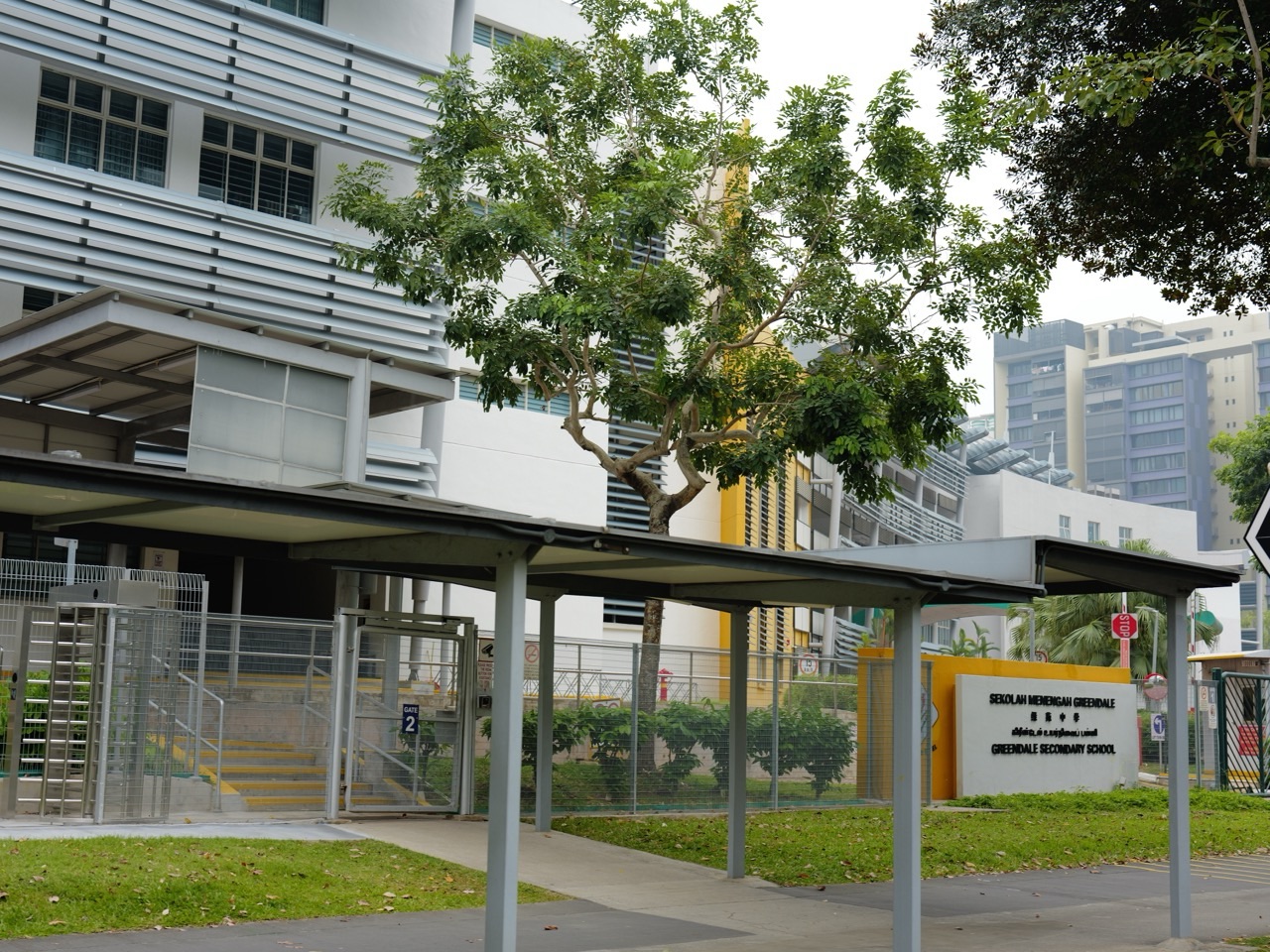
Did you know? Greendale Secondary School in Punggol placed third in the inaugural national secondary-school Kuiz Cepat Tepat 2.0 Malay language and culture quiz in 2026. The programme attracted 220 students from 44 secondary schools. Ang Mo Kio Secondary won, with Yishun Town Secondary second and Greendale Secondary third. This is a useful local achievement for families thinking about 2027: Malay can be learned through reading, cultural inquiry, teamwork and clear decisions under time pressure—not only by memorising answers for a written paper.
Quick answer: The results are historical 2026 facts, not a confirmed 2027 competition timetable. The official MLLPC report dated 24 June 2026 describes the participation and format; its 31 August 2026 result confirms Ang Mo Kio Secondary as champion. Berita Harian’s 30 August report identifies Greendale as third. Punggol students can apply the same principle—accurate understanding first, speed second—whether or not a new round is organised.
Greendale Secondary’s official contact information places it at 51 Edgedale Plains, Singapore 828866. A national competition result and a local address are verifiable; what is not established is whether Greendale will select a 2027 team, what membership criteria it might use, or whether any private tuition centre has a right to recruit participants.
A verified result that belongs in Punggol’s education story
MLLPC and Mediacorp developed Kuiz Cepat Tepat 2.0 as a Malay-language quiz for secondary students. The initial 2026 event brought together 44 schools with five participating students each, making 220 competitors. Eight schools, involving 40 students, advanced to the semi-finals, and four reached the final stage.
MLLPC says the semi-finals were streamed on 27 June 2026, while the televised finals were aired on 30 August 2026 on Suria and meWATCH. The winners were announced in August. The outcome gives Punggol families a concrete example of students using language and cultural knowledge in a public, fast-paced setting.
The reported final placings were Ang Mo Kio Secondary first, Yishun Town Secondary second and Greendale Secondary third. Berita Harian reported book vouchers for the 2026 finalists, with $300 for each winning-team member, $200 for each runner-up member and $100 for each third-place member. These figures describe historic 2026 awards; they are not a 2027 prize promise.
Why the word ‘speed’ is not the whole point
A timed quiz may reward fast recall, but speed without accurate meaning is fragile. A student can identify a familiar term very quickly and still misunderstand its use in a sentence. Another may know a historical name but attach it to an event from the wrong era. Productive preparation begins with correct knowledge and then trains access to that knowledge under realistic conditions.
Ask two questions after every practice response: ‘Was it correct?’ and ‘Why is it correct?’ If the student cannot explain, the response may have been a guess or a memorised cue. A thoughtful review distinguishes a lucky answer from dependable understanding.
MLLPC describes the competition as supporting creative and critical thinking, along with interest in language, literature and culture beyond the classroom. These are broad educational goals, not proof that one quiz improves every participant’s SEC grades.
Four different kinds of questions a school quiz can inspire
Vocabulary in context
Rather than naming an isolated word, ask students to select the meaning of a phrase within a short situation. Then change one detail to see whether the same answer still fits. This builds sensitivity to meaning, register and nuance.
Language structure
Give an original short sentence containing a contextual or grammatical challenge appropriate for the learners’ level. Ask what makes one expression suitable and another misleading. Check answers against a qualified teacher or approved language resource.
Cultural knowledge
Discuss a documented Malay cultural practice, literary form or historical figure. The student should be able to identify what an authoritative source actually establishes, instead of repeating an appealing but unsupported legend.
Literary interpretation
Use a brief original passage and ask which line supports an inference about a character’s choice. The best answer is not always the most dramatic one. Strong readers can point to the evidence and identify limits to what can be concluded.
These are proposed learning categories, not a reconstruction of confidential or officially published Kuiz Cepat Tepat 2.0 questions. A family need not pretend to know the real question bank to practise useful skills.
Original quiz example 1: a factual claim versus a plausible guess
Ask a group to judge two statements: ‘Greendale Secondary is in Punggol’ and ‘Every Greendale student participates in Kuiz Cepat Tepat’. The first is supported by the school’s location; the second is not established by a five-person competition team. Invite the pupils to explain why a school’s achievement cannot automatically be generalised to every child.
Next change the question: ‘Did Greendale Secondary finish third in 2026?’ Students can verify it using the Berita Harian report. Then ask, ‘Will the school finish third in 2027?’ The right answer is that the future result is unknown. This teaches an essential distinction between documented past performance and speculation.
The exercise also trains the ability to say ‘I do not know yet’ rather than confidently invent an answer.
Original quiz example 2: the difference between a word and a claim
Suppose a student knows a Malay proverb describing cooperation. In a fictional scenario, two friends work on a poster, but only one performs the work. The team must decide whether a proverb about mutual support truly describes the situation. Instead of rewarding speed alone, ask the player to justify the relationship.
Now modify the story so both friends contribute different skills and help each other. The proverb is more appropriate. A change in context changes the quality of the answer. This is semantic reasoning—the skill of selecting language for the situation.
For culturally precise proverb use, a learner should consult a relevant Malay teacher or authoritative reference, especially when an expression has subtle conditions. A fast online translation may capture words without the appropriate connotation.
Original quiz example 3: a historical timeline
Offer a simple exercise with three verified events from a school’s or neighbourhood’s official history and ask pupils to place them in chronological order. Learners must identify the source and date of each event before racing to arrange cards.
A Punggol class might use Greendale Secondary’s official school history, which describes the school’s first Secondary 1 intake in January 2006. Ask pupils what the record actually states and what additional evidence would be needed to describe earlier local education.
This exercise builds historical thinking while remaining a language task. Students can explain the sequence in their own words and compare whether a source is a firsthand record, an official retrospective or an informal story.
The 2026 competition timeline, without inventing 2027 registration
- 27 March 2026: an official programme page lists a briefing session.
- Early April 2026: published registration information from MLLPC contains differing deadlines—one programme page lists 10 April, while a past-event summary references 3 April. These were 2026 notices, not 2027 instructions.
- 24 June 2026: MLLPC reported participation of 220 students from 44 schools, and progress to the semi-finals.
- 27 June 2026: semi-finals were streamed online.
- 30 August 2026: final broadcast aired on Suria and meWATCH, according to MLLPC.
- 31 August 2026: MLLPC published the winning-school announcement.
The deadline discrepancy is a useful lesson. When two pages from the same organiser present different historic registration dates, a future applicant should not silently select one. They should consult a current official notice and the responsible school or organiser. A 2026 application form does not establish entry to a competition in 2027.
Greendale’s third place: what can and cannot be inferred
The 2026 placement indicates that Greendale Secondary’s five-person team performed well in a national competition. It does not reveal every student’s Malay proficiency, the school’s overall examination results, or whether its programme can be replicated by another institution. It also does not establish that a child entering Greendale in 2027 will be selected.
Families comparing secondary schools should consider school ethos, learning opportunities, accessibility, subject offerings and the child’s needs. One award is a positive data point rather than a complete school ranking.
The local achievement is worth recognising for what it really is: a group of Punggol students participating competitively in Malay language and cultural learning at national level. That has educational value without exaggeration.
What Punggol schools and families can learn about teamwork
In a five-person team, one student may have stronger literary knowledge, another may recall cultural facts quickly, and a third may excel at listening carefully to a difficult question. A team must balance speed against the risk of interrupting, second-guessing or answering before the whole question is understood.
A useful training routine lets members explain their reasoning before adding time pressure. Later, students may practise fast, accurate decisions with clear rules for turn-taking. The educational goal includes cooperation under pressure rather than treating one quick speaker as the whole team.
A four-week home or small-group quiz plan
Week 1 — Build a trustworthy knowledge bank
Use age-appropriate Malay reading, school-approved resources and relevant factual references. Ask each learner to make a small set of original questions with source notes, not copy paid or confidential question banks.
Week 2 — Learn to justify
For every answer, ask for a brief reason. Categorise mistakes: misunderstanding of the question, missing background knowledge, confusing two similar terms, incorrect inference or rushed recall.
Week 3 — Introduce modest time limits
Only after a student understands the material should the group attempt shorter response times. Emphasise listening until the question is complete, then answering clearly.
Week 4 — Test unfamiliar contexts
Give different questions covering similar concepts. Ask students to explain when evidence is insufficient or a word has more than one meaning. The group can discuss which mistakes were reduced without turning a friendly activity into a stressful daily exam.
This four-week schedule is an original instructional suggestion, not an official MLLPC bootcamp. A teenager already balancing assessments and CCA may need shorter sessions and plenty of rest.
What to do when the child gives a wrong answer
Avoid calling the student careless without inspecting the cause. Ask what they heard, which words triggered the response and what evidence they used. A mistake based on a misheard question needs a different response from one caused by missing factual knowledge.
If a student understands the concept but loses accuracy under a timer, reduce pressure temporarily and restore speed after consistency improves. If they can recall a definition but cannot apply it to a changed example, teach the underlying meaning.
A learner’s progress is more convincing when the correct response appears again in a fresh setting without hints, not just immediately after an adult supplies the answer.
Where to find reliable Malay-language and culture material
The MLLPC Resources page collects Malay reading publications and educational material. Students can supplement these with appropriately selected school resources and books from the National Library Board. When preparing historical questions, use school or archival sources that clearly state dates and context.
For learners interested in writing rather than rapid quizzing, the same committee features Karya Kreatif and youth literary opportunities. Different activities develop complementary skills: knowledge retrieval, speaking, careful reading, composition and cultural participation.
A 2027 school enquiry checklist
- Has MLLPC announced another secondary-school Malay quiz in 2027, and where are the dated current rules?
- Does my child’s school plan to participate, and which teacher or coordinator is responsible?
- What are the valid registration dates, eligibility conditions and nominated team size?
- Are there school selection activities, and what qualities do they actually assess?
- What learning materials are recommended by the school, rather than advertised as compulsory by a private seller?
- How do safeguarding, media consent, transport and student workload affect participation?
- What opportunities exist for learners who are interested but are not selected for a national team?
Do not pay for a course claiming guaranteed selection or access to an official question bank. Competition organisers and schools control participation, and no private lesson can create that entitlement.
A meaningful home conversation after watching a quiz
If a family watches a historical 2026 episode through an authorised broadcaster’s archive, ask three questions afterwards: Which answer surprised you? What evidence would verify it? What did the team do when uncertain? The questions shift attention from applause and prizes to reasoning and learning.
A student can take a new word or idea from the programme and explore it in a short story or nonfiction article. This turns momentary excitement into a sustainable language habit without replicating any protected game-show content.
Why the result matters to future Punggol learners
A national quiz is only one kind of language opportunity. Its wider message is that Malay knowledge can be applied publicly: to understand culture, respond accurately, work in teams and reason under uncertainty. Students who never join the programme can still learn those skills in school, family discussions or a modest study group.
The most constructive question for 2027 is not ‘How can my child win this title?’ It is ‘How can my child become more curious, better informed and more capable of explaining why an answer is true?’
Frequently asked questions
Did Greendale Secondary finish third at Kuiz Cepat Tepat 2.0 in 2026?
Yes. Berita Harian’s August 2026 final report identifies Greendale Secondary as third, after Ang Mo Kio Secondary and Yishun Town Secondary.
How many schools and participants took part?
MLLPC’s June 2026 report states 220 students from 44 secondary schools, with eight schools advancing to the semi-finals.
Will a 2027 edition definitely be held?
The official sources cited concern 2026. A future edition, schedule and registration process are not established by them. Check current MLLPC announcements and the school.
Can any Punggol teenager register independently?
Do not assume so. The 2026 material describes secondary-school participation; any future application must follow the organiser’s and school’s published eligibility and nomination rules.
Does a quiz trophy guarantee higher SEC Malay marks?
No. It reflects a competitive event, not a national examination score or automatic university admission.
Are the practice questions in this article official?
No. They are original educational examples about evidence, language and historical reasoning, not reconstructed or leaked competition questions.
Sources and Punggol reading
Official reporting: MLLPC — 44 schools and 220 participants, MLLPC — Ang Mo Kio Secondary champion, and 2026 programme and historic dates. Final placements: Berita Harian, 30 August 2026. Local school location: Greendale Secondary School. Related: Yusof Ishak Secondary’s choral-recitation results.
Sources checked on 27 October 2026. Historic 2026 results and deadlines are separated from future possibilities. Teaching examples are independent; competition selection, participation and 2027 terms must be verified with the current organiser.


