
Singapore Citizens aged 40 and above can use the SkillsFuture Level-Up Programme to help pay for eligible substantial retraining, but its different benefits do not all work in the same way. The S$4,000 SkillsFuture Credit (Mid-Career) offsets out-of-pocket fees for selected eligible courses and does not expire. The separate SkillsFuture Mid-Career Training Allowance can provide eligible full-time trainees with 50% of their past average monthly income, between S$300 and S$3,000 per month, or eligible part-time trainees with a flat S$300 per month. Full-time and part-time allowance use share a maximum of 24 months across the programme’s lifetime limit.
For a Punggol adult deciding whether to take an approved course in 2026, the fastest sequence is target job → genuine skills gap → eligible course → course subsidy → usable SkillsFuture Credit → training allowance eligibility → timetable and household budget → application → assessment and job search. A credit balance is not bank cash, a monthly allowance is not automatically paid to everyone who signs up, and finishing a course is not a guaranteed job offer.
The official SkillsFuture Level-Up Programme was updated on 1 July 2026, following the formation of the Skills and Workforce Development Agency (SWDA) from SkillsFuture Singapore and Workforce Singapore. This guide explains the separate layers of help as of October 2026, rather than promoting a particular course provider.
The immediate SkillsFuture Level-Up answer
| Benefit | Who it is mainly for | Amount and real limitation |
|---|---|---|
| Opening SkillsFuture Credit | Singapore Citizens aged 25 and above | S$500 base credit, non-expiring; eligible MySkillsFuture courses |
| SkillsFuture Credit (Mid-Career) | Singapore Citizens aged 40 and above | S$4,000 top-up; non-expiring; only selected courses |
| Full-time Mid-Career Training Allowance | Qualifying Singapore Citizens aged 40+ with recent earned income taking selected full-time long-form training | 50% of average monthly income, minimum S$300, maximum S$3,000 |
| Part-time Mid-Career Training Allowance | Qualifying Singapore Citizens aged 40+ with recent earned income taking selected part-time long-form training | Flat S$300 per month from 2026 |
| Combined allowance duration | Same eligible learner | Maximum 24 months for the mid-career training allowance |
| Enhanced course-fee subsidy | Qualifying mid-career learners on approved programmes | Subsidy varies by course and institution; some reach 90% |
| SkillsFuture Career Transition Programme | Relevant adults planning a career switch | Training and career support on eligible programmes, not a guaranteed placement |
| Workfare Skills Support Level-Up | Qualifying lower-wage workers aged 30+ under separate rules | Different income and age tests; allowance months may overlap limits at age 40+ |
| Application route | Actual learner | Official MySkillsFuture course page and Training Allowance application |
| Employment outcome | Depends on employer and person | No automatic salary, promotion or job offer |
This comparison draws on the SWDA SkillsFuture Credit page, the Level-Up programme and the Training Allowance FAQ.
One-sentence definition: what is the Level-Up Programme?
The SkillsFuture Level-Up Programme is a package of course-fee and income-support measures that helps qualifying Singaporeans aged 40 and above pursue substantial upskilling or reskilling.
It is not one course, one tuition centre, one employee benefit or one government cash payment. Its key elements are additional course-fee support and the mid-career training allowance for selected longer programmes.
A person may be eligible for the S$4,000 credit but not the training allowance for a particular short course. Another person may already have spent some of the credit while remaining eligible to apply for allowance for a later qualifying long programme, subject to remaining duration and other criteria.
This distinction is especially important when course advertising bundles several government logos into one impressive headline without explaining each qualifying test.
Before paying, ask the provider to identify the exact course listing, subsidy, credit tier and separate allowance eligibility, each supported by the appropriate official page.
Why Punggol is part of the story without having a separate subsidy
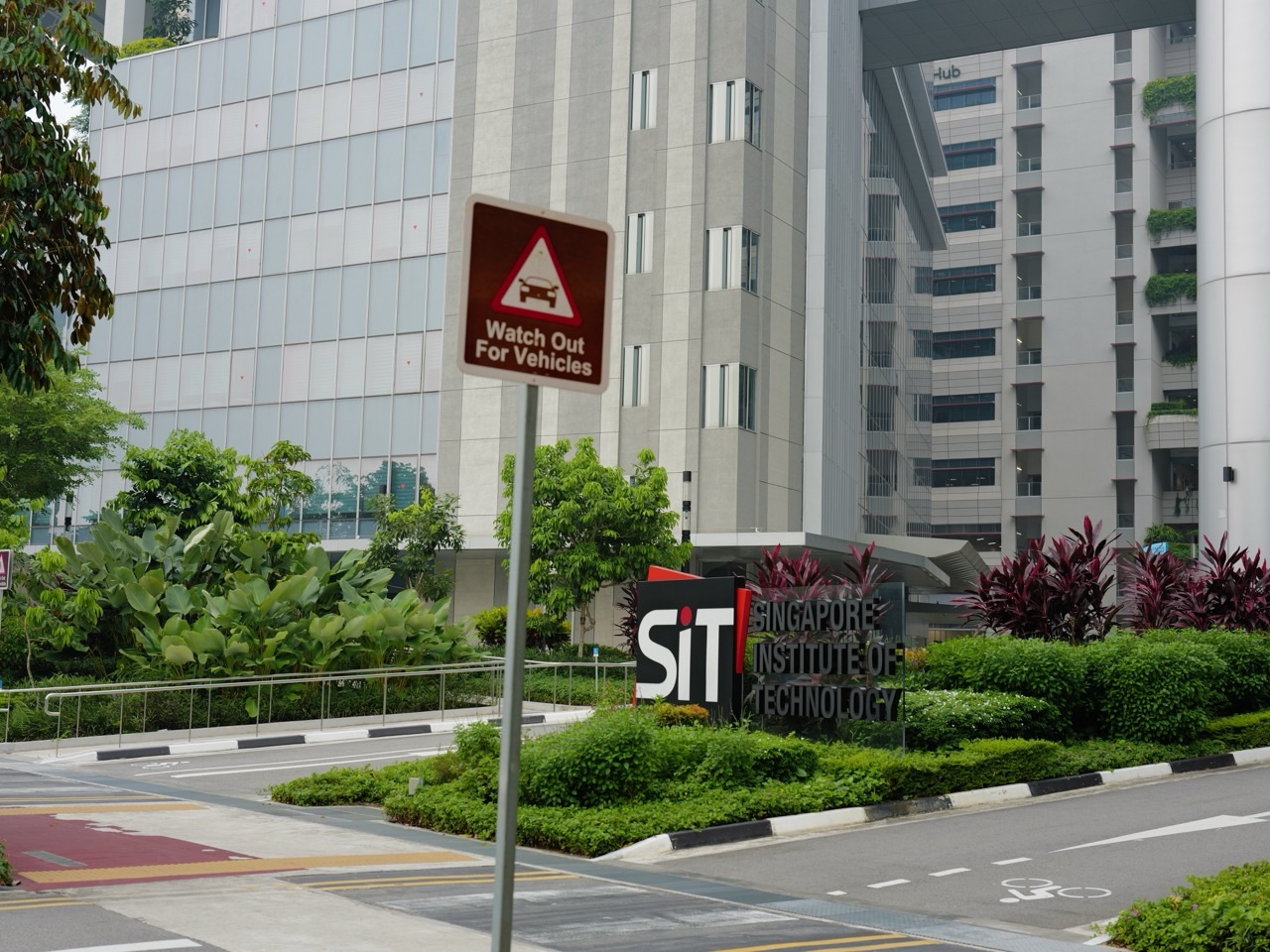
Punggol residents may work in retail, food services, facilities, office operations, community care or professional roles. The growing industry-and-education environment around Punggol Digital District and Singapore Institute of Technology provides a local reason to think about continuing education, but there is no Punggol-only SkillsFuture Credit account.
JTC’s Punggol Digital District describes an industry-and-university ecosystem. It does not mean a resident automatically qualifies for every SIT course, or that every district employer is hiring graduates of a specific training programme.
Some useful courses may be offered online, on the SIT campus, at a polytechnic, at ITE or elsewhere in Singapore. The proper comparison concerns the approved training programme, mode, actual dates and career value, not simply whether its location includes the word Punggol.
A short walk from home can help with attendance, but an unsuitable course near home can still waste money. A farther programme with a real qualification and relevant job requirements may be worth considering.
Use local convenience as one input after determining whether the course addresses a legitimate skills gap.
Check the two SkillsFuture Credit tiers separately
The current SkillsFuture Credit guidance identifies two tiers.
The Base Tier is an opening credit of S$500 for eligible Singapore Citizens aged 25 and above. It does not expire and can be used for a broad range of courses listed as eligible on MySkillsFuture.
The Mid-Career Tier is a S$4,000 top-up for eligible Singapore Citizens aged 40 and above, also non-expiring, but available only for selected training with intended employability outcomes. It cannot be assumed usable for every workshop, language class or hobby course that accepts the S$500 base tier.
This means a learner’s total displayed credit can consist of different accounts with different permitted uses. Do not look at the sum alone and assume the entire balance may be applied to an arbitrary course.
Check the actual course’s funding eligibility before planning a fee payment. An official listing is more reliable than a commercial flyer showing only a SkillsFuture logo.
The S$4,000 top-up did not make the older balance expire
The current SkillsFuture Level-Up FAQ explains that the previous Additional SkillsFuture Credit (Mid-Career Support) granted in 2020 originally had a planned expiry at the end of 2025.
That expiry was lifted, and the remaining old balance was combined with the new S$4,000 SkillsFuture Credit (Mid-Career) account from 1 May 2024.
For example, if a person previously had S$500 of the 2020 mid-career support and had used S$300, the remaining S$200 was merged into the new mid-career credit account. The resulting usable balance depends on the person’s subsequent claims, not an assumed flat S$4,200 in every account today.
Do not add the old S$500 as a universal extra top-up for every new 40-year-old, or tell people that the S$4,000 must be spent before December 2026. The current official source describes the new credit as non-expiring.
The actual remaining amount should be checked inside the learner’s authenticated MySkillsFuture account.
What courses can use the S$4,000 mid-career credit?
The official SWDA SkillsFuture Credit page identifies selected courses such as Institute of Higher Learning full qualifications and stackable modules, SkillsFuture Career Transition Programmes, certain Arts Institution qualifications, Progressive Wage Model training and Workplace Literacy and Numeracy courses.
This is a category description rather than a promise that every programme offered by a university or training business is eligible. Each course must be confirmed using the actual official listing and funding attributes.
A short public lecture about AI may be interesting but not necessarily eligible for the S$4,000 account. A selected structured programme building toward a recognised qualification may qualify while another course of similar duration does not.
If a course is offered at SIT or another university, check whether the precise programme and intake are subsidised and recognised for the intended credit, rather than inferring eligibility from the institution’s name.
A clear provider should be able to show the official course entry and explain which credit component may be used against fees.
Fee subsidy, credit and training allowance solve different problems
A course-fee subsidy reduces the fee you need to pay. SkillsFuture Credit offsets remaining eligible out-of-pocket course fees. A training allowance helps with the income or incidental cost of participating in selected longer training.
These are three distinct mechanisms. They may interact, but do not call them three cash grants or assume each is paid into the trainee’s bank account.
Suppose a hypothetical approved course has a published unsubsidised fee of S$8,000, and the learner qualifies for a 75% course-fee subsidy, leaving S$2,000 before other applicable charges. If the course and account qualify, SkillsFuture Credit might cover some or all of that remaining eligible S$2,000.
The fact that the learner has S$4,000 mid-career credit does not mean they can withdraw S$4,000 cash or receive S$2,000 change from that particular S$2,000 fee.
Any separate monthly training allowance is assessed through its own eligibility system, training dates and verification of activity.
Worked example: understand the actual fee payable
Consider a fictional Punggol resident aged 44 considering a qualifying training programme. The list fee is S$6,000, the person’s approved course subsidy covers 70%, and the residual fee is 30%.
The residual fee is S$6,000 × 0.30 = S$1,800 before any additional fees, taxes or different rules. If the learner has at least S$1,800 of usable credit for that course, they may be able to apply credit toward eligible out-of-pocket fees.
The learner should ask for an itemised fee schedule showing the published fee, specific funding decision, GST treatment, instalments and remaining credit balance. Those facts cannot be inferred from the advertisement alone.
If the student drops out or fails to meet training conditions, refund, clawback or attendance rules may matter. A credit claim does not automatically insure the entire investment against every circumstance.
The S$6,000 fee and 70% subsidy are invented solely to teach the calculation. No course provider, SIT programme or published 2026 fee is being represented.
A 40-year-old and a 39-year-old may face different funding routes
The standard S$4,000 SkillsFuture Credit (Mid-Career) and Mid-Career Training Allowance are aimed at Singapore Citizens aged 40 and above.
A 39-year-old employee should not assume they already have the mid-career credit merely because they will turn 40 later, without checking the official year-of-birth and award rules. The opening S$500 credit has a different age-25 starting condition.
The person aged 39 may still have access to other eligible SkillsFuture course subsidies, a base credit and perhaps Workfare Skills Support if they meet its separate lower-wage and age criteria.
A person who turns 40 during a qualifying programme needs to check the relevant qualifying period or semester rule. The official Level-Up FAQ describes certain subsidy treatment for course semesters commencing in the year the person turns 40.
Do not mix course-fee subsidy eligibility with allowance eligibility without examining both sources. A learner’s date of birth alone does not decide every programme condition.
The full-time Training Allowance: 50% of average income
For qualifying Singapore Citizens aged 40 and above who undertake approved full-time long-form training, the official Mid-Career Training Allowance FAQ describes 50% of average monthly earned income, calculated using government records for the most recent twelve months before the course begins.
The allowance has a published minimum of S$300 and maximum of S$3,000 per month, subject to having the requisite recent earned-income record and meeting all programme conditions.
It is intended to partly offset income forgone while pursuing training. It is not a promise that a person earning S$6,000 monthly will receive the full S$6,000 while attending class.
A learner without recent earned income should not assume the minimum S$300 applies automatically. The official programme states that relevant earned income in the latest twelve months is needed for the allowance.
The government uses the applicable records and approval procedure. An individual’s estimate from gross bank deposits is only a budgeting exercise, not the official training allowance determination.
Worked example: full-time retraining after S$3,200 income
Imagine an invented Punggol employee aged 46 with an officially recognised preceding twelve-month average monthly earned income of S$3,200, who is approved for an eligible full-time training programme and meets all other requirements.
The 50% calculation is S$3,200 × 0.50 = S$1,600 per month. Because S$1,600 lies between the S$300 minimum and S$3,000 maximum, that is the simplified illustrative monthly allowance.
If the training is approved for six eligible paid months, the simple arithmetic is 6 × S$1,600 = S$9,600 of potential allowance across those months, subject to actual payment, attendance and programme rules.
This is not guaranteed before an application is assessed. Nor does S$1,600 necessarily replace all the worker’s previous wages, CPF arrangements, insurance or household budget.
The example shows why a mid-career adult should prepare a real financial transition plan instead of using the headline S$3,000 maximum for every course.
Worked example: income above the cap
Suppose a different hypothetical qualifying candidate has average monthly earned income of S$8,000 in the relevant twelve months.
Fifty percent would be S$4,000, but the ordinary full-time allowance is capped at S$3,000 per month. The simplified possible amount is therefore S$3,000, not S$4,000.
If the person previously earned S$8,000, accepting full-time training may still create a substantial income gap. The S$3,000 cap is designed as partial support, not income insurance for every former salary.
Do not conclude that the learner should therefore take the course or should reject it. The decision depends on career opportunity, training quality, employment status and household commitments.
A training provider must not advertise that every eligible participant receives S$3,000 merely because the maximum exists. Government-record income and other conditions determine the actual assessment.
Part-time Training Allowance started in 2026
For selected part-time long-form programmes, the SkillsFuture Mid-Career Training Allowance began supporting eligible learners from 1 March 2026, with applications opening 9 February 2026.
The part-time rate is a flat S$300 per month rather than half of the worker’s actual salary. It is intended to help with incidental costs such as learning materials and commuting while the learner continues working.
The part-time route requires the learner to meet relevant eligibility, including recent earned income, and attend a listed qualifying programme. A three-hour weekend hobby class does not automatically qualify for the monthly allowance.
The 1 July 2026 Level-Up information and training allowance FAQ set out the current scheme.
Do not confuse a monthly training allowance with SkillsFuture Credit being used to pay course fees. The person may qualify for one, both or neither depending on the precise course and circumstances.
Worked example: a part-time course with commuting costs
A fictional Punggol adult continues a weekday office job while pursuing a part-time qualification that requires eight in-person sessions per month. Suppose they meet the programme’s eligibility and are approved for the S$300 part-time allowance.
Imagine their actual monthly additional costs are S$80 for transport, S$60 for suitable learning materials and S$45 for meals associated with longer training days. Those invented costs total S$185, leaving an illustrative S$115 after these selected expenses.
But that S$115 is not the full net benefit of training. The person still invests substantial personal time, may pay some unreimbursed course fees, and may have family-care or opportunity costs.
A fixed S$300 allowance cannot reasonably be described as a new salary. It is limited training-related support for a specified time period.
The example reminds a learner to plan a sustainable weekly schedule rather than enrol because the monthly government figure sounds appealing.
The 24-month cap is shared between full-time and part-time allowances
The programme provides a maximum of 24 months of Mid-Career Training Allowance to a qualifying person across eligible participation. Changing from full-time to part-time training does not automatically reset the clock.
For example, a fictional person who has already received eight months of approved full-time allowance would have, in simple arithmetic, up to sixteen months of remaining allowance entitlement within the lifetime limit, subject to programme and course eligibility.
Do not assume a learner can receive 24 months at the maximum S$3,000 rate and then another 24 months at S$300 merely because the course modes differ.
Some people aged 40 and above can also be eligible under Workfare Skills Support Level-Up; the official rules state that the relevant age-40-plus allowance duration is shared across the schemes.
Record approved allowance months, not simply course duration in a prospectus. A course’s teaching period and the months approved for allowance may differ under the specific programme.
Full-time and part-time training solve different household problems
A full-time course may permit intensive retraining, but can involve leaving or reducing paid work. Part-time learning may preserve employment income, but requires evening, weekend or other study time and can affect family responsibilities.
For a Punggol parent, consider school collection, meals, homework supervision and whether another adult has genuinely agreed to cover the training hours. Do not assume a domestic worker, grandparent or neighbour will be available indefinitely without discussion.
For a shift worker, check the actual training timetable and attendance conditions. A course scheduled every Wednesday evening may conflict with rotating shifts even if the provider’s advertising says “part-time”.
Some programmes include industrial projects, assessments or onsite attendance that extend beyond teaching hours. Confirm these before committing.
The best mode is not automatically full-time because the headline allowance is higher. Compare actual learning value, income foregone, likelihood of completing the programme and next-job requirements.
Do not turn an interesting course into a career guarantee
SkillsFuture Career Transition Programmes support reskilling in fields with employment opportunities and can include career advisory and job-search assistance. That is not a contractual promise that a graduate will receive an offer from a named employer.
A person should ask the provider about assessment standards, who teaches, the qualification or credential awarded, relevant project work, job-search support, and what verified outcomes are available for previous comparable cohorts.
Avoid unsupported advertising claims such as “100% placement” without understanding definitions, cohorts, exclusions and whether outcomes were independently verified.
One useful comparison is between the job’s mandatory skill requirements and what the course will teach to a demonstrable level. A broad AI-awareness seminar may be valuable but insufficient for a role requiring production software testing.
Our Punggol career-switch course selection guide owns the separate decision about how to evaluate course fit. This article focuses on official funding and allowance mechanics.
The SkillsFuture Mid-Career Enhanced Subsidy
The SkillsFuture Mid-Career Enhanced Subsidy page explains additional fee subsidies for eligible Singapore Citizens aged 40 and above.
Depending on the approved programme, support can reach up to 90% of eligible course fees or programme costs, with institution and course distinctions. Certain postgraduate programmes are eligible only if they are among the selected MOE-subsidised courses.
Do not assume 90% is guaranteed for every non-subsidised private course. The exact course, learner and prevailing funding policy determine the rate.
This subsidy can reduce fees before SkillsFuture Credit is applied to an eligible remaining amount. The credit and subsidy must not be double-counted as two separate reimbursements of the same expense.
Ask the provider for the final personalised fee assessment, not a marketing flyer with only the maximum percentage.
Public institutions can offer different eligible qualifications
The official programme identifies qualifying programmes from polytechnics, ITE, autonomous universities and relevant arts institutions. However, a given institution may offer many courses with different funding schemes.
For example, one short module may be stackable into a recognised qualification and eligible for mid-career credit, while an unrelated executive event at the same campus is not.
The applicant should examine whether the credential is a full qualification, a micro-credential leading toward a full qualification, a SkillsFuture Career Transition Programme or another eligible category.
The academic year, intake, course registration process and formal admission rules still apply. Possessing a credit account does not guarantee admission, exemption from entry qualifications or reserved seating.
Where a role involves regulated professional work, check the relevant licence or registration authority, not merely the institution’s brand and the training’s subsidy status.
SIT Punggol and lifelong learning opportunities
The Singapore Institute of Technology has an important physical presence in Punggol. Its continuing education arm, SITLEARN, offers a place to discover professional and lifelong learning programmes.
A Punggol resident may find that proximity helps attend a relevant course, but not every SITLEARN listing is necessarily taught on the Punggol campus or eligible for Mid-Career Training Allowance.
The learner should confirm exact programme title, intake, mode, site, eligibility and relevant official SkillsFuture funding designation. These can differ even between courses marketed under similar subject areas.
A course in data analytics, engineering or business should be measured against an actual job family and prerequisite skill level. The local campus makes the route visible, not automatic.
If the learning opportunity is worthwhile but part-time dates conflict with the worker’s shifts, investigate the official alternatives rather than falsifying attendance or ignoring employer duties.
How to check an eligible course correctly
Start at MySkillsFuture through its authentic official website. Search for the exact course, not simply the provider’s name. Open the course listing and read the funding eligibility attributes.
Check whether it accepts Opening Credit, Mid-Career Credit and/or Mid-Career Training Allowance, and whether the particular intake and delivery mode qualify. A course may be funded for one element but not another.
Read admission criteria, tuition schedule, course duration, assessment and attendance rules. Confirm the correct provider entity and dates with the institution through its official channels.
If a provider offers a course on a messaging app and asks you to transfer the S$4,000 balance to a private person to reserve a place, stop. SkillsFuture Credit is not a bank transfer to an unknown third-party agent.
Save the course listing details and written fee quotation. That evidence is useful if the advertised funding and the actual invoice do not match.
How to apply for training allowance
The official SkillsFuture Level-Up page directs learners to the Training Allowance application service through official government authentication.
Determine the eligible course and obtain the actual admission or enrolment information first. Then use the designated Training Allowance system to check personal eligibility and submit the application as required for the course.
For some qualifications or micro-credential arrangements, the official process may require separate applications for different approved modules or milestones. Follow the provider’s correct official instructions and the portal’s requirements.
Do not assume a course provider can guarantee government approval of your personal allowance. Funding decisions rely on government records, the qualifying programme and programme compliance.
Retain application and payment confirmations, and monitor official messages during training rather than relying only on a salesperson’s assurance.
The application deadline and course start matter
For SkillsFuture Credit claims and Training Allowance, the correct timing matters. A learner may need to apply before a course begins or within the official claim window rather than expecting unlimited retroactive reimbursement.
The SWDA training provider FAQ and MySkillsFuture information explain procedures for the current period and course type.
Do not rely on a 2024 forum post with an obsolete application date or a screenshot from another person’s account. Policies and portal steps can be updated.
If admission is still tentative, clarify whether you are eligible to apply yet and what happens if the institution changes the course start date.
Avoid paying an unverified private intermediary to “backdate” training or alter attendance. Genuine programme records are fundamental to lawful funding.
Attendance and progress are part of allowance compliance
Monthly training allowance is tied to eligible participation, not merely enrolling and then disappearing. The actual programme has attendance, assessment and progress requirements.
A worker studying part-time should plan how shift changes, examinations, transport and childcare will be managed. Ask the training provider how absence or deferred assessment affects a month’s allowance rather than inventing a blanket rule.
If a genuine medical or family emergency occurs, use the provider’s appropriate documented process. Do not falsify presence or ask someone to sign attendance on your behalf.
The provider and official scheme may review programme data as part of allowance assessment. Keep emails and authorised records relevant to your own course.
High-quality training is a career investment; rushing attendance merely to earn the S$300 monthly amount defeats that larger purpose.
What happens when a participant drops or changes courses?
A learner may discover that the course is too advanced, unsuitable or incompatible with household obligations. Before withdrawing, read the provider’s actual fee, withdrawal and refund terms as well as the funding programme’s rules.
A credit claim that has already been used may not be automatically restored in full. A training allowance linked to participation may stop or require correction if the person no longer satisfies the conditions.
Ask the provider how to formally record withdrawal or deferment, and whether the scheme needs a separate update. Keep the official response.
Do not treat a change of course as automatic eligibility for a fresh 24 months of allowance. Previously funded time remains relevant.
This is another reason to perform a skills audit and realistic schedule test before enrolling, rather than starting a long programme solely because funding is available.
Short workshops versus long-form training
A two-day digital productivity workshop can be useful and may be eligible for Opening SkillsFuture Credit, but it does not automatically qualify for the long-form Mid-Career Training Allowance.
The allowance is designed around selected substantial retraining programmes rather than a generic training certificate. Course categories and intended outcomes are defined by the official scheme.
A provider should state whether the course qualifies for the credit, enhanced subsidy or allowance instead of calling the entire package “fully SkillsFuture-funded”.
A person may choose short training as a targeted refresher when they already possess most required skills. A longer qualification may be necessary when moving into a materially different occupation.
The educational decision should follow employer requirements and professional readiness, not the largest headline grant amount.
Workfare Skills Support Level-Up is related but distinct
A lower-wage worker aged 30 and above may fall under the Workfare Skills Support (WSS) Level-Up scheme, launched in 2026, rather than the general age-40-plus Mid-Career route.
WSS Level-Up has separate income and eligibility criteria, training allowance rates, and lifetime periods. When an eligible worker reaches age 40, some allowance limits are shared with the general mid-career training allowance.
Do not assume the full two schemes can be stacked as two separate training allowances for the same period. The official WSS programme guidance explains the interaction.
Our dedicated Working in Punggol Workfare Skills Support Level-Up guide addresses this lower-wage training pathway in depth. It is a different question from whether a 42-year-old employee has S$4,000 of Mid-Career Credit.
Where multiple subsidies apply, ask the training provider to confirm the precise allowed combination and final fee, rather than assuming all maximums can be added together.
A Punggol household’s time-and-money calculation
Consider an invented Punggol parent earning S$3,400 monthly and considering full-time retraining. The person may qualify for an illustrative monthly allowance of S$1,700 under a simple 50% calculation, if government records and all programme requirements support it.
The household previously budgeted around the S$3,400 salary, with fixed expenses such as housing, food, utilities and caregiving. If the person temporarily stops earning that salary, the illustrative allowance covers only half of the previous monthly amount.
Now consider part-time training while continuing work. The possible S$300 allowance is much smaller but the employment income may continue. However, the participant may need several evenings weekly and perhaps Saturday assessments.
A simple financial comparison should calculate income that genuinely continues, possible approved allowance, fees payable after subsidies, commuting and family-care cost. Do not count a future unapproved allowance as cash already received.
A family may rationally choose a less generous-looking allowance route because it has a more sustainable schedule and lower income risk.
The role of career advice before spending credit
SWDA’s 2026 Level-Up programme page links to career and skills advisory services, a Careers & Skills Passport using verified government records, and digital career guidance resources.
These tools help a person take stock of skills and identify real areas for development. They are useful because many people know they want a better job but cannot yet name the skills that job genuinely requires.
Write a target role and compare three actual job descriptions. Identify what can already be demonstrated, what needs practice and which missing qualification is mandatory.
Then compare courses. A qualified adviser may help narrow the choice, but an actual employer still decides whether your credentials and experience meet its recruitment needs.
Career planning works better as a sequence of evidence than as shopping for certificates.
How to compare two eligible programmes
Suppose two invented courses both appear eligible for Mid-Career Credit.
Programme A is eight weeks of short task-based lessons that improve an existing spreadsheet skill. Programme B is nine months of deeper study leading to an approved recognised qualification and supported project work. A person already competent at advanced spreadsheets may gain more from B, while another employee only needing routine reporting could choose A.
But the training allowance eligibility can differ between them. A course accepting S$4,000 credit is not necessarily a qualifying allowance programme.
Compare course outcomes, assessments, hours, delivery location, employer relevance, opportunity cost and actual costs after funding. If A is a short course without training allowance, do not artificially add eight weeks of S$300 monthly payments.
The invented comparison illustrates why eligibility needs to be checked per funding mechanism and exact course, not inferred from subject matter.
The course’s teacher, assessment and transfer to work
A good course should help the learner perform work, not merely collect attendance. Check whether instructors explain methods clearly, assess relevant competence and offer practice in realistic problems.
For a digital data programme, look for proper data cleaning, validation and explanation of results. For administration, look for records, workflows and confidentiality. For technical trades, safety competence and relevant professional standards matter.
Ask what the final learner can actually produce, which assessment proves it, and how a future employer could check the skill without breaching confidentiality.
An approved qualification can be valuable but should not be mistaken for years of professional experience. A career switcher may still need supervised entry-level practice after graduation.
This is the difference between buying training and building employable capability.
A training plan that accounts for shift work
A Punggol food-service or retail employee may have an inconsistent roster. Before starting an eligible part-time course, obtain the actual weekly class schedule and examination dates.
Discuss with the employer whether shift swaps, advance rota notice or a suitable flexible-work arrangement are possible. Employer approval is not automatic; it depends on the role and applicable procedure.
If the person needs to attend class every Wednesday evening, a last-minute Monday-to-Sunday roster that repeatedly assigns Wednesday late shifts creates an obvious risk to programme completion.
Do not rely on hiding the course until repeated absences occur. Where a worker wants to balance both commitments, a clear practical conversation may help.
A course chosen to improve career security should not create an unnecessary disciplinary or financial problem through unreliable attendance.
For an older employee, the course can support role redesign
A Punggol worker aged 59 or 63 may want to remain in employment but shift from physically demanding duties to quality control, scheduling or mentoring.
Relevant skills training may help that transition when there is a real approved role and the training teaches a specific missing capability. However, a course does not automatically create the role or settle medical fitness, retirement or re-employment matters.
Our retirement and re-employment guide explains the separate statutory framework after the July 2026 age changes.
A genuine plan links the employee’s prior experience with a realistic new function and appropriate support, rather than suggesting that every older person should retrain in the same fashionable technology.
The Level-Up programme is a resource for the worker’s chosen career needs, not a mandatory retirement requirement.
What a training provider should explain transparently
A responsible provider should identify the exact legal provider entity, approved course code, intake, delivery mode, fees, applicable subsidies, credit eligibility, training allowance qualification, assessment standards and refund conditions.
The provider must not imply that the learner can cash out unused S$4,000 credit, guarantee a S$3,000 allowance regardless of prior income, or automatically produce a job offer from a Punggol employer.
Ask for a final written itemisation of the subsidised course fee payable and which funding steps the individual must personally submit. A brochure may show the maximum available to someone else, while your personal fee and allowance differ.
If the provider advertises employer placement statistics, ask for definitions, relevant cohort dates and what was independently verified.
Clear terms protect both learners and reputable training organisations from misunderstandings.
Avoid SkillsFuture refund and grant scams
Government training credit provides a tempting brand for fraudsters. A message may claim that your credit is about to expire today, that someone can withdraw the balance into cash, or that you must transfer a “processing deposit” to secure an allowance.
The current S$4,000 mid-career credit does not expire. A fake urgency message contradicting that fact should be treated cautiously.
Start through MySkillsFuture or another independently verified official government site. Do not give a stranger your Singpass password, one-time password or bank login.
Verify a supposed training provider through its authentic official channels. A copied SkillsFuture logo and a real school name do not establish that the person messaging you is authorised.
If something appears suspicious, the public ScamShield resource provides Singapore-specific prevention and assistance information.
A twelve-week decision and enrolment plan
Weeks 1–2: identify two realistic next-job families and the genuine qualifications each requires. Write down actual evidence you already have and the gap you want training to close.
Weeks 3–4: search the official course directory and compare exact approved programme listings. Distinguish Mid-Career Credit, course subsidy and Training Allowance eligibility.
Weeks 5–6: check the fee after subsidy and usable credit. Obtain the correct course schedule and compare it with work, commuting, childcare and rest requirements.
Weeks 7–8: seek career advice where useful and confirm that the programme’s assessment and work outcomes match the target role.
Weeks 9–10: complete official enrolment and any permitted SkillsFuture Credit and Training Allowance application steps according to the relevant deadlines.
Weeks 11–12: prepare the learning environment, attendance arrangements and a simple weekly progress record. Confirm what must be done to maintain eligibility and complete the course.
The twelve-week timeline is an editorial planning tool, not a guarantee of admission, a fixed application window or a government requirement to spend three months preparing.
One-page eligibility worksheet
| Field | What to record | Why it matters |
|---|---|---|
| Citizenship | Actual status | Most listed Level-Up benefits are for eligible Singapore Citizens |
| Age and qualifying year | Date of birth and programme-specific criteria | S$500 base versus S$4,000 mid-career eligibility |
| Recent earned income | Government-recognised prior twelve-month history | Training Allowance assessment |
| Target occupation | Real job family and requirements | Prevents irrelevant course purchases |
| Course listing | Exact provider, code and intake | Funding varies by course |
| Course mode | Full-time or part-time | Allowance calculation and schedule |
| Course-fee subsidy | Actual approved percentage | Reduces out-of-pocket fee |
| Usable credit | Base and Mid-Career balances separately | Not all balances work on all courses |
| Allowance months used | Previous approved participation | 24-month cap |
| Work and care commitments | Real weekly obligations | Completion feasibility |
| Assessment | Projects, exams and attendance | Evidence of transferable competence |
| Actual fee and refund terms | Written final cost | Financial risk control |
Keep the worksheet private when it contains personal financial data. Use authentic government services for formal assessment.
What goes wrong most often?
Mixing credit and cash: telling a person they can withdraw S$4,000 into a bank account is wrong. It is a course-fee credit.
Assuming a course qualifies for every support: an Opening Credit course may not be eligible for Mid-Career Credit or Training Allowance.
Using the maximum allowance as a personal promise: S$3,000 is a cap, not everyone’s approved monthly amount.
Ignoring prior-income requirements: a person without relevant recent earned income should not assume the full-time minimum is automatically payable.
Double-counting allowance months: a learner does not receive separate twenty-four-month pots simply by alternating part-time and full-time training.
Ignoring household and employer realities: a course that cannot be attended consistently can create financial loss even when generously subsidised.
Assuming graduation guarantees hiring: training and employer recruitment are separate decisions.
Frequently asked questions
Who receives the S$4,000 SkillsFuture Credit?
Eligible Singapore Citizens aged 40 and above, subject to the official mid-career scheme rules and account records.
Does the S$4,000 credit expire at the end of 2026?
No. The current official SkillsFuture Credit (Mid-Career) is non-expiring.
Is the S$500 opening credit separate?
Yes. Eligible Singapore Citizens aged 25 and above have an opening credit of S$500 for a broader set of eligible courses.
Can I withdraw the credit as cash?
No. It offsets eligible course fees, not a bank cash balance.
Can a 35-year-old use the mid-career credit?
The ordinary S$4,000 Mid-Career Credit starts at age 40 under the published conditions. Other course support may be available.
Does any SIT course qualify?
No. Check the exact course and intake’s funding eligibility rather than assuming every programme from a named institution is covered.
What is the full-time Mid-Career Training Allowance?
For eligible full-time long-form training, generally 50% of recognised prior average monthly income, subject to S$300 minimum and S$3,000 maximum.
What is the 2026 part-time allowance?
A flat S$300 per eligible month for approved part-time long-form training, under the current scheme.
When did part-time Training Allowance begin?
From 1 March 2026, with applications opening on 9 February 2026.
Does every course accepting credit also pay a monthly allowance?
No. The allowance has a separate list of eligible long-form programmes and personal qualifying criteria.
Can I receive twenty-four months of part-time allowance and twenty-four months of full-time allowance?
No. The published lifetime cap for the Mid-Career Training Allowance is 24 months across the modes.
What if I have Workfare Skills Support eligibility too?
Check the particular scheme; age-40-plus allowance limits can be shared and two allowances should not be assumed payable for the same training period.
Can I receive an allowance while keeping my current job?
The part-time route is designed for people continuing work while pursuing eligible part-time training. Its S$300 amount is not half the worker’s salary.
Is training at Punggol Digital District automatically eligible?
No. The location and industry theme do not establish course eligibility.
Does the programme guarantee a role after completion?
No. Check actual employment support and outcomes; employer hiring remains a separate process.
Should I pay an agent to secure the S$4,000 balance?
No. Use official channels, check the genuine provider and protect Singpass credentials.
Can I use both fee subsidies and credit?
They can apply in sequence where eligible: subsidy reduces the fee, and usable credit may offset the remaining eligible payable amount.
What if I already used the old 2020 mid-career credit?
Any remaining eligible old balance was merged into the current Mid-Career Credit. Check your actual account rather than assume the full historic amount remains.
Source ledger and practical limits
Verified for October 2026: S$500 Opening Credit from age 25, S$4,000 non-expiring Mid-Career Credit from age 40; selected course eligibility; full-time Training Allowance from S$300 to S$3,000 based on 50% prior income; S$300 part-time allowance introduced in March 2026; and the shared 24-month lifetime limit.
Illustrations: all household scenarios, S$6,000 course-fee computations and individual income examples are invented. They do not certify any person’s course or funding status. Actual programme eligibility, dates, fees and payment are governed by the official listing and application.
- SWDA: SkillsFuture Level-Up Programme
- SWDA: SkillsFuture Credit tiers
- MySkillsFuture: SkillsFuture Credit details
- MySkillsFuture: Level-Up FAQs
- SWDA: Training Allowance FAQ
- MySkillsFuture: Mid-Career Enhanced Subsidy
- MOM: Workfare Skills Support scheme
- SITLEARN: Courses for individuals
- MySkillsFuture: Official course directory
- Working in Punggol: How to choose a career-switch course
- Working in Punggol: Complete series archive
Continue Working in Punggol: related 2026 employment guides
Continue through the connected guides on training funding, sustainable work, scams and the policies behind employment in Punggol. See the complete Working in Punggol series archive for the full collection.


