
On 3 September 1994, The Straits Times reported that HDB had served eviction notices on three Punggol Point boatels: Awang Boat Sheds, Zainal Water Ski Centre and Marina View. The notices capture a critical transition moment when the old waterfront was already being reorganised for a different future, yet operators were still responsible for customers’ boats and ongoing marine services.
For readers searching Punggol boatel eviction notices 1994, Awang Boat Sheds, Zainal Water Ski Centre or Marina View Punggol, the precise verb matters. A notice records an administrative step. It does not prove every business was physically removed that day or that every boat left immediately.
Did you know? the same report referred to five boatels at Punggol Point while naming three establishments that had received notices. The existence of five businesses and three named notices should not be silently collapsed into “all five were evicted at once”.
The Crazy-Rich Idea: Redevelopment Has a Human Operations Layer
Land can be cleared on paper faster than service obligations disappear in real life.
A boatel operator still had to think about:
- customers’ vessels;
- security;
- weather;
- access to the shore;
- temporary storage;
- family labour;
- new business arrangements.
A Notice Is Not the Same as Removal
An eviction notice identifies an authority, a recipient and an administrative moment.
Later sources are needed to establish when individual structures were demolished, when boats were moved and when each business stopped operating at the old site.
notice served ≠ site vacated ≠ structures demolished ≠ business ended.
Customer Boats Made the Transition More Complicated Than Moving a Shop
A restaurant can remove tables and equipment. A boatel may still hold customers’ vessels that need watching, access and maintenance.
This made the old waterfront transition an operations problem as much as a land-use problem.
Family Labour Helped Keep the Businesses Functioning During Uncertainty
Later historical accounts describe family members taking turns to watch boats after parts of the old facilities had already been lost.
That is evidence of continuity under pressure, not proof that the earlier business environment remained intact.
Five Boatels and Three Notices Must Stay Separate
Historical arithmetic needs careful labels.
The report’s broader count of five boatels describes the waterfront scene. The three named notices describe a specific administrative action.
The 1994 Notices Belong Before the 1996 Marina Opening
Punggol Marina later opened in 1996 with roots among former boatel operators.
That later institution should not be projected backward as though it was the same business receiving the 1994 notices.
For the later chapter, read Crazy Rich Punggol | Punggol Marina and the Luxury of Maritime Knowledge Surviving a Changing Coastline.
A Planning Lesson: New-Town Land Assembly Produces Uneven Timelines
Different households, firms and waterfront uses can leave at different moments even when they are all affected by the same broad redevelopment programme.
This is why a single “Punggol cleared in the 1990s” sentence is too crude for serious history.
A Business Lesson: Service Obligations Can Outlast the Premises
Customers may still expect care for property already entrusted to a business, even while that business is losing its site.
The boatel accounts make this responsibility visible.
An English Lesson: Every Historical Verb Needs Its Own Date
“Notified”, “vacated”, “demolished”, “moved”, “opened” and “closed” are not stylistic alternatives. They describe different events in a transition.
Evidence Boundaries
- The 3 September 1994 report names three boatels served with notices.
- The same reporting refers to five boatels in the wider waterfront scene.
- A notice does not prove immediate removal.
- Later Punggol Marina history is connected through people and maritime knowledge, not institutional identity.
Evidence Anchors
The crazy-rich Punggol lesson is that redevelopment is not one clean before-and-after photograph. The 1994 boatel notices show people still working, watching boats and managing obligations while the coastline was already being reassigned to a different future.
On 3 September 1994, The Straits Times reported that the Housing & Development Board had served eviction notices on three boatels at Punggol Point: Awang Boat Sheds, Zainal Water Ski Centre and Marina View. The headline marks an important moment in Punggol history. The kampong had largely been cleared, yet small businesses continued caring for pleasure boats along the old waterfront. The 1994 notices show how the transformation of an entire coast happened in stages, not with one sudden demolition.
If you are researching the history of Punggol Point, Punggol boatels, Awang Boat Sheds, Zainal Water Ski Centre or the redevelopment of the old coastline, this guide begins with what the contemporary report actually establishes. It then explains the boat-storage business, how families managed the transition, how to read the dated evidence and why the story should not be confused with the later Punggol Marina club.
The short answer: what happened in September 1994?
- Contemporary newspaper date: 3 September 1994, reporting an HDB statement issued the preceding day.
- Three named boatels served notices: Awang Boat Sheds, Zainal Water Ski Centre and Marina View.
- Separate count: the report refers to five boatels at Punggol Point; this does not mean all five received the same notices in the report.
- What a notice means: an announced enforcement or relocation step, not automatic proof every vessel and operator disappeared on the publication date.
- Longer context: most of Kampong Wak Sumang’s residents had relocated during the 1980s, but boat-care businesses remained for years.
- Source quality: the 1994 report is contemporary; later heritage writing adds testimony from people directly affected.
Why would Punggol have a ‘boatel’ in the first place?
A boatel was a waterfront business providing space and services for boat owners. Think of it as part boat-storage facility, part care and maintenance operation, rather than a land-based hotel for travellers. A client might live elsewhere in Singapore while their boat stayed at Punggol. Someone had to watch it, manage access, check on weather and look after equipment. That made a boatel a place of work, not merely a picturesque seaside stop.
Older Punggol supported fishermen, marine trades, waterskiing and pleasure-boating alongside restaurants and village homes. Each depended on access to the shore, but each had a different type of customer and a different business model. When the shoreline was earmarked for redevelopment, it was not enough simply to relocate a stall or a dining table. Boats, storage sheds, moorings and customer commitments had to be dealt with as well.
The three names in the 1994 news report
Awang Boat Sheds and Zainal Water Ski Centre were not generic labels invented years later. They appear in the contemporary 3 September report, alongside Marina View, as the three establishments receiving notices. Keep these names together when citing that specific event, and resist substituting the later Punggol Marina club as if it had been the organisation receiving the same notices.
There is a subtle but vital point about the word five. The news account mentioned five boatels at Punggol Point while specifying three notices. A careful history article cannot upgrade that into a statement that all five had been evicted at once. Nor can it assume that a notice produced immediate removal. The report is evidence of an administrative decision at a date; subsequent outcomes require subsequent evidence.
What was still happening on the coast after the kampong years?
The National Library Board’s research on Kampong Wak Sumang explains that boatel operators were among those who stayed near the water after most villagers had moved out. The continuing presence of these businesses matters. It demonstrates that a community does not vanish the instant a resettlement programme reaches its houses. Some livelihoods retain a physical connection to the sea long after residential streets and social networks have changed.
In the September 1994 reporting cited by BiblioAsia, Jimat Awang described arrangements with relatives to take turns watching clients’ boats. The family had lost substantial buildings on the site, including sleeping huts and storage, yet responsibility for boats remained. Zainal Jantan similarly described arrangements to watch dozens of boats, while other family members would return to a flat in Hougang. These accounts are testimony about particular operators, not a census of every boatel worker.
Boats outlasted buildings: a difficult kind of transition
Imagine the practical situation. An office or sleeping hut can be demolished on a specific day. A customer’s vessel still requires a berth and an accountable person; it cannot simply be abandoned. The operator must juggle changing access, physical security, customer notification, temporary shelter and new arrangements. That is why the history of Punggol’s boatels is a story of service obligations as well as land redevelopment.
It also reminds us that the word resettlement hides different experiences. A family moving home to a high-rise flat, a fisherman looking for a new landing place, and a boat-care business managing customers were all negotiating different consequences. Treating the entire coastline as one undifferentiated ‘old kampong’ loses that nuance.
A short chronology: 1980s to the 1990s
- Mid-1980s: the Kampong Wak Sumang residential landscape was dismantled as redevelopment progressed; oral-history and photographic documentation preserved aspects of village life.
- February 1992: a Straits Times report, cited in the National Heritage Board’s museum research, discussed a reprieve for Punggol Point restaurants and boatels until year-end.
- April 1994: contemporary reporting recorded an effort by Punggol boatel owners to establish a private club, evidence that some operators were searching for a workable future.
- 2–3 September 1994: an HDB statement and newspaper report established notices to the three named establishments.
- Later 1990s: Punggol’s planning and coastal land-use story continued to change; the later opening and operations of Punggol Marina belong to a separate chapter.
Why 1992, 1994 and 1996 must not be collapsed into one date
A common shortcut in local history is to say that everything ‘closed in the 1990s’. That sentence is too vague for a serious account. A 1992 extension is not a 1994 notice, and a 1994 notice is not the same event as a later marina operation. A club proposal is not necessarily a completed or successful institution. Every historical verb — proposed, notified, moved, opened, demolished — needs its own date and source.
The distinctions matter especially because visitors now associate Punggol with organised waterfront recreation, the Punggol Settlement, and park connectors. The coast’s modern attractions may encourage a neat before-and-after story, but the actual transition included overlapping activities, incomplete moves and operators trying to keep their businesses alive.
The HDB record and the voices of operators answer different questions
What can we learn from an administrative notice? It identifies who was formally addressed, the authority acting and the procedural moment. What can we learn from Jimat Awang’s and Zainal Jantan’s recollections? They describe how the resulting uncertainty was experienced at work and at home. One kind of evidence should not replace the other.
When a historian uses only the official notice, the story can become a sterile sequence of sites cleared. When the historian uses only memories, precise dates and legal steps can become blurred. Put the sources side by side and the waterfront becomes recognisably human: a working landscape being reclassified for a different future.
What did boatel workers know that a new town planner might not?
Boat owners and waterfront workers relied on knowledge that maps rarely capture: how to approach the shore safely, which local arrangements work during heavy rain, how to handle a vessel that needs watching, and how a small network of operators shares responsibilities. Such knowledge matters even when a business’s original buildings have gone. It is a form of local expertise transmitted through practice.
At the same time, planning a new town requires public housing, roads, drainage, sanitation, transport access and land assembly. This is not a story in which only one side had legitimate concerns. The interesting historical question is how those priorities met, and whose work became harder while land use changed.
How to look at Punggol Point today without mistaking it for 1994
The present-day Punggol waterfront has paths, recreational spaces and transport links that are fundamentally different from the village-and-boatel landscape described in older sources. A current photograph of the promenade is useful for orientation but is not proof of the position, footprint or condition of a particular 1994 establishment. To reconstruct locations properly, consult dated surveys, archival photographs, site plans and contemporary maps.
For a wider local reading route, see Punggol Marina and its boatel roots, fishermen in 1987, and Punggol Jetty at the old road end. Each covers a related part of the coast without treating different events as interchangeable.
A local-history exercise for students and families
- Write down the three boatel names actually identified in the 1994 report.
- Create a two-column chart: documented administrative step versus documented human consequence.
- Place 1980s village resettlement, the 1992 reprieve, the April 1994 club idea and September 1994 notices in chronological order.
- Compare a historic coast photograph with a present-day map; record what cannot be inferred from images alone.
- Write a 100-word answer to: Why does the history of a place continue even after its old buildings disappear?
Frequently asked questions
Were all five boatels evicted in September 1994?
The contemporary newspaper account refers to five boatels in the Punggol Point setting but specifies notices to three establishments. That does not establish identical action against all five on that date.
Was Punggol Marina the same as Awang Boat Sheds?
No. The 1994 report names Awang Boat Sheds, Zainal Water Ski Centre and Marina View. Punggol Marina’s later history should be dated and described separately even when discussing its broader boatel background.
Did all villagers remain until 1994?
No. National Library Board heritage research places the dismantling of Kampong Wak Sumang and relocation of most residents in the 1980s. Boat-care operations were among the activities that continued for longer.
Can we still visit the exact 1994 boatel buildings?
Do not promise a surviving building. The historical research describes structures that had already been demolished by 1994. Current public access and paths should be checked independently, and archival maps are needed for exact site reconstruction.
Sources and evidence boundary
- The Straits Times, 3 September 1994 — contemporary report: “3 Punggol boatels get evict notices from HDB”.
- National Library Board, Hannah Yeo, “Remembering Punggol’s Kampong Wak Sumang” — contextual research and cited operator testimony from 1994.
- National Heritage Board, MUSE 2018 — research notes citing the 1992 reprieve and April 1994 boatel-owners report.
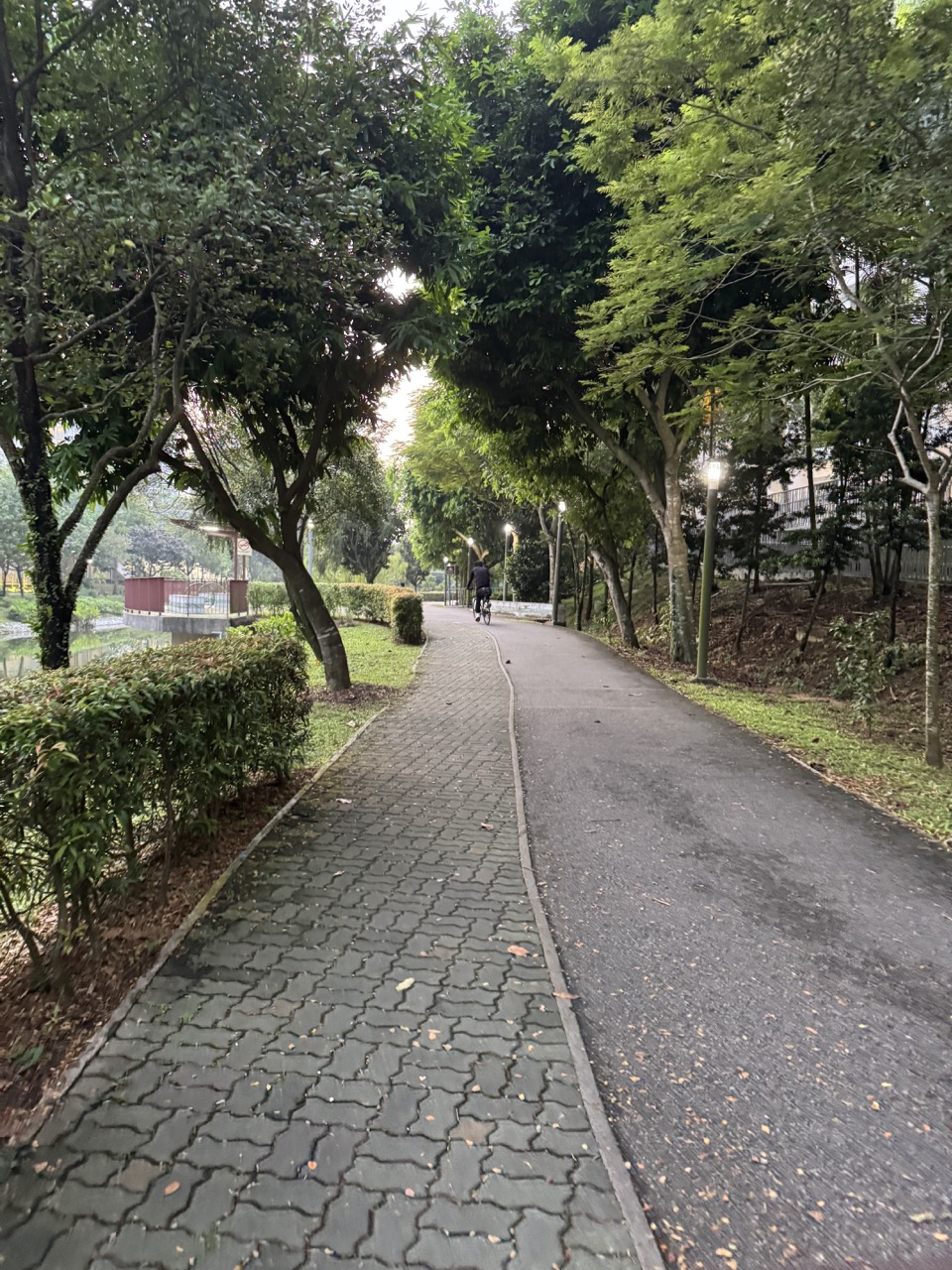
Source discipline: This article distinguishes HDB’s documented notices from the later operational outcomes of individual businesses. The feature image is a modern view of the Punggol riverside, not an archival photograph of any boatel in 1994.
And that is what makes this Punggol history worth preserving. The old coast was not just scenery. It held customers’ boats, family work, contested timelines and years of knowledge that did not vanish on the day a demolition notice was served.


