
Punggol Marina Club opened in 1996, but its roots reached back into an older waterfront economy of boatels, boat storage, waterskiing, fishing trips and sea-based recreation. National Heritage Board records connect the club with former operators including Awang Boat Sheds, Zainal Water-ski Centre, Marina View and Yap Boatel, whose earlier businesses had been disrupted by reclamation and redevelopment.
For readers searching Punggol Marina history, Punggol Marina 1996 or how the club connected to the old boatels, the important word is continuity. The 1996 marina was a new institution, but some of the people, knowledge and recreational culture behind it came from an older coastal world.
Did you know? NHB research identifies eight boatels operating along Punggol’s coast by 1986. By September 1994, National Library material still records caretakers looking after customers’ boats even as parts of the older waterfront landscape were being dismantled.
The Crazy-Rich Idea: Skills Can Survive Even When the Landscape That Produced Them Changes
Reclamation can remove buildings and alter shorelines, but it does not instantly erase maritime knowledge.
Boat operators still understood:
- storage;
- launching and recovery;
- maintenance;
- weather;
- customer handling;
- coastal navigation;
- recreation operations.
Punggol Marina gave some of that knowledge a new institutional form.
The 1996 Club Did Not Invent Punggol’s Maritime Leisure
Sea-based recreation was already well established.
NHB records events such as a 1982 powerboat regatta, a 1983 water-ski series and a 1983 Easter Boat Show.
The marina therefore belongs to a later chapter of an existing recreational culture.
Reclamation Created Both Loss and Reorganisation
Older boatels, seafood businesses and kampong livelihoods faced displacement as reclamation and redevelopment advanced.
The historical story should not be simplified into “old businesses closed, new marina opened” on one date. Different occupiers left at different stages, and some work continued during the transition.
1994 Caretakers Show the Transition Was Lived, Not Abstract
Looking after customers’ boats after some buildings were demolished reveals a practical problem: property and responsibility can outlast the business environment around them.
That gives reclamation a human scale.
The Marina’s Location Belonged to an Older Road Map
Remember Singapore places the development at the end of Ponggol Seventeenth Avenue and describes it as a S$50 million project.
Later Northshore roads changed how the area was approached and understood.
For the wider road history, see Crazy Rich Punggol | Punggol Farmways, Rubber Plantations and the Luxury of Roads That Remember Work.
Leisure and Livelihood Were Intertwined
A visitor might remember boats, sunshine and weekends.
Workers behind that leisure handled engines, storage, repairs, fuel, tides, schedules and customers.
Restoring those workers to the story makes waterfront history more complete.
A Business Lesson: Redevelopment Can Destroy a Location Without Destroying a Capability
When a site disappears, operators may still carry transferable knowledge, customer relationships and industry experience into a new venture.
Punggol Marina is historically interesting because it shows that organisational continuity can survive physical discontinuity.
A Geography Lesson: Coastline Change Rewrites Access
Reclamation does more than add land. It can change road endings, waterfront distance, launch points and the practical geography of marine businesses.
An English Lesson: “Roots in the Boatels” Does Not Mean “The Same Business Continued Unchanged”
The marina had continuity through people and knowledge, but it was a new club with a new development and new institutional structure.
Evidence Boundaries
- The club opening belongs to 1996.
- NHB connects named former boatel operators with its formation.
- 1980s events establish earlier maritime recreation.
- 1994 caretaker accounts document a transition period.
- Different redevelopment deadlines should not be collapsed into one overnight closure.
Evidence Anchors
- NHB Roots: Punggol — Waves of Recreation
- NLB BiblioAsia: Kampong Wak Sumang
- Remember Singapore: Old Punggol Road and tracks
The crazy-rich Punggol lesson is that redevelopment does not always erase capability. Punggol Marina turned older maritime knowledge and recreation culture into a new 1996 institution even as the coastline, roads and businesses around it were being remade.
Punggol Marina Club opened in 1996, but its roots were much older than the new waterfront facility. The National Heritage Board records that former Punggol boatel operators—Awang Boat Sheds, Zainal Water-ski Centre, Marina View and Yap Boatel—were among those who formed the private club after earlier waterfront businesses had been disrupted by reclamation and redevelopment.
Before the club, Punggol Point supported boat storage, water-skiing, fishing trips, sightseeing and sea-sports gatherings. By 1986, National Heritage Board research identified eight boatels along the coast. Redevelopment forced difficult changes: a National Library Board study describes boat caretakers still safeguarding customers’ boats in September 1994, even after some buildings were demolished. This was a story about livelihoods and responsibility as well as leisure.
The 1996 marina should also be read on the right map. Remember Singapore places the original development at the end of Ponggol Seventeenth Avenue and describes it as a S$50 million project. Subsequent road and Northshore development changed how the location was reached. This long-form history explains the operators, chronology, events, people, geography, source records and connections with today’s Punggol—without treating photographs of the modern waterfront as images of 1996.
Choose your reading route
Quick timeline · The founding operators · 1994 lived experience · The 1996 club · Roads and Northshore
Complete contents
- 1. The timeline: sea sports, reclamation and a 1996 reopening
- 2. Why Punggol was associated with the sea long before the marina
- 3. What a Punggol boatel actually did
- 4. The four named founding operators and what can be verified
- 5. The remarkable 1994 story of caretakers who stayed
- 6. Sea-sports culture: regattas, skiing, shows and family outings
- 7. Reclamation: why the shore and its businesses changed
- 8. The 1996 Punggol Marina Club: a new arrangement for old expertise
- 9. The geography puzzle: Ponggol Seventeenth Avenue and Northshore
- 10. How the marina differs from Punggol Point’s older seafood culture
- 11. From a private waterfront club to a modern residential district
- 12. The human side: Wak Sumang, Awang and living maritime knowledge
- 13. How to read marina figures without inventing a history of success
- 14. What a modern historical walk can and cannot show
- 15. For parents and students: a research project worth doing
- 16. Frequently asked questions about Punggol Marina’s history
- 17. Source notes, historical limits and the wider reading trail
1. The timeline: sea sports, reclamation and a 1996 reopening
The easiest way to understand Punggol Marina is to begin before the word ‘marina’ appears on the new development. Punggol had long been a coastal district with fishing villages, boatmen, food outlets and travellers attracted by the sea. The National Heritage Board’s heritage study describes a post-war revival of waterfront recreation and records organised events in the 1960s, 1970s and 1980s. Boating was an industry, a sport and a visitor experience.
The 1980s brought both busy activities and uncertainty. National Heritage Board research identifies a 1982 Singapore Powerboat Association regatta, a 1983 7-Up Water Ski Series and a 1983 Easter Boat Show. By 1986, eight boatels operated in the Punggol recreational scene. Those facts provide evidence that the 1996 club was not inventing sea-based recreation in a place that had never known it.
Reclamation plans changed the setting. National Library Board research discusses a 1983 announcement and 1986 vacate instructions affecting Kampong Wak Sumang, seafood restaurants and boatels. National Heritage Board’s broader account describes facilities and people affected by the early 1990s and a final deadline by the end of 1994 for certain waterfront occupants. A historian should resist treating the different deadlines as a single overnight closure. Projects, tenants and stages changed over time.
The marina’s 1996 opening belongs at the other side of that transition. NHB explicitly connects the club to named former boatel operators. The important continuity was knowledge of boats, customers, storage and a recreational community, not merely a similar marketing slogan. Remember Singapore also describes the new facility as a S$50 million development at the end of Ponggol Seventeenth Avenue.
Create a timeline with separate columns for ‘event’, ‘people affected’ and ‘landscape change’. Place organised sea sports in 1982–83, operating boatels in 1986, the 1994 caretaker reports and the 1996 opening. This structure helps a reader see why the club’s creation was both a new commercial venture and a response to an older world being reorganised.
2. Why Punggol was associated with the sea long before the marina
Punggol’s coastal role is older than twentieth-century recreation marketing. The area includes the histories of Kampong Wak Sumang and people who depended on fishing, boat handling and nearby markets. The National Library Board’s account of the kampong shows that the sea was a source of livelihood, not just a background for leisure photographs. People knew tides, weather, boat maintenance, fish markets and the practical hazards of working close to water.
This history makes the later rise of boatels easier to understand. Operators could serve visitors because a maritime knowledge base already existed. Boats require storage, launching and recovery, mechanical attention, fuel, scheduling and monitoring. Customers may arrive for a pleasant afternoon, but a business has to manage the unglamorous tasks between visits. The marina story involves these practical skills as much as it involves sunshine.
The historical boundary of Punggol was larger than the modern town’s administrative image. National Heritage Board research notes that older references to Punggol included areas that later became associated with Sengkang and Buangkok. Old place names, maps and oral recollections therefore require care. Not every document labelled ‘Punggol’ refers to the same modern planning polygon, and not every old waterfront business occupied today’s Punggol Point Park.
Punggol Point was especially notable for combining leisure and living. National Heritage Board material describes beach recreation, boatels and seafood businesses. The National Library Board adds stories about local residents who supplied fishing catches and services to the visitor trade. For those families, recreation and livelihood were intertwined. A boat sheltered for a holidaymaker might represent an ordinary worker’s day-to-day income.
To teach this connection, ask who made a family day at the sea possible. The list includes boat operators, repair workers, cooks, market traders, transport providers and people looking after equipment. These are often invisible in retrospective photographs showing only smiling passengers. Restoring them to the story makes Punggol history fuller and more credible.
3. What a Punggol boatel actually did
The word ‘boatel’ can confuse a modern reader who pictures a floating hotel or a boat used as overnight accommodation. In historical Punggol accounts, the category included shoreside businesses providing storage, docking and services to owners and renters of boats. NHB describes boatels that also rented boats for water-skiing, fishing and sightseeing. They were parts of the marine leisure economy rather than simply picturesque buildings beside water.
A boatel’s basic practical responsibilities explain why customers relied on operators. A craft not currently at sea still needs a safe place and someone who understands how it can be moved or used. During periods of demolition or resettlement, this relationship did not vanish immediately. Ownership of a boat, responsibility for its storage and the availability of a suitable shore facility could extend beyond the life of a particular shed.
The National Library Board’s research into Kampong Wak Sumang gives an unusually vivid example. It describes how some boatel operators stayed to look after customer vessels even after most villagers had relocated. The September 1994 newspaper accounts recounted there are valuable because they reveal what continuity meant to people at the time: not a vague sentimental connection but watchfulness over specific property entrusted to them.
It is also worth distinguishing business models. A professional water-ski centre needed boats and access to suitable waters for the activity. A storage-oriented shed might earn its income differently. Sightseeing and fishing trips had their own seasonal demand and skills. Four companies sharing an interest in a later marina did not necessarily operate identical businesses beforehand.
An excellent historical definition avoids exaggeration: Punggol boatels were waterfront operators that, in documented cases, provided boat storage and water-recreation services. Do not assert that every company offered every possible activity, every bed or every package. Local terms sometimes covered overlapping operations, and the archival source should establish which service belonged to which business.
4. The four named founding operators and what can be verified
The National Heritage Board identifies four former operators involved in creating Punggol Marina Club: Awang Boat Sheds, Zainal Water-ski Centre, Marina View and Yap Boatel. Naming them is important. Without names, an article can reduce the story to an anonymous developer constructing a facility in 1996. Names preserve the possibility of tracing photographs, interviews, newspaper accounts and family histories.
Awang Boat Sheds appears in National Library Board material about Kampong Wak Sumang. It connects the business to a named coastal community and to the history of boat caretaking during resettlement. The 1994 accounts refer to Jimat Awang remaining to watch clients’ boats. That evidence supports continuity of responsibility even when the physical waterfront was changing.
Zainal Water-ski Centre is also mentioned by name in both NHB and NLB accounts. NLB identifies Zainal Jantan in a September 1994 context and reports that he and friends planned to watch over several dozen vessels. The statement records what was reported at that time. It should not be used as a total number of vessels stored at the 1996 marina or a count of company assets across its entire history.
Marina View and Yap Boatel complete the four-company list in the NHB source. The present evidence supports their names and involvement, not detailed biographies, exact ownership shares, founding capital contributions or undisclosed family relationships. A responsible article leaves those questions open rather than filling them with invented backstories for the sake of narrative symmetry.
This is why the best local history sometimes contains an explicit sentence saying what remains unknown. We can identify a group of organisations and explain the transition from boatels to club. To describe who negotiated each agreement, how the shares were divided or what each founder thought privately, we would need more records. The absence of those documents is a research gap, not permission to fictionalise.
5. The remarkable 1994 story of caretakers who stayed
The most moving evidence in this history is not an architectural rendering of the new club. National Library Board researcher Hannah Yeo recounts newspaper interviews from September 1994 in which boatel operators described staying behind to watch customers’ boats as the old coast changed. She identifies Jimat Awang of Awang Boat Sheds and Zainal Jantan of Zainal Water-ski Centre.
According to that research, Jimat Awang described sharing watch duties with relatives, despite the demolition of important structures used by the family business. Zainal Jantan described caring for dozens of boats and sleeping in a remaining small hut while his family returned to a Hougang flat. These are descriptions of the 1994 circumstances, paraphrased from NLB’s historical reporting. They connect land redevelopment with workers and customers whose needs did not disappear when buildings did.
Consider what watching the boats required. Owners expected their property to remain accounted for even when the shore facilities were disrupted. For an operator, walking away could mean abandoning a relationship built over many years. The caretaking reflected a commercial obligation but likely also a sense of responsibility. The source records actions; it does not give us access to every motive, so an article should not pretend to know precisely what each man felt.
The accounts also reveal that relocation can have more than one geography. A family may move to a housing flat while an adult continues working on the original shore. An industry may be officially displaced yet retain residual activity as stored equipment is recovered or moved. A headline saying ‘Punggol’s boatels closed’ can conceal this drawn-out transition.
For students, the evidence raises valuable questions. What does a redevelopment deadline mean to a business holding other people’s property? Which workers face the longest transition? What is preserved when a person moves: equipment, skills, customers, stories or all of them? Punggol Marina’s 1996 formation becomes a deeper story when read alongside these earlier decisions.
6. Sea-sports culture: regattas, skiing, shows and family outings
Organised sea sports give this history texture. The National Heritage Board identifies the 1982 Singapore Powerboat Association regatta, the 1983 7-Up Water Ski Series and the 1983 Easter Boat Show. These event names show that Punggol was not merely a quiet coast where a few individuals rented a boat. It participated in a more visible recreation culture with scheduled occasions and audiences.
Older NHB material also records a 1966 regatta associated with Punggol Point Community Centre and a 1974 sea games event organised for fundraising. Together, these references make it possible to study different reasons people gathered around the waterfront: competition, community organising, entertainment and the raising of funds. Each event should retain its organiser and year rather than being combined into an undated list of ‘water sports festivals’.
Water-skiing depended on a particular balance of boats, equipment, riders and suitable waters. Operators provided services that allowed visitors to try an activity for which most households would not own a boat. This helps explain the boatels’ public role. They made access to the water more practical for people who were not part of the fishing community and were not necessarily boat owners.
The seasonal, environmental and safety dimensions also matter. The sea is not the same as a managed swimming pool. Conditions change with weather, currents, visibility and vessel traffic. A family looking at archival photographs may be drawn to the excitement, but the image alone does not establish the risk controls of a historical event. Nor should old publicity become present-day instructions for using the same waters.
The lesson for an editor is to resist describing the past as only picturesque. A marina grows from an ecosystem of organisers, athletes, instructors, customers, caretakers and infrastructure. The 1996 club represented a way of housing and managing that ecosystem after old shore facilities could no longer continue in their previous form.
7. Reclamation: why the shore and its businesses changed
The transformation of the coastline is essential to the marina story. Singapore reclaimed land around Punggol as it prepared for expanded urban development. The National Library Board’s study of Kampong Wak Sumang describes a 1983 plan to reclaim approximately 277 hectares and early requirements for people and waterfront businesses to vacate. Government heritage material describes broader northeast-coast reclamation phases. These are related initiatives, but project dates and land areas should not be collapsed into one undifferentiated number.
Reclamation changes more than where a person can stand on the beach. It alters the coastline’s shape, the relationship between roads and water, the location of launching points and what kind of business can occupy a site. A former boatel may lose direct water access. A shop or home may have to move because its land is acquired. Some familiar routes may disappear, while new ones are not yet open. Economic activity therefore faces a difficult transition.
Land reclamation is often narrated with diagrams showing the net increase in square kilometres. For local residents, it may be experienced through notices, altered surroundings, temporary storage, construction and the loss of particular businesses. The 1994 newspaper stories preserved by NLB are an example of the human scale of that engineering programme.
There are multiple dates worth separating. The announcement and initial works in the early 1980s, a 1986 resettlement phase, later 1994 reporting about remaining boatels and the 1996 marina are different points along a sequence. It would be inaccurate to say that every resident left together in the same month, or that 1996 exactly reversed what reclamation had changed. Continuity was partial and negotiated.
For a map exercise, locate the shoreline in a historical map and compare it with one produced after Northshore development. Check map scales and sources. Trace how a former road end might no longer lead to the same water edge. Then explain why a business needing boats, space and customer access would be affected differently from a shop selling groceries inland.
8. The 1996 Punggol Marina Club: a new arrangement for old expertise
NHB’s central historical claim is that Punggol Marina Club opened in 1996 and was formed by former boatel owners. That fact is more significant than a simple opening announcement. It describes how knowledge and relationships from an earlier waterfront economy were reorganised into a different commercial setting after redevelopment.
Remember Singapore’s detailed history of Punggol Road describes the facility as a S$50 million project built in 1996. It also recounts the contemporary ambition to make it a major sea-sports centre. Such promotional scale claims are best attributed to the source and period. They do not justify an unsupported assertion that the site remained the largest or most successful club for all subsequent years.
The new club was private, according to NHB. That tells us something about the institutional form, but not the complete membership, rules or fee history. A reader may come across later descriptions of Marina Country Club or another company name. Those present-day business labels should be handled through dated records, not assumed to be identical in every legal or operational respect to the 1996 founding arrangement.
What kinds of continuity matter most? The ability to store boats, organise access to water activities and maintain relationships with people seeking recreation. The earlier boatels’ names were not merely decorative heritage labels; NHB says their former operators participated in founding the new venture. This suggests a bridge between coastal skills and a larger capital-intensive site.
Equally important is what did not return. The kampong itself was not reconstructed by opening the club. Families who had resettled did not automatically regain their former homes. The coastline had changed. A history article should celebrate entrepreneurship only while acknowledging that relocation and physical loss remained part of the story. Renewal and displacement can be true at the same time.
9. The geography puzzle: Ponggol Seventeenth Avenue and Northshore
Remember Singapore places the original Punggol Marina project at the end of Ponggol Seventeenth Avenue. The name uses the older spelling Ponggol, which survives in some road names even though the modern town is generally spelled Punggol. A reader following a historical article with a modern map needs to understand why these spellings and access routes coexist.
Ponggol Seventeenth Avenue itself arose from the old numbered-track landscape. The road history describes how Track 17 became an asphalt avenue as housing appeared. Its later association with the marina made it a recognisable route towards the coast. But development around Northshore changed the road network and physical access. The 2018 history notes that the marina was no longer linked to that original avenue as before.
This gives a useful lesson in historical location. A business may remain associated with a stretch of water even when the road used to reach it changes. If a historical source says ‘at the end of Seventeenth Avenue’, a present-day visitor should not automatically expect to drive to a contemporary club by that route. The source is describing a landscape at a given time.
The area also contains names that should not be confused. Punggol Marina is a historical club name; Marina Country Club is a contemporary named facility in the Northshore area. A recent owned photograph of Marina Country Club can illustrate continuing maritime uses in Punggol, but it is not evidence of the exact look or ownership of the 1996 Punggol Marina clubhouse. Caption the photograph accordingly.
For students, use an annotation technique called ‘same place, different time’. Put the 1996 claim in one colour and a contemporary street observation in another, with both dates visible. Explain what you can directly match and what needs further verification. This produces a more accurate spatial history than dragging an old address marker onto a new road map without explanation.
10. How the marina differs from Punggol Point’s older seafood culture
Punggol Point’s seafood restaurants are among the best-remembered parts of the old waterfront. Families travelled for meals, sea breezes and a view that felt remote from the city. Boatels, water sports and fishing overlapped with that setting, but they were not all the same enterprise. A restaurant needs kitchens and diners; a boatel needs craft-handling skills and shoreside services; a marina integrates particular boating facilities into a larger structure.
The National Heritage Board’s broader essay ties all these uses together while preserving their distinct histories. It also recalls tragedy at the wartime coast. Punggol Point is not simply the place where people enjoyed water sports. It has a memorial context that deserves attention whenever a historical walking route includes the beach. A respectful account holds everyday leisure and difficult memory without turning one into an afterthought.
When reclamation and redevelopment affected waterfront businesses, losses were uneven. A restaurant might relocate inland, close or later reopen in a new venue. A boatel had to account for stored vessels and access to navigable water. Those differing needs help explain why a group of boating operators could become involved in the new club. Their problem was more than replacing a shopfront.
The 2014 Punggol Settlement was a later chapter in the same region’s dining story. NHB notes that it revived an association with seafood along Punggol Point. Yet the settlement should not be folded into the 1996 Punggol Marina article as though it was created by the club. They share a landscape and a recreation tradition, but have distinct dates and businesses.
For a local-history reader, this distinction prevents SEO pages from becoming repetitive. One article can explain marina and boatel continuity. Another can explain the seafood businesses. A third can interpret the former tracks and road changes. Cross-links allow the whole history to be deep without forcing every page to claim ownership of every attraction.
11. From a private waterfront club to a modern residential district
Modern Punggol is often introduced as a waterfront town, with walkable parks, a waterway and extensive residential neighbourhoods. That reputation was not created in a single year. It grew through older leisure history, planning proposals, reclamation, an initial Punggol 21 programme and subsequent phases of development. The marina’s opening in 1996 happened in the same broader period as a major new town ambition, but evidence of temporal proximity is not proof that every venture was directly caused by one planning announcement.
The National Heritage Board describes Punggol’s waterfront identity as changing through periods of activity, disruption and renewal. This is a stronger account than saying ‘Punggol was rural, then suddenly modern’. The transition required many overlapping decisions by residents, industries, planners and private operators. Coastal businesses had to respond to new landforms and roads. Housing and public recreation eventually brought different visitors to the area.
Northshore today is a residential landscape with its own shopping and transport connections. A historical photograph from 1996 cannot be used as an uncaptioned representation of Northshore now. Conversely, a modern photograph of a club on Northshore Drive may show the persistence of nautical uses but not the buildings, coastline or facilities experienced by the original founders.
This distinction also changes how we understand value. A marina may be useful because it supports specific boating activities and preserves some maritime skill. A public park is useful because it offers broad access. A resident’s everyday route to a school or shop matters for different reasons. The fact that all are near the coast does not make them interchangeable, and different groups may have competing needs.
The most convincing account therefore combines entrepreneurial continuity with an awareness of the costs of redevelopment. It recognises that one type of waterfront recreation can continue while other places and practices disappear. Punggol did not simply recover its past; it created a different future using some inherited skills and memories.
12. The human side: Wak Sumang, Awang and living maritime knowledge
The National Library Board’s Punggol study connects the coastal economy to Kampong Wak Sumang, its descendants and the boats they cared for. This is important because physical landmarks often receive more attention than the people who made them work. A new marina clubhouse is easy to photograph. The decades of boat handling, fishing and hospitality that preceded it are harder to see without interviews and archives.
NLB describes how people from the village continued maritime work even after resettlement. The 1994 boatel interviews preserve names and circumstances from a period of upheaval. These details prevent a faceless explanation in which ‘the government reclaimed land and businesses relocated’. Each change involved choices made under constraints by families and workers who had to support themselves.
Names should be handled with care. Awang Abdullah, Jimat Awang and Awang bin Osman appear in the wider sources in different contexts. Shared names or family connections do not allow a writer to collapse all individuals into one person. A good article identifies the name exactly as it appears in a particular record and avoids inventing kinship beyond what the source documents.
The broader history of Wak Sumang also relies on oral tradition, maps and archival materials. NLB’s research explains that the settlement’s origin stories contain variations. That provides a useful warning for the marina story: historical accounts can be valuable without every detail being independently confirmed. Record uncertainty honestly, especially when moving from memory to precise dates or business ownership.
For children researching the area, the key lesson is that infrastructure has a human history. The ability to store and care for a boat, guide a customer on water or run a small service can be passed between people even when buildings are gone. A heritage project should ask how that practical knowledge survives and how its practitioners can be recognised in the public record.
13. How to read marina figures without inventing a history of success
The S$50 million description from Remember Singapore is eye-catching, as are references to the scale of the club on opening. Numbers make an article appear authoritative, but they require discipline. The capital figure is attached to a particular historical report; it should not be described as the exact eventual cost without an audited final account. Nor should it be converted into modern money casually without stating the inflation method and date.
Likewise, the National Heritage Board’s count of eight boatels by 1986 describes an earlier industry at a specified time. It is not a count of founders of the 1996 club. The four named former operators in the club account are a distinct group. A rushed writer might accidentally claim eight founding companies because both numbers occur in the same historical subject. The sources do not support that inference.
The 1994 newspaper figures concerning boats cared for by Zainal and his associates are another distinct measurement. Boats guarded in a transition period are not necessarily boats owned by that operator, boats using the future marina or boat registrations for Punggol as a whole. Readers should ask what each number measures before deciding what it means.
The wider sea-sports events are similarly time-specific. The 1982 regatta and 1983 competitions tell us about organised activity, not exact annual visitor totals. A crowded archival photograph may show interest on that occasion while providing no reliable estimate of long-run attendance. It is better to say ‘a venue for organised sea-sports events’ than to invent a decade of record-breaking crowds.
If building a school data table, use labels such as ‘1986 number of boatels reported by NHB’, ‘1994 boat-caretaking context in NLB report’, ‘1996 project value described by Remember Singapore’ and ‘1996 four named former operators in NHB account’. Accurate labels are often more important than impressive numbers.
14. What a modern historical walk can and cannot show
Someone searching the internet for Punggol Marina history may also want to see the place. The problem is that the road approach, surrounding housing and waterfront views have changed. A walk in modern Northshore can help a reader understand how maritime use persists, but cannot reproduce the shoreline or streets of 1996. Do not promise a historical replica or require access to private club facilities.
Start with a current publicly accessible map of Punggol and Northshore. Mark roads, waterfront public routes and present-day transport connections from recent official sources. Then view historical maps of Ponggol Seventeenth Avenue and the old track landscape. Instead of trying to draw one line connecting all eras, use two map layers and explain which roads were altered.
If taking present-day photographs, make sure they accurately describe what is visible. A current image of Marina Country Club on Northshore Drive is helpful as a modern contextual illustration. The caption should not read ‘Punggol Marina Club in 1996’ unless the photo is actually an authenticated historical image. For a family walking past a contemporary marina-related facility, respect private boundaries, signs and the activities of working boats.
An alternative learning route is to visit accessible heritage displays at Punggol Regional Library, which has showcased local Punggol histories, and to study National Library material online. Check exhibition and opening information if planning an actual visit. A past exhibition described in a 2023 article may not remain in exactly the same form years later.
A strong field note has four items: dated source, historical location, present observation and a cautious conclusion. Example: ‘A 2018 published road history places the 1996 project at the old avenue’s end; the modern road configuration is different.’ That observation is simple, verifiable and much stronger than an unqualified claim that everything moved to a different address.
15. For parents and students: a research project worth doing
Punggol Marina makes a good educational case because it combines history, geography, economics, engineering and English writing. A Primary child can begin by explaining why a boat needs a safe place even when nobody is using it. The idea of storage becomes a concrete introduction to maritime livelihoods. Older students can examine redevelopment and compare what different businesses needed to survive.
In History, begin with four claims and trace each to a source: waterfront sports events in 1982–83, eight boatels by 1986, 1994 caretaking, and the 1996 club formed by named operators. Assign a confidence level and explain it. The NHB and NLB sources have different coverage. The exercise rewards attribution rather than memorised dates.
In Geography, ask why land reclamation changes the feasibility of a boatel. A marina requires access to water and enough land for storage and movement. A restaurant may be able to move to another commercial site; a boat storage operation has specific physical requirements. Draw these dependencies as a system: sea access, roads, shoreline, labour, customers and land tenure.
In Economics or career education, compare the activities of a small owner-operated boatel and a larger club. Think about capital, operating costs, staff, maintenance, risk, insurance and customers. Use hypothetical figures clearly marked as a teaching example, not invented company accounts. An engineer, marine technician, event organiser and customer-service worker all contribute to a functioning sea-sports venue.
In English, write a feature that starts with the 1994 caretakers rather than a generic paragraph about a beautiful coast. Explain the human stakes in original language and then give the dates. A strong article moves between an accessible human detail and verifiable wider change. It should not copy a historian’s prose or dramatise undocumented conversations.
The final project could include an annotated timeline, two maps, a source table and a short reflection on what continuity means. The strongest conclusion might be that Punggol Marina opened as a new facility in 1996 but drew upon skills and businesses shaped by an earlier coastline. That is both specific and meaningful.
16. Frequently asked questions about Punggol Marina’s history
When did Punggol Marina Club open? The National Heritage Board records the opening in 1996.
Who formed the club? NHB names former Punggol boatel operators Awang Boat Sheds, Zainal Water-ski Centre, Marina View and Yap Boatel.
Was this the first time people used the Punggol coast for water sports? No. Earlier decades included boating, fishing, water-skiing and organised sea-sports events.
How many boatels were there? NHB describes eight in the Punggol waterfront recreation scene by 1986. This is not the number of club founders.
What did boatels provide? Historical accounts mention storage, docking and boat rental for activities including fishing, water-skiing and sightseeing.
What changed in the 1980s and 1990s? Reclamation, resettlement and redevelopment altered the shore, roads and businesses’ ability to remain.
Did all waterfront businesses disappear in 1986? No. Sources describe multiple phases; the NLB records men still guarding customers’ boats in September 1994.
How expensive was the 1996 marina project? Remember Singapore’s 2018 road history describes it as a S$50 million development.
Where was it originally approached? Remember Singapore places the development at the end of Ponggol Seventeenth Avenue and notes later road changes around Northshore.
Is Ponggol a different town from Punggol? Ponggol is an older spelling that persists in some historical records and road names.
What is the relationship with Marina Country Club? The modern Northshore facility belongs to the evolving maritime landscape. Ownership and name changes across decades should be established by dated business records rather than inferred from similar names alone.
Did the 1996 club rebuild Kampong Wak Sumang? No. The club continued aspects of boating activity, but resettled communities and old shore buildings were not thereby restored.
Can anyone enter a marina today? Check current property access, operating rules and opening information. A historical article grants no access rights.
Where can I find original evidence? Start with the National Heritage Board’s Punggol recreation history, the National Library Board’s Wak Sumang study and dated road histories.
17. Source notes, historical limits and the wider reading trail
The National Heritage Board’s ‘Punggol: Waves of Recreation’ is the backbone for understanding the recreational history of the coast. It records the earlier water-sports scene, boatels, closure and the four-company connection to the 1996 club. It also situates recreation within the longer story of wartime trauma and subsequent redevelopment.
Hannah Yeo’s National Library Board article about Kampong Wak Sumang adds the lived experience behind the business transition, including the 1994 newspaper interviews of caretakers. It also provides a carefully sourced history of the coastal community, oral histories and surviving archival images. That work prevents the club from becoming a story only about investors and buildings.
Remember Singapore’s article on the 26 tracks of Punggol Road supplies the useful S$50 million description and original Ponggol Seventeenth Avenue road connection. Its road chronology helps explain why old directions no longer align simply with modern Northshore access. It is a historical secondary account, so figures should be attributed rather than presented as newly verified accounts.
Current club websites and photographs serve a different purpose. They can establish modern addresses or illustrate present-day maritime activity, but they cannot prove how the original Punggol Marina site appeared or operated in 1996. Avoid mixing modern opening hours with historical story without a clear dated label.
For the rest of the local story, follow the master timeline, Punggol Road tracks, Wak Sumang and waterfront recreation, Punggol Settlement dining history and Northshore redevelopment articles. Together they trace a place that repeatedly changed while some activities, relationships and skills survived.
Quick Punggol Marina questions
What year should I put in a history project?
Use 1996 for Punggol Marina Club’s opening. Keep 1986 and 1994 as earlier boatel and redevelopment milestones.
Were the old operators separate companies?
The National Heritage Board names four former boatel operations. It does not provide a complete public cap table for the later club.
Is ‘boatel’ only a hotel on a boat?
Not in the Punggol source context. The term also covered shoreside storage and recreation services associated with boats.
Can a 2026 photo illustrate 1996?
Only if it is clearly labelled as contemporary context, never as an archival view from 1996.
Why did some operators stay in 1994?
NLB recounts their continuing responsibility to guard customers’ boats. A historical answer should stop at the evidence rather than inventing private motives.
Which claim is strongest?
NHB’s named former operators and 1996 opening are documented institutional historical claims with a clear source.
Which claims require more research?
Exact share ownership, full financial performance, complete membership history and each stage of company rebranding or acquisition.
Can children learn local history from these events?
Yes. The sequence supports timeline writing, map comparison, source reliability, cause-and-effect and understanding workers behind recreation.
Do the eight boatels mean eight marina founders?
No. The eight refers to an earlier industry count; the NHB club-founding account names four operators.
Was the marina responsible for all Northshore development?
No. Both belong to a transforming coast, but large-scale town planning involved many distinct projects and organisations.
Where can I read about Kampong Wak Sumang?
The National Library Board’s BiblioAsia study gives detailed context, photographs and archival references, including interviews with former residents.
Are old sea-sports events still held on the same beach?
A historical event list cannot confirm current event programmes or water access. Check current organisers and official guidance.
What does this history say about progress?
It shows that a new institution can preserve some skills and business relationships even when earlier homes and waterfront facilities are lost.
What makes the account above a generic summary?
It traces distinct dated sources, checks who did what, explains the meaning of old road addresses, and separates documented facts from inference.
Primary and historical sources
- National Heritage Board, Punggol: Waves of Recreation
- National Heritage Board, Waterfront Living at Punggol
- National Library Board, Remembering Kampong Wak Sumang
- Remember Singapore, Retracing the 26 Tracks of Punggol Road
- National Heritage Board, History of Punggol
- Marina Country Club current website (not a 1996 archive)
- Punggol master history timeline
- History of Punggol Ranch
- Punggol Point, seafood heyday
- Northshore StraitsView historical HDB design milestone
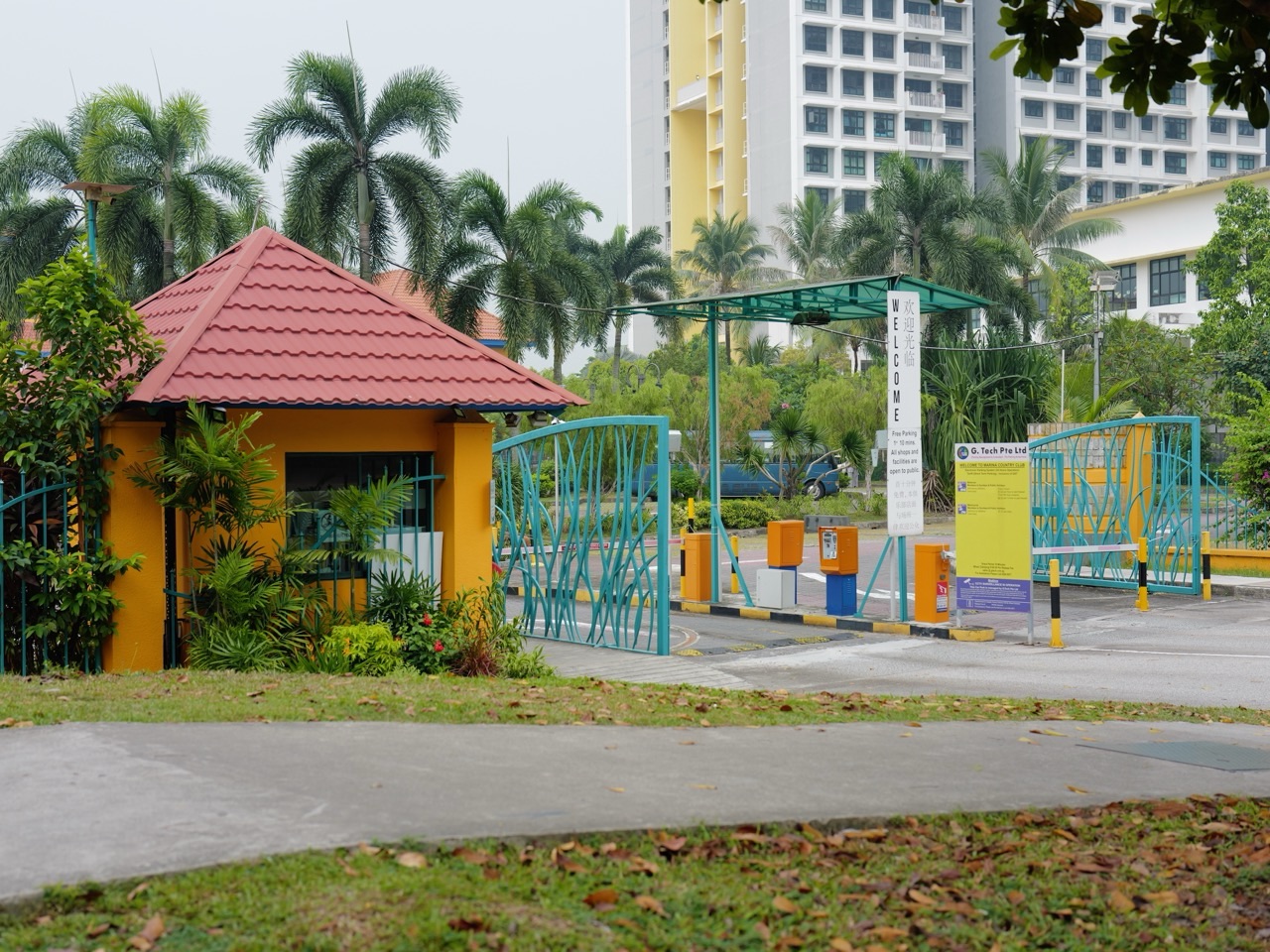
Photo note: the featured photograph records the modern Marina Country Club on Northshore Drive. It is visual context for today’s coastline, not an authenticated photograph of the club when it opened in 1996. The article’s historical evidence is given in the linked sources.


