
The future of education in Punggol is not limited to children moving from Primary school to SIT. Adults are part of the town’s education story too. In its March 2026 announcements, Singapore’s Ministry of Education said the SkillsFuture Level-Up Programme (SFLP) course catalogue would expand from the fourth quarter of 2026 to include eligible Workforce Skills Qualifications (WSQ) full qualification courses. Around 200 full qualification courses were expected to qualify across sectors including healthcare, information and communications, engineering, media and early childhood.

For a mid-career Punggol resident, this could widen the selection of substantial training paths worth investigating. But an important caution belongs in the first paragraph: the announcement is about the expected programme expansion, not a guarantee that every WSQ course, every provider or every applicant will automatically qualify for every subsidy or allowance. As of 23 October 2026, readers should check the live MySkillsFuture listing for the exact course and funding status rather than treating a planned catalogue size as proof of current availability.
This guide is for adults who want to understand what changes, how a full qualification differs from a short course, how SkillsFuture Credit and training allowances relate, what to verify before paying, and how Punggol’s changing economy might inform a sensible education decision. It is deliberately different from a general overview of SkillsFuture Credit or an AI-only course list.
What MOE Announced and What Remains to Be Checked
MOE’s 2026 Committee of Supply announcements state that SkillsFuture Level-Up will expand to include eligible WSQ full qualification courses from Q4 2026. Around 200 were expected to qualify across a range of industries. This is a national initiative. It does not depend on living in Punggol, and it does not name a new Punggol campus for every course.
A separate 2026 policy direction was to bring training and employment support closer together through the announced merger of SkillsFuture Singapore and Workforce Singapore. That can influence how people navigate skills, courses and careers over time. However, the announced merger should not be used to invent a course commencement date or tell a trainee that the application portal has already changed without checking current official arrangements.
Why is the course-catalogue change important? Some workers require more than a short topical workshop. A person changing from retail to a technical role, returning after time away from employment, or seeking a recognised qualification for a progression step may need structured assessment and several connected skill areas. A WSQ full qualification is designed to certify a defined set of workplace competencies.
Even so, the title ‘full qualification’ does not mean a job is guaranteed. The right course must fit the intended occupation, current hiring requirements, the learner’s foundation and the available time. A credential is one piece of evidence about competence; actual employers decide how it relates to a role.
WSQ: Full Qualification Versus a Short Course
Singapore’s WSQ system provides a national framework for training, assessing and certifying workplace skills. An approved course can lead to a Statement of Attainment for a relevant module, while an approved full qualification programme has a broader credential structure that requires the relevant components.
Imagine learning basic food safety in a short course. That may be valuable or compulsory for a specific job, but it is not the same as completing a full qualification covering a much larger group of competencies. Likewise, a short introduction to AI tools is not the same thing as a substantive workplace credential with defined learning outcomes and assessments.
The distinction matters because a government announcement that says ‘WSQ full qualification courses’ should not be rewritten online as ‘all WSQ courses’. A provider may offer excellent short modules while those modules alone are not included in the new SFLP expansion. Check the exact course entry and eligible funding initiative.
The qualification name itself also matters. A WSQ certificate, diploma or other designated full qualification should be checked against the provider’s current approval and the relevant WSQ framework. A glossy brochure saying ‘industry recognised’ is not a substitute for evidence of current accreditation.
Why This Matters to Punggol’s Changing Job Market
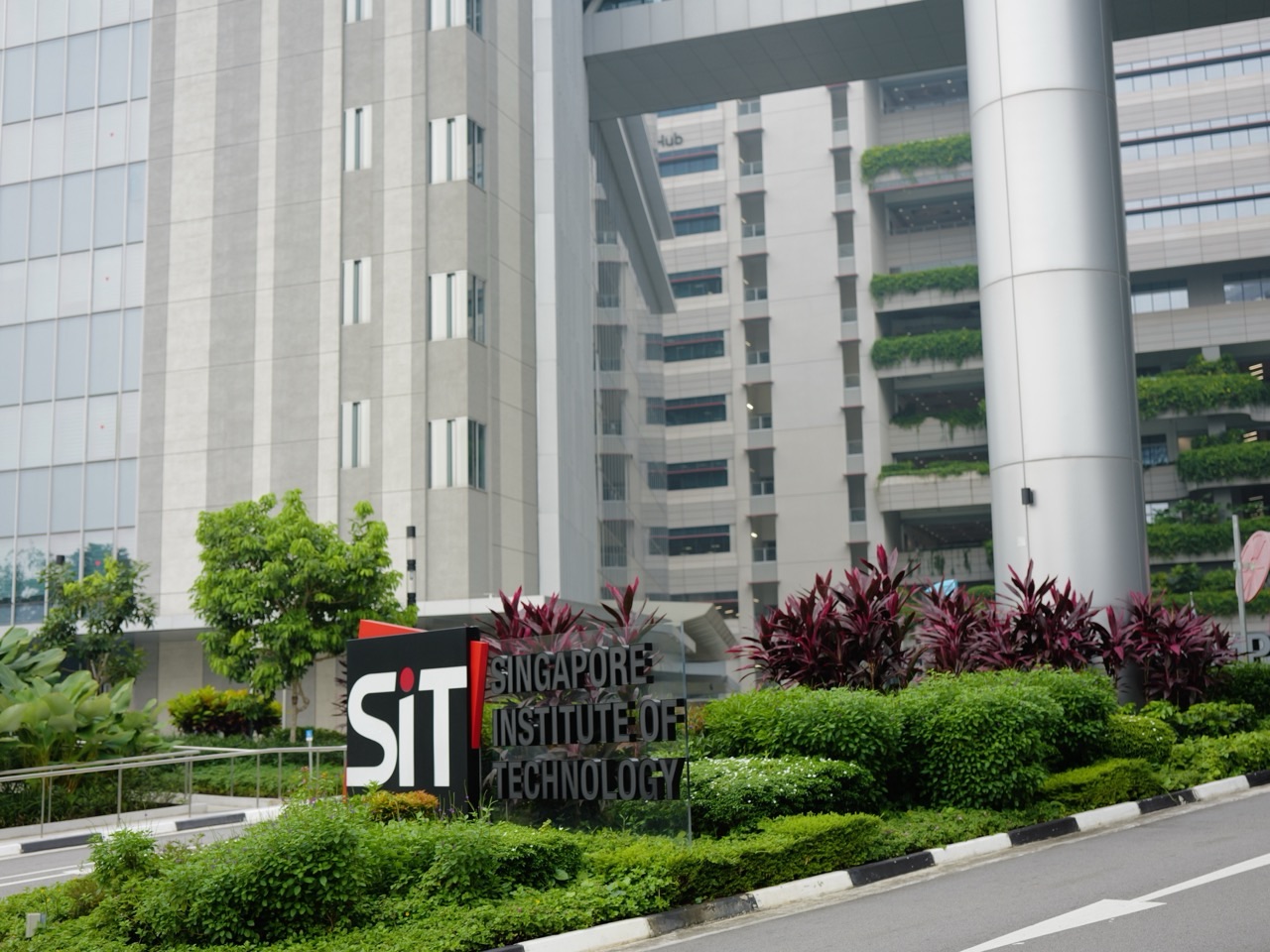
Punggol Digital District is a major part of the town’s economic development. JTC describes it as a business park integrating the Singapore Institute of Technology and businesses in areas such as AI, cybersecurity, robotics and financial technology. That creates a local reason to investigate future skills, but not a promise of a role to anyone who completes training.
Punggol also contains households, schools, childcare centres, community facilities, transport services, shops and workplaces beyond advanced technology. A resident considering a new career might prefer community care, early childhood, facilities operations, engineering support, digital services or media. Educational decisions should start with the actual work the person wants to perform.
A local jobs discussion needs two kinds of evidence. One is the official description of the district’s industries and employment plans. The other is current real job requirements for the role being considered. A worker who sees a possible digital role in Punggol still needs to know whether employers ask for programming, network support, project coordination, service operations, qualifications, prior experience or some combination.
The best use of proximity is practical: attend an appropriate information session if one is open to the public, research realistic work tasks and plan a sustainable journey to training. The existence of SIT in Punggol does not mean that every WSQ full qualification is taught at SIT or that every course includes access to a Punggol employer.
Who Is SkillsFuture Level-Up For?
SkillsFuture Level-Up focuses on supporting mid-career Singaporeans undertaking more substantive skills development. The current SkillsFuture Credit system has a base tier for eligible Singapore Citizens aged 25 and above and a separate mid-career tier for eligible citizens aged 40 and above.
According to official SkillsFuture guidance, the opening base SkillsFuture Credit is $500, subject to the applicable rules, while the mid-career credit is $4,000 for eligible citizens aged 40 and above and is restricted to selected courses. Both of these tiers are described as not expiring. They should not be confused with a separate one-off 2020 credit that had a 2025 expiry date.
A resident aged 35 should not simply assume eligibility for the age-40 mid-career top-up. Likewise, a resident aged 45 should not assume the $4,000 can be claimed against every course marketed as professional training. Eligibility attaches to the individual, course and current policy terms.
The existence of SkillsFuture Credit does not remove the need to examine course fees, subsidies, payment timing, refunds, transport or income lost while studying. Some people can take evening or part-time training; others need a period of full-time study. The right option depends on circumstances rather than age alone.
The Four Different Things People Often Call ‘Funding’
First is a course fee subsidy: eligible providers and programmes may have subsidised prices under relevant rules. The quoted fee before subsidy may differ substantially from what an eligible learner actually pays.
Second is SkillsFuture Credit: a personal credit that may be used against eligible course fees in accordance with the appropriate tier. A course can be eligible for one source of support without automatically meeting every other scheme’s conditions.
Third is a training allowance under a specific programme, intended to offset some of the cost of time spent in substantial training. Eligibility can depend on age, citizenship, training mode, prior income and other rules. Do not infer entitlement to an allowance from course enrolment alone.
Fourth is employer support, which may include paid study time, fee sponsorship or a planned job transition. Such support depends on the employer’s actual agreement, not a national announcement. Before committing to a programme, understand whether employer support comes with a service obligation or other conditions.
Combining all four in one vague sentence—’The government pays for the course and salary’—is misleading. A trustworthy course plan shows each component separately, identifies what is confirmed and gives an out-of-pocket estimate for the actual learner.
A Worked Budget: Understand the Arithmetic Before Enrolling
Consider a fictional Punggol resident, Maya, who is considering a full qualification with an illustrative headline fee of $3,200. Suppose, solely for this worked example, she receives a confirmed $1,600 fee subsidy. The remaining fee would be $1,600 before applying any eligible personal SkillsFuture Credit.
If her verified available and usable credit for this particular course is $1,000, the illustrative remaining cash fee would be $600. But it would be incorrect to assume she has $1,000 eligible credit simply because a web search mentions a national top-up. She must check her actual balance and the selected course’s current support status.
Now add non-tuition costs. Suppose travel and materials cost another hypothetical $180 and she gives up several paid shifts worth $400. Her family’s economic commitment is not simply the $600 cash tuition payment. It may be closer to $1,180 before any training allowance or employer support, depending on the real circumstances.
The key is to perform the calculation in the right order: confirmed fee after subsidy, then usable credit, then actual cash outlay, then incidental costs and income effects. Do not double-count a subsidy or assume that a training allowance will necessarily cover the difference.
When a Full Qualification Makes More Sense Than Three Short Courses
Suppose a resident wants to move from a general customer-facing role into a more technical operational role. Three short workshops might introduce digital tools, service data and basic project coordination. They may be useful, but the learner could still lack an integrated assessment of the competencies relevant to the target role.
A full qualification could provide a more coherent sequence if it matches the required skills and has appropriate recognition. But choosing the longest possible course is not automatically better. A person who only needs one regulated competency or a targeted update may benefit more from a short accredited module.
The correct comparison starts with the job. Which tasks must the worker perform? Which skills do employers require? Is a particular credential formally necessary? Does the course assess those skills, or does it mostly introduce concepts already familiar to the learner?
Look also at opportunity cost. A full qualification may involve evening classes, workplace assignments, attendance requirements, practical assessments and examinations. A worker who cannot maintain the schedule may not gain the intended value, even when the fees are heavily subsidised.
The WSQ Provider Check That Can Prevent a Costly Error
SkillsFuture Singapore published a 2026 information memorandum clarifying conditions for awarding WSQ full qualifications. It states that approved training providers must deliver the full qualification and that the constituent modular Statements of Attainment leading to the qualification must generally be obtained through the same SSG-approved provider awarding it, under the stated rules.
This matters to someone collecting individual modules from different centres and assuming they can combine them freely into one credential. Before paying for the first module, ask the provider precisely how the course leads to the intended full qualification, which modules are required and whether previously completed components are accepted under the relevant approval framework.
Verify the provider through official SkillsFuture or training-provider information. Ask for the full course title, award, delivery mode, duration, training schedule and current approval status. Understand whether assessments are practical, written or workplace-based and what happens if a module is not passed on the first attempt.
Be cautious if marketing copy uses words such as ‘guaranteed WSQ diploma’ but offers no recognisable official full-qualification title or evidence of the provider’s authority to award it. A course provider may use a brand name for its package; the official qualification is the credential that needs to be verified.
What to Ask a Course Provider Before Paying
‘Which exact WSQ full qualification will I receive if I complete and pass?’ The answer should include the recognised full-qualification title, not only the provider’s marketing name.
‘Is this course listed as eligible for the specific SkillsFuture Level-Up support I intend to use, for my age and citizenship?’ Ask for the applicable official listing rather than a screenshot from an older brochure.
‘What are the entry requirements and what prior skills should I already have?’ A career changer may need bridging foundations. A course that looks accessible on paper may still require strong language, mathematics, technical or practical abilities.
‘Which modules and assessments are compulsory, and where must they be taken?’ This is essential for a programme built from several parts.
‘What is the complete payment schedule after applicable subsidies and credits?’ Ask what happens if you withdraw, are absent, fail an assessment or need to retake a module.
‘What outcomes can the provider demonstrate?’ Completion rates, practical learning, career guidance and employer relationships may be relevant, but none should be mistaken for an individual guarantee of employment.
Healthcare and Community Care: A Local Career Case
Punggol families use clinics, hospitals, community support services and care networks. A resident interested in care work should begin by identifying whether the target job involves direct patient or client care, administration, community support, therapy assistance, operations or a regulated professional role.
These roles are not interchangeable. A course teaching general service skills does not provide a nursing licence. A community care qualification may develop important practical skills but may not satisfy statutory registration requirements for another occupation. Relevant regulators and employers decide what is required.
A fictional resident, Farah, wants to move from retail operations to community support. She reads actual job descriptions, notes recurring requirements and attends a course briefing. She verifies whether the proposed WSQ full qualification covers tasks like communication, documentation, safety and working within a service team.
She also asks about shifts, emotional demands, travel and support during training. Her decision improves because she is evaluating the work, not just a fashionable course title. A full qualification becomes worthwhile only when it closes a genuine gap toward that role.
Information and Communications: What a Beginner Should Test
Punggol Digital District gives technology career opportunities greater visibility, but a learner should avoid the idea that one ‘AI and cybersecurity’ course can qualify a beginner for every technology job. Software development, security operations, system support, data analysis and IT service delivery have different foundational requirements.
A fictional resident, Daniel, is drawn to cybersecurity because he sees a business district growing near his home. He begins by comparing three real roles: IT support specialist, security operations analyst and software engineer. He discovers that the required competencies differ considerably.
Before selecting a full qualification, Daniel completes a realistic foundational task, such as explaining a basic network diagram or managing a simple dataset, to determine whether the work appeals to him. He consults actual course outcomes and asks whether the programme includes hands-on assessed practice.
If he chooses a qualification, his goal is not to collect a badge. It is to build evidence that he can perform relevant work safely, explain his decisions and continue learning. A role-specific portfolio may complement a credential, subject to employer expectations.
Engineering, Facilities and the Built Environment
Punggol has new buildings, transport systems, public facilities and a developing district with sustainability features. That creates a useful context for thinking about engineering and building-related work. But an attractive building does not tell you which licences or certificates a technician needs.
A worker exploring facilities operations might compare responsibilities for planned maintenance, fault reporting, energy monitoring, equipment inspection, safety coordination and contractor liaison. Some tasks require regulated personnel or specific competency certification; others are broader operational responsibilities.
Suppose a fictional resident, Ravi, has practical experience but limited formal credentials. He finds a potential WSQ full qualification that might match his direction. His next step is to verify the credential against real job descriptions and ask the provider about recognised assessment of practical skills. He also checks whether the course is supported under SFLP.
The value is not necessarily an immediate job move. A well-chosen qualification can help organise existing skills, identify gaps and support future progression where employers recognise it. Avoid promising a particular salary increase because the course brochure mentions a developing business district.
Early Childhood Education: More Than Enjoying Children
Early childhood is among the sectors MOE identified in the planned course expansion. A Punggol parent who enjoys helping children may reasonably consider work in preschools, but the sector involves professional standards, safeguarding, pedagogy, routines, communication and relevant regulatory expectations.
An adult should distinguish a course that develops general supporting skills from qualifications recognised for particular educator roles. The Early Childhood Development Agency governs important sector arrangements. A WSQ qualification does not automatically create eligibility to serve in every professional early-childhood role.
A fictional career changer, Mei, first reads the duties of the exact role she wants. She explores whether the work requires a specific early childhood diploma or certification and compares the time commitments of available courses. If an eligible WSQ route is useful, she verifies its recognition for her intended job before enrolling.
This protects her from an expensive misunderstanding. The title ‘early childhood’ on a course page is not enough to establish that it meets an employer’s role requirements or a regulator’s conditions.
Media and Digital Content: Build Evidence, Not Only a Certificate
Media is another sector included in MOE’s broad list of expected WSQ full qualification opportunities. A resident may consider video production, content operations, communication, digital design or related roles. These differ in creative demands, software proficiency, project management and professional expectations.
A fictional adult learner, Hafiz, has experience editing short videos but wants to work in a more structured production environment. He compares job postings and finds that some roles place greater value on a portfolio and teamwork than on one specific course title. He chooses training based on the gaps in that evidence.
He asks whether assessments produce appropriate artefacts: planning documents, edited work, production schedules or a documented project. He also checks rights and privacy. A portfolio should not include client material without permission, regardless of whether an instructor used it for a lesson.
A full qualification may be useful if it supplies recognised breadth and feedback. It is not an automatic replacement for a practical portfolio. The strongest plan links learning outcomes to demonstrable work.
How to Choose Between Full-Time and Part-Time Learning
Full-time study may suit someone who can take a period away from work and wants a concentrated transition. Part-time study may suit someone who needs to retain income or manage family responsibilities. Neither arrangement is inherently more serious or more employable.
The learner should draw a real weekly schedule before applying. Include travel from Punggol, class hours, supervised practice, independent study, assessment periods, work shifts, childcare and rest. If the schedule cannot accommodate recovery or emergencies, the course may be difficult to complete.
Check the provider’s attendance and assessment rules. A course advertised as ‘flexible’ may still have compulsory practical sessions. Likewise, an online course may require in-person evaluation, protected examination conditions or synchronous participation.
Training allowance rules can differ between modes, so do not assume the same benefit simply because the programme name appears in both cases. Ask the official scheme provider or use the current SkillsFuture guidance for a personalised eligibility check.
A Household Timetable Example for a Punggol Parent
Imagine a parent working standard office hours with two school-age children. A proposed course requires classroom time on two evenings plus weekend practice. At first glance, the total teaching hours look manageable. The hidden constraint is that those evenings coincide with homework supervision and school pickups.
The parent draws a four-week trial timetable without enrolling. One evening involves a grandparent collecting a child. Another requires preparing dinner in advance. Saturday includes three hours of independent study. The family identifies one difficult week with a school event and a parent work deadline.
The point is not to insist that someone has a perfect backup plan. It is to recognise the actual resources required. A qualification has costs in attention, coordination and recovery, not only tuition fees.
If the proposed routine is unsustainable, the family may consider a later cohort, a different delivery format or a foundational course. Delaying a badly matched programme can be more sensible than beginning quickly and withdrawing after a few sessions.
SkillsFuture Level-Up Is Not the Same as Workfare Skills Support
The 2026 policy environment includes multiple training support schemes that may sound similar. SkillsFuture Level-Up is an important mid-career initiative, while Workfare Skills Support, including Level-Up arrangements, targets particular lower-wage worker circumstances under a separate eligibility framework.
The Ministry of Manpower also announced that long-form WSQ full qualifications would enter Workfare Skills Support Level-Up coverage from Q4 2026 under the applicable conditions. This is useful context but not a reason to assume that every SFLP learner qualifies for Workfare support.
A person may need to compare both schemes, but must keep their age, income, employment status, training mode and course requirements distinct. The correct question is not ‘Which programme advertises the biggest number?’ It is ‘Which scheme does the official system show I am actually eligible for in this exact course run?’
Where a programme involves allowances, carefully check whether the payments are based on income, a flat rate, time spent training or other conditions. Do not budget household expenses on the assumption that every announced maximum will be paid.
What Has Changed for Adults in Their Forties and Fifties?
For an eligible mid-career worker, the $4,000 SkillsFuture Credit top-up and access to selected substantial qualifications can reduce some barriers to changing or deepening skills. The widening SFLP catalogue from Q4 2026 could make more vocationally oriented full qualifications available under relevant support.
But this does not mean adults below 40 are excluded from learning. Other SkillsFuture provisions, employer training, eligible programmes, publicly offered courses and self-funded options may still exist. The age-40 distinction is about a specific mid-career support tier, not a declaration that education starts only at 40.
Nor should a worker in their sixties assume reskilling is inherently impossible. The question is whether the chosen course, demands, goals and support arrangements fit the individual. A person may seek continued employment, a new role, part-time work or personal mastery. Those are different objectives.
It is also important to respect prior experience. Adult education should not treat an experienced worker as having no useful knowledge simply because they lack one new certificate. Strong teaching can identify what the learner already knows and where training adds verified value.
What Happens After a Qualification Is Completed?
The completion certificate is a milestone, not the last step. A career-changing learner should prepare to explain the practical competencies acquired, show appropriate evidence of work, identify realistic target roles and understand where further supervised experience is needed.
A useful post-course record includes the formal award name, assessed modules, relevant work artefacts where permitted, challenges solved and examples of teamwork. The learner should also be able to describe limitations honestly. A person who has just learned a technique should not present themselves as an experienced expert in every setting.
For a promotion within the same company, discuss with the employer which responsibilities the new qualification supports. The employer may value the learning but may not have an immediate vacancy or pay adjustment. Written conversations about role requirements are more reliable than assumptions.
For a career transition, continue to compare actual job advertisements, interviews and professional licensing where relevant. A reputable full qualification improves a learner’s evidence but does not remove selection processes.
A Realistic 2026–2027 Action Plan
October 2026: Read the official MOE announcement and identify the intended occupation or work task. Search the current MySkillsFuture portal for appropriate full qualifications and inspect the actual course entry. If the promised expansion has not yet been reflected for a particular qualification, do not assume it is already eligible.
Q4 2026: Recheck which WSQ full qualification courses have been approved under SFLP, compare providers, and verify the exact fee subsidy, credit applicability and any training allowance for the intended course run.
Early 2027: Consider practical work-schedule implications and entry requirements, then enrol only when the course and support arrangements are sufficiently clear. If you are exploring WSQ framework changes, also examine the official Training Partners Gateway guidance.
During and after training: Retain records, practise the assessed skills, collect permitted evidence of learning and review actual career opportunities. The next step may be employment, progression in a current role, additional modules or a change in direction.
This is a checking schedule, not a guarantee that 200 qualifying courses will all begin teaching on a single day or operate within Punggol.
Five Common Mistakes in Mid-Career Course Shopping
Confusing WSQ modules with full qualifications. A Statement of Attainment for one module may be valuable, but it is not necessarily the full qualification referred to in the new initiative.
Assuming every course is covered. SkillsFuture Credit tiers and other support schemes may apply only to selected programmes. Verify the official course run.
Ignoring the provider’s authority to award the credential. Marketing language cannot replace registered approval and clear full-qualification requirements.
Choosing a fashionable sector without role research. ‘Cybersecurity’ or ‘AI’ is not a job plan. Identify the work first and then the required skills.
Budgeting only the subsidised tuition fee. Time, transport, materials, lost income and childcare can affect whether study is sustainable. Account for them before paying.
These errors are preventable. A one-page course comparison sheet is often enough to reveal whether the choice is based on real evidence or a vague hope.
A Useful Three-Course Comparison
Compare three options with the same questions. Write the course’s official title, awarding provider, full-qualification status, assessed competencies, total required modules, delivery location and schedule. Next record the published fee, the specific subsidy and credit eligibility for your profile, and the remaining cash cost.
Then add a relevance column. Which real job description does the learning support? Which important requirements does it not satisfy? Is there evidence of employer recognition, appropriate licensing or practical assessment? How much new knowledge will the learner actually gain?
Finally consider risk. What happens if the learner needs to pause for health, family or employment reasons? Can an interrupted course be resumed? Are there refund and reassessment conditions? These details are often less glamorous than a future-career slogan, yet determine whether the plan is workable.
The best option may not have the lowest fee, shortest duration or most impressive headline. It is the one whose expected value and real demands align most closely with a sustainable learning and work goal.
Frequently Asked Questions
What is the SkillsFuture Level-Up expansion announced for Q4 2026?
MOE announced that eligible WSQ full qualification courses would be added to the supported SFLP catalogue, with around 200 expected across several sectors.
Does this mean all WSQ courses qualify?
No. The announcement concerns eligible full qualification courses. Verify the exact programme through current official records.
Does the course have to be in Punggol?
No. This is a national initiative. Punggol residents may study at approved providers elsewhere or in other permitted formats.
Is this a new university campus in Punggol?
No. It concerns adult qualification support, not construction of a new school or campus.
Is SkillsFuture Credit the same as a training allowance?
No. Credit offsets eligible course fees; training allowances are separate benefits with their own eligibility and payment conditions.
Can a 30-year-old take a WSQ qualification?
Course access depends on programme requirements. However, the specific $4,000 SkillsFuture Credit (Mid-Career) tier is for eligible citizens aged 40 and above.
Is the $4,000 top-up available for any private training?
No. Its use is restricted to selected eligible courses under official rules.
Does full qualification mean no further work experience is needed?
No. Employers and regulated professions can require experience, registration, licences or other qualifications.
Can I collect modules from different centres and get a WSQ full qualification?
Do not assume so. SSG’s 2026 information memorandum sets provider approval and module-completion requirements for full qualification awards. Verify the exact pathway before enrolling.
Are technology jobs guaranteed at Punggol Digital District?
No. JTC describes industries and planned district scale, but individual jobs depend on employers, vacancies and candidate suitability.
Will a WSQ course lead directly to an SIT degree?
There is no general automatic conversion implied by this announcement. Check formal university admissions, credit-recognition and articulation agreements separately.
What if I work shifts?
Compare delivery mode, attendance rules, assessment dates and your family schedule before choosing a course run.
Can I study part-time and receive the same allowance as a full-time learner?
Do not assume identical benefits. Allowance amounts and eligibility can vary by scheme and training mode.
What if the course is not listed on MySkillsFuture yet?
Do not treat an expected future addition as approved. Recheck the current official listing or contact the responsible provider for verified information.
Is a training provider’s sales brochure enough proof?
No. Check the official course listing and accreditation, current fees, eligibility and award conditions.
Where should I start?
Identify a target job or progression goal, read its actual requirements, compare approved full qualification programmes and calculate the real family time and financial commitment.
Official Sources and Related Punggol Reading
The primary announcement is MOE Committee of Supply 2026. For course discovery and personalised support, use MySkillsFuture and official SkillsFuture Credit guidance. For accreditation rules, consult Training Partners Gateway WSQ information and the 2026 SSG full qualification memorandum. The MOM 2026 statement helps distinguish Workfare and training support. For the local industry context, visit JTC Punggol Digital District.
Our Punggol Education and Town-Life Index provides routes to school and adult learning guides. The related Adult AI Skills and AI Ready Quiz guide handles AI-specific readiness. This article instead focuses on the Q4 2026 WSQ full qualification expansion, qualification verification and decisions for adult career learners.
The Future Learner May Be the Parent
There is something hopeful about a town where children can attend school, university students can work with industry and a parent can contemplate a new qualification years into a career. But opportunity is useful only when it can be tested against real eligibility, costs and work requirements.
For Punggol residents, the 2026 SkillsFuture Level-Up expansion is a reason to investigate additional full qualification options—not a signal to enrol in the first course with an exciting advertisement. Understand the job, inspect the credential, verify current funding and make sure the household can support the training schedule.
A good educational decision leaves the learner with more than a certificate. It creates a clearer understanding of what they can do, why the skill is useful and what a realistic next step should be.
Reviewed 23 October 2026. The approximate 200-course figure and Q4 2026 introduction are official announced expectations, not a verified live count or guarantee of eligibility. Financial scenarios and learners above are illustrative only.


