
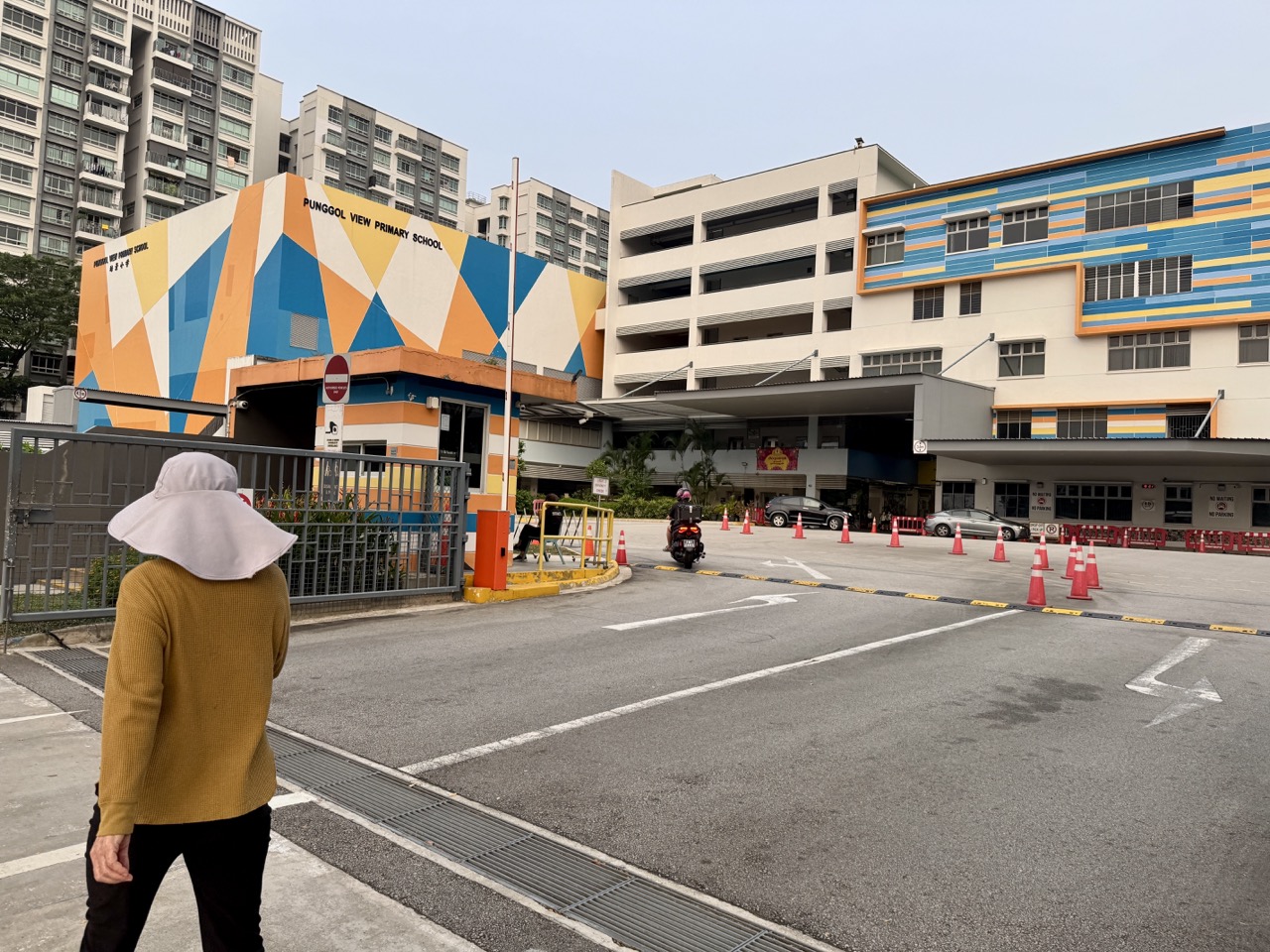
A major change in Singapore education support began in 2026: MOE expanded additional manpower and funding for schools supporting students from disadvantaged backgrounds from 100 schools to 157 schools. The Ministry expects around 20,000 students a year to benefit from stronger identification and coordinated support. For families in Punggol, this means it is worth asking not only about school-fee relief, but about whether the student’s actual learning, attendance and daily-life barriers can be addressed together.

The figures are national, not a published quota for Punggol. MOE has not used the announcement to promise that a particular school, class or child automatically receives a named support package. The programme’s published components are school-based interventions, after-school engagement and collaboration among schools, public agencies and community partners. A family needs to discuss its circumstances with its own school or relevant service rather than using a national percentage as an eligibility certificate.
This guide explains what is confirmed, why coordinated support matters, how parents can describe barriers without stigma, and which practical steps can help a child attend, participate and learn. The goal is not to make every household complete a long application for assistance it does not need. It is to make the right help easier to identify when a child is spending energy managing obstacles that adults could reasonably reduce.
The Essential Facts at a Glance
When: The expansion was announced in MOE’s March 2026 Committee of Supply package and applies from 2026.
Scale: Additional manpower and funding are being provided to 157 schools, an increase from 100. MOE estimates about 20,000 students will benefit annually. These are national figures, not a list of participating Punggol institutions.
Purpose: Better identification of students from disadvantaged backgrounds, followed by customised and coordinated support rather than a uniform programme that assumes every child needs the same thing.
Three announced routes: School-based interventions, after-school engagements, and ongoing collaboration with public agencies and community partners.
What remains school-specific: Exact services, timetables, referrals, which schools receive particular additional resources, individual eligibility and the outcome of a child’s assessment. Confirm all of these locally.
First action for a parent: Choose the most significant current barrier—regular attendance, food, transport, learning materials, homework environment, social support or another documented concern—and speak with the child’s school about existing help and referral pathways.
What the 157-School Announcement Actually Means
MOE’s 2026 statement is about strengthening the capacity of more schools to support learners whose circumstances make educational participation harder. The increase from 100 to 157 schools describes where extra manpower and funding will be directed under the announced expansion. It does not mean that only children enrolled at these 157 schools may receive any assistance, or that every pupil at those schools meets a particular financial threshold.
The estimate of 20,000 beneficiaries each year is likewise a planning figure. It should not be interpreted as 20,000 new scholarships, 20,000 school transfers, or 20,000 places in a separate institution. The forms of help may differ by school and by the child’s needs.
MOE identifies a coordinated design: find barriers earlier, provide support inside schools, offer additional engagement after school and work with other agencies and organisations where school action alone is insufficient. This design recognises that low participation may be linked to transport, household instability, limited adult availability or repeated disruptions—not necessarily to a child’s willingness to learn.
A sound local guide leaves these distinctions visible. No parent should make a housing decision or choose a Punggol school based on an invented claim that an unnamed campus has been guaranteed a specific slice of the funding.
Why Educational Disadvantage Cannot Be Reduced to One Number
Household income matters, but a child’s school experience depends on more than a figure entered on a form. Two families with comparable incomes may have different housing stability, caregiving arrangements, transport costs, working hours and access to space. A student may face several modest obstacles that become substantial when they occur at the same time.
Consider a pupil who arrives home hungry, cares for a younger sibling, shares a single device and then tries to complete an online task near midnight. The final incomplete assignment may look like a problem of effort. The more useful question is which resource or routine made completion unnecessarily difficult.
Another learner may have enough books and devices but repeatedly miss school because a caregiver’s shift starts before the available morning arrangements. A third may attend regularly but lack support interpreting school notices because the adults at home are unfamiliar with the current education system. These are different situations requiring different responses.
Avoid making moral assumptions from a bursary application or a student’s uniform. Need is a circumstance to understand, not an identity to impose. Effective support preserves dignity by treating the learner as a person with abilities and ambitions, not merely a collection of deficits.
The Difference Between School Support and Financial Assistance
A fee subsidy helps a family pay for schooling expenses. An educational intervention may help a child practise reading, attend regularly, organise assignments or receive timely guidance. A social-service referral may help with household matters that affect school participation. These services can complement one another, but they are not interchangeable.
MOE’s Financial Assistance Scheme has its own application and eligibility process. The 157-school capacity expansion is a separate policy announcement about additional school resources and coordination. Parents should not assume that approval for one scheme automatically grants every other form of support, nor that a child who is ineligible for a particular income-tested subsidy cannot receive any school guidance.
Families seeking help with official education-related costs can use MOE’s Student Finance System and the school’s published financial assistance contact. Current amounts and income thresholds should be checked there, because they are periodically updated and may differ by school type or scheme.
A helpful conversation explains both the practical need and the proper route. ‘We have difficulty paying this month’s school transport cost’ asks a different question from ‘My child cannot attend an after-school reading session because there is no pickup arrangement.’ A good support plan may need to address both.
The First Barrier: Getting to School Reliably
School attendance begins well before the first lesson. A child’s day can be disrupted by transport cost, changing adult shifts, an unavailable caregiver, long commutes or difficulty managing a complicated route. Before assuming non-attendance reflects indifference, examine the journey from the front door to the school gate.
A practical school conversation can describe the days attendance was difficult, what usually went wrong, who was available to help and whether a predictable alternative is possible. The aim is not to publish a family’s private schedule online; it is to give the appropriate staff enough information to consider available arrangements and referrals.
A small intervention may be highly valuable. Clear dismissal times, an agreed contact plan after absence, help understanding a school-bus arrangement or more predictable communications can reduce repeated disruption. But do not invent a free bus service or guarantee that every Punggol student will be offered one.
Measure the effect through regular, safe participation. A child who is present consistently can benefit from instruction, friendships and routines that fragmented attendance makes harder to sustain.
The Second Barrier: Food, Energy and the Ability to Concentrate
An academic lesson assumes a child can pay attention. Hunger, inadequate rest or inconsistent meals can make that difficult. School meal support is therefore connected to learning, even when it is administered as financial assistance rather than a direct teaching programme.
Families should check the current MOE financial assistance rules and any school-based support the child may qualify for. The precise benefits and start dates matter. Some subsidies take effect only after approval; a parent should not budget as though every earlier expense will be reimbursed.
The conversation can remain simple and respectful: ‘My child is regularly unable to buy a meal during the school day. What approved schemes or school support should we apply for?’ This gives staff a concrete issue to address without inviting public discussion of the household’s finances.
A teacher can notice patterns, but should not be expected to diagnose the full household situation from behaviour in a classroom. Support is strongest when the family, school and relevant agencies share information through appropriate channels and protect the child’s privacy.
The Third Barrier: Having Somewhere to Study
Punggol flats can be busy homes. The dining table might also be a place for meals, homework, a parent’s work and younger children’s activities. A learner may have little control over noise or the time when a shared space becomes available. This problem can affect children across income groups but can be especially difficult when alternatives are limited.
A productive plan distinguishes tasks that require uninterrupted concentration from tasks that can be broken into short intervals. Reading a brief passage may fit a quieter fifteen-minute slot. A timed digital assessment may require advance scheduling. Practising a musical instrument is different again.
Parents can discuss with the child which part of the homework routine fails most often. If space is the binding constraint, more instruction to ‘focus’ may not help. Consider whether an appropriate school-based or community learning space is available, while checking actual hours, age rules and supervision conditions.
Punggol Regional Library at One Punggol is an existing public resource, but the library is not a guaranteed supervised child-care service or a substitute for school arrangements. The correct question is which safe, accessible setting supports this child’s learning at the right time.
The Fourth Barrier: Devices and Digital Access
Schools increasingly use digital resources, but a family’s access is not accurately measured by whether someone in the household owns a smartphone. Required learning may depend on a suitable device, stable connectivity, account access, charging, a quiet place and enough time for the pupil to use the equipment.
Imagine three siblings sharing a working computer. The youngest needs an interactive language activity, the middle child a research presentation and the oldest a timed assessment. All three can be diligent and still encounter a resource conflict. The support problem is scheduling and access, not a lesson in discipline.
When requesting help, specify the required task, the available device, the time constraint and the consequence. Ask whether the school has authorised alternatives, devices or support arrangements. Do not assume a particular loan scheme applies universally; confirm the child’s eligibility and the equipment’s permitted use.
Where a child is using generative AI or external applications, privacy and academic integrity matter too. A free app is not necessarily a safe substitute for school-approved tools. Families should follow school technology rules and avoid uploading identifiable student information to unknown services.
The Fifth Barrier: Understanding the Instructions
A student may have access to a worksheet but still struggle with its language, assumed background knowledge or the amount of organisation required. Sometimes a learner is described as ‘behind’ when the immediate obstacle is understanding a task instruction, not the core concept being taught.
Take a Mathematics question that combines a bus timetable, several quantities and an instruction to compare rates. The student may be able to divide accurately but fail to identify which number is the numerator. Adding twenty arithmetic questions will not necessarily address the misunderstanding.
A better intervention checks the exact mental step. Can the learner explain the task in their own words? Identify the known quantities? Choose an operation for a reason? Review an error and then attempt a similar, unfamiliar item independently?
The same logic applies to reading comprehension, science explanations and writing. Well-coordinated academic support should connect practice to observed gaps rather than merely increasing volume. If the school has an appropriate intervention, ask what skill it targets and how progress is reviewed.
The Sixth Barrier: School Notices and Family Communication
Busy caregivers may read school communications late, share duties across households or struggle to understand the language of a formal notice. A student can miss an opportunity because an application deadline, consent form or after-school activity was misunderstood, even when the family values education highly.
Good communication is specific. It states what action is required, by whom, by when and through which official channel. Families can help by keeping one simple list of critical dates and identifying a reliable person to check notices where appropriate.
If a notice is unclear, contact the school rather than guessing from another family’s screenshot. Ask whether the deadline applies to your child’s cohort and whether an alternative arrangement exists if the family has a genuine difficulty. Be honest about the constraints without sharing unnecessary sensitive details.
This is an educational equity issue because knowing how to navigate institutions can determine whether a student actually receives an available service. Clear language and respectful school–home communication are not decorative extras; they are part of access.
The Seventh Barrier: Missing Work After an Absence
A short absence can create a longer learning problem when missing notes, homework, teaching and school messages accumulate. The child returns and finds the class has moved on. Then the learner may disengage because the first question in the new lesson depends on something they were not there to learn.
The remedy should begin with triage. Identify which missed concepts are prerequisites for the next lesson, which tasks are essential, which can reasonably be omitted or replaced and when the teacher expects the student to catch up. A clear, prioritised list often helps more than forwarding an entire pile of worksheets.
At home, give the child a small starting task that is achievable. Ask for the first unresolved question rather than insisting every missed item must be completed in one evening. The goal is reintegration into ordinary learning, not a punitive weekend of copying.
A school–family support plan may include a predictable point of contact or a staged catch-up schedule. Such arrangements are school-specific; ask what can reasonably be offered rather than treating the national support announcement as a fixed entitlement.
The Eighth Barrier: Feeling That Help Is Shameful
Some students hide difficulties because they do not want classmates to know their family is receiving support. Others worry that asking questions will make them appear less capable. Such feelings can keep real needs invisible even when services exist.
A respectful school environment can communicate that support is part of normal learning. Some children need extension in Mathematics; others need help interpreting a passage; another may temporarily need transport or meals support. None of these facts exhausts the child’s identity.
Parents can reinforce this by separating a circumstance from the child’s worth. Instead of saying, ‘You are a poor student who needs help,’ explain, ‘This arrangement is making the task difficult; we will find a more workable way.’ Language affects whether a learner is willing to speak early the next time a problem appears.
Staff should also consider confidentiality when arranging conversations and programmes. A family should be able to ask what information is necessary, who will see it and how decisions will be communicated. The details of another child’s support should not become school-gate gossip.
A Three-Layer Model for Coordinated Support
Layer one: immediate stability. Remove a barrier that prevents participation now. This could involve confirming access to meals, transport, necessary materials or a safe daily routine. If a child has an urgent safety or welfare concern, use the correct school or statutory channel immediately.
Layer two: learning repair. Once attendance and basic access are reasonably stable, identify the academic or organisational skill causing difficulty. Use short, targeted practice with timely feedback and an independent retry. Too much generic homework can increase exhaustion without improving understanding.
Layer three: sustained participation and agency. Help the learner maintain progress, build friendships, attend meaningful activities, ask for support and gradually assume appropriate responsibility. Review the plan so that assistance adapts as circumstances change.
The layers interact. A child may need learning support while a transport problem is still being resolved. This is not an official MOE three-layer classification; it is a practical way for families to understand why coordinated support is more useful than one isolated intervention.
The Role of After-School Engagement
MOE specifically names after-school engagement as one of the components of its expanded support approach. The purpose may include helping students stay connected to learning and appropriate activities beyond regular lessons. But the national announcement does not provide a universal timetable or guarantee identical programmes at all 157 schools.
A parent should ask what the actual school offers, who supervises it, which children it serves, whether there are costs, and how transport or pickup works. A programme that is educationally valuable can still be inaccessible if a caregiver cannot safely collect the child afterward.
After-school participation is not only academic remediation. Depending on what is actually offered, an activity may help a child build confidence, routine, relationships and a positive connection to school. Those outcomes matter alongside marks.
Evaluate the fit. Is the learner supported rather than overwhelmed? Does the schedule leave enough time for meals and sleep? Does the child know why the activity exists? An intervention should improve the child’s week rather than becoming another obligation the family cannot sustain.
Why Community Partners Matter
Some learning barriers sit outside the school’s direct authority. A housing, employment or family-care issue cannot be solved simply by a teacher assigning a different worksheet. MOE’s emphasis on collaboration with public agencies and community partners recognises that different organisations have distinct responsibilities.
For example, a family may need help navigating social assistance or ongoing case support. MSF’s ComLink+ programme has its own eligibility and family-coaching arrangements, focused on stability, self-reliance and social mobility. It is not the same as a school programme and should not be presented as an automatic package for every pupil in the 157-school expansion.
A useful coordinated plan identifies who owns each action. The school might clarify academic catch-up and attendance communication. The family might provide relevant documents through an authorised channel. An appropriate public agency may assess eligibility for a separate service.
Coordination works best when it reduces repeated storytelling, missed referrals and contradictory advice while respecting consent and the lawful handling of personal data. A family should understand the role of each contact rather than being sent from office to office without an agreed next step.
A Punggol Primary School Family Case
Consider a hypothetical Primary 2 learner at a Punggol school. A caregiver works rotating hours; the child often misses a reading activity because morning arrangements are unstable. At home there are age-appropriate books, but no consistent adult reading slot.
The school first checks attendance patterns and listens to the family rather than assuming lack of interest. Together they identify the morning handover as the most disruptive issue. The family asks about appropriate support and clarifies what an ordinary school-day catch-up should look like.
A teacher selects a short reading routine targeting the child’s comprehension level and checks progress after several weeks. The learner practises one familiar text pattern, then attempts a new passage without being prompted at every word. The parent receives concise guidance that fits the family’s working hours.
Success is not a dramatic story in which every problem vanishes. It is more reliable attendance, a manageable routine and evidence that the child understands more of the texts encountered. The example is illustrative, not a report of a particular school or family.
A Punggol Secondary School Family Case
Imagine a Secondary 2 student who attends consistently but submits incomplete Mathematics assignments. The student has a school device and knows how to log in. A generic solution would be to assign a larger practice package or advise the family to buy tuition.
A closer look shows that the student struggles to translate word problems into equations, then avoids starting tasks that resemble earlier failures. The first intervention is academic: diagnose the reasoning gap, work through a few suitable examples and have the student independently explain the solution on a new question.
Meanwhile, the family discusses a realistic study time and asks whether the school has appropriate academic or mentoring support. If the student is also experiencing stress, the proper school support contact should be considered.
Progress is visible when the learner begins tasks with less prompting and can repair errors. A policy that increases support capacity is meaningful when it enables this kind of specific, sustained help—not simply a larger quantity of completed pages.
A Family with Two Children and One Device
In another illustrative Punggol household, one child needs digital assignments for Primary school while an older sibling is preparing for SEC-level subjects. Both have legitimate needs but share one suitable computer and a home connection that becomes unreliable during peak use.
The parent can document the actual resource conflicts over a week without sending private account credentials to anyone. The student explains which tasks are timed and which can be completed offline. The family asks schools whether deadlines can be anticipated and whether approved equipment or access arrangements exist.
At home, the children agree on short device-use windows, with buffers for technical failure and clearly distinguished essential from optional tasks. The parent checks whether public learning spaces are suitable and safe for the children’s ages.
The lesson is that ‘digital access’ is not a yes-or-no label. A workable education system considers when a resource is available and whether the learner can use it independently in time.
A Family Returning After a Difficult Term
Imagine a Primary 5 child who has missed several weeks of regular study because of a disruptive household event. The family feels overwhelmed by the prospect of catching up in every subject immediately. A well-intentioned adult may set an unrealistic schedule that increases resistance.
Start with current safety and welfare needs where relevant. Then identify the prerequisite knowledge for the next set of lessons. For Mathematics, this might be fractions or ratio rather than all missed topics in chronological order. For English, it might be reading inference or paragraph organisation. Choose a small daily practice routine and verify progress after each block.
The school and family can agree on which assignments matter most and how updates will be communicated. Short, visible successes can rebuild agency. A pupil who can answer ‘Here is the next question I can do’ has a more useful starting point than one facing a large undifferentiated backlog.
This case illustrates why customised intervention, rather than a single fixed catch-up worksheet, is educationally important.
A Student Who Needs a Safe Way to Ask for Help
A child can be academically capable and still struggle to approach an adult. They may fear reprimand, feel embarrassed, or be unsure which teacher or officer is appropriate. In such cases, giving the family a list of ten services without an entry point may not solve the access problem.
A more usable plan identifies one trusted school contact, the kind of concern that can be raised, and a way the child can request help. A short message, an agreed check-in or a private conversation may be easier than speaking in front of a class.
Adults should take the concern seriously without promising outcomes outside their authority. If the issue requires specialised attention, help the family reach the appropriate person instead of improvising a diagnosis. For urgent safety risks, follow safeguarding and emergency procedures.
The long-term educational aim is not to keep the learner dependent on an adult escorting every decision. It is to build confidence in recognising a difficulty early, communicating it accurately and using suitable resources.
How to Make an Effective Request to the School
Begin with a concise statement of the observed difficulty and its practical effect. ‘My daughter missed three mornings because the adult pickup arrangement broke down’ is clearer than ‘Our family is always treated unfairly’. ‘My son cannot complete timed online assignments because the shared computer is used by another sibling’ identifies a constraint that can be discussed.
Provide enough relevant information for an assessment, while avoiding unnecessary personal disclosures. Ask which official school process applies, what documents are needed, when the family can expect a response and who will follow up. If a particular programme is unavailable, ask about appropriate alternatives or the correct referral.
It is reasonable to take notes after the conversation. Record the agreed action, person responsible and review date. Avoid recording another student’s case or forwarding sensitive messages to unrelated parent groups.
When a family is declined a particular benefit, request a clear explanation of the applicable criteria and any legitimate appeal route. Disagreement should remain about evidence and rules, not personal accusations.
What a Student Support Plan Should Contain
A workable plan begins with the student’s present strength and the most important obstacle. It identifies one or two priority outcomes that the learner, family and staff can recognise. A goal such as ‘complete the essential weekly assignments on time with no late-night device conflict’ is more concrete than ‘be responsible’.
The plan should say what support is available, who provides it and how the student will participate. It should also state when progress will be reviewed. If a strategy is not helping, the response is to reconsider the diagnosis and the design, not to insist that the learner must simply try harder.
Keep the number of goals manageable. A child whose attendance, study space, confidence and vocabulary all require attention may need staged priorities. Effort becomes more effective when it is concentrated on the barrier with the greatest downstream effect.
The plan should eventually reduce dependence where possible. The highest-quality support is not necessarily the one with the most adult interventions. It is the one that helps the student engage more securely and independently over time.
Follow-Up Measures That Matter More Than a Headline Number
A national beneficiary figure tells us the scale of policy ambition. It does not tell a particular family whether support has helped. That requires measures close to the child’s lived experience.
Attendance can be assessed through regular, safe school participation. Homework access can be assessed through whether essential work is completed within reasonable hours. Academic help can be assessed through independent performance on new questions. A mentoring activity may be evaluated through the child’s sense of belonging and their ability to ask for help.
A family can also look for reduced crisis management: fewer missed notices, fewer last-minute device arguments, a clearer contact point and less confusion about the next required action. Small improvements in systems can protect energy for actual learning.
Do not use an individual child’s data to claim that a national programme is universally successful or unsuccessful. Policy evaluation requires broader evidence. Personal progress remains meaningful, but its scope should be described accurately.
A Four-Week Starting Plan
Week one — observe: Identify the recurring barrier, record only relevant facts, talk with the learner and check any immediate welfare or safety concern. Avoid designing a complicated programme before the problem is understood.
Week two — contact: Speak with the school about available help and appropriate referral routes. Where needed, check the current Student Finance System and official financial assistance information. Clarify which actions can begin immediately.
Week three — stabilise: Put the agreed routine into practice. Keep goals small enough to sustain: a reliable morning handover, an accessible reading slot, a device schedule or targeted learning practice.
Week four — review: Compare the situation with the first week. Is school participation more reliable? Are the essential tasks manageable? Is the child able to explain the next step? Decide with the school whether the arrangement should continue, be adjusted or be escalated.
This is a proposed family process, not a mandatory four-week MOE intervention cycle. Follow school-specific timelines and urgent support arrangements where they apply.
How Teachers Can Avoid Mistaking Symptoms for Causes
An incomplete worksheet is an observation, not an explanation. It might arise from missing prerequisite knowledge, confusing instructions, lack of study time, an absence, distress or a device conflict. Asking the student to do more of the same work can reinforce the original difficulty.
An efficient diagnostic sequence starts with a short sample of the task and a discussion of the point where the learner stopped. If the student can solve an easier version independently, add one new demand. If the student cannot explain the instruction, simplify the language before testing the mathematics. If the student understands but lacked access, work on the resource arrangement.
This process can be applied without publicly labelling a pupil. It helps teachers allocate limited support time more precisely. It also provides clearer evidence when additional services are appropriate.
The educational principle is first-principles repair: identify what is not yet stable, teach that component, practise it in context and check transfer later. Support that fails to identify the cause is more likely to create work than improvement.
How Schools Can Protect Dignity in Service Delivery
Privacy should be part of the design, not an afterthought. A child should not need to announce a family income, disability, parental job loss or counselling history to classmates in order to access school help. Public attention can deter participation.
Schools and agencies should collect information for defined purposes through their official channels. Families can ask who has access and why it is needed. Parents should likewise refrain from circulating another household’s subsidy status in chat groups.
Language matters. Describing a pupil as a learner receiving additional support is more respectful and more accurate than treating disadvantage as a permanent personal identity. Celebrate effort, competence and growth while taking barriers seriously.
Good dignity safeguards are compatible with accountability. A family can provide documents to the correct authority and participate in reviews without their child’s private circumstances becoming part of a public conversation.
What This Expansion Is Not
It is not a declaration that every Punggol Primary or Secondary school is among the 157 recipients. It is not a replacement for the MOE Financial Assistance Scheme. It does not create an automatic entitlement to free tuition, a particular after-school place, a device or school transport.
It is also not a school admission scheme, a change to national examination scoring or an assurance that every student supported will achieve a particular grade. MOE’s published announcement concerns additional manpower, funding, identification and coordinated support.
Families should be cautious about advertisements that invoke the 20,000-student figure to claim a commercial programme is government approved. Check directly with official institutions. School support and the services of a private provider are different matters.
Equally, do not conclude that the initiative is irrelevant if a child does not receive direct funding. A strengthened school process, clearer referral or improved coordination can still matter. The actual effect needs evidence.
Seven Mistakes Families Can Avoid
Assuming the school has the same programme as another school. Ask for the current local arrangement and eligibility before relying on a neighbour’s experience.
Treating one rejected subsidy as the end of all possible help. Different services have different purposes and rules. Seek guidance on the relevant alternatives through proper channels.
Over-disclosing sensitive information. Share what the authorised service needs, not entire personal histories in public parent chats.
Blaming a child for a logistics problem. Observe whether the task was actually possible with the resources and time available.
Solving every issue with more tuition. Extra teaching is unlikely to repair an unstable journey, missed meals or the absence of a workable study slot.
Starting too many interventions simultaneously. Stagger changes so the learner and family can see which adjustment helps.
Forgetting the child’s voice. The learner may identify the most disruptive obstacle more accurately than adults do.
Questions Parents Should Ask in 2026 and 2027
Which support programmes does this school currently operate, and which learners are they designed to serve? What is the correct way to raise concerns about access or attendance? Does the school have a staff member who can coordinate support when several difficulties occur at once? What information is genuinely necessary to consider a referral?
Ask whether school-based academic help targets a particular learning gap, how independent progress is checked, and whether the timetable is manageable. If the school proposes an after-school programme, confirm supervision, transport, pickup times, cost and participation requirements.
For financial assistance, ask about eligibility, documents, effective dates and what happens when family circumstances change. A school should be able to direct families to current official information without promising an award before assessment.
Finally, ask what to do if the proposed arrangement is not working. A plan without review can become a permanent burden rather than a pathway to improvement.
Frequently Asked Questions
Are exactly 157 schools in Singapore getting more support in 2026?
MOE announced additional manpower and funding for 157 schools, up from 100, as part of its 2026 measures. Check for subsequent official updates.
Does the figure mean all 157 schools are in Punggol?
No. It is national. The announcement does not supply a claim that every Punggol school is included.
Is the 20,000 figure the number of Punggol pupils receiving help?
No. MOE estimates around 20,000 students nationally benefit annually from the strengthened support arrangements.
Can a child benefit without receiving a scholarship?
Potentially. MOE’s stated categories include school-based support, after-school engagement and coordinated services, which should not be equated automatically with scholarships.
Is the scheme the same as MOE FAS?
No. MOE FAS is a financial assistance mechanism with its own criteria. The 2026 announcement concerns additional school capacity and coordinated interventions.
Does a child’s nationality affect financial assistance eligibility?
The conditions depend on the specific scheme. Check MOE’s current official Student Finance guidance and the school’s instructions rather than extrapolating from another family’s application.
Can I demand placement in a particular after-school programme?
The national announcement does not guarantee a specific programme or place. Ask the school about suitability, vacancies, support and alternatives.
Will the school pay for a private tutor?
Do not assume that. No such universal entitlement follows from the announcement.
What if my child is doing poorly but our income is not low?
Academic guidance and income-tested support are different matters. Start by discussing the learning difficulty with teachers and asking about appropriate school resources.
What if our family finances change suddenly?
Inform the school or relevant agency using the appropriate channel and ask which current financial or social support rules may apply.
Can a school refer a family to a community partner?
MOE explicitly describes collaboration with public agencies and community partners as part of the approach. Individual referrals depend on the situation and the relevant service’s own rules.
How soon should we expect an intervention to work?
There is no universal timetable. Set a realistic review point based on the problem and the agreed plan, rather than expecting an immediate grade increase.
Is this a new national examination?
No. It is a student-support initiative, not a change in SEAB examination format.
Can a family protect its privacy while applying for help?
Use official channels, ask what information is required and avoid circulating sensitive documents in public groups. Specific programmes may need documentary evidence for eligibility checks.
Does additional support mean the child is less capable?
No. Educational participation depends on opportunities and circumstances as well as skills. A need for resources or targeted teaching does not define the learner’s potential.
Is this article a list of schools receiving funds?
No. It explains the confirmed national measure and how families can engage with their own schools without inventing a local allocation list.
Primary Sources and Related Punggol Guides
The controlling national source is MOE’s Committee of Supply 2026 announcements, particularly the section on strengthened support for students from disadvantaged backgrounds. For eligibility-based school-cost assistance, see MOE’s Student Finance System. To understand separately administered family case support, refer to MSF’s 2026 ComLink+ and family support announcements.
Within eduKate Punggol, the Learning Support in Punggol Schools guide explains academic and additional-needs channels, and the School Counselling and Student Support guide covers other school services. The Education and Town-Life Index helps locate further stage-specific guidance without confusing those schemes with this new funding expansion.
What Success Would Mean for One Punggol Student
A policy that reaches 157 schools and aims to benefit around 20,000 students each year is significant. Yet the test for one household is much smaller and more demanding: is the child safely attending, participating meaningfully, learning what was previously inaccessible and becoming better able to ask for help?
Education changes when an obstacle is identified accurately and the next support action is clear. A predictable journey, a reliable meal, access to a device, a comprehensible instruction, a targeted learning repair and a trusted adult may each look modest alone. Together they can protect the time and attention the child needs to learn.
For Punggol families, the right next move is not to guess which schools received which funds. It is to take a specific concern to the responsible school or agency, ask what is available now and review whether the arrangement truly helps the learner. That is a practical way to interpret the 2026–2027 support expansion without turning a national commitment into an unverified individual promise.
Reviewed on 23 October 2026. Figures and announced support categories are attributed to MOE; home examples and suggested review processes are illustrative, not a published MOE eligibility schedule or a promise of benefits.


