
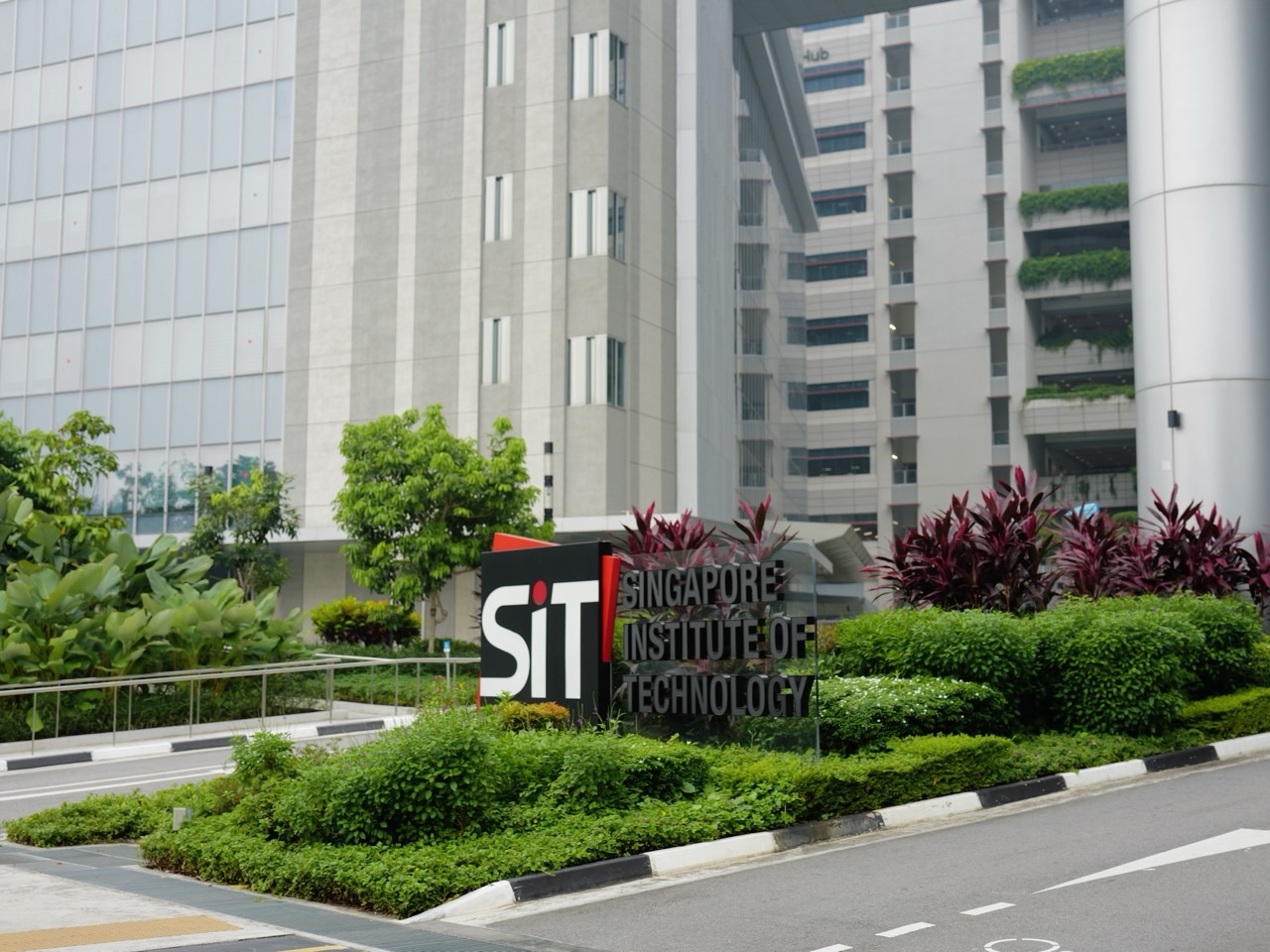
Quick answer: The OCBC Analytics and Innovation Lab at Singapore Institute of Technology (SIT) Punggol Campus gives eligible university students an applied-learning connection to finance, coding, data analytics and fintech AI. OCBC and SIT also announced intended community outreach on financial literacy, planning and retirement, together with a separate bond-free scholarship scheme for selected undergraduates. That does not mean every Punggol resident can walk in, use a Bloomberg terminal or claim an education grant.
OCBC’s September 2024 announcement says the university lab was designed for a capacity of up to 100 Bloomberg terminals and had more than 30 at the time of reporting. Capacity is not an installed count, and a historical installed count is not live availability. The same partnership established the OCBC SIT Scholarship, listed at S$11,000 a year for approved students in specified degree programmes, subject to current scholarship conditions. Read OCBC’s official partnership announcement for the source.
For a Punggol family, the lasting opportunity begins before university. Children can learn how to make responsible budgets, check percentages, clean a small dataset, write an honest explanation and recognise the limits of a model. Older learners can use those foundations to compare degrees or real roles in software engineering, analytics, digital services and banking technology. None of the exercises here recommends trading, opening a particular financial product or disclosing real household financial details.
What has actually been announced—and what has not?
| Development | Confirmed basis | Do not assume |
|---|---|---|
| SIT financial analytics lab | Academic facility for financial analysis and fintech innovation | Open public trading or walk-in terminal access |
| Bloomberg terminals | Designed capacity of up to 100; more than 30 reported in 2024 | 100 terminals are installed or available today |
| Community financial education | Partnership objective includes financial-literacy and planning workshops | Weekly sessions or a guaranteed seat on a chosen date |
| OCBC SIT Scholarship | Listed annual award for selected eligible SIT students | All Punggol residents or all degrees qualify |
| OCBC Punggol office development | Separate innovation hub originally targeted for Q1 2027 completion | Same location and access rules as SIT’s lab |
| Internship partnership | Originally announced with scholarship and applied learning | Permanent job guarantee for every successful applicant |
The word ‘nearby’ is important but easy to overstate. A Punggol child can see a university in the district and understand that a future qualification may connect knowledge to work. Yet students still have to meet academic prerequisites and selection conditions. A community outreach announcement requires a real event date, audience, registration route and supervision before it becomes an activity that a family can attend.
Why financial data belongs in a school’s Mathematics and English lessons
In a school worksheet, a percentage is sometimes treated as a technique to be memorised. In real life, the denominator decides whether a statement is meaningful. A company may announce that revenue rose by 20%, while costs rose even faster. A product may have a large discount on a higher original price. A monthly budget can balance on paper while forgetting irregular expenses. The ability to ask ‘Twenty per cent of what?’ is a significant financial skill.
English is equally useful. An analyst who cannot say where the data came from, explain a caveat or communicate a calculation may cause people to misunderstand a result. A carefully written sentence such as ‘Among our 40 fictional survey participants, 15 expressed interest’ is more reliable than ‘Punggol customers want this service’. It identifies the actual sample and avoids claiming more than the evidence shows.
Computing makes it possible to repeat large calculations consistently, but it also makes errors scale. A program that counts refunds as revenue or silently replaces missing values with zero may produce a convincing wrong number every time it is run. Students therefore need to understand the data, check exceptions and describe uncertainty before describing themselves as competent in analytics.
Worked example 1: percentages do not always cancel
Consider a fictional investment-like value of S$100. A 20% increase makes it S$120. A subsequent 20% decrease is calculated from S$120, giving S$96. The combined operation is 100 × 1.20 × 0.80 = 96. Therefore a rise of 20% followed by a fall of 20% gives a 4% decline compared with the initial amount.
The numbers are deliberately hypothetical. They are not market prices or a prediction. They illustrate a general mathematical idea: the percentage base matters. Ask the learner to apply the same reasoning to successive retail discounts, an increased price followed by a reduction, or a change in a school’s event budget.
Worked example 2: compound growth requires a stated assumption
Suppose S$1,000 earns a purely illustrative 2% per year for three years, with no deposits, fees, taxes or withdrawals. Under simple interest, each year adds S$20 and the total is S$1,060. Under annual compounding, the ending value is 1,000 × 1.02³ = approximately S$1,061.21. The difference comes from interest being earned on an earlier year’s accumulated interest.
| Year | Simple interest illustration | Annual compounding illustration |
|---|---|---|
| Start | S$1,000.00 | S$1,000.00 |
| 1 | S$1,020.00 | S$1,020.00 |
| 2 | S$1,040.00 | S$1,040.40 |
| 3 | S$1,060.00 | S$1,061.21 |
No bank is offering the rate in this example. Real financial products have terms, changing rates, fees and eligibility conditions. A student who understands how an assumption changes a result is learning something more enduring than a particular advertised yield.
Worked example 3: choose the right average
A fictional school club sells 10 items at S$4 and 30 items at S$2. Revenue is S$40 + S$60 = S$100. Across 40 items, the average sale price is S$2.50. However, the simple average of the two displayed product prices is S$3.00. Both calculations can be correct, but they answer different questions.
This is the foundation of weighted-average reasoning. An analyst must identify whether an average gives equal weight to categories, customers, transactions or quantities. Students can apply the idea to school test components, transport fares or hypothetical sales without buying or trading anything.
Worked example 4: profit and margin are different comparisons
Fictional Company A reports S$1,000,000 of revenue and S$100,000 of profit. Fictional Company B reports S$600,000 of revenue and S$90,000 of profit. A has larger total revenue and profit, but B’s simplified margin is 15%, compared with A’s 10%. These figures alone do not determine which business is safer or worth more.
| Measure | Company A | Company B |
|---|---|---|
| Revenue | S$1,000,000 | S$600,000 |
| Profit | S$100,000 | S$90,000 |
| Simplified margin | 10% | 15% |
| Cash flow | Unknown | Unknown |
| Debt | Unknown | Unknown |
| Investment conclusion | Insufficient information | Insufficient information |
Students should learn to stop when evidence is missing. The correct conclusion is not ‘we cannot do anything’; it is ‘we can compare the stated metrics and identify the additional information required’. That is professional data literacy.
What children can learn without a Bloomberg terminal
A Primary pupil may practise paying for fictional purchases, giving correct change and distinguishing necessary from discretionary spending. An upper-primary child may build a simple weekly budget and explain which irregular cost would change it. Secondary students can clean an invented transaction table, create a chart and identify a misleading claim. Older learners can experiment with reproducible programs, hypothesis testing and responsible model evaluation.
| Stage | Safe learning activity | Evidence of understanding |
|---|---|---|
| Primary 1–2 | Count money and explain change for an imaginary purchase | Accurate calculation and explanation |
| Primary 3–4 | Track a fictional school spending plan | Budget with categories and a checked total |
| Primary 5–6 | Compare percentage discounts | Correct starting base and interpretation |
| Secondary 1–2 | Create a mock dataset and graph | Units, definitions and stated limits |
| Secondary 3–4 | Write a small data-cleaning or classification project | Tests, exceptions and meaningful evaluation |
| Post-secondary | Compare recognised academic and professional learning routes | Original assessed project and honest skill inventory |
Avoid treating every school project as an early investment exercise. A child does not need a share-trading account, family bank statements or a credit product to understand financial data. Paper examples and supervised spreadsheets can teach the foundational skills with much less risk.
Project 1: a fictional Punggol school canteen data dashboard
Prepare 40 invented transactions with fields for date, item name, unit price, quantity and a status of completed or refunded. Deliberately insert a duplicate, a blank value and an inconsistent date format. Students should first define rules for handling those cases. They can then calculate totals and make one chart comparing item categories.
The assessment is not who has the most colourful graph. It is whether another learner can reproduce the totals, whether refund transactions were handled correctly and whether missing values were documented rather than silently set to zero. A student should explicitly label the material as invented and should not seek private canteen sales information.
An older learner may write a simple validation script, but that is only useful when they can test it. Feed the program an empty file, a duplicate and an unusual value. Describe what happens, whether an error is reported and how the result is verified. The error handling is part of the skill.
Project 2: an accessible budget explanation for a fictional family
Create a pretend household earning S$4,500 in monthly net income and having S$3,200 of identified essential expenses. The initial remainder is S$1,300. Give the family a sudden S$300 repair and ask students to describe how the remainder changes. Then ask what other information they would need before designing a responsible real budget.
The purpose is not to judge actual Punggol families or rank children by allowance. Real households have different commitments, dependants, income patterns and needs. A classroom model should support empathy and clear reasoning rather than pressure students to disclose family financial information.
A strong learner also distinguishes a plan from available cash. A household may expect a payment next month but cannot spend that future receipt twice today. This introduces cash-flow awareness without requiring formal accounting.
Project 3: a fictional fraud-warning decision tree
Use made-up account notifications to explore how a person can recognise unexpected demands and verify through independently known official channels. Students should avoid building convincing fraudulent messages, requesting credentials or testing real accounts. The decision tree can recommend stopping, checking and seeking appropriate assistance when uncertainty remains.
The best part of this exercise is language precision. A suspicious feature is a warning sign, not necessarily proof of fraud. A student should explain what is known, what remains uncertain and which safe action follows. This same reasoning matters when testing AI models.
Project 4: interpret a chart before repeating the headline
Give students ten fictional monthly values and ask them to create two honest visualisations with clearly labelled axes. Then show them a misleading version with an omitted date range or unclear scale. The class should explain how a visual choice changes a reader’s impression even though the underlying dataset may be the same.
The learner must produce one supported statement, such as ‘the fictional monthly total increased in six of the nine month-to-month comparisons’, and one unsupported statement, such as ‘our software caused the improvement’. This teaches the difference between description and causal explanation.
Which SIT degrees does the OCBC SIT Scholarship identify?
The official OCBC SIT Scholarship page specifically identifies six degree routes. Families should use its exact current wording rather than assume the award covers every technology or business programme.
- Bachelor of Science with Honours in Applied Artificial Intelligence.
- Bachelor of Science in Applied Computing (via the Competency-based Stackable Micro-credential Pathway).
- Bachelor of Engineering with Honours in Computer Engineering.
- Bachelor of Science with Honours in Computing Science.
- Bachelor of Engineering with Honours in Information and Communications Technology (Information Security).
- Bachelor of Engineering with Honours in Information and Communications Technology (Software Engineering).
The listed award is S$11,000 per year for the course of study, up to four years, subject to eligibility and continued selection requirements. OCBC’s original announcement described five bond-free scholarships each year and internship opportunities, but a family should verify current conditions and application dates directly with SIT. Acceptance into a degree is not an automatic scholarship decision.
For Secondary students, the immediate priority is not submitting a scholarship form years too early. It is understanding the eventual qualification route, maintaining solid school foundations, exploring the kind of work the degree involves and keeping a record of genuine project learning. Older applicants should check academic entry requirements separately from award requirements.
Where the bank’s planned community education fits
OCBC and SIT’s partnership announcement mentions educational outreach on financial literacy, financial planning and retirement planning for Punggol residents. This is distinct from admitting students to a degree or granting open use of terminals. A parent or senior should look for a named, currently advertised event with its date, audience, registration route and access instructions.
A senior learner may want a clear explanation of everyday financial terms and safe verification practices rather than specialist programming. A parent may want a family-budget activity. A university student may need formal analytics training. These audiences have different educational goals; one campus partnership can support several routes only when the organiser actually offers the relevant service.
Frequently asked questions
Can the public use the OCBC Analytics and Innovation Lab?
Unrestricted public access has not been established. Use only authorised academic or event arrangements.
Are there 100 Bloomberg terminals?
The official announcement describes design capacity up to 100 and more than 30 then installed. Those figures do not establish a current operating count.
Is the lab the same as OCBC’s Punggol innovation hub?
No. The SIT lab is an educational facility, while the bank’s innovation hub is a separate workplace development.
Will there be financial-literacy workshops for Punggol residents?
The institutions announced that intention, but a confirmed session requires an actual date, eligibility and registration.
Is the scholarship S$11,000 in total?
SIT lists S$11,000 annually, tenable for up to four years under the scheme’s conditions.
Can every SIT student apply?
No. The official page lists specific eligible undergraduate degree programmes and selection rules.
Does the scholarship guarantee an OCBC job?
No. Internship opportunities and scholarship support do not mean a guaranteed permanent position.
Can a Secondary 1 pupil learn fintech without investing?
Yes. Budgeting, percentage calculations, data cleaning, basic coding and privacy are suitable foundations.
Does studying fintech mean choosing shares?
No. Financial technology includes payment systems, software security, analysis, user interfaces and more.
Why must a student label fictional data?
To prevent readers confusing classroom exercises with authentic institutional, business or customer records.
What Punggol families should take away
The OCBC–SIT learning link creates an opportunity to see how mathematics, software, data and professional responsibility meet in a real institution. It does not eliminate eligibility rules or turn proximity into a career offer. A younger child can begin with accurate arithmetic and careful explanations; a Secondary learner can build a tested mock dataset; an eligible SIT applicant can investigate a named degree or scholarship.
A credible learning journey is built from a real question, a defensible calculation, an honest recognition of missing information and a responsible decision about what to do next. Those habits will remain useful as Punggol’s educational and commercial district develops.
Project 5: compare an AI classifier with a transparent rule
Give a Secondary computing club thirty fictitious spending descriptions. The classroom task is to place them into four categories: transport, food, learning and other. Students first create a simple rule such as ‘if the description contains an approved transit term, label it transport’. They then compare their rule with a supervised AI-assisted draft where permitted by school policy.
Prepare an agreed reference answer for the fictional dataset and record all differences rather than quietly changing the test. If a method correctly labels 27 of 30 examples, its observed accuracy is 90% in that deliberately small sample. The learner must not claim that this score proves the system can manage real bank transactions. New categories, ambiguous words, refunds, language differences and personal information would create problems not captured by the class test.
The most valuable discussion is often about disagreement. Why did the rule misunderstand ‘school bus lunch outing’? Should one purchase fit two categories? Could an individual override the suggested label? Which decisions require a human? These questions introduce model evaluation and product design without requiring access to customer data or banking infrastructure.
Project 6: prepare a plain-English retirement worksheet, not financial advice
The OCBC–SIT collaboration lists retirement planning among its intended community education themes. A classroom can explore the vocabulary using an imaginary older adult whose monthly essential expenses and irregular costs are supplied by the teacher. Students should identify what the worksheet can calculate and, equally, what real-life information is missing.
A fictional individual may have S$1,600 in listed monthly essential costs, an additional S$200 in optional activities and several annual expenses that occur at different dates. The student can convert the annual expenses into a rough monthly planning equivalent, but they should not treat an averaged figure as cash available on every day. Timing and liquidity matter.
Actual retirement decisions may involve CPF, healthcare, caregiving, housing, insurance, taxes and inflation, and different people have different circumstances. A school worksheet is not a substitute for official scheme rules or qualified guidance. The student should avoid asking grandparents to reveal their financial balances or using a family member’s situation as a public case study.
The communication task is to design a page an older person can read comfortably: clear labels, sensible type size, consistent definitions and a short explanation of uncertainty. A well-written financial-literacy guide may be more beneficial than adding a colourful chart whose meaning is hard to interpret.
Project 7: test a fictional spending alert with ethical user research
Imagine a digital interface that warns a user when a planned transaction exceeds a self-selected budget threshold. Ask the team to draw two mock screens with fictional values and test them with consenting peers. Do participants understand the alert? Do they feel pressured or confused? Does the message explain which information was used and what the person can do?
The exercise should not connect to a real account or attempt to monitor classmates’ purchasing habits. A mock alert can be tested with paper and harmless invented scenarios. The students can still evaluate whether a message is accurate, respectful, accessible and useful.
Ask them to distinguish a warning from an instruction. A budget notice may suggest checking the planned spending, but it should not pretend to make a personal financial decision for someone without knowing their circumstances. Designing a system that supports judgement rather than replacing it is an important financial-technology skill.
Project 8: what is the opportunity cost of an attractive offer?
Provide a fictional student with S$60 in saved allowance. They can spend S$40 on a hobby item now or keep the money for a school activity in two months. The numbers alone do not prove one option is better. Students should identify what matters to the person, whether additional funds may be needed and which goal they are choosing to delay.
Then offer a mock promotion: ‘Spend S$50 and receive S$10 off.’ A student who originally intended to spend only S$30 should not assume that spending more becomes a saving merely because the advertisement uses the word discount. The correct comparison is the amount paid and what is obtained, not the face value of the promotion.
This exercise helps families teach thoughtful decisions without moralising about enjoyment. It builds the transferable ability to compare an option with what must be given up.
Project 9: explain the difference between profit and cash
Consider a fictional school enterprise that records S$200 in sales but receives only S$80 immediately because the rest is due later. It has S$70 of expenses that must be paid now. A simple profit calculation may make the project look successful, yet the cash available after the immediate payments is only S$10, before other obligations. Money expected from buyers later is not identical to money on hand today.
Students can construct a timeline showing when invoices are issued, when money is received and when suppliers must be paid. They can also discuss what happens if the expected payment is delayed. This teaches why enterprises can face cash difficulties even when a projected income statement looks attractive.
The example must remain within school rules. Children should not be encouraged to extend consumer credit to classmates or collect debts from one another. A paper simulation gives the full mathematical learning benefit without turning a classroom into a risky lending exercise.
Project 10: investigate whether a budget chart tells the whole story
Give students two fictitious months with different family commitments. In one month, transport costs increase because a person takes more trips to attend appointments. A chart alone may show higher spending, but the conclusion ‘the family managed money worse’ is unwarranted. The cause and purpose of a spending change matter.
Ask the student to write two versions of a summary. The careless version blames the family for spending more; the careful version reports the observed change, notes that the reason is not yet known and identifies what could legitimately be investigated. This teaches responsible language as well as the limits of data.
For a computing extension, let students add a short contextual note field to the fictional dataset. The aim is not to collect sensitive personal narratives, but to demonstrate that numbers often need interpretation. Professional banking analytics similarly involves regulatory, privacy and fairness responsibilities.
How financial-data jobs differ from one another
| Career direction | Typical learning emphasis | Common misunderstanding |
|---|---|---|
| Financial data analyst | Statistics, data quality, financial concepts, communication | A graph alone establishes a correct decision |
| Software engineer in finance | Programming, security, testing and reliable services | Finance software is mainly about choosing stocks |
| Cybersecurity specialist | Systems, authorisation, risk and incident response | Any publicly accessible system can be tested without permission |
| Product designer | User experience, accessibility, clear service rules | An attractive interface guarantees understanding |
| Business analyst | Requirements, process mapping and stakeholder needs | A certification alone proves every workplace capability |
| Risk and governance professional | Policies, evidence, compliance and appropriate oversight | A model score replaces legal or ethical judgement |
Students should read actual job descriptions before choosing an academic pathway. Titles that sound similar may require different levels of mathematics, programming, professional experience or regulatory understanding. A child who enjoys visual communication might find product design more appealing than quantitative modelling, while another who enjoys logical debugging may prefer software reliability.
The point is not to narrow ambitions prematurely. It is to test an interest with a small original project and identify the schooling foundations that preserve appropriate future choices.
How to develop a portfolio that a future lecturer can understand
A learner’s first financial-data portfolio does not need specialist terminal access. A clear project might contain the original fictional dataset, a description of how the data were cleaned, a spreadsheet or program with reproducible calculations, one informative visualisation, test cases and a two-paragraph explanation of the result’s limits.
All sources and collaborators should be credited accurately. If software or AI tools assisted, record how they were used and verify outputs. A project that silently copies code or invents test results is poor evidence of capability, even when its final screen appears advanced.
The learner should be able to answer: Why was this metric chosen? What does a blank record mean? How are refunds treated? Which unit is displayed? What would change the conclusion? Which operations were yours? These questions test deep understanding and help guide the next round of learning.
A responsible project also has a privacy statement. It identifies whether the data are simulated and notes that no actual customer or family banking credentials were collected. That habit prepares the student for a field where trust is as important as technical speed.
Mathematics mistakes that can quietly distort financial conclusions
- Confusing a percentage change with a percentage-point change.
- Using the wrong starting amount when calculating successive increases and decreases.
- Comparing totals when the groups have very different numbers of observations.
- Interpreting an average without understanding whether quantities were weighted.
- Mixing currencies, months and annual figures without converting units.
- Treating a missing value as zero when the difference matters.
- Adding rounded results repeatedly rather than checking the underlying exact amounts.
- Assuming correlation proves a causal explanation.
- Treating a hypothetical interest rate as a current product promise.
- Using an eye-catching graph with an unclear or misleading axis.
These are not obscure finance tricks. They are the same reasoning failures that can appear in ordinary school Mathematics. Helping students explain the mistake, repair the method and verify an answer is often more valuable than adding more questions to a worksheet.
A practical twelve-week preparation sequence
Weeks 1–2: secure arithmetic and everyday money language
Review decimals, percentages, ratios and units using entirely fictional amounts. Ask the student to distinguish savings, spending, income, interest, refunds and liabilities. Each term should be explained with a short example the student created independently.
Weeks 3–4: create a dataset and a clear question
Set up 30 to 50 imaginary transactions with a simple data dictionary. Identify a question such as ‘Which categories account for most of our fictional revenue?’ before drawing a graph. Introduce two deliberate data errors so the learner has to detect and correct them.
Weeks 5–6: practise spreadsheet or coding tests
Create formulas or a simple program, and verify totals by another method. Include missing values, duplicates and refunds among the test cases. Keep a short record of every rule and correction.
Weeks 7–8: communicate the findings
Prepare one chart with labelled axes, dates and units, followed by a plain-English interpretation. Ask a reader to explain the result. If they misunderstand it, revise the labelling rather than blaming the reader.
Weeks 9–10: evaluate a risk and a different user need
Use a fictional suspicious message or confusing budget notification to consider privacy, verification and accessible information design. Explain why the system cannot make a guaranteed personal financial decision for everyone.
Weeks 11–12: create a final portfolio report
Bring together the question, data source, method, results, limitations, ethics and next step. Invite specific feedback from a teacher or consenting reviewer. Preserve earlier drafts so that improvement is visible. The end point is a stronger learner, not a declaration that the work is a bank-ready application.
Questions Punggol parents should ask about fintech enrichment
- What can my child do independently after the activity that they could not do before?
- Does the course teach real Mathematics, data and communication, or mostly demonstrate software?
- Are financial examples explicitly fictional and age-appropriate?
- Are real banking details, identification numbers and account access completely unnecessary?
- Can the instructor explain how missing data, errors and model uncertainty are handled?
- Are there supervised assessments and clear feedback?
- Is the course presented as a school enrichment activity or as professional qualification training?
- Are any claims about SIT, OCBC, scholarships or internships confirmed by the named institution?
- What is the full cost, with appropriate refund and supervision arrangements?
- Will the learner leave with an original project and honest reflection rather than only a photo or badge?
An important distinction for 2027: a workplace hub is not a course schedule
OCBC’s Punggol innovation hub is a separate bank workplace project, originally announced with a 2027 completion target. The university lab exists in a distinct institutional setting. A family should not use the office-hub opening date to infer the launch of a scholarship, a finance lesson or a Bloomberg terminal session.
Similarly, a community outreach promise is not an open enrolment calendar. To attend a financial-literacy event, find a genuine official notice containing the date, venue, intended participants and registration. To explore the scholarship, use SIT’s current admissions documentation. To inquire about a university module, use the programme and faculty channels.
This distinction protects families from wasting travel time or planning on the basis of an old press release. Educational opportunity becomes useful only when its eligibility, timing and requirements are clear.
A more complete FAQ for parents and students
Do I need Additional Mathematics to work in fintech?
Different roles and degrees have different prerequisites. Strong numerical reasoning matters, but check the exact current academic and employment requirements.
Is a Bloomberg terminal necessary for a student project?
No. A modest spreadsheet with clear sources, checked formulas and honest limits can demonstrate useful foundational abilities.
Can a school student build a finance AI system?
A simplified fictional classification or budgeting prototype may be appropriate under supervision. It must not process private financial records or be presented as approved financial advice.
Do all SIT technology degrees qualify for the OCBC scholarship?
No. The official scheme lists six specific eligible undergraduate degrees and other selection conditions.
What if my child prefers English or design over pure coding?
Finance technology also needs communication, user research, product design and clear explanations. Explore actual role requirements before choosing a path.
Why is a scholarship not the same as a tuition discount?
A selective scholarship is awarded after conditions and assessment. It should not be treated as confirmed family income until formally offered.
Are community finance workshops appropriate for seniors?
Some planned outreach themes, including financial and retirement planning, are relevant, but suitability, accessibility and registration depend on each advertised session.
Will a financial analysis exercise tell me which investment to buy?
No. School calculations teach reasoning and cannot establish an appropriate personal investment choice without far more information and professional considerations.
What can a Secondary 2 student do this weekend?
Use fictional spending data to practise percentages, validate a spreadsheet total and write three honest observations about the result.
Does a beautiful dashboard prove that its figures are correct?
No. The source data, cleaning rules, formulas, measurement units and chart labels all need verification.
The conclusion: opportunity comes from capability, not access to a screen
The SIT–OCBC partnership adds a tangible financial-technology learning connection to Punggol. Eligible students may have structured higher-education, partnership and scholarship routes, while community education can become valuable when real sessions are announced. But the best preparation for younger learners remains careful Mathematics, lucid English, ethical data handling and a willingness to correct mistakes.
A student who understands why a percentage base matters, why a chart can mislead and why private information must be protected is already building the thinking that modern analytical work needs. That capability will remain valuable long after the initial publicity surrounding Punggol’s new buildings.


