
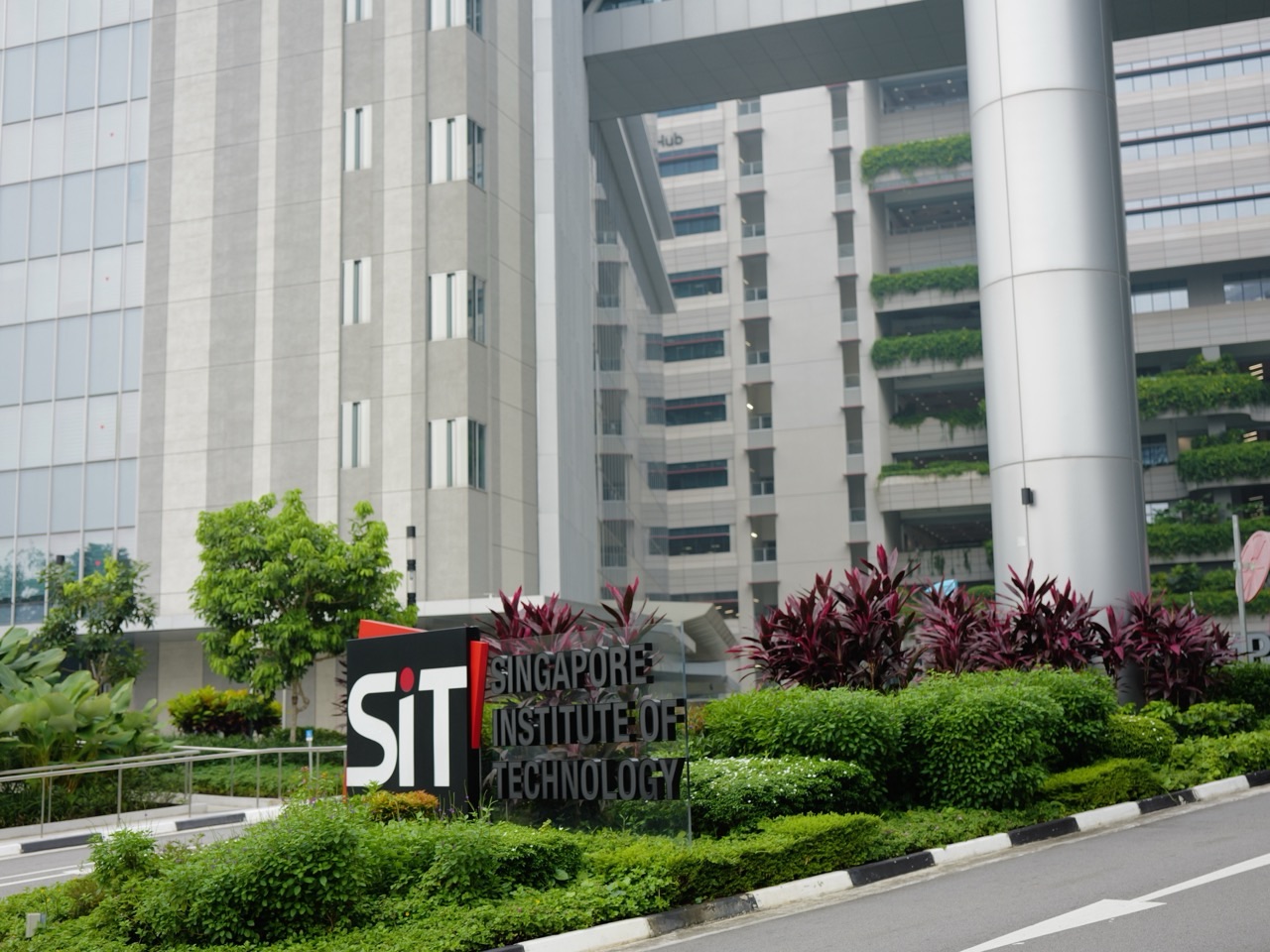
Can a pupil in Punggol progress from Primary Science to a Robotics Engineering degree? Yes. Robotics joins forces, energy, electronic circuits, sensors, mathematics, programming, control systems and artificial intelligence. It begins with familiar classroom questions—what is moving, what is measured, why did the machine stop—and develops into the design and testing of physical autonomous systems. Singapore Institute of Technology (SIT) offers a Bachelor of Engineering with Honours in Robotics Systems at the SIT Punggol Campus. Nanyang Technological University (NTU) offers a separate Bachelor of Engineering in Robotics. These are real and distinct university programmes, not a town-specific school examination.
Current university facts: SIT Robotics Systems describes a four-year, 240-credit direct-honours degree, project-based systems engineering, software, artificial intelligence, mechatronics, a 12-month Integrated Work Study Programme (IWSP) and an overseas immersion element. The 2026/27 course page gives qualification-specific entry information, including an A-Level/IB requirement for two suitable Science, Mathematics or Computing subjects at the stipulated standard. NTU’s Robotics degree is interdisciplinary, combining mechanical, electrical and AI-focused engineering with its own published admission requirements. Programme eligibility is not an entitlement from living near either campus.
The shortest correct explanation of how a robot works: a sensor measures part of its environment; software interprets the input; a controller chooses an action; an actuator moves something; and new sensor information shows whether the action worked. Any part of that chain can be wrong. A camera may see a dark shape rather than an object, wheel encoders may record rotation instead of actual travel, and a controller may issue a valid-looking command to an unsafe mechanical configuration. This is why real robotics education centres on controlled systems and evidence, not just a spectacular demonstration.
Robotics education from Primary school to SIT and NTU
| Level | What is taught | The next useful question |
|---|---|---|
| Primary 3–6 Science | Forces, friction, light, materials, measurements and simple energy ideas | What did the device do and how do we know? |
| Secondary Science / Computing | Circuits, mechanisms, sensors and logical procedures | Which quantity does the sensor really report? |
| JC H2 Science or relevant diploma | Mathematical modelling, experiments, electricity, code and statistics | What assumptions link the model to the observation? |
| SIT Robotics Systems | Mechatronics, systems integration, C/C++, AI, project work and 12-month IWSP | Does the integrated robot perform safely beyond one demonstration? |
| NTU Robotics | Mechanical, electrical, software and AI-oriented robotics in a degree framework | Which control, sensing and engineering skills are verified? |
| Research or engineering employment | Technical evidence, approved workplace processes, ethics and safety | Can performance be reproduced under intended operating conditions? |
The seven components of a real robotics system
| Component | Scientific or engineering meaning | Typical misunderstanding |
|---|---|---|
| Mechanical structure | Geometry, forces, loads, movement and physical limits | A neat chassis is automatically stable |
| Sensor | A measurement of a defined physical input | A reading is always the true value |
| Controller | A policy or algorithm using state and feedback | More powerful correction is always better |
| Actuator | An electrical, pneumatic or other device producing physical action | A motor’s speed rating is its torque |
| Software | Executable logic, interfaces and tests | A successful run proves the program correct |
| AI model | Data-based inference or learned decisions | AI removes physical safety constraints |
| Integration and oversight | Reliability, access, human interaction and risk controls | A student project is already a certified product |
Thirty-six concepts explained: the incorrect model, the repair and the transfer
1. Define the task before selecting hardware
A design begins with what a robot should achieve, the environment, allowed movements and measurable acceptance criteria. Choosing expensive parts before defining the task often hides the real engineering question.
Applied diagnostic. A toy sorting arm moves nine identical blocks in ten trials. That is 90% success in a limited trial, not proof of capability with all objects. Ask what counts as a successful grasp, where the blocks were placed and whether conditions changed.
2. Distinguish a sensor from an actuator
Sensors measure, while actuators produce movement or another controlled action. A robot can combine them in one assembly, but the roles remain different. An input signal is not a successful outcome until its physical consequence is checked.
Applied diagnostic. An optical detector reports reflected intensity while a motor rotates a wheel. Ask the pupil to trace the data and power paths. A second task should swap in a different kind of sensor to test whether the distinction survives.
3. Coordinate systems matter to movement
A robot-local forward direction rotates with the machine. A world-map direction does not. Commands and sensor coordinates must specify their frame or an apparently correct formula can produce movement in the wrong direction.
Applied diagnostic. A robot heading north turns east and then advances one metre. Its world displacement is eastward, though its local instruction was forward. Have the learner mark both frames on a diagram and repeat with a different heading.
4. Wheel rotations are not guaranteed distance
An encoder counts angular movement and requires wheel circumference, gearing and assumptions about traction to estimate ground travel. Rotating a wheel while a robot is stationary can generate counts without displacement.
Applied diagnostic. An ideal wheel with circumference 0.25 m makes twelve full rotations without slipping: travel would be three metres. Ask what happens if the floor becomes slippery and which independent measurement could reveal the error.
5. Scalars and vectors answer different questions
Distance is total path length; displacement is the directed change between positions. Velocity is directional, while speed does not specify direction. A controller needs the quantity relevant to its planning objective.
Applied diagnostic. A robot travels three metres east and three west. The distance is six metres and displacement is zero. Change the path to north and east and require a vector diagram rather than a memorised subtraction.
6. A motor is part of an energy system
A motor converts electrical input into mechanical output and heat under its operating conditions. Its rated or measured electrical power is not guaranteed useful shaft power. Load, speed and cooling affect behaviour.
Applied diagnostic. A fictional motor takes 25 W input and gives 15 W mechanical output. Illustrative efficiency is 60%. Ask which instruments measured both values and why the remaining 10 W is not energy that vanished.
7. Torque uses a lever arm and direction
A motor joint may need to oppose a load’s turning effect, not merely supply a linear force. Torque magnitude depends on force and perpendicular distance about an axis. A high-speed motor is not automatically a high-torque motor.
Applied diagnostic. A five-newton load acting 0.20 m from a pivot produces one newton-metre under the simple perpendicular model. Rotate the force and ask why the effective moment can change.
8. A high centre of mass can affect stability
Robot balance involves centre of mass, base shape, external forces and dynamic acceleration. A platform that stands still under one load may tilt during turning or braking. Stability must be tested for intended movements.
Applied diagnostic. Compare two fictional platforms with the same mass but loads located at different heights. Ask which geometric and acceleration information is needed before declaring one safe; do not treat appearance as a stability certificate.
9. Battery energy is different from motor power
A battery stores a finite amount of usable energy, while a motor draws power over time. A product labelled 50 Wh does not automatically deliver 50 W continuously for one hour in all conditions.
Applied diagnostic. An ideal 60 Wh battery sustaining a constant 20 W load lasts three hours under a no-loss model. Ask why a robot with variable motor demands may run for a different duration.
10. Series and parallel connections cannot be read from artwork
Electronic circuits work according to actual electrical nodes and component connections, not which components look adjacent on a drawing. Current, voltage and resistance have separate meanings.
Applied diagnostic. Two ideal 6-ohm resistors produce 12 ohms in series and 3 ohms in parallel. Rotate the diagram while retaining its connections; the correct answer should not change.
11. Sensor calibration links a signal to a quantity
A sensor may output counts, volts or digital values rather than direct distance or temperature. Its conversion needs an appropriate reference, working range and account of uncertainty.
Applied diagnostic. A fictional sensor reports 2.0 V at 10 cm and 2.5 V at 20 cm under a calibrated linear segment. Ask whether extrapolating to a metre without further validation is justified. It is not.
12. Optical sensors depend on surface and light
Reflective sensors can respond to the colour, reflectivity and angle of a surface and to ambient conditions. A reliable system needs an account of conditions in which its readings become untrustworthy.
Applied diagnostic. A dark object produces a weaker optical response than a white object at the same distance. The robot could misinterpret darkness as greater distance. Ask what controlled test would expose that problem.
13. Cameras record pixels, not meanings
Object recognition involves algorithms and labels applied to image information. Shadows, viewpoints and new object appearances can produce errors even when the camera works exactly as designed.
Applied diagnostic. A machine recognises a box in training photos but fails when the box is rotated. The problem may be model generalisation, not broken optics. Test on genuinely new scenes.
14. Range sensors have physical limits
LiDAR, ultrasound and infrared systems use different physical principles. Objects, geometry and environmental conditions can change returned signals. A missing reading should not automatically be translated into empty safe space.
Applied diagnostic. A fictional range scanner fails to return a value from an unusual surface. Ask whether the controller should treat it as unknown or assume that there is no obstacle. Explain the safety implications.
15. Feedback control is a cycle
A controller compares a desired state with measurements and adjusts an output. Open-loop commands do not use observed results, whereas feedback can respond to discrepancies within the limits of sensing and dynamics.
Applied diagnostic. A robot is asked to drive one metre, but an encoder suggests only 0.8 m. Describe how a feedback system could recognise an error without assuming that additional motion is automatically safe.
16. More gain can make control worse
A strong corrective command can cause overshoot or oscillation, while a weak one may respond too slowly. Controller tuning is about dynamics, stability, noise and allowed actions, not simply maximising power.
Applied diagnostic. A simulated arm swings past its target repeatedly before settling. Ask what graph of error over time would show the overshoot and settling behaviour.
17. Control and sensor noise must be separated
A fluctuating sensor does not prove an object is physically moving. Noise, resolution and environmental interference can create variation in measurements, and overreactive control can amplify it.
Applied diagnostic. A stationary robot reports position estimates of 9.9, 10.0 and 10.1 cm. Ask which controlled reference would help distinguish actual movement from measurement noise.
18. Embedded code needs defined failure states
Robot control software may switch among states such as idle, navigating, handling and emergency stop. Missing transitions can be dangerous when a sensor, battery or communication link fails.
Applied diagnostic. An instructional program keeps driving after losing its front sensor. Identify the missing failure response in its state diagram rather than focusing only on successful obstacle avoidance.
19. Software tests need more than one successful demonstration
One test may establish that a specific input produced the intended output once. It cannot prove software performs correctly across timing, environmental or interface differences. Repeated and varied test cases need honest recording.
Applied diagnostic. An object sorter successfully handles one sample but drops four of the next ten. A defensible report includes all eleven trials and describes what was different.
20. Interfaces require agreed units and timing
Subsystem integration may fail even when parts work individually. If one module reports millimetres and another expects metres, control errors can be large without a broken sensor.
Applied diagnostic. A measured gap is 500 mm, but a planner treats the number as 500 m. Ask what data contract should have specified units and validation.
21. Simulations need real-world validation
A simulator can help design algorithms and evaluate ideas safely, but real components introduce friction, latency, manufacturing tolerances and unpredictable disturbances. Simulation success is not physical-system certification.
Applied diagnostic. A virtual gripper holds an object while a real one slips. Identify which friction and force assumptions should be tested under supervised conditions.
22. AI assists robotics but does not overrule physics
Embodied-AI systems can use learned representations to plan or select actions. Yet the physical world still has loads, collisions, reach constraints and human safety concerns.
Applied diagnostic. An AI model suggests grasping a fragile object with excessive force. The physical controller must enforce appropriate safeguards. Ask where the safety restriction belongs.
23. Training accuracy is not independent performance
A robot vision model can learn its training examples closely and still fail on new users, camera angles or lighting. Independent test sets and clear success criteria help establish realistic capability.
Applied diagnostic. A classifier is correct on 98% of photographs reused from its training data. That does not establish 98% performance in a new Punggol classroom.
24. Planning considers constraints as well as distance
A shortest path may cross a prohibited area, collide with people or demand excessive energy. Planning should identify goals, cost terms and absolute limits.
Applied diagnostic. One route is two metres long through a no-go region; another is three metres through an approved area. The planner’s correct choice depends on the stated constraints.
25. Human–robot interaction deserves explicit design
People need to understand a system’s actions and have appropriate physical and privacy safeguards. Successful motion in an empty lab is not enough to establish usability near a child or older person.
Applied diagnostic. A service robot moves abruptly beside pedestrians. The engineer needs human-use requirements and authorised study, not only a navigation score.
26. Industrial robots require trained oversight
Motors and grippers can pinch or strike even when the software seems simple. Safe use relies on suitable protective equipment, risk assessment, supervision and operating limits.
Applied diagnostic. Do not bypass interlocks or experiment with industrial robotics at home. Use approved low-voltage educational kits and supplied diagrams for the learning principle.
27. Connected robots require cybersecurity
A networked robot can receive commands and record camera data. Authentication, updates and access permissions affect both personal information and physical safety.
Applied diagnostic. Publishing a project’s credentials can expose a connected system to unauthorised control. The student should use approved security practices, not post live access details.
28. Pupil projects must protect personal data
Camera and audio sensors can record classmates or visitors. Consent, institutional rules and data minimisation remain relevant even when a recording is intended only for a robotics assignment.
Applied diagnostic. A robot collects faces for an object-detection class without checking permission. Synthetic or authorised sample data may be a better educational choice.
29. Mechatronics crosses several disciplines
A system may have a mechanical, electrical, software or sensing cause when performance fails. Effective debugging creates tests that distinguish these possibilities rather than swapping hardware blindly.
Applied diagnostic. A gripper drops objects. Ask whether the problem is geometry, force, sensor response, timing or the controller, and which single test would isolate a cause.
30. Systems engineering manages interactions
SIT’s programme emphasises systems engineering, an approach that clarifies requirements, interfaces, verification and integrated behaviour. A working component is necessary but not always sufficient for a working whole.
Applied diagnostic. The motor and range sensor each pass bench tests, yet their combined system responds too slowly. The integration timing is now the relevant question.
31. Internship and industry project have specific rules
SIT Robotics Systems lists a twelve-month IWSP and industry project experiences. NTU Robotics has its own programme requirements. Industry work should be understood as supervised study with workplace responsibilities, not automatic permanent hiring.
Applied diagnostic. A student’s placement might include confidential data and restricted equipment. Ask what tasks are authorised and what learning evidence can be disclosed publicly.
32. Locality is useful but not an admissions condition
SIT Robotics Systems is at Punggol Campus, a practical advantage for some families. But the university selects applicants through formal admission rules rather than a simple home-address privilege.
Applied diagnostic. Compare actual study location, modules, prerequisites and workload. A pupil might choose a different university if the curriculum fits their interests better.
33. School STEM work is a foundation
A line-following toy can develop interest in circuits, control and observation, yet does not represent full professional training. The next step is to identify what the student learnt, what remained unknown and how the idea could be tested again.
Applied diagnostic. Ask what sensor the toy used and whether the child’s explanation survives a change of surface or lighting.
34. A credible portfolio includes unsuccessful trials
A strong project record includes a defined question, raw tests, versions, corrections and results. A flawless-looking video may conceal many failures and is not a substitute for evidence.
Applied diagnostic. A sorter succeeds on 18 of 20 trials. Report 90% within those trials and identify what caused the other two outcomes if known.
35. Distinct errors need distinct teaching
A pupil may confuse radian measure, encoder counts, coordinate directions or current and voltage. Giving all four the same generic worksheet is less useful than locating the first wrong mental move.
Applied diagnostic. After a targeted explanation, present a different wheel size, sensor or frame and check whether the student can reconstruct the logic unaided.
36. Robot performance claims must be bounded
Robotics can support useful activities but has conditions of operation, maintenance needs and ethical consequences. A classroom prototype is not automatically a certified product or a commercial robot.
Applied diagnostic. Write a conclusion that names what was tested, under what conditions, and which performance claims still require additional evidence.
Six original worked problems with interpretation
Wheel rotations and slip
A fictional wheel with 0.20 m circumference makes 25 revolutions. With no slip, distance is 5.0 m. But its rotation count cannot show whether the robot actually moved that distance on a slippery surface. A different reference measurement would be needed.
Battery capacity versus load
An idealised robot has 90 Wh of usable energy and a constant 30 W load, yielding 3 hours of theoretical runtime. This does not establish a real test result because motor demands, battery limits and inefficiencies differ.
Control-loop error
A simulated arm targets 0.60 m while the sensor reports 0.48 m. Defined signed position error equals +0.12 m. It is not sufficient to compute a safe motor command without the chosen controller and system limits.
Mechanical turning moment
An ideal force of 6 N acts perpendicularly at a distance 0.15 m from a pivot. The torque magnitude is 0.90 N m. The turning direction and actual physical loads must be considered before inferring mechanical safety.
Motor efficiency
A hypothetical motor uses 40 W electrical input and produces 26 W useful mechanical output. Its illustrative power efficiency is 26/40 = 65%. The balance of energy is transferred by other processes; energy is not destroyed.
Task success versus generalisation
An example robot correctly moves 42 objects among 50 controlled tests. The measured proportion is 84% in that set. Different materials, lighting, users or obstacles may change its performance; the observed rate is not a universal guarantee.
Four-week learning and programme decision plan
| Week | Action | Independent evidence |
|---|---|---|
| 1 | Confirm actual SIT and NTU Robotics programmes and qualifications | A dated source list and realistic shortlist |
| 2 | Review forces, circuits, units and basic programming | Correct explanation of sensing and motion |
| 3 | Interpret safe fictional sensor and feedback data | Model, calculation and limitation explained |
| 4 | Compare integration, AI, ethics, IWSP and project requirements | New-context explanation and informed next step |
Frequently asked questions
Does SIT offer Robotics Systems at Punggol?
Yes. Its current programme lists the Punggol Campus, four years and 240 credits.
How long is SIT’s Robotics Systems IWSP?
The current programme states twelve months; actual course rules and employer arrangements apply.
Does NTU have a separate Robotics degree?
Yes. NTU lists a multidisciplinary Bachelor of Engineering in Robotics.
Can an eligible A-Level student apply to SIT Robotics?
Yes, subject to current admission qualifications, the relevant subject prerequisites and selection.
Is a robot’s wheel count exactly its ground distance?
Only under assumptions such as known wheel circumference and no slip.
Is machine learning enough to ensure robot safety?
No. Engineering safeguards, validation and trained oversight are still necessary.
Does a short robotics CCA qualify someone as an engineer?
No. It is educational exploration, not a university degree or regulated engineering credential.
Does living in Punggol grant a guaranteed SIT place?
No. Home address alone does not meet programme selection conditions.
Does an IWSP guarantee full-time employment?
No. A programme placement is distinct from a subsequent hiring decision.
Can children operate industrial robot arms without supervision?
No. Physical machine risks require appropriate approved equipment and trained supervision.
What does effective robotics teaching look like?
Diagnose a specific wrong physical or computational model and retest understanding with a changed task.
Further explanations: building and testing reliable systems
A robotics test plan should examine component behaviour and the integrated machine separately. A camera may pass an image test, yet the robot might still take an unsafe route because the mapping algorithm uses a different coordinate system. A motor may meet its unloaded speed rating yet fail to lift a specified mass because torque requirements were misunderstood. The scientist or engineer documents the relevant physical model, measures the response under safe supervised conditions and checks alternative causes. This chain gives the learner a way to diagnose failures instead of calling the robot intelligent or stupid.
A school-safe exercise can provide a table of wheel rotation counts, measured distances and lighting conditions. The pupil compares modelled and observed distances, identifies the assumption that could have failed and proposes one further measurement. A correct calculation is necessary, but the stronger answer states what the comparison does and does not establish. This same habit supports later university systems engineering without requiring access to an actual industrial robot.
Choosing a specialisation by the work, not its fashionable title
A Robotics Engineering route may emphasise integrated physical systems, while Computer Science may focus on algorithms, computer vision and software architectures, Electrical Engineering on controls and embedded electronics, and Mechanical Engineering on dynamics and machinery. These fields overlap, but the actual university modules and admission conditions differ. Students should compare a first-year Mathematics module, an advanced discipline course and the programme’s project or internship route before deciding that one title must be better.
A pupil who likes coding but dislikes physical fabrication can still explore robotics software, while one fascinated by mechanisms may need to strengthen programming. Academic strengths should be assessed from real schoolwork rather than guessed from a hobby. Good teaching starts from the specific gap—units, forces, circuits, code, algorithmic logic or experimentation—and builds the next stage deliberately.
A full sensor-to-action example for a Secondary student
A school-level robot receives a fictional distance-sensor reading every 0.10 seconds while approaching an obstacle. The controller has a stated target and should issue commands only within its approved safe operating model. The reading itself may contain noise, and the distance to an obstacle can decrease during processing and braking. A student who simply says that the robot stops when the display reaches a round number has not explained why the chosen threshold is adequate. The complete scientific question includes sensing accuracy, speed, controller delay and braking behaviour, even where these are handled qualitatively.
Use a supplied table with time, measured distance and intended controller state. Ask pupils to state which row would cause a change under a simplified classroom algorithm, what information is missing to decide whether the action is safe and whether an invalid reading should be interpreted as no obstacle. The answer should not specify real industrial operating settings or authorise a physical test. It should demonstrate clear input, decision, output and feedback reasoning. Replacing the distance sensor with a light sensor later tests whether the student truly understands the architecture.
SIT Punggol’s four-year pathway is more than learning how to code
The SIT Robotics Systems degree is distinctive for integrating systems engineering, software, artificial intelligence and multiple mechatronic disciplines around building deployable systems. Its published 2026 course description also includes professional work-based learning and overseas immersion. Such a curriculum is different from studying a programming language alone. Software may decide what to do, yet components must deliver physical forces, sense changing environments, manage power and satisfy real safety constraints. Students need competence across these layers and must learn how one component’s error affects another.
When comparing SIT with NTU Robotics, families should inspect first-year Mathematics and Physics requirements, electronics and computing modules, design projects and programme-specific industry components. The choice can be informed by a student’s interests: making mechanisms, programming algorithms, improving controls or integrating complete systems. But the current degree page and admissions office are the sources for enrolment criteria. A Punggol address does not replace subject prerequisites, interviews or selection. Curriculum changes for later intakes should be checked directly, especially when comparing a 2026 module list with a future university application.
Interpreting robot motion graphs without mixing up axes
A robot’s position–time graph, speed–time graph and motor-current graph describe different physical quantities. A flat line on a position–time graph may indicate no position change in the stated reference frame; a flat line at a positive value on a speed–time graph indicates constant speed. A rising motor-current trace is not itself proof of a larger linear acceleration because the drivetrain, load and controller influence the relationship. These distinctions matter when teaching pupils to read test results rather than simply match graph shapes.
Give the student two hypothetical traces with labelled units. First, ask which one can be differentiated or otherwise interpreted to estimate velocity under the supplied conditions. Then ask what additional measurements would link electrical input to mechanical motion. A student who can explain the difference has developed a transferable modelling habit also useful in Physics and Engineering. If the first response relies only on whether the line slopes, reteach the meaning of each axis. A graph is an encoded measurement, not a picture of the physical robot.
Why a robotics trial needs an explicit definition of success
A system can finish a task and still violate time, energy or safety constraints. Engineering validation therefore uses a stated definition of success. For an educational sorting system, success might require correct object placement within an allowed time and without an unauthorised movement. Reporting only that the arm moved or picked up something cannot establish the broader requirement. Nor can the number of videos posted establish reliability if failures are removed from the record.
A sound classroom project defines the test set before observing outcomes: object sizes, locations, attempts, success criteria and how invalid sensor readings will be recorded. Pupils then preserve their actual results, calculate a proportion with the correct denominator and describe the conditions that may limit transfer. An 80% success rate among familiar cubes is not an 80% success rate across unknown objects, varying illumination or crowded spaces. The correction is not to call the robot bad; it is to say precisely what its tested performance does and does not show.
Safety-first robotics education for younger learners
Primary pupils can learn about forces, friction, light and simple logic without working near powerful actuators. An approved school robot, supervised low-voltage kit, diagram or computer simulation can show the same scientific principles at the learner’s stage. Moving machinery, high-current electrical equipment and industrial tools involve hazards that cannot be assessed solely by a child’s enthusiasm or a tutor’s confidence. Access controls, training and a suitable laboratory procedure are essential when activities become more advanced.
An educator can provide a picture of a wheel, light sensor and motor and ask the pupil to predict what would happen when the light becomes dimmer. Then change the surface and ask whether a single detector reading uniquely determines distance. This keeps the intellectual challenge while avoiding risky home experiments. At university, more advanced supervised work can build practical skill with real apparatus. Each stage should be honest about what the safe exercise demonstrates and which physical skills can be learnt only with approved equipment.
How to compare a robot’s software error with a mechanical error
A robot that stops short of its target may have a coding problem, sensor bias, motor limitation, low battery, excessive friction or mismatched coordinate definitions. Treating every mismatch as an AI problem wastes time and hides the mechanism. A good systems engineer proposes a test that isolates one possible cause. For example, checking a sensor against a reference tests the measurement chain; examining expected commands in simulation tests the software logic; safely observing performance under an approved load tests the physical output.
A fictional dataset can be split into commanded motion, encoder rotation and separately observed ground displacement. Ask which pairs agree and which differ. If encoder counts match commands but real travel is shorter, wheel slip or geometry becomes a plausible hypothesis; the result still does not prove the cause without a controlled test. The pupil should explain the proposed inference and its limits before moving to another trial. This is the same scientific inquiry habit taught in Primary fair tests, now applied to integrated technology.
Robot ethics includes the people who are affected by deployment
Robotics is not only about building machines that move. A device may operate in workplaces, schools, hospitals or public areas and affect people who did not choose its design. Privacy, accessibility, accountability and the ability to interrupt unsafe actions are therefore relevant engineering requirements. A camera-based delivery robot, for instance, can create concerns about identifiable recordings or how it behaves when a pedestrian blocks its path. Successful task completion does not automatically answer these questions.
Students should practise writing two kinds of requirements: functional requirements such as moving an object to a defined location, and non-functional or safety requirements such as not entering a restricted area or disclosing images without authorisation. The project should document how each is assessed and what remains unknown. A supervised university capstone might develop these ideas through formal design review, but a school-level paper exercise can introduce the reasoning safely. This helps pupils understand technology as part of society rather than a substitute for human judgement.
A careful bridge from hobby to engineering admission
A school robotics interest can be supported by Mathematics, Physics, Computing, CCA projects and reflective technical writing. The most informative portfolio describes a challenge, a model, actual attempts, a failure and a corrected explanation. Fancy claims about developing artificial general intelligence or replacing all human work are not necessary. The route into SIT or NTU depends on the degree’s published eligibility requirements and selection process; a competition medal or kit purchased at home is not an admissions exemption.
Families can plan a four-week diagnostic bridge before a future application. In the first week, solve one motion and one circuit question with units. In the second, read a small sensor-calibration table. In the third, use a simple control-flow diagram and identify a missing failure response. In the fourth, compare current degree module descriptions and ask the child to explain which part of robotics most interests them. The goal is a realistic learning direction grounded in present strengths and gaps, not a claim that one early school decision fixes a future career.
Official sources and the eduKatePunggol learning route
- SIT — BEng (Hons) Robotics Systems at Punggol
- SIT — Integrated Work Study Programme academic information
- NTU — Bachelor of Engineering in Robotics
- NTU — curriculum and second-major routes
- eduKatePunggol — NUS and NTU Science degrees
- eduKatePunggol — Biomedical Engineering and biosensors
- eduKatePunggol — Materials Science and Nanotechnology
- eduKatePunggol — Biostatistics and Data Science
- eduKatePunggol — Secondary 1 Science models
- eduKatePunggol — JC H2 Physics 9478
- eduKatePunggol — SIT applied Engineering and IWSP
Source check: 21 October 2026. Degree names and programme details come from current SIT/NTU pages. All sensor readings, calculations and robot trials are fictional teaching examples. No actual industrial test result, lab permission, admission priority or guaranteed job is implied.
How to tell whether learning transferred
After explaining one error, change the problem’s surface features while preserving the underlying concept. A pupil who correctly divides distance by wheel circumference may fail when the robot turns; ask about coordinate direction and slip. Another who solves an ideal energy problem may still confuse watts with watt-hours in a sensor-driven scenario. These errors have different causes, and it is important to identify the first mistaken step.
A useful record contains the original working, the exact misconception, the explanation that repaired it and an independently solved new task several days later. More completed worksheets alone do not establish durable understanding. The goal is an accurate, safe and evidence-led explanation the student can use beyond one rehearsed demonstration.
The measurable difference between a demo and a deployable robot
A demonstration asks whether a task can work in a particular controlled setting. Deployment asks whether it can work repeatedly under defined variation with appropriate human and equipment protections. Developers must document sensing limitations, control timing, failures and maintenance requirements. A system that succeeds in one trial should be celebrated as progress without being advertised as fully reliable.
For learning, describe two scenarios: one robot sorts identical items under consistent light; another must handle a mixture with occasional missing sensor readings. Ask which evidence in the first case is insufficient for the second. Then suggest safe independent test cases and a stop condition. This produces engineering judgement rather than repeating the same demonstration.
Why robots need both physical tests and software tests
Software logic can be checked with simulated sensor inputs, including cases that are difficult to create safely in a classroom. Hardware behaviour can be assessed under supervised approved limits. Integration tests then check how the two behave together. A correct software output on a laptop does not establish that a motor moved, and a successful motor motion does not establish that the control code handled a failure case.
A suitable paper exercise gives a sensor input table, pseudocode and expected actions. The pupil calculates outputs, spots a missing state transition and explains what the software should do when readings are unreliable. They can practise the reasoning without building a hazardous machine.
Why individual reasoning matters more than the robot’s appearance
Students can build visually impressive devices from kits while retaining weak foundations in units, circuits, angles or control. Good education uses the project as a diagnostic opportunity. Ask which part the student personally understands and which was provided by a kit or another team member. A clear answer about one simple sensor may be stronger evidence than an unsupported claim to have developed sophisticated embodied AI.
At the next lesson, change the sensor type or test geometry and have the child predict a result before seeing the solution. The teacher should explain the exact physical or mathematical rule and then remove prompts. That is how a hobby becomes transferable engineering knowledge.


