
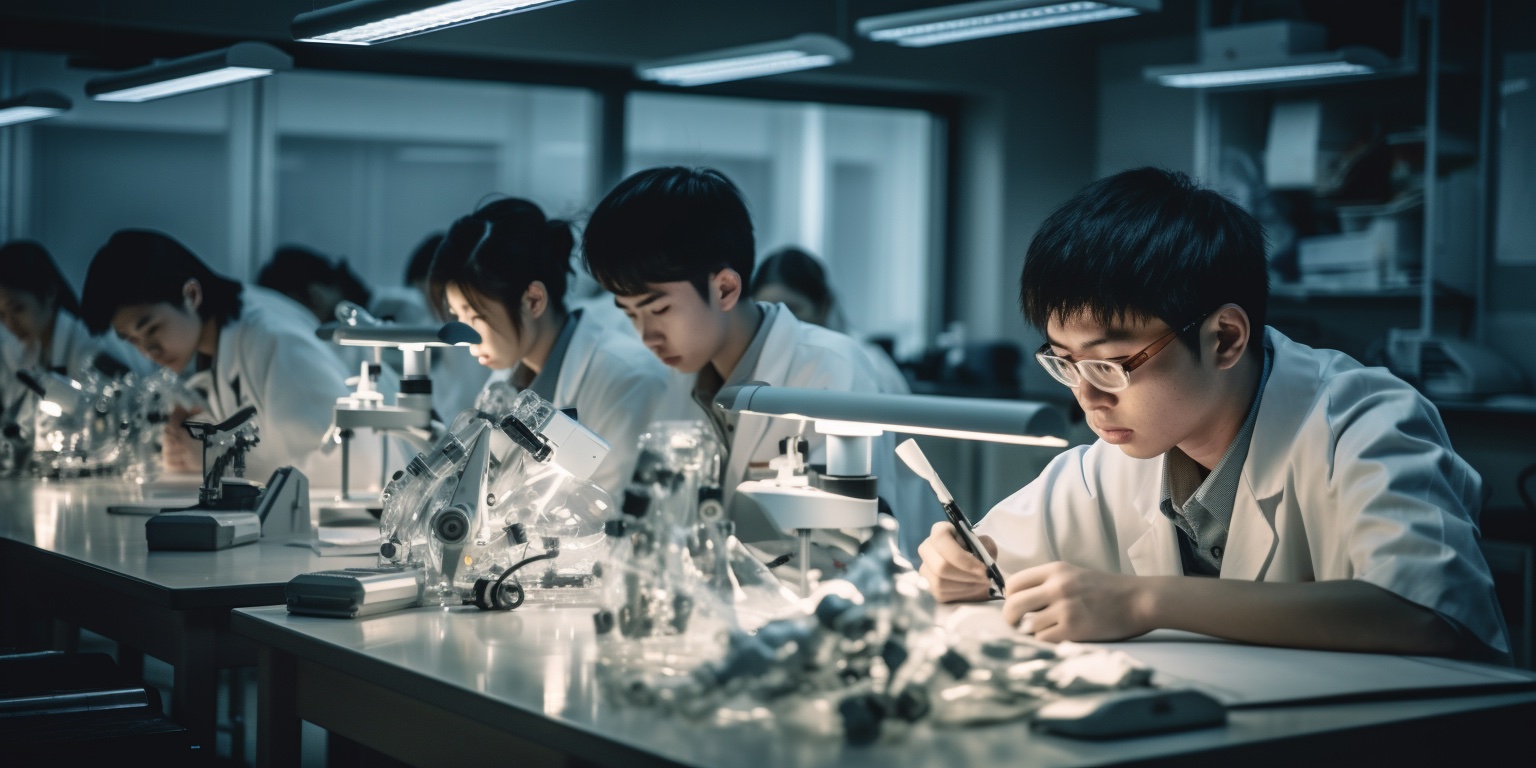
Can a learner from Punggol study Forensic Science at university in Singapore? Yes. NUS offers a restricted 20-Unit Minor in Forensic Science and a restricted 40-Unit Second Major in Forensic Science under published cohort rules. They train students to examine scientific evidence through Chemistry, Biology, Physics, statistics and legal context. A forensic qualification is not a warrant to investigate real crimes, a job offer from a government laboratory or a medical forensic licence. Its educational value lies in learning how a measurement supports—and limits—an inference.
Check the precise programme first: NUS’s 2026 Second Major and Minor in Forensic Science page says FSC2101 Forensic Science is the essential gateway course. The second major became available from AY2025/26 Semester 2 for eligible cohorts from AY2022/23 onward. Its April 2026 update recoded FSC3101 Evidence in Forensic Science as FSC3201. Entry is restricted and subject to approval; NUS indicates students should be taking or have passed FSC2101, preferably with GPA at least 3.5, and apply within its designated window. None of these conditions guarantees an individual offer.
A useful forensic explanation answers five questions in order: **What is the sample? What was actually measured? Which validated method was used? Which proposition does the result support? What remains unknown?** A result consistent with a possible source does not automatically prove how or when something happened, much less establish a legal verdict. Singapore’s Health Sciences Authority Forensic Chemistry and Physics Laboratory describes professional work in trace evidence, documents and reconstruction; the Forensic Medicine Division performs a distinct qualified medical function. University study and those professional roles must not be conflated.
Fast reference: forensic programmes and professional fields
| Route | Current verified feature | Limit on what it means |
|---|---|---|
| NUS Forensic Science Minor | 20 Units: FSC2101 plus qualifying electives for applicable cohorts | Restricted selection, not automatic enrolment |
| NUS Forensic Science Second Major | 40 Units, introduced for eligible cohorts from AY2025/26 Semester 2 | Different from a standalone Bachelor in Forensic Science |
| NUS Criminal Justice Minor | Separate 2026/27 programme focused on systems of justice | Not the same as analytical forensic testing |
| HSA Forensic Chemistry and Physics | Professional chemical, trace, document and technical analyses | Institutional access and professional methods |
| HSA Forensic Biology and toxicology | Authorised identity and analytical investigations | Not unrestricted teaching specimens |
| HSA Forensic Medicine | Qualified forensic pathologists and coroner-related services | Requires specialist medical qualifications |
For the NUS minor, the published framework specifies FSC2101 and four eligible electives; the second major specifies FSC2101 and nine eligible electives, with overlap and minimum-residency rules. Module examples include FSC3201 Evidence in Forensic Science, FSC4201 Probability and Statistics in Court, FSC4202 Forensic Human Identification and FSC4203 Forensic Toxicology and Poisons. Availability and course credits must be confirmed for the actual student.
Evidence versus inference: what careful language looks like
| Observation | Appropriate limited conclusion | Unsupported leap |
|---|---|---|
| Two fibres have similar observed morphology | They were not distinguishable on the stated features | They definitely have the same owner |
| One specified compound is detected | The method found a signal consistent with that substance | The test proves intent, dose or motive |
| DNA features fit a comparison profile | The comparison supports a defined source proposition | One result proves the entire event |
| An image file contains timestamp metadata | The file contains that metadata at examination | The metadata independently proves all event times |
| A sample is below a detection limit | Not detected by this method at that threshold | The true amount is exactly zero |
| Two measurements are close | They agree within the particular measurement process | The instrument is necessarily accurate |
Thirty-eight ways to reason accurately about Forensic Science
1. Forensic Science is evidence interpretation, not a television shortcut
The field applies validated scientific methods to questions arising in legal or investigative contexts. Each measurement is conditional on the sample, method and quality controls. A single clue may be useful but rarely establishes a complete account of an event or person’s intention.
Example. Suppose a classroom simulation gives one coloured particle and a dramatic narrative. A careful student describes the particle’s visible characteristics and asks which test could identify its composition rather than solving the imaginary case by storytelling.
Teaching check. Teaching check: distinguish direct observation, scientific identification and a legal conclusion in three separate sentences. The student should name the evidence needed to move from one to another.
2. The NUS Minor is not a standalone scientific degree
NUS’s 20-Unit Forensic Science Minor is studied alongside an eligible principal academic programme. It supports scientific literacy about evidence but does not replace the student’s main discipline or confer an independent degree of forensic professional qualification.
Example. A Chemistry undergraduate may gain complementary context about trace materials; a Biology student may learn more about DNA evidence. Their principal degree remains separately governed by university requirements.
Teaching check. Ask for the student’s official primary major, forensic award and applicable cohort rule. If these are not known, do not represent an elective interest as confirmed entry to a professional programme.
3. The Second Major is a distinct restricted qualification
The Forensic Science Second Major introduced from AY2025/26 Semester 2 has a published forty-unit structure for eligible cohorts. The programme includes essential and elective requirements, limits on overlapping credits and a restricted application process.
Example. A student could be keen to read several forensic modules yet not automatically satisfy the second-major requirements, depending on how they count within the overall degree and the actual approval decision.
Teaching check. Check the current NUS degree audit and application process. A programme appearing in a module catalogue is not proof that every student may declare it.
4. FSC2101 is a gateway, not a generic interest badge
NUS identifies FSC2101 Forensic Science as the essential course under the published minor and second-major arrangements. Students may need a good performance in it for selection consideration, in addition to meeting other requirements.
Example. Joining a public talk or watching an online investigation documentary may inspire the student but does not automatically fulfil FSC2101 credit or approval.
Teaching check. Ask the student to show the current registered course and academic credit, then distinguish the learning experience from the formal selection process.
5. FSC3101 became FSC3201 in April 2026
NUS’s official 8 April 2026 notice records the recoding of Evidence in Forensic Science from FSC3101 to FSC3201. Course equivalence and applicable timetable rules should be checked before using an older planning sheet.
Example. A student comparing previous cohort documents may search for FSC3101, fail to find it and mistakenly believe the entire topic was cancelled. Administrative recoding does not itself establish that conclusion.
Teaching check. Record the date, cohort and current code, and request faculty clarification when old and new plans conflict.
6. Criminal Justice examines a different level of inquiry
NUS’s separate Minor in Criminal Justice focuses on systems of crime, policy, institutions and social consequences, whereas Forensic Science emphasises the methods and interpretation of scientific evidence. Both matter, but they cannot be treated as one interchangeable minor.
Example. A student interested in why policing policy changes may prefer social research, while another attracted to chromatographic testing may prefer analytical methods. Neither path by itself determines professional authority.
Teaching check. Ask what kind of question the learner hopes to answer and compare the actual modules rather than choosing the more dramatic title.
7. Measurement and meaning must stay separate
An instrument measures a defined physical or chemical quantity under conditions. A report can then interpret how that quantity relates to a proposition. Confusing the two turns scientific language into unjustified certainty.
Example. An imaginary test records a trace of a particular ink constituent. That establishes a method-specific observation; it does not establish who wrote a message, when, or their motive.
Teaching check. Have the learner underline every claim that was not directly measured and explain what extra evidence would be required.
8. Identification differs from source association
Identifying the material category of a particle is not the same as establishing its unique source. Different objects can share substances or properties; rare features can sometimes strengthen association but are not automatically unique.
Example. Two hypothetical samples of polymer film show similar spectra. The analysis may support consistency with a composition, but the samples could still have come from different manufacturing batches.
Teaching check. Ask for the reference population, tested characteristics and method limits before using the word identical.
9. Trace materials can have indirect transfer
Material can be transferred through many routes, and its presence does not establish exactly how it arrived. A forensic inference must consider plausible alternatives and how evidence was collected and stored.
Example. Two fictional fabrics contain a common fibre type. The finding might be consistent with contact but could also arise through ordinary shared environments, depending on context.
Teaching check. Teach the difference between a presence statement and a specific transfer narrative, keeping the example conceptual rather than offering evasion methods.
10. Laboratory contamination is a separate possible cause
Contamination can enter through sample handling, equipment or analysis. Its effect on an interpretation depends on the method and chain of custody. An unexplained unexpected signal should not be ignored because the initial theory predicts something else.
Example. An imaginary set of samples is opened together under unsuitable conditions, then shows overlapping trace signals. The scientist must consider the handling history before attributing all overlap to an original event.
Teaching check. Ask which quality-control observation or documentation could help evaluate the discrepancy.
11. Sample identifiers are as important as instrument precision
A calibrated instrument cannot repair a label swap by producing more accurate numbers. The final conclusion must trace each analytical result to the intended specimen and its authorised history.
Example. Fictional Samples A and B exchange labels before data are entered into a spreadsheet. The values may be numerically consistent yet attached to the wrong source.
Teaching check. Have the learner create a simple sample-identification log with fictional codes and dates, and explain how a misassignment would be detected.
12. Calibration needs reference data and appropriate range
Instrument calibration compares a measurement with suitable standards. An accurate instrument at one level may not behave identically at another; method range, uncertainty and systematic bias all matter.
Example. A fictional meter reads 10.3 against a reference of 10.0 and 20.6 against 20.0. The offsets differ, so subtracting 0.3 from all results cannot be justified from those observations.
Teaching check. Ask whether the apparent error is constant, proportional or unresolved and identify what additional reference measurements would help.
13. An observed match is not necessarily unique
Many common substances, physical patterns or biological characteristics may be shared by multiple possible sources. The strength of a comparison depends on how common the measured features are and what alternatives remain.
Example. An ordinary black ink may have similar visible colour to many others. A visual match on colour alone provides weak identification and little information about a unique writing source.
Teaching check. Train the student to report the precise comparison feature and avoid using ‘only possible source’ without a validated basis.
14. DNA profiling tests defined genetic propositions
DNA profiles can support identity or relationship comparisons under a specific statistical and laboratory framework. They do not independently establish timing, motive or all circumstances of an event. Mixtures, degraded samples and incomplete profiles complicate interpretation.
Example. A hypothetical profile shares several alleles with a comparison profile. The learner should not convert this observation into an unqualified event narrative.
Teaching check. Ask what source proposition was tested and what assumptions are required for the reported statistical result.
15. Genetic match information is not a legal verdict
The probability of evidence under a particular source hypothesis must not be mistaken for the probability that a person is legally responsible for an entire event. Additional evidence and the court’s role remain separate.
Example. A fictional genetic likelihood ratio favours one comparison proposition. Even a strong result does not say whether an event was lawful, intentional or happened at the inferred time.
Teaching check. Check whether each sentence describes the laboratory proposition or a broader legal conclusion, and separate them.
16. Biological mixtures require explicit assumptions
Samples containing material from multiple sources can generate overlapping signals. A model that assumes one contributor cannot always interpret mixture information correctly; ambiguity and method limits need honest reporting.
Example. A simplified hypothetical profile has more distinct alleles at a locus than expected from one diploid contributor, suggesting a mixture or another technical question. It does not uniquely identify contributors.
Teaching check. Explain which assumption failed and what kind of validated analysis would be needed, without improvising real forensic procedures.
17. Toxicology detection is not a complete exposure story
A chemical detected in a suitable specimen can be analytically important, but identity and concentration alone may not reveal exposure dose, timing, symptoms or medical cause. Those require further context and professional interpretation.
Example. An educational exercise gives a measured compound concentration without the specimen type, collection time or clinical facts. Declaring a person was poisoned would be unwarranted.
Teaching check. Ask for the missing variables before discussing meaning. Do not turn classroom arithmetic into health or legal advice.
18. A detection limit does not imply true absence
Analytical methods have finite sensitivity. A result not detected at a specified threshold means that this method did not find a signal above its criterion. It is not proof that every trace is absent.
Example. Suppose a simulated procedure has a detection limit of 3 units and returns a result below that limit. A student who writes concentration equals zero has added a false precision to the evidence.
Teaching check. Teach the difference among below detection, below quantification and an independently established zero where relevant.
19. False positives have a base-rate component
Sensitivity and specificity describe test performance relative to defined reference outcomes. Positive predictive probability also depends on how often the tested condition occurs. High sensitivity alone cannot prove the reliability of a positive result in every population.
Example. In an illustrative group of 1,000 with 10 true cases, a test with 90% sensitivity and 95% specificity yields about nine true positives and approximately fifty false positives in expectation.
Teaching check. Ask the learner to draw the two-by-two table rather than declare the 90% sensitivity equals 90% probability a positive is true.
20. Likelihood ratios compare conditional evidence probabilities
A likelihood ratio assesses evidence under two specified propositions. It is not itself a posterior probability, certainty percentage or judge’s conclusion. Choice of hypotheses matters for meaningful interpretation.
Example. If an observation is 0.8 probable under Hypothesis A and 0.2 under B, its simple likelihood ratio favours A by a factor of four, under those assumptions.
Teaching check. Require the student to name both propositions and avoid turning the factor four into a claim that a particular person has a 4-in-5 chance of guilt.
21. The relevant comparison population matters
Rarity and matching calculations can depend on a reference population’s sampling. A characteristic common in one dataset may be rare in another, and neither dataset necessarily represents every relevant person or object.
Example. An invented fibre frequency estimate comes from a small convenience sample. It cannot be treated as the verified proportion among all fabrics in Singapore.
Teaching check. Ask where a statistic came from, which population it describes and what uncertainty remains.
22. Repeatability is distinct from correctness of interpretation
Multiple consistent readings can show a method’s repeatability while its calibration or source assignment remains flawed. Likewise, two laboratories may use different methods to examine the same issue and obtain results requiring reconciliation.
Example. A series of five identical instrument responses looks precise, but a shared unrecognised bias could make them consistently inaccurate.
Teaching check. Teach the learner to ask whether repeats addressed random variation or the actual suspected systematic weakness.
23. Microscopy gives morphology within resolution limits
Microscope images reveal physical features at a particular scale and preparation, not every aspect of material composition or origin. A high-magnification picture can still be affected by artefacts or selection of a nonrepresentative field.
Example. Two particles appear similar under a low-resolution educational micrograph. The learner may describe observed shape but cannot conclude their full chemical identities match.
Teaching check. Identify which additional analytical information would answer the composition question and what remains uncertain.
24. Spectroscopy is evidence about material behaviour
Chemical spectra depend on interactions with radiation, instrument settings and reference methods. A single broad peak can be consistent with a chemical group but does not always uniquely identify a complete substance.
Example. A hypothetical sample shows an absorption compatible with an organic functional group. Without the rest of the spectrum or other evidence, naming an exact compound would overclaim.
Teaching check. Require a statement of the spectral observation and the range of plausible interpretations, not just the favourite answer.
25. Chromatography is separation, not automatic unique identification
Chromatographic retention and signal responses are influenced by the analytical method. Two materials may show peaks at similar times without being proven the same, and peak area comparisons may require suitable calibration.
Example. Two fictitious chromatograms each contain a peak at the same time; the feature supports further comparison, not immediate unique identification.
Teaching check. Ask what independent reference or detector information would strengthen identification.
26. Document examination links Physics and Chemistry
Documents can be studied through physical or chemical properties and comparative observations under approved procedures. Technical findings must not be conflated with a person’s intention, authenticity determination or the legal meaning of a signature.
Example. A hypothetical document has two ink regions with different measured chemical profiles. That may support a material difference under the method but not establish who wrote them.
Teaching check. Have the learner identify the measured property, its methodological limit and one inference that would require other information.
27. Image processing may generate artefacts
Contrast enhancement or scaling can improve presentation of some recorded details but cannot guarantee recovery of information absent from the original file. A processed image is an interpretation of data and must remain traceable to its source.
Example. A severely blurred frame becomes visually sharper after a filter, but newly sharp-looking letterforms may not reflect genuine recorded detail.
Teaching check. Ask what transformation was applied and whether a proposed feature was independently verified.
28. Digital timestamps are evidence that needs context
File metadata may include timestamps or device information, but such fields require provenance and can be affected by normal device operation and file processing. A timestamp alone does not reconstruct every real-world event.
Example. An illustrative camera file and a separate device record show different times. It is inappropriate to choose one automatically merely because it fits a narrative.
Teaching check. Teach source checking, independent corroboration and clear limits, without describing techniques for altering or hiding evidence.
29. HSA’s forensic laboratories are professional institutions
Singapore’s Health Sciences Authority publishes Forensic Chemistry and Physics, biology, analytical toxicology and related applied-science services. Their technical work operates under specialised procedures and professional responsibilities, not the open access of a school enrichment workshop.
Example. A university can teach the logic of evidence assessment without claiming its student reports are validated HSA forensic findings.
Teaching check. Separate programme learning goals from institutional authority, accreditation and actual professional employment responsibilities.
30. Forensic Medicine follows a different qualification route
HSA’s Forensic Medicine Division includes qualified pathologists involved in authorised cases and examinations. A Forensic Science minor can teach relevant concepts but does not qualify an undergraduate to perform medical forensic procedures.
Example. A student with a Life Sciences major should not call themselves a forensic pathologist after completing an elective.
Teaching check. Check the formal medical qualifications and professional training required for a desired role, and keep educational curiosity separate from licensing.
31. Court communication must preserve scientific boundaries
Experts may need to explain technical observations to audiences without specialist knowledge. Clear writing is not a licence to overstate confidence. The reader must be able to trace conclusions to methods and assumptions.
Example. A scientifically honest sentence might say a trace was consistent with a reference by the tests performed, rather than that it conclusively proves a particular whole event.
Teaching check. Ask whether a sentence would remain defensible if another plausible source were considered. If not, qualify it.
32. Correlation is not proof of an investigative narrative
Two observations occurring together may be linked, share a third cause or be coincidental. A graph cannot determine causal history unless the method and additional evidence support that inference.
Example. A fictional dataset shows one signal increasing across samples where a second also rises. The relation may suggest a common source but does not establish one without appropriate controls.
Teaching check. Describe the association and propose a further authorised test rather than announcing a cause.
33. Negative results can still be scientifically important
A method may rule out some possibilities or reveal that evidence is insufficient. Investigators should preserve unexpected or negative results rather than discard them because the starting theory was attractive.
Example. An imaginary comparison produces no valid signal despite a prediction that a compound would be present. The correct response is to report the method and its detection limits and assess what the absence of signal means.
Teaching check. Teach evidence integrity and the distinction between a failed experiment and a failed hypothesis.
34. Real cases involve confidentiality and ethics
Private case materials, genetic records and health information are sensitive. A teaching interest is not a lawful basis to access, copy or publish them. Institutional permissions and professional duties govern data use.
Example. A student may analyse a fictional or appropriately released dataset but must not contact families or collect biological material from an actual incident for a project.
Teaching check. Require the learner to state the permitted source and ethics boundary before beginning a proposed investigation.
35. Mock crime-scene teaching is educational simulation
Universities may use mock scenarios to practise observation, scientific method and reasoning. The simulation is not a real police investigation, and completing it does not confer investigative powers or the right to handle real evidence.
Example. An instructor supplies staged materials and a question about identifying chemical properties. The student’s task is to report the results under classroom conditions and acknowledge limitations.
Teaching check. Keep the case explicitly fictional in any portfolio and avoid presenting it as participation in professional law enforcement.
36. Career interest should begin with disciplinary depth
Forensic roles can involve analytical Chemistry, molecular Biology, Physics, statistics, digital analysis or specialised Medicine. A student needs a realistic foundation in the relevant branch, not merely an exciting interest in crime documentaries.
Example. One student may prefer DNA-related evidence while another is interested in materials and documents. The suitable academic route and professional entry conditions differ.
Teaching check. Compare actual university modules and official employer role criteria rather than assuming all forensic scientists perform identical tasks.
37. A scientific minor is not an employment promise
Completing the NUS programme may be educationally valuable, but government agencies and employers apply separate hiring and professional requirements. Internship or research opportunities are also subject to availability and selection.
Example. A student who earns strong grades and demonstrates careful research still cannot assume a named laboratory is obliged to employ them.
Teaching check. Ask which qualification, practical experience and official recruitment criteria apply to the specific role.
38. Effective tuition repairs the exact inferential error
A learner who confuses specificity with positive predictive value needs probability instruction; one who mislabels a sample needs data traceability instruction. Both might write wrong answers to the same fictional forensic question for different reasons.
Example. A tutor should ask the learner to explain the reasoning before correcting the numerical result, then model the right distinction and test it with a changed example.
Teaching check. Independent transfer days later is stronger evidence of learning than a dramatic case study or multiple certificates.
Six original worked examples in evidence-based reasoning
Example 1: the base-rate effect on a positive result
Suppose 1% of an invented 10,000-person sample has a condition, and a hypothetical test has 90% sensitivity and 95% specificity. That gives 100 truly positive people, about 90 detected, and among 9,900 true negatives approximately 495 false positives. The simple positive predictive fraction is 90/(90+495) ≈ 15.4%. This is a conditional-probability exercise, not a real clinical or forensic test and not a diagnosis.
Example 2: interpreting a likelihood ratio
A fictional observation is assumed to have probability 0.70 under Proposition A and 0.10 under Proposition B. The resulting likelihood ratio is 7 favouring A under those assumptions. The number means the observation is seven times as probable under A as under B; it does not say the posterior probability of guilt is 7/8 or that investigators should ignore other evidence.
Example 3: a chemical non-detection
An instrument’s hypothetical validated detection limit is 4 units and a sample falls below that threshold. Reporting not detected at this method’s specified limit is supported. Reporting a true concentration of exactly zero, or that no instrument anywhere could find a signal, exceeds the result. A suitable methods section should include the relevant sample, unit and limit.
Example 4: a calibration inconsistency
For standards of 10.0, 20.0 and 30.0 units, fictional readings are 10.2, 20.4 and 30.5. Their errors are +0.2, +0.4 and +0.5, not an identical offset. A student should not subtract exactly 0.2 from every future unknown reading and call the instrument fully calibrated. Additional validated reference measurements and model checks are needed.
Example 5: two sample labels are exchanged
Hypothetical samples A and B have distinct measured spectra. Their laboratory labels are switched before analysis, producing an apparently perfect but incorrectly attributed result. Re-running the same instrument on both still-misidentified samples might produce consistent data while preserving the mistaken attribution. The scientific problem is sample provenance, not the precision of the spectrometer.
Example 6: similar traces and limited conclusions
Two fictional fibres have similar colour and diameter within the stated optical measurement uncertainty. The narrow conclusion is that these features did not distinguish them using that method. Their chemical composition, unique source and exact transfer history are not thereby established. A responsible report says what comparison was made, lists its limits and does not invent an event narrative.
A four-week exploration and learning plan
| Week | Learning question | Evidence that the learner understands |
|---|---|---|
| 1 | Which NUS programme, selection route and course codes apply? | Verified minor or second-major plan, without guaranteed approval. |
| 2 | How do observations differ from source and event claims? | Concise evidence-limited report on fictional material. |
| 3 | How do false-positive rates and likelihood ratios work? | Correct two-by-two calculation with relevant assumptions. |
| 4 | Which professional roles and safety rules apply? | Accurate distinction among forensic science, justice and medicine. |
Frequently asked questions
Does NUS offer Forensic Science education?
Yes, a restricted Minor and Second Major under its published programme rules.
Is the NUS minor 20 Units?
Yes for the applicable cohort framework, including FSC2101 and four selected electives.
Is the second major 40 Units?
Yes for applicable cohorts, with its own essential and elective requirements.
When was the second major introduced?
From AY2025/26 Semester 2 for eligible cohorts identified by NUS.
Did FSC3101 become FSC3201?
NUS’s April 2026 update records that recoding.
Is Forensic Science the same as Criminal Justice?
No. The former is more focused on scientific evidence; the latter examines social and institutional systems.
Can an undergraduate automatically handle real evidence?
No. Professional access requires institutional authorisation.
Does a DNA profile alone prove an offence?
No. Source evidence and event context are distinct propositions.
Does 90% sensitivity mean 90% of positives are true?
Not generally; prevalence and specificity also matter.
Can non-detection prove a true zero?
Not necessarily. The test has a specific detection limit.
What does HSA do in forensic science?
HSA describes professional forensic Chemistry, Physics, Biology and related analytical work.
Is a forensic pathologist the same as a forensic science undergraduate?
No. Pathologists require professional medical qualifications and specialist training.
Can a forensic minor guarantee an HSA job?
No. Employment has separate qualifications and selection rules.
Are home microbiology investigations appropriate?
Avoid culturing unknown organisms or collecting real sensitive specimens outside authorised laboratories.
What is a scientifically strong forensic conclusion?
A measured observation, justified interpretation and explicit evidence limits.
How a parent can recognise a misleading forensic statistic
One common confusion is treating an error rate measured on a laboratory reference set as if it directly expressed the chance of guilt for a particular individual. Those are different probabilities, conditioned on different information. The laboratory might report sensitivity or specificity for a defined test, while a legal question requires much broader consideration of context. A useful educational routine is to draw the possible true-positive, false-positive, true-negative and false-negative outcomes in a simple table. Give every number its denominator. Only after those quantities are clear should the student calculate the fraction of positive tests that are true under the hypothetical population assumptions.
The correction must remain conditional. If the population prevalence changes, the predictive fraction can change even when sensitivity and specificity remain numerically the same. If the definition of a positive result changes, the test-performance figures may change as well. A learner who understands this no longer mistakes a confident-looking percentage for a complete account of evidence. Their final sentence should say what the model assumes, what it calculates and why it is not itself a legal or medical determination.
Writing a forensic-science answer that a sceptical reader can audit
A strong university answer should make its reasoning easy to reconstruct. Begin by naming the evidence type and whether the observation was direct or processed. State the measurement and its units, describe the comparison against a reference, explain the limited scientific inference, and identify the relevant uncertainty or alternative explanation. Avoid writing an elaborate narrative before the evidence has been established. Scientific reports are often more useful when they are precise and modest about what remains unknown than when they sound absolutely certain.
For a fictional trace-material example, a student could say that two samples have similar spectra at the wavelengths measured, but that the result does not establish a unique source or explain transfer history. A follow-up could ask whether another authorised measurement would improve discrimination. This educational method works equally well for microscopy, DNA profiles, analytical toxicology, questioned documents and digital files. It also encourages students to preserve original data and processing steps so their conclusions remain checkable.
Forensic career exploration without claiming institutional access
Singapore has real forensic work involving Chemistry, Physics, Biology, Medicine and specialised technical analysis, as HSA’s public descriptions show. However, the daily responsibilities of a forensic scientist are not necessarily the same as those of a forensic pathologist, police investigator or lawyer. A student interested in this area should begin with the discipline they genuinely want to practise and examine the relevant qualifications. One may prefer analytical Chemistry and instruments, another molecular Biology and statistical interpretation, while another is more interested in social research about justice systems.
The NUS forensic minor or second major can complement a primary degree where eligible, but university selection, employment requirements and professional authorisation are separate matters. Parents should compare modules, current application conditions and authentic career descriptions. Mock investigations are valuable learning experiences only when clearly labelled as simulations. They never permit access to real-case evidence, private genetic material or professional facilities without explicit authorisation.
Official sources and continuing science routes
- NUS 2026 Forensic Science Minor and Second Major
- NUS Minor in Criminal Justice
- HSA Forensic Chemistry and Physics laboratory
- HSA Forensic Medicine Division
- HSA Applied Sciences services
- eduKatePunggol NUS/NTU Science programmes
- eduKatePunggol University Chemistry
- eduKatePunggol University Biology
- eduKatePunggol Secondary Laboratory Skills
- eduKatePunggol Science SEC pathway
Fact check — 21 October 2026. Official NUS pages control its 2026 Forensic Science programme offerings, codes and restricted conditions. HSA’s pages establish the scope of its professional services. All sample data, comparisons and probability examples are original fictional problems, not real forensic evidence, clinical decisions or employment promises.
Teaching Guide for Parents and Educators
Start with a short fictional observation and ask five questions: What was observed? What was measured? Which method supports the result? Which proposition is being considered? What remains unproved? Do not allow the pupil to jump directly from a laboratory feature to a verdict. When conditional probabilities are involved, draw the two-by-two table before discussing percentages. When a comparison involves physical evidence, identify the sample and reference limitations before asserting a source.
The effective sequence is diagnose → teach the relevant scientific distinction → guide one worked example → test a new fictional case independently → record remaining limitations. If a learner makes a sample identity mistake, teach traceability; if they commit a probability error, teach conditional reasoning. The instructional quality lies in observing and correcting the precise wrong mental step rather than in the number of worksheets, mock investigations or students present.


