
Quick answer. Singapore schools are responsible for preventing and responding to bullying, hurtful behaviour and serious misconduct through safety measures, investigation, appropriate discipline and support for affected students. Bullying commonly involves intentional and repeated hurtful conduct; a single insensitive remark or isolated argument may still require action even when it does not meet that definition. Pupils and parents should report genuine concerns promptly through their school’s trusted teacher or designated channel. Where a child is in immediate danger, securing safety and contacting appropriate emergency assistance takes priority over waiting for ordinary school communication.
On 15 April 2026, MOE announced a review and a stronger national approach, including clearer discipline guidelines, improved school–parent communication, peer-support structures and expanded reporting channels. A common disciplinary framework is due for implementation across schools by 2027, while enhancements roll out in phases from 2026. This timing matters: the planned 2027 national online student-reporting channel should not be described as already universally operating in October 2026. The current school can explain the reporting route available now.
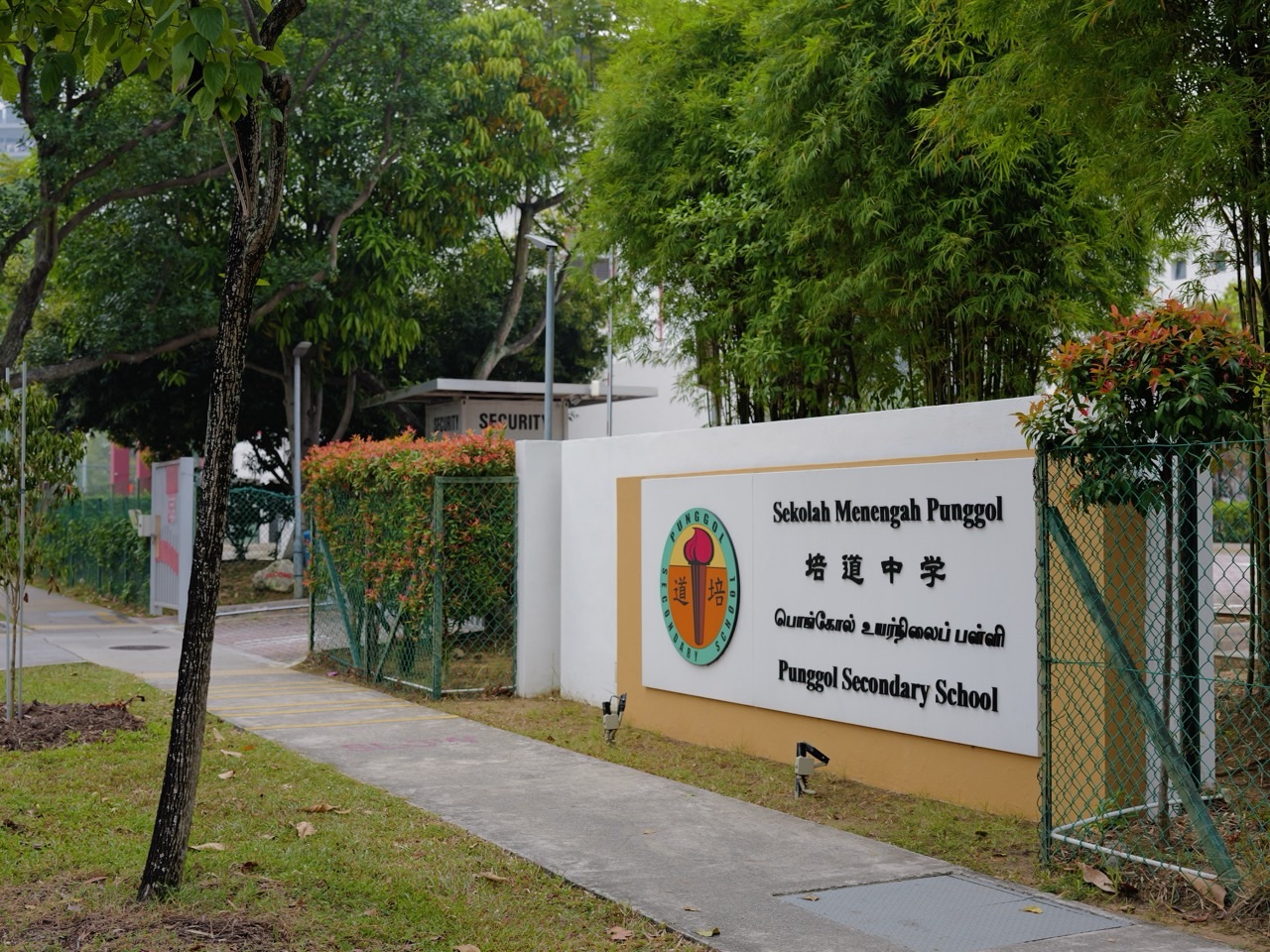
There is a specific Punggol example. Punggol Secondary School’s safe and caring environment page distinguishes one-off hurtful behaviour, deliberate social exclusion, physical actions and repeated cyberbullying. Its 2026 Student Support Team page lists the roles of school counsellors, Special Educational Needs Officers, welfare staff and Education and Career Guidance staff. The school’s public material helps parents understand adult responsibilities; students should not be required to resolve serious bullying solely through class prefects or Peer Support Leaders.
This guide is an explanation of the education system’s prevention, response, investigation, rehabilitation and communication process, not a substitute for the existing step-by-step Punggol bullying-reporting guide. It includes distinctions among conflict, bullying and emergency threats; carefully bounded evidence preservation; school–home conversations; the 2027 reform; peer and bystander roles; original scenarios; FAQs and official 2026 sources. Reviewed 21 October 2026.
Four distinct concerns — what action belongs where?
| Situation | Priority | Who helps? |
|---|---|---|
| Immediate danger, threat or serious injury | Protect child and seek urgent assistance | Appropriate emergency responders + school |
| Repeated exclusion or targeted insults | Document and report pattern | Teacher / student management team |
| Cyberbullying with school-related peers | Save relevant evidence, report, avoid reposting | School + platform / appropriate authority |
| Ordinary disagreement without immediate danger | Clarify facts and resolve respectfully | Trusted teacher and students with adult guidance |
| Ongoing distress after incident | Support participation and wellbeing | Counsellor, school support team, relevant professionals |
Find the answer quickly
- Definition, risks and first safety response
- The 2026–2027 MOE policy reform
- Punggol school’s support and investigation
- Peer support and cyberbullying
- Parent action and monitoring
- FAQs and sources
1. Start with immediate safety, then classification
A child describing a threat, injury or ongoing physical intimidation needs adult help and an immediate safe environment. A parent does not need to prove an official bullying label before asking the school to protect the child.
When no immediate danger exists, document observable facts and contact a suitable school adult. The school can evaluate whether the reported conduct is isolated conflict, repeated bullying or another disciplinary issue.
This order prevents families from getting trapped in a debate about terminology while a pupil remains vulnerable. Safety and accurate investigation come before reputational arguments.
2. Why a one-off incident can still be serious
MOE distinguishes persistent intentional bullying from other hurtful acts, but a single assault, credible threat or dangerous event can require significant intervention. The lack of repetition is not a reason to dismiss actual harm.
Similarly, an unkind comment may warrant education and a clear response without being treated as identical to a sustained pattern of intimidation. Schools need judgement, evidence and proportional measures.
Parents should describe what happened rather than insist on one category prematurely. The response can be firm while the full circumstances are still being established.
3. Intent, repetition and impact are distinct questions
A child may report that peers repeatedly exclude them. Investigators need to understand the context, intent, pattern and impact. Deliberate isolation designed to humiliate is different from two pupils simply not becoming close friends.
A single incident can also have a severe impact, so harm must be evaluated separately from whether the formal bullying definition is met. Students may remember events differently.
Good reporting records date, place, exact words or actions and witnesses where known. Conclusions should come after collecting appropriate evidence, not from viral rumours.
4. Physical bullying and school safety
Pushing, hitting, blocking movement or damaging belongings may create immediate safety risks. An adult should consider separation, supervision, medical attention where necessary and prompt reporting through the school’s procedures.
Students should not be encouraged to retaliate violently, gather classmates into a confrontation or film dangerous behaviour at close range. Adult staff and emergency services have defined roles.
A safety plan can include predictable supervision and safe travel or transition arrangements. The plan should be reviewed when circumstances change instead of assuming one warning eliminates all risk.
5. Verbal insults can accumulate into a pattern
Repeated humiliation, targeted name-calling and threats can cause substantial distress even without physical contact. The school should examine words, frequency, context and whether the conduct continued after an intervention.
Parents can help by recording the child’s own account without repeatedly leading them toward a preselected answer. An accurate record strengthens the school’s ability to investigate fairly.
A child should know they can ask for help even if classmates insist that hurtful words are only jokes. Serious impact deserves a careful adult response.
6. Social exclusion is often difficult to observe
A child may be consistently isolated from groups or encouraged to be ignored. The pattern may occur in recess spaces, group chats or school projects without any dramatic confrontation.
A teacher can examine group interactions, consider what the child reports and plan appropriate inclusion and supervision. The goal is not to compel children to become best friends; it is to stop deliberate harmful treatment.
Parents should avoid publishing another pupil’s identity or asking classmates to campaign against them. Professional investigation and careful support can protect everyone’s dignity.
7. Cyberbullying can continue after dismissal
Group chats, social media, images, impersonation and repeated targeted messages can extend school harm beyond the campus. A school’s responsibilities may be relevant where relationships and conduct involve its pupils, while online platforms and other authorities may have separate roles.
Families can preserve their child’s own relevant messages, account names and timestamps securely. They should not hack accounts, repost harmful images or recruit online followers to punish another child.
Report credible threats promptly. Removing harmful content from a platform may help, but school safety and emotional support can still be necessary.
8. What evidence is useful to report
A short factual timeline is more useful than a lengthy accusatory essay. Include when and where the incident happened, the precise behaviour observed, the child’s account, any direct evidence and what immediate safety action is requested.
Separate verified facts from information received second-hand. If a screenshot is relevant, preserve the original and avoid modifying it in a way that changes context.
The school may need to speak to witnesses and review additional material fairly. Parents should not assume their own record establishes every motive or disciplinary conclusion.
9. When urgent authorities may be appropriate
Immediate violence, serious injury, credible threats or other emergencies should not be handled solely through routine email. Parents should seek safety and appropriate emergency services where necessary, while alerting the school through the proper channel.
An ordinary class disagreement with no danger usually belongs first with school staff. The level of response should reflect the actual circumstances rather than a one-size-fits-all escalation.
The school can explain its emergency and student-management procedures. A child should know a trusted adult and a safe location to seek assistance.
10. The 2026 national review followed consultation
MOE’s April 2026 announcement followed a review of school responses to bullying and hurtful behaviour, including engagement with parents, educators and other stakeholders. Its objective was to improve prevention, consistency, response and confidence in school handling.
The reform should not be described solely as increasing punishments. It includes reporting access, parental communication, stronger staff support, guidance and peer relationships.
A family reading a dramatic headline should examine all parts of the official reform. Prevention and rehabilitation are as relevant to school culture as the sanctions applied when misconduct is established.
11. The new common framework is for 2027
MOE announced that by 2027 schools would operate with more standardised baseline disciplinary responses to serious or very serious misconduct, while retaining room for consideration of each incident.
As of October 2026, this is a planned full rollout rather than an instruction to tell every parent the 2027 measures have already taken effect. Schools may be implementing different enhancements progressively.
The current school’s staff should identify the procedures operating now. A dated policy comparison is more reliable than an online message that confuses announcement and commencement dates.
12. Discipline is not a public spectator event
Schools can impose lawful measures such as detention, suspension or adjustments to conduct outcomes under applicable rules, with safeguards and proper responsibilities. The 2027 reforms seek greater consistency and proportionality in handling serious misconduct.
Parents should not demand a public punishment announcement or access another student’s confidential disciplinary file. A school can explain safety steps and response principles without disclosing protected details about a minor.
Fairness requires considering evidence and the needs of all children. Consequences should serve safety and behavioural improvement rather than social-media spectacle.
13. The severity of a case is not determined by one word
MOE guidance considers factors such as impact, intent, repetition, seriousness and the student’s response to earlier interventions. A label like “bullying” does not automatically specify one uniform sanction without examining the actual incident.
Different students may have different developmental or support needs, requiring appropriate consideration within the lawful process. This is not a reason to ignore harm; it is part of a proportionate decision.
Parents can ask which immediate protective steps were taken, what investigation remains and how recurrence will be monitored. Those questions are usually more actionable than demanding a predetermined punishment before facts are established.
14. School management is responsible for formal discipline
Student leaders, classmates and parent volunteers may support a positive environment, but formal investigation and disciplinary decisions belong to authorised school personnel under current policy.
A prefect should not interrogate another child, confiscate their device without authority or impose detention. Peer Support Leaders can direct classmates to help but cannot act as substitute counsellors or investigators.
This division of responsibility protects the children involved and makes accountability clearer. Families should know the school’s named reporting and escalation routes.
15. Punggol Secondary’s published safe-school approach
Punggol Secondary’s official safe and caring environment page explains types of hurtful behaviour, including repeated cyberbullying, deliberate exclusion, physical harm and insensitive comments. It also describes a firm stance and positive teacher–student relationships.
This is a grounded local example, not a claim that all schools use exactly the same website wording or timetable. The school’s current support and investigation process controls its individual cases.
Punggol families can use the page to understand terminology while contacting the relevant teacher about specific concerns. An online page is not a channel for publishing allegations about identifiable children.
16. The Punggol Secondary Student Support Team
Punggol Secondary’s August 2026 page identifies school counsellors, SEN Officers, a welfare officer and an ECG counsellor as distinct sources of support. It notes that form teachers or year heads can coordinate referrals, and describes confidentiality subject to safety and legal exceptions.
This makes an important distinction: the class teacher may be a useful first contact, while trained staff can provide more specialised help when necessary. Families can ask how those roles work together.
Do not assume a counsellor can disclose every detail of a child’s private session to the parent of another pupil. Confidentiality is part of responsible support, with relevant safety exceptions.
17. A teacher’s first responsibility is to respond safely
A teacher receiving a report should help assess immediate safety and follow the school’s response procedure. Sometimes that means arranging separation and supervision while details are clarified.
The teacher may also need to notify key personnel or meet affected pupils individually. Families should expect appropriate responsiveness while recognising that a fair investigation may take time.
A child’s need to be safe does not disappear during investigation. Parents can ask for interim measures and a suitable time for the next factual update.
18. Reporting through a trusted adult remains essential
In October 2026, a pupil should use the reporting channels made available by their school, such as form teacher, year head, counsellor or student-management staff. Do not tell students they must wait for a future national online channel.
If the first adult is unavailable or implicated in the concern, the child can seek another suitable school leader or authorised help. The family should keep communication factual and focused on safety.
The existing Punggol guide on how to report school bullying provides practical steps. This article explains the broader national system and the changing 2027 framework.
19. The 2027 national online reporting channel is prospective
MOE announced plans to improve access to reporting, including an online channel for students by 2027. The precise operational details and school integration should be confirmed through later official announcements.
An article written before the launch should not invent a working portal link, user account procedure or response time. Similarly, an anonymous social-media form that claims government authority should not be trusted without verification.
Parents should use current school contacts until the national service is officially available. This protects students from sending sensitive information to impersonators.
20. Parents should receive meaningful updates
MOE’s reform emphasises timelier and more consistent communication with parents. An update can explain that safety steps were taken, what process follows and when a further response can be expected without releasing another child’s protected information.
A vague assurance that everything is fine may be insufficient when the family reports repeated harm. Conversely, school staff may not be able to share an allegation’s unverified details with all parties.
A productive parent message asks for current safety, process status and the next contact point. It avoids public demands for named penalties before investigation.
21. A written incident timeline should be accurate
A parent can record what their child reported, when the report was made, what evidence was retained and which school contact responded. Distinguish what the parent personally saw from what the pupil believes occurred.
This protects both the child and the integrity of the school’s follow-up. Repeatedly editing the account to strengthen an accusation can introduce contradictions and delay clarification.
If the situation changes, add a dated update instead of overwriting the original. An honest chronology is better than a polished story with uncertain details.
22. Restorative practices are not a substitute for safety
Schools may use reflection, counselling, relationship repair and appropriate support to help students understand harm and change behaviour. Such work can accompany proportional disciplinary measures where misconduct is established.
A restorative conversation must not pressure an affected child into accepting an apology or sitting with someone when that would be unsafe. Adult facilitation and readiness matter.
The aim is responsible behavioural change, not a public performance of forgiveness. Families should distinguish immediate safety, accountability and longer-term rehabilitation.
23. The child accused of bullying also needs a fair process
A school should examine allegations fairly, explain relevant rules and provide appropriate support for a pupil whose actions are being investigated. Labelling a child publicly before findings can cause separate harm and impair due process.
Parents of the accused can encourage truthful disclosure, cooperation and responsibility where wrongdoing is established. Defensive retaliation against the reporting family is not constructive.
A child who acted wrongly can be held accountable and still be taught better behaviour. Proportional response and meaningful change are compatible goals.
24. Conduct grades are a separate school record
Certain disciplinary outcomes can influence a student’s conduct grade under the applicable framework. This is not identical to a subject Achievement Level or a private tuition ranking.
Families should ask the school what its current conduct criteria are and how a concern is documented or reviewed. Sensitive details about other pupils are not for public circulation.
Students benefit when the behavioural expectations are clear, explained and consistently applied. A conduct outcome should be connected to actual observed behaviour rather than neighbourhood rumours.
25. Bullying prevention belongs to school culture
Preventing harm involves classroom expectations, social-emotional education, supervision, peer support and early response to unkind behaviour. A school that relies only on severe punishment after incidents is missing much of the preventive work.
Punggol Secondary’s public material describes a caring environment, positive student–teacher relationships and trained peer leaders. These mechanisms can help students feel more comfortable seeking help.
Parents can reinforce respectful communication at home while recognising the school’s responsibility to investigate and manage school incidents. Prevention is a shared culture, not outsourced to affected pupils.
26. Bystanders should seek help rather than retaliate
A pupil witnessing repeated humiliation can avoid joining in, offer safe support afterwards and report what was observed to a teacher. The child should not be asked to confront a dangerous group or place themselves at risk for evidence.
Simple accurate statements are valuable: “I saw three pupils block the doorway after recess,” rather than a claim about motives the witness could not know.
Students can learn that moral courage includes asking an adult for help. A school culture that praises safe reporting can reduce pressure on child witnesses.
27. Peer supporters need supervision and referral routes
A Peer Support Leader may be the first person a classmate approaches. They should listen respectfully, explain that serious concerns require adult support and help connect the child to a trusted teacher.
A peer leader who is told of a serious threat must not promise secrecy or attempt therapeutic counselling. This protects both children from responsibilities they are not qualified to manage.
Parents can ask how PSLs are trained and supervised, not merely how many students wear the badge. Quality of referral is an important outcome of the programme.
28. Cyberbullying evidence needs privacy protection
A child may receive repeated harmful messages or discover an edited image circulating online. Keep only relevant evidence through safe, authorised methods and report it through suitable school and platform channels.
Avoid reposting harmful material to draw public support. Doing so can amplify humiliation, breach privacy and spread false or incomplete allegations.
Ask the school whether removal requests, safety steps and counselling support are appropriate. An online post may be taken down while the underlying peer relationship still needs intervention.
29. Different platforms may have separate reporting procedures
Social-media providers have their own content-reporting systems, while serious unlawful conduct can raise other responsibilities. These routes do not replace the school’s need to manage students’ safety when the incident affects school life.
A parent should avoid assuming every rude message is automatically a criminal offence, or that repeated targeted threats are harmless because they occurred after school hours.
Seek guidance from the right authority for the actual facts. Clear categorisation prevents both overreaction and missed protection.
30. What a good safety plan might include
A school can consider supervised transition areas, seating or grouping adjustments, safe contacts and monitoring when a pupil is worried about recurrence. The exact plan depends on the incident, student needs and available staff.
A plan should name who the pupil can approach and how the family will be updated. It should not rely entirely on the affected child avoiding all ordinary school activities.
The goal is appropriate education access and physical and emotional safety, not punishment of the student who sought help.
31. One incident may reveal a wider pattern
An apparently isolated incident may be part of repeated behaviour not yet known to adults. A thorough school response may therefore check earlier concerns, different locations and possible peer dynamics with appropriate safeguards.
Parents can share earlier dates and examples but should not recruit other children into a public investigation. The school has responsibility to hear relevant accounts fairly.
The difference between one event and a pattern matters to classification and response. It should be established through evidence, not assumed for rhetorical effect.
32. False certainty can harm both families
A child may give an incomplete account because of fear, embarrassment, misunderstanding or memory. This does not mean the report should be dismissed. It means investigators should gather additional evidence sensitively.
Parents can validate the child’s need for safety without asserting unverified motives or accusing every pupil in a group. Likewise, staff should not prejudge a report because no teacher witnessed the event.
Accurate statements protect credibility and help appropriate action. Families can insist on safety while remaining open to new facts.
33. An original conflict-versus-bullying case
Imagine two fictional Secondary 1 pupils arguing once about an uneven group-project workload. One uses an insulting phrase, and both walk away upset. The insult deserves attention, but this single description does not establish repeated targeted bullying.
Suppose instead that one pupil organises others to exclude the same classmate from multiple projects over several weeks, with repeated humiliating messages. That new pattern needs investigation for intentional and repeated harm.
The distinction changes the inquiry, not whether anyone deserves respectful treatment. Both situations merit suitable adult guidance, with different possible intervention and consequences.
34. An original cyberbullying case
A fictional pupil sees a classmate’s photo altered and circulated repeatedly in a school-related chat. The affected child becomes afraid to attend lessons. The family preserves the original messages available to them, avoids forwarding the image, and contacts authorised school staff about immediate safety.
The school can investigate and coordinate support while the platform’s reporting mechanisms address the content. The case should not be resolved by a parent publicly naming alleged perpetrators.
The educational lesson is that digital harm can affect real school participation. Appropriate reporting, confidentiality and accountability can operate together.
35. Supporting the child after a report
A child may worry that reporting will worsen peer relationships. Adults should explain the immediate plan, what contact is available and how the school intends to monitor further problems. Avoid promising that everything will be solved by one meeting.
Keep ordinary routines as stable as possible where safe, and consider school counselling or appropriate professional support when distress persists. There is no shame in asking for assistance.
Parents should listen for changes in sleep, attendance, friendships and willingness to participate without interpreting every feeling as a formal diagnosis.
36. Helping a child who harmed others to change
When misconduct is established, the family can work with school staff on concrete responsibilities: stop the behaviour, accept lawful consequences, understand its impact and practise different responses to conflict.
An apology may be part of the process, but it is not sufficient if repeated harmful conduct continues. Adults should look for sustained behavioural evidence rather than impressive words once.
The pupil’s dignity remains important. Correcting behaviour is not the same as declaring a child irredeemably bad, and meaningful support may be needed alongside accountability.
37. School attendance during a difficult period
A pupil may dread returning after an incident. The family should contact the school about safety and attendance needs rather than allowing unexplained absence to accumulate. Significant health or psychological needs deserve appropriate professional input.
A school can explain any temporary accommodations, learning recovery and communication procedures it can provide under the circumstances. A parent should not invent a school-approved absence policy from a private article.
The priority is safe participation and learning continuity, with honest information shared through appropriate channels.
38. If the first school response seems insufficient
Document the concern factually, identify what remains unsafe or unresolved, and follow the school’s appropriate escalation route, potentially including a year head or school leadership. The formal MOE enquiries process may be relevant where needed.
Avoid publicising unverified allegations or demanding another pupil’s private record. A specific written question about safety and next steps is more actionable than threats posted to a group chat.
The existing Punggol step-by-step reporting guide addresses practical communication. This article provides system context and timing for the 2027 changes.
39. What the new online channel may improve
MOE’s planned 2027 student reporting channel aims to make it easier to report concerns, including for children reluctant to approach an adult face to face. The official implementation details should be checked when released.
A digital form cannot by itself protect a child on campus. Schools still need adults who respond, investigate, supervise and communicate. Sensitive reporting also requires appropriate privacy handling.
Families should encourage children to use trusted existing school channels in the meantime, rather than waiting for technology to solve a current problem.
40. Measuring whether the response is working
A useful follow-up asks whether harmful conduct has stopped, whether the affected child can participate safely, and whether the school has agreed on appropriate monitoring. A disciplinary sanction alone may not prove that relationships or risk have improved.
School staff can assess patterns through observations and appropriate records; parents can share changes noticed at home. Neither needs to broadcast details about other children.
Progress can include safer recess, reduced harmful messages, improved attendance and the child’s confidence in seeking help. These should be interpreted carefully, not converted into a false precision score.
41. The role of parents in prevention
Adults can model disagreement without humiliation, set appropriate online boundaries and discuss how to respond safely when someone is excluded. A family should avoid rewarding gossip or teaching a child that retaliation proves strength.
A useful conversation asks what the child could do if a friend makes a harmful joke: avoid participating, check on the affected pupil when safe, and seek a trusted adult if the pattern continues.
Parents do not replace school investigators. Their contribution is building habits and providing accurate information that supports a caring school environment.
42. A four-week school–home support sequence
Week 1: clarify the observed facts and immediate safety. Contact the appropriate school staff, preserve relevant evidence and agree on a safe reporting contact.
Week 2: follow the school’s investigation and support processes while avoiding social-media escalation. Ask for the expected next update and practical protective steps.
Week 3: review whether the child can attend and participate safely. Consider any appropriate counselling, peer or family support under adult guidance.
Week 4: discuss the remaining concerns and a realistic monitoring plan. The schedule is an illustrative organisation tool, not a deadline MOE promises for resolving all cases.
43. The 2027 framework must be dated accurately
An article written in October 2026 should explain that MOE announced standardised measures for implementation by 2027, rather than state every school already applies the full future framework. Current schools may be adopting recommendations in phases.
It should also separate rules concerning school misconduct from criminal law, which has its own authorities and procedures. A school decision is not a police conviction.
Accurate dates and roles keep parents from acting on misinformation. Consult the current MOE update and school practice if a case is ongoing.
44. Common myths that confuse parents
One myth is that a single hurtful comment can never matter because it does not meet the usual repeated-bullying definition. Another is that peer leaders should investigate incidents alone. A third is that a school must publicly announce punishments to prove it acted.
Families may also confuse a planned national online reporting channel with one already live, or assume all restorative work means no real consequences.
The correction is to prioritise safety, report facts, understand adult responsibilities and follow the current process. Both accountability and respectful support are necessary.
45. The final parent checklist
Identify what happened, when and where, whether the pupil is safe and which adult has been informed. Keep evidence factual and private. Ask about temporary protective measures, the investigation procedure and the next suitable communication point.
Do not promise a child that reporting means instant expulsion of another student, or tell them that no help is possible until a new national portal launches.
A school should be able to respond to genuine harm fairly, preserve learning access and support safer behaviour. The framework’s purpose is protecting students and improving school culture, not merely producing a disciplinary headline.
Frequently asked questions
What counts as bullying in Singapore schools?
Intentional, repeated hurtful behaviour is central to the usual definition, though one-off harmful incidents can still require action.
Should parents report a single serious threat?
Yes. Safety and appropriate adult help should not depend on proving repetition first.
Where does a pupil report bullying now?
Use the current school’s trusted teachers, student-management staff, counsellors or other designated reporting channels.
Is the 2027 national online bullying portal already live in October 2026?
Do not assume so. MOE announced the future channel and schools currently have their own reporting arrangements.
When was the strengthened national framework announced?
15 April 2026, with enhanced measures rolling out in phases and common disciplinary arrangements due by 2027.
Does MOE require schools to take bullying seriously?
Yes. MOE and schools describe prevention, investigation, safety, discipline and student support as part of their responsibilities.
Is one rude joke always a formal bullying offence?
Not necessarily. Intent, context and repetition matter, but hurtful words should not automatically be ignored.
Can cyberbullying be relevant if it happens after school?
Yes. Online peer behaviour can affect school safety and participation; appropriate school and platform responses may apply.
Can students investigate classmates’ private phones?
They should not be encouraged to access devices or accounts without authority. Adults handle investigations.
What should parents preserve?
Relevant original messages, dates, factual observations and official communication, held privately and without alteration.
Should an affected family’s group chat publish accused pupils’ names?
No. Protect minors’ privacy, investigation fairness and the child’s wellbeing.
Are Peer Support Leaders the same as counsellors?
No. PSLs can help students connect with appropriate adults, not provide clinical therapy or formal investigation.
Can a PSL promise complete confidentiality?
No. Serious safety concerns require adult referral and appropriate disclosure.
What if the child is in immediate danger?
Prioritise safety and suitable emergency assistance rather than relying solely on routine school email.
Are schools using standard penalties from 2027?
MOE’s 2026 announcements describe common measures to be in place by 2027, with schools considering the individual case.
Does serious wrongdoing always lead to one fixed punishment?
No. Formal responses consider severity, evidence, impact and relevant circumstances under applicable rules.
Can schools use restorative work and discipline together?
Yes. Support and behavioural repair can complement proportionate disciplinary consequences.
Must a bullied child accept an apology immediately?
No. Safety and readiness matter; no child should be pressured into an unsafe meeting.
Will schools share another pupil’s disciplinary record?
Parents should not assume entitlement to confidential details about another minor.
Can school counselling help affected pupils?
Yes. Schools have counselling and related support roles; the exact referral process varies.
Does Punggol Secondary publish a safe-school approach?
Yes. Its public page describes hurtful conduct, repeated bullying, adult response and caring school relationships.
What if the school response remains inadequate?
Document specific unresolved risks and use the school’s relevant escalation pathway and MOE channels where appropriate.
Can a school make temporary adjustments for safety?
It may consider suitable protective arrangements depending on the facts and available resources.
Does reporting automatically guarantee an expulsion?
No. Investigations and discipline follow applicable standards and case-specific evidence.
Is an apology alone always enough?
Not necessarily. Sustained behavioural change and appropriate accountability may be required.
What should parents do first?
Ensure the child’s safety, document observable facts and contact a trusted authorised school adult promptly.
Official references and Punggol companion articles
- MOE response to bullying in schools, April 2026
- MOE comprehensive anti-bullying review, May 2026
- MOE parliamentary reply on bullying and restorative support, May 2026
- MOE management of school bullying, September 2025
- Punggol Secondary safe and caring environment
- Punggol Secondary Student Support Team, 2026
- Punggol Secondary CCE and peer leadership
- Greendale Secondary school support links
- MOE refreshed school–home partnership
- Punggol how-to report school bullying
- Punggol student leadership and peer support guide
- Punggol school leadership and parent feedback
- Immutable Clementi teaching and diagnostic standard
Editorial review, 21 October 2026. MOE’s 2027 framework is identified as a prospective full implementation, while existing 2026 school reporting routes remain valid. No named student, accusation or disciplinary incident is alleged. All scenarios are invented to explain principles. This article cannot substitute for school emergency, legal or professional assistance where necessary.


