
Quick answer. Singapore secondary schools can offer distinctive programmes that develop different strengths alongside core academic subjects. The Applied Learning Programme (ALP) helps students connect subject knowledge to real-world problems, while the Learning for Life Programme (LLP) develops interests, values, citizenship, leadership and life skills through structured experiences. These are not additional national examination certificates, nor are they a guarantee of Direct School Admission (DSA) or employment.
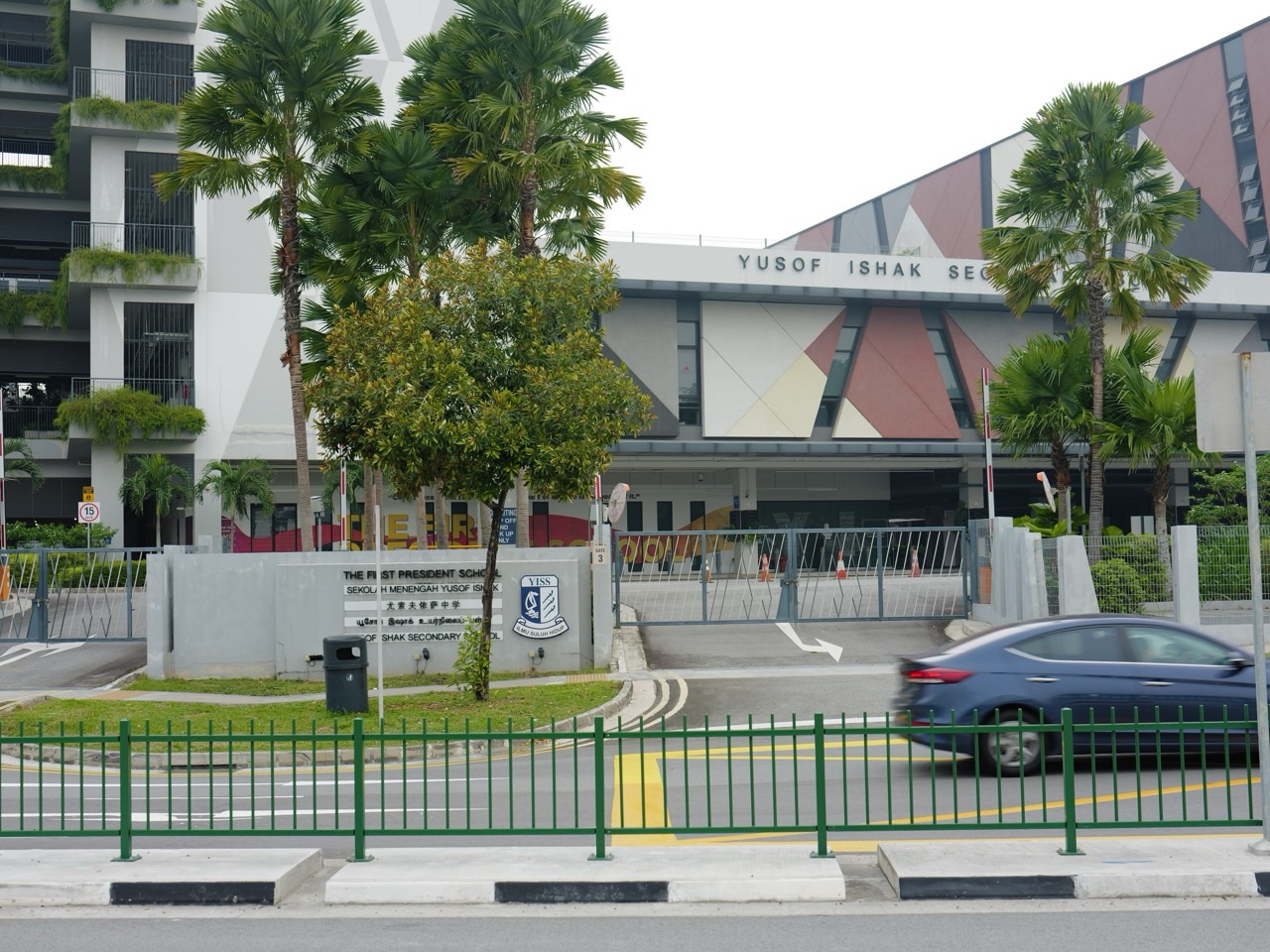
For Punggol families, the programmes are concrete rather than abstract. Punggol Secondary School lists an environmental-sustainability ALP involving smart hydroponics and vermicomposting, with an LLP in community and youth leadership. Yusof Ishak Secondary School describes a sustainability-oriented STEM ALP with urban farming and robotics. Greendale Secondary School describes an ALP in design, technology and engineering, including problem-solving through coding and making. Actual student participation, timetables and opportunities must be verified with each school.
Find your answer
- ALP vs LLP and the 2026 changes
- Punggol Secondary, Greendale and Yusof Ishak
- Original STEM and leadership exercises
- School choice, DSA and CCA
- Parent FAQs and official sources
ALP and LLP in one comparison
| Dimension | ALP | LLP |
|---|---|---|
| Primary purpose | Apply academic knowledge to actual problems | Develop character, interests, leadership and life skills |
| Common activities | STEM projects, environmental work, design or technology | Community leadership, arts, sports, outdoor education |
| Academic qualification | Not a standalone national SEC subject | Not a standalone national SEC subject |
| Parent check | Teaching methods, participation, reasoning | Authentic responsibility, inclusion, feedback |
| 2026 reform | May be streamlined/integrated by schools | May be streamlined/integrated by schools |
MOE announced that from 2026 schools have greater autonomy to streamline or integrate ALP and LLP to support student development and use teachers’ time more flexibly. Therefore an older brochure saying every school runs two identical stand-alone weekly periods may no longer describe its current provision. The underlying educational goals remain broader than examination marks.
This guide explains how ALP and LLP work, their differences from CCAs, subject electives and Applied Learning Modules, the relevant 2026 reforms, school-by-school Punggol examples, original Maths and Science project diagnostics, LEAPS and DSA limitations, and how to compare two legitimate school choices. Editorial check: 21 October 2026.
1. What ALP is intended to achieve
MOE’s Applied Learning Programme connects academic knowledge and skills with the real world. Its purpose is to give learners opportunities to explore applications, experiment, investigate, create and explain what they have learned. A school may use technology, sustainability, engineering, languages, business or another applied domain as its focus.
An ALP is not a standalone replacement for Secondary Mathematics, English or Science. Its tasks can require accurate subject foundations, including measurement, data interpretation, reading, research and communication. A student who builds a working model may still need to explain why it works.
Parents should ask what students actually do, how teachers support their reasoning and what evidence shows improvement. An attractive project photograph does not establish the depth of the learning experience.
2. What LLP is intended to achieve
The Learning for Life Programme develops students through interests and wider life experiences, including leadership, character, sports, outdoor education, arts, environmental responsibility, community engagement and other values-based learning.
The aim is not simply to collect hours or stage performances. A learner may practise teamwork, decision-making, empathy, resilience and responsible action in situations where an examination paper would be a poor measure.
A school with a community-leadership LLP may ask students to identify genuine needs, plan an activity, work safely with others and reflect on outcomes. The educational benefit lies in what the pupil understands and can do afterwards, not just a photograph beside a volunteer banner.
3. ALP and LLP are different but complementary
ALP usually begins with connecting academic knowledge to practical use; LLP commonly begins with human development, interests, values and meaningful participation. A project can overlap. For example, a school investigating food waste may apply Science and Mathematics to data while also learning civic responsibility.
A parent should not assume the acronym determines every activity. Ask which part is teaching concepts, which develops student agency and how pupils receive feedback.
The programme’s official title helps parents understand the school’s broad direction. It does not provide a complete individual timetable or describe every opportunity available to all year levels.
4. What changed from 2026
MOE’s September 2024 Work Plan Seminar announcement said schools would have greater flexibility from 2026 to streamline their Applied Learning and Learning for Life programmes. This is intended to reduce fragmentation and better integrate teaching, student development and school-specific priorities.
A family comparing programmes should therefore use the actual current school website or open-house information, not rely on a 2022 timetable of separate compulsory periods. Activities may be integrated into subjects or organised through school-wide themes.
The reform is not a national instruction to cancel creative, applied or community learning. The policy broadens operational choice while preserving the purpose of developing diverse strengths.
5. ALP is not a formal examinable elective by default
A school might offer an ALP on sustainability and also offer an examinable elective such as Design & Technology or Computing. These are different things. An ALP project does not automatically become a graded national subject carrying SEC G1, G2 or G3 certification.
The academic value can still be considerable. Students may learn to plan, collect data, test an explanation and present evidence. Some schools may connect those experiences with assessed classroom work under local arrangements.
Ask the school which activities are curricular, which are enrichment, which are assessed and what qualification—if any—is awarded. Do not assume a schoolwide ALP provides a direct admissions bonus.
6. ALP is not the same as Applied Learning Modules
MOE also lists Applied Learning Modules (ApLM) among secondary-school opportunities. Those modules have particular arrangements for applied experiences and may connect learners with post-secondary institutional settings. The names sound similar but should not be interchanged.
An ALP describes a school’s distinctive applied learning direction, while a specific ApLM is a defined module opportunity. The family should confirm which is being discussed before budgeting for travel or expecting formal credit.
Students can benefit from both without treating either as a substitute for the SEC or a polytechnic diploma. Actual certification and eligibility depend on the relevant programme.
7. LLP is not identical to a CCA
A school CCA may involve regular participation in sports, uniformed groups, performing arts or clubs. LLPs can use some of the same settings to nurture leadership, arts or outdoor competencies, but their aims and delivery may be broader.
Joining a CCA does not guarantee that every pupil undertakes every specialist LLP opportunity. Likewise an LLP activity does not automatically count as a particular LEAPS 2.0 point under the CCA recognition scheme.
Parents can ask what participation is expected for the child’s level and how outcomes are recognised. Do not turn all wider learning into an assumed numerical admissions advantage.
8. Punggol Secondary’s environment ALP
Punggol Secondary School’s July 2026 official page describes an Applied Learning Programme in Environmental Sustainability. Its activities include smart hydroponics, block programming, vermicomposting and other real-world STEM challenges.
These experiences can connect biology, environmental systems, technology and data. For example, a pupil might examine how growing conditions affect plant health, but a valid conclusion still requires accurate observations and controlled comparisons.
The school’s description documents the programme; it is not a promise that every Secondary 1 student personally owns a hydroponics kit or participates in every external competition. Confirm current participation details with the school.
9. Punggol Secondary’s community and youth leadership LLP
The school also describes a Learning for Life Programme in Community and Youth Leadership, aimed at developing students’ agency, empathy, collaboration and contribution to the community.
A useful project should begin with understanding the people affected, rather than presuming volunteers know what others need. Learners can then plan an appropriate activity, discuss safety and evaluate what happened.
A parent asking about this LLP should request concrete examples of student responsibility and reflection. A tally of service hours alone does not prove that the child has become a more effective leader.
10. Greendale Secondary’s design and engineering ALP
Greendale Secondary School’s July 2026 official page describes applied learning in coding, design, technology and engineering, with learners using problem-solving skills for real-world challenges.
A meaningful task might require designing a simple mechanism, programming a behaviour, observing a failure and changing one input at a time. Correct reasoning, not merely owning a robotics kit, is central.
The precise equipment, timetable and specialist opportunities can change. Families should ask about authentic participation and how students without prior private coding classes are supported to learn the foundational ideas.
11. Yusof Ishak Secondary’s sustainability STEM ALP
Yusof Ishak Secondary School’s July 2026 ALP page describes science, technology, engineering and mathematics with sustainability themes such as urban farming and robotics. It names an approach built around a sustainable and smart city.
This gives Punggol an authentic local connection to school-based applied learning in an urban-development context. Students may engage with investigations and projects related to environmental systems.
The published school page should not be used to claim every student is guaranteed access to a named research laboratory, competition or employer internship. Parents should distinguish the schoolwide programme from selection-based enrichment activities.
12. Why school-specific examples are useful for comparison
Three Punggol-area secondary schools may all describe STEM or sustainability activity, yet the teaching and student experience can differ. One may focus strongly on urban growing systems, another on design and making, while another integrates digital environmental projects with leadership.
A meaningful comparison asks which concepts the child will encounter, how much time is devoted to the programme, which activities are accessible to ordinary pupils and what support is offered.
Rankings that compress all these differences into an undated label such as “top STEM school” tell a parent less than two accurate paragraphs from the relevant schools’ own 2026 descriptions.
13. Environmental sustainability is more than recycling slogans
A school sustainability project can ask students to measure, model and reduce resource use or understand food systems. The actual learning depends on whether pupils distinguish their observations from conclusions and can test an idea.
For example, planting seeds is an experience; comparing growth under controlled conditions and explaining measured differences develops scientific reasoning. Counting recycled items is an activity; evaluating contamination, data quality and relevant behaviour can deepen it.
Parents can encourage the learner to ask what the project demonstrated, not merely how many photos were taken. The same critical thinking is useful beyond the specific school theme.
14. An original hydroponic investigation
Imagine two fictional classroom plant containers with equal types and numbers of seedlings. Students want to know whether light duration affects growth. A poor experiment also changes water supply, container size and nutrient solution while changing light duration.
A better controlled comparison keeps the other relevant conditions as similar as possible, varies the intended light duration, defines a growth measure and records repeated observations. Any conclusion should acknowledge measurement and biological variation.
This is an original conceptual example, not a description of an actual experiment conducted at Punggol Secondary. Appropriate school supervision and safety procedures are essential for real equipment and electrical systems.
15. Original Mathematics example: growth-rate arithmetic
Suppose a hypothetical plant grows from 12 cm to 18 cm over three weeks. Its increase is 18 − 12 = 6 cm, giving an average change of 2 cm per week over that interval.
A pupil should not claim that the plant grew exactly 2 cm in each week unless weekly readings establish that. The average summarises total change, not individual weekly observations.
For transfer, use a second plant that increases from 10 cm to 19 cm in three weeks, averaging 3 cm per week. Ask whether the comparison is fair when the plants began at different sizes. The problem links arithmetic with scientific caution.
16. Why percentages can be misleading in student projects
A team reports that recycling participation increased from 10 pupils to 15. That is an increase of five pupils, or 50% of the original ten, but without knowing the eligible school population the percentage alone may be misleading.
A rise from two to four participants is 100%, although it involves only two additional people. Students should learn to report both the counts and the percentage when appropriate.
This helps them avoid exaggerated public-impact claims and supports accurate communication. The skill transfers to Science, business, social studies and later workplace reporting.
17. A design-thinking example: the faulty book stand
Imagine pupils designing a cardboard stand to hold a book during revision. It collapses under a heavier book. A superficial response adds more material at random; a more disciplined response considers base width, support angle and the load’s position.
Change one design factor and compare similar test loads safely, documenting what changed. A new book size checks whether the modified design is robust beyond one demonstration.
A student who can explain the mechanism has learned more than a student displaying an attractive prototype without understanding. This is the standard of applied reasoning families should look for.
18. A coding project must be independently explainable
A simple computer program controlling a sensor may appear to work, yet the pupil might have copied the entire code. Ask them to predict what happens if a threshold or condition changes, then explain the observed output.
For example, a fictional program waters plants when a moisture reading is below 30 units. If the threshold changes to 40, more readings trigger watering, assuming lower readings indicate drier conditions in that particular model.
The educational value comes from understanding the condition, measurement, units and limitations, not from being able to press Run. Real watering equipment requires appropriate adult supervision and safe electrical practice.
19. The distinction between correlation and cause
A class may notice that plants near the window grew taller. That observation does not prove sunlight alone caused the difference if water, temperature, plant variety or initial size also varied.
Students should identify alternative explanations and design a better comparison. A teacher can help them distinguish what the data show from what the project team wants to conclude.
This critical thinking is central to an ALP’s real-world character. A confident but unsupported presentation should be improved through evidence rather than accepted because the topic is exciting.
20. Project writing should be clear and honest
A meaningful school report states the problem, what was attempted, what was observed, whether the evidence supports a conclusion and what remains uncertain. Jargon should not replace explanation.
For example, “Our design saved 30% water” requires a clear baseline, measurement method and comparable conditions. Without those details it may be an aspiration rather than a demonstrated result.
A student learning to distinguish measured fact from promotional language gains a skill relevant to future subjects and employment. This is a useful educational outcome even if the project does not win a competition.
21. How LLP can develop real leadership
A pupil who takes responsibility for a team should listen, clarify roles, anticipate risks and evaluate whether others were treated fairly. Leadership is not measured simply by having the title of chairperson.
Imagine a class planning a community activity. A stronger leader checks accessibility, obtains necessary approvals, consults participants and allocates tasks appropriately, rather than imposing an elaborate plan without discussion.
School LLP experiences can provide practice with feedback, but parents should not claim one service activity guarantees a future leadership scholarship. Character develops over time.
22. Values in Action connects to LLP but is not identical
Values in Action (VIA) encourages civic responsibility, community participation and reflection within Singapore schools. An LLP in community leadership may incorporate VIA-related opportunities, but the two frameworks are not automatically the same module or award.
A meaningful VIA activity responds to a genuine need with safety and consent. Students should ask whether their action helped the intended people and whether the community partners wanted that support.
Recording hours without reflecting on outcomes is a narrow measure. A strong experience combines empathy, careful planning and honest evaluation.
23. Community projects must respect privacy
Students may conduct surveys, photographs or interviews for a local project. They need to follow school permissions and protect participants’ data, particularly when children or vulnerable people are involved.
A school project should not publish a resident’s address, medical condition or private conversation just to make the report sound authentic. Learn to anonymise information and use only approved sources.
This turns ALP and LLP into practical digital-literacy education. Responsible research is as important as creative problem-solving.
24. How 21st Century Competencies appear in these programmes
MOE’s 21st Century Competencies include critical, adaptive and inventive thinking, communication, collaboration, and civic, global and cross-cultural literacy. An ALP or LLP can offer authentic opportunities to develop those capabilities.
A student should not simply write “I showed 21CC” in a portfolio. Better evidence describes the actual task: how a conclusion was tested, why a plan changed, or how a team handled disagreement.
Teachers may use observation, reflection and discussion to assess growth. Parents can reinforce the same habit at home by asking the child what they would do differently next time.
25. ALP is not automatic DSA eligibility
A school may offer a distinctive STEM ALP and separately participate in DSA-Sec for particular talent categories. The ALP does not promise that every pupil enrolled in it or every primary applicant interested in the topic gains a DSA place.
MOE and the actual receiving school’s admissions procedures control the selection. A private robotics competition certificate may be relevant to an aptitude application but cannot replace compulsory tests or interviews.
A family should choose a school because its daily learning fits the child, not because a programme description sounds like a guaranteed entry trick.
26. ALP is not automatic SEC subject credit
An ALP project may support learning in Science or Design & Technology, but a separate national SEC entry requires actual examinable subjects and qualification rules. The programme’s title does not become a G3 subject simply because it includes the word engineering.
A student considering upper-secondary subject choices should check the school combinations and the official SEAB syllabus for the intended G level.
The distinction matters when planning later ITE, polytechnic or JC admission. Only the accepted subjects and qualifications specified by the receiving route should be used in eligibility calculations.
27. LLP and LEAPS recognition are separate
A secondary student can develop leadership and service through LLP activities, while LEAPS 2.0 records co-curricular participation and achievement under its specific criteria. A completed LLP project does not automatically yield an Excellent LEAPS result.
Students should ask how the school records relevant experiences and whether they meet current recognised participation or leadership criteria. Records need to be accurate, not constructed solely to obtain a bonus.
Authentic contribution remains valuable even when it produces no extra admission points. The educational aim is sustained responsibility and development.
28. How to ask a child about school projects
“Did you win?” is often a less useful first question than “What did you try, and what surprised you?” The latter invites reasoning and reflection. A child may describe a failed experiment that taught them more than a routine demonstration.
Parents can ask which evidence supported the group’s conclusion and what further question arose. This supports intellectual curiosity without taking over the pupil’s assessed work.
A family should not secretly complete the project to make the result impressive. The student’s ability to explain the work matters more than an adult-produced final poster.
29. How to recognise authentic student participation
A school website may feature competition winners, but a family also needs to know what ordinary pupils experience. Does the programme introduce all relevant students to the foundation, or are advanced opportunities limited to a selected group?
An honest school can explain different layers: curriculum-wide activities, electives, talent programmes and optional competitions. The family should not infer equal participation from a single photograph of a small team.
Ask for the year-level timetable and examples of student work at different readiness levels. That makes the comparison fairer.
30. Assessment should test transfer
A pupil may complete a hydroponics worksheet correctly after a teacher models it, yet struggle when asked to interpret data from a different plant. Similarly, a leader may manage a rehearsed activity but not know what to do when a volunteer is absent.
Good assessment changes the conditions and asks the student to adapt. The teacher observes whether the concept survives without prompts and provides specific feedback.
This first-principles loop—diagnose, explain, guide, vary and verify—is more educationally useful than simply awarding marks for the most attractive project display.
31. What if the child dislikes the advertised theme?
A student may be placed in a school with an environmental ALP but prefer literature, music or sport. That does not automatically mean the school is unsuitable. The core curriculum, CCAs, subject choice and student-support culture may still be a good fit.
Ask which experiences are compulsory, how deeply they dominate the timetable and what other opportunities exist. Some students discover new interests through an unfamiliar applied domain.
Do not pressure the pupil to declare a lifelong career aspiration based on a Secondary 1 programme title. Early exposure should broaden choices rather than lock them prematurely.
32. School choice should not be based only on the ALP title
Punggol families should compare the school’s actual PSLE posting eligibility, subject offering, Full SBB flexibility, student support, CCAs, fees and commute. ALP and LLP are valuable additional dimensions, not the entire decision.
Two schools may offer similar environmental STEM experiences but differ in teaching methods or pupil activities. Ask each for specific details rather than selecting the one with the more futuristic programme name.
The best programme is the one the child can genuinely engage in while building secure academic foundations and positive daily routines.
33. A factual comparison matrix for Punggol secondary schools
Create columns for school, official ALP, official LLP, schoolwide activities, selected enrichment, core subject options and Punggol transport. Source each statement to the current school page or MOE SchoolFinder.
For example, Punggol Secondary officially describes environmental sustainability and community leadership. Greendale’s official ALP emphasises design and engineering. Yusof Ishak’s ALP describes sustainability-themed STEM and urban farming. The schools’ own LLP and subject details should be checked separately.
Do not rank the three on a fabricated “ALP effectiveness score” without credible common data. Presenting the programmes accurately is already useful information.
34. The daily commute is part of learning
A family near Punggol Coast and another near Punggol Central may face different travel times to the same campus. School projects, CCAs and LLP events can affect dismissal and transport arrangements.
Test the actual door-to-door weekday route, including wet weather, appropriate crossings and late afternoon collection. A good academic fit can be undermined by chronic exhaustion and an unrealistic family schedule.
Convenience does not automatically outrank a child’s learning interests, but should be considered alongside them. A sustainable journey supports attendance, rest and participation.
35. Costs and materials should not be assumed
A public-school ALP or LLP may involve school-provided resources, but optional competitions or particular enrichment activities can have separate arrangements. Parents should ask what is compulsory, what is supplied and whether financial help exists.
Do not buy costly robotics hardware or hydroponics equipment before an official school notice. The programme may use shared facilities or specific devices unsuitable for an unverified personal purchase.
A school can explain the actual requirements. Family spending should support learning, not try to purchase a competitive advantage through irrelevant gadgets.
36. Four weeks to understand a school’s programmes
Week 1: shortlist realistic secondary schools and verify the current ALP/LLP information through MOE and school pages. Note each school’s exact focus without turning it into a ranking.
Week 2: ask the child to explore one concept related to a preferred programme through a safe age-appropriate task. Observe their questions and how they respond to difficulty.
Week 3: attend or read official open-house information and ask about curriculum-wide participation, electives, support and timetable. Test the family commute.
Week 4: compare the full school experience and make a valid application shortlist, keeping historical posting figures and DSA criteria in the proper context.
37. Questions to ask at a school open house
Ask what is taught in Secondary 1 and 2, whether all pupils participate, how teachers assess learning and which advanced programmes are selective. Ask what the LLP expects students to do and how community partners are involved.
Then ask how the programme links with the national subject curriculum and what support exists for pupils who struggle with foundational mathematics, scientific language or project organisation.
A student should be allowed to ask whether they will actually enjoy the activities, not merely listen to adults describe impressive achievements. Practical transparency helps families choose well.
38. School programmes may change in future years
MOE’s 2026 flexibility allows schools to update and integrate distinctive programmes as needs evolve. A page published in 2021 can describe a valuable history, but may not be the exact Secondary 1 experience in 2027.
Use school notices, MOE SchoolFinder and the current timetable, especially when the family is comparing admissions for a later cohort. Save the date of the source.
A responsible article should distinguish confirmed present offerings from aspirations and historical projects. Programme evolution is normal and is not evidence that the school has abandoned its educational goals.
39. Common mistakes about ALP and LLP
One mistake is describing the two programmes as national examination subjects. Another is saying every school’s ALP is STEM or every LLP is sport. A third is using a school-specific programme title as a guarantee of DSA, LEAPS or an employer placement.
Families may also misunderstand Applied Learning Modules as identical to ALP or believe all students automatically join elite competitions shown on the school’s website.
The correction is straightforward: identify the specific programme, the ordinary student experience, the actual school offering and the national qualifications that remain separate.
40. A student’s own explanation is the best evidence
A student who can explain why their hydroponics comparison was fair, why a prototype failed or how a community activity was adapted shows more learning than one who merely remembers the project’s slogan.
Ask for one unfamiliar application: Could the same method be used with a different plant? Would the team change its plan for a different group of participants? The answer reveals transfer and adaptive thinking.
This standard helps parents value programme quality without reducing children to competition medals or photographs. Independent reasoning is the durable outcome.
41. Responsible innovation includes ethics and safety
Sustainability and technology projects can involve living things, personal data, electrical equipment or community participants. Students should learn to ask about safety, consent and environmental effects before beginning, and teachers should supervise according to the activity.
A clever device does not justify unsafe experiments at home. A community project should not publicise residents’ private information to earn attention. Ethical judgement is part of the intended learning.
Families can reinforce this by discussing how the child checked a claim, respected permissions and made a responsible decision—not only whether the project succeeded.
42. Connection to post-secondary learning
Concepts learned in ALP can help students explore future ITE, polytechnic, JC or university interests, but participation is not a formal substitute for the qualifications required by those institutions. An interest in engineering can develop through a school project while the learner still needs suitable Mathematics and Science foundations.
LLP can support confidence, collaboration and service habits that matter across careers and civic life. These competencies can help students make informed future choices without promising a specific outcome.
Use Education and Career Guidance to investigate actual study routes after the pupil has explored genuine interests. A school programme is a useful starting point rather than a final profession.
43. When a project reveals a learning gap
Suppose a pupil cannot calculate the average plant growth despite enjoying the experiment. The correct response is to teach the mean and its limitations, not conclude that the pupil lacks interest in Science. Another pupil may calculate correctly but misunderstand the purpose of a controlled comparison.
The adult should identify the exact missing connection, demonstrate it with a clear example and check transfer. The rest of the student’s strengths remain important.
This diagnostic approach prevents an applied programme from becoming a competition for the most polished final product. It makes the activity genuinely educational for varied learners.
44. Character and leadership should be observable
A pupil who leads a project should be able to explain how decisions were shared, what changed after feedback and how another person’s needs were considered. A title without responsibility is a weak measure of leadership.
Parents can encourage thoughtful follow-through in school and home activities without manufacturing stories for awards. Consistency, honesty and respect are more valuable than staged volunteering.
A school’s LLP is effective when it helps students practise these habits repeatedly in suitable real situations. Awards may recognise exceptional examples but are not the only purpose.
45. Final Punggol parent checklist
Identify the child’s interests and actual learning needs. Verify the preferred secondary school’s present ALP, LLP, G-level subjects, CCAs, student support and full timetable using official sources.
Ask whether activities are schoolwide or selective and how pupils develop independent understanding. Test the commute and discuss realistic workload rather than assume a school’s reputation resolves every practical question.
The best decision is a school where the student can learn core subjects securely, explore meaningful interests and grow into a thoughtful, capable person. ALP and LLP add valuable context to that decision when described accurately.
Frequently asked questions
What does ALP mean?
Applied Learning Programme: school-based opportunities that connect academic knowledge with authentic real-world applications.
What does LLP mean?
Learning for Life Programme: experiences designed to nurture interests, character, leadership and wider life competencies.
Are ALP and LLP national SEC subjects?
No. They are distinctive educational programmes rather than automatic G1/G2/G3 certificate entries.
Must every ALP focus on STEM?
No. School themes can vary; check the school’s current official offering.
Can LLP involve community leadership?
Yes. Punggol Secondary explicitly lists Community and Youth Leadership as its LLP focus.
What is Punggol Secondary’s ALP?
The school publishes an environmental sustainability programme with activities including smart hydroponics and vermicomposting.
What is Yusof Ishak Secondary’s ALP?
Its official 2026 page describes STEM for sustainability, including urban farming and robotics.
What is Greendale Secondary’s ALP?
Its 2026 description emphasises design, technology, engineering and coding for practical challenges.
Is ALP the same as Applied Learning Modules?
No. They are different MOE programme categories with distinct delivery and purposes.
Does a student join a CCA through LLP automatically?
No. CCA enrolment and LLP participation follow specific school arrangements.
Does ALP guarantee a DSA-Sec offer?
No. DSA has separate criteria, selection and commitments.
Does LLP automatically give LEAPS 2.0 bonus points?
No. LEAPS levels are awarded under their own defined criteria.
Did MOE remove ALP and LLP from 2026?
No. MOE gave schools more flexibility to streamline or integrate these programmes, not a general cancellation.
Can all pupils join every ALP competition?
Not necessarily. Ordinary curriculum participation and selective enrichment differ by school.
Does a STEM ALP guarantee a polytechnic engineering place?
No. National examination, qualification and course-specific admissions requirements remain separate.
Can a child dislike the ALP theme but still choose the school?
Yes. Compare the entire curriculum, other activities, teaching support and learner fit.
What counts as strong ALP learning?
Accurate independent reasoning, well-designed tests, thoughtful project work and transfer to new situations.
Should parents buy a robotics kit before enrolment?
Not without checking the actual school materials and programme needs.
Is a photo of a project proof every pupil participates?
No. Ask about schoolwide versus selected student involvement.
How can parents compare school ALPs fairly?
Use the official programme, ordinary activities, teaching goals and assessment rather than an invented ranking.
Can ALP and LLP overlap in a sustainability project?
Yes. A project can combine subject application with civic responsibility and leadership.
Does a child’s ALP involvement determine their future career?
No. It can help explore interests but is not a binding career decision.
What if a child struggles with the Maths inside ALP?
Diagnose the specific misconception, teach the foundation and check a fresh example.
How does the commute affect choice?
Travel time, safe routes and late programme activities affect the child’s energy and family routine.
Do all three Punggol secondary schools have identical programmes?
No. Check each school’s current ALP, LLP and academic programme details.
What should a family do first?
Read the current official school programme and compare it with the child’s genuine interests and learning needs.
Official sources and Punggol companion guides
- MOE Applied Learning Programme
- MOE Learning for Life Programme
- MOE school-specific opportunities overview
- MOE 2024 Work Plan Seminar — flexibility from 2026
- Punggol Secondary environmental sustainability ALP
- Punggol Secondary community youth leadership LLP
- Greendale Secondary ALP (July 2026)
- Yusof Ishak Secondary 2026 STEM sustainability ALP
- MOE Yusof Ishak Secondary SchoolFinder profile
- MOE SchoolFinder
- Punggol existing ALP/LLP quick guide
- Punggol primary school ALP/LLP comparison
- Punggol secondary schools and Full SBB overview
- Punggol CCA and LEAPS 2.0 guide
- Immutable Clementi diagnostic-learning baseline
Editorial verification, 21 October 2026: ALP/LLP national rules and the 2026 flexibility are drawn from MOE; Punggol programmes are described only as confirmed in the individual school sources. All worked student, plant and coding scenarios are teaching illustrations. Verify current school timetables and selection rules with the institution.


