
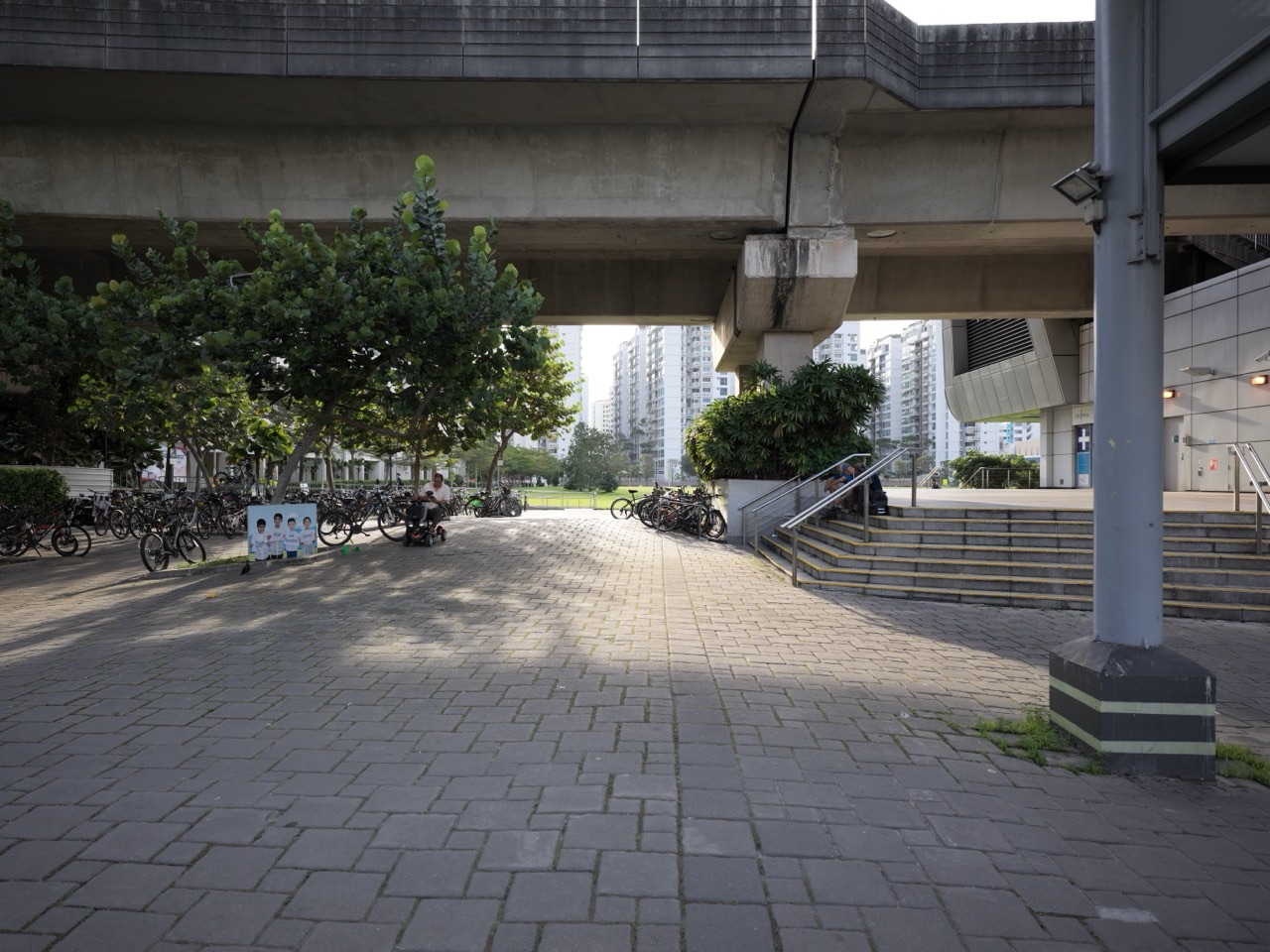
Punggol is one of Singapore’s most interesting everyday places for public transport enthusiasts. Its North East Line (NEL) reaches Punggol Coast, its automated Punggol LRT serves residential neighbourhoods across two loops, and two distinct bus-interchange areas connect commuters with schools, housing, retail and the Punggol Digital District. You do not need a behind-the-scenes depot tour to enjoy learning how the system works.
**The top 10 things to do in Punggol for public transport enthusiasts** are to compare Punggol MRT and Punggol Coast MRT; plan a two-loop Punggol LRT discovery ride; study the reopened Teck Lee LRT connection; inspect the passenger-friendly design of Punggol Coast Integrated Transport Hub; understand the routes of Services 34 and 117/M; investigate the 2026 extension of Service 381; appreciate the different Punggol and Punggol Coast Art in Transit works; learn about the NEL’s driverless railway design; compare an actual lawful bus-and-train journey with a route planner; and create a car-lite last-mile map using public transport and walking. These are ten different transit questions, not ten stations where special tours are guaranteed.
The key geography is simple: **Punggol MRT (NE17)** is beside Waterway Point, the LRT and the central bus interchange. **Punggol Coast MRT (NE18)** opened for passenger service on 10 December 2024 and is the new NEL terminal, integrated with Punggol Digital District. **Teck Lee LRT (PW2)** began operating on 15 August 2024. Punggol Coast Bus Interchange opened on 29 June 2025, and LTA reports that Service 381 was extended to Punggol Coast on 13 September 2026. These dated developments are important because older maps and route advice may predate them.
A transport hobby must never interfere with passenger operations. Take photographs only where permitted, do not block lift or platform circulation, do not film identifiable commuters intrusively, and never enter staff, track or depot areas. A trip that involves riding public transport requires the normal valid fare or concession conditions, and current service changes must be checked with LTA or the actual operator before departure.
Quick reference: Punggol’s transport activities
- 1. Compare Punggol MRT and Punggol Coast MRT as two different NEL places — Punggol MRT NE17 and Punggol Coast MRT NE18 on the North East Line.
- 2. Understand Punggol LRT’s two automated residential loops — Punggol LRT interchange and appropriate operating LRT stations.
- 3. Explore the significance of Teck Lee LRT’s 2024 opening — Teck Lee LRT station PW2 and its clearly public access routes.
- 4. Examine the inclusive design of Punggol Coast Bus Interchange — Public passenger areas of Punggol Coast Integrated Transport Hub.
- 5. Compare the route-change logic behind Services 34 and 117/M — Public bus information at Punggol Coast Bus Interchange and official LTA maps.
- 6. Investigate the September 2026 Service 381 extension — Public stops between Punggol East and the Punggol Coast transport hub.
- 7. Study two different Art in Transit stories at NE17 and NE18 — Permitted public viewing areas of Punggol and Punggol Coast MRT stations.
- 8. Understand what makes the North East Line a driverless urban railway — NEL public stations and LTA’s technical rail network descriptions.
- 9. Use a legal fare-and-journey planning exercise with current LTA rules — LTA journey planner and a real eligible trip in the Punggol/NEL/LRT network.
- 10. Design a Punggol car-lite last-mile map that people can really use — Public connectors between One Punggol, Waterway Point, Punggol Coast MRT and open Digital District routes.
The ten choices serve distinct purposes: rail geography, local loops, new station access, accessible interchanges, route amendments, art, technology, real fare rules and car-lite navigation. No activity requires an unauthorised tour. One or two selected stops make a better afternoon than a full-day station-collection exercise that interrupts the people actually using the system.
How to be a considerate public transport enthusiast
Observe without obstructing commuters
Treat this as an operating transport system rather than an amusement ride. Commuters rely on lifts, fare gates, platforms, trains and interchanges to reach work, school and essential services. A hobbyist’s observation belongs in a safe public spot that leaves passengers a clear route. Never stand across a tactile guidance strip, block priority boarding or stop in a train doorway to take a photograph.
Distinguish lines, loops and interchanges
Read the distinction between rail line, service loop and interchange. The NEL is a heavy MRT route reaching Punggol Coast. Punggol LRT has two local loops and currently serves 14 stations in LTA’s description; it feeds commuters into Punggol MRT and nearby bus links. The word ‘loop’ does not mean any specific trip will automatically bring a rider to every station without attention to operating direction and current service.
Check dated route amendments and current maps
Use a dated map. Punggol Coast became a terminal in December 2024, and Punggol Coast Bus Interchange opened in June 2025. Some online visitor guides still show the older arrangement, while route amendments such as Service 381’s September 2026 extension change practical connections. Official LTA and public operator information is the first source for present routes, not a photo of a display from years ago.
Pay the actual fare or follow valid concession terms
Budget ethically. Riding trains and buses is an actual journey with fares or valid concessions. LTA’s free morning off-peak rail travel arrangement introduced in December 2025 has particular stations, days and tap-in windows; a hobbyist should read the terms rather than assume unlimited free exploration at any time. Avoid repeatedly tapping or travelling solely to exploit an offer contrary to its conditions.
Study inclusive passenger design with respect
Think about accessibility and the passenger perspective. A transport hub should work for families using strollers, seniors, wheelchair users and commuters unfamiliar with the district. Signs, lifts, priority waiting, toilet facilities and sheltered transfers affect service quality. Observation does not require pretending to use priority features reserved for somebody else.
Build a useful dated journey record
Build one useful report from each trip. Record the exact station or stop name, date, observed sign, official source and one question you cannot answer from public space. Do not guess rail control software, signal timings or restricted operational details. A precise journey diary is more valuable than a dramatic but inaccurate story about an inaccessible control room.
Ten Punggol transport discoveries in detail
1. Compare Punggol MRT and Punggol Coast MRT as two different NEL places
Where: Punggol MRT NE17 and Punggol Coast MRT NE18 on the North East Line.
Verified rail, bus or station facts
LTA says Punggol Coast opened on 10 December 2024 as the new North East Line terminal, making the line 22 kilometres long with 17 stations at opening. The station is integrated with the 50-hectare Punggol Digital District, while Punggol MRT is the interchange for the town’s LRT and central services. These are different stations with distinct purposes, not alternative names for one stop.
How to explore it lawfully
Make a normal permitted train journey between NE17 and NE18, checking the latest service notice and fare arrangements first. At each station, stand away from the main passenger flow and identify the interchange links, signage and public exits. Explain which destinations each serves: central Waterway Point at Punggol, and the public district or Coast Mall near Punggol Coast.
Worked Punggol transport example
A first-time visitor reads a cafe guide telling them to meet at Punggol Coast and assumes it refers to the original Punggol MRT. After a short rail orientation, they understand the extra station and create a clearer meeting invitation naming NE18 and a specific exit. The practical insight is worth more than riding several unnecessary loops.
Operating, passenger and safety limits
Do not linger across fare gates, photograph station security features or block escalators. A publicly accessible concourse is not a train cab or operations room. A current rail operator timetable controls the actual service.
What to record afterward
Draw two adjacent station boxes and label the real interchanges and public-facing destinations. Note why a transport system adds a new terminal as a district develops.
A good observation is a dated statement that another passenger can understand. Record the station, stop or service number, the authority explaining its purpose, and any live detail you actually checked. Avoid converting an older opening announcement into today’s timetable. A person who can correct a mistaken route with a precise source has made a more useful transport discovery than someone who merely collected a photograph of every sign.
The primary LTA or JTC reference supports the history or design described here. It is not a live booking, a promise of a specific departure time or permission to enter staff-only infrastructure. Check current operator notices before travel.
2. Understand Punggol LRT’s two automated residential loops
Where: Punggol LRT interchange and appropriate operating LRT stations.
Verified rail, bus or station facts
LTA describes Punggol LRT as an automated two-loop local rail system opened in 2005, linking neighbourhoods to Punggol MRT and bus services. Its current LTA page lists 14 served stations. The service is intended for everyday residential access rather than a heritage rail excursion, and exact clockwise or counter-clockwise operation and platform information must be checked on the day.
How to explore it lawfully
Study LTA’s present LRT route map and choose one legitimate point-to-point ride that helps you understand a loop. At the interchange, read platform signs before boarding rather than assuming any vehicle will travel around the desired side. Observe how land uses differ at two stops from public space, then return using a practical journey rather than occupying crowded trains for an unnecessary full circuit.
Worked Punggol transport example
A hobbyist sees ‘East Loop’ and ‘West Loop’ on a map and initially assumes they must be the same physical circle viewed in opposite directions. They use the network diagram to understand the distinct branches and the interchange function. The route diary is more accurate than an improvised station-counting game.
Operating, passenger and safety limits
The driverless system has safety and passenger rules. Do not obstruct doors, force an extra stop or lean over a platform for train photographs. Maintenance and special service patterns can alter operations; check LTA and operator alerts.
What to record afterward
Map one selected residential stop to Punggol MRT, adding an observation about last-mile walking and why local loops can connect housing to a trunk MRT line.
A good observation is a dated statement that another passenger can understand. Record the station, stop or service number, the authority explaining its purpose, and any live detail you actually checked. Avoid converting an older opening announcement into today’s timetable. A person who can correct a mistaken route with a precise source has made a more useful transport discovery than someone who merely collected a photograph of every sign.
The primary LTA or JTC reference supports the history or design described here. It is not a live booking, a promise of a specific departure time or permission to enter staff-only infrastructure. Check current operator notices before travel.
3. Explore the significance of Teck Lee LRT’s 2024 opening
Where: Teck Lee LRT station PW2 and its clearly public access routes.
Verified rail, bus or station facts
LTA confirmed Teck Lee LRT station began operating on 15 August 2024. It is near Sentul Walk and improves access to Singapore Institute of Technology’s Punggol campus and the Digital District. LTA’s report also described sheltered first-and-last-mile links and the complementary Service 84G/W connections. The station’s role is practical district access, not a promise of free access to university laboratories.
How to explore it lawfully
Plan a normal LRT ride to Teck Lee, then use clearly signed public exits and walkways for a short orientation. Look at how pedestrian paths connect with bus routes or public campus surroundings. Compare this arrangement with Punggol Coast MRT’s own access and ask why a district benefits from more than one rail approach.
Worked Punggol transport example
A visitor thinks Punggol Coast MRT is the only route into the digital district. Teck Lee shows how another transport mode and walking links serve different parts of the same campus-and-business area. They write down the advantages of a smaller local station compared with a main terminal.
Operating, passenger and safety limits
Public signage does not authorise entrance into classrooms, staff workplaces or construction zones. Check the latest bus and LRT service information: a 2024 official opening statement establishes history but not every 2026 vehicle schedule.
What to record afterward
Create a first-and-last-mile diagram showing LRT, a public linkway and a destination without assuming every interior space is open to the public.
A good observation is a dated statement that another passenger can understand. Record the station, stop or service number, the authority explaining its purpose, and any live detail you actually checked. Avoid converting an older opening announcement into today’s timetable. A person who can correct a mistaken route with a precise source has made a more useful transport discovery than someone who merely collected a photograph of every sign.
The primary LTA or JTC reference supports the history or design described here. It is not a live booking, a promise of a specific departure time or permission to enter staff-only infrastructure. Check current operator notices before travel.
4. Examine the inclusive design of Punggol Coast Bus Interchange
Where: Public passenger areas of Punggol Coast Integrated Transport Hub.
Verified rail, bus or station facts
LTA says Punggol Coast Bus Interchange opened on 29 June 2025, integrated with NE18 and Punggol Coast Mall. The official release describes barrier-free entrances, priority queue areas with seats at boarding berths, accessible toilets, baby-care facilities and a commuter care room. Those design choices help real people make transfers, and their presence is a better observation subject than recording a sensational crowd video.
How to explore it lawfully
Enter public passenger areas with normal commuter etiquette, identify the signposted bus boarding berths and connection to the MRT, and observe wayfinding without standing in queues unnecessarily. Compare how a commuter with a stroller or reduced mobility might make the same transfer. Note an accessible feature but do not occupy a priority seat or commuter care room just to take a photograph.
Worked Punggol transport example
Two transport students compare an interchange whose bus stops are far from rail with Punggol Coast’s integration. They see that a sheltered connection and nearby facilities can reduce transfer friction. Their design critique mentions documented features and a question about user experience without pretending to have interviewed passengers.
Operating, passenger and safety limits
Do not enter staff canteens, driver rooms, operational yards or vehicle movement areas. The availability of a specialised room is not permission to use it as an entertainment attraction. Buses have changing departures and may be crowded.
What to record afterward
Make a passenger-experience map from public signage and identify one convenience feature, one accessibility feature and one question for future study.
A good observation is a dated statement that another passenger can understand. Record the station, stop or service number, the authority explaining its purpose, and any live detail you actually checked. Avoid converting an older opening announcement into today’s timetable. A person who can correct a mistaken route with a precise source has made a more useful transport discovery than someone who merely collected a photograph of every sign.
The primary LTA or JTC reference supports the history or design described here. It is not a live booking, a promise of a specific departure time or permission to enter staff-only infrastructure. Check current operator notices before travel.
5. Compare the route-change logic behind Services 34 and 117/M
Where: Public bus information at Punggol Coast Bus Interchange and official LTA maps.
Verified rail, bus or station facts
When Punggol Coast Bus Interchange opened, LTA moved Services 34 and 117/M from the older Punggol interchange and amended their routes. Service 34 was extended through Punggol Central, Sumang Walk, Sumang Link and Punggol Way. Service 117/M was extended via Punggol Place, Sentul Crescent and Sentul Walk. These are dated official service changes, not instructions to assume every 2025 timetable or frequency remains identical in 2026.
How to explore it lawfully
Download LTA’s route-change release and compare the former and current interchange assignments. Select one genuine bus journey relevant to your travel needs and observe the sequence of road names or public destinations. Ask why route extensions can improve local connections even when they increase distance for an individual traveller. Use the current public operator route for actual departure timing.
Worked Punggol transport example
A resident remembers catching Service 34 at central Punggol and tells a visitor to meet there. After consulting LTA’s route history, they realise the terminus moved to Punggol Coast. A clear route map avoids a failed meeting and illustrates the difference between network-wide improvement and individual habit.
Operating, passenger and safety limits
Do not invent the current first bus, last bus or exact travel time from the original announcement. Vehicle movements, stops and interchange use are operational. Do not photograph commuters against their wishes or block a berth for hobbyist observations.
What to record afterward
Build a before-and-after route card with the year, interchange and two changed road links. Explain how changing a bus terminus can affect transfers.
A good observation is a dated statement that another passenger can understand. Record the station, stop or service number, the authority explaining its purpose, and any live detail you actually checked. Avoid converting an older opening announcement into today’s timetable. A person who can correct a mistaken route with a precise source has made a more useful transport discovery than someone who merely collected a photograph of every sign.
The primary LTA or JTC reference supports the history or design described here. It is not a live booking, a promise of a specific departure time or permission to enter staff-only infrastructure. Check current operator notices before travel.
6. Investigate the September 2026 Service 381 extension
Where: Public stops between Punggol East and the Punggol Coast transport hub.
Verified rail, bus or station facts
LTA announced that from 13 September 2026, bus Service 381 was extended from Punggol East to Punggol Coast, improving local links to the Integrated Transport Hub. This is a fresh 2026 route change, especially useful because guides written before September may omit the new destination. The official announcement describes the extension, not a permanent guarantee of a particular bus frequency.
How to explore it lawfully
Compare the current operator route with an older map if one is available. Ride a normal permitted journey between appropriate stops or study the two end areas on public maps. Mark which housing or community amenities now have a more convenient connection. Avoid staying on the vehicle only to record every other commuter or assuming the same stop name applies in both directions.
Worked Punggol transport example
A traveller sees an old map ending Service 381 at Punggol East and wonders why a current route planner shows a connection toward Punggol Coast. LTA’s September release resolves the discrepancy. The hobbyist dates the old source and improves the map rather than calling either passenger’s experience wrong.
Operating, passenger and safety limits
The precise route, stop codes and timings must be checked on the current public operator listing. Do not use a stale social-media route poster for a date-specific journey. Respect peak-hour capacity.
What to record afterward
Write a three-line revision record: what changed, when LTA announced it, and which connection the extension was intended to improve.
A good observation is a dated statement that another passenger can understand. Record the station, stop or service number, the authority explaining its purpose, and any live detail you actually checked. Avoid converting an older opening announcement into today’s timetable. A person who can correct a mistaken route with a precise source has made a more useful transport discovery than someone who merely collected a photograph of every sign.
The primary LTA or JTC reference supports the history or design described here. It is not a live booking, a promise of a specific departure time or permission to enter staff-only infrastructure. Check current operator notices before travel.
7. Study two different Art in Transit stories at NE17 and NE18
Where: Permitted public viewing areas of Punggol and Punggol Coast MRT stations.
Verified rail, bus or station facts
LTA’s official Art in Transit page names Goh Beng Kwan’s ‘Water, Landscape & Future’ at Punggol NE17 and Zul Othman | ZERO’s ‘TRAJECTORIES’ at Punggol Coast NE18. The first uses layered representations of water, seaside, kampungs and trees, while the second traces personal memories and the changing landscape of Punggol. These are distinct station artworks and a strong reason to observe a railway beyond vehicles.
How to explore it lawfully
Consult LTA’s Art in Transit information, travel legitimately to each station and observe the works from authorised passenger or public areas without obstructing flow. Record one visual detail from each and ask how the same town’s past can be told differently. If artwork is inside a paid area, follow ordinary valid fare rules rather than entering without entitlement.
Worked Punggol transport example
An enthusiast initially photographs a wall at NE18 and captions it as Goh Beng Kwan’s Punggol work. After checking LTA, they correct the attribution and notice how ZERO’s approach is shaped by memory and changing tracks. The correction is a meaningful improvement in both art appreciation and transport documentation.
Operating, passenger and safety limits
Do not touch installations, block escalators or photograph other commuters intrusively. Artworks may be partly obscured by maintenance or station operations. Respect copyright when sharing images, especially close-up reproductions of entire works.
What to record afterward
Create two accurate captions naming the artwork, artist, station and one observed visual theme, and link to LTA’s official credits.
A good observation is a dated statement that another passenger can understand. Record the station, stop or service number, the authority explaining its purpose, and any live detail you actually checked. Avoid converting an older opening announcement into today’s timetable. A person who can correct a mistaken route with a precise source has made a more useful transport discovery than someone who merely collected a photograph of every sign.
The primary LTA or JTC reference supports the history or design described here. It is not a live booking, a promise of a specific departure time or permission to enter staff-only infrastructure. Check current operator notices before travel.
8. Understand what makes the North East Line a driverless urban railway
Where: NEL public stations and LTA’s technical rail network descriptions.
Verified rail, bus or station facts
LTA describes the North East Line as a fully automated underground heavy MRT line, operated without a conventional driver in every train cab. Its public technical pages discuss signalling, rolling stock and architecture, including the double-volume Punggol Coast station design that places high-level ceiling mechanical and electrical services behind concourse walls for easier maintenance. Public technical explanations are not permission to inspect signalling hardware or enter a cab.
How to explore it lawfully
Read LTA’s NEL technology explanation before a normal trip. Observe the passenger interface: platform doors, wayfinding, intercom or other permitted visible controls. Ask how automation changes the roles of operations staff, information systems and passenger safety. Use LTA’s words for technical claims, avoiding guesses about train control algorithms from a moving window.
Worked Punggol transport example
A child asks why nobody is visibly driving the train. The adult explains that driverless operation still requires an extensive authorised system of control, monitoring, maintenance and passenger assistance. They draw a conceptual diagram separating a train, signalling, platform and operations centre without claiming to have inspected the control room.
Operating, passenger and safety limits
A public rail system is safety-critical infrastructure. Do not interfere with doors or emergency devices, bypass station barriers or attempt to reach cab or track equipment. Avoid sharing security-sensitive diagrams from unauthorised sources. A technical description can be dated as rolling stock is upgraded.
What to record afterward
Create a systems diagram with passenger, train, platform and operations functions; identify what is publicly observable and what requires official technical documentation.
A good observation is a dated statement that another passenger can understand. Record the station, stop or service number, the authority explaining its purpose, and any live detail you actually checked. Avoid converting an older opening announcement into today’s timetable. A person who can correct a mistaken route with a precise source has made a more useful transport discovery than someone who merely collected a photograph of every sign.
The primary LTA or JTC reference supports the history or design described here. It is not a live booking, a promise of a specific departure time or permission to enter staff-only infrastructure. Check current operator notices before travel.
9. Use a legal fare-and-journey planning exercise with current LTA rules
Where: LTA journey planner and a real eligible trip in the Punggol/NEL/LRT network.
Verified rail, bus or station facts
LTA’s Plan Your Journey page explains distance-based travel and an off-peak rail arrangement introduced from 27 December 2025 for eligible weekday tap-ins at specified North East Line and Sengkang-Punggol LRT stations. The published conditions include tap-in windows before 7.30am or between 9.00am and 9.45am on weekdays excluding public holidays. This is a specific policy, not an all-day permission to ride trains for free.
How to explore it lawfully
Choose an actual personal trip and compare two departure windows with official fare and travel guidance. Note transfer rules and the practical impact of journey time on daily life, rather than travelling repeatedly solely to create an artificial sample. If fare calculations depend on concessions, select the correct profile. Check that the special fare policy remains in force on the intended date.
Worked Punggol transport example
A commuter wonders whether shifting their ordinary morning journey could reduce fare or crowding. They read the eligibility conditions and choose an appropriate time that also meets their work schedule. They do not assume a public holiday qualifies, or claim every station and ride is automatically free.
Operating, passenger and safety limits
Never tap in or out contrary to transport rules, lend concession cards improperly or block gates to record transactions. Promotions and fare policies can change. A generic article should not quote a personal fare without origin, destination, card type and date.
What to record afterward
Make a transparent sample calculation listing origin, destination, travel day, selected tap-in time and whether the official eligibility rule applies. Do not claim a hypothetical saving is an observed charge.
A good observation is a dated statement that another passenger can understand. Record the station, stop or service number, the authority explaining its purpose, and any live detail you actually checked. Avoid converting an older opening announcement into today’s timetable. A person who can correct a mistaken route with a precise source has made a more useful transport discovery than someone who merely collected a photograph of every sign.
The primary LTA or JTC reference supports the history or design described here. It is not a live booking, a promise of a specific departure time or permission to enter staff-only infrastructure. Check current operator notices before travel.
10. Design a Punggol car-lite last-mile map that people can really use
Where: Public connectors between One Punggol, Waterway Point, Punggol Coast MRT and open Digital District routes.
Verified rail, bus or station facts
JTC’s current Punggol Digital District visitor page provides rail, LRT, bus and walking approaches, including Punggol Coast MRT and Teck Lee LRT, while LTA publishes transport hub and route information. A car-lite route involves the actual door-to-door journey, not a theoretical line between station names. Public paths may have works, changing access and different levels of shelter.
How to explore it lawfully
Choose one practical visitor task—reaching a library, hawker centre or public mural. Use LTA/JTC route information, note the chosen station exit, the lawful public walking link and a clear destination entrance. Consider a stroller or wheelchair user’s needs as a route-design test without pretending every side path is barrier-free. Use current signs for detours.
Worked Punggol transport example
A family wants the public mural at Punggol Coast but starts from Waterway Point. They compare a rail transfer, a bus route and walking options, then select the one suitable for their child and the day’s weather. The result is a realistic trip rather than an overambitious ‘all Punggol by foot’ claim.
Operating, passenger and safety limits
Do not map shortcuts through private university buildings, fenced Punggol Heritage Trail phases or Punggol Point Park’s closed upgrading zones. Route accessibility depends on the exact entrance, lift and path; current field signs override future masterplan drawings.
What to record afterward
Publish a compact route card with start, mode, interchange if any, destination and one verified alternative. Include a date, so readers know when the details were last checked.
A good observation is a dated statement that another passenger can understand. Record the station, stop or service number, the authority explaining its purpose, and any live detail you actually checked. Avoid converting an older opening announcement into today’s timetable. A person who can correct a mistaken route with a precise source has made a more useful transport discovery than someone who merely collected a photograph of every sign.
The primary LTA or JTC reference supports the history or design described here. It is not a live booking, a promise of a specific departure time or permission to enter staff-only infrastructure. Check current operator notices before travel.
Three realistic Punggol transport itineraries
90-minute NEL and station-art discovery
Meet at Punggol MRT, locate Goh Beng Kwan’s station art from permitted passenger areas and travel legitimately to Punggol Coast. Study the contrast with ZERO’s work and the public signs connecting NE18 to the Digital District. Return by the appropriate current service. The outing needs no excursion into staff spaces and can finish earlier if the station is busy.
An LRT and local-bus map-reading afternoon
Begin with LTA’s current LRT diagram and choose one convenient legitimate LRT journey. If time permits, inspect the public access to Teck Lee and compare its connection with Punggol Coast MRT. Use the 2025 bus route amendments and 2026 Service 381 extension as written route-history examples. Do not attempt all loops and every bus in the same short afternoon.
Accessibility and first-last-mile fieldwork
At Punggol Coast Integrated Transport Hub, observe the public wayfinding and transfer layout without occupying priority facilities. Choose a genuine passenger destination such as a public hawker or mural route, and note the barriers, sheltered segments and actual return. The output is a map of one useful journey rather than a score for how much station equipment you photographed.
Five essential transport fact-checking habits
First, date every opening and amendment. Punggol Coast MRT and Teck Lee LRT opened in 2024, the Integrated Transport Hub opened in 2025 and Service 381’s extension began in September 2026. That order explains why a guide produced before 2024, 2025 or September 2026 may not represent present routes. Do not claim a newer station or stop always existed.
Second, distinguish a line’s general characteristics from the operation of a particular train. The NEL’s automation and the Punggol LRT’s two-loop design are facts about the network. A particular trip may be affected by maintenance, crowding, service direction or station access. LTA and the rail operator’s current information govern the visit.
Third, use official fare and concession terms. A time-limited or time-of-day promotion is not proof that every rail trip is free. The actual fare can depend on origin, destination, travel time, card type and transfer conditions. A transparent hypothetical journey is more credible than inventing a price for an unnamed traveller.
Fourth, keep public infrastructure public. Fare gates, lifts, boarding zones and tactile paths exist primarily for passengers. Do not treat an emergency intercom, priority queue or commuter-care facility as a playground or exhibit. Ask permission for organised or commercial photography and respect privacy at all times.
Fifth, separate art credit from station design description. Punggol’s and Punggol Coast’s Art in Transit works have different creators and themes. LTA’s credits are the source of truth; a label copied from a similarly named station can quickly become a factual error.
10-point transport discovery checklist
- Choose one line, interchange or route question for the outing.
- Use LTA and current operator maps, not an undated online diagram.
- Know whether you are meeting at Punggol NE17 or Punggol Coast NE18.
- Check valid fares, concession conditions and transfer rules.
- Stay in authorised public passenger areas.
- Leave fare gates, tactile strips, lifts and boarding zones unobstructed.
- Observe and photograph station art respectfully with correct credits.
- Check the 2025 Coast interchange and 2026 bus amendments before relying on old maps.
- Respect passenger privacy and avoid restricted operational details.
- Finish with a dated, accurately sourced route note.
Frequently asked questions
What is the difference between Punggol and Punggol Coast MRT?
Punggol NE17 connects with the central LRT and existing town-centre amenities. Punggol Coast NE18 opened in December 2024 as the new NEL terminal and serves the Digital District and integrated transport hub.
How many stations does Punggol LRT have?
LTA’s current system overview describes the Punggol LRT as two loops with 14 served stations. Check the latest service map and operations for your specific trip.
When did Teck Lee LRT open?
LTA says Teck Lee LRT PW2 began passenger service on 15 August 2024.
When did Punggol Coast Bus Interchange open?
LTA confirmed 29 June 2025. It is integrated with Punggol Coast MRT and Punggol Coast Mall.
Which buses were relocated to Punggol Coast?
LTA’s June 2025 opening announcement describes Services 34 and 117/M moving from the older Punggol interchange with amended routes. Always use current operator listings for actual trips.
Was Service 381 extended in 2026?
Yes. LTA’s September 2026 announcement says Service 381 was extended from Punggol East to Punggol Coast from 13 September 2026.
Is Punggol MRT Art in Transit the same as Punggol Coast’s?
No. LTA credits Goh Beng Kwan’s ‘Water, Landscape & Future’ at NE17 and Zul Othman | ZERO’s ‘TRAJECTORIES’ at NE18.
Can visitors look inside a driverless train’s controls?
Ordinary passenger areas are for permitted travel, not technical control access. Use LTA’s public technical pages and never interfere with safety-critical railway systems.
Can I ride Punggol LRT free every morning?
No blanket rule applies. LTA’s free morning off-peak rail arrangement has specified stations, weekday tap-in windows and other conditions. Check the current terms.
Can I take photographs in stations?
Follow the station and operator’s current rules; do not obstruct passengers, breach privacy or enter restricted areas. Commercial or organised photography may have separate permission requirements.
Is Punggol Coast MRT walkable to public district amenities?
JTC describes public access via station exits within the Digital District, with mall, hawker and open public routes. Check the specific destination and current work diversions.
Can I visit the Punggol rail depot as a transport fan?
A depot is not an ordinary public attraction. Only attend a genuinely authorised official tour if one is offered; do not enter staff or operational property.
Official transport sources and related Punggol guides
The historical opening dates and service changes above were checked against the Land Transport Authority’s publications, with JTC used for current public Digital District approaches. Day-specific vehicle times and route adjustments belong to live operators. Related eduKatePunggol pages help readers connect transport discoveries to everyday visits.
- LTA Punggol Coast 2024 opening
- LTA Sengkang–Punggol LRT system
- LTA Teck Lee LRT 2024 opening
- LTA Punggol Coast Integrated Transport Hub 2025 opening
- LTA Service 381 2026 extension
- LTA Art in Transit credits
- LTA North East Line technology
- LTA official journey planning
- JTC public transport directions for PDD
- Punggol without a car itinerary
- Punggol public bus discovery companion
- Punggol MRT / LRT knowledge guide
- Punggol local atlas
The best first Punggol transit outing
Start with an ordinary journey from NE17 to NE18 and one public station-art comparison. If that sparks your curiosity, return another day for a selected LRT journey, an interchange accessibility study or the Service 381 route amendment. Punggol’s transport system becomes more interesting when you understand how it helps people move, not when you try to access areas intended for operators.


