
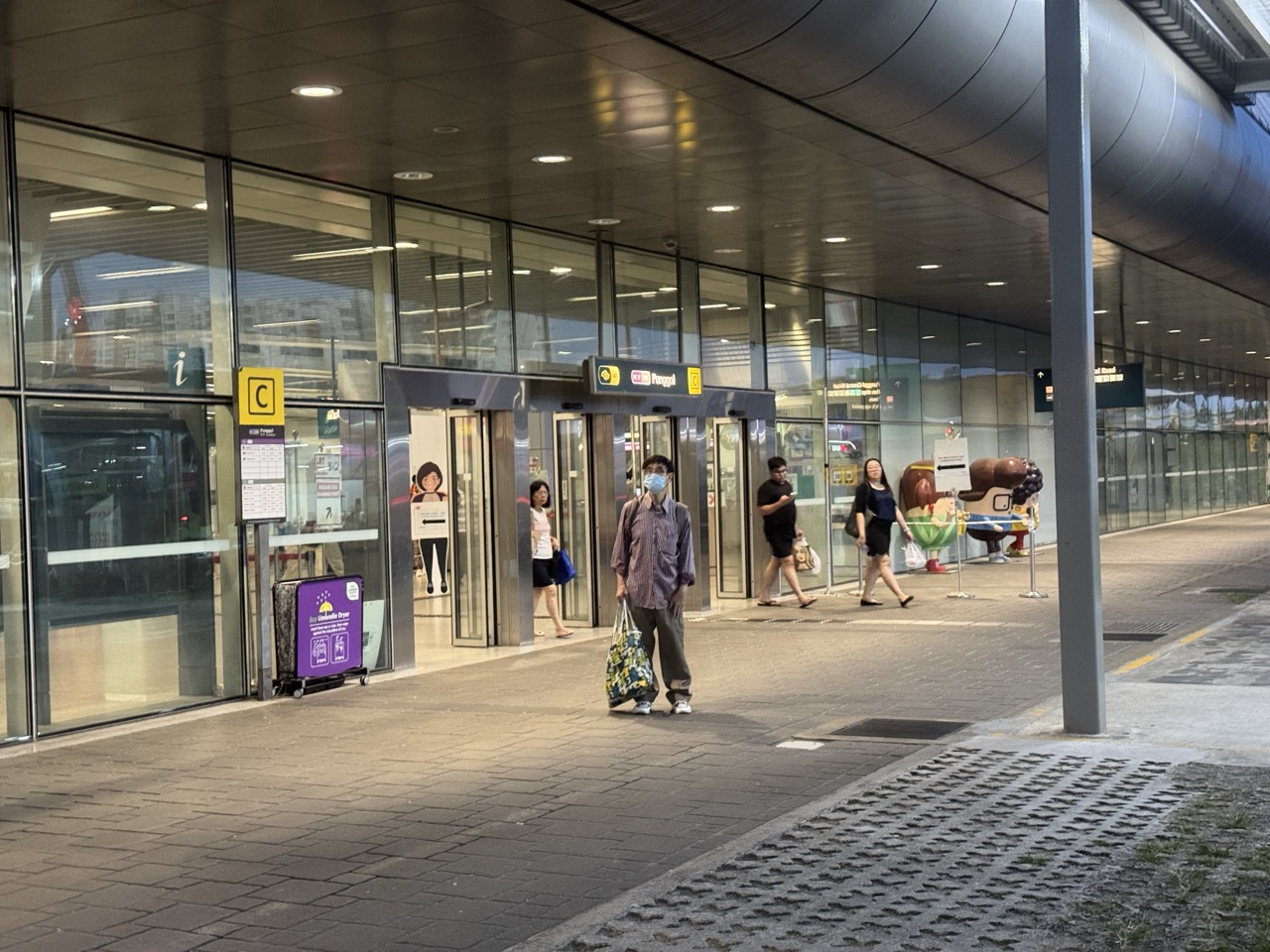
The quick answer: Living in Punggol can give a family a very workable education journey from Primary 1 to university, but only when the actual door-to-door school route is tested rather than assumed. Begin with the child’s assigned school and timetable; decide whether the journey is walking, LRT, MRT, bus or a combination; rehearse the final 300 metres; identify the adult responsible for each handoff; and build a realistic contingency for heavy rain, late dismissal and missed connections. Punggol and Punggol Coast are North East Line stations, while the Punggol LRT provides neighbourhood links. Neither a nearby station nor a short-looking map automatically means a simple journey.
This guide is about the life of a learner who must travel: nursery and Primary 1 children with adults, upper-primary pupils learning road judgment, secondary teenagers becoming more independent, post-secondary students travelling farther afield, and university students using Punggol Coast and the Singapore Institute of Technology campus. It is not a school ranking, ticket-fare promise or guarantee of a school place. A commute is a daily learning condition. When it repeatedly consumes sleep, attention or recovery, families should solve the logistics before treating every exhausted afternoon as an academic problem.
The Punggol school-commute map in one minute
Punggol has a local LRT system connecting neighbourhood stations with Punggol MRT, which is on the North East Line. Punggol Coast, the line’s northern terminal, began passenger service in December 2024. Teck Lee LRT opened in August 2024 and adds another connection toward the Singapore Institute of Technology and Punggol Digital District. Punggol Coast Bus Interchange opened in June 2025. These are documented infrastructure changes, not promises that any particular school trip will be fast. Routes, operating patterns and connections should be checked close to travel day.
For school planning, divide the map into three layers. First is the doorstep: lift, void deck, crossing, covered walkway and the point where the child enters the school. Second is the neighbourhood network: a walk, LRT loop, feeder bus or interchange, including waiting and transfer. Third is the destination zone: a Punggol school, a school elsewhere in Singapore, a polytechnic, JC, ITE, an autonomous university or a workplace. Many maps show only the second layer. Families experience all three. The weakest one usually determines whether the morning works.
A practical route card should hold the destination address, reporting time, the precise school gate, the normal mode of transport, a backup route, the expected adult contact and the safe place to wait if something changes. Review this card as the child gets older; independent travel requires a different plan from accompanied travel. Never leave a young child to navigate an unfamiliar transfer merely because the train stations are familiar to an adult.
The decision to make before buying anything
Start by asking what problem is genuinely being solved. A family might be considering a new home, a change in childcare, a tuition timetable, a transport arrangement or a different school. Each is a different decision. If the difficulty is a school gate that opens later than the parent’s workday begins, a new pair of school shoes does not fix it. If the difficulty is confusion at an LRT interchange, buying extra assessment books will not restore the time spent travelling.
Write a one-sentence problem statement: ‘Our Primary 2 child reaches school safely but is rushed at breakfast three days a week,’ or ‘Our Secondary 1 teenager gets home too late on CCA days to concentrate.’ The statement should describe what happens, when and what it affects. Avoid a label such as lazy, disorganised or weak in Mathematics until the family has looked at sleep, transport, waiting and task demands.
Then observe three ordinary weekdays. Track leaving the home, reaching the first stop, boarding, transfers, arrival at the gate and return home. A single unusually smooth trial is weak evidence. So is the one day when everything went wrong. Families do not need an expensive tracking system; a simple notebook will show recurring bottlenecks. If a child is distressed by change, keep the observation discreet, supportive and predictable.
Primary 1 registration and the distance illusion
School registration is not the same as an everyday commute. Singapore’s Primary 1 registration exercise runs through eligibility phases, and home–school distance can affect admissions priority in the relevant phases. A school described as ‘near Punggol’ may not be inside the distance band that a family imagines, while a short straight-line distance can still contain an awkward crossing or transfer. Check the Ministry of Education’s official registration portal, which explains the applicable year, phases, approved address, distance rules and balloting. Do not infer the admissions outcome from a property agent’s walking estimate.
For the 2026 registration exercise, parents were applying for P1 entry in 2027. MOE separately announced changes for the 2027 registration exercise, affecting P1 entry in 2028, including revised Phase 2C arrangements. Rules can change by intake year; an older sibling’s experience is a memory, not a substitute for the new exercise’s official information. This article does not predict future balloting or equate a comfortable journey with automatic admission.
The useful action is to make two shortlists. One lists schools the family may be eligible to apply to; the other lists schools whose everyday journey, start-time requirements and care arrangements the family can actually sustain. There will often be overlap, but the sets are not identical. For a grounded local directory, start with our Punggol primary-school list and verify individual school details in MOE SchoolFinder. Selection should account for the child’s needs, siblings, support and daily transport, not only a school’s reputation.
Punggol Primary School is a name, not a location clue
One particularly important detail is that Punggol Primary School is in Hougang, not in Punggol town. The name survives as a school name, but a family searching only for the word ‘Punggol’ can easily form the wrong mental map. Conversely, local Punggol schools include names such as Edgefield, Horizon, Mee Toh, Northshore, Oasis, Punggol Cove, Punggol Green, Punggol View, Valour and Waterway. A school’s official address decides the journey, not the geography suggested by its name.
Before touring a school or comparing routes, copy the address and intended entrance directly from current school information. Type the address into the planner and review walking directions. A destination marker in the middle of a large compound can obscure the gate used for arrival. Public transport apps can show the neighbourhood stop but may not identify the exact school-access point for an individual class. The school is the authority on its reporting arrangements.
The same rule applies as children grow: a college or campus may use a widely recognised institution name while having several locations, buildings, teaching venues or entrance rules. Check the address on the enrolment documents, timetable or event invitation. Saving the exact address once is a small task that prevents many wrong-turn mornings. Ask older students to teach the route back to the adult; explaining it is a more revealing readiness test than saying they ‘know where it is’.
The five elements of a realistic morning
A workable morning has five elements: wake-up time, preparation, actual travel, arrival margin and a recovery plan for disruption. Many families budget only the third. Children may require time to eat, use the toilet, find their belongings, put on shoes, check a water bottle or adjust emotionally to a difficult morning. Treat these as ordinary parts of life rather than as evidence of bad character.
Arrival margin is not the same as moving the household’s wake-up time indefinitely earlier. If the family is sleeping too little, reducing time in bed to compensate for a fragile route may create a new problem. A strong plan removes predictable morning choices: bags packed the night before, uniform located, transport card placed consistently, and the adult’s first task agreed. The goal is not military precision. It is a calm departure with fewer avoidable decisions.
Make the route one the family can repeat. A plan requiring everyone to run for a specific service every day has no resilience. A plan allowing some modest variation is more humane. If adults have staggered work schedules or shift work, decide who leads the weekday routine and what happens on the days that person is unavailable. Write it down so grandparents, helpers or other authorised caregivers do not receive incomplete instructions.
A worked example: the 31-minute route is only a hypothesis
Suppose a fictional family measures seven minutes from the front door to the stop, nine minutes riding a service, five minutes walking from the final stop to the school gate and ten minutes of combined waiting and arrival margin. Their planning total is 7 + 9 + 5 + 10 = 31 minutes. This is a teaching example, not a published travel-time claim for any Punggol school or service.
Now test the assumptions. If the first walk requires waiting at two signalised crossings, seven minutes on a quiet Sunday may not represent a weekday with a child. If the nine-minute leg describes only time on the vehicle, the missed-service risk belongs in the waiting allowance. If the school has a different entrance for morning drop-off, the last five minutes may change. If ten minutes is entirely consumed by a late connection, there is no margin left for reaching class calmly.
Try the proposed journey during a normal school-day window when practical. Use published service information and compare it against the lived trip. Rather than promise a universal ‘safe buffer’, identify the smallest delay that would cause the child to be late and discuss a backup. The numerical example teaches decomposition: every leg has a purpose, uncertainty and point at which a parent can intervene.
Preschoolers and early-primary children need adult-led routes
For younger children, the route should be boring in the best sense: familiar, supervised, short enough to manage and easy to explain. The person collecting the child should know the school’s or care provider’s authorised handover procedure. A child should not have to improvise which adult to follow when an unexpected family arrangement occurs. Keep phone numbers, backup pickups and authorised persons current with the institution.
Practise environmental cues, not merely station names. A child can learn to notice the correct lift lobby, covered walkway, gate signage and the place where the adult waits. Explain crossings with simple repeated routines, without expecting a very young pupil to make complicated independent traffic judgments. Keep conversations calm and specific: ‘We wait behind this line with the adult’ is more useful than ‘Be careful’ when the child has not yet learned what careful means.
If a primary school has a school-based student care centre or a family uses an external care provider, do not assume the transport handoff is automatic. Confirm its opening, reporting, dismissal, authorised-collector and fee arrangements directly. MOE’s P1 registration resources include links to school-based student care information. MSF describes student-care fee assistance for eligible families; eligibility should be checked directly rather than inferred from neighbourhood or income gossip.
The upper-primary shift: independence is a sequence
Primary 4 to Primary 6 children often want more responsibility. Some can manage a familiar short route independently; others need more time, a different arrangement or additional support. Age alone does not determine readiness. A sensible transition begins with the child explaining the route, demonstrating street-crossing decisions under supervision, identifying the correct stop, and knowing what to do when something is different.
A graded approach might start with the parent leading, then the child leading with the parent nearby, then a short separately agreed leg, and finally a full familiar journey if the family and school consider it appropriate. The order and timing depend on the child. Do not make independence a competition with classmates. The ability to ask for help and stop rather than guessing is a sign of competence.
Agree the three safety rules in advance: where to wait if the route changes, which adult or school number to contact, and which public places are acceptable for assistance. If a service is diverted, a child should not be pressured to make an entirely new cross-town journey without checking. Families using phones can make them a support tool, but a device does not replace a clear plan. Test what happens if the battery is flat or mobile service is unavailable.
Secondary-school life changes the transport problem
At secondary level the destination may be farther away, the start time may differ, and co-curricular activities, examinations or consultation sessions may alter dismissal. Full Subject-Based Banding also means a student’s subject experience and timetable should be understood at the school level; the presence of G1, G2 or G3 subject levels says nothing by itself about the student’s travel route. A longer day often has more than one return-time pattern.
A useful secondary-school transport plan includes an ordinary day, a CCA day, an assessment day and a special school event. For each, record the expected end of school, the mode home, the family contact and the fallback if dismissal changes. A teenager who can navigate one early-afternoon route may not yet be comfortable with a late-evening unfamiliar transfer. Teach route flexibility in daylight and with support before relying on it during a pressured school week.
Ask an adolescent to estimate the return journey using their own words, then compare the estimate with a real trip. This develops judgment. Over time, let them own more of the planning while adults remain available for exceptions. The aim is not surveillance; it is helping the student manage time, safety and recovery. For school choice after the Primary School Leaving Examination, see our Punggol school choice and commute guide.
CCA days need a separate version of the week
A timetable with CCA is not a timetable with the same journey slightly later. Students may carry extra equipment, need food and water at a different hour, wait for friends, or move to a venue away from the usual classroom. The period between school dismissal and CCA can be substantial in some arrangements; parents should not infer the day’s full shape from the normal class timetable.
For every activity day, ask four questions. Where will the activity happen? What time is dismissal expected? Does the child need to return to the original school before leaving? What is the travel plan afterwards? The school or CCA teacher’s current instructions govern these points. A sports venue or competition away from school can change the correct bus stop and pickup point entirely.
Protect a food and recovery window. A student who reaches home tired may need a meal, a shower or a break before intensive work. Do not automatically insert a long tuition session into the first available slot. If important academic support is needed, schedule it where it can be used effectively. The learner’s attention is part of the resource allocation, just as surely as the transport card and the clock.
From Punggol to JC, MI, polytechnic or ITE
Post-secondary life introduces choice, more varied timetables and different teaching rhythms. A JC student may have early lessons and substantial co-curricular commitments. A polytechnic student may have lab sessions, group projects, block timetables and occasional days with later starts. ITE programmes have their own campus locations, practical work and attendance expectations. A student should never assume that an institution’s name describes one universal daily schedule.
Begin with the confirmed institution and course campus, not an abstract institution category. Plot the direct rail leg, any transfer, the last walk and the return route during the expected timetable. Check the actual programme’s reporting expectations and safety instructions. Travel costs, concession eligibility and timetables should be confirmed with the relevant transport and institution authorities; do not lift an old price from a social media post.
Singapore’s national post-secondary admissions framework is changing. The first Singapore-Cambridge Secondary Education Certificate examination is in 2027, and MOE has announced a Post-Secondary Admissions Exercise beginning in 2028 for the relevant intake. Families must use the correct cohort’s rules, and the selection decision should include programme fit as well as the future commute. See our Punggol guide to the 2028 admissions exercise before making timing assumptions.
The university question changes again at Punggol Coast
The Singapore Institute of Technology moved its academic community to its Punggol campus in phases, welcoming the first groups in September 2024 and completing its principal move in May 2025. Its campus was officially opened in September 2025. This means a Punggol family can now encounter university students, lecturers, workplace partners and industry-linked learning activity within the wider town. It does not mean every resident can enrol, enter specialised university spaces, use student-only facilities or walk into any event without permission.
For an admitted SIT student, start with the faculty’s timetable, assigned building, workshop or laboratory, and access guidance. The site is integrated with Punggol Digital District; public and controlled areas have different rules. For a visitor, use the university’s public-access guidance and programme registration rather than an assumption that an open campus photograph equals unrestricted access. Punggol Coast MRT, Teck Lee LRT and local bus infrastructure create multiple possible approaches, but the appropriate last leg depends on the destination building.
For a Punggol resident attending another university, the same route-decomposition approach applies even if the destination is much farther away. University independence adds irregular schedules, group-work meetings, part-time work and internships. The best transport plan recognises the full semester, not only the first day’s orientation journey. The official SIT campus information explains the local campus context.
Understand Punggol LRT without relying on memory
The Punggol LRT is useful precisely because parts of Punggol are not immediately beside the North East Line’s main stations. But residents should check current loop direction, platform signage, service patterns and the route of the specific trip. A remembered station order is not a substitute for live operator information, especially after infrastructure changes or when a child is making an unfamiliar journey.
Teach the child what to read: station name, line direction, exit signage, platform information and the destination bus stop. Ask them to describe the difference between arriving at Punggol MRT and reaching the school gate. A transfer can involve escalators, walking, waiting and a change of level. The same trip can feel different when a student carries a project, musical instrument or sports bag.
At Teck Lee, the 2024 opening improved access toward the university and business district. At Punggol Coast, the station opened in December 2024; the nearby bus interchange followed in June 2025. These are useful historical anchors when reading older advice. A 2023 article describing the area as ‘future MRT access’ is obsolete for a 2026 journey. Check LTA’s station announcement and bus-interchange update.
Rain, heat, haze and accessibility
Punggol’s outdoor sections may include open walking paths, roadside crossings and transitions between sheltered and unsheltered areas. Rain and intense sun change the comfort of that final walk, particularly for younger children. Haze can also change a school’s activities or a family’s health considerations. Do not improvise health advice from a route map: use current school notices, the National Environment Agency’s official readings and appropriate healthcare guidance when symptoms or vulnerabilities matter.
A weather-resilient route identifies shelter, safe crossing points and a place to pause. It does not require a child to sprint across a road to catch a service. Teach what to do if lightning or severe weather makes a planned outdoor shortcut unsuitable. Parents should review any temporary works, diversions and school drop-off changes. The supposedly shorter route may not be the right one during construction.
Accessibility matters even when no wheelchair is involved. A child with a temporary injury, a heavy school project, fatigue, sensory needs or an accompanying younger sibling may need a different path. The route can be tested at the student’s walking pace with the actual bag. Families supporting disability-related needs should check current station accessibility information and communicate relevant arrangements with the institution rather than assuming every path is identical.
The last 300 metres are not a small detail
For many students, the journey fails not on a train but between the exit and the gate. They reach the right area and still feel lost because the entrance is on the other side of a compound, the crossing has a long wait, or the pickup point is unclear. Those final metres are where bags, traffic, crowds and last-minute anxiety converge.
Walk that last section once with the learner. Identify the crossing and its signal, the sheltered waiting area, school signage and the exact pickup location. If a school has separate entrances for visitors, students and vehicles, observe the rules published by the school. Avoid using service entrances or informal shortcuts. The adult should be able to name the agreed location in a single sentence.
For older students, ask them to explain an alternative safe route from the nearest stop. They should know how to return to the last familiar point rather than wandering farther when uncertain. This method builds usable map literacy. It can also lower conflict with caregivers: the family shares a specific destination and route instead of trading vague instructions such as ‘wait outside’.
Why travel time is an academic variable
Learning requires attention. A student who starts homework after a long journey, missed meal or stressful transfer may produce a weaker answer despite knowing the material. That does not erase the need to learn; it suggests that study timing and task type must respect real conditions. Short retrieval, reading or correction may be more productive than an immediate long assignment when the child is depleted.
A useful evening sequence is to meet basic needs, check the school’s urgent instructions, complete one meaningful learning task, then review what is left. The length depends on age, workload and the individual’s circumstances. Families should not use the commute as a permanent excuse for ignoring work, nor use homework volume as proof that exhaustion is imaginary. Both pressures can be real and both can be managed.
Where possible, schedule high-concentration work when the learner is alert. Use the return trip for light tasks only when it is safe and practical; students standing on crowded transport should not be encouraged to read difficult material or handle devices inattentively. A quiet period at home is often a better setting for mathematical working or demanding reading. Travel planning is therefore part of the household’s learning plan.
A four-week route audit that families can actually finish
Week 1 — Observe: Record ordinary departures and returns, with the child participating at an appropriate age. Identify the longest unpredictable segment and one condition that makes the day difficult. Keep school attendance rules as fixed constraints. Do not change several things at once before understanding the pattern.
Week 2 — Test one improvement: Move school-bag preparation to the previous evening, change the departure buffer, clarify a caregiver handoff, or rehearse a better final walking segment. Pick one intervention. A family that alters wake-up times, meals, transport mode and tuition simultaneously cannot know which change helped.
Week 3 — Practise the exception: Rehearse a missed service or alternate pickup as a conversation or accompanied trial, not as an unsafe surprise. Teach who to contact and where to wait. Check late-dismissal and CCA arrangements. Older students can plan the backup themselves and explain it to an adult.
Week 4 — Review and preserve: Compare lateness, stress, travel variability and after-school energy against Week 1. Keep what worked. Correct what did not. Write the agreed plan where every responsible adult can find it and review it after a new timetable, school move or transport change. The result is a reliable household procedure rather than a one-off perfect commute.
Parent case study: a Primary 2 child who was ‘slow’
Imagine a Punggol family whose Primary 2 child seems slow every morning. The adults initially focus on the child’s shoe-tying and breakfast speed. A three-day observation shows that the largest delay is actually uncertainty over who carries the school materials and a bottleneck at the lift when everyone leaves at the same moment. The child is trying to follow two adults giving different instructions.
The family changes two features sequentially. First, one adult becomes the morning lead while the other handles lunch and the younger sibling. Then they pack the bag the night before and leave with a small margin. The child’s shoe-tying is practised separately, without turning departure into a daily test. The meaningful outcome is not that the child became perfectly fast; it is that the family reduced preventable friction and had enough time for a calm arrival.
A parent evaluating this case should look for evidence: fewer hurried departures, a child who knows the handover sequence and fewer lost items. If the child remains distressed, the family should discuss broader needs with the school. The lesson is to diagnose the system around a child before attributing every difficulty to the child.
Student case study: a Secondary 3 CCA day
A Secondary 3 learner in a hypothetical Punggol household has two evenings that end much later than ordinary class days. The family has used one uniform weekday timetable, so the student is repeatedly told to begin demanding work immediately after reaching home. On CCA days, the student eats late, loses concentration and stays up trying to recover unfinished tasks.
The family maps two distinct weekdays. Ordinary days include focused corrections after a short rest. CCA days prioritise the next day’s critical work, a meal and sufficient time to wind down; nonurgent revision is moved to an earlier available period. The student checks which assignments are genuinely due and communicates with teachers where necessary. They do not simply stop studying.
After two weeks, the student can explain which day has capacity for deep work and which day needs a lighter plan. The household tracks completed corrections and sleep rather than only hours at a desk. This is a transport-related academic intervention: protect the cognitive conditions under which learning happens.
University case study: three different campus days
Consider a first-year undergraduate living in Punggol. Monday begins with a morning seminar, Wednesday contains an afternoon group project, and Friday includes an industry visit at a different location. A single ‘journey to university’ saved on a phone cannot represent these days. The Friday destination might not even be the university campus.
The student makes a semester calendar and labels each destination by building and required arrival time. They check the faculty’s instructions for equipment and safety, then calculate the travel plan for each distinct journey. They agree group-work meeting times early and keep a separate note for the industry visit. If attending SIT, they also check which spaces are publicly accessible and which require university credentials.
The improvement is not necessarily reducing travel time. It is reducing confusion, avoidable lateness and missed preparation. University life rewards the ability to manage this independently, while knowing when to ask a course coordinator or relevant office for assistance. A Punggol student planning a different university can use exactly the same method.
When the best route is not the shortest route
Two journeys may differ by a few minutes on a map, yet one has fewer risky crossings, a simpler transfer or a more predictable arrival. A shorter trip requiring a tight connection can be less reliable for a young student than a slightly longer route with fewer moving parts. The right choice depends on the learner’s independence, health, transport familiarity and the day’s demands.
Choose the route by an ordered set of questions: Is it safe and permitted? Can the student navigate it? Is it reliable enough for the reporting time? Is its physical and cognitive burden sustainable? Only then compare small differences in published duration. A route that looks best for a fully mobile adult may be poor for a primary child carrying a project or a parent walking with a stroller.
For teenagers, involve them in the trade-off. Ask them to justify a proposed journey using these criteria. If they prefer a transfer-rich shortcut, request a supervised or low-risk trial first. This is not about preventing independence. It is about learning how to make choices with evidence rather than confidence alone.
What to do when the usual service is disrupted
Every commuter should have a simple fallback. For a young child, that generally means an authorised adult takes responsibility and the school is contacted if arrival or collection is affected. For a secondary student, it might mean returning to a familiar safe waiting point, checking operator notices and contacting home. For a university student, it can mean informing the relevant teaching staff when a disruption affects a compulsory activity.
Do not coach a child to cross an unfamiliar road or accept a ride from a stranger just to preserve punctuality. If public transport information is incomplete, use the official operator’s announcements and the school’s published contact route. An unavoidable transport delay is a different problem from careless departure. Adults can help the student document the event and communicate respectfully.
Write one contingency sentence into the route card: ‘If the usual service is unavailable, I will wait at the agreed staffed place and contact [named caregiver or institution] before changing route.’ Adjust the wording to the student’s age. A plan short enough to remember is more useful than a complicated emergency flowchart that no one consults.
How to keep transport cost claims honest
Public transport fares and student concession arrangements depend on current rules and eligibility. Different ages, student categories, modes and cards may have different products or conditions. A site quoting one ‘Punggol school fare’ as if it applied to Primary 1, JC and university students would be misleading. Check the official SimplyGo and transport operator pages for the student’s current eligibility.
A proper family budget includes the actual return pattern: ordinary class days, CCAs, occasional campus events, a caregiver’s additional trips, and any agreed paid alternative in exceptional circumstances. It should not assume expensive private transport is automatically required, nor assume free transport because a child is young. Calculate with known costs; mark unknown or variable items clearly.
Nonfinancial costs matter too. A complicated route can consume an adult’s availability, affect siblings and limit rest. Discuss these costs openly rather than hiding them behind the word ‘convenient’. The goal is to find a sustainable household arrangement, not a route that wins an online comparison by a nominal minute.
A clear checklist before the first school day
- Confirm the institution, address, correct entrance and reporting time from official messages.
- Check the relevant P1 registration or admissions rules for the actual intake year, without assuming a place is guaranteed.
- Walk or test the full route at the student’s pace; include stops, transfers, crossings and the last stretch.
- Write the primary and backup journey, and review current operator notices before important travel.
- Agree the responsible adult, authorised collector and communication method where required.
- Arrange meals, uniform, bag, transport card, medication or accommodations according to the student’s needs and school instructions.
- Distinguish an ordinary day from a CCA, test, off-site activity or later-return day.
- Revisit the plan after a timetable, home, campus, transport service or caregiving change.
Ten frequently asked questions
Does living near Punggol MRT mean a school is easy to reach?
No. The relevant test is the complete door-to-door journey, including the child’s school entrance, transfers, crossings and reporting time. A short rail leg can still be paired with a difficult final walk or a long wait.
Is Punggol Coast MRT already open in 2026?
Yes. LTA states that Punggol Coast on the North East Line opened to passenger service on 10 December 2024. Check live travel information for the current service pattern.
Is Punggol Primary School in Punggol town?
No. Its address is in Hougang. Check MOE SchoolFinder and the school’s official contact information rather than deciding from its name.
Can a home close to a school guarantee Primary 1 admission?
No. Eligibility, phases, vacancies, distance rules and any ballot depend on the official registration exercise. Distance is a potential admissions factor, not a promise.
Do G1, G2 and G3 tell me which train a secondary student takes?
No. These are subject levels under Full Subject-Based Banding. School location, class timetable and CCA arrangements determine the journey.
Should my child start travelling alone in Primary 4?
There is no one-size-fits-all threshold in this guide. Assess maturity, route complexity, school arrangements, crossings and ability to respond safely when plans change. Practise incrementally and make an age-appropriate decision.
Is Teck Lee LRT useful for the SIT campus?
LTA says Teck Lee opened in August 2024 and improved access toward SIT and Punggol Digital District. The best approach still depends on the specific campus building and current directions.
Is every area of SIT Punggol open to the public?
No universal public-access permission can be assumed. Follow SIT’s current visitor and facility-specific rules, especially for teaching or specialised spaces.
Does the 2028 post-secondary admissions change affect every student now?
No. Rules must be matched to the relevant cohort. MOE says the new Post-Secondary Admissions Exercise begins in 2028, following the first SEC examinations in 2027.
What single change should an overwhelmed family make first?
Measure the real trip and identify its weakest recurring segment. Then fix one controllable issue—handoff, bag preparation, route knowledge, margin or after-school timing—and review whether it actually helped.
Official sources and useful next reading
This independent educational field guide was checked against the MOE Primary 1 registration portal, MOE’s 2026 policy announcements, the LTA Punggol Coast opening announcement, LTA’s Teck Lee LRT announcement, LTA’s Punggol Coast Bus Interchange update and SIT’s Punggol campus page. These sources establish national systems and infrastructure facts; sample family schedules above are illustrative, not quoted transport data.
To continue within eduKatePunggol, use the 11-primary-school overview, the secondary-school selection guide, the 2028 admissions explanation and the family-life overview. Recheck all time-sensitive rules with the issuing authority before acting. The best school journey is not a perfect route on paper; it is a safe, understandable and repeatable part of daily life that still leaves a learner able to learn.


