
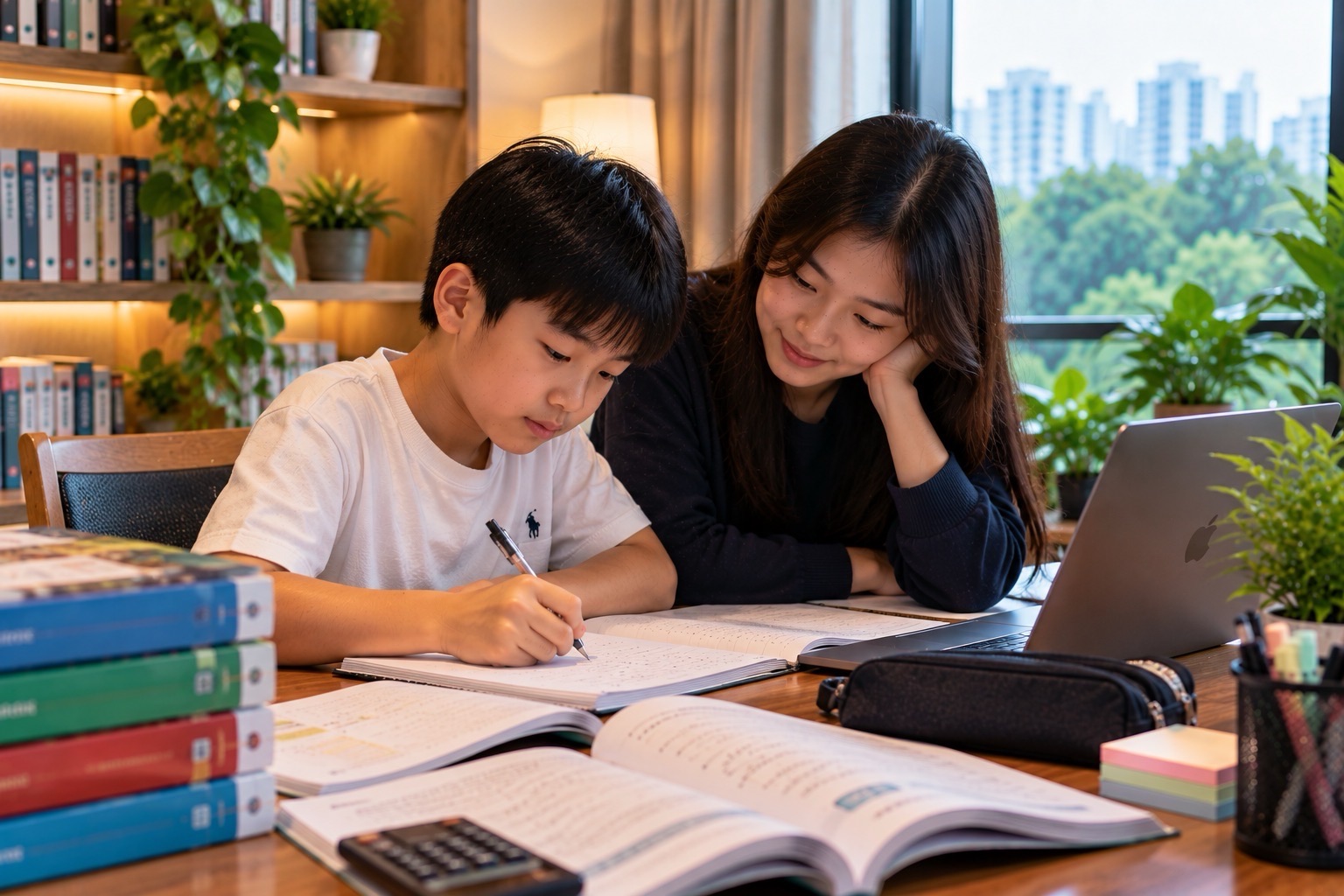
The quick answer: A Parent Support Group (PSG) is one way Punggol families can support their school community without taking over teaching, school operations or private student decisions. The most useful parent volunteer does not need to be wealthy, available every weekday or highly connected. They need to understand the actual school’s arrangements, contribute willingly, protect children’s privacy and help create constructive relationships among families and educators. Volunteering is a partnership role, not permission to make rules for the school or guarantee a child a preferred teacher, grade, CCA or admission outcome.
Singapore’s MOE Parent Support Group site offers practical guidance for PSG members and leaders. Its About PSG page, updated in August 2026, describes PSGs as supportive partners, a bridge between parents and school, and a lighthouse for positive parenting and collaboration. An individual school’s leadership and operating rules determine the events, permissions and volunteer arrangements available there.
For a Punggol parent, the best first step is to ask “What does my child’s actual school need, and which contribution can I reliably make?” A parent might assist in an approved event, contribute a professional skill during a legitimate programme, support a reading activity or welcome other families—provided the school invites or authorises the role. This guide is about Life in Punggol | Parent Support Groups and School-Family Partnerships, not a directory of live volunteer vacancies. It explains the purpose, boundaries, common mistakes and useful family-level outcomes.
What a school PSG actually does
A PSG helps nurture a respectful school–home relationship, encouraging parents to support education while recognising teachers and leaders as responsible for school teaching and administration. Its exact activities differ. Some groups organise parent-sharing sessions; others support approved school celebrations, student activities or parent engagement programmes.
MOE’s PSG guidance emphasises positive relationships, school alignment and parents participating constructively. PSGs should not be represented as a second governance board that can override curriculum or student discipline decisions. If a concern belongs to the school’s administration, use its authorised channel rather than asking a volunteer to rule on a sensitive matter.
The first test of any proposed PSG activity is who benefits and what work is authorised. A good programme serves students and families and fits the school’s actual needs, not merely the volunteer’s wish to organise something visible.
PSG, parent chat and parent–teacher meeting are different
A PSG is a structured school-partnership activity under school guidance. A parent messaging group may be an informal exchange among caregivers. A parent–teacher meeting concerns an individual learner’s education and progress. These three forums have different purposes, confidentiality expectations and decision-making authority.
A volunteer helping organise a family event should not seek private report cards from classmates. A chat administrator is not necessarily a PSG officer. A parent discussing an individual learning concern should contact the responsible educator or support personnel through the relevant school’s process.
Our Punggol parent school-messaging verification guide covers rumours and online discussions. The parent–teacher meeting guide addresses individual feedback. Neither role should be disguised as general PSG volunteering.
Who can join and how to find out
Start with your child’s school. Check its official parent-engagement or PSG information and contact the appropriate school office or existing group channel. Different schools may invite volunteers through forms, events or term-based onboarding. A family should not assume that every group has the same membership process.
Some activities require advance registration, briefings or screening appropriate to working with pupils. Other opportunities may be short, specific and supervised. Ask what is required before arriving at a school gate hoping to enter an event.
A Punggol resident with no child enrolled at a particular school should not assume membership or campus access simply because they live nearby. Community volunteering outside a PSG follows other organisers’ rules.
A useful volunteer can start with one small commitment
Parents often imagine that meaningful involvement requires becoming a committee member. A more feasible start might be supporting one authorised event or attending a parent engagement session and sharing thoughtful feedback. This helps the volunteer learn the school’s approach before accepting larger duties.
Set a realistic scope. A parent who works shifts may be available for an occasional weekend activity but not a weekly morning programme. Another might contribute a skill remotely through an approved school process. Neither should promise an arrangement they cannot sustain.
Reliability, confidentiality and willingness to work under school guidance matter more than the number of events listed on a parent’s personal profile.
What the PSG’s “bridge” role really means
A bridge between parents and school facilitates respectful communication, helping parents understand school activities and encouraging constructive collaboration. It does not mean forwarding confidential complaints to a broad mailing list or promising that staff will accept every request.
Suppose several families are confused about a general new activity. PSG volunteers may help parents find the actual school’s public information or encourage them to ask the appropriate official contact. They should avoid inventing explanations or turning rumours into policy.
If a family has a child-specific safeguarding, learning-support or disciplinary concern, the bridge role may mean directing the parent to the right confidential channel—not collecting private evidence and debating it with other volunteers.
School leaders and educators retain their roles
Teaching, school safety, admissions, assessment and authorised pupil support belong to the responsible institution and professionals. A PSG can strengthen the surrounding community without becoming a shadow administration.
MOE’s PSG resource site explains that PSG activities should align with the school’s goals and be developed together with school leaders. Parents should therefore seek the necessary endorsement before organising a programme under a school’s name.
A parent with teaching or technical experience can offer relevant expertise in a legitimate setting. Yet holding a professional qualification outside school does not give unrestricted permission to teach a class, handle a pupil’s private records or decide a programme’s educational standards.
A PSG is not an admissions advantage scheme
It would be misleading to tell families that joining the PSG guarantees a Primary 1 place for a sibling or a future admission benefit. Singapore’s P1 registration has its own phase-based eligibility rules and supporting conditions. A parent must consult the MOE Primary 1 registration portal to determine current eligibility.
Some registration phases historically involve qualifying service or school connections, but participation in an informal activity should not be treated as automatic proof of meeting those conditions. The rules and qualifying nature of service require specific official verification. Do not volunteer under a false promise of admission.
The correct reason to contribute to a PSG is to support a real school community. Any question about a family member’s admissions eligibility belongs to MOE and the relevant school, not social pressure within a parent network.
The child’s own view deserves a place
Children may appreciate seeing their parents support a school event. Others prefer a clear separation between school friendships and adult involvement. An appropriate PSG role should respect the child, avoid unnecessary embarrassment and never turn a volunteer parent into an unofficial observer of classmates’ private behaviour.
Ask the learner which school activities they find interesting and what support feels helpful. Do not require public gratitude for parental volunteering or interpret a teenager’s desire for independence as rejection.
A parent’s service should enrich the community rather than make the child’s day revolve around family status. That principle becomes especially important as learners reach secondary school.
Primary school: reading and transition activities can be useful
A school might invite approved volunteers to support reading-related activities, family orientation or community events. A parent can help create a welcoming environment, provided the role is supervised and consistent with school guidelines.
For younger pupils, encouraging reading does not require a volunteer to assess each child’s attainment. Asking pupils what they enjoyed in a story and helping them find an age-appropriate book can be meaningful. Formal identification of learning difficulties and teaching interventions belong to qualified school personnel.
At a Punggol primary school, the correct activity depends on its current plan. Families should avoid assuming that a programme seen at another school is operating locally or that the volunteers may take photographs of pupils freely.
Secondary school: parent roles should mature with students
Secondary students manage several subject teachers, CCAs and greater independence. They may welcome support for school-community events but not constant adult oversight. A PSG can help families understand transitions and facilitate appropriate communication without inspecting individual homework or friendships.
MOE’s secondary transition guidance emphasises adjustment to a new environment and relationships. Parent engagement can support a sense of community, but personal concerns should still be handled privately through relevant school staff.
A secondary PSG should be careful not to make academic prestige or examination comparisons the focus of its activity. Parent partnerships are most meaningful when they help children learn and belong, not when they become another ranking exercise.
Volunteering time should fit work and caregiving
Many Punggol households include parents working long hours, shifts or multiple jobs. Other families rely on grandparents or student care. A PSG should welcome a range of contributions where school arrangements permit and avoid equating high availability with parental commitment to education.
Before volunteering, calculate the full time cost. A two-hour event may also require travel, preparation, briefing and recovery. A parent caring for two younger children needs a legitimate arrangement for them rather than assuming they can attend an event without consideration of supervision.
School collaboration is stronger when adults can contribute sustainably. A parent who cannot volunteer that month can still support schoolwork and respectful communication from home.
A worked example: the real time behind a volunteer event
Consider a fictional volunteer opportunity requiring 90 minutes at school, 30 minutes preparation and 25 minutes of transport each way. The total is 90 + 30 + 25 + 25 = 170 minutes, or two hours and 50 minutes. These are illustrative values, not the requirements of a named Punggol PSG.
If the family has a student-care pickup inside that period, the volunteer must arrange a lawful and reliable alternate collector or choose another opportunity. It is not responsible to tell a younger child to wait unsupervised because the parent is helping at a school.
This arithmetic teaches a simple principle: volunteering has a real household cost in time. A sustainable contribution accounts for obligations to every family member, not only the parent participating.
No one should be pressured to donate money to belong
Some groups may support legitimate school fundraising or activities under their actual rules, but a parent should not feel compelled to make large purchases, pay an unofficial membership fee or finance expensive gifts to demonstrate care for a child.
Ask for proper school approval and transparent handling of funds for any permitted fundraising. Do not send money to an individual simply because they claim to collect on behalf of the PSG. Verify unfamiliar requests directly through the school.
Where appropriate, a parent can contribute time, ideas or professional skill instead of money. The spirit of a PSG should support community, not create another financial barrier between families.
Volunteering does not grant unrestricted campus access
Schools have access controls for the safety and functioning of learning. A PSG member should follow visitor, identity verification, photography, safeguarding and staff instructions. An event pass for one activity is not ongoing permission to enter classrooms or staff areas.
Before an activity, ask where to report, what time to arrive, whom to contact and what equipment is permitted. Respect school procedures if plans change. This protects students as well as volunteers.
A parent should not use a volunteer role to monitor a particular teacher, classmate or family without legitimate cause and authority. Child-specific concerns follow appropriate separate channels.
Child privacy is a hard boundary
An approved volunteer may see children participating in a school event. That does not create permission to share their identities, learning records or personal situations online. Do not upload photographs of minors without appropriate school and consent processes.
Avoid sharing confidential information learned through volunteering with a neighbourhood parent chat. A child’s medical, disciplinary, family or assessment circumstances should not become informal conversation material. The fact that a volunteer encountered the information accidentally does not make it public.
If a legitimate safeguarding issue arises, report it through the responsible school’s authorised procedures rather than starting a social-media investigation.
A good PSG works with diversity, not only confident speakers
Families differ in home language, financial circumstances, time, disability needs and experience with the school system. A PSG should not assume every parent can attend a daytime meeting or communicate comfortably in the same format.
Where the school permits, a group might provide clear written information, suitable meeting times or accessible participation. Parents should also avoid treating one family’s language or cultural routine as inferior. Asking what will help different families participate is more useful than demanding uniform involvement.
Volunteers should recognise that sensitive educational support and accommodations remain the responsibility of the relevant school and professionals. Welcoming families does not entitle volunteers to diagnose their children.
Parents Gateway should remain an official source
The Parents Gateway service supports official announcements, consent forms and other communications at participating schools. A PSG parent may help another family understand where to find a notice but cannot replace the school’s own authority or demand access to someone else’s account.
Do not ask other parents to share Singpass credentials. If a grandparent or caregiver needs legitimate access, the family should consult the school and Parents Gateway’s official help about relevant permissions.
A volunteer can provide a useful reminder to read a confirmed notice, but should not rewrite an attendance rule or announce a changed school dismissal on their own authority.
How to respond when a parent brings a serious concern
Imagine a parent approaches a PSG member with a bullying allegation or private report-card issue. The volunteer should listen respectfully, avoid public speculation and direct the family to the school’s appropriate confidential contact. A PSG committee meeting is not the place to display another child’s assessment record or decide guilt.
Where a concern involves immediate safety, the parent should use appropriate urgent procedures. Volunteers should not promise that they will personally investigate students or obtain confidential staff information.
The Punggol parent guide to reporting bullying addresses a separate safeguarding job. A PSG supports healthy relationships best by respecting this boundary.
Peer support among parents can be valuable
Parents sometimes feel isolated when handling an unfamiliar school transition. A PSG session can provide opportunities to share ordinary experiences—such as helping a child pack their bag, maintaining reading habits or understanding the shift into Secondary 1—without claiming every strategy works for every learner.
A parent can share how they solved a household scheduling problem and acknowledge that another family may require different arrangements. Evidence-based humility prevents informal advice from turning into a false universal policy.
For an academic difficulty, the correct next step may be consulting the teacher or qualified tutor to identify the first misconception. A parent’s anecdote can inspire a question, but it cannot diagnose another child’s learning need.
Connect school-parent volunteering with the wider community carefully
MOE’s COMPASS, established in 1998, is the national advisory council involving community and parent stakeholders in support of schools. It helps explain the larger philosophy of school-family-community partnerships.
NLB and legitimate community organisations may offer volunteer opportunities outside the school system. A Punggol parent might support a library activity under NLB’s own rules rather than through a school PSG. These are complementary opportunities but not interchangeable authorisations.
Do not assume a Punggol public-library volunteer badge grants school access or that a school PSG assignment is automatically credited by another organiser. Confirm each opportunity with its responsible institution.
Punggol Stories as an example of a separate community opportunity
The National Library Board’s Punggol Stories exhibition describes a permanent exhibition within Punggol Library and volunteer guide opportunities routed through NLB. The exhibition presents local history from kampongs and agriculture to waterfront development.
A parent interested in local heritage could research the official materials and consider a suitable current NLB volunteer role where available. That is not a PSG unless the actual school partners formally with the activity.
A family can still use the exhibition to have meaningful conversations with children. Historical observations and family recollections should be distinguished from verified public records; volunteer enthusiasm does not replace fact-checking.
Parent volunteering can model civic responsibility without turning into performance
Children can see adults contribute their time and skills for the benefit of others. That may encourage a habit of participating constructively in community life. However, parental service should not be framed as a guarantee of a child’s character, grades or future leadership awards.
A useful family discussion after an event might ask: Who needed support? What did the volunteers actually do? What was difficult? How did the school know whether the activity helped? The child can learn about responsibility without being required to praise the parent publicly.
The educational benefit is grounded in observed actions and honest reflection. Claiming a national impact from one event would overstate the evidence.
A parent with a demanding career can still contribute meaningfully
Suppose a parent has relevant knowledge in engineering, writing, healthcare, design or another field. They may be willing to share a genuine educational perspective in an approved school activity. The parent should ask what the school’s learning purpose is and how the contribution will be supervised.
Technical expertise should be communicated in an age-appropriate, accurate way. Avoid turning the session into recruitment or advertising for a private business. A volunteer’s professional role does not make every opinion about education correct.
A successful short talk can help children ask better questions about how people learn and work. It should not promise a job, scholarship or future course place.
Primary-to-university: parent involvement changes form
At primary level, parents are often closely involved in authorised care and school communication. In secondary school, students can manage more of their own activities and deadlines. In JC, ITE and polytechnic, institutions may provide family engagement through different channels. University students increasingly handle academic affairs and privacy directly.
A school PSG framework should not simply be extended to an adult undergraduate’s module grades. SIT’s parent outreach or public campus events, where available, do not give relatives blanket rights to student records or laboratories.
For Punggol families entering tertiary education, consult the actual institution’s admissions and student-life resources. Our first-generation university student guide explains how relatives can help without doing the student’s work.
A four-week low-pressure PSG start
Week 1 — Understand: Locate the school’s official PSG contact, read current participation guidance and identify one activity or value that fits your interests. Avoid accepting a leadership title before understanding the commitment.
Week 2 — Clarify: Ask the school or PSG organiser about registration, duties, safeguarding, times, expected preparation and necessary approval. Confirm how questions or incidents should be referred to staff.
Week 3 — Contribute: Complete a suitable agreed task under the organiser’s instructions. Keep children’s privacy protected, respect the school and avoid advertising unrelated services. Record only what is needed for legitimate activity review.
Week 4 — Review: Ask whether the activity benefited students or families, what required improvement and whether the parent can continue sustainably. A reliable occasional volunteer may be more valuable than an overcommitted parent who must repeatedly cancel.
Case study: a new Punggol P1 parent wants to help
A fictional parent of a Primary 1 child is excited to become involved but works shifts and cannot attend morning activities. Other parents suggest that a good parent must join every PSG event. The parent checks the school’s actual opportunities and identifies a modest contribution compatible with family obligations.
The parent attends a relevant briefing and supports one authorised activity rather than making an unsustainable promise. They continue to manage their child’s school routine and seek proper teacher guidance for individual academic concerns.
The outcome is positive participation without equating parenthood with volunteer hours. The case is a fictional example, not a guaranteed programme at a named school.
Case study: a PSG chat receives a private complaint
A volunteer receives a message alleging another student’s misconduct, along with identifying photographs. Rather than forward the accusation to every parent, the volunteer advises the concerned family to contact the school through its proper safeguarding channel and avoid circulating personal information.
The volunteer also checks whether the PSG’s own chat rules need a reminder about privacy. They do not attempt an informal investigation or declare a child guilty on the basis of one account.
The lesson is that responsible support sometimes means declining to share information. A parent network becomes more trustworthy when it respects students’ rights and legitimate school processes.
Case study: a volunteer event needs a real learning objective
A school-approved parent activity is described vaguely as “technology day”. Volunteers initially plan many impressive demonstrations without checking the children’s ages or the school’s intended outcomes.
The organiser and school agree a clear learning objective, such as students asking one evidence-based question about how a tool solves a real problem. Volunteers limit their demonstrations to what is authorised and understandable, then invite student reflection.
The result is more purposeful than a showcase designed mainly for adult photographs. The aim is learning and community partnership, not publicity.
Ten frequently asked questions
What is a school Parent Support Group?
A school-partnership arrangement in which parents work with the school to support the community and strengthen relationships, under relevant school guidance and policies.
Must every Punggol parent join a PSG?
No universal obligation is claimed here. Participation depends on the school’s opportunities and the family’s circumstances.
Does joining a PSG guarantee a P1 place for a sibling?
No. Admissions follow MOE’s applicable registration phases and eligibility. Volunteering should not be undertaken on an unverified promise of priority admission.
Can PSG members choose teachers or change curriculum?
No such general authority follows from membership. Teaching and administration remain with the responsible school and relevant MOE framework.
Can shift-working parents help even without weekly daytime availability?
Where the school offers appropriate options, small and occasional contributions can be worthwhile. Ask for current arrangements rather than assuming all roles require weekly attendance.
Can a PSG member access another child’s report card?
No automatic right exists. Student records and individual school matters must be handled through authorised confidential channels.
Is a parent WhatsApp group automatically an official PSG?
No. Informal chats, formal parent support structures and school notice services are different.
Can parents volunteer at NLB Punggol Library through a school PSG?
Only when the specific organisers have arranged an appropriate partnership. NLB volunteering otherwise follows NLB’s own current procedures.
Does PSG participation guarantee better examination scores?
No. Community engagement may support a positive learning environment, but a volunteer role does not create a guaranteed academic outcome.
What is the best first step for a parent interested in helping?
Check the actual school’s official PSG contact and agree one realistic, appropriately authorised contribution.
Official sources and other Punggol guides
The principal sources are MOE PSG official site, MOE About PSG, MOE parent, community and government partnerships, MOE COMPASS, Parents Gateway, Punggol Stories by NLB and NLB Volunteer Opportunities. School opportunities, authorisations and events must be verified with the relevant institution. The numerical example and family cases above are fictional.
Continue through the Punggol school transition guide, grandparents and school caregiving, the family calendar and how to ask teachers and mentors for help. A strong parent support group does not replace school expertise. It builds trusted relationships so children, families and educators can do their different jobs well.


