
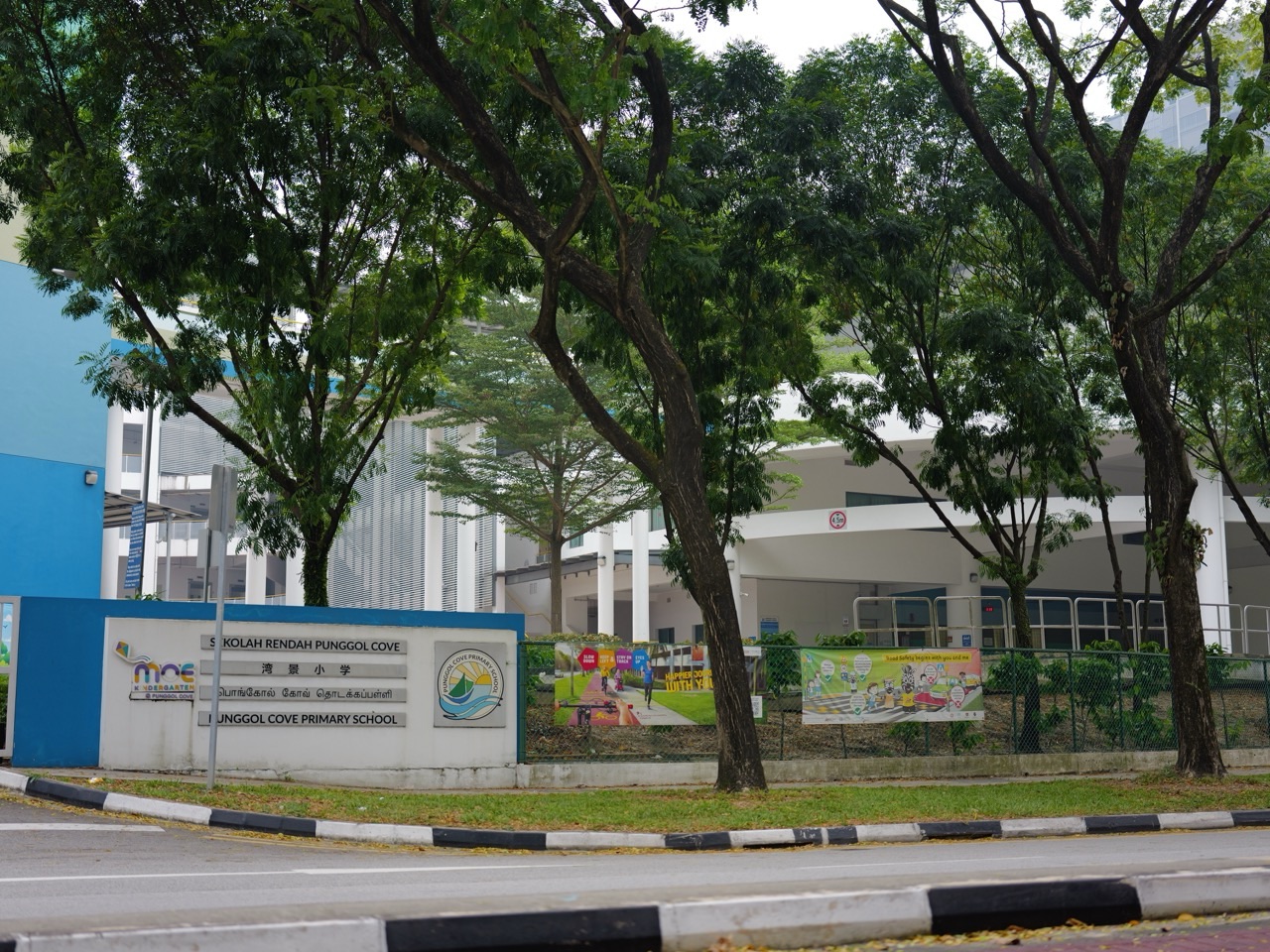
Quick answer. International students who are neither Singapore Citizens nor Singapore Permanent Residents follow a different admissions process to enter mainstream Singapore government primary and secondary schools. For Primary 1, families use MOE’s separate international-student indication-of-interest process before the relevant Phase 3 allocation. For Primary 2–5 and Secondary 1–3, the main entry route is the Admissions Exercise for International Students (AEIS) for the following academic year. A later Supplementary AEIS (S-AEIS) serves specified remaining entry levels and vacancies, typically Primary 2–4 and Secondary 1–2 in the same school year.
The 2026 AEIS applications have closed and its tests were held in September 2026. MOE says applications for the 2027 S-AEIS are expected to open in early January 2027, with testing tentatively in late February or early March 2027. These are not interchangeable deadlines. A family reading in October 2026 should not be told to apply to a September test that has already happened.
For primary AEIS and S-AEIS, the admission process uses a qualifying Cambridge English Qualifications (CEQ) result meeting MOE’s relevant age and level rules, alongside a Mathematics assessment. Secondary candidates undertake the English and Mathematics tests specified by the exercise. Passing a test does not guarantee the family’s chosen Punggol school. Offers depend on performance, eligible levels, vacancies and the national posting arrangement.
This 2026–2027 parent guide also explains citizenship categories, international-student school fees, P1 entry, school choices, Student’s Pass matters, preparation, English and Mathematics concepts, and the first year of learning. It uses official MOE/SEAB references, original worked exercises, practical family scenarios, FAQs and a four-week plan. Source check: 20 October 2026.
1. Why international students have a separate route
Singapore national schools prioritise admission under the applicable citizenship and school-place framework. Non-SC and non-PR applicants do not simply join the phases used by Singapore Citizens and Permanent Residents or claim the same distance priority.
MOE runs separate processes so places for international students can be considered after the relevant requirements, testing and available school capacity. The procedures serve different age groups.
Parents should first identify the child’s official nationality and PR status, intended level and academic year. A family living in Punggol cannot change the admission category simply by renting a home near a preferred school.
2. International student does not mean Returning Singaporean
A Returning Singaporean or PR child coming home after studying abroad can have admission routes such as Assured School Placement, SPERS-Sec or P1 registration. AEIS generally concerns eligible students without SC or PR status.
The difference matters because the forms, timing, tests and school choices are not interchangeable. A family that applies under the wrong route can lose useful time even if the child is academically capable.
Parents should compare their immigration and nationality documents with the official MOE eligibility descriptions before buying a test-preparation package.
3. P1 for international students is a separate two-step process
Non-SC and non-PR families seeking a Primary 1 place use MOE’s indication-of-interest process, followed by possible Phase 3 registration if instructed. They do not simply register in SC/PR Phases 1, 2A, 2B or 2C.
MOE requires families to submit correct identification and supporting documents by the stated window. Indicating interest is not a school offer and does not create priority at a chosen local primary school.
For a child eligible for P1, the family should use the exact birth-year rules and current Phase 3 guidance rather than prepare for the Primary 2 AEIS test.
4. The 2026 international P1 timeline was earlier than Phase 3
MOE’s 2026 P1 international-student information specified an indication-of-interest period from 19 to 25 May 2026, ahead of later Phase 3 processing. The published instructions describe outcomes by the end of October for the relevant intake.
That timing demonstrates why parents cannot wait until ordinary school registration phases conclude before beginning international-student planning. A family arriving late in the year may need to explore future options rather than assume it can enter that completed exercise.
The dates are historical facts about the 2026 process. A family applying for P1 in a later academic year must consult the new official calendar.
5. What Phase 3 means in international P1 entry
After the formal indication of interest, MOE centrally evaluates available places under the international-student process. A family invited to the next step follows the instructions for the applicable Phase 3 registration and school allocation.
The process is not an auction for the nearest school, and the family should not assume a specific campus will be offered because it named that campus in a message.
A successful offer also creates separate tasks: registration, required identification, school reporting and any immigration permission. Parents should plan those steps rather than treating an indication-of-interest acknowledgement as enrolment.
6. AEIS serves defined primary and secondary levels
MOE’s AEIS route is for relevant international students seeking Primary 2–5 or Secondary 1–3 entry in the following academic year. The permissible age range is linked to the applied level.
A learner’s current foreign-school grade should not automatically be converted to the same Singapore level. Different countries begin compulsory schooling at different ages and use different curricula.
Check the official age table before deciding what test the child can apply for. Applying to an academically desired level that violates the permissible age or entry rules can invalidate the plan.
7. S-AEIS is narrower than the main AEIS
The supplementary exercise serves designated remaining entry levels and school vacancies later in the cycle. MOE’s 2027 S-AEIS overview identifies Primary 2–4 and Secondary 1–2, rather than every level that appears in the main AEIS.
A family cannot assume that because Primary 5 and Secondary 3 are available in AEIS they must also be open in S-AEIS. The difference is material for a child near a level boundary.
Check eligibility and the exercise’s test details separately. “Supplementary” describes the later route, not an automatic second attempt for every possible entry level.
8. The 2026 AEIS application and test are finished
MOE’s 2026 AEIS overview states that its application window has closed and the tests were conducted in Singapore from 1 to 3 September 2026. A guide published in October must explicitly recognise that these tests are now past.
Families should check the current MOE route instead of purchasing a course advertised as guaranteed preparation for an already completed test.
The next viable process depends on the child’s age, eligible level, application timing and whether a supplementary exercise is available. It is better to state this uncertainty honestly than invent an immediate test slot.
9. The 2027 S-AEIS provisional timetable
MOE says applications for the 2027 S-AEIS will open in early January 2027, with tests tentatively in late February or early March. The specific application portal, documents and final dates must be confirmed when official registration opens.
A January application is not automatically approved simply because the parent has created a Candidates Portal account. The family should wait for confirmation and prepare entry proof when issued.
Dates may move and available testing places can be limited. Use the live government page rather than an older screenshot forwarded in a parent chat.
10. Cambridge English Qualifications are relevant to primary AEIS
For the primary entry route, MOE requires a qualifying Cambridge English Qualifications result meeting specified age and applied-level criteria before the Mathematics test application. This is an admission requirement, not evidence that a child has completed the Singapore primary English syllabus.
The certificate type, validity and minimum result must match MOE’s current table. A child who is too young or has the wrong assessment version may not qualify simply because the family paid for an English test.
Parents should confirm which CEQ to take before booking it and allow time for the result to be available for the official application.
11. CEQ is not the same as the secondary AEIS English paper
Primary applicants use the required Cambridge English Qualification evidence under the applicable process. Secondary AEIS candidates instead face the specified English language assessment in the central exercise, alongside Mathematics.
Preparing a primary child’s CEQ as though it were a Secondary 2 composition paper would be a mismatch. Likewise, a secondary applicant should not assume presenting a primary-level CEQ removes all English testing.
This distinction helps families select appropriate learning tasks rather than purchasing an undifferentiated “AEIS English” package.
12. Why the Mathematics paper remains important
A qualifying English certificate does not settle Mathematics readiness. Primary AEIS/S-AEIS uses the relevant Mathematics assessment to evaluate whether the learner can apply concepts aligned with the target entry level.
A child may be confident with foreign-school methods yet unfamiliar with Singapore question language or written presentation. A teacher should diagnose the actual difference instead of assuming the student’s previous mathematics education was poor.
Use official MOE syllabuses to identify prerequisites, then teach one unstable concept and check it on changed questions before attempting larger mock papers.
13. Original Primary Mathematics worked example
A fictional applicant is asked to compare 42 and 38. The pupil chooses 38 because eight is larger than two. The answer reveals the learner is comparing ones without accounting for tens.
Show 42 as four tens and two ones, and 38 as three tens and eight ones. Four tens exceed three tens, so 42 is greater.
For transfer, compare 53 with 49 and ask the learner to explain their reasoning. This is a conceptual teaching illustration, not an actual MOE admission test item.
14. Original Primary fraction example
Suppose a pupil adds 1/2 and 1/4 by writing 2/6. That procedure incorrectly adds differently sized fraction parts. A simple diagram shows one half is two quarters, so the sum is 2/4 + 1/4 = 3/4.
Ask a new example, 1/3 + 1/6 = 2/6 + 1/6 = 1/2. The learner should explain why equivalent parts are required.
The educational goal is accurate reasoning and independent transfer. A student who memorises the first corrected answer may still fail when the denominators change.
15. Secondary English needs genuine composition and comprehension
Secondary AEIS tests assess English through tasks appropriate to the target level, including writing, comprehension and language use under the exercise’s current instructions. Successful preparation cannot rely only on memorising impressive vocabulary.
Ask the learner to write an original, coherent response to an age-appropriate prompt, then inspect organisation, grammar and relevance. Use unfamiliar comprehension passages to check whether claims are supported by text.
A family should consult the actual SEAB test-format page rather than assume every Secondary 1–3 examination has identical essay length or time limits.
16. Original English inference example
Consider the invented sentence: “The traveller told his brother he knew the route, but he checked the road signs at every junction.” The stated fact is that he checked signs. A possible inference is uncertainty or caution; the sentence does not prove he became lost.
A learner who writes “He missed the train” has introduced an unsupported event. Correcting this requires separating literal information from reasonable interpretation.
For transfer, use another sentence about a student rechecking notes before a presentation. Ask which detail supports the inferred feeling and what remains unknown.
17. Secondary Mathematics can introduce symbolic language
A returning learner seeking Secondary 2 may need Singapore Secondary 1 algebra concepts even if the foreign curriculum emphasised different topics. Unknown quantities, equations, directed numbers and geometry notation can create specific gaps.
For example, 3(x − 2) = 15 becomes x − 2 = 5 after division by three, so x = 7. A pupil answering x = 5 has omitted the final step.
A new task 4(y + 1) = 24 checks transfer, giving y = 5. A good explanation of equality is more reliable than a memorised instruction to move numbers across an equals sign.
18. The test is not a promise of a preferred school
AEIS and S-AEIS are placement exercises. Results and available vacancies determine whether an eligible candidate receives a school offer, and the family cannot simply select any primary or secondary school as though it were a private course purchase.
A high score in a private mock paper does not bind MOE. The real process uses the government’s test and school-place arrangements, and competition may differ by level and year.
Punggol parents should prepare a realistic education and transport plan for whatever official outcome is available rather than promise the child a particular school name.
19. A child’s age matters as much as a previous grade
MOE’s AEIS eligibility tables limit which school level a child may seek based on age and other conditions. Foreign curricula can begin formal schooling earlier or later than Singapore’s, so a certificate saying “Year 5” does not automatically mean the learner is eligible for Primary 5.
Parents should check the official permissible age chart before booking tests. An academically advanced child may still need a lawful placement at a different level from the family’s first assumption.
The purpose is appropriate schooling within the national system, not simply translating foreign year numbers one-to-one.
20. Test outcomes depend on capacity as well as readiness
An applicant can demonstrate relevant academic ability without receiving a particular Punggol campus. Places for international students are considered under MOE’s allocation framework and available vacancies.
Do not assume that paying the test fee reserves a desk at a preferred school. It covers the official examination process under its terms, not an entitlement to one named institution.
A family should preserve realistic alternatives and the child’s wellbeing while awaiting results. An offer letter is different from an application acknowledgement or an unofficial score prediction.
21. The Candidates Portal is an official administrative tool
MOE and SEAB use an authorised Candidates Portal for AEIS and S-AEIS account creation, applications and payment processes. Applicants should enter details exactly as required, including passport identity and birth date.
A family can lose time if the passport number, name or required certificate does not match official records. Correct errors through the prescribed process rather than creating duplicate speculative accounts.
Protect account credentials. An informal parent group or tutor does not need the child’s login details to offer academic advice.
22. Registration and payment do not equal approval
Submitting a form or paying a test charge is not the same as being accepted to sit, passing the assessment or receiving a school place. The official portal or message confirms each separate step.
Parents should preserve payment acknowledgements and entry proof, while monitoring any request for additional evidence. They should also read the published fee and refund conditions, rather than assuming any withdrawal automatically produces a full reimbursement.
An agency promising “instant school placement after payment” should be treated cautiously until every claim is verified from official MOE sources.
23. Cambridge English Qualifications need sufficient lead time
For primary applicants, the CEQ result must meet the specific required standard and be ready for the AEIS or S-AEIS application. A student might be comfortable speaking English yet need time to sit the qualifying external assessment and receive an official certificate.
Parents should choose the right age-appropriate Cambridge English assessment according to MOE’s table before paying a provider. The requirement cannot be substituted with any English tuition-centre worksheet score.
A realistic schedule includes time for registration, test taking, results and government submission. Waiting until the AEIS window is almost closed creates avoidable risk.
24. A CEQ grade does not bypass Mathematics
A qualifying primary English result establishes one prerequisite for applying; it does not prove mastery of Mathematics at the intended Singapore primary level. The child must still follow the official AEIS Mathematics process.
Preparation can begin by testing quantity, fractions, operations, measurement and unfamiliar word-problem relationships at the relevant level. A child who is already strong in these topics needs less remedial work than one who is genuinely missing a foundational concept.
A teacher should adjust practice based on evidence rather than automatically prescribe the same expensive package to every applicant.
25. Why writing full working steps matters
Singapore Mathematics assessments often expect the learner to demonstrate method, not only announce a final number. A pupil may obtain a plausible answer by guessing an operation and fail when the relationship changes.
Ask them to identify the given quantities, draw a suitable representation and explain each operation. For a ratio of three red parts to five blue parts with a total of 64, there are eight equal parts, each worth eight, giving 24 red and 40 blue items.
For transfer, use a total of 80, giving 30 red and 50 blue. This is a hypothetical teaching problem, not a leaked admission paper.
26. Secondary English needs genuine independent writing
A student can memorise a polished sample essay and still struggle with an unfamiliar prompt. Independent writing requires understanding the topic, organising ideas and choosing accurate vocabulary and grammar.
A useful practice begins with a plan containing the main event or argument, supporting details and a conclusion. The learner then writes under age-appropriate conditions and reviews one clear improvement.
The goal is coherent communication. Copying long model passages without understanding them is unlikely to provide robust readiness for an official placement assessment.
27. Higher secondary levels require conceptual bridging
An applicant seeking Secondary 3 entry may need foundational algebra, geometry and data concepts usually introduced across the earlier Singapore secondary years. A foreign curriculum may sequence these topics differently.
For instance, a student familiar with solving linear equations might be less experienced interpreting gradients and coordinate graphs. Another may know geometry but struggle with directed numbers and formal working.
Ask an educator to map the actual syllabus differences. The student should not be labelled weak in Mathematics simply because a familiar concept appears in unfamiliar notation.
28. The 2027 supplementary tests remain tentative until confirmed
MOE describes the 2027 S-AEIS testing period as late February or early March 2027, pending final confirmation. A family should not book non-refundable travel around a guessed date when the official notice has not confirmed the particular testing slot.
Read the opening registration instructions in January, then use the issued entry proof for location, reporting time and permitted materials.
Education advice should distinguish scheduled, tentative and already completed events. That precision prevents costly mistakes.
29. Primary 5 is not a general S-AEIS option
The MOE 2027 S-AEIS overview describes primary admission opportunities for Primary 2 to Primary 4, not Primary 5. A parent must not infer that every primary level appearing in the earlier AEIS is offered in the supplementary exercise.
A child near the upper primary age range may therefore have different remaining options from a younger sibling. They should consult MOE’s current guidance and avoid using another family’s invitation as proof of eligibility.
If an option is unavailable, ask the proper authority about legitimate next steps rather than purchasing a supposed alternative sitting.
30. Secondary 3 is likewise not a general S-AEIS level
MOE’s supplementary overview describes Secondary 1 and 2 entry, while the main AEIS has wider secondary levels including Secondary 3. That difference matters for pupils returning or relocating later in the school sequence.
Parents should check the current age and applied-level rules. The official choice may require a different academic plan or an alternative institution rather than simply sitting the wrong test.
A provider cannot override published government eligibility because the family has paid for an intensive preparation course.
31. Government-school fees vary by citizenship category
MOE’s current fees service differentiates Singapore Citizen, Permanent Resident, ASEAN international and non-ASEAN international students, as well as school level and school type. An international family’s fee is not automatically the same as a Punggol Singaporean neighbour’s rate.
Fee schedules are subject to review. The family should use MOE’s live fee checker for the specific study year and school category rather than extrapolating an older monthly number.
Separate school and miscellaneous charges and any other legitimate expenses. A low quoted registration fee does not describe the child’s full cost of schooling.
32. Why an ASEAN versus non-ASEAN distinction matters
The international-student fee framework can distinguish ASEAN and non-ASEAN nationalities. A parent should not assume all foreign passports produce exactly the same monthly school fee.
Use the official nationality and fee category in MOE’s current calculator. The amount could differ by primary versus secondary level and by the relevant academic year.
Budgeting should be based on the actual government’s rate and offer documents, not on an agent’s generic “international school fee” estimate, which might refer to a completely different school type.
33. Test fees and monthly tuition fees are different
An applicant may pay an AEIS or S-AEIS application or examination fee and, if offered a place, later pay recurring school fees. These expenses have different purposes and refund conditions.
A parent who spends heavily on test preparation should still budget for school fees, transport, textbooks, student care and relevant uniform expenses. The offer does not automatically provide all these items free.
A full household education budget separates one-time application expenses from monthly costs and uncertain future fees. This prevents double-counting.
34. International students may need a Student’s Pass
A place at a Singapore school and permission to reside and study are different administrative decisions. The Immigration & Checkpoints Authority (ICA) handles relevant Student’s Pass matters, subject to immigration rules.
Families should follow the current ICA and MOE instructions when an offer requires immigration documentation. A school acknowledgement is not itself a visa or a guarantee that immigration requirements will be met.
Avoid disclosing passports to unverified agents offering guaranteed passes. Use appropriate official channels and keep deadlines and document validity in view.
35. The first school choice may not be in Punggol
A family can live in Punggol while the offered government school is elsewhere, depending on the national placement and vacancies. Location is useful for transport planning but does not bind the admissions authority.
Before making a housing decision solely around one school, check what the international admission process actually permits. A property agent’s “within one kilometre” phrase refers to a different priority context and should not be treated as an AEIS guarantee.
When a formal offer arrives, evaluate real safety, commute, subject provision and the child’s ability to settle in.
36. Foreign students follow the same classroom curriculum after entry
An international pupil admitted to a mainstream Singapore school enters its national education environment and relevant subject arrangements. The learner may have differences in English, Mathematics, Science or Mother Tongue experience compared with classmates.
The school can explain required subjects, appropriate placement and any support available. Parents should not assume that AEIS success means no academic bridging will ever be needed.
A child may be advanced in one subject and unfamiliar with another. Accurate classroom observations help identify where teaching should be strengthened rather than relying on a single broad label.
37. Mother Tongue questions should be handled separately
International students may face different language backgrounds and requirements. The family should discuss the actual Mother Tongue subject, any approved alternative and relevant exception criteria with the receiving school and MOE.
It is incorrect to assume that a child’s foreign nationality automatically permits complete avoidance of the subject, or that a private language certificate substitutes for an official approval.
The relevant framework has its own rules. Keep MTL enquiries separate from AEIS English and Mathematics test preparation so that one issue does not obscure another.
38. School placement is not the end of transition
After admission, the learner needs to understand the school timetable, curriculum, school culture, rules, meals, transport and how to seek help. A high entrance-test performance does not automatically make every unfamiliar daily routine easy.
Parents can visit appropriate public areas near the assigned school and rehearse the route, while using official school channels for orientation and documents. A secondary pupil may also need an explanation of Full Subject-Based Banding and G1/G2/G3 subject levels.
A predictable first month can improve participation and reduce avoidable stress.
39. A fictional family with a P1 and P3 applicant
Imagine a relocating family with two children. One is of Primary 1 age and the other is eligible to seek Primary 3. The parent initially plans to register both through AEIS in September.
The correct approach separates their routes: the P1 child follows the distinct international P1 indication-of-interest process, while the older child considers AEIS or S-AEIS depending on level and the actual year. Each has different requirements and timelines.
This fictional example illustrates why using a single “international student” label for siblings can lead to incorrect applications.
40. The main lesson: eligibility before preparation
A child should not spend months preparing an examination for a level or year they cannot apply to. The family must first verify age, status, eligible school level, deadline and whether the exact exercise is open.
Then learning preparation should diagnose real English and Mathematics gaps, explain the missing concept and test transfer using unfamiliar work. That is more effective than a commercial promise of admission through question volume alone.
Punggol’s school system follows national MOE rules. Strong planning combines accurate applications with practical care, commuting and a respectful transition for the learner.
41. What if a family misses the application deadline?
Missing an official AEIS or international P1 deadline does not mean an agent can create another application window. The parent should check MOE’s current route, including whether S-AEIS is available for the child’s age and target level.
A later exercise can be narrower than the main one. A Secondary 3 or Primary 5 applicant should not assume S-AEIS has a corresponding opening if the official level list excludes them.
Ask the admissions authority about legitimate alternatives and future intake periods. It is more responsible to acknowledge a missed date than promise an unofficial shortcut.
42. When a private or international school is considered
A family that does not obtain a mainstream school place may explore a suitably recognised privately funded or international education option. This is a different institutional and fee framework and should be checked on its own terms.
The school may offer a foreign or international curriculum with different examinations and graduation qualifications. Parents should understand the course, awarding body, enrolment conditions, education quality and actual fees.
Do not assume that a foreign school’s annual fee or curriculum is interchangeable with an MOE mainstream school. A sensible comparison focuses on educational fit and legitimate qualification recognition.
43. School-fee budgeting for a full academic year
Start with MOE’s official monthly fee checker for the student’s citizenship, ASEAN or non-ASEAN category, school level and year. Add miscellaneous fees and realistic recurring transport, food, care and learning-material costs.
Separate one-time test fees from recurring school bills. A family that budgets only for AEIS registration may be surprised by the expenses after a place is offered.
A calculation should use confirmed published amounts and the actual child category. Copying last year’s amount from a forum makes an otherwise accurate arithmetic worksheet unreliable.
44. A practical budget with fictional figures
For an illustrative family, suppose recurring monthly education-related costs are $800 in school charges, $90 transport and $110 food. The total is $1,000 monthly, or $12,000 over twelve equal months under those invented assumptions.
These values are not MOE international-student fees or a quotation from a Punggol operator. The exercise demonstrates how to combine categories while keeping the actual government rate separate.
A parent should replace the hypothetical numbers with the official bill and account for any months, fees or arrangements not included in the simple model.
45. Four-week preparation before a valid exercise
Week 1: confirm citizenship category, age, level and actual open application exercise. Read MOE’s eligibility and document rules rather than begin with test tricks.
Week 2: if applying for primary entry, check the required CEQ certificate and result timeline; assess the child’s core Mathematics against the appropriate Singapore syllabus.
Week 3: practise targeted English or Maths foundations, inspect errors and give unfamiliar transfer tasks. Clarify passport or portal discrepancies through official channels.
Week 4: confirm application, entry proof, fees, test venue and realistic travel. After results, evaluate the official school offer and the household budget without claiming a guaranteed chosen campus.
46. The child’s actual experience remains important
A move into Singapore’s mainstream schools may bring unfamiliar classroom practices, subject levels and friendships. Academic test success helps with placement but cannot eliminate every social or language adjustment need.
Parents can ask the learner which part of the day is confusing and identify a school adult who can help. A carefully rehearsed transport route, school-day routine and realistic homework schedule may improve wellbeing.
A child should not be reduced to a test score or blamed when vacancies affect the placement outcome. Family support can remain ambitious and evidence-based without becoming punitive.
47. Commercial promises need verification
A provider may offer useful AEIS tuition but cannot grant an MOE school place, guarantee a CEQ result or waive a government deadline. A polished mock test is not the same as the official examination.
Before paying for preparation, ask which level and syllabus is taught, how the tutor diagnoses misconceptions and whether the promised materials genuinely match current official requirements. A blanket guarantee of a preferred campus is a warning sign.
Educational support is valuable when the learner becomes more capable independently. It cannot override national admissions and immigration decisions.
48. The central difference between entry and education
AEIS, S-AEIS and international Primary 1 processes determine whether a learner can enter the national school system under the current rules. Once placed, the child still needs suitable teaching, routines, friendships, safe transport and genuine understanding of subject content.
A family should therefore make two plans: the admission application, and the student’s first-year learning and wellbeing support. Conflating them can lead to unnecessary anxiety or the mistaken belief that one successful test settles everything.
Accurate MOE sources, honest dates, diagnostic teaching and practical Punggol family planning are the strongest foundation for the journey.
Frequently asked questions
Who uses international-student admission routes?
Eligible non-Singapore Citizen and non-Permanent Resident children seeking MOE mainstream primary or secondary admission.
Can an international child use SC/PR Phase 2C registration?
No. International Primary 1 follows a separate indication-of-interest and Phase 3 process.
When was the 2026 international P1 indication-of-interest period?
MOE published 19–25 May 2026 for the relevant intake. Later cohorts must use a new official calendar.
Does indicating interest guarantee a P1 school?
No. MOE evaluates the application and places based on the relevant rules and vacancies.
What ages or levels does AEIS cover?
The main AEIS generally covers eligible Primary 2–5 and Secondary 1–3 admission, within its published age rules.
What levels does the 2027 S-AEIS cover?
MOE identifies Primary 2–4 and Secondary 1–2 for the supplementary route.
Can S-AEIS admit an applicant directly to Primary 5?
Do not assume so; P5 is not listed in the current 2027 supplementary primary level range.
Can S-AEIS admit an applicant directly to Secondary 3?
Not under the general 2027 S-AEIS Sec 1–2 levels published by MOE.
Are applications for September 2026 AEIS still open?
No. MOE states the 2026 AEIS exercise is closed, with tests conducted in September.
When will 2027 S-AEIS applications open?
MOE says early January 2027; confirm exact dates when published.
When will 2027 S-AEIS tests take place?
MOE tentatively indicates late February or early March 2027.
Do primary applicants need CEQ?
MOE’s primary AEIS and S-AEIS routes require qualifying Cambridge English Qualifications under age- and level-specific rules.
Does CEQ replace the primary Mathematics assessment?
No. Eligible primary applicants must also follow the relevant Mathematics test process.
Do secondary AEIS applicants take English and Maths?
The secondary exercise has official English and Mathematics assessments under SEAB/MOE instructions.
Can a foreign child choose any school in Punggol?
No. Official placement depends on test results, permissible level, vacancies and national processes.
Does living within one kilometre guarantee an AEIS place?
No. The usual SC/PR P1 distance-priority context is not a universal international-student placement guarantee.
Are international school fees the same as Singapore Citizen fees?
No. MOE’s checker distinguishes citizenship, ASEAN/non-ASEAN origin, school level and year.
Does an AEIS application fee pay future school tuition?
No. An examination application is separate from recurring school fees and other schooling expenses.
Do international students need a Student’s Pass?
Some do under ICA rules. Admission and immigration permission are separate and should both be confirmed.
Will a successful AEIS result guarantee immigration approval?
No. ICA decides relevant Student’s Pass matters under immigration rules.
Is AEIS the correct route for Returning Singapore Citizens?
No. Returning SC/PR students have separate P1, ASP, SPERS and other MOE routes.
What if the child’s foreign grade level differs?
Use MOE’s age and school-level eligibility requirements rather than assume labels are equivalent.
Can a tutor guarantee an AEIS school offer?
No. Tutors can support genuine learning but cannot control MOE tests, vacancies or placement decisions.
What if our child does not receive a place?
Consult MOE’s current admissions guidance and consider legitimate next steps or suitable other institutions.
How can parents prepare without excessive pressure?
Teach the actual English and Mathematics prerequisites, inspect errors, and test new examples independently.
What is the first action for an international family in Punggol?
Verify immigration category, child’s age and eligible admission level, then check which MOE exercise is open for the intended year.
Official sources and related guides
- MOE International Students: AEIS overview 2026
- MOE AEIS eligibility, age and CEQ requirements
- MOE AEIS primary and secondary tests
- MOE AEIS application and Candidates Portal
- MOE 2027 S-AEIS overview and tentative schedule
- MOE 2027 S-AEIS eligibility
- MOE 2027 S-AEIS tests
- MOE international Primary 1 registration
- MOE international P1 indication of interest
- MOE school fee checker
- MOE SchoolFinder
- ICA Student’s Pass official site
- Punggol education system AEIS overview
- Punggol English AEIS and CEQ detailed sibling guide
- Punggol S-AEIS P5 and Sec3 question
- Punggol Returning Singaporeans separate route
- Immutable Clementi diagnostic teaching standard
Editorial fact check, 20 October 2026: 2026 AEIS tests are complete, while 2027 S-AEIS dates remain subject to official confirmation. School fees and Student’s Pass rules are independently administered. Worked problems and applicant scenarios are original hypotheticals. No place, visa, examination result or fee waiver is promised.


