
A student in Punggol can take a first job or internship only under the rules appropriate to their age, immigration status, type of work and actual agreement. Singapore permits children aged 13 to under 15 to do light duties in non-industrial settings, while those aged 15 to under 16 have wider but still restricted options. For polytechnic, ITE and university students, the employment relationship and the school’s endorsement can also change how CPF is treated.
The immediate checklist is can I legally do this job? → is the employer genuine? → what will I learn? → what are the actual hours and paid terms? → is CPF required or exempt? → can I still meet study, sleep and travel commitments? Do not assume “internship” means every hour is unpaid, “school holiday” removes safety laws, or a company near Punggol Digital District automatically offers genuine placements.
This Working in Punggol article explains Singapore’s school-holiday work, first paid employment, industrial attachment and internship system as of October 2026. It is written for students, parents, educators and small employers. It does not promise openings at a named Punggol company. The key law is covered in MOM’s Employing Young Persons and Children guidance.
First-job rules at a glance
| Student situation | Main rule or question | First official source |
|---|---|---|
| Age under 13 | Do not presume ordinary paid employment is allowed | MOM child and young-person rules |
| Age 13 to under 15 | Only light work in non-industrial settings; industrial work generally not allowed except with family members | MOM young worker guidance |
| Age 15 to under 16 | Non-industrial employment possible; industrial work has employer notification and medical report requirements | MOM young worker guidance |
| Under 16 doing manual work | Time, breaks, night work and rest-day restrictions can apply | Part 8 and regulations |
| Age 16 or above | Ordinary employment requirements and any other specific rules matter | Employment Act and contract |
| Local student’s paid internship | CPF generally applies if there is an employment relationship, unless a valid student internship exemption applies | CPF Board |
| Approved school internship | MOE-subsidised institution/programme and school-approved training can qualify for CPF exemption | CPF Board student internship FAQ |
| Student’s Pass during term | Eligible listed-institution student: at most 16 hours weekly, or approved course-related industrial attachment | MOM foreign student exemption |
| Student’s Pass during vacation | Exemption has distinct eligible-institution, pass and age at least 14 conditions | MOM foreign student exemption |
| SIT integrated work-study | Programme-specific applied learning and work placement, often longer than casual internships | SIT programme details |
| Unsure whether employer is real | Verify company and recruiter independently before sharing identity records | MOM and Police guidance |
The table is a route to the correct rule, not a substitute for eligibility determination. Age, actual tasks, institution, contract and status can all change the answer.
Punggol offers several kinds of work, not one student job market
A first job may be at a retail counter near Waterway Point, a customer-service operation, an event team, an education-related service provider, a restaurant or a business nearer Punggol Coast. A formal internship may instead place a polytechnic or university student in an office, laboratory, technical operation or other approved training environment.
Those roles may share a neighbourhood while differing enormously in training, physical risk and supervision. A school holiday shop shift is not necessarily an industrial attachment, and a short private coding assignment is not the same as a university-approved internship.
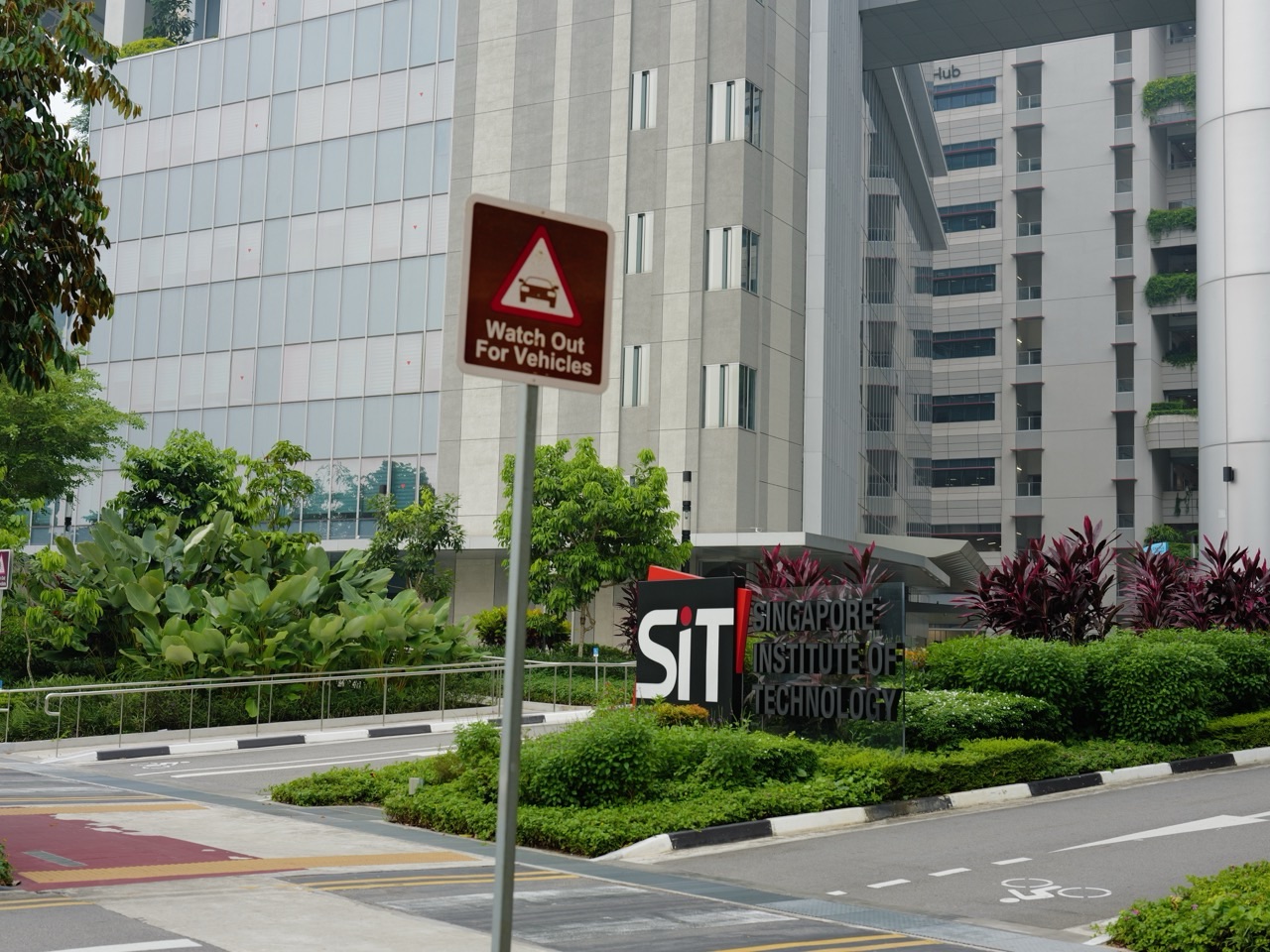
SIT’s Punggol campus gives local students a visible illustration of integrated learning and work. SIT describes its Integrated Work Study Programme as a programme with actual workplace learning, with duration varying by degree, rather than a universal recruitment scheme open to everyone who lives nearby.
The useful question is what the arrangement actually provides. Will the student receive proper guidance, be able to complete legitimate tasks safely and gain evidence of relevant skills? Or is the attractive title hiding unstructured duties and unpredictable hours?
Treat Punggol’s geography as a travel convenience, not as evidence that the educational value or contractual arrangement is good.
What 13- and 14-year-olds may do
MOM states that children aged 13 to less than 15 may undertake light duties in non-industrial settings. Industrial work is not generally allowed in this age group, except in the circumstances involving work with family members stated on MOM’s page.
“Light work” does not mean “anything the employer says is easy”. Duties must be suitable for the person’s age and should not risk injury. A child helping with appropriate low-risk activity cannot automatically be assigned moving machinery, exposed electricity, hazardous work or dangerous manual handling.
The restrictions protect schooling and development. A child’s availability during school holidays does not create permission for an unsafe job. Employers and parents should check both the activity and the hours.
For children performing manual labour, MOM says they must not work more than three hours without a 30-minute break or more than six hours in a day including time at school. They must not work between 11pm and 6am, and work on rest days requires the specified permission.
These restrictions are not a target schedule that young workers should aim to fill. A family can decide that no paid employment is appropriate at that stage, even when a certain light activity may legally be possible.
What changes at ages 15 to under 16
MOM’s young-person employment page identifies 15 to under 16 as a separate category. Young persons can work in non-industrial settings under the applicable restrictions.
For industrial employment, the employer must notify MOM and submit a medical report within 30 days after the young person starts work. Industrial settings include types of manufacturing, construction and transport-related work; the exact work and legal classification must be checked.
For those performing manual labour, MOM says young persons must not work more than four hours without a 30-minute break or more than seven hours in a day, including time at school. Night work from 11pm to 6am and unauthorised work on rest days are restricted.
A Punggol employer should not assume a 15-year-old may safely operate equipment simply because the young person is tall, confident or has previously done a similar task at home.
The appropriate response is to assess the real duties, working environment and required notifications, then provide meaningful supervision and training. Where uncertainty is substantial, contact MOM rather than making up a permissive interpretation.
Why “non-industrial” is not the same as “harmless”
A restaurant or shop can be non-industrial under the relevant categorisation and still contain hot surfaces, sharp implements, slippery floors, heavy items or stressful customer situations. Legal eligibility to work in the sector does not mean every task is suitable for every teenager.
Employers must consider the actual activity. A young person arranging small packaged items under supervision differs from someone carrying large hot containers or working beside moving industrial machinery.
For students under 16, MOM specifically identifies work involving injury risk, attending moving machinery, live uninsulated electrical apparatus and underground work as unsuitable.
The employer must also plan what happens when a customer behaves aggressively or equipment fails. A young worker should know whom to call, not be expected to make safety-critical decisions alone.
Parents and students can ask for a written task description, training and supervision before accepting, just as an adult would ask about a new workplace’s safety system.
The first decision: employment, internship or genuine self-employment?
A part-time employee works under a contract of service and has applicable employee rights. A formal training placement may or may not involve an employment relationship. A genuinely self-employed person can have different legal responsibilities and benefits.
Do not rely solely on the label “intern”, “helper”, “freelancer”, or “project-based assistant”. Ask who controls duties, sets hours, provides equipment, pays wages and supervises the work. An actual part-time employment relationship cannot automatically be made into unregulated volunteering by a creative title.
Singapore’s MOM contract-of-service explanation provides the employee versus independent service distinction.
For a school-approved industrial attachment, identify the educational institution’s written learning objectives, supervisor, placement dates and any mandatory reporting or safety terms.
An employer may also offer a brief unpaid observation visit or volunteering opportunity. Whether real productive work should be paid depends on the actual legal relationship and circumstances; do not pretend all arrangements have the same answer without examining the facts.
CPF for interns is not a simple yes or no
The CPF Board’s internship FAQ states that CPF contributions are generally payable for local employees, including interns, where there is an employer–employee relationship under a contract of service.
But the Board also permits a student internship exemption when the student is enrolled in an MOE-subsidised institution or programme and the training is approved by the educational institution. For such exempt internships, the employer should retain the relevant school documents, including approved extensions.
This is narrower than “all student interns pay no CPF”. An independently arranged internship not endorsed by the institution can attract CPF like ordinary part-time or temporary employment when the student is a covered local employee.
The exception is about the qualifying education and training arrangement, not a free choice to omit employee CPF because the allowance is called a stipend.
Students should ask the employer and school whether the placement satisfies the CPF exemption criteria and what documentary endorsement exists. A job title alone does not answer this.
Worked example: two local students with the same monthly allowance
Imagine two hypothetical Singapore Citizen polytechnic students receiving S$900 per month for work.
Student A is completing an industrial attachment approved by an MOE-subsidised educational programme. The employer holds the documented approval and meets the CPF Board’s conditions for the student internship exemption. The relevant wages may therefore be CPF-exempt under that documented scheme.
Student B independently finds an ordinary temporary office job during the break, signs a contract of service and has no qualifying institution approval for training. CPF contributions generally apply to eligible local employee wages under the normal rules.
The monthly amount is the same, but the treatment can differ because the underlying arrangement and documentation differ. A payroll clerk should not assume every payment to a student is exempt.
These are explanatory examples, not a calculation of either person’s exact net income. Contribution rates, age and other eligibility conditions must be checked with the CPF Board’s current employer guidance.
School approval matters beyond the CPF question
A genuine school-approved internship normally has educational objectives, programme requirements and contacts responsible for assessment or supervision. Ask the institution what learning outcomes are expected and which activities are appropriate.
An employer should understand whether the student will be assessed on a work journal, project, competency evidence or supervisor report, and should not assume the placement can be used as an unlimited source of ad hoc labour.
The exact educational programme matters. SIT’s work-study scheme has different structures for different degrees, and other universities, ITE and polytechnic programmes may follow their own curriculum, assessment and placement rules.
A student should check who grants academic credit, whether attendance is required on particular dates, how extensions are approved and what to do if the work no longer matches the agreed learning objectives.
Educational endorsement does not guarantee a job offer. A successful internship may create relevant experience and employer contact, but formal hiring remains a separate decision.
SIT at Punggol: applied learning without promising placements
The Singapore Institute of Technology describes work-study as part of an applied-learning model. One SIT programme module describes eight to twelve months, with structure varying by degree programme.
Another eight-month module describes two trimesters in an actual workplace, integrating practical professional skills and classroom learning.
These are examples of actual educational designs, not one universally identical internship duration for every SIT degree. Students should rely on the current module and placement instructions for their programme.
An applicant should not assume a company at Punggol Digital District offers an internship simply because JTC or SIT lists it as an ecosystem partner. The employer must advertise or otherwise verify the opportunity, and the student must meet any relevant application or university requirements.
For a Punggol student interested in technology, this helps distinguish industry exposure from formal employment. A good educational placement should have supervision and credible tasks, not merely a futuristic office background.
Foreign students holding a Student’s Pass: a separate law
A student who is not Singaporean or PR and holds an ICA-issued Student’s Pass cannot assume the same right to paid work as a local student. MOM’s Work Pass Exemption for Foreign Students sets out specific permitted circumstances.
During school term, an eligible full-time registered or matriculated student at an institution on MOM’s listed schedule may work without a separate work pass if the work is no more than 16 hours weekly, or is an industrial attachment or internship conducted by the institution that contributes towards graduation requirements.
The requirement is not simply being 18 years old or enrolled at any private provider. The institution must be eligible, the Student’s Pass must be valid, and the relevant activity must satisfy the stated criteria.
During vacation, the rules use a different list and include being at least 14 years old, holding a valid Student’s Pass, and studying full-time at an eligible listed institution.
These permissions do not make illegal or unsafe youth work acceptable. Immigration and workplace safety are distinct layers of compliance.
The 16-hour rule is not a blanket international student permission
Suppose an invented eligible foreign SIT student wishes to work ten hours weekly during term. They still need to check their Student’s Pass, institution’s listing and the work’s actual status. The ability to remain below 16 hours is only one condition.
Now suppose another student wants to work twenty-five hours weekly during term. A qualifying graduation-related industrial attachment may meet the separate exception, but twenty-five hours of unrelated casual work would not be permitted under the ordinary 16-hour term-time condition.
MOM explicitly says a student taking a leave of absence for additional industrial attachments not contributing to graduation may need a work pass.
MOM also states that exchange students are not permitted to work under the exemption described, and foreign students arriving for training attachments may need a Training Work Permit, Training Employment Pass or another proper route.
Never assume that a website telling international students “all are welcome” has checked a candidate’s immigration eligibility. Use official rules before accepting or starting work.
A first pay calculation for a school-holiday job
Consider a hypothetical 17-year-old local student taking an appropriate temporary retail support job. The offer is S$14 gross per hour, with four paid hours per shift, three shifts each week for four weeks.
The scheduled work totals 4 × 3 × 4 = 48 paid hours. Expected gross pay for the exercise is 48 × S$14 = S$672, assuming every scheduled hour is worked and paid, with no other adjustments.
But the student may spend thirty minutes commuting each way. Over twelve shifts, that adds twelve hours of travel, turning forty-eight paid hours into about sixty hours away from home. A job that looks excellent per paid hour may still impose a meaningful study and travel cost.
This is not a real advertised Punggol rate. The applicable PWM, CPF, employment protections and deductions depend on the actual occupation, company and worker status. Do not assume the entire S$672 will be deposited unchanged.
A useful student budget keeps gross wages, eligible deductions, commuting costs and savings separate rather than spending the headline pay in advance.
What should a first contract contain?
A young employee should be able to understand the actual employer, job duties, start and end date if fixed-term, worksite, rate of pay, working days and hours, salary period, breaks, leave where applicable and notice terms.
MOM’s Key Employment Terms (KETs) page describes written terms for eligible Employment Act-covered employees whose contract began after 1 April 2016 and whose employment lasts at least 14 days.
The exact KET duty can depend on the work arrangement and service length. A one-day event job may not have the same statutory written-KET condition, but it is still sensible to request clear agreed pay and duties before undertaking the assignment.
Do not assume a trial shift is automatically unpaid or that productive work can be denied any payment merely because it is framed as a test. Seek the correct official advice if the legal treatment is unclear.
Keep the eventual agreement and a simple record of actual hours. This prevents surprises when an enthusiastic young person receives the first payslip.
Young workers can have a salary question without being rude
A new employee may hesitate to ask when wages will arrive or whether cleaning up after the advertised finish time is paid. These are normal questions about the arrangement, not a personal challenge to the manager.
Ask: “Is this the hourly basic or gross rate? When does the paid shift start and finish? Are opening and closing duties part of the paid time? What is the salary period and payment date?”
If a roster is changed, confirm the agreed hours and whether the student can safely attend. A 16-year-old with exams the next morning should not casually promise unlimited closing shifts to appear eager.
The first job should teach professional habits including punctuality, honest records, asking questions and following safety rules. None requires tolerating unclear wages or dangerous instructions.
For a longer part-time employment arrangement, our Punggol part-time leave, overtime and CPF guide explains the employment rights in more detail.
Why the work itself matters more than the brand name
A student may be attracted to a technology-related internship at Punggol Digital District, but the value of the placement depends on real assignments, supervision and appropriate learning support.
A small local business where a supervisor demonstrates scheduling, records and customer problem-solving can also provide useful experience. The student should not assume an impressive office automatically offers better educational exposure.
Ask what the person will actually produce in the first two weeks. Will there be a mentor or approved supervisor? Can the student ask questions without exposing confidential information? What happens when an assigned task is outside the student’s training and competence?
A good programme distinguishes learning tasks from work that requires a qualified or authorised professional. An intern should not independently perform high-risk technical work just to appear capable.
Assess the entire experience, including remuneration where appropriate, travel, time, safety, constructive feedback and what evidence can legitimately be included in a future application.
Workplace safety matters more than a first wage
MOM’s child and young-person rules limit unsuitable work for those under sixteen. Employers also have broader workplace safety and health duties that remain relevant to older student employees and interns.
A café may have slippery floors and hot surfaces. A warehouse can contain moving vehicles and lifting risks. A technical laboratory may require specific training and access authorisation. A student should not take shortcuts or use equipment without appropriate guidance.
The safe first-day questions are: Who trains me? Which tasks require supervision? Where are the emergency procedures? How do I report a hazard? What should I do if a customer threatens or harasses me?
MOM’s Workplace Safety and Health duties page explains the obligations of different stakeholders. Work injury compensation may also depend on the actual employment and training relationship.
A family should not trade a student’s safety for an impressive reference letter or a small bonus.
Work injuries and employer responsibilities for interns
An intern who is genuinely an employee under a contract of service may have statutory protections depending on eligibility. Work injuries should be taken seriously regardless of a student’s lack of seniority.
If someone is injured, seek appropriate medical help, inform the employer, document the event truthfully and ask about reporting and compensation obligations. School coordinators may also need to know if the incident affects an approved attachment.
The Singapore WICA framework covers most eligible employees under contracts of service or apprenticeship, with exclusions. A school-approved CPF exemption is not automatically a decision about work injury compensation; these are different legal systems.
For details about WICA, read our Punggol work injury guide. The article explains reporting deadlines, medical leave wages and eligible expenses.
Do not invent that interns have no rights because an allowance is small. Equally, do not promise identical protection to every volunteer, genuinely independent contractor and school placement without checking the contract and scheme.
How to handle schoolwork and employment without pretending both are limitless
A student may want wages, experience and a strong academic record simultaneously. Those goals can be compatible, but a schedule has physical limits.
Write a weekly calendar showing school, study, examinations, commuting, work, meals and actual sleep. Compare the proposed shifts with a realistic amount of recovery and assignments. For someone under sixteen doing manual work, legal working-time restrictions also apply.
A fixed Saturday shift may be more manageable than unpredictable closing duties on school nights. A university internship tied to programme requirements can involve a planned full-time block, but its schedule should come through the institution’s actual arrangements.
If an employer asks the student to miss mandatory classes or disregard an official internship requirement, speak with the institution before accepting. One temporary opportunity should not silently damage the programme it was supposed to support.
Avoid treating every hour without scheduled work as free capacity. Time to rest and prepare is part of a sustainable student routine.
A Punggol commute is not just a map pin
A job described as being “at Punggol” could be at the town centre, Punggol Coast, a neighbourhood retail site or a service location elsewhere. The journey from an HDB block may require walking, LRT, MRT, bus or other safe transport.
For an early shift, check first services and the exact entrance. For an evening shift, check the final viable route home. A young worker should know whom to contact if a bus is delayed and how to return safely.
The Punggol Coast commuting guide explains how to measure the complete door-to-work route rather than counting train minutes alone.
For young students, travel reliability is a factor in whether a shift is appropriate. A job ending long after ordinary public services operate may create unsafe or expensive conditions even if the shop itself is nearby.
Do not count theoretical transport savings or assume every route remains available during exams, public holidays or severe weather.
Employers should design actual training, not use an intern title as a loophole
A good internship has an introduction, approved tasks, supervision, feedback and some clear outcome the student can discuss afterward. These can be simple: a customer enquiry process, a safe stock-checking method, an authorised spreadsheet exercise or a technical design review.
A student should understand what “good work” looks like before being judged harshly for an error. The employer should not expect untrained interns to make sensitive decisions alone, or assign restricted work to someone under the legal working age for it.
For a formal school placement, coordinate with the institution’s supervisor and agree how attendance, performance and unexpected issues will be reported. If the work diverges materially from approved learning objectives, seek advice from the institution.
CPF exemptions require appropriate school documentation. An employer should keep the actual approval rather than only stamping “intern” on payroll records.
Treat students as people developing professional capability. This promotes safer work and often improves the employer’s future recruitment pipeline.
A useful first-job interview structure
A student with little paid work experience can still describe reliable evidence from school projects, volunteering, properly supervised activities and original practice tasks. Do not invent professional achievements.
For example, a student applying for a retail support role might say: “I helped organise materials for a school event. I used a checklist, double-checked quantities and learned how to report missing items early. I would like to practise accurate stock and customer work in a supervised setting.”
A university student applying for software testing can demonstrate a small genuine project, document how a bug was reproduced and explain what they learned from the fix. A badge from a short course is not automatically proof of independent technical competence.
Use the simple situation → task → action → result sequence for relevant examples. Speak naturally rather than reciting a rehearsed autobiography. Our job interview guide provides more examples.
The recruiter should judge job-relevant ability rather than rely on unrelated personal stereotypes. TAFEP’s fair recruitment guidelines are an appropriate official reference.
A first-payslip check that takes five minutes
First identify the salary period and recorded paid hours. Compare it with your approved timesheet or shift record. Check the hourly basic rate, relevant allowances and gross amount.
Next inspect deductions and, for eligible employees, the applicable CPF contribution. If the arrangement is an approved exempt internship, ask for the documented basis of that treatment rather than assuming “students don’t get CPF.”
Finally compare the actual payment with the net amount on the payslip. A discrepancy can come from payroll cutoff, missed hours, classification or an error; ask for the calculation before jumping to conclusions.
MOM requires itemised payslips for covered employees under applicable conditions. For a school attachment that is not an employee contract, check the actual agreement and relevant programme rules instead of copying a generic employment statement.
Our Punggol payslip and CPF article explains this process for working adults and first-time employees.
How to verify a student job without giving away identity access
A genuine job can be advertised on a local board, school channel, employer website or recruitment platform. But a popular platform and professional logo are not independent proof of legitimacy.
Ask for the legal employing entity and verify the vacancy through authentic channels. If an agency is involved, check the MOM Employment Agencies and Personnel Search and confirm the contact independently.
Do not pay deposits to unlock work, send Singpass passwords, reveal one-time passwords or switch your Singpass registered phone number to a supposed recruiter’s contact. Singapore Police’s 2026 advisory documents recruitment impersonation schemes exploiting those actions.
A first-time worker may be particularly vulnerable to pressure about “limited interview places”. Legitimate employers can explain the job and process without demanding access to personal digital identity.
Our Punggol job-offer verification guide covers more detailed checks.
The hidden challenge of “flexible” student shifts
A shift job advertised as “choose your hours” may still depend on the employer’s staffing demand. A student cannot budget using the maximum advertised shifts unless they are actually guaranteed.
Suppose two invented offers both pay S$14 hourly. Offer A guarantees three four-hour shifts weekly. Offer B offers “up to five” but no minimum. A student who needs dependable income may prefer A, while someone primarily exploring work may value B’s potential flexibility.
However, if B only supplies one shift most weeks, the headline weekly pay may be much less than a student expected. Ask how rosters are issued and how optional shifts are allocated.
A family should also ask whether the student may decline a late or unsafe shift and how changes are agreed. A young person’s legal working-hour restrictions must still be observed.
A professional worker can be enthusiastic and still communicate boundaries about study commitments, transport and legally permitted duties.
Worked example: is a two-week internship worth the travel time?
Consider an invented short learning placement with an S$400 total allowance across ten days. Suppose it requires six supervised hours on site each day, plus one hour total commuting daily.
The person commits 70 hours across the period: sixty on site and ten travelling. The allowance is S$400 ÷ 70 ≈ S$5.71 per hour of total committed time for personal comparison.
That is not necessarily the legally applicable wage or hourly rate, and the example alone cannot determine employment status or the minimum amount payable. The placement could have genuine structured educational value, or it could be an unsuitable offer with little supervision.
Ask what skills the student can demonstrate afterward, who provides feedback and whether the work corresponds to the student’s programme. Compare transport, meals and opportunity cost honestly.
Do not accept unpaid or low-paid work automatically because it uses a prestigious industry label. Nor assume that all worthwhile learning is measured only by immediate hourly cash.
Build a portfolio without leaking company information
An internship can provide valuable experience, but the right to describe a project is different from the right to take its source files or customer data away.
Ask the employer what may be included in a CV, presentation or public portfolio. If the work is confidential, describe your responsibilities at an appropriate level without revealing protected information.
For example, say you tested an authorised workflow and learned to document reproducible bugs. Do not upload the company’s source code or screenshots with real customer account numbers to a public website.
If a student needs evidence for school assessment, the institution and host should clarify what format can be shared securely. A redacted or fictionalised demonstration may sometimes be an acceptable alternative.
Respect for confidentiality is itself a valuable early-career skill, especially for students entering technology, healthcare or education services around Punggol.
An eight-step first-job acceptance process
Step 1: verify age eligibility and safety restrictions. If the student is under sixteen, consult MOM’s specific youth employment rules before discussing hours.
Step 2: identify the real employer, supervisor, worksite and legitimate application channel. Do not submit sensitive documents to an unverified chat.
Step 3: determine whether the arrangement is employment, an approved educational internship or a genuinely different service relationship. Obtain the relevant written agreement.
Step 4: check the rate, payable work hours, salary period, any school learning requirements and whether applicable CPF is payable or exempt.
Step 5: draw a genuine weekly calendar including school, exams, commuting and sleep. If holding a Student’s Pass, verify immigration work eligibility separately.
Step 6: ask what duties are restricted, what safety training is supplied and how to report problems.
Step 7: start work with clear expectations; record actual authorised hours and ask questions rather than guessing.
Step 8: check the first payment, learning outcomes and whether the arrangement deserves continuation. Leave room for study and recovery.
The steps are an editorial checklist, not a government licence or approval letter.
Frequently asked questions
Can a 13-year-old work in Singapore?
MOM says children aged 13 to under 15 may do light duties in non-industrial settings, subject to restrictions. This does not mean every advertised activity is suitable or permitted.
Can a 14-year-old work in a factory?
Industrial work is generally not permitted to that age group except the family-work circumstance identified by MOM. Check exact rules.
What changes at 15?
Those aged 15 to under sixteen can work in non-industrial settings, and industrial employment involves employer notification and a medical report within thirty days. Unsafe tasks remain restricted.
Can an under-16 young person work until midnight?
MOM restricts children and young persons performing manual work from night work between 11pm and 6am. Check the actual job and applicable rules.
Are students always exempt from CPF?
No. The general employee CPF rule can apply. Qualifying school-approved training in an MOE-subsidised programme may be exempt with proper documentation.
Does every internship automatically have to be paid?
The legal treatment depends on the actual arrangement and employment relationship. A generic internship label does not determine a universal answer; ask for the agreement and official advice when unclear.
Does a school internship allowance always attract CPF?
No. CPF Board provides an exemption for qualifying MOE-subsidised, institution-approved training. The employer must retain the necessary supporting documents.
Can a Student’s Pass holder work twenty hours weekly during term?
Not under the ordinary 16-hour term-time work-pass exemption. A qualifying industrial attachment contributing to graduation can be a different route. Specific eligibility matters.
Is the foreign student’s vacation rule the same as the term-time rule?
No. MOM has separate qualifying institution lists and vacation conditions, including the person being at least fourteen years old.
Do exchange students get the ordinary work-pass exemption?
MOM explicitly says exchange students are not allowed to work under that exemption. They should not assume being a university student is sufficient.
Does SIT’s Punggol campus automatically provide internships to locals?
No. SIT programmes have specific placements and the employers make real selections. The campus location alone is not a recruitment promise.
Can a student be assigned to handle confidential customer records?
Only within appropriate legal and employer-authorised arrangements with suitable training and safeguards. A trainee should not bypass information security controls.
Do part-time student employees need itemised payslips?
Eligible Employment Act-covered employees are subject to MOM’s payslip rules. Check the actual employment and service conditions.
What if the employer underpays the first shift?
Ask for the salary period, agreed rate and recorded hours. Preserve written terms and refer to official MOM guidance if a genuine employment dispute remains.
Is a first job valuable even if it is not in the desired career?
It can teach punctuality, communication, safety and accurate work, but should still be lawful, supervised and sustainable.
Official sources and explanation boundaries
Checked for October 2026: MOM’s rules for children and young persons; the CPF Board’s school-approved internship exemption; the foreign Student’s Pass work exemption; the differences between employee and independent service relationships; and SIT’s programme-dependent integrated work-study designs.
Hypothetical content: all pay rates, first-job stories, hours and internship value calculations are teaching examples. They are not real vacancies, guaranteed internship stipends or legal determinations of individual work eligibility.
- MOM: Employing young persons and children
- MOM: Contract of service and employment status
- MOM: Key Employment Terms
- MOM: Work-pass exemption for foreign students
- CPF Board: Internship CPF exemption
- CPF Board: Who should receive CPF
- SIT: Integrated Work Study Programme
- SIT: Applied learning at Punggol
- TAFEP: Fair employment and recruitment
- Police–GovTech: 2026 recruiter impersonation warning
- Working in Punggol: series archive
Continue Working in Punggol: related employment guides
The guides below connect wages, young workers, tax, foreign employment authorisation and everyday job decisions. Browse the full Working in Punggol archive for every verified chapter in the ongoing series.
- Progressive Wage Model, LQS and 2026 local wages
- IRAS income tax, AIS and No-Filing Service
- Employment Pass, S Pass and Work Permit rules
- How to read your payslip, CPF and deductions
- Part-time jobs, leave and overtime
- How to check an employment contract
- Working in Punggol job interviews
- How to verify a recruiter and job offer


