
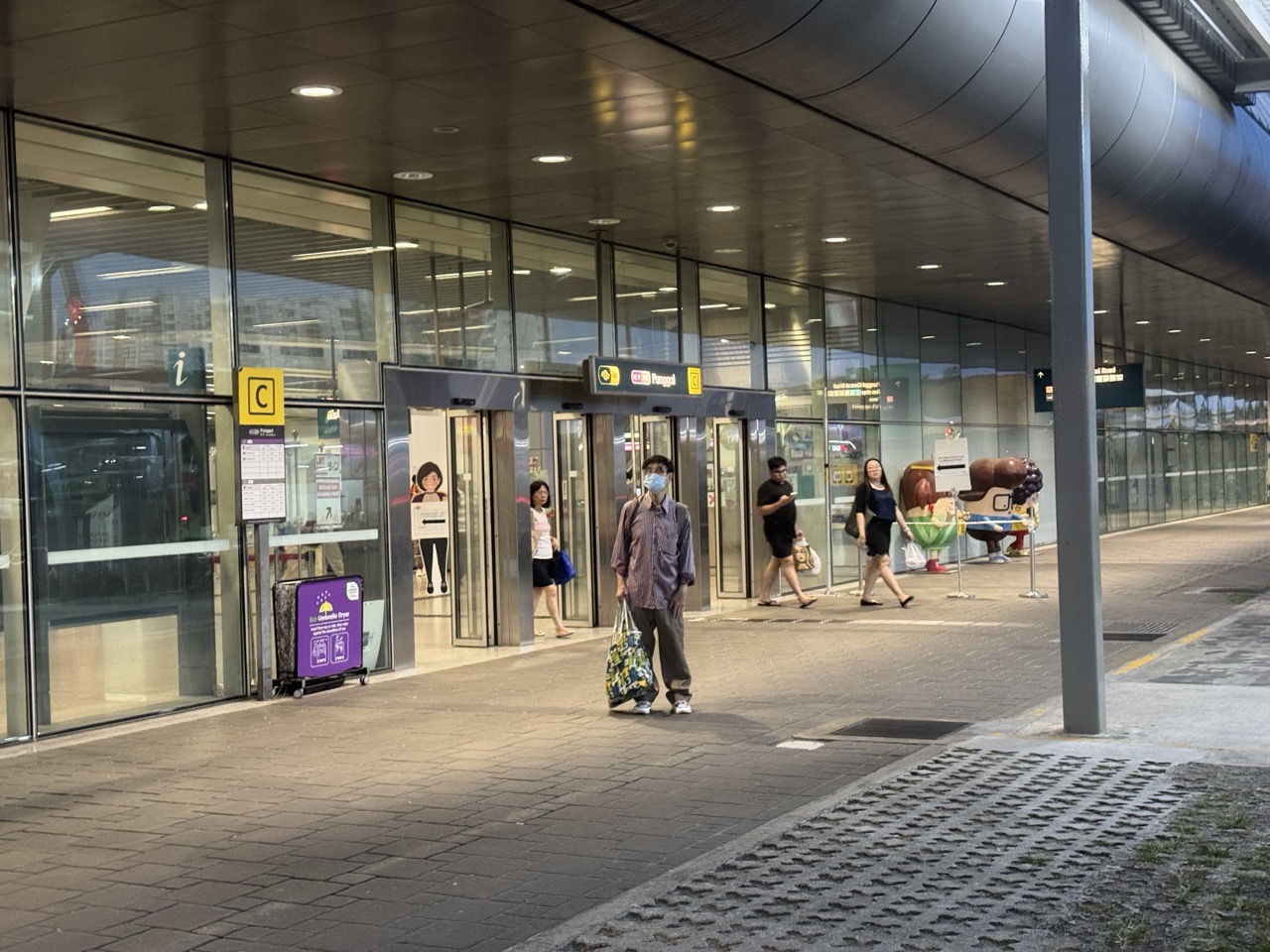
For work in Punggol Digital District, start with Punggol Coast MRT (NE18) on the North East Line, but plan the journey to your actual building rather than stopping at the station. JTC says Punggol Coast exits 1 and 2 lead into the district; the Singapore Institute of Technology (SIT) specifically directs visitors to Exit 1 for its Punggol campus. The district can also be reached via Teck Lee LRT (PW2), several buses, a cycling connection and designated drop-off areas.
The practical answer is to plan a door-to-desk commute: home to stop, actual wait, train or bus, transfer, station exit, walk, security and lift to the place where your shift or meeting begins. An advertised “five minutes from MRT” can be true for a district boundary yet insufficient for an employee who must clock in at a distant office entrance.
This Working in Punggol article covers work travel for people employed at the business district, university, shops and nearby services, plus residents deciding whether to accept work elsewhere. It is not a live arrival board and does not guarantee the route, travel time or bus frequency for a specific day.
At a glance: verified ways to reach Punggol’s new work centre
| Destination or approach | Official orientation | What to verify next |
|---|---|---|
| Punggol Digital District | JTC identifies Punggol Coast MRT exits 1 and 2 | Exact tower, lobby, lift and reporting entrance |
| SIT Punggol campus | SIT identifies 1 Punggol Coast Road, Exit 1 from Punggol Coast MRT | Specific block and any visitor registration |
| Teck Lee LRT (PW2) | JTC and SIT identify walking links into the district | Which exit and final walking direction fit your building |
| Punggol Coast Bus Interchange | LTA confirms opening on 29 June 2025 | Today’s service list and arrival times |
| District bus stops | JTC lists 84G, 84A/84W, 34 and 117/117M routes in its directions | Correct stop direction and current operating pattern |
| Intra-town routes | LTA says Service 381 was extended to Punggol Coast from 13 September 2026 | Whether its current route suits your HDB cluster |
| Bicycle or park connector | JTC lists park-connector and end-of-trip connections | Route conditions, parking and facilities access |
| Car or private hire | JTC lists 90 Punggol Way for taxi/private-hire drop-off | Building-specific pickup area and restricted access |
Sources for these route statements: JTC’s PDD contact and travel page, SIT campus locations, LTA’s interchange release and LTA’s September 2026 bus update.
Punggol MRT and Punggol Coast MRT are not the same stop
Punggol MRT is NE17, connected to the Punggol LRT and the established town-centre transport node. Punggol Coast is NE18, one station farther along the North East Line and the terminal station in the Punggol Digital District area.
LTA opened Punggol Coast station on 10 December 2024. The official statement explains that the extension improves links to the JTC business park, SIT campus and surrounding area. It does not mean every office has the same walking distance from either station.
For a worker whose destination is in central Punggol, stopping at Punggol MRT may be logical. For a role in a tower within Punggol Digital District, continuing to Punggol Coast usually deserves consideration. For a workplace near Teck Lee’s access corridor, the LRT and walking approach may also be useful.
These are geographic starting points, not universal travel instructions. A route’s suitability depends on where you begin and which building you must reach. Do not transfer twice merely because someone on a forum says every “Punggol job” uses one particular station.
When checking a listing, request the actual block or tower number and postal address. A company with more than one Singapore office may interview at Punggol but assign you to another site, or the reverse. Confirm the reporting location in writing if proximity is a central reason for accepting.
What the official JTC directions say
JTC’s Punggol Digital District travel page gives several approaches. It tells MRT travellers to alight at Punggol Coast NE18, with exits 1 and 2 located within the district. It also gives Teck Lee PW2 on the Punggol LRT as an approach, and identifies district bus stops and the interchange.
For buses, the same JTC page lists 84G to stop #65721 opposite Punggol Coast Station; 84A and 84W to stop #65729 at Punggol Coast Station; and 34, 117 and 117/M for Punggol Coast Bus Interchange. These are source-stated access options, not a promise of every bus’s current frequency or the most efficient journey from your home.
JTC lists a carpark approach via Punggol Way, near Towers 80, 82 and 84, and the private-hire or taxi drop-off at 90 Punggol Way. Again, use the building’s current instructions for staff access, deliveries and dedicated parking. A drop-off address is not necessarily the right door for employee arrival.
JTC also notes access by bicycle through park connectors and use of end-of-trip facilities. An office employee should ask which facilities are available to their tenancy and whether an access pass or locker arrangement is needed.
The district is designed as a mixed development. A short road distance can still end in a pedestrian route, limited vehicle access or a second internal walk. Choose based on the final entrance rather than map-pin convenience.
How to get to SIT Punggol campus
SIT lists the main campus address as 1 Punggol Coast Road, Singapore 828608. The university’s campus location page identifies Punggol Coast MRT Exit 1 as the direct approach. It also describes the nearby interchange, links from Teck Lee LRT and options for cycling and limited parking.
If your employment is with SIT, a campus vendor, a catering operator, an event contractor or another service partner, the campus address alone may not identify your correct reporting point. Ask for the block, department or meeting location and the nearest appropriate entrance.
SIT’s page describes its Punggol setting as a car-lite district. That makes public transport, walking and cycling relevant options, but workers on early or late shifts should still check available service hours and real journey safety. A route that works beautifully for a midday campus visit may not suit a 5.30am setup call.
A campus is not one classroom or office. People may walk between buildings, visit loading or service areas, or require access to different levels. Count this movement separately if it is needed before paid work begins.
Avoid reusing temporary shuttle details from a special university event. For example, an open-house event shuttle can be time-limited rather than a standing staff service. Look up the current official campus transport page when your job starts.
Why Teck Lee LRT can be a useful alternative
The Sengkang–Punggol LRT system provides local loop services that feed Punggol MRT. The Punggol network is distinct from the North East Line, and some homes are naturally more convenient to an LRT station than to a direct bus or long walk.
JTC’s district page gives Teck Lee PW2 as one route into PDD, while SIT also describes a sheltered or covered walking connection via the campus. Different buildings and official pages refer to exits that lead toward different connections; follow the signs for your actual destination rather than assuming one exit serves every worker.
A Punggol resident near an LRT stop can compare two sequences: LRT to Punggol, then NEL to Punggol Coast and walk; or LRT to the stop giving a direct walking approach. The better one can depend on operating direction, waiting time, weather and where the office lies.
Do not estimate a commute by adding only the advertised LRT and MRT ride times. Include waiting for a loop train, walking within the station, moving between platforms and the final site connection.
If you need a mobility-friendly route, investigate step-free paths, lifts and shelter. “Connected” does not necessarily mean every outdoor segment is entirely protected from weather, and worksite entrances may require a different route.
Punggol Coast Bus Interchange: what opened and what changed
LTA confirmed that Punggol Coast Bus Interchange opened on 29 June 2025 as an integrated transport hub connected to the station and Punggol Coast Mall. Its opening included the transfer and extension of Services 34 and 117/M, with routes revised to serve more residents and destinations.
The LTA opening announcement also describes barrier-free access, priority queue areas, accessible toilets, a baby-care room and passenger amenities. These details help orient workers carrying equipment, travelling with mobility aids or using transport with family.
Bus services can be amended after an interchange opens. A route printed on a 2025 announcement may not be a complete 2026 service list. Check the live journey planner, the current bus-stop notice and the operator’s service information when you actually travel.
That is particularly important for someone with a strict shift start. An app may show a faster theoretical transfer that is fragile when a bus arrives late. The practical solution is to identify a lower-risk backup with manageable wait and walking time.
For late work, investigate the last viable homeward transport sequence rather than assuming the same outbound route works in reverse at midnight. The operating hours of rail and buses are a separate issue from the daytime service map.
September 2026 change: Service 381 reaches Punggol Coast
A more recent update matters to Punggol residents. LTA’s September 2026 bus connectivity announcement says Service 381 was extended from Punggol East to Punggol Coast from 13 September 2026, improving intra-town access to amenities and the integrated transport hub.
This is exactly why an old neighbourhood bus map cannot be your entire commute plan. A resident who previously needed a transfer might now have another connection worth checking. That does not mean 381 is faster from every block, or that all its stops are equally near a workplace.
Use today’s bus stop and route information to see whether the service passes your starting point, which direction it travels and whether your shift aligns with its operating hours. For an early or late roster, test actual availability rather than depending on the existence of the service.
Workers should also note the difference between Punggol Bus Interchange, the older town-centre node, and Punggol Coast Bus Interchange. A message such as “meet at Punggol interchange” is ambiguous in 2026. Clarify which one.
For changes to the broader network, check LTA and the bus operator, not a screenshot from a group chat taken before the service extension.
Build a door-to-desk journey, not a station-to-station screenshot
The most common planning error is to stop measuring once the train reaches Punggol Coast. A realistic commute includes every part of the trip between leaving home and being ready to work.
Start with the walk from your front door to the feeder bus or LRT. Include crossing time, lift waits at your HDB block if relevant and any interval between services. Next, measure the train or bus journey and the transfer time. Then add the distance from the destination platform to the correct station exit and building.
Finally, add office-side time: the walk to the lobby, visitor registration or security, turnstile, elevator, storage of personal items and the short walk to the assigned desk or point of reporting. Some of this may be part of the job’s paid time depending on the actual arrangement; do not assume a legal rule from this planning exercise.
If the employer says the role begins at 9am, ask whether that means clocking in at reception, being ready at a shop counter or joining a meeting at a precise location. These can imply different departure times.
A pleasant district with cafes and covered links can still have congestion at a particular lift bank. A busy early-morning entrance is more relevant to staff punctuality than a quiet weekend visit.
Worked example: the hidden fifteen minutes
Consider an invented worker whose trip to Punggol Coast takes 32 minutes from door to station exit. The job listing says the building is “near MRT”. The worker assumes a 9am start means leaving home at 8.25am is adequate.
On the trial weekday, it takes another seven minutes to reach the building entrance, three minutes at access control and five minutes to reach the correct floor and workstation. The actual minimum is 32 + 7 + 3 + 5 = 47 minutes, without a reliability buffer.
For a 9am reporting time, a departure at 8.25am would arrive at approximately 9.12am if those conditions held. A 10-minute buffer would make the planning requirement about 57 minutes—a suggested departure around 8.03am.
These figures are invented and do not describe any real PDD building or public transport schedule. Their purpose is to show how station-only estimates create false punctuality. The worker should measure their own route and agree on the true reporting point.
A more interesting result may be that another entrance reduces the walk, an earlier bus avoids one transfer or a staggered start improves reliability. That is why the first week should involve observation, not rigid attachment to the fastest route shown once on a phone.
A second calculation: how much time a route change really saves
Suppose two hypothetical commute options are available for 22 workdays in a month. Route A takes 46 minutes each way including average waits and walking. Route B takes 38 minutes each way, but only if a particular connection is made reliably.
The nominal saving is 8 minutes each way, or 16 minutes per day. Over 22 days that becomes 352 minutes, about 5 hours and 52 minutes monthly. This is useful, but it is not an automatic reason to change routes.
If Route B misses its connection twice a week and produces a 20-minute extra delay each time, the theoretical savings shrink sharply. If Route A is more sheltered, step-free or predictable during heavy rain, it may still be the better daily choice.
Compare the typical experience, the high-delay experience and the number of places where things can go wrong. A reliable 46-minute route may be better for a shift-dependent job than an unpredictable route marketed as 38 minutes.
Avoid claiming that route optimization produces guaranteed monthly savings. It is a scenario exercise; exact travel times change with service conditions, transfers and individual walking speed.
Use official travel tools for current information
LTA’s MyTransport.SG application provides journey planning, bus arrival estimates, nearby transport information, rail and road alerts. Use it to compare candidate routes and monitor disruptions.
SimplyGo’s Travel Guide provides bus and rail route information and fare calculation. If comparing alternatives, use the current fare calculator rather than copying a fare table from an old article. SimplyGo publishes its fare schedule, but concessions and schemes can change what a particular rider pays.
Do not use a rough Google map distance as a substitute for train and bus availability. A short straight line can cross a canal, fenced site or road without a pedestrian crossing. The correct question is whether there is an actual lawful route that suits your time and mobility needs.
For important days—job interview, first day, safety briefing, formal event—look for rail disruption notices and leave room for a change of plans. A route with one transfer is not always more robust than a direct bus.
Travel apps are helpful but not infallible. Make sure the destination pin is the real office entrance. If the destination is simply “Punggol Digital District,” confirm the tower separately.
Understand the 2026 off-peak travel option
LTA’s journey planning information describes a free morning off-peak rail travel initiative effective from 27 December 2025. It states that commuters who tap in at specified North East Line stations between Punggol Coast and Kovan, or at any Sengkang–Punggol LRT station, before 7.30am or between 9.00am and 9.45am on weekdays excluding public holidays can enjoy free travel for the first rail trip of the journey under the scheme.
Read the exact current conditions, including which portion of a multimodal journey is covered, before budgeting. It does not mean every complete journey starting anywhere in Singapore is free, and it is not permission to arrive late at work.
This could be relevant if an employer approves a different starting time and the worker’s route is eligible. But the schedule should make sense operationally before the worker reorganises a day around a transport discount.
A simple comparison can use the difference in actual card fares, multiplied by the relevant workdays. Do not guess a month’s savings without checking concession status, tap-in time, eligible stations and current scheme details.
For workplace schedule changes, see our guide to formally requesting flexible work. Transport incentives are an input into the request, not a legal entitlement to a different shift.
Should you use MRT, LRT, bus or a bicycle?
There is no universal winner. MRT is often predictable for medium-distance travel along the North East Line, but may need feeder access. LRT serves nearby residential clusters, but the relevant loop, wait and walking connection matter. A bus can avoid rail transfers while being more sensitive to road conditions.
A bicycle can be useful for a person with a safe and manageable route, suitable weather clothing and access to secure storage or end-of-trip facilities. JTC and SIT identify cycling connections and bicycle facilities. But an applicant should verify parking, shower access if needed, building policy and where cycling is permitted.
Private-hire vehicles can help with occasional exceptional times, but should not be budgeted as though their fares were constant. Queueing and pickup points can vary, and a car-lite environment may restrict how close a vehicle can approach an entrance.
Walking may be simpler than an extra transfer for some nearby residents. Measure the route in daylight and in the conditions relevant to your hours. Choose pedestrian crossings and designated paths rather than shortcuts through service areas.
If you need step-free access, compare the actual route, not just the general accessibility of a station. Check the path from the platform to the workplace and possible construction diversions.
Planning for shift work changes everything
A normal weekday 9-to-6 route is not proof of an acceptable commute for a person beginning at 6am or finishing at 11.30pm. Train and bus operating hours, service frequencies and transfer options can differ materially.
Before agreeing to a rotating or late shift, ask the employer for representative rosters and the frequency of last-minute changes. Write two travel plans: one for arriving before the earliest start and one for leaving after the latest expected finish.
For late shifts, verify the last viable connection all the way home, not only the departure of one train or bus. A route that gets you as far as Punggol MRT is not enough if no safe or practical final link remains.
For an early start, check whether an earlier service is available and whether a reasonable arrival buffer creates an overly early departure from home. A manager may not know a particular employee’s local feeder schedule; share the constraints without assuming the employer must redesign the role.
If the return journey regularly requires an expensive ride-hail vehicle, include that as a recurring cost of the offer. A slightly higher salary can be less useful when transport is expensive after the last public service.
See our existing Life in Punggol for Shift Workers for sleep, meals and safe travel considerations beyond routing.
A practical rain and heat plan
Punggol is an outdoor neighbourhood with exposed streets, park connectors and waterfront routes. A sheltered route can be valuable, especially for workers carrying laptops, food-service uniforms or equipment. Map the sheltered links and decide where an umbrella, rain jacket or shoe cover would be useful.
A cycling route that is comfortable in dry weather may require a different plan during heavy rain. Agree in advance whether you would switch to MRT, bus or a lawful alternative. Do not put punctuality ahead of safe conditions.
Hot weather can make a ten-minute midday walk materially different from a ten-minute early-morning walk. If your role requires formal clothing, consider time to cool down before the first meeting. Indoor access and drinking water may be relevant to physical comfort.
For a worker with mobility or health needs, confirm routes and accessible facilities with the relevant operators and building manager. “Car-lite” is a planning concept, not a reason to ignore accessibility.
If haze affects outdoor travel or a job with outdoor tasks, check official air-quality and employer safety guidance rather than making assumptions from how the sky looks. Our separate Punggol haze workplace guide addresses that topic.
What a return-to-work parent must calculate
Commuting decisions often have a second clock: preschool pickup, a school-based student-care cutoff, eldercare appointments or a household handover. A 50-minute journey with a ten-minute buffer may be workable for one person and impossible for another with a fixed collection time.
Write two timelines: workplace to home and workplace to the care pickup. The shortest route home may not be the best route to the child. Check whether a direct bus stop near a centre could be more useful than a rail transfer.
Also separate usual travel from contingency travel. Who covers when the NEL is delayed, work runs late or a child becomes unwell? A reliable plan has a backup person or legitimate care arrangement, not a hope that no two problems occur on the same day.
If a local job reduces travel, quantify the time gain across the actual number of onsite days. A hybrid job based far away may require less total commuting than a fully onsite role near home.
Our near-home job decision guide uses a worked monthly time calculation to compare those trade-offs with pay and progression.
When the office is not the real reporting location
Construction, maintenance, security, retail delivery, events and service roles may involve a sequence of sites. A job advert can say “Punggol Digital District” because that is the administration base while work takes place at other premises.
Ask whether a typical workday begins at headquarters, a customer site, a loading bay or an equipment collection point. Confirm whether travel between sites happens during paid work, how required transport is arranged and what expenses the employer reimburses under the actual agreement.
A facilities worker at a large campus may need to collect equipment or check in with a supervisor before moving to a different building. A hospitality worker may need to change clothes before beginning a shift. A technical employee may attend customer premises outside Punggol.
This is a contract-and-operations question, not simply navigation. It should be resolved before relying on a commute estimate to decide whether to accept the role.
MOM’s key employment terms guidance recommends stating place of work where appropriate, especially when the reporting location differs from the employer’s address.
A five-day commute test before accepting an offer
Day 1: identify the destination. Obtain the company name, tower, postal address, entrance and start time. Check the official JTC or SIT guidance where relevant.
Day 2: compare routes. Find at least two feasible approaches, including public transport and an alternative. Record the number of transfers and the final walk.
Day 3: travel at the real time. Test an ordinary workday journey at the required arrival time if possible. Record each segment and any actual delays. A quiet weekend rehearsal is only a preliminary orientation.
Day 4: inspect the fallback. What happens if one bus is missed, a train is delayed, heavy rain begins or your usual lift is unavailable? Choose a reasonable backup route and communication plan.
Day 5: calculate the recurring cost. Use exact fare tools, expected onsite days and realistic incidental expenses. Include the return trip. If shifts vary, do separate calculations.
You may not be able to run five physical tests before a job offer expires. In that case, do a representative weekday trip and use the official planners for the remaining conditions. Record uncertainty rather than pretending it has disappeared.
A new employee’s first-week transport log
During the first week, record departure time, station or stop arrival, actual wait, arrival at the correct building and the time you were ready to start. Five observations are often more informative than one unusually good trip.
You may discover that a particular train connects well with a feeder only on some mornings. You may find that the office has a different entrance for staff, or that the nearest bus stop is not obvious from a general map.
Compare median-like typical time with your slowest observed journey. Do not build a rigid schedule solely around the fastest day. Ask a colleague which entrance they use, but check it against authorised access and your own mobility needs.
If you begin arriving much too early, consider whether a modest adjustment remains reliable. Being dependable is important; permanently donating an unnecessary hour of personal time is not the goal.
After a change to roster, workplace or home address, repeat the test. A commute is a system that can change, not a permanent fact about a district.
Frequently asked questions
Is Punggol Coast station open in 2026?
Yes. LTA confirms it opened for passenger service on 10 December 2024 as NE18 on the North East Line.
Should a PDD worker alight at Punggol or Punggol Coast?
Usually examine Punggol Coast first for district buildings, but use the actual workplace address. Punggol is a separate station serving the older town centre and LRT interchange.
Which exit serves SIT Punggol?
SIT’s official campus guidance identifies Punggol Coast Exit 1 for direct access. Confirm your specific block and staff entrance.
Does Teck Lee LRT serve Punggol Digital District?
Yes, JTC and SIT identify a Teck Lee walking connection. Compare the final walking path with the MRT approach for your building.
Which buses serve the area?
JTC lists services including 34, 117/117M and 84 variants. LTA also announced the 381 extension to Punggol Coast from 13 September 2026. Confirm live routes and directions before travelling.
Is Punggol Coast Bus Interchange different from Punggol Bus Interchange?
Yes. Punggol Coast Bus Interchange opened in June 2025 as a separate integrated hub; distinguish it from the older town-centre interchange.
Is parking guaranteed at SIT or PDD?
No. SIT describes a car-lite campus and limited parking. Check the exact building, parking arrangements and any relevant charges before relying on a car.
Is the early-morning NEL journey always free?
No. LTA’s scheme has specific eligible stations, tap-in windows, weekday conditions and trip definitions. Verify the terms for your journey.
Can I treat a journey planner’s travel time as my arrival time?
Not safely. Add walking, access, lifts, service variability and a realistic buffer, especially for shift work.
What if I finish after public transport stops?
Plan the final trip home from the actual worksite, verify last services and budget for an appropriate alternative. Raise regular scheduling conflicts before accepting a role.
Is cycling a good option?
It may be, if the route is safe and practical and there is permitted parking and end-of-trip access. Check weather, building policy and a backup for rain.
How can I decide between a closer job and a better-paying distant one?
Compare actual monthly onsite commute time, expenses, working hours, family constraints, pay, learning and career progression. The job-near-home comparison guide gives the calculation.
Source ledger and what remains to be checked
Officially verified as of October 2026: Punggol Coast MRT began passenger service on 10 December 2024; Punggol Coast Bus Interchange opened on 29 June 2025; JTC and SIT publish district and campus access directions; LTA reported Service 381’s September 2026 extension; LTA and SimplyGo supply journey and fare tools.
Not provided as facts: specific first or last train times, guaranteed bus headways, building access time, traffic conditions or actual passenger travel metrics. All numerical journey examples above are invented. They should be replaced by current, person-specific journey data before taking employment or scheduling decisions.
- JTC: Punggol Digital District travel and contact directions
- SIT: Punggol campus address and transport options
- LTA: Punggol Coast station opened 10 December 2024
- LTA: Punggol Coast Bus Interchange opening details
- LTA: Service 381 extension from 13 September 2026
- LTA: Sengkang–Punggol LRT
- LTA: Journey planning and free off-peak rail conditions
- LTA: MyTransport.SG travel app
- SimplyGo: Travel Guide and fare checker
- eduKatePunggol: Jobs at Punggol Digital District
More in the Working in Punggol series: Is a job near home worth it? • Check an employment contract • Request flexible working • Switch careers and choose training • Verify an advert and recruiter • Start a new job: first 90 days • Read your payslip, CPF and deductions. For employer verification, transport and statutory rights, check the linked official guidance before making a decision.


