
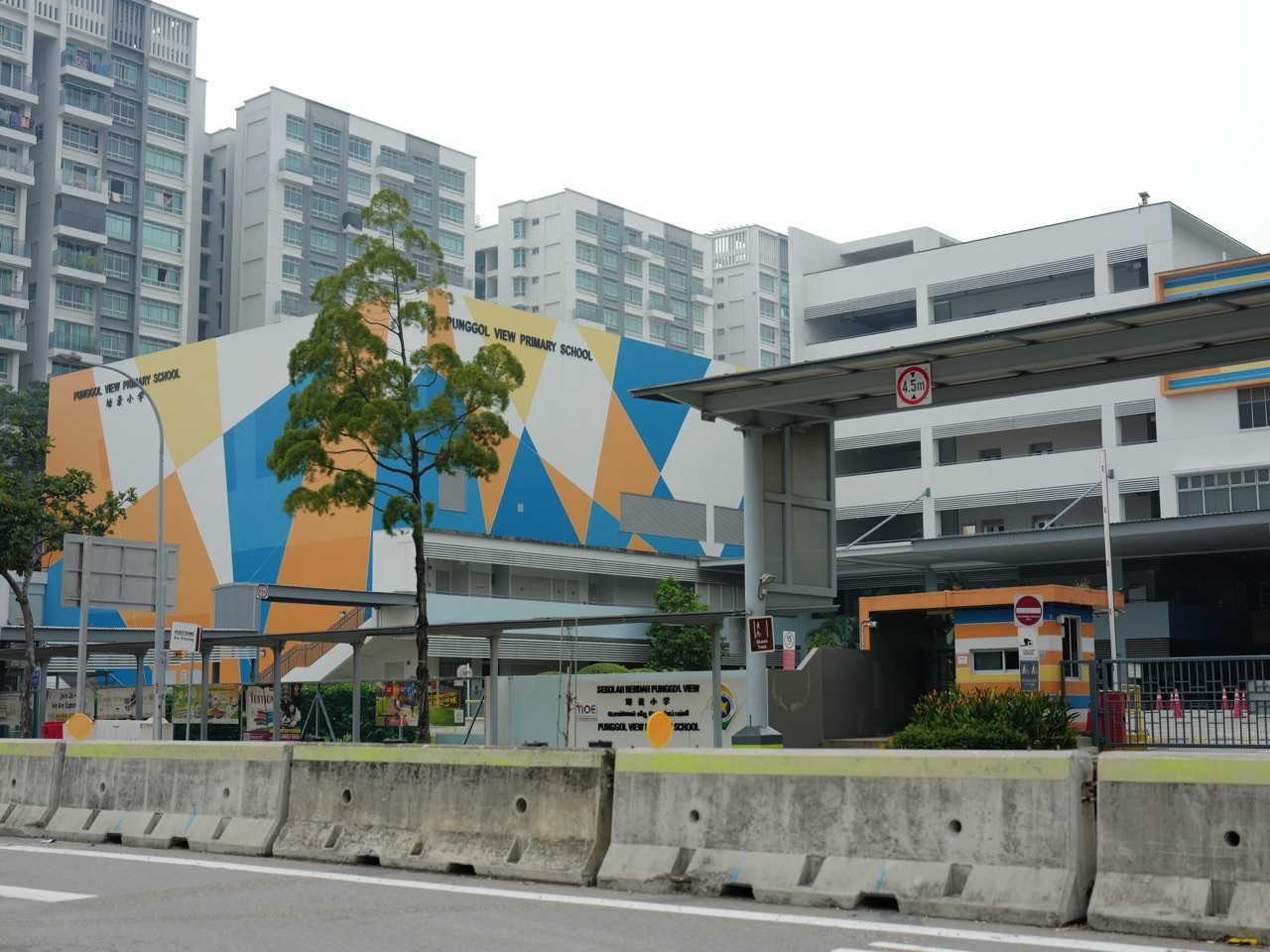
Primary 5 Mathematics and Punggol Haze: The Answer First
What should a Primary 5 student learn from haze-related Mathematics examples? The relevant grade-level skills include whole numbers to ten million, operations with fractions and decimals, rate, percentage, area of triangles, volume of cuboids, angles and properties of common shapes. These provide enough mathematical challenge without turning the worksheet into an advanced air-pollution forecasting project.
The 2021 MOE Primary Mathematics syllabus, updated October 2025 applies to P5 in 2026. The updated progression places ratio and average in P6 rather than requiring them as new Standard Mathematics P5 topics. This guide therefore focuses on P5 foundations and labels any extension separately.
There are 24 original fully worked problems, parent-facing diagnostics, conceptual explanations and a four-week practice routine. All numerical haze readings, room sizes, survey counts and prices are fictional. Punggol belongs to NEA’s North reporting region; use haze.gov.sg for actual family decisions, not these classroom values.
What Makes Primary 5 Different from Primary 4?
Primary 4 consolidates factors and multiples, fractions, decimals and the interpretation of graphs and shapes. Primary 5 develops more powerful operations and models: a fraction can be divided by another fraction, rates connect two quantities, percentages express proportions of a whole and volume extends measurement into three dimensions.
These changes require a student to think about relationships, not simply identify an arithmetic operation from a keyword. A P5 child should be able to explain why rate is an amount per unit of time, why volume has cubic units and why a percentage uses a specified base.
Haze makes the context familiar, but the mathematics should remain accurate and age appropriate. A fictional indoor reading session is safer and more useful for learning than asking children to walk through smoky air to gather data.
Teachers can build from concrete demonstrations, then diagrams and finally symbolic solutions. A correct numerical answer is more valuable when the pupil understands how it was obtained.
A Grade-Specific Warning About Ratio and Average
Older worksheets may still label ratio and average as Primary 5 chapters because earlier Singapore syllabus sequences placed topics in different years. The 2021 Primary Mathematics syllabus revised that order: ratio and average are P6 topics, while rate and percentage are important at P5.
That distinction matters for parents searching “P5 haze Maths worksheets”. Asking a P5 learner to solve sophisticated ratio models as if they are compulsory grade-specific content can obscure whether they understand current fractions and rates.
A stronger plan diagnoses the actual level: can the pupil calculate fractions correctly, apply a unit rate, find an appropriate percentage and solve a volume or triangle-area problem?
If a teacher has introduced later concepts as enrichment, that is a separate decision. This article follows the official progression while leaving room for students’ individual readiness.
The Mathematics of Rate: Per Minute, Not a Health Dose
A rate compares quantities with different units. If an illustrative machine prints 120 activity cards in five minutes, its average rate is 24 cards per minute under the stated constant-rate assumption.
This arithmetic concept can also appear in distance and time, item production, flow or energy use. However, the fact that a quantity is “per hour” does not automatically make it a valid environmental prediction. A PM2.5 concentration in µg/m³ is itself a mass per air volume, not a simple speed.
For a Primary 5 child, begin with ordinary rates such as books sorted per minute. Write both units and check what happens when time doubles under a constant-rate condition.
A verified haze exposure or public-health recommendation requires information beyond a classroom rate calculation. The mathematical model and its real-world meaning must be kept distinct.
Percentages: Always Identify One Hundred Percent
When a percentage question asks for part of a group, the group is usually treated as 100%. If 35% of eighty fictional families choose an indoor learning activity, the count is 28.
A percentage change compares a difference with the original quantity. Decreasing from 75 to 60 is a decrease of 15, which is 20% of 75. Using the final value as the denominator produces a different answer and does not match the question.
For discounts or price changes, identify whether the amount is before or after a change. A one-line bar model showing 100%, the removed part and the remainder can prevent a careless operation.
Do not tell readers that a 20% numerical reduction in fictional PM2.5 means a person’s health risk has also fallen by exactly 20%. The percentage is tied to the measured variable.
Original Worked Problem 1 · Seven-Digit Place Value
Question. In the invented number 7,204,506, what is the value of the digit 2?
Worked solution. The digit 2 is in the hundred-thousands place; its value is 200,000.
Why it works. Reading large numbers accurately prevents errors in arithmetic, estimates and financial interpretation.
Tutor’s check. Ask the pupil which mathematical concept is being used and why that concept—not a memorised keyword—fits the situation. Have them verify a calculation with another method or estimation where possible. For fractions, use an equal-part diagram; for shapes, label the dimensions and angle properties.
Evidence limit. This is fictional educational material. A correct result involving sample PM2.5 concentrations is not a live reading, a medically safe concentration or an actual Punggol school instruction.
Original Worked Problem 2 · Whole-Number Multiplication
Question. A fictional centre has 125 sets, with 48 cards per set. How many cards altogether?
Worked solution. 125×48=125×(50−2)=6,250−250= 6,000 cards.
Why it works. Distributive multiplication is a useful way to check a two-digit multiplier.
Tutor’s check. Ask the pupil which mathematical concept is being used and why that concept—not a memorised keyword—fits the situation. Have them verify a calculation with another method or estimation where possible. For fractions, use an equal-part diagram; for shapes, label the dimensions and angle properties.
Evidence limit. This is fictional educational material. A correct result involving sample PM2.5 concentrations is not a live reading, a medically safe concentration or an actual Punggol school instruction.
Original Worked Problem 3 · Multi-Step Whole Numbers
Question. A school orders 2,400 sheets, then uses 375 on Monday and 490 on Tuesday. How many remain?
Worked solution. Used=375+490=865. Remaining=2,400−865= 1,535 sheets.
Why it works. Add the amounts used before subtracting them from the starting whole.
Tutor’s check. Ask the pupil which mathematical concept is being used and why that concept—not a memorised keyword—fits the situation. Have them verify a calculation with another method or estimation where possible. For fractions, use an equal-part diagram; for shapes, label the dimensions and angle properties.
Evidence limit. This is fictional educational material. A correct result involving sample PM2.5 concentrations is not a live reading, a medically safe concentration or an actual Punggol school instruction.
Original Worked Problem 4 · Fraction as Division
Question. Seven identical fictional sandwiches are shared equally among four pupils. How much does each receive?
Worked solution. 7÷4= 1 3/4 sandwiches per pupil.
Why it works. A fraction can express a quotient. The sharing assumption means equal-sized portions.
Tutor’s check. Ask the pupil which mathematical concept is being used and why that concept—not a memorised keyword—fits the situation. Have them verify a calculation with another method or estimation where possible. For fractions, use an equal-part diagram; for shapes, label the dimensions and angle properties.
Evidence limit. This is fictional educational material. A correct result involving sample PM2.5 concentrations is not a live reading, a medically safe concentration or an actual Punggol school instruction.
Original Worked Problem 5 · Add Unlike Fractions
Question. Evaluate 2/3 + 5/6.
Worked solution. 2/3=4/6. Sum=4/6+5/6=9/6= 1 1/2.
Why it works. Use a common denominator before adding. The whole number is an additional complete unit.
Tutor’s check. Ask the pupil which mathematical concept is being used and why that concept—not a memorised keyword—fits the situation. Have them verify a calculation with another method or estimation where possible. For fractions, use an equal-part diagram; for shapes, label the dimensions and angle properties.
Evidence limit. This is fictional educational material. A correct result involving sample PM2.5 concentrations is not a live reading, a medically safe concentration or an actual Punggol school instruction.
Original Worked Problem 6 · Subtract Unlike Fractions
Question. Evaluate 3/4 − 2/5.
Worked solution. 3/4=15/20; 2/5=8/20; difference= 7/20.
Why it works. The common denominator is 20, so both fractions describe equal-sized twentieths.
Tutor’s check. Ask the pupil which mathematical concept is being used and why that concept—not a memorised keyword—fits the situation. Have them verify a calculation with another method or estimation where possible. For fractions, use an equal-part diagram; for shapes, label the dimensions and angle properties.
Evidence limit. This is fictional educational material. A correct result involving sample PM2.5 concentrations is not a live reading, a medically safe concentration or an actual Punggol school instruction.
Original Worked Problem 7 · Multiply Fractions
Question. Evaluate (2/3)×(3/5).
Worked solution. Numerators 2×3=6; denominators 3×5=15; 6/15= 2/5.
Why it works. A product of two proper positive fractions is smaller than either input in this case.
Tutor’s check. Ask the pupil which mathematical concept is being used and why that concept—not a memorised keyword—fits the situation. Have them verify a calculation with another method or estimation where possible. For fractions, use an equal-part diagram; for shapes, label the dimensions and angle properties.
Evidence limit. This is fictional educational material. A correct result involving sample PM2.5 concentrations is not a live reading, a medically safe concentration or an actual Punggol school instruction.
Original Worked Problem 8 · Divide by a Fraction
Question. Evaluate (3/4) ÷ (1/2).
Worked solution. 3/4×2/1=6/4= 1 1/2.
Why it works. Dividing by one-half asks how many halves fit into three-quarters. The answer is greater than 3/4.
Tutor’s check. Ask the pupil which mathematical concept is being used and why that concept—not a memorised keyword—fits the situation. Have them verify a calculation with another method or estimation where possible. For fractions, use an equal-part diagram; for shapes, label the dimensions and angle properties.
Evidence limit. This is fictional educational material. A correct result involving sample PM2.5 concentrations is not a live reading, a medically safe concentration or an actual Punggol school instruction.
Original Worked Problem 9 · Multiply a Mixed Number
Question. Find 1 1/2 × 2/3.
Worked solution. 1 1/2=3/2; then 3/2×2/3=6/6= 1.
Why it works. Convert the mixed number correctly, then simplify the exact result.
Tutor’s check. Ask the pupil which mathematical concept is being used and why that concept—not a memorised keyword—fits the situation. Have them verify a calculation with another method or estimation where possible. For fractions, use an equal-part diagram; for shapes, label the dimensions and angle properties.
Evidence limit. This is fictional educational material. A correct result involving sample PM2.5 concentrations is not a live reading, a medically safe concentration or an actual Punggol school instruction.
Original Worked Problem 10 · Add Decimals
Question. A fictional craft group uses 4.65 m and 3.70 m of ribbon. Find the total.
Worked solution. 4.65+3.70= 8.35 m.
Why it works. Align place values; the measurement remains a length, not an area.
Tutor’s check. Ask the pupil which mathematical concept is being used and why that concept—not a memorised keyword—fits the situation. Have them verify a calculation with another method or estimation where possible. For fractions, use an equal-part diagram; for shapes, label the dimensions and angle properties.
Evidence limit. This is fictional educational material. A correct result involving sample PM2.5 concentrations is not a live reading, a medically safe concentration or an actual Punggol school instruction.
Original Worked Problem 11 · Divide Decimals
Question. A fictional length of 12.6 m is cut into three equal pieces. Find each length.
Worked solution. 12.6÷3= 4.2 m.
Why it works. Check by multiplying 4.2×3=12.6.
Tutor’s check. Ask the pupil which mathematical concept is being used and why that concept—not a memorised keyword—fits the situation. Have them verify a calculation with another method or estimation where possible. For fractions, use an equal-part diagram; for shapes, label the dimensions and angle properties.
Evidence limit. This is fictional educational material. A correct result involving sample PM2.5 concentrations is not a live reading, a medically safe concentration or an actual Punggol school instruction.
Original Worked Problem 12 · Rate Per Minute
Question. A fictional printer makes 120 learning cards in 5 minutes at a constant average rate. Find the cards per minute.
Worked solution. 120÷5= 24 cards/min.
Why it works. The slash means “per”. The output is a rate, not the total number printed.
Tutor’s check. Ask the pupil which mathematical concept is being used and why that concept—not a memorised keyword—fits the situation. Have them verify a calculation with another method or estimation where possible. For fractions, use an equal-part diagram; for shapes, label the dimensions and angle properties.
Evidence limit. This is fictional educational material. A correct result involving sample PM2.5 concentrations is not a live reading, a medically safe concentration or an actual Punggol school instruction.
Original Worked Problem 13 · Use a Rate
Question. At the fictional constant rate of 24 cards/min, how many cards can be printed in seven minutes?
Worked solution. 24×7= 168 cards.
Why it works. This assumes the machine works continuously at the same rate. A real printer may have pauses.
Tutor’s check. Ask the pupil which mathematical concept is being used and why that concept—not a memorised keyword—fits the situation. Have them verify a calculation with another method or estimation where possible. For fractions, use an equal-part diagram; for shapes, label the dimensions and angle properties.
Evidence limit. This is fictional educational material. A correct result involving sample PM2.5 concentrations is not a live reading, a medically safe concentration or an actual Punggol school instruction.
Original Worked Problem 14 · Percentage of a Group
Question. In a fictitious poll, 35% of 80 families select a reading game. How many families is that?
Worked solution. 0.35×80 = 28 families.
Why it works. The denominator is the original group of eighty; this is not a real community survey.
Tutor’s check. Ask the pupil which mathematical concept is being used and why that concept—not a memorised keyword—fits the situation. Have them verify a calculation with another method or estimation where possible. For fractions, use an equal-part diagram; for shapes, label the dimensions and angle properties.
Evidence limit. This is fictional educational material. A correct result involving sample PM2.5 concentrations is not a live reading, a medically safe concentration or an actual Punggol school instruction.
Original Worked Problem 15 · Percentage Increase
Question. A fictional value rises from 60 to 75. Find the percentage increase.
Worked solution. Increase=15; 15/60×100%= 25%.
Why it works. The base is 60, the starting value. If units were µg/m³, the change applies only to that variable.
Tutor’s check. Ask the pupil which mathematical concept is being used and why that concept—not a memorised keyword—fits the situation. Have them verify a calculation with another method or estimation where possible. For fractions, use an equal-part diagram; for shapes, label the dimensions and angle properties.
Evidence limit. This is fictional educational material. A correct result involving sample PM2.5 concentrations is not a live reading, a medically safe concentration or an actual Punggol school instruction.
Original Worked Problem 16 · Percentage Decrease
Question. A fictional concentration falls from 75 to 60 µg/m³. Find the percentage decrease.
Worked solution. Decrease=15; 15/75×100%= 20%.
Why it works. The original value is 75. This does not imply personal inhaled mass or health risk fell by an identical percentage.
Tutor’s check. Ask the pupil which mathematical concept is being used and why that concept—not a memorised keyword—fits the situation. Have them verify a calculation with another method or estimation where possible. For fractions, use an equal-part diagram; for shapes, label the dimensions and angle properties.
Evidence limit. This is fictional educational material. A correct result involving sample PM2.5 concentrations is not a live reading, a medically safe concentration or an actual Punggol school instruction.
Original Worked Problem 17 · Simple Discount
Question. A fictional workbook costs S$80 and is discounted by 15%. Find the final price.
Worked solution. Discount=0.15×80=S$12. New price=80−12= S$68.
Why it works. The example price is invented. A discount is a percentage of the original price unless stated otherwise.
Tutor’s check. Ask the pupil which mathematical concept is being used and why that concept—not a memorised keyword—fits the situation. Have them verify a calculation with another method or estimation where possible. For fractions, use an equal-part diagram; for shapes, label the dimensions and angle properties.
Evidence limit. This is fictional educational material. A correct result involving sample PM2.5 concentrations is not a live reading, a medically safe concentration or an actual Punggol school instruction.
Original Worked Problem 18 · Triangle Area
Question. A fictional triangular poster has base 12 cm and perpendicular height 7 cm. Find its area.
Worked solution. Area=1/2×12×7= 42 cm².
Why it works. Use the perpendicular height, not any sloping side of the triangle.
Tutor’s check. Ask the pupil which mathematical concept is being used and why that concept—not a memorised keyword—fits the situation. Have them verify a calculation with another method or estimation where possible. For fractions, use an equal-part diagram; for shapes, label the dimensions and angle properties.
Evidence limit. This is fictional educational material. A correct result involving sample PM2.5 concentrations is not a live reading, a medically safe concentration or an actual Punggol school instruction.
Original Worked Problem 19 · Compare Two Triangles
Question. Triangle A has base 10 cm, height 6 cm. Triangle B has base 8 cm, height 9 cm. Which has greater area?
Worked solution. A=1/2×10×6=30 cm². B=1/2×8×9=36 cm². B is larger by 6 cm².
Why it works. Comparing only the base length would miss the role of perpendicular height.
Tutor’s check. Ask the pupil which mathematical concept is being used and why that concept—not a memorised keyword—fits the situation. Have them verify a calculation with another method or estimation where possible. For fractions, use an equal-part diagram; for shapes, label the dimensions and angle properties.
Evidence limit. This is fictional educational material. A correct result involving sample PM2.5 concentrations is not a live reading, a medically safe concentration or an actual Punggol school instruction.
Original Worked Problem 20 · Cuboid Volume
Question. A fictional box measures 4.5 m by 3 m by 2 m. Find the volume.
Worked solution. 4.5×3×2= 27 m³.
Why it works. Volume uses cubic metres because three dimensions are multiplied.
Tutor’s check. Ask the pupil which mathematical concept is being used and why that concept—not a memorised keyword—fits the situation. Have them verify a calculation with another method or estimation where possible. For fractions, use an equal-part diagram; for shapes, label the dimensions and angle properties.
Evidence limit. This is fictional educational material. A correct result involving sample PM2.5 concentrations is not a live reading, a medically safe concentration or an actual Punggol school instruction.
Original Worked Problem 21 · Volume from Equal Cubes
Question. A simplified shape contains 12 identical cubes, each with side length 2 cm. Find the total volume if they do not overlap.
Worked solution. One cube has volume 2³=8 cm³. Twelve contain 12×8= 96 cm³.
Why it works. Count the cubes and calculate one cube’s volume before multiplying.
Tutor’s check. Ask the pupil which mathematical concept is being used and why that concept—not a memorised keyword—fits the situation. Have them verify a calculation with another method or estimation where possible. For fractions, use an equal-part diagram; for shapes, label the dimensions and angle properties.
Evidence limit. This is fictional educational material. A correct result involving sample PM2.5 concentrations is not a live reading, a medically safe concentration or an actual Punggol school instruction.
Original Worked Problem 22 · Angles in a Triangle
Question. Two interior angles of a triangle measure 50° and 60°. Find the third.
Worked solution. 180−50−60= 70°.
Why it works. The interior angles of a triangle sum to 180 degrees.
Tutor’s check. Ask the pupil which mathematical concept is being used and why that concept—not a memorised keyword—fits the situation. Have them verify a calculation with another method or estimation where possible. For fractions, use an equal-part diagram; for shapes, label the dimensions and angle properties.
Evidence limit. This is fictional educational material. A correct result involving sample PM2.5 concentrations is not a live reading, a medically safe concentration or an actual Punggol school instruction.
Original Worked Problem 23 · Parallelogram Angles
Question. An interior angle of a parallelogram is 115°. Find the adjacent interior angle.
Worked solution. Adjacent angles are supplementary: 180−115= 65°.
Why it works. Opposite angles are equal; adjacent angles sum to 180 degrees.
Tutor’s check. Ask the pupil which mathematical concept is being used and why that concept—not a memorised keyword—fits the situation. Have them verify a calculation with another method or estimation where possible. For fractions, use an equal-part diagram; for shapes, label the dimensions and angle properties.
Evidence limit. This is fictional educational material. A correct result involving sample PM2.5 concentrations is not a live reading, a medically safe concentration or an actual Punggol school instruction.
Original Worked Problem 24 · Rhombus Perimeter
Question. A rhombus has side length 7 cm. Find its perimeter.
Worked solution. A rhombus has four equal sides, so perimeter=4×7= 28 cm.
Why it works. Equal sides do not mean every rhombus has four right angles. A square is a special rhombus, but not every rhombus is a square.
Tutor’s check. Ask the pupil which mathematical concept is being used and why that concept—not a memorised keyword—fits the situation. Have them verify a calculation with another method or estimation where possible. For fractions, use an equal-part diagram; for shapes, label the dimensions and angle properties.
Evidence limit. This is fictional educational material. A correct result involving sample PM2.5 concentrations is not a live reading, a medically safe concentration or an actual Punggol school instruction.
When to Draw a Fraction Bar
Fractions become challenging when different denominators appear. A bar model shows the same whole partitioned into equal parts, allowing students to visualise why denominators must be compatible before addition or subtraction.
In 2/3+5/6, thirds can be expressed as sixths, so 2/3 becomes 4/6. The sum is 9/6 or 1 1/2. The model can show one complete bar of six sixths and three sixths of a second bar.
A similar diagram helps explain division by a fraction. Three-quarters contains one full half and another half of a half, so 3/4÷1/2=1 1/2.
The purpose is understanding the operation. Once the pupil can explain the picture, move to the symbolic method and a new question without the original numbers.
Why a Rate and a Ratio Are Different Teaching Steps
A rate often connects quantities in different units, such as cards per minute or litres per hour. It is useful for explaining why multiplying a rate by a time gives a count or amount under suitable assumptions.
A ratio compares quantities and is a substantial part of the later Primary 6 progression under the updated syllabus. P5 students who are secure with rates and fractions will find later ratio learning easier.
Do not force a P5 learner into complex ratio word problems before they can consistently identify what “per minute” means. The distinction is especially valuable in environmental reading, where mass concentration and PSI are not interchangeable quantities.
Practise rate with safe, familiar activities rather than inhaled-particle calculations requiring advanced assumptions.
Geometry: Triangles, Parallelograms and Rhombuses
P5 Mathematics develops stronger shape reasoning, including the properties of triangles and quadrilaterals. A triangle’s area uses half the base times its perpendicular height, and the sum of interior angles is 180 degrees.
A parallelogram has equal opposite angles and supplementary adjacent angles. A rhombus has four equal sides but need not have right angles. A trapezium has a pair of parallel sides under the usual Singapore primary-school definition.
Pupils should draw and mark sides or angles before calculating. If a diagram is not drawn to scale, rely on given properties rather than guessing the angle by appearance.
These skills apply to layouts, signs and everyday geometry; the haze context is optional background rather than a necessary element of the proof.
Volume: From Cubes to Cuboids
For a cuboid, multiply length × width × height using consistent length units. The result has cubic units. This is different from the area of a floor or wall.
The cube example illustrates that a cube of side 2 cm has volume 8 cm³, not 6 cm³ or 4 cm². Twelve such cubes have combined volume 96 cm³ if they do not overlap.
For a Punggol room, volume may later serve as one input when assessing air-cleaning devices, but it does not itself give an indoor PM2.5 concentration. It is important to distinguish room volume, filter cleaning rate and air-quality measurement.
The Mathematics lesson should teach the formula and interpretation, not pretend that every larger room is automatically less healthy.
Working with Percentages Responsibly
A percentage states a proportion relative to a defined whole or baseline. In a fictional survey, 35% of eighty families means twenty-eight families. It says nothing about the actual preferences of Punggol households.
For a percentage increase, use the earlier quantity in the denominator. A rise from 60 to 75 is an increase of 15 relative to 60, or 25%. A fall from 75 to 60 is a decrease of 15 relative to 75, or 20%.
Students often ask why those percentages differ when the absolute change is the same. The answer is that the reference bases differ. Drawing two bars can make this visible.
The environmental interpretation must remain limited. A 20% reduction in a fictional particle-concentration variable is not proof of an identical percentage change in health risk.
Reading an Environmental Chart Without Mixing Measures
Singapore publishes one-hour PM2.5 concentrations and a 24-hour PSI index. They differ in units, averaging periods and how the public should interpret them. The regional North reading is relevant to Punggol but is not certified individually for every HDB block.
A child may use a fictional series to practise identifying a maximum, calculating a percentage change or presenting a table. However, that data cannot be used to announce the next day’s school closure or medical precautions.
The easiest source check has five questions: Who published it? When? Which region? Which variable and unit? Is it observed or forecast?
This is a useful interdisciplinary skill that stays within appropriate mathematical literacy while protecting readers from a false sense of certainty.
A Four-Week P5 Mathematics Plan
Week 1 — Number operations and fractions. Diagnose large-number accuracy and all four fraction operations. Correct mistakes in common denominators and inverse operations.
Week 2 — Decimals, rates and percentages. Use safe fictional schedules, prices and counts. Have the student identify the unit-rate denominator and percentage base.
Week 3 — Geometry and volume. Work on triangular area, cuboids and quadrilateral properties. Require accurate diagrams and dimensional units.
Week 4 — Multistep transfer. Give new scenarios combining a rate and duration, a percentage and total, or geometry and arithmetic. The student should explain the relationship before calculating.
The schedule is a home or tutor suggestion, not an official MOE week-by-week timetable. Adjust it to what the child’s class has already learnt.
Common P5 Errors and Targeted Corrections
Error one: Adding unlike fractions without first expressing equivalent parts. Use a common denominator and a strip model. Error two: Dividing a fraction by another fraction by dividing only the numerators. Explain division as “how many of this size fit into that amount”.
Error three: Forgetting the “per” in a rate. Label cards per minute and then multiply by actual minutes. Error four: Using the final value as the base for a percentage increase or decrease when the question specifies the original.
Error five: Using a sloping side as the perpendicular height of a triangle. Mark the right angle. Error six: Confusing cubic volume with square area.
After diagnosing an error, provide a fresh question with different numbers. Being able to solve only the repeated example is not the same as conceptual mastery.
How a Parent Can Assess Genuine Progress
Ask the student to solve one problem while explaining their thinking aloud. Where they are stuck, listen for the precise missing connection rather than immediately giving a formula.
For fractions, ask, “What does the whole represent, and are the parts equal?” For percentage, ask, “Which amount is 100%?” For rate, ask, “Per what unit?” For geometry, ask, “Is that the perpendicular height?”
A tutor can record improvement by category: conceptual understanding, calculation accuracy, diagram use, units and independent checking. This is more informative than reporting that a child completed twenty-four problems.
The immutable Clementi Mathematics Tutorials model reflects that teaching priority: stabilise the mathematical foundation before raising difficulty.
Frequently Asked Questions
Does Primary 5 Mathematics include rate and percentage?
Yes. They are part of the updated Standard Mathematics P5 progression.
Is average a new Primary 5 topic in the updated syllabus?
The updated 2021 syllabus places average at Primary 6. This article does not treat it as a new compulsory P5 topic.
What about ratio?
The updated syllabus places ratio in the Primary 6 progression. P5 learners should build strong fractions and rates first.
Is volume the same as floor area?
No. Area is measured in square units; cuboid volume uses three dimensions and cubic units.
Why does the area of a triangle use one-half?
Two congruent copies of a triangle can form a parallelogram under a suitable arrangement, giving the half-base-times-height relationship.
Can a fictional PM2.5 decrease be used for health advice?
No. Real decisions require the latest NEA North-region reading and relevant advisory.
What is a useful check for a fraction problem?
Estimate, use a visual equal-part model and check with inverse operations where possible.
Does a rhombus always have four right angles?
No. It always has four equal sides; a square is a special case with right angles.
Are these real 2026 school questions?
No. They are original educational practice, not an authorised school or examination paper.
How should parents support P5 progress?
Identify one weak relationship, practise it in a new context and ask the child to explain their method independently.
Continue Through the Punggol Mathematics Library
The preceding grade is Primary 4 Mathematics and Punggol Haze. For the broader pathway, read Primary 3–6 Mathematics Through Punggol Haze.
For a school-system view, use Understanding Punggol Mathematics: Primary 1–6 and the PSLE Bridge. For other interdisciplinary worked examples, see Punggol Haze Maths and Science Worksheets.
The Punggol Haze Complete Guide links the wider local knowledge collection. This page deliberately remains focused on P5 fractions, rate, percentage, geometry and volume.
Official Sources and Teaching Boundary
Prepared 18 October 2026. All people, devices, prices, room sizes and concentration figures in the worked examples are fictional. No item is a copied or predicted national examination question.
- MOE: Primary Mathematics Syllabus, Updated October 2025
- SEAB: PSLE 2026 Formats and Subject Codes
- NEA: PM2.5 and PSI Explained
- NEA: Live Haze Readings
The strongest Primary 5 response identifies the mathematical quantity, selects an appropriate operation, shows its working and knows exactly what the result does—and does not—mean.
The Punggol Haze Mathematics Progression: Primary 3 to PSLE
Choose a grade-specific set of original worked Mathematics examples, from Primary 3 numbers and charts to the updated 2026 Primary 6 PSLE syllabus. Every sample pollution reading is fictional; refer to NEA’s current North-region advice for actual outdoor activity decisions. Official Mathematics scope belongs to MOE and SEAB.


