
Complete reading index
Choose one of the chronological chapters, then continue to the fact-checking, local community, source-based lessons or primary newspaper records.
- 1. 11 April 1993: a visit captured by next-day newspapers
- 2. Goh Chok Tong’s role and the exact period
- 3. The article that asked whether Punggol would get an MRT line
- 4. Why 1993 Punggol was already a place for young families
- 5. The Punggol Community Club had a 1993 opening record
- 6. Residents also raised housing concerns
- 7. Shops, food businesses and an everyday economy
- 8. The public remark about religious harmony
- 9. How a whole newspaper issue becomes a neighbourhood archive
- 10. A 1993 community request is not the same as an approved railway
- 11. June 2003: the North East Line creates the rail connection
- 12. January 2005: the LRT becomes part of local mobility
- 13. From the 1993 visit to the 1996 Punggol 21 vision
- 14. December 2024: Punggol Coast extends the rail story
- 15. Why ‘Punggol’ in a 1993 newspaper may describe a wider ward
- 16. The 1993 Punggol Community Club as civic infrastructure
- 17. Housing applications, subletting and the limits of one day’s reporting
- 18. The families and children the newspaper chose to portray
- 19. Religious harmony as a recorded public theme
- 20. Small-shop interviews as economic evidence
- 21. How to fact-check an April 1993 newspaper story
- 22. A source-based lesson for Primary and Secondary students
- 23. Questions readers ask about the 1993 Punggol visit
- 24. The meaning of this 1993 snapshot for Punggol history
- Original sources and related reading
On 11 April 1993, Prime Minister Goh Chok Tong visited Punggol and heard residents’ questions about transport, housing and everyday services. The next day’s Straits Times included an article asking whether Punggol would get an MRT line. Those requests predated the North East Line’s 2003 opening and are evidence of community priorities, not proof that any one question caused a later railway decision.
This sourced local history reconstructs the newspaper coverage, new Community Club and later milestones. It preserves the difference between what was asked, what was reported and what was eventually built.
Quick reading routes
1993 visit · Residents’ MRT request · Young families · Community Club · Primary records
1. 11 April 1993: a visit captured by next-day newspapers
On Sunday, 11 April 1993, Prime Minister Goh Chok Tong visited the Punggol area and met residents. The Straits Times issue dated Monday, 12 April carried a cluster of reports about the visit, including one headed ‘An MRT line for us soon? Punggol residents ask PM’. The issue date and event date should be separated: the newspapers were reporting the previous day’s encounters.
This is a revealing moment in Punggol history because it falls after substantial changes to the older rural area but before the 1996 announcement of Punggol 21. Housing and community facilities were already important to families, while long-distance transport and everyday services were still subjects of residents’ questions.
The 1993 newspaper is a contemporaneous source. It records what journalists observed and which voices they selected, not a complete transcript of every visitor’s question. The publication included several related short stories, so an editor should not merge all of them into a single uninterrupted speech.
The historically secure starting point is that residents asked about future MRT access during a Prime Minister’s community visit. A request is not an approval, construction contract or promise that a train line would open immediately. Later rail milestones must be sourced and dated separately.
This article examines that demand in the setting of a young HDB population, the newly opened community club and Punggol’s evolving relationship with Singapore’s transport network.
2. Goh Chok Tong’s role and the exact period
Goh Chok Tong was Singapore’s Prime Minister during the April 1993 visit. This is a historical description of the office he held then, not a statement about current political leadership. The timing matters because Punggol was undergoing an important transition in public housing, services and community identity.
The newspaper described the event as a community visit, which involved listening to residents and observing their everyday concerns. It should not be treated as a formal hearing exclusively about an MRT line. Other parts of the report discussed housing applications, local shops and questions unrelated to transport.
Residents wanted practical improvements in their surroundings. Their questions help historians understand needs that are less visible in top-down masterplans. An opening date tells us when a station begins service; a dated request shows what people were asking before that milestone arrived.
It would be inaccurate to invent a private conversation between the Prime Minister and an unnamed resident or to state that a later decision was made in direct response to one question. The source material gives a headline and contemporary descriptions, while exact policy causation would require planning documents and records of decision-making.
The most useful interpretation is therefore cautious: the 1993 visit offers direct evidence that questions about rail connectivity were part of local public discussion before Punggol’s modern transport network arrived.
3. The article that asked whether Punggol would get an MRT line
The Straits Times piece dated 12 April 1993 is especially valuable for its wording. It framed a resident concern as a question about an MRT line ‘for us’. That phrase conveys desire and uncertainty. It does not say the line already existed or that a definite opening date was announced at the visit.
The original report should be consulted through NewspaperSG for the full text, including the context of individual questions and official responses. A search index or article heading alone should not be used to invent precise quotations, route alignments or ministerial commitments.
The request makes sense in the geography of Punggol. A coastal or northeastern district can feel remote if everyday journeys depend on roads and transfers. A rail line may promise more predictable access to jobs and services elsewhere in Singapore. This is a general interpretation of why MRT access matters; the particular residents’ complete motives need direct quotes to establish.
A timeline should place the newspaper request in 1993, the North East Line opening to Punggol in June 2003, and the later Punggol Coast extension in December 2024. Those dates demonstrate change across three decades without implying one-to-one causation.
The central history question is not merely when Punggol got trains. It is that public expectations preceded the opening, giving students a way to examine the difference between community needs, transport planning and completed infrastructure.
4. Why 1993 Punggol was already a place for young families
A companion Straits Times account described Goh’s popularity with children and parents in a relatively new HDB estate. It mentioned an eight-year-old child, Ang Guan Hsi, and a toddler who offered a soft toy during the visit. Such details help reveal the demographics and atmosphere of a developing residential community.
These are dated observations, not a full population census. The press selected memorable encounters to illustrate a day of public engagement. A picture of young children gathering around a visitor does not prove the proportion of households with children across the whole town.
Yet the scenes are historically useful. They show that the Punggol area had families with immediate practical concerns before Punggol 21 became the dominant story about future waterfront living. Children, school routines, housing needs and travel were not secondary to the development narrative; they were part of everyday life.
An article about the visit should give the named child credit within the narrow scope of the report, rather than inventing subsequent schooling, interviews or adult career information. The appearance of a name in an archival item does not authorise a modern biography.
The broader lesson is that new towns are inhabited long before their final planned image is complete. Public infrastructure continues to develop around people who are already working, raising children and asking for services.
5. The Punggol Community Club had a 1993 opening record
A separate National Library catalogue entry identifies a Punggol Community Club opening souvenir dated 13 March 1993. It preserves information about the new institution, its facilities, staff, activities, supporters and advertisements. That makes the club a documented part of Punggol’s civic life just before the April Prime Minister’s visit.
The April newspaper report referred to the new Punggol Community Club as the setting for remarks to residents. These are two related but distinct dated sources: one documents an institution’s opening and the other documents a later community event. Combining them carefully shows how the public space was being used.
The club should not be confused with Punggol Point Community Centre, an older institution associated with coastal community activity, or with the much later One Punggol integrated hub. Similar names can obscure very different buildings and eras.
A commemorative magazine often presents an institution’s achievements from its own viewpoint. Its donor acknowledgements and advertisements may illuminate business and community links, but they do not establish every resident’s experience. A newspaper report provides another perspective, selecting public encounters and comments.
For local historians, the combination is unusually useful: a March institutional document and April news coverage together explain how a new community facility could become a setting for discussing Punggol’s needs.
6. Residents also raised housing concerns
The 12 April 1993 newspaper issue carried reports about housing questions raised during the visit. One described people seeking help with the progress of applications for flats. Another discussed an individual couple’s dispute related to subletting rules. These examples show that housing was not only a planning statistic; it involved personal administrative questions.
The concerns should not be reduced to a claim that all residents had the same problem. A reporter may choose unusual or sympathetic examples. The individual cases reveal types of issues present in a community, but they are not a complete survey of the estate.
New residential areas often involve transitions from renting to owning, adjusting to eligibility rules and planning for growing families. The reports are consistent with those broader challenges but do not prove particular outcomes for every household.
Privacy and fairness also matter. The source named some people in its 1993 reporting, yet a present-day historical article does not need to repeat unrelated allegations in a sensational way. The main point is that residents raised practical housing difficulties during a public engagement event.
The link with transport is indirect but meaningful. A family seeking an appropriate home also thinks about access to work, education and services. The visit captured several dimensions of an expanding settlement at the same time.
7. Shops, food businesses and an everyday economy
The newspaper reports also described Goh talking with local shopkeepers and asking about their businesses. One account recorded a haircut price of S$5 from a barber and observations about food preparation and retail activity. Such small details can become unexpectedly useful economic snapshots decades later.
A haircut price from one shop in April 1993 is not an official average for all Singapore barbers and is not a current price. It shows what a particular reporter learned from a particular business on that day. A historian should retain that limited scope.
Commercial space matters because new towns are more than collections of homes. Families need goods and services close to where they live, while small businesses depend on foot traffic, suitable shop units and local demand. The visit offered a public glimpse of that ecosystem.
The Straits Times issue also described questions about the sale of shop units. Those reports belong to the wider administrative and economic context of the day; they should not automatically be tied to a single future retail-policy change without additional evidence.
For a school project, the most interesting comparison is between a dated 1993 neighbourhood business detail and today’s integrated shopping and food environment. The categories can be compared, but today’s numbers must come from current sources.
8. The public remark about religious harmony
A short Straits Times report from the same visit recorded Goh praising the way people of different religions lived and worked together in Punggol. It placed those remarks at the new Punggol Community Club. The statement is part of the community story rather than a transport announcement.
The point belongs in the article because it shows that residents and leaders discussed social relationships alongside physical infrastructure. Roads, trains and flats shape a town, but relationships across families and institutions also affect its everyday character.
A public official’s praise is evidence for what was said in a particular speech, not a complete sociological study showing that no tensions existed. To evaluate actual long-term social patterns, researchers would need additional oral histories, community records and survey evidence.
Punggol’s wider history includes several religious institutions and village communities. Their experiences span different periods, and the 1993 statement should not be used to claim they were all founded during the same development phase.
A useful historical response can say that the Prime Minister’s April 1993 visit addressed both practical development concerns and the social fabric of the community, while separately citing the newspaper records supporting each topic.
9. How a whole newspaper issue becomes a neighbourhood archive
The April 1993 Straits Times issue contains a cluster of stories rather than a single all-purpose Punggol article. One focuses on MRT questions, another on family encounters, others on flat applications, small shops and religious harmony. Reading them together provides a multi-perspective snapshot of a particular public event.
But the historian must still separate the original articles. Different reporters may have covered different moments and interviewed different people. A one-day cluster cannot prove every participant heard or reacted to every statement mentioned elsewhere on the page.
The issue’s value lies partly in details later development summaries might omit. A named child greeting the Prime Minister, a local haircut price and questions about housing procedures can reveal what everyday life looked like during an era of rapid change.
Archival newspaper indexes also have limitations. OCR or transcription can misread names, amounts and punctuation. A reader making a high-stakes assertion should consult the original scanned article and retain its date and location. Brief search snippets are excellent leads but not substitutes for complete evidence.
The result is an accurate, readable method: begin with the 11 April event, identify the 12 April reports, group related concerns and state where the available source does not justify a stronger claim.
Primary references
- NewspaperSG: The Straits Times, 12 April 1993
- National Library Board: Punggol Community Club 1993 souvenir
- LTA: Sengkang–Punggol LRT history
- Alstom: North East Line operating since 20 June 2003
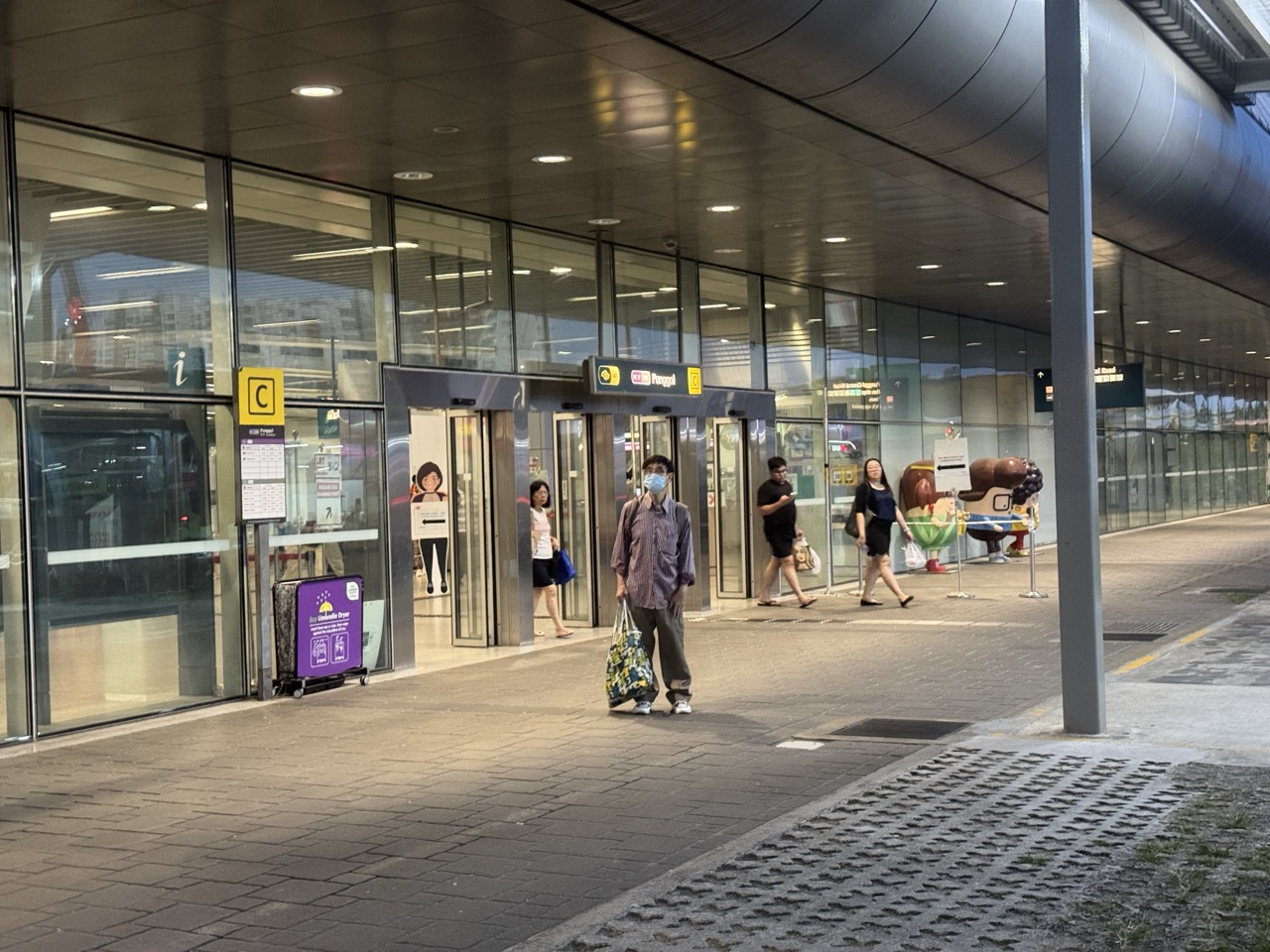
Image integrity note: the featured image shows contemporary Punggol MRT infrastructure. It is not an archival photograph of the April 1993 visit.
10. A 1993 community request is not the same as an approved railway
The headline asking whether Punggol residents would soon receive an MRT line is most revealing as evidence of demand. It tells us that rail connection was an issue that people raised during a community visit. The wording does not by itself record a construction contract, an opening date or a route map. Historical writing must resist the temptation to make every early wish into the direct cause of a later outcome.
Public infrastructure passes through a series of stages. People recognise a need, agencies study options, policies are approved, project budgets and design are developed, contractors build the facilities, and only then do passengers use them. The 12 April 1993 newspaper belongs near the beginning of this sequence for Punggol’s rail history. It gives insight into public expectations, not a complete decision trail.
If an article claims the Prime Minister promised the completed North East Line during that visit, the claim requires an attributable statement from the original report or an official speech. The newspaper’s question headline alone is not sufficient. Equally, the fact that a line opened ten years later does not prove the visit was the singular reason it happened. Large transport projects depend on population forecasts, land-use planning and island-wide connectivity.
The best student response is carefully limited: Punggol residents were reported asking about an MRT line in April 1993; the North East Line later began serving Punggol in June 2003. Those statements are connected chronologically, but the causal relationship cannot be established from the two facts alone.
This distinction is important for writers building large historical series. It prevents articles on early transport requests from becoming duplicates of articles on railway opening ceremonies. Each piece should own a different part of the evidence: public demand, planning, construction or operation.
11. June 2003: the North East Line creates the rail connection
The North East Line began passenger operations on 20 June 2003, bringing heavy rail service to Punggol after years in which residents had travelled through a bus-based network and road connections. This was a major later milestone and a clear outcome to compare with the concerns raised in 1993.
A reliable chronology should distinguish Punggol MRT station from the later Punggol Coast station. The former belonged to the original North East Line, while the latter opened on 10 December 2024 as a northern extension. A reader who searches for ‘first MRT to Punggol’ should receive the 2003 date, not a 2024 answer. A reader interested in the new Digital District terminal needs the later date.
The opening changed the geography of commuting. Rapid transit connects residential districts to an island-wide network and provides a different kind of travel reliability from buses moving along road corridors. But exact travel-time savings for 2003 households would require contemporaneous timetables and origin–destination pairs, not merely the existence of a train station.
The rail network was also not the same as the full public-transport experience. Buses and pedestrian links remained important for reaching homes and destinations away from station entrances. A new MRT line can be transformative without becoming the only way people travel.
When a Punggol history article looks back from 2003 to 1993, the interesting insight is that a decade separated the recorded question and the operational service. That interval is part of infrastructure history, but it does not by itself tell us what political or technical steps occurred in between. The transport-system article can supply those stages from separately verified records.
12. January 2005: the LRT becomes part of local mobility
Punggol’s LRT system began operating in January 2005, connecting the major interchange to neighbourhood stations. It added an important local layer to the railway network. The LRT and MRT have different functions: a longer-distance rail line connects Punggol to other parts of Singapore, while the LRT is designed to help residents move within the town and reach the interchange.
This local network is relevant to the 1993 request because a desire for an MRT line often includes a less visible concern: how a person will reach that railway from home. A line through a district can be helpful, but access involves walking routes, station placement, lifts and feeder transport. The historical 1993 article does not establish detailed LRT preferences expressed by those residents.
The network also developed in stages rather than appearing fully operational in one instant. Some Punggol LRT stations began passenger service later as residential development expanded. An accurate article about the whole LRT would therefore need station-specific dates. Here the 2005 milestone serves as a concise later point of comparison.
Family travel illustrates why network layers matter. A parent bringing children to a train station may value sheltered access and reliable transfers as well as speed. An elderly resident may place more importance on comfortable connections and shorter walking distances. These are general planning considerations, not documented motives of each person interviewed in 1993.
For students, draw a small network diagram with Punggol MRT as a node, local LRT stops as feeders and buses as complementary routes. Explain why the original request for better mobility cannot be measured solely by the day the first MRT train arrived.
13. From the 1993 visit to the 1996 Punggol 21 vision
HDB’s official town history records that Prime Minister Goh Chok Tong unveiled the Punggol 21 blueprint in 1996. It described a proposed modern waterfront town for the twenty-first century. This planning announcement followed the April 1993 community visit by roughly three years, but the later blueprint should be understood through its own policy documents and historical setting.
Punggol 21 concerned more than transport. HDB described an integrated approach to housing, community facilities and the wider living environment. The town was imagined as a destination with strong identity rather than simply a series of apartment blocks. Transport connectivity would necessarily be part of making such a town workable, but we cannot infer that one resident’s question in 1993 dictated the final design.
HDB and National Heritage Board histories note that subsequent development faced economic and construction difficulties. Plans were adjusted in later years, and the Punggol 21 Plus strategy introduced in 2007 renewed the waterfront vision. These phases are distinct from the original 1993 concerns about day-to-day access and housing applications.
The sequence allows a nuanced interpretation. Families already lived in the area and made practical requests. Planners later presented a much larger vision. New rail, waterway and community facilities arrived across several phases. The history is both bottom-up and top-down, but the exact causal connections require documents beyond two dated public milestones.
A good local-history article therefore uses the 1993 visit as an independent chapter in the story, while linking to dedicated articles on Punggol 21, Punggol 21 Plus and the Waterway. It does not paste the full planning history into every article simply because the same Prime Minister appears at more than one event.
14. December 2024: Punggol Coast extends the rail story
The Land Transport Authority opened Punggol Coast station for passenger service at 3 pm on 10 December 2024. The station extended the North East Line beyond the earlier Punggol terminal and provided rail access to the Punggol Digital District, including its business park and the Singapore Institute of Technology campus. This is a distinctly later development era.
LTA’s 10 October 2024 announcement and 10 December opening factsheet make the milestone easy to verify. They also published projected and comparative journey information. Such figures belong to the 2024 planning and operating context, not to travel conditions during the 1993 community visit. A reader should not imagine that Digital District students were among the people asking for a new MRT in 1993.
The later station illustrates how a network can expand after its original opening to serve changing patterns of work, study and housing. Punggol in the early 1990s had one set of community concerns; Punggol’s new northern district decades later had different users and destinations. Both layers contribute to the larger history of access.
Transport demand often changes when a town’s economy changes. New homes create journeys; schools and workplaces change where people need to travel; an improved network can influence land use. Those are general relationships that can be analysed without attributing every specific decision to a newspaper question from years earlier.
A clear historical page places the dates in one sentence: residents publicly raised MRT questions in 1993; the North East Line served Punggol from 2003; the Punggol Coast extension opened in 2024. That chronology is independently useful and avoids treating different generations of infrastructure as the same project.
15. Why ‘Punggol’ in a 1993 newspaper may describe a wider ward
Historical constituency and neighbourhood terminology requires attention. The 12 April 1993 issue reports a Prime Minister’s community visit to Punggol, yet some housing complaints in the same coverage explicitly concern Hougang estate. Those words reflect the local political and residential geography being covered at the time, which need not correspond exactly to today’s Punggol planning-area boundary.
If a newspaper says a family living in Hougang raised an issue during the Punggol community visit, a later writer should not relocate that household to a modern Punggol HDB block. The event’s public label and the interviewee’s address answer different questions. A sourced article keeps each tied to the original text.
This is especially important in a history series that spans many decades. Town names, constituency lines and postal identities can change. An older place called Punggol might include or relate to parts of what readers now associate with Hougang or Sengkang. The historic use of a name should not be replaced with a modern map as though administrative boundaries were timeless.
A careful researcher records the named location of the community visit and the specific estate or district of each resident where the source provides it. If the address is absent, the entry should say ‘not established’. This prevents the creation of artificial street-level precision.
The practical lesson for writers is that local search terms can be wider than the geography of a single planning district. Article titles can use the source’s public event label, while the body explains the location distinctions before readers attempt to map every household.
16. The 1993 Punggol Community Club as civic infrastructure
The National Library catalogue entry for a Punggol Community Club souvenir records an opening dated 13 March 1993. It is a strong institutional anchor only a month before the Prime Minister’s visit. The April news coverage referred to remarks at the new club, showing the building was already being used as a public meeting place in its early period.
A community club serves purposes different from a shopping centre or train station. It can host social activities, programmes and occasions when residents meet local leaders. In a growing estate it provides a venue for an emerging community, whose families may otherwise know one another mainly through schools, workplaces and housing blocks.
The souvenir’s documented content includes accounts of facilities, activities, construction, supporters and advertisements. These elements give historians more than a building photograph: they reveal how the institution presented its purpose and which relationships supported it. However, a commemorative publication has an institutional viewpoint and cannot substitute for a full resident survey.
The April visit provides a complementary journalistic perspective. Reports about parents, public questions and religious harmony show the community club and surrounding neighbourhood during an event, rather than only through its ceremonial opening material.
A local-history series should link the 1993 souvenir article and the 1993 visit article, but not merge them. One is an institution-centred record; the other is an event-centred source. The two work best when each preserves its original date, purpose and evidence.
17. Housing applications, subletting and the limits of one day’s reporting
The newspaper coverage of the 1993 visit includes residents seeking help with new flats and other housing matters. Those reports show practical concerns that can be easy to overlook when later histories celebrate blueprints and major infrastructure openings. Housing policy is experienced through eligibility, application timing and personal circumstances as well as through statistics.
The issue includes a reference to a family in Hougang hoping to secure a new flat, along with other reports about tenancy or subletting questions. A historian should avoid repeating allegations or private details beyond what is necessary for understanding the broader housing concerns. A name in an old newspaper does not create an obligation to turn the person’s life into a modern profile.
These stories also need to be read against how newspapers select interviewees. Reporters may focus on interesting examples, especially when a public official is meeting many residents over a short time. The presence of a complaint documents that it was raised; it does not measure how common the issue was across the entire constituency.
The comparison with later Punggol housing is valuable. The new town underwent several development phases, and flats became closely associated with its waterfront vision. But the 1993 sources show people dealing with immediate administrative needs before those later plans became familiar.
A good paragraph differentiates aspiration from entitlement. Someone asking for help does not prove an application was approved, a rule was changed or a promise was fulfilled. Those outcomes would require follow-up records. Clear historical writing leaves that boundary visible.
18. The families and children the newspaper chose to portray
The reports described the Prime Minister meeting children and parents, including eight-year-old Ang Guan Hsi and a toddler who presented a toy. Such details offer a vivid glimpse of a community event. They are especially useful because large new-town histories rarely retain the names of ordinary children encountered during early neighbourhood visits.
Yet care is needed. The 1993 article records a brief public interaction, not an invitation for later writers to investigate the child’s present-day identity, career or family. The safe historical statement is limited to the dated encounter and the role it played in the newspaper’s account.
The tone of the feature also belongs to the period’s reportage. A journalist could describe a politician as popular with young and old, choosing warm encounters to convey atmosphere. That framing can be analysed as a media choice rather than adopted as an objective measure of public approval across the whole estate.
For Punggol’s social history, the scene matters because people already lived and raised families in the area before the 1996 blueprint. The later plan did not create community life from nothing; it was developed in a region with existing households, local businesses and institutions.
A student writing about the event should separate observed behaviour from editorial description: a child held a hand or offered a toy according to the report; the feature’s broader claim about popularity is a journalist’s framing. Both are part of the source, but they are not the same kind of evidence.
19. Religious harmony as a recorded public theme
The 12 April 1993 issue included a short report describing remarks by Goh at Punggol Community Club about religious harmony. The statement is historical evidence that social cohesion was part of the public message during the visit. The reported setting also links the remarks to a newly documented community institution.
A leader’s praise of a community does not automatically amount to an independent study of every relationship among residents. It records an expressed assessment. To evaluate patterns of interaction in more depth, a researcher would consult community organisations, oral histories and repeated evidence across different periods.
Punggol’s older religious and cultural landscape included Malay village institutions and later places serving a more varied population. Separate historical articles document the Masjid Wak Sumang story, churches and the religious institutions of the growing new town. Those developments have different origins and dates, so they should not be treated as though all were created at the 1993 visit.
The remarkable point is that questions about housing and travel existed alongside social themes. A community needs physical infrastructure, but belonging and relationships are also part of how residents experience place. The newspaper captured both aspects within the same public occasion.
A History or English assignment could compare the article about the MRT request with the article about religious harmony. They address different concerns, and each uses a different style of reporting. Together they help students see why one headline cannot tell the entire story of a day.
20. Small-shop interviews as economic evidence
Accounts of Goh speaking with shopkeepers during the visit are useful microhistorical sources. The newspaper recorded details such as a barber’s S$5 haircut price. That is evidence of a quoted price in one historical context, not an official 1993 market average and certainly not a current rate.
New towns need a local economy of ordinary services. Haircuts, meals, groceries and small repairs create daily reasons for residents to use neighbourhood shops. These businesses can become social meeting points as well as places of transaction, particularly in a newly growing community.
An individual’s reported price can prompt useful questions: what did the business charge for different services, what rent or expenses did it face, and how much did the price mean relative to household income? The source does not answer all of these. A responsible historian leaves them as research questions rather than inventing a full profit-and-loss account for one barber.
For Mathematics, students can compare nominal prices only if both dates are identified and the task is clearly hypothetical or properly adjusted for inflation. For History, the more direct lesson is to treat prices as dated, local observations attached to a speaker.
The shop stories help balance Punggol’s familiar timeline of grand developments. A town’s working economy includes people whose services operate between major infrastructure milestones. The 1993 visit offers one such snapshot before the modern retail landscape had emerged.
21. How to fact-check an April 1993 newspaper story
The most direct primary source is the digitised Straits Times issue of 12 April 1993. Its index identifies the reports on pages 24 and 25, including the article about an MRT request, family encounters, housing concerns and remarks on religious harmony. The issue date is the publication date; the visit described in those articles took place on the preceding Sunday.
A historian should read the original page before quoting exact words. Newspaper search snippets are useful leads, but optical character recognition sometimes confuses letters, names and punctuation. A phrase that appears distorted in a search result should not be silently repaired into a new quotation without checking the scan.
The next source type is an institutional record, such as the National Library catalogue entry for the Punggol Community Club’s 13 March 1993 opening souvenir. That is evidence of a separate milestone and a useful way to understand the venue. It should not be passed off as the official transcript of everything said in April.
For later infrastructure, use HDB and Land Transport Authority documents. HDB supplies the 1996 Punggol 21 date. Official railway records and operating announcements establish the 2003 North East Line and 2024 Punggol Coast milestones. These sources verify later events without proving that the 1993 question directly produced them.
The strongest method is to assign one source to each claim and retain a column for unanswered questions. Exact rail commitments made at the visit, eventual outcomes for individual housing applicants and the full public attendance require more evidence than the available index alone provides.
22. A source-based lesson for Primary and Secondary students
Begin with a question every child can understand: what makes a neighbourhood easier for a family to live in? Students might name a train station, school, grocery shop, park or community centre. The 1993 newspapers show people asking about several of these needs before many current Punggol facilities existed.
In History, make four event cards: community visit in April 1993, Punggol 21 blueprint in 1996, North East Line service in June 2003 and Punggol Coast station in December 2024. Ask students to arrange them and explain why an event appearing earlier does not necessarily prove it caused every later event. Introduce the word corroboration as checking a statement against another suitable document.
For English, compare the question in the 1993 MRT headline with the certainty of an official opening announcement. The question expresses uncertainty; the opening release records a scheduled or completed service milestone. Students can practise converting these into sentences that preserve the speaker, date and level of certainty.
For Geography, draw two simplified networks, one representing road access before rail and one with MRT, LRT and bus connections. Leave route and travel-time details blank unless dated maps or timetables support them. The aim is to understand why a growing population may request improved access, not to fabricate a 1993 journey planner.
A well-designed assignment finishes with a source note. The student should state that the 1993 event is known from newspaper reports, later infrastructure dates from official records, and individual residents’ final outcomes remain beyond the evidence used. That is a more valuable skill than memorising an unsourced timeline.
23. Questions readers ask about the 1993 Punggol visit
Did Goh Chok Tong visit Punggol in 1993? Yes. The Straits Times issue of Monday 12 April 1993 reported his community visit on the previous day, Sunday 11 April.
Was he Prime Minister at the time? Yes. The article’s office description refers to his role in April 1993.
Did residents ask about MRT access? Yes. One report was headed ‘An MRT line for us soon? Punggol residents ask PM’.
Did a line open immediately? No. The North East Line opened at Punggol in June 2003, about a decade later.
Does the newspaper prove a firm construction promise? The title alone does not. Exact official commitments require direct examination of the report or government records.
When was the Punggol Community Club opened? NLB’s catalogue identifies an opening souvenir dated 13 March 1993.
Was the 1993 club the same as One Punggol? No. One Punggol is a much later integrated public facility, and the names should not be merged.
Did families already live in Punggol? Yes. The 1993 coverage described a developing HDB community with parents and children.
Were all complainants located inside today’s Punggol planning boundary? Not necessarily. Some reports from the community visit explicitly concern Hougang estate.
What housing issues were raised? Contemporary reports described residents seeking assistance with new-flat applications and tenancy-related questions.
Did local shopkeepers feature in the reports? Yes. Articles described conversations about neighbourhood businesses, including a reported S$5 haircut in one historical example.
Was religious harmony discussed? Yes. A separate report documented remarks at the community club.
When was Punggol 21 announced? HDB identifies 1996 as the year Goh Chok Tong unveiled its blueprint.
When did Punggol Coast MRT open? LTA records 10 December 2024, at 3 pm.
Is the 1993 visit proven to have caused the station? No. The dated sources establish events and public interest, not exclusive direct causation.
Why study this visit? It records what residents were asking and how an emerging community was portrayed before Punggol became known for its later waterfront and rail infrastructure.
24. The meaning of this 1993 snapshot for Punggol history
The April 1993 newspaper cluster is valuable precisely because it is ordinary. It captures people seeking rail access, talking to shopkeepers, asking about flat applications and gathering with children at a community event. These details are less grand than a national development blueprint, yet they explain how a place was being lived in at the time.
New-town history can be misleading when it begins only with an official plan and presents people as arriving afterwards. The 1993 Punggol reports show families and community institutions already present before the 1996 Punggol 21 announcement. Later housing, waterway and transport programmes were developed in a changing place, not on a socially empty map.
The sources also demonstrate the value of chronology. A question in 1993 is not a station opening; a 1996 vision is not a finished town; a 2003 railway is not a 2024 extension. Each milestone has its own documents, inhabitants and practical purpose.
The wider archive still contains gaps. Not every resident’s comment was printed, the full proceedings may not be available in one document, and the newspaper’s selected encounters do not establish a representative sample of public opinion. A trustworthy article states those limits rather than creating a fictional comprehensive transcript.
The enduring insight is that daily needs and long-term planning interact over time. Housing, transport, community services and social relationships become visible together when researchers read a complete newspaper cluster instead of relying only on a later anniversary summary.
Original records and related Punggol reading
- The Straits Times, 12 April 1993 — digitised original issue
- National Library Board — Punggol Community Club opening souvenir, 13 March 1993
- HDB — Punggol development history and 1996 Punggol 21 blueprint
- LTA — Punggol Coast station opened 10 December 2024
- Alstom — North East Line inauguration and June 2003 operations
- Punggol Community Club 1993 souvenir — history article
- Punggol bus and MRT transport history
- Punggol 21 and Punggol 21 Plus historical planning
- Punggol History 89 — complete master directory
Evidence note: the 1993 visit and related questions are traced to contemporaneous newspaper reporting. Later rail and planning dates are drawn from separate official institutional sources. The featured photograph is contemporary Punggol MRT context, not an authenticated scene from 11 April 1993.


