
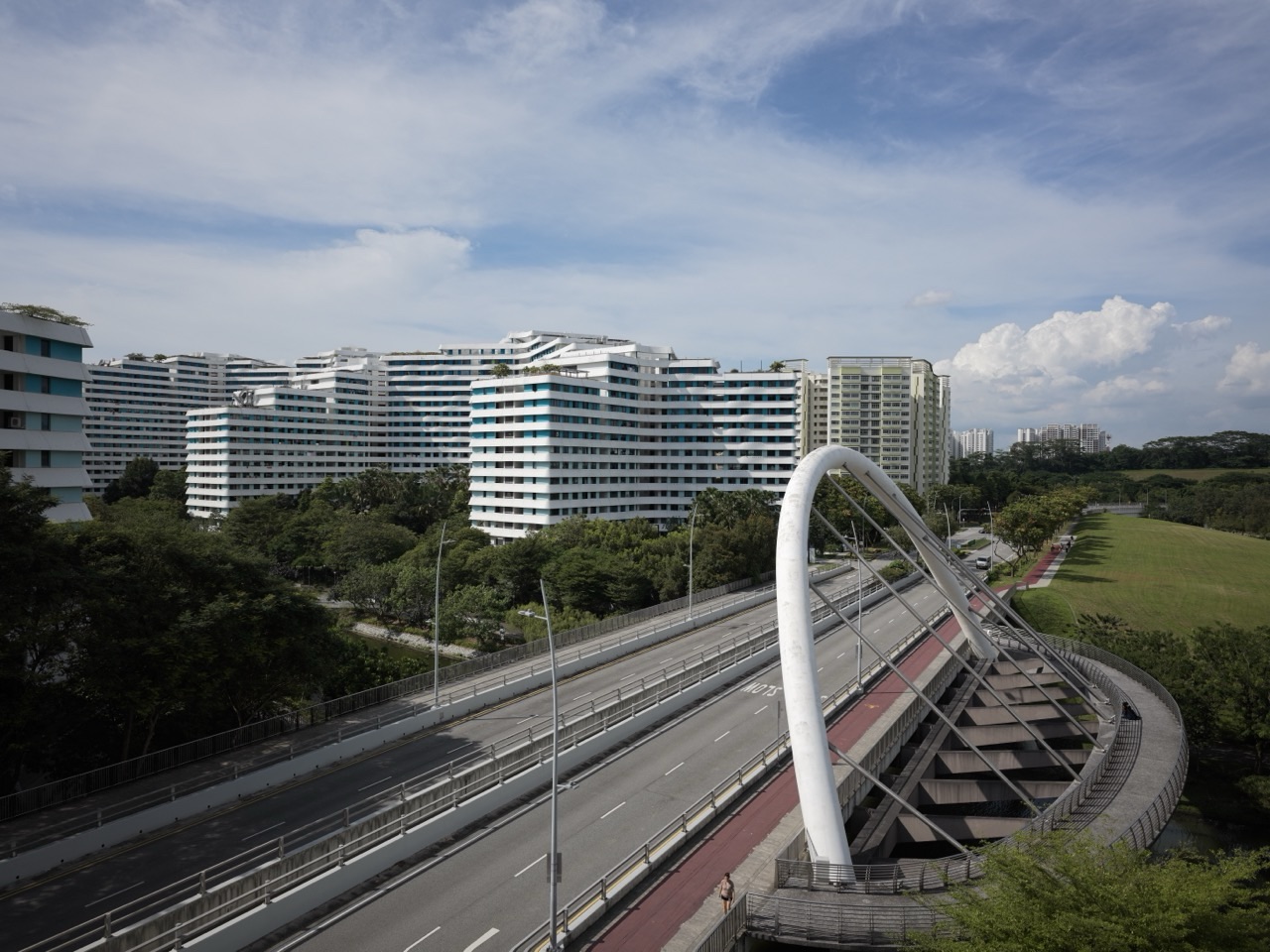
Following the HDB Explorer Trail in Punggol is one of the smartest free things to do in Punggol during the school holidays: a self-guided walk from Treelodge@Punggol, HDB’s first eco-precinct, to the Waterway, Kelong Bridge and the old Punggol Road.
Here is a question HDB’s own worksheet asks primary pupils: why are the blocks at Treelodge@Punggol painted a lighter colour?
This is idea #8 in eduKate Punggol’s Top 100 Things to Do in Punggol During the School Holidays. Below you will find the four stops on HDB’s Explorer Trail, what to look for at each, how to use HDB’s free primary worksheet, a simple home experiment that answers the “lighter colour” question, and how to walk the trail kindly in a place where people live.
Most children think of science as something that happens in a laboratory.
This trail shows them it also happens in car parks, corridors and rooftops.
Right here, in the estate down the road.
This idea is perfect for families who want to:
- see everyday Punggol through an engineer’s and a scientist’s eyes;
- use a ready-made, free HDB worksheet with their primary-age child;
- link homes, water, energy and history in one easy walk;
- enjoy a calm morning outing close to the Town Centre;
- start real conversations about saving water and energy; or
- discover why Punggol calls itself an eco-town.
Quick look
- Best for: Primary 3 to Secondary 2, with younger siblings on an “eco-spotter” hunt
- Time needed: 2 to 3 hours with breaks
- Cost: free
- Best time: 8am to 11am on a dry weekday
- Nearest stations: Punggol MRT (NE17) and Damai LRT (PE7)
- Rain plan: do the worksheet’s home experiment indoors, or visit Punggol Regional Library at One Punggol
See all 100 school-holiday ideas · Chat with eduKate Punggol on WhatsApp · Visit eduKate Punggol on Facebook
The HDB Explorer Trail in Punggol Is Bigger Than It First Appears
At first glance, it is just a walk past some flats to the Waterway.
But HDB designed the Explorer Trail as one of its Sustainability Trails, which HDB says schools and communities can use to organise their own walks. It shows how a town can be built to save energy and water and care for its surroundings. HDB’s page lists four stops:
- Treelodge@Punggol;
- My Waterway@Punggol;
- Kelong Bridge; and
- the Heritage Area.
Homes. Water. A bridge. A memory.
Each stop answers a different question. How can a building stay cooler without extra air-conditioning? How can a waterway be both beautiful and useful? How does a modern town remember the fishing villages and country roads that came before?
That is what makes this trail special. Children are not just looking at things. They are looking for reasons.
The Hidden Lesson in a Lighter Colour
HDB’s primary worksheet for the Explorer Trail starts at Treelodge@Punggol with a simple question: why are the blocks painted a lighter colour?
Many children guess: “Because it looks nice.”
That is a fair answer. But the worksheet is pointing at something more interesting. Its answer key says lighter colours reflect heat and absorb little of it.
You can test this at home in ten minutes. Take two identical cups of water. Wrap one in black paper and one in white paper. Leave both in the same sunny spot for half an hour, then feel the water, or use a thermometer if you have one.
“The black one is warmer.”
The water was the same.
The sunlight was the same.
Only the colour changed.
This is a fair test: change one thing, keep everything else the same, and see what happens. It is the backbone of the experiments children do in primary Science, and it also links to what they learn about heat. Once a child has felt the difference with their own hands, a pale block of flats is never just a pale block of flats again. It is a design choice with a reason behind it.
Why Punggol Families Love the HDB Explorer Trail
Most science outings need a ticket. This one needs comfortable shoes and a printed worksheet.
It is also close to home for many families. HDB says Treelodge@Punggol is a 5- to 10-minute walk from Punggol MRT station, and the Waterway stops are inside Punggol Waterway Park, which NParks lists as open 24 hours and free.
The joys of an Explorer Trail morning
- It is free and self-guided, so you set the pace
- HDB’s free primary worksheet gives the walk a clear structure
- Four stops keep it short enough for younger legs
- It mixes Science, history and design in one outing
- Children see sustainable ideas in a real neighbourhood, not a textbook
- The Waterway section is green, breezy and lovely for a snack stop
- Kelong Bridge and the old bus stop add a story about old Punggol
- It sparks conversations about saving water and energy at home
Best of all, it changes how children see their own block. After this walk, many start asking, “Does our building have that too?”
What You’ll Find on the Four Stops
These notes come from HDB’s Explorer Trail page and its 2020 primary worksheet, NParks and our own Punggol Waterway Park Guide.
Stop 1: Treelodge@Punggol, HDB’s first eco-precinct
HDB describes Treelodge@Punggol as its first eco-precinct and a Green Mark Platinum award winner. It has seven residential blocks with a podium car park, and was completed in 2010. HDB highlights three eco features. The podium car park has higher ceilings to help heat escape and improve airflow, and the blocks are spaced further apart for better cross-ventilation. The Eco-Deck is a landscaped rooftop space on the car park, linked by a “Green Spine”, where extra greenery reduces heat build-up and glare. A rainwater harvesting system collects and stores rainwater for washing common corridors and watering plants. HDB’s worksheet adds solar panels, a second refuse chute for recyclables and energy-saving lights.
Stop 2: My Waterway@Punggol
HDB describes the 4.2-kilometre Waterway as running through Punggol Eco-Town, with freshwater mangroves that help clean the water and outdoor furniture made from recycled materials. The worksheet also mentions surface aerators installed along the Waterway to help keep the water healthy. Ask children to spot benches and look closely at the plants along the edge.
Stop 3: Kelong Bridge
HDB describes Kelong Bridge as a wooden, stilts-and-posts bridge that recalls Punggol’s old fishing villages, and its worksheet gives the bridge a length of 125 metres. NParks says it is styled after offshore fishing platforms on wooden stilts. Our Kelong Bridge guide has more of the story. Remember that cycling is not allowed on this bridge.
Stop 4: The Heritage Area
Here, HDB and NParks note, the old bus stop and a 160-metre stretch of the old Punggol Road were preserved when the park was built. It is a wonderful place to imagine Punggol before the flats: kampongs, farms and a country road. For the bigger picture, read our article on Old Punggol Road.
A note on the trail beyond
HDB’s page says the Heritage Area and Kelong Bridge form part of a 1.3-kilometre heritage trail towards the Punggol Point waterfront. Please do not continue to Punggol Point Park: it has been closed for upgrading since 11 August 2026, with completion expected by 31 December 2027.
How to Plan a Brilliant Explorer Trail Morning
Fifteen minutes at home turns a walk into a mission.
1. Check the weather and the air
Look at the forecast and the latest readings on haze.gov.sg. October 2026 brought unhealthy haze readings to Singapore, so make this a habit.
2. Print the worksheet
HDB’s Explorer Trail worksheet for primary level has questions about Treelodge@Punggol and the Waterway, plus a word search. It includes an answer key, so print the question pages for your child and keep the last page for yourself.
3. Plan your route
HDB suggests walking from Punggol MRT station, from Punggol Central to Punggol Place and towards Punggol Drive, or taking the LRT to Damai station and walking towards Punggol Road. Check OneMap for the walk from Treelodge@Punggol to the Waterway and Kelong Bridge.
4. Agree on resident-friendly rules
Treelodge@Punggol is a home for many families. Keep voices low, stay in public common areas, do not photograph into homes and do not enter anywhere locked or signposted for residents only.
5. Add an eco-spotter checklist
For younger children, make a simple list of things to find: plants, a recycling point, a bench, a shady walkway, a solar panel seen from below. Tick each one off.
6. Plan the finish
End near food or home. Many families will finish at the Waterway, close to the Town Centre’s shops and food.
A Sample Holiday Day, Hour by Hour
Here is a relaxed weekday rhythm. Adjust the timings to your route.
8am: Breakfast and worksheet preview
Read the first question together: why are the blocks a lighter colour? Let everyone make a guess and write it down.
8.45am: Walk to Treelodge@Punggol
Walk or take the LRT. On the way, ask children to notice the colours of different buildings.
9.15am: Eco-precinct detectives
From public areas, look for the podium car park, the greenery and other eco features on the worksheet. Fill in the Treelodge@Punggol questions.
10am: To the Waterway
Walk to the Waterway. Spot recycled-material furniture, water plants and anything that looks like it helps the water.
10.45am: Kelong Bridge and the Heritage Area
Cross Kelong Bridge on foot, then find the old bus stop. Take a “then and now” photo.
Noon: Lunch and answers
Over lunch, compare guesses with what you saw. Then reveal the worksheet answers.
Afternoon: The colour experiment
At home, run the black-and-white cups experiment. Did the result match your guess?
Three Ways to Enjoy It
The same four stops can be a treasure hunt, a worksheet or a design study.
For little explorers (Primary 1–3)
Keep it simple and visual. Use the eco-spotter checklist and let them tick off what they find. Talk about one big idea: “This building was designed to stay cooler.” Preschool siblings can ride in the stroller and spot trees, birds and the old bus stop. For Primary 1 and 2, the worksheet word search is a fun way in.
For big kids (Primary 4–6)
This is the worksheet’s sweet spot. Let them lead, read each question aloud and decide what evidence they need to answer it. Add the colour experiment at home. Primary 6 children enjoying the break after the PSLE may like being the family “tour guide”, explaining each stop to everyone else.
For teens (Secondary 1–4)
Teens can compare old and new. Treelodge@Punggol was completed in 2010; what eco features do newer parts of Punggol use? They might also compare the 160-metre stretch of old road in Waterway Park with the first 400-metre stretch of the Punggol Heritage Trail, which NParks opened in August 2025 between Punggol North Avenue and Campus Boulevard. Why keep an old road at all? That is a great question for a short reflective piece.
The Learning Bridge: Science Without the Worksheet
Ironically, this trail comes with a worksheet. But the real learning happens in the noticing.
- Science: Primary Science, a formal subject from Primary 3, includes themes such as Energy and Cycles. The lighter-colour question links to heat, the rainwater harvesting system links to water and its uses, and the solar panels on the worksheet link to energy from the Sun. The cup experiment practises fair testing.
- English: Explaining a stop to the family, like a tour guide, practises clear speaking and the ability to give reasons, which helps with oral conversations in school.
- Mathematics: Kelong Bridge’s 125-metre length invites a step-counting estimate, and timing the walk between stops practises durations.
Keep it light. If you would like more ideas for using the holidays well, our article on using the school holidays for Science explains how to repair, consolidate or prepare ahead.
Little Hiccups and How to Dodge Them
Here are the small problems most likely to trip you up.
Heat
Parts of the route are exposed. Go early, carry water and rest in shady spots. Check the MSS heat stress advisory on very hot days.
Rain and lightning
The Northeast Monsoon brings frequent afternoon storms in late November and December. If you hear thunder or see lightning, leave open areas and bridges and head indoors. MSS has a lightning alert page.
Haze days
When readings are high, do the worksheet and the experiment at home instead. Our Punggol haze indoor activities guide has more ideas.
Residents’ privacy
Remember that this is someone’s home. Keep groups small and quiet, and never photograph people or their windows.
Roads and crossings
The route crosses roads. Hold hands with younger children and use proper crossings.
Restricted areas
Some spaces in residential estates are for residents only. If a gate is locked or a sign says no entry, admire from outside.
What a Great Day Looks Like
You will know the trail worked when the children:
- can name at least one eco feature at Treelodge@Punggol and explain what it does;
- guessed, tested and checked the “lighter colour” question;
- found the old bus stop and imagined who once waited there;
- walked kindly and quietly through a residential estate;
- started noticing eco features in their own block; and
- asked, “Why don’t all buildings do that?”
That question is the start of a future engineer, planner or scientist.
When to Go
MOE schedules the 2026 year-end school holidays from Saturday 21 November to Thursday 31 December, after the last school day on Friday 20 November. Some secondary students at schools used as O-Level venues began their break after Friday 23 October. MOE’s 2027 calendar lists the March (13 to 21 March), June (29 May to 27 June) and September (4 to 12 September) holidays, with the next year-end break from 20 November 2027.
Weekday mornings are best: cooler, quieter and kinder to residents than weekend crowds. With the Northeast Monsoon usually arriving around the end of November, finish the outdoor stops before lunch.
Getting There from Around Punggol
HDB says Treelodge@Punggol is a 5- to 10-minute walk from Punggol MRT station (NE17) and Punggol Bus Interchange, from Punggol Central to Punggol Place, towards Punggol Drive. By LRT, HDB suggests getting off at Damai station (PE7) and walking towards Punggol Road, then crossing the road. From Treelodge@Punggol, use OneMap to plan the walk to the Waterway. NParks lists Punggol MRT and Damai LRT as the nearest stations to Punggol Waterway Park. Weekday tip: under LTA’s free morning off-peak rides scheme, extended in October 2026, the first rail trip is free when you tap in at any Punggol LRT station before 7.30am or between 9am and 9.45am on weekdays (not public holidays); check LTA for current terms.
Start: Treelodge@Punggol, around Punggol Place, Punggol Drive and Punggol Road
Nearest MRT/LRT: Punggol MRT (NE17) and Damai LRT (PE7)
Entry: free; Punggol Waterway Park is open 24 hours
Quick Details
Activity: a self-guided walk along HDB’s four-stop Explorer Trail
Where: Treelodge@Punggol, My Waterway@Punggol, Kelong Bridge and the Heritage Area
Best ages: Primary 3 to Secondary 2; younger children with an eco-spotter checklist
Cost: free
Time needed: 2 to 3 hours with breaks
Booking: none needed; HDB’s page does not mention guided tours
Accessibility: NParks lists Punggol Waterway Park as wheelchair accessible; check OneMap for a step-free route through the estate
Status checked: October 2026, HDB Explorer Trail page and NParks park page (no closures listed for the park)
What to Bring
- The HDB primary worksheet, printed, with pencils
- A clipboard or hardback book to lean on
- An eco-spotter checklist for younger children
- Refillable water bottles
- Hats and sunscreen
- Insect repellent for the Waterway section
- A light umbrella or raincoat
- A phone or camera for “then and now” photos
- Two cups, black and white paper, and tape for the home experiment
- A small snack
Frequently Asked Questions
What is the HDB Explorer Trail?
It is one of HDB’s Sustainability Trails, with four stops in Punggol: Treelodge@Punggol, My Waterway@Punggol, Kelong Bridge and the Heritage Area.
Is there a worksheet for children?
Yes. HDB has published a primary-level Explorer Trail worksheet (2020) with questions on Treelodge@Punggol and the Waterway, a word search and an answer key.
Can we go inside Treelodge@Punggol?
Treelodge@Punggol is a residential estate. Stay in public common areas, keep noise down and do not enter anywhere locked or marked for residents only.
How long does the trail take?
Allow 2 to 3 hours with breaks and worksheet time. HDB lists a walking distance on its page, but how long you spend depends on how much you stop to look.
Is there a guided tour?
HDB’s Explorer Trail page does not mention guided tours. It is designed to be self-guided, and HDB says schools and communities can use its resource kit to organise their own trails.
Can we continue to Punggol Point?
Not at the moment. Punggol Point Park has been closed for upgrading since 11 August 2026, with completion expected by 31 December 2027.
Is it suitable for younger children?
Yes, with a shorter route. Younger children enjoy the eco-spotter checklist, the bridge and the old bus stop more than the written questions.
Helpful Reading for Punggol Families
- Top 100 Things to Do in Punggol During the School Holidays
- Punggol School Holiday Guide: A Week-by-Week Plan for the Year-End Break
- Old Punggol Road: Why a Future Town Still Needs Memory
- Punggol Waterway Park Guide
- Treelodge@Punggol and the Eco-Town Experiment
- Singapore’s First Eco-Town and Sustainable Living
- Punggol Waterway Science Trail
- School Holiday Science Plan: Repair, Consolidate or Prepare Ahead?
- HDB: Explorer Trail
- HDB: Explorer Trail Worksheet (Primary)
The HDB Explorer Trail for Punggol Families
A town can teach, if you know where to look.
A pale wall becomes a lesson in heat.
A car park becomes a lesson in airflow.
A rooftop garden becomes a lesson in cooling.
An old bus stop becomes a lesson in memory.
For little ones, the trail is a treasure hunt through their own neighbourhood.
For big kids, it is a worksheet that comes to life.
For teens, it is a case study in how people design the places they live.
And for parents, it is a quiet reminder that the best Science lessons are sometimes waiting at the end of your own corridor.
Plan the Rest of Your School Holidays
Eight ideas down, ninety-two to go. Browse the full Top 100 Things to Do in Punggol During the School Holidays, or take your new detective skills further with idea #9, a holiday science morning by the Waterway.
And if a calm, small-group learning block is also on your holiday list, eduKate Punggol teaches English, Mathematics and Science in classes of three. Come find out more.
Book a consultation · Chat on WhatsApp
eduKate Punggol
Small-group English, Mathematics and Science
Primary and Secondary
By appointment · +65 8823 1234
Properly taught kids shine a bright light into the future.
← Previous: #7 Plant detective walk · All 100 ideas · Next: #9 Waterway science morning →
Checked October 2026. Opening hours, prices, programmes and closures change, so please confirm with the official source before you go.


