
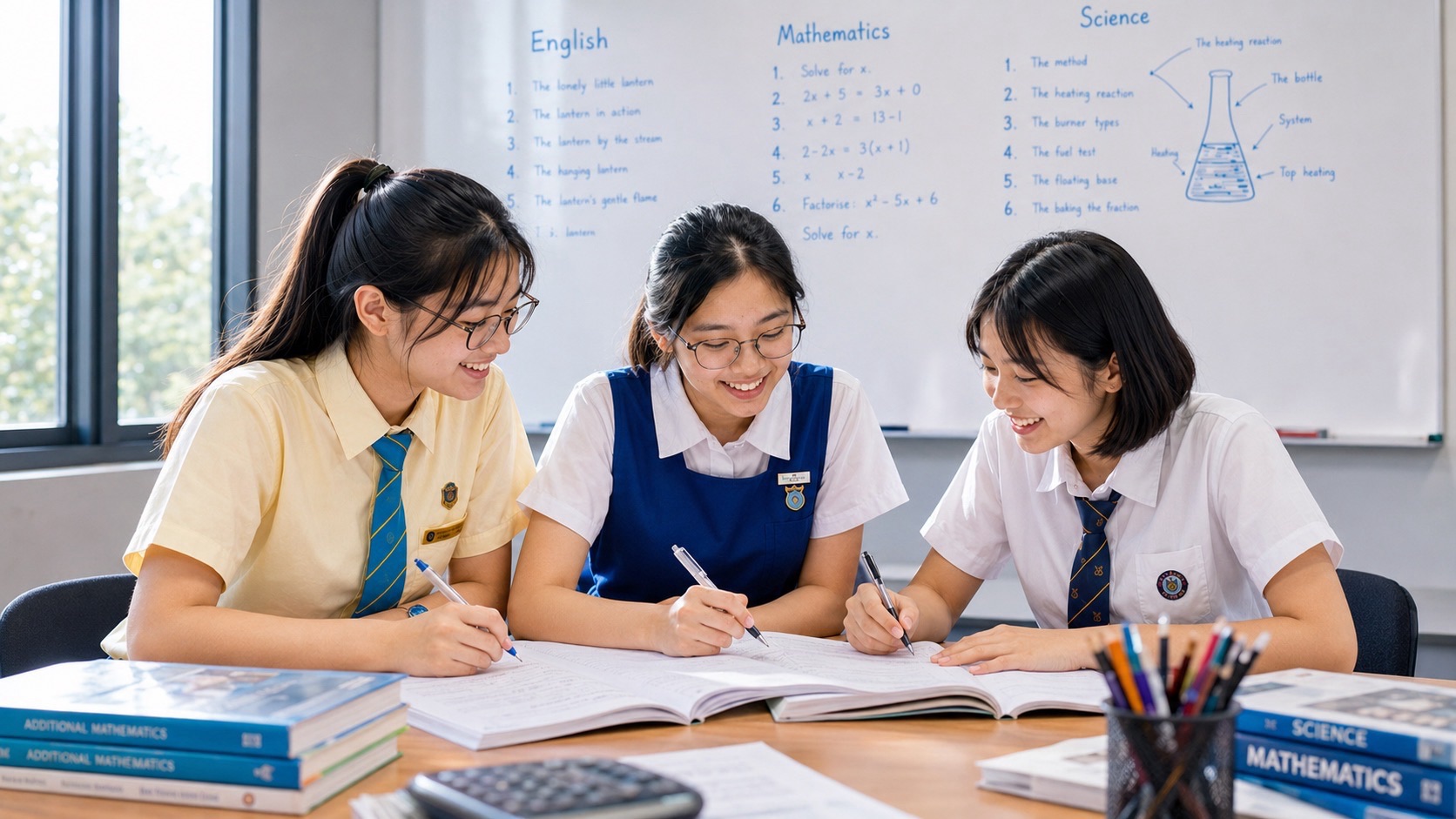
Did you know? In 2027 G2 English Language situational writing, the visual text is not a script to copy. It is a bank of information from which a student must select useful details, adapt them to the task and write for a clear purpose, audience and context.
G2 English tuition can help when a child either copies every visible detail or overlooks the details that fulfil the task. The first useful step is simple: before drafting, write four labels—purpose, audience, required points and usable visual details—then match each selected detail to one required point.
Bring one recent situational-writing script and its visual stimulus to a diagnostic review. Mark each sentence as selected, adapted or developed. This quickly shows whether the difficulty is visual reading, task fulfilment, tone, organisation or language—not merely “weak writing”.
G2 ENGLISH · VISUAL TEXT TO WRITING
Find the first useful move
Start by asking what job each visual detail performs. A date, venue, quotation, statistic and picture caption may all be visible, but only details that help the writer fulfil the task deserve space.
On this page
- What K200 actually requires
- Diagnose the selection error
- Work through a visual-text example
- How tuition can build the skill
- Check for independent progress
- Useful next reading
What K200 actually requires
The 2027 G2 English Language syllabus K200 states that candidates write 180–250 words for a given situation involving a visual text. The response may be an email, letter, report or speech, and it must suit the purpose, audience and context.
The same document separates task fulfilment from language. Strong task fulfilment addresses and develops the required points, shows awareness of purpose, audience and context, and supports ideas with given information. That means an elegant response can still lose ground if it ignores a required point, while a detail-rich response can become unfocused if it reproduces the stimulus indiscriminately.
Parents should confirm the examination year and exact subject level in the SEAB 2027 G2 school-candidate directory. G2 is a subject level; it is not the same thing as the student’s Posting Group.
Diagnose the selection error
A tutor should first watch how the student reads the task. Four different weaknesses can create the same thin or overloaded response:
- The student notices visual details but cannot connect them to the required points.
- The student copies phrases without changing viewpoint, pronouns or tone.
- The student selects a relevant detail but does not explain why it matters to the audience.
- The student begins drafting too early and discovers a missing point only near the end.
A clean diagnosis uses a blank planning grid. If the student can identify the audience but not choose evidence, the repair is selection. If the student chooses well but writes in the wrong register, the repair is adaptation. If the student includes all points but leaves them undeveloped, the repair is explanation and consequence.
Work through a visual-text example
Practice situation: imagine a school poster inviting students to a Saturday neighbourhood clean-up. It shows the meeting time, collection point, equipment supplied, a photograph of litter near a waterway and a short comment from a previous volunteer.
Suppose the task is to email classmates and persuade them to join. The meeting time and collection point are operational details. The equipment note removes a practical worry. The photograph can support the reason for action. The volunteer comment may provide reassurance, but it should be paraphrased and connected to the audience rather than pasted into the email.
From visual detail to useful sentence
Copied: “Gloves and bags will be provided.”
Adapted and developed: “You will not need to buy equipment because gloves and collection bags are provided, so joining is easy even if this is your first clean-up.”
The second version still respects the given information, but it performs a job: it anticipates a classmate’s concern and advances the persuasive purpose. The student has not invented an outcome or distorted the stimulus.
How tuition can build the skill
Useful practice changes one variable at a time. First, the student highlights only details linked to the required points. Next, the same details are rewritten for a different audience. Then the student develops one selected detail with a reason, benefit or consequence. Finally, these moves are used in a complete timed response.
If a provider genuinely offers G2 English, a three-student lesson can make this visible: each learner can defend one selected detail, compare a different choice and revise after hearing the audience effect. The tutor should still inspect each individual plan and script. Parents should confirm actual subject provision rather than assume it from a general tuition description.
This follows the same diagnosis-before-volume principle shown in the eduKate small-group teaching reference: identify the mental move that went wrong, repair it, then return the student to independent work.
Check for independent progress
Progress is not “the student used more details”. A better check is whether the student can complete these actions without prompts:
- State the purpose and audience in one sentence.
- Match every required point to at least one relevant visual detail.
- Leave out attractive but irrelevant information.
- Adapt wording and viewpoint instead of copying mechanically.
- Develop selected details while staying within the required length.
- Review the finished response against purpose, audience and context.
Use two unfamiliar tasks a week apart. If the method survives a new visual layout and a different text type, the learning is beginning to transfer.
Useful next reading
Read how G2 English tuition can improve summary writing without copying, then return to the Primary, PSLE and SEC syllabus series directory.


