
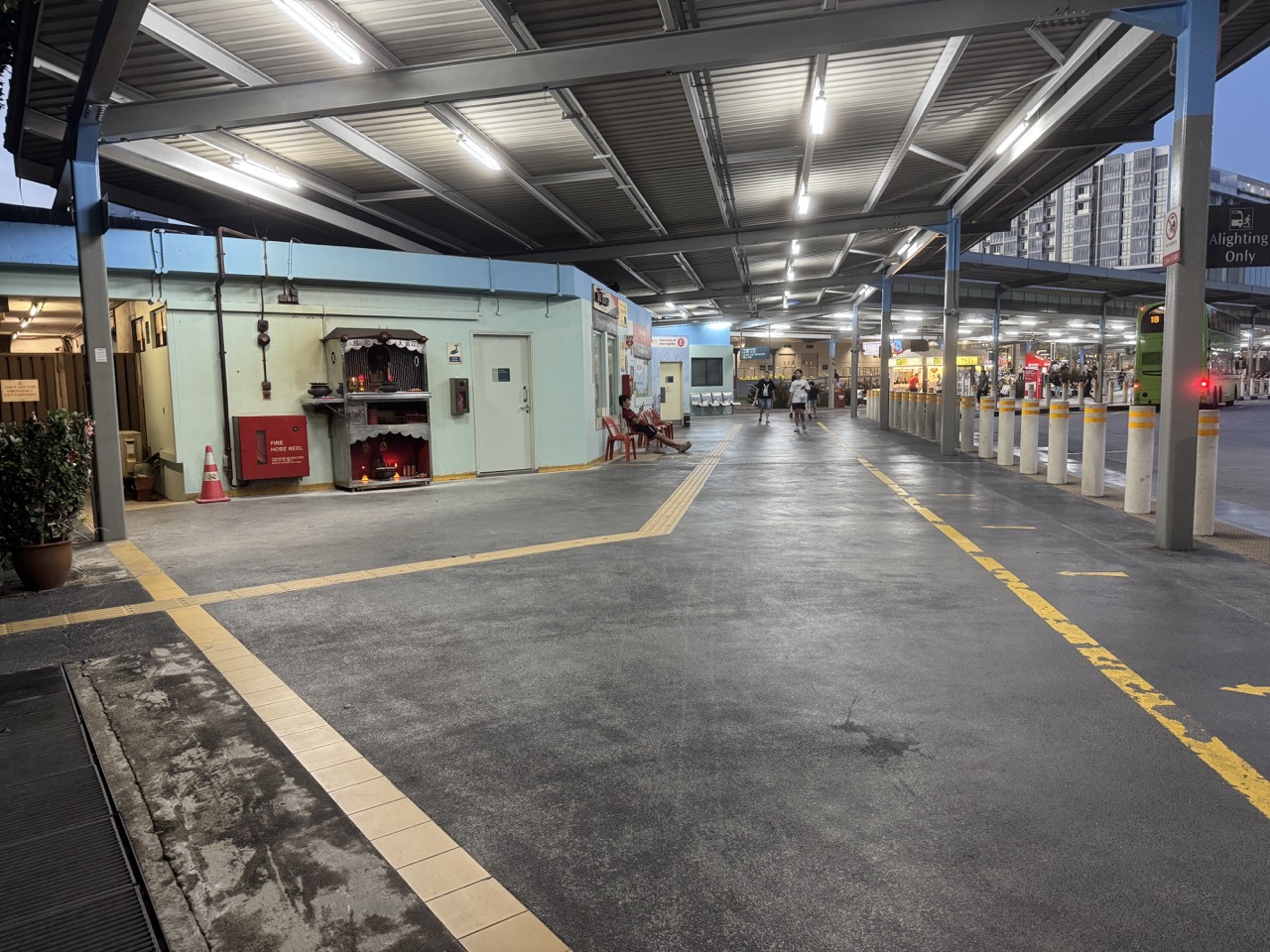
Punggol Bus Interchange began operations on 30 November 2003, giving the young town a dedicated transfer point between local bus services and the North East Line. SBS Transit’s 2003 annual report records the opening as part of the transport system serving a still-developing Punggol.
For readers searching Punggol Bus Interchange history, when Punggol Bus Interchange opened or how the early new town connected buses with rail, the key word is interchange. The building’s importance came from linking journeys: neighbourhood bus to town centre, bus to MRT, and one bus service to another.
Did you know? the interchange opened before Punggol LRT passenger service began in January 2005. That means the town’s transport network accumulated in layers rather than appearing fully formed on one day.
The Crazy-Rich Idea: A Hub Makes Every Connected Route More Useful
A transport hub creates value through combinations. One route may serve one corridor; several routes meeting beside rail create many possible journeys.
network value grows when separate services become easy to combine.
30 November 2003 Is the Interchange Milestone, Not the Start Date of Every Route
Individual bus services have their own launch dates. The interchange opening marks the facility beginning operations, not every service that would later use it.
The Interchange and Punggol Coast Interchange Are Different Facilities
The original town-centre interchange should not be confused with the later Punggol Coast Bus Interchange. Similar names belong to different transport eras.
For current-day location clarification, see Punggol Bus Interchange vs Punggol Coast Bus Interchange.
Buses Added Flexibility Around Fixed Rail Infrastructure
Rail moves efficiently along fixed corridors. Bus routes can be introduced, extended or redirected as new housing clusters mature. Punggol needed both.
A Geography Lesson: Transfers Change Functional Distance
A destination may remain the same number of kilometres away, yet become much easier to reach when transfer points are organised around one hub.
An English Lesson: “Began Operations” Is More Precise Than “Was Built”
The historical claim here is that the interchange began operations on 30 November 2003. Construction completion and later redevelopment are separate milestones.
Evidence Anchor
The primary contemporary source is SBS Transit Annual Report 2003, which records the interchange opening and its bus–North East Line connection.
The crazy-rich Punggol lesson is that transport wealth is optionality. The interchange gave residents more ways to combine buses and rail from one common node as the town continued growing around it.
Punggol Bus Interchange began operations on 30 November 2003. SBS Transit’s annual report records the opening as a new connection between local bus services and the North East Line for residents of the developing town.
The original Punggol bus interchange opening belongs to the town-centre transport story. It should be distinguished from the later Punggol Coast Bus Interchange, even though both names appear in accounts of Punggol’s public transport.
The SBS Transit Annual Report 2003 provides contemporary operator evidence for the date and intended bus–rail connection. The milestone helps explain how local journeys and travel beyond Punggol were brought together.
Choose your reading route
Why a bus–rail connection matters · The operator’s 2003 account · Putting the interchange on the timeline
CHAPTER 1 OF 3
1. Why a bus–rail connection matters
A railway station serves one point in a town. Bus services can bring passengers from surrounding neighbourhoods to that point, allowing a longer journey to continue by train.
This is the practical meaning of an interchange: it is a place where journeys connect. For a family travelling across Singapore, the useful route is the whole chain from home to destination, including the transfer.
CHAPTER 2 OF 3
2. The operator’s 2003 account
The annual report identifies Punggol and Sengkang as two bus interchanges that began operating during 2003. It describes Punggol’s opening specifically in terms of connecting the North East Line with bus services.
The same report describes efforts to help passengers adapt to rail operations, including an integrated customer-service hotline and volunteer Goodwill Ambassadors. These were wider operator initiatives, rather than measures attributed only to Punggol Bus Interchange.
Previous chapter · Contents · Next chapter
CHAPTER 3 OF 3
3. Putting the interchange on the timeline
The bus interchange’s 2003 opening preceded the Punggol LRT passenger opening in 2005. The town’s transport connections therefore developed through different milestones.
For present-day location clarification, see Punggol Bus Interchange versus Punggol Coast Bus Interchange. For historical research, attach the place name and date to each record so a newer facility is not accidentally substituted for the original one.


