
Did you know? PG1, PG2 and PG3 describe Posting Groups; G1, G2 and G3 describe subject levels. After PSLE, tuition should change from primary examination preparation to support for the child’s actual Secondary 1 subjects. The right starting question is “What level is this subject being taken at?”
Posting Groups facilitate secondary admission and guide initial subject levels. Under Full Subject-Based Banding, a learner may offer different subjects at different levels. Tuition should therefore use the school’s confirmed English, Mathematics, Science, Mother Tongue and Humanities arrangements rather than treating one Posting Group as a permanent learning label.
Ask the school for the subject-level list and early teaching sequence, then bring that information with recent work to the tutor. Choose a focused bridge: language and comprehension, arithmetic into algebra, scientific explanations or evidence-based Humanities. A level change is a school decision under the applicable criteria; tuition cannot guarantee it.
Choose your next step
What changes for PG1, PG2 and PG3 families? · Why does the Primary-to-Secondary bridge matter? · How should support change through Secondary 1?
What changes for PG1, PG2 and PG3 families?
The practical change is a more specific support plan. A student entering through PG1 may need one level of Mathematics support and a different level in a stronger language subject. PG2 or PG3 entry also does not remove the need to inspect individual readiness. The subject-level information matters more for lesson planning than a broad label.
Avoid rebuilding old streams inside tuition. Ask whether worksheets, explanations and assessment practice match each offered subject. Lower-secondary common curriculum subjects also form part of school life; not every lesson belongs to a G1/G2/G3 examination track.
Why does the Primary-to-Secondary bridge matter?
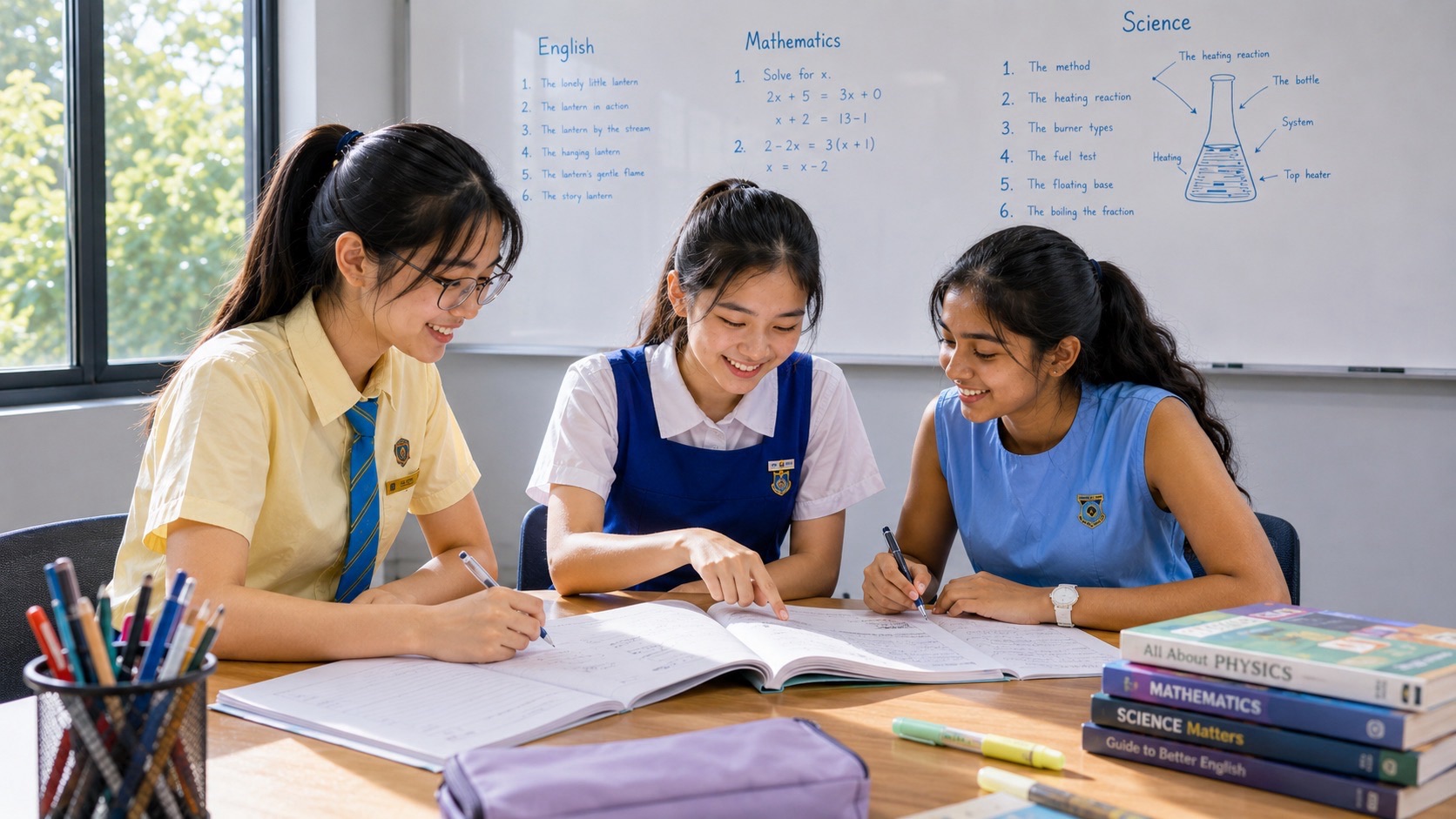
In Mathematics, letters begin to represent quantities within expressions and equations. A learner should understand what the symbols mean and why an operation preserves equality. For English, longer texts and more demanding responses call for careful interpretation and organised expression.
Science introduces increasingly formal ideas and representations. Humanities asks learners to examine evidence, context and relationships. These are suggested diagnostic directions, not a claim that every school teaches the same topic in the same term. Use the school’s programme to locate the next useful step.
How should support change through Secondary 1?
Review actual classroom work after the student has settled in. Check whether homework is becoming more independent and whether earlier gaps are reappearing. If a more demanding subject level is being considered, discuss the school’s criteria, bridging arrangements and overall workload.
Rest after PSLE and a sensible transition can coexist. A short bridge should teach a connection the learner needs, not rush through an entire secondary syllabus. For a Punggol parent, the useful consultation question is: “What can my child understand and do now, and what does the first secondary term require next?”
Continue with the right Punggol guide
Existing PG1, PG2 and PG3 parent guide
Secondary 1 Mathematics support
How tuition works at eduKatePunggol
Find all Primary, PSLE, SEC and syllabus guides in this series
Official references and scope
Official information checked on 10 October 2026. Choose the document for the learner’s actual examination year, subject title and level. School subject availability and programme availability should be confirmed directly.


