
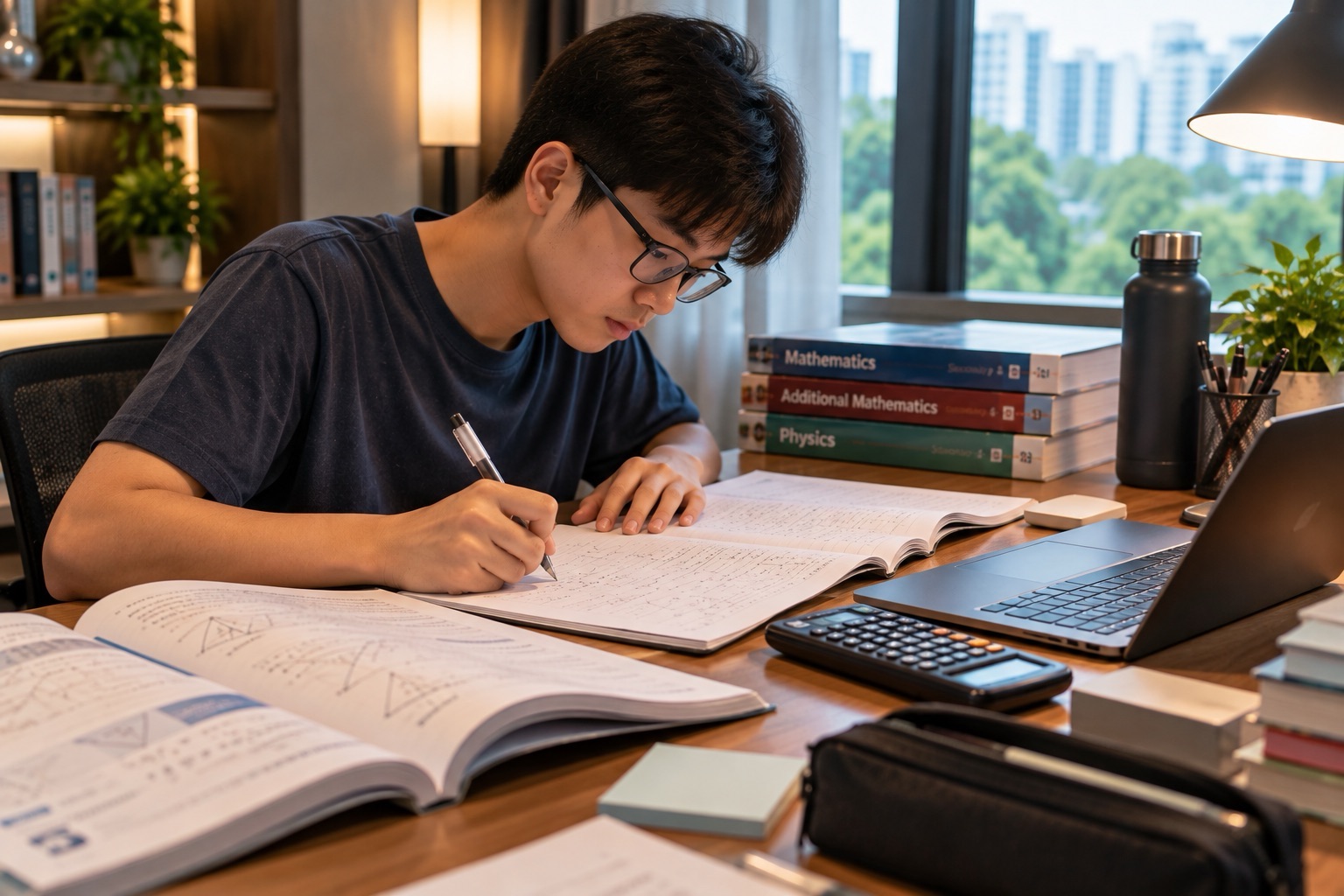
A Primary 6 pupil can spend six minutes polishing a sentence about the morning sky and discover, far too late, that the actual story has barely begun. Another child writes at astonishing speed but never explains why the main character makes a difficult choice. For parents searching for PSLE English composition time management, Primary 6 creative writing enrichment in Punggol, PSLE Continuous Writing practice or how to finish English composition on time, these are different problems requiring different repairs.
The core aim of Primary 6 timed creative writing enrichment is to help pupils protect original thinking while making reliable decisions about topic relevance, planning effort, scene development, writing completion and final checking within the current Paper 1 conditions. The objective is not to make children produce identical model essays faster. It is to make their own creativity available when they cannot consult a tutor, restart repeatedly or spend most of their time on the introduction.
Picture a child with two good story ideas about a lost library book. One is a dramatic mystery needing five subplots. The other is a thoughtful story about keeping a promise to return something borrowed. Under time pressure, choosing the second is not less creative. If it allows a believable conflict, a clear decision and a properly developed ending, it may be the more skilful route for that particular task.
This page owns the Primary 6 time-management and originality milestone. The Primary 6 PSLE English Composition and Independent Writing guide covers final-year writing more broadly, while Creative Writing to PSLE Composition Writing Skills explains the wider transfer from enrichment. Here we examine what happens when a capable writer meets the clock.
The Core Aim: Complete the Work Without Losing the Writer
Families sometimes respond to slow writing by demanding shorter sentences, fewer imaginative ideas and memorised openings. Those changes may make a page fill more quickly while leaving the real bottleneck untouched.
A child who understands the topic, chooses a relevant story and knows how it will end can write clearly without reinventing the entire narrative halfway through each sentence.
Good time management begins with diagnosing where effort goes, then making an adjustment that the pupil can repeat independently on an unfamiliar task. Finishing matters, but only a complete, relevant, coherent response demonstrates the full skill.
A writing clock should change how decisions are managed, not erase the original thinking behind them.
The Official 2026 PSLE Paper 1 Conditions
In its 17 July 2026 media reply, Singapore’s Examinations and Assessment Board explained that the PSLE English Language Paper 1 lasts one hour and ten minutes and includes both Situational Writing and Continuous Writing. Candidates have flexibility to manage the shared time. Continuous Writing has a minimum of 150 words.
The SEAB 2026 examination formats directory lists the applicable English syllabus. For the 2026 Continuous Writing task, a given topic is accompanied by three pictures offering different angles; the composition uses at least one of them.
These statements describe the 2026 examination, not a guaranteed format for later years. Any suggested minute-by-minute practice schedule is a teaching experiment rather than an official time allocation.
Why ‘Just Write Faster’ Usually Misses the Point
A pupil may run late because the question was misunderstood, too many plots were considered, the opening was rewritten repeatedly, the middle kept expanding, sentence construction was laboured or the ending was never planned. Faster handwriting does not repair all those causes.
A useful tutor observes the actual writing process. Where did the child stop? What were they trying to decide? Did they abandon the planned story? Did they know what the ending should do?
Once the first repeated bottleneck is identified, the lesson can repair it in a smaller exercise before another full timed attempt.
The Seven-Point Time-Leak Audit
- Task reading: did the child misinterpret the title or pictures?
- Idea selection: did too many candidate plots consume attention?
- Planning: did the outline become a second essay?
- Opening: was a decorative paragraph rewritten repeatedly?
- Middle: did unrelated complications interrupt the main problem?
- Ending: was the intended resolution unclear or left until the final moment?
- Accuracy: was there a workable opportunity to review tense, punctuation and relevance?
Do not hand all seven targets back to the child as a verdict. Identify the one or two patterns that most affected completion, teach an alternative and retest.
Worked Example: A Great Opening, No Ending
In a fictional teaching example, Farah selects a practice title, “A Difficult Choice”, and plans a story about admitting that she damaged a friend’s sketch. The plot could work. But Farah spends a large amount of her practice time describing the bright morning sky, school corridor and first bell.
She rewrites the opening until it sounds impressive. The central decision does not appear until late, and her story stops just before the friend responds.
The diagnosis
Farah does not lack imagination. She lacks a reliable way to protect writing time for the central event and consequence.
A targeted correction
Try two plain opening sentences: “I had promised to keep Leena’s drawing safe. When I opened the folder, a dark stain covered the bottom corner.” The important problem appears immediately.
The essential scene
Farah can develop the moment she considers hiding the damage, approaches Leena, explains what happened and accepts a believable response. This is where the topic becomes visible.
The retest
On an unfamiliar title, she should once again begin with a relevant event and reach a complete outcome. That new attempt is stronger evidence than simply copying the corrected sketchbook story.
The names, event and practice title are fictional examples.
Choose a Route That Can Be Finished
An idea can be marvellous for a long holiday story yet unsuitable for a shorter constrained composition. A mystery with six suspects may require far more explanations than a pupil can handle under the current conditions.
Teach children to compare candidate plots for relevance, a clear causal chain and realistic scope. A small misunderstanding can offer more meaningful character development than an enormous adventure.
Rejecting a favourite idea is a creative decision, not a failure. The child can keep it in a notebook for another project.
The Topic-and-Picture Check
Before beginning an exam-format practice, pupils should state what the topic needs the story to demonstrate. They should then choose a visual element that can influence the central events.
Suppose an invented practice set about responsibility offers pictures of a notebook, a raincoat and a handwritten letter. A pupil might use the notebook in a story about returning borrowed work or the letter in a story about keeping a promise.
These are invented teaching images, not real examination pictures. A picture element should matter to the narrative instead of being mentioned once as decoration.
The Compact Plan That Protects the Conclusion
- Topic: one clear meaning the story must demonstrate.
- Character: a person with an understandable goal.
- Obstacle: a problem related to that goal.
- Choice: an action that changes what happens next.
- Outcome: the consequence the reader will need to see.
- Picture: the selected visual element’s genuine role in the plot.
The child can record short phrases, not full descriptive paragraphs. The plan succeeds if it allows drafting to begin with enough direction to reach a meaningful ending.
If a pupil explains the plan clearly but still struggles to produce sentences, the next lesson may need writing fluency or grammar rather than more plotting frameworks.
The Ending-First Check
Ask the learner to state the intended resolution in a short sentence before writing the introduction. This is not necessarily the final sentence in the completed composition; it is a destination.
A plot about admitting a mistake may end with an honest conversation and a practical consequence. A story about returning a lost item may end with its return or a credible attempt that addresses the central issue.
Knowing the destination helps the writer identify which scenes matter. It does not forbid an improved ending that emerges during drafting.
Use Scenes for the Decision and Bridges for the Journey
Young writers can spend a whole paragraph walking to school and then rush through the apology that should carry the story. Teach the distinction between scene and bridge.
A bridge can say “After school, I returned to the library.” A scene can show what happens when the character explains the loss and the other person reacts.
Time is protected not by removing all description but by giving detail to the moments that change the reader’s understanding.
A Second Example: The Borrowed Art Folder
A fictional P6 pupil promises to return a classmate’s art folder before a display. They discover that a younger sibling accidentally drew on the back cover.
The central narrative route is manageable: establish the promise, discover the damage, consider concealing it, choose to explain and show how the classmates respond.
A random sporting victory or extraordinary rescue will not help unless it develops that original problem. The child may include a distinctive object or a funny moment, but the story still needs to finish its main movement.
Suspense Can Be Quiet
A hesitant confession, unread message or delayed response can keep the reader curious. There is no need to insert screaming or a thunderstorm to create tension.
“I typed the apology, erased it, then knocked on the door” is a small moment that prepares a decision. The reader knows something matters and waits to discover what happens.
Effective suspense is valuable only if the next scene rewards the reader’s attention with development or consequence.
Originality Is More Than Unusual Events
Two children might both write about losing a borrowed item. Their stories can differ through motive, relationship, setting and the response they choose.
One writer focuses on fear of disappointing a friend. Another explores an honest conversation that repairs trust. The shared premise does not require identical language or plots.
Teach pupils to find one meaningful, specific decision rather than five spectacular incidents they cannot connect.
Protect Natural Narrative Voice
Some Primary 6 students imitate ornate model paragraphs so heavily that their characters no longer sound believable. A child does not need to use “declared majestically” when the scene simply requires “said”.
Accurate, expressive language is more useful than compulsory sophistication. Strong prose can move between simple statements and richer moments according to purpose.
If a pupil cannot explain what one of their own words means in context, it may not be the right choice for the sentence.
The Mid-Draft Direction Check
During a teaching session, the writer can briefly ask: Is my main problem still clear? Have I reached or prepared the turning point? Do I know how the story can resolve?
The pause should be short and should not become another elaborate planning ritual. It is designed to catch drift before another unrelated paragraph appears.
For pupils who already maintain a coherent direction, an extra check may be unnecessary. The instruction should match the observed problem.
No Universal ‘Official’ Planning Minutes
SEAB states that candidates have flexibility to manage the shared Paper 1 time. It does not prescribe one universal number of minutes for planning, drafting or checking.
A tutor might test different allocations during practice, but should label them as teaching strategies. Some pupils need to choose a plot more quickly; others need more time to form accurate sentences.
Compare complete attempts and decide which personal routine produces the most reliable finished writing.
A 30-Minute Focused Writing Exercise
- Minutes 0–5: interpret a fictional practice topic and select a relevant route.
- Minutes 5–9: note the character’s goal, obstacle, choice and ending.
- Minutes 9–22: draft the central scene and consequence without continually rewriting the opening.
- Minutes 22–27: check the story for relevance and a complete event chain.
- Minutes 27–30: make one accuracy correction and explain it.
This is a short targeted exercise, not a complete seventy-minute PSLE Paper 1 simulation and not an official time allocation. It isolates planning and completion habits for instruction.
When Writing Faster Makes the Story Worse
Rushing can make pronouns unclear, dialogue confusing and cause-and-effect links disappear. Writing only to finish may therefore create a different problem.
The aim is reliable pacing with readable content. Practise concise, purposeful planning; develop the important event; complete the ending; and preserve a manageable final check.
Speed is useful when it frees attention for quality. It is not a substitute for quality.
The Three-Part Final Review
Check relevance
Does the story answer the topic? Is the chosen visual stimulus meaningfully integrated?
Check the narrative
Does the character’s goal produce a related problem and decision? Is the ending clear? Can readers follow names, time and actions?
Check language
Are there obvious errors in tense, spelling, sentence boundaries, dialogue punctuation or word meaning?
The pupil need not run a forty-point checklist under examination conditions. These priorities give a short, purposeful order for the available reviewing time.
If the Child Cannot Begin
A blank page can mean the topic is unclear, too many plots compete or the pupil fears an imperfect first sentence. These require different teaching moves.
If the title is misunderstood, interpret it before writing. If too many ideas are available, choose between two one-sentence routes. If perfectionism is the barrier, allow a plain first sentence and return to it after the story exists.
Short, supportive untimed exercises can repair those problems before another demanding practice session.
If the Middle Never Stops Growing
Some children avoid the ending by adding fresh complications: a lost phone, a broken bicycle, a suspicious stranger and a class competition all appear in one story.
Ask which event actually changes the character’s ability to resolve the original problem. Cut or compress unrelated scenes and develop the decisive moment instead.
One coherent conflict is often stronger than a pile of adventures.
If the Ending Regularly Goes Missing
First, check whether the student has an intended outcome. If not, practise the ending-first check. If the outcome is known but no time remains, inspect the opening and bridge paragraphs.
The correction may be reducing decorative setup and planning a realistic resolution earlier.
Avoid treating a stock moral sentence as a substitute for the missing consequence.
Sentence Accuracy Is a Real Time Cost
A child who stops at every unfamiliar spelling or struggles to build complete sentences may take longer even with an excellent plot plan.
Targeted language practice can help that learner more than another session of brainstorming. Teach grammar, reference and common spelling patterns in short examples, then reintegrate them into writing.
Writing instruction should distinguish the first sentence-level bottleneck from the plot-planning bottleneck.
Model Essays Should Teach Craft, Not Become Scripts
A good model can show how a writer establishes a character’s goal or prepares a turning point. But memorising an entire plot and forcing it onto every new topic is fragile.
After reading a model, change the person, object, problem and ending. Keep the writing move, not the original sentences.
If the pupil can apply that move independently to an unseen prompt, the model has helped learning rather than copying.
Differentiated Small-Group Repair
Three Primary 6 pupils may receive the same practice title but need different instruction. One struggles to choose a story, another cannot complete a conclusion and a third loses clarity through tense and pronoun errors.
A thoughtful tutor identifies each problem and assigns a focused repair rather than giving all three another list of impressive adjectives.
Small-group teaching is valuable when it results in precise attention and later independent performance, not because the number of students alone guarantees progress.
A Four-Week Reliability Cycle
- Week 1 — Diagnose: observe a representative unseen task and identify the time leak.
- Week 2 — Repair: teach a shorter exercise targeting the actual bottleneck.
- Week 3 — Integrate: complete a new coherent story with reduced scaffolding.
- Week 4 — Transfer: try another unfamiliar task and compare completion, clarity and independence.
The cycle is illustrative, not an advertised timetable. Adjust the pace to the learner’s existing skills and current school commitments.
How Parents Can See Real Improvement
- The pupil interprets a new topic without copying a prepared plot.
- A concise plan identifies the central problem and consequence.
- The chosen picture affects the actual story.
- The opening reaches the main action promptly.
- The middle stays focused on the same central issue.
- A complete ending appears under suitable practice conditions.
- Word choice, grammar and reference remain understandable.
- The child makes at least one useful self-correction.
- A later new-prompt attempt needs fewer adult interventions.
These are learning receipts rather than official grading categories or guarantees of PSLE results. Keep dated samples and note the amount of guidance supplied.
Keep Creative Pleasure in Primary 6
A child preparing for PSLE can still write funny little stories, fantasy scenes and private poems without a stopwatch. Such projects allow ideas and language to grow beyond assessment routines.
Label the purpose of each activity honestly. Free writing is for exploration; a timed task checks the ability to select and complete relevant prose. The two modes can support each other without becoming identical.
Protect time for reading, rest, play and ordinary conversation. Another practice paper is not automatically the best educational investment.
When More Tuition Is Not the First Answer
A pupil already writing independently and completing tasks reliably may benefit from reading widely and occasional targeted feedback instead of another weekly drill.
A child who repeatedly struggles with foundational sentence accuracy may need direct language repair before more time pressure. If the problem is emotional overload or exhaustion, scheduling and rest deserve consideration.
The best next lesson begins with actual evidence of what breaks down, not a generic promise that more practice will fix everything.
Questions Punggol Parents Can Ask
- Does the tutor know the official shared Paper 1 time conditions?
- What specific step causes my child to run late?
- Can the student choose a relevant original route without help?
- Does the plan identify the turning point and ending?
- Is the chosen picture genuinely integrated?
- Do lessons protect the child’s own narrative voice?
- Can the tutor show improvement on a later unseen prompt?
- Are suggested time splits clearly described as practice strategies, not official rules?
One of the strongest signs of progress is a pupil explaining, “I knew my ending before I wrote the opening, so I didn’t get lost in extra events.” That is writing control.
Frequently Asked Questions
How long is the 2026 PSLE English Paper 1?
Seventy minutes for Situational Writing and Continuous Writing together, with flexible allocation between the two tasks according to SEAB.
What is the minimum 2026 PSLE Continuous Writing length?
At least 150 words. A longer composition is not automatically better; relevant development and clarity remain important.
How do I help my child finish English composition on time?
Identify where time is lost, teach one targeted repair and retest using unfamiliar material. Planning, overwritten introductions and missing endings require different approaches.
Should every practice composition use an exact time split?
No universal split suits all learners. Timing strategies can be tried and adjusted, but they should not be presented as official SEAB rules.
Can timed writing coexist with originality?
Yes. Choosing a meaningful route, natural details and believable character decisions is creative work. Time management helps those choices become a complete response.
Should a P6 child memorise dramatic openings?
Learning opening techniques is useful, but copying fixed paragraphs across topics risks irrelevance. Use a clear entry point the child can develop.
Continue the eduKatePunggol Primary 1–6 Progression
- Primary 1 Picture Story Writing
- Primary 2 Sentence-to-Paragraph Writing
- Primary 3 Story Writing and Character Goals
- Primary 4 Composition and Scene Writing
- Primary 5 Composition and Independent Planning
- Primary 6 PSLE English Composition and Independent Writing
Focused Writing and Official Sources
- Primary 5 Creative Writing Ideas and Composition Planning
- PSLE Composition Writing Skills
- Story Openings and Hooks
- Editing and Revising Stories
- Primary 6 English Composition: Diagnosis and PSLE Transfer
- SEAB 17 July 2026 PSLE English Paper 1 Explanation
- SEAB 2026 PSLE Formats Directory
The P6 Timed Writing Principle
A young writer can imagine more than one good story, but a constrained task asks for one clear response. The skill lies in making the right decision for the question without losing the ability to write naturally and thoughtfully.
The core aim of Primary 6 Punggol creative writing enrichment for PSLE composition time management is a child who knows what matters first: understand the question, choose a viable route, develop the turning point, finish the story and check it. When the clock is present but the writing still belongs to the pupil, creative confidence has become dependable execution.


