
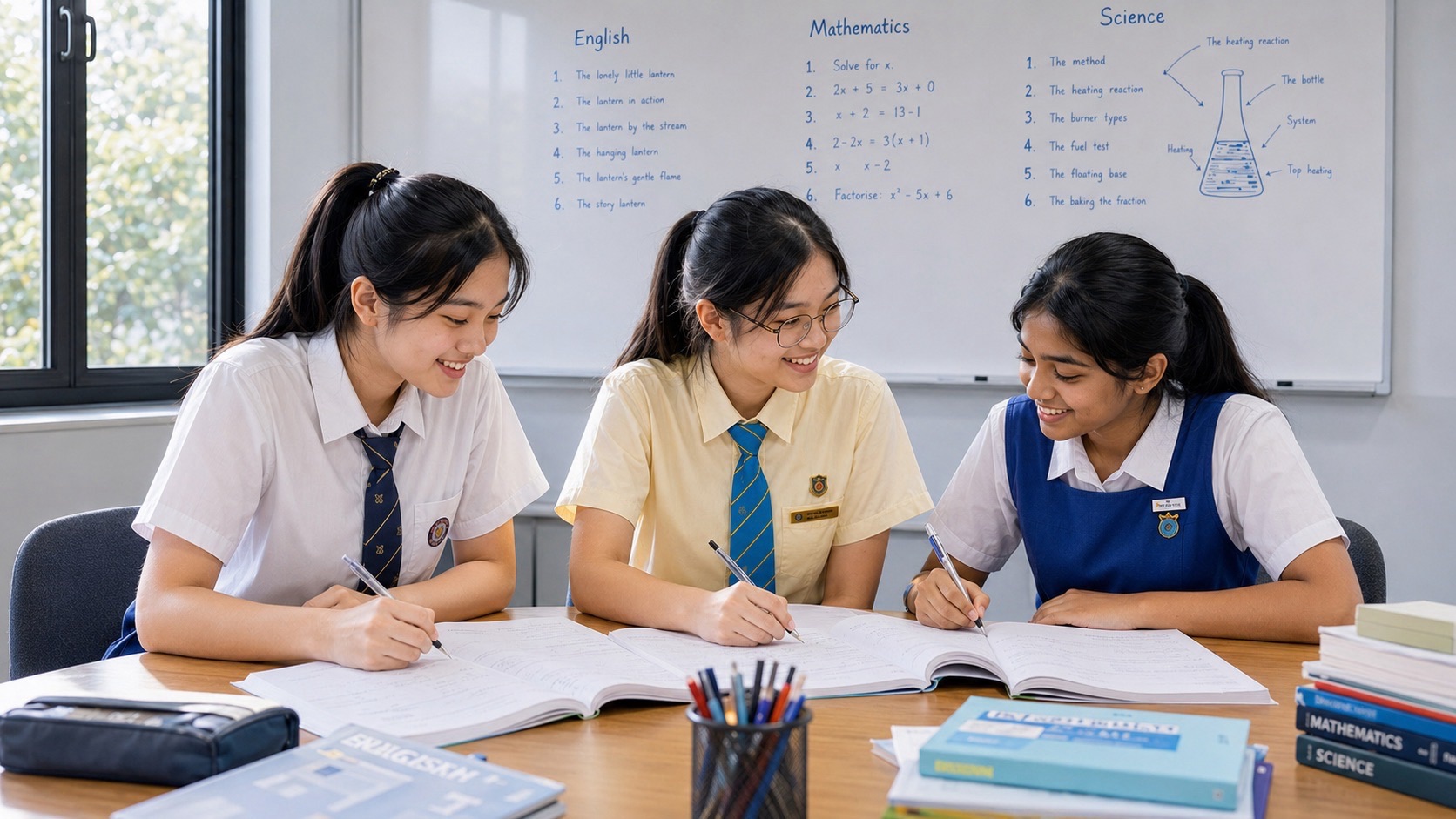
Punggol Science Tuition should include Science progress tracking because improvement is easier to manage when students, parents and tutors can see what is actually changing. A single test score is useful, but it cannot show the whole learning process. A student may be retrieving old topics better, making fewer graph errors or writing more precise explanations before the overall grade moves significantly.
The core aim of Science progress tracking in Punggol tuition is to turn learning into an evidence trail. Good tracking follows more than marks: concept stability, recurring error patterns, retrieval after delay, transfer to unfamiliar questions, time control and the amount of tutor support still needed. The purpose is not surveillance. It is to make better decisions about what to teach, practise, maintain or stop.
Explore related Science learning guides and choose your next reading step.
Progress Is More Than the Latest Score
Scores matter because they show performance under a particular set of conditions.
But one paper may be easier, harder or unusually well matched to a student’s strengths.
Progress tracking should therefore combine outcome measures with learning behaviours.
The Core Aim: Measure What Should Change Next
Useful tracking answers three questions.
- What is improving?
- What is still recurring?
- What should change in the next learning cycle?
Tracking is valuable only when it informs action.
Track Concept Stability
Can the student explain the concept accurately without notes?
Can they still do so after a week or a month?
Durability is a stronger measure than immediate lesson success.
Track Retrieval
A student may understand a topic but fail to access it later.
Short cold questions can show whether knowledge remains available.
See Science Retrieval Practice.
Track Recurring Error Categories
Repeated mistakes often reveal more than total marks.
Graph scale, units, practical variables, vague explanations and command-word errors can be tracked across topics.
Track Transfer
A student who can solve the familiar version but not a changed-context version has not fully stabilised the concept.
Progress should include success on fresh applications.
See Science Application Questions.
Track Independence
One of the most important measures is how much help the student needs.
Does the learner begin without prompts? Can they choose the model? Can they check their own work?
Fewer prompts can be a strong sign of progress even before grades jump.
Track Time Control
A correct answer that takes far too long may still signal a performance issue.
Timed sections can reveal whether hesitation is decreasing and checking time is improving.
Track Practical and Data Skills Separately
Students can improve concept knowledge while still losing marks in graphs or experiments.
Cross-cutting skills deserve their own progress indicators.
Primary Science Progress Tracking Should Stay Simple
For younger learners, track a few meaningful behaviours: explanation, vocabulary, diagrams, old-topic recall and independence.
The system should not make the child feel constantly measured.
PSLE Science Progress Tracking Should Become More Cumulative
Primary 6 students need evidence across the whole syllabus.
Track mixed retrieval, MCQ accuracy, open-ended precision, graph reading and paper completion.
Secondary Science Progress Tracking Should Match Subject Level
G1, G2 and G3 students should be measured against their actual course demands.
Combined Science students may need component-specific tracking, while separate-science students need subject-specific dashboards.
Do Not Track Everything
Too many metrics create noise.
Choose a small number of indicators that actually affect learning decisions.
- Recent school score or paper evidence.
- Top recurring error.
- Old-topic retrieval stability.
- Transfer success.
- Independent-start frequency.
- Timing or checking risk.
Use Baselines
When a student joins tuition, establish a starting point.
This may include a school paper, short diagnostic, oral explanation and one unfamiliar application.
A baseline makes later improvement visible.
Use Trends, Not One-Off Events
A single excellent or poor paper can mislead.
Look for patterns across several weeks or assessments.
Progress is more reliable when multiple indicators move in the same direction.
Progress Can Be Uneven
Students may improve in concept knowledge before marks, or improve accuracy while becoming temporarily slower because they are using a more careful method.
Tracking should allow for these transitional stages.
Strong Students Need Progress Tracking Too
A high score can hide stagnation if every question remains familiar.
Track novelty, precision, experimental evaluation and transfer rather than only marks.
Struggling Students Need Progress Made Visible
When grades move slowly, smaller indicators matter.
Fewer blank answers, better retrieval and successful retests can show that the learning system is working.
See Science Tuition for Struggling Students.
Assessment Is the Measurement Layer
Tests, school papers and mock papers provide performance evidence.
Progress tracking organises that evidence across time.
See Science Assessment.
Feedback Is the Action Layer
Tracking shows what changed. Feedback explains what the student should do next.
See Science Feedback.
A Simple Monthly Science Progress Dashboard
- Current school topic.
- Latest assessment evidence.
- One strength that has stabilised.
- One recurring error still open.
- One old topic due for retrieval.
- One transfer skill being tested.
- One independence target.
- Next review date.
This is usually enough to guide decisions without creating administrative overload.
Parents Should Receive Useful Progress Information
A meaningful update should explain what has improved, what still recurs and what the student is expected to do next.
Generic statements such as “doing well” or “needs more practice” are less actionable.
The Student Should See Their Own Progress Too
Progress tracking is most powerful when the learner can name the change.
“I now check graph scales.” “I can retrieve electricity without notes.” “I need fewer hints on practical questions.”
Ownership increases motivation and self-regulation.
When Tracking Shows No Improvement
Do not simply continue the same programme indefinitely.
Recheck the diagnosis, class fit, workload, teaching method and whether the student is completing independent practice.
The point of tracking is to notice when the current strategy needs to change.
How the eduKate Ecosystem Connects
The parent communication route is How Parents, School and Tutor Should Share Science Progress Without Creating More Pressure.
For parent evidence after lessons, see What the Parent Should Record After a Tuition Lesson.
Frequently Asked Questions
How should Science progress be tracked?
Use a small set of indicators such as school performance, recurring errors, retrieval, transfer, timing and independence.
Are marks enough to measure progress?
No. Marks are important, but they should be interpreted alongside learning behaviours and error patterns.
How often should progress be reviewed?
Frequently enough to guide teaching, with deeper reviews after meaningful assessments or several weeks of learning.
What if the marks have not improved yet?
Check whether leading indicators such as retrieval, error closure, accuracy and independence are improving. If nothing is moving, revisit the learning plan.
How do we know tuition is becoming less necessary?
The student can retrieve, choose methods, correct errors and complete fresh questions with less tutor prompting.
The Core Aim, in One Sentence
The core aim of Science progress tracking in Punggol tuition is to create an evidence trail from today’s learning behaviour to tomorrow’s independent performance.
Progress becomes useful when it tells the student, tutor and parent what should happen next.


